Kathmandu
Sunday, July 5, 2026





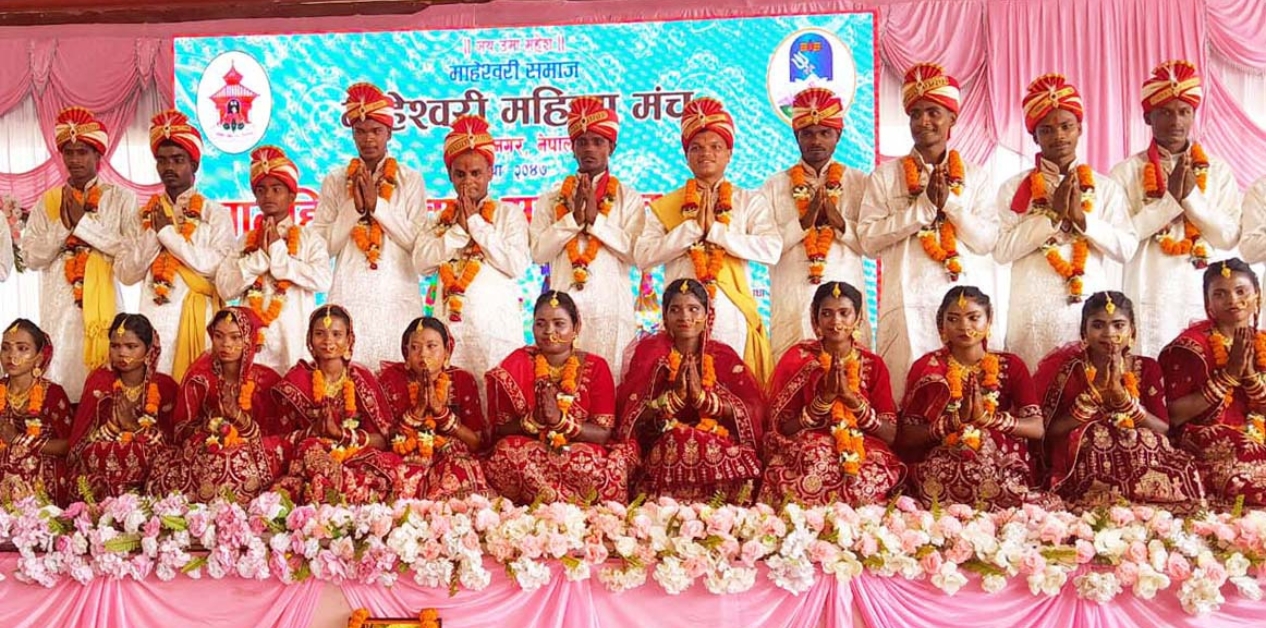
BIRATNAGAR. There was a distinct glow on the face of Anup Soren from Urlabari-7, Durgapuri, Morang on June 29. As he walked his daughter Phulmani Soren down the aisle as a bride, there were tears of joy in his eyes and a smile of contentment on his lips.
“The debt I took during the wedding of my first two daughters has not been paid off yet,” Anup says. “But today, as I marry off Phulmani, there is neither the worry of debt nor the pressure of a dowry. Not only is my daughter settling down, but it is also a huge relief for me.”
For impoverished families, a wedding is not just a joyful occasion but also a mountain of economic crisis. According to Anup, weddings in villages can cost anywhere between Rs 800,000 to 1,000,000. For a family earning a living through daily wage labor, managing such an amount means carrying the burden of debt for years.
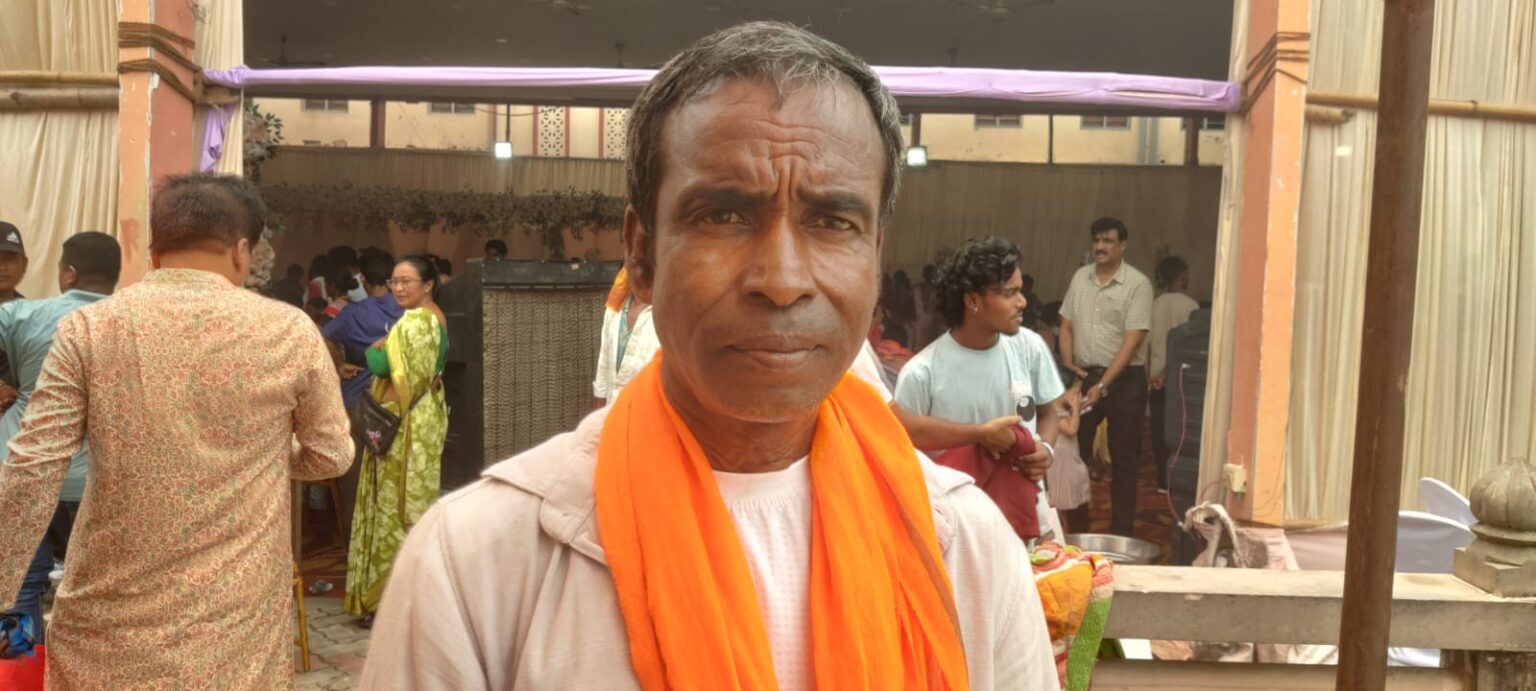
Anup Soren
“For people like us who do manual labor, managing hundred of thousands of rupees means drowning in a pit of debt,” he says. “But here, neither did we have to give a dowry (tilak), nor did we have to take out a loan. On top of that, we even received household items required for my daughter’s new home. What could be a bigger relief than this for a father?”
At 11:00 AM on June 30, the atmosphere inside Biratnagar’s Atithi Sadan was filled with enthusiasm. Inside the hall, 11 wedding pavilions (mandaps) were decorated in a row. These mandaps were named ‘Radha Mandap’.
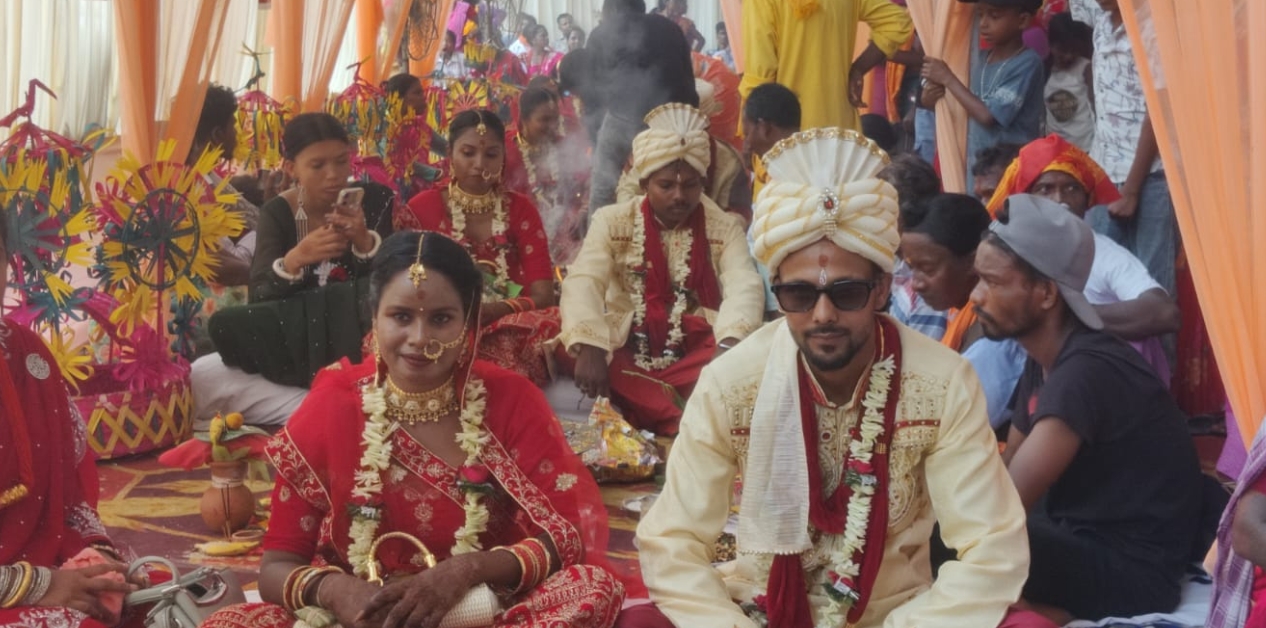
The couple Anil Darji and Phulmani Soren at the mass wedding.
Sitting in mandap number 11 of that row were 25-year-old Anil Darji from Shivasatakshi-7, Jhapa, and 23-year-old Phulmani Soren. Their marriage was not just a traditional matrimonial bond, but also a celebration of years of love and a union between different communities.
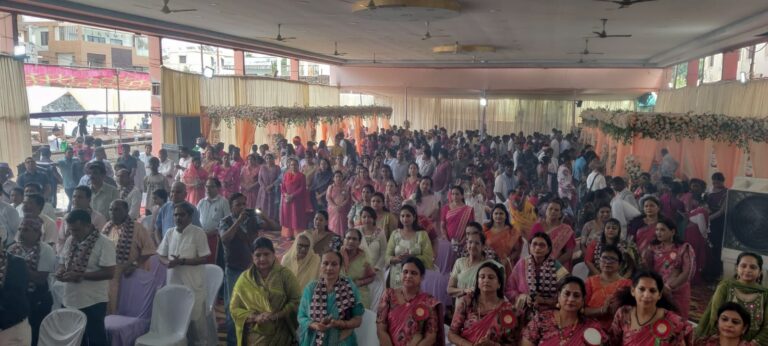
Participants at the mass wedding .
“Our love achieved legal and social completeness today,” says the groom, Anil, sitting in the pavilion. “Marrying in a mass ceremony sends a great message to society as well. At least our parents didn’t have to carry a heavy burden of debt just for the sake of a wedding.”
According to Anil, if the wedding had been held in their village with typical grandeur, it could have cost between Rs 1.5 to 2 million. “Saving that expense will now help lay the foundation of our life ahead,” he says.

City Safaris (electric rickshaws) decorated for the wedding procession.
Ramila Thapa, who came as part of the wedding procession from Jhapa, was also amazed by the sight of the wedding. “Getting married individually crushes people under financial weight,” she says. “But here, weddings are taking place according to one’s own religion and culture without any unnecessary showmanship. This is a new path toward changing society.”
A new beginning
In pavilion number 8, 29-year-old Manish Tudu from Kankai, Jhapa, and 25-year-old Shanti Murmu from Sunwarshi, Morang, sat holding each other’s hands. They were legitimizing their one-year-long love relationship by coming to the mass pavilion.
“I am happy to be able to turn love into marriage without spending money from my own pocket,” Manish says. “Saving Rs 500,000 to 600,000 is a huge asset for the future.”
In pavilion number 9, the two-year-long romance of 30-year-old Buddhilal Murmu from Urlabari and 26-year-old Sunita Mardi also took the form of marriage. In Buddhilal’s understanding, a wedding should not be made a medium for wasteful expenditure. He says, “We have started a good practice from here.”
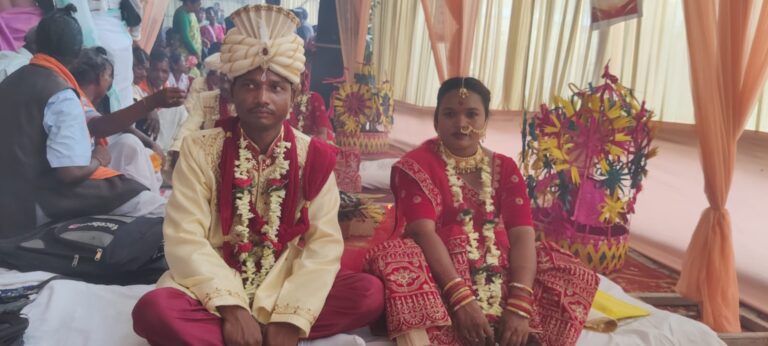
The couple Buddhilal Murmu and Sunita Mardi.
Puja Shiwakoti from Jhapa, who participated in the mass wedding, states that in a society where people worry about how to repay a money lender’s loan the very day after a wedding concludes, such practices help impoverished families become self-reliant.
The forum became a companion
The companion that enabled 11 couples to embark on their life journey together at once was the Maaheshwari Mahila Manch based in Biratnagar. The forum did not just facilitate the weddings; it also gifted the newlywed couples 99 types of household items necessary for a new home.
The couples getting married were Phulmani Soren-Anil Darji, Bhumika Rishidev-Paras Kumar, Lalita Hasda-Rajesh Hemram, Shanti Murmu-Manish Tudu, Sunita Mardi-Buddhilal Murmu, Rosha Hemram-Bablu Murmu, Meena Murmu-Warislaal Hasda, Munni Marandi-Sanat Chaunge, Sarita Tudu-Suklal Murmu, Sanita Kisku Tudu-Vijay Baske, and Manita Sada-Shekharkumar Rishidev.
The forum provided materials ranging from gold jewelry to wardrobes, utensils, gas stoves, beds, and bedding. Having basic necessities managed for their new homes left the newlyweds and their families financially reassured.
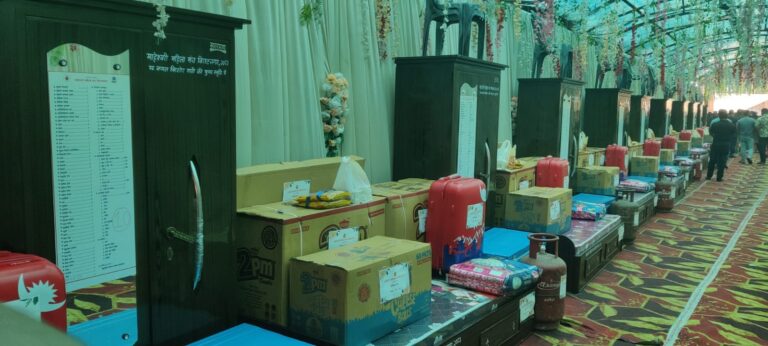
99 types of household items kept to be given as gifts to the 11 couples.
According to Lalita Jaju, the president of the forum, the objective of the program is not merely to conduct marriages but also to secure the economic foundation of the newly married couples.
“We have opened a two-year fixed deposit account of Rs 21,000 in the name of each bride,” Jaju says. “They will receive the interest from it, and after two years, they can also use the principal amount.”
The forum, in coordination with local representatives and the Nepal Federation of Indigenous Nationalities, selected youths aged 20 and above from impoverished families. Jaju mentions that they were selected for marriage only after verifying their citizenship and age.
The forum spent around Rs 2.5 million on the weddings of the 11 couples and the arrangement of materials. The amount was collected from donors. To make the program organized, Shital Baheti served as the coordinator and Archana Tapadiya as the co-coordinator.
Participating in the ceremony, Bhim Parajuli, the Minister for Tourism, Forests, and Environment of Koshi Province, considers mass weddings to be a “link of social harmony.” He says, “At a time when extravagance is increasing in society, such programs help bring about economic equality.”
A silent rebellion against an expensive culture
Ram Prasad Pokharel, a sociologist and assistant professor at Degree Campus Biratnagar, is worried that wedding culture has recently turned into a showy competition. “The trend of spending four to five days on grandeur with Haldi, Mehendi, and receptions, and changing into expensive outfits, has widened the gap between the haves and have-nots in society,” Pokharel says. “This expensive culture is driven by the elite class, the direct brunt of which is borne by the poor.”
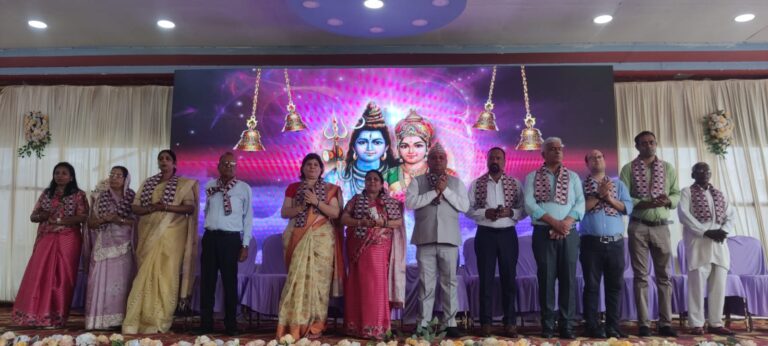
Guests participating in the mass wedding.
According to him, amidst such a costly culture, mass marriage is a silent rebellion. It gives people with low economic status the psychological courage to complete their rituals in a dignified manner.
“This mass wedding has provided proof that society is not just about showing off, but can also walk along with the lower class,” says Pokharel.