Kathmandu
Monday, July 27, 2026





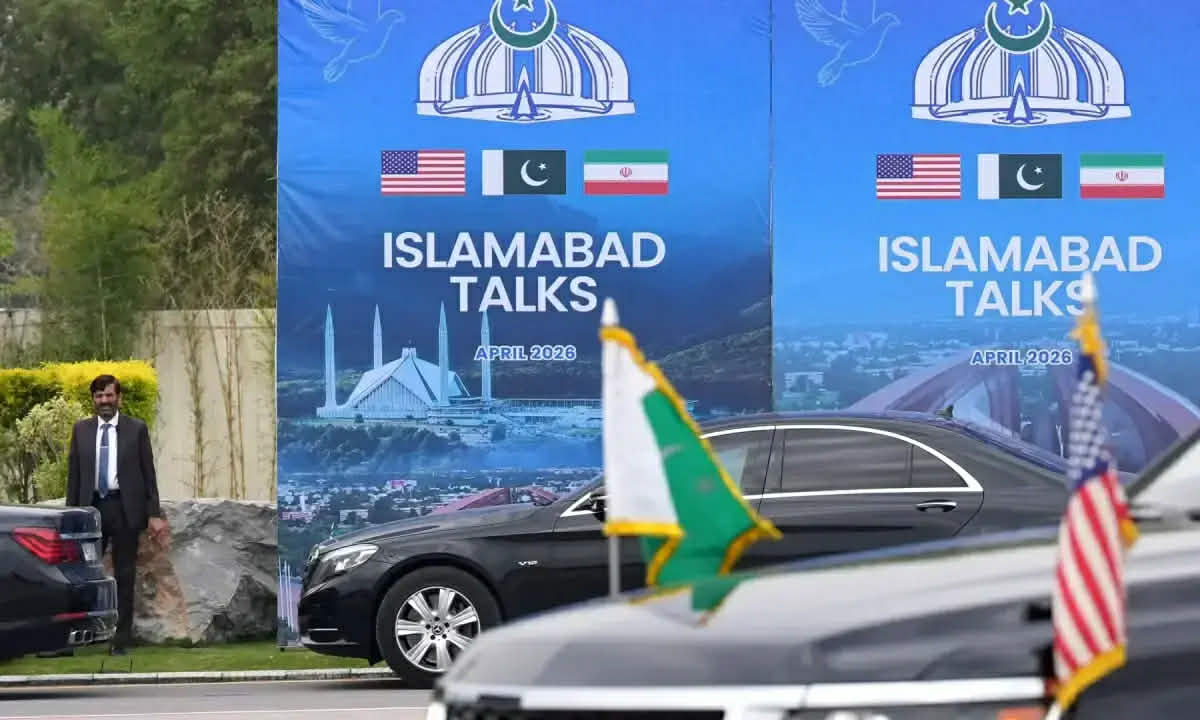
ISLAMABAD: The historic “Islamabad Talks,” a trilateral initiative mediated by Pakistan, concluded on Sunday without a breakthrough.
US Vice President JD Vance announced that despite 21 hours of “substantive discussions” between high-level delegations, the United States and Iran were unable to reach a formal agreement.
The direct negotiations, marking a significant diplomatic shift after decades of tension, began on Saturday afternoon and stretched deep into Sunday.
Addressing a press conference in the Pakistani capital, Vance characterized the duration and depth of the talks as “good news,” but admitted the outcome remained stalled.
“The bad news is that we have not reached an agreement,” Vance told reporters, noting that while the US was clear about its “red lines,” the Iranian delegation chose not to accept the terms offered.
The Nuclear Stumbling Block
The primary point of contention remains Iran’s nuclear program. Vance emphasized that the core goal of the Trump administration is to secure an “affirmative commitment” that Tehran will not seek nuclear weapons or the tools required to rapidly develop them.
While acknowledging that certain enrichment facilities had been “destroyed,” Vance questioned Iran’s long-term “commitment of will.” He stated that the US needs a guarantee that lasts not just for the next two years, but for the long term—a commitment he says has not yet materialized.
Sanctions and Frozen Assets
The discussions also covered the sensitive issue of Iranian frozen assets and broad economic sanctions. Iran has maintained that any progress is contingent on US “good faith” and the recognition of its rights, specifically regarding sanctions relief and access to its global funds.
Vance claimed the US delegation was “quite flexible” and “accommodating,” acting under President Donald Trump’s instructions to negotiate in good faith. However, he noted that the two sides simply could not reach a situation where the Iranians were willing to accept the specific US framework.
Pakistan’s Role as Mediator
Despite the lack of a deal, both sides expressed gratitude toward the Pakistani leadership for facilitating the high-stakes encounter. Vance opened his briefing by praising Prime Minister Shehbaz Sharif and Chief of Army Staff Field Marshal Asim Munir as “incredible hosts.”
He was quick to clarify that the stalemate was a result of the fundamental differences between Washington and Tehran, rather than any failure on the part of the mediators. “Whatever shortcomings were in the negotiations were not because of Pakistanis, who did an amazing job and really tried to help us and the Iranians bridge the gap,” Vance said.
As the delegations depart Islamabad, the future of the diplomatic track remains uncertain, with the US signaling that the door remains open if Iran shows a fundamental shift in its nuclear ambitions.