Kathmandu
Friday, July 24, 2026





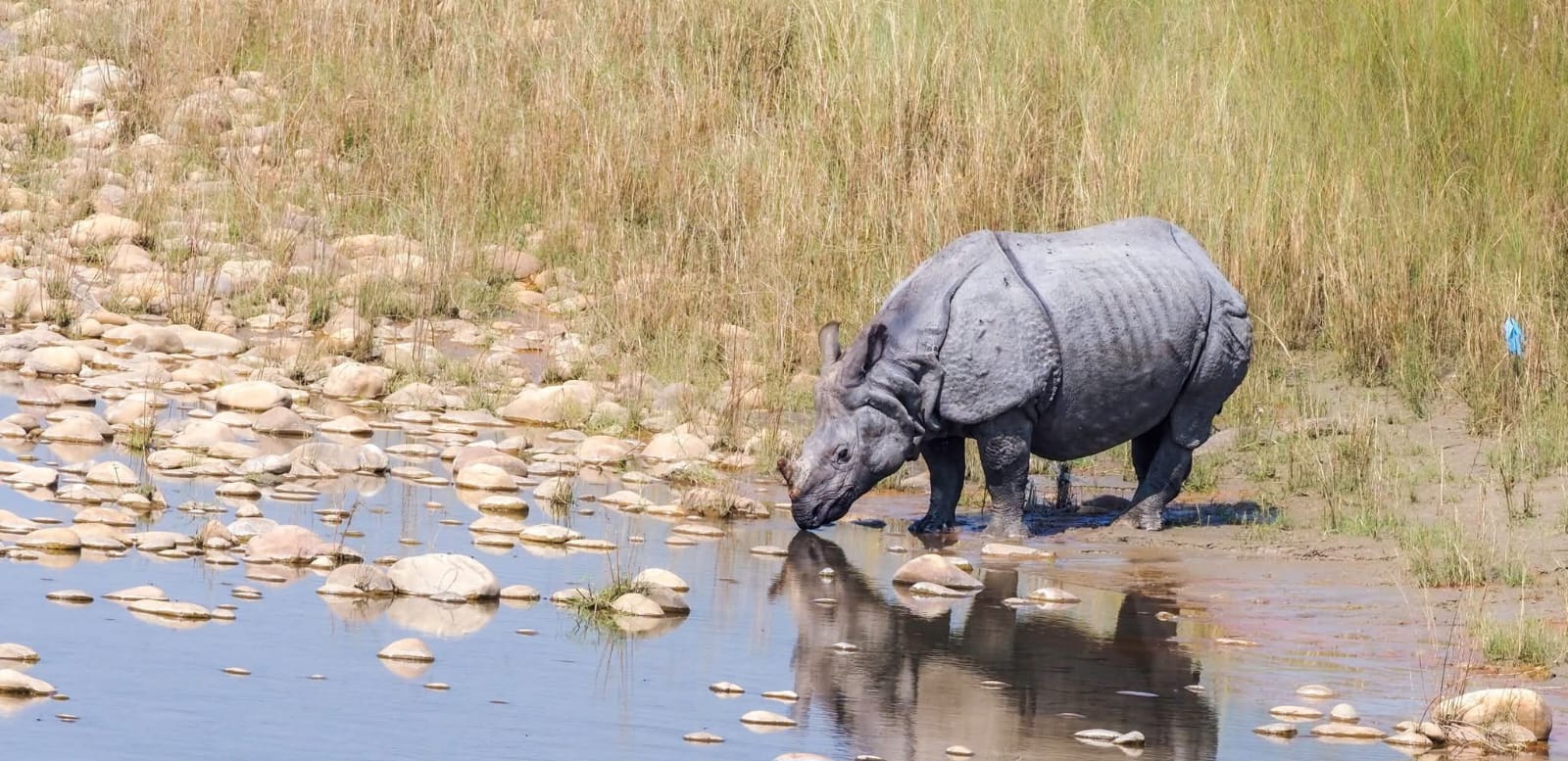
KATHMANDU: The census of the rare one-horned rhinoceros, which was postponed last year due to budget shortages, will not take place this year either.
The rhino count, usually conducted every four years, has been delayed this year because the tiger census is also scheduled. The rhino census will now be carried out next year using a genetic method.
As the monsoon season makes fieldwork difficult, officials said the counting process cannot be conducted at this time. The census is conducted by the Department of National Parks and Wildlife Conservation.
A technical committee related to wildlife surveys under the department has decided to prepare a protocol for conducting the rhino census through a genetic method. According to senior ecologist Haribhadra Acharya, discussions have already begun on preparing the protocol.
Under the genetic method, field teams collect rhino dung samples, which are then tested in laboratories through DNA analysis to identify the number and sex of rhinos. Each rhino has a unique genetic structure, allowing accurate identification.
Acharya explained that rhinos usually defecate in the same locations repeatedly. These sites are identified and monitored using CCTV cameras, while dung samples are collected multiple times. The protocol will determine how all these procedures will be carried out.
The genetic census method will mainly be used in Chitwan National Park due to its large area. The protocol will also determine what percentage of land area should be covered for sample collection.
Rhinos in Nepal are mainly found in riverbanks, grasslands, and riverine forest areas. They are present in four national parks across the country. Since direct observation is possible in Bardia National Park, Shuklaphanta National Park, and Parsa National Park, the genetic method will only be applied in Chitwan.
So far, Nepal has used this method only for snow leopard surveys. Officials say the genetic approach is safer and less expensive than previous methods. Earlier, rhino counts were conducted through direct observation by dividing forests into blocks, a process considered costly and risky.
According to Acharya, the 2021 rhino census cost around Rs 30 million. During that survey, one technician was seriously injured after falling from an elephant. The process took nearly three weeks and required mobilization of large numbers of elephants, vehicles, and technical personnel.
Acharya said the department is now focusing on the genetic method because it is scientifically reliable and more widely accepted than direct observation or photo identification techniques.
The 2021 census recorded 752 rhinos across Nepal’s national parks and conservation areas. Rhino numbers had fallen to around 100 in the 1960s, despite estimates suggesting there were about 800 rhinos in Nepal during the 1950s.
The 2021 census found 694 rhinos in Chitwan National Park alone, while the rhino population in Bardia increased from 29 to 38, and Shuklaphanta recorded 18 rhinos.