Kathmandu
Monday, June 15, 2026





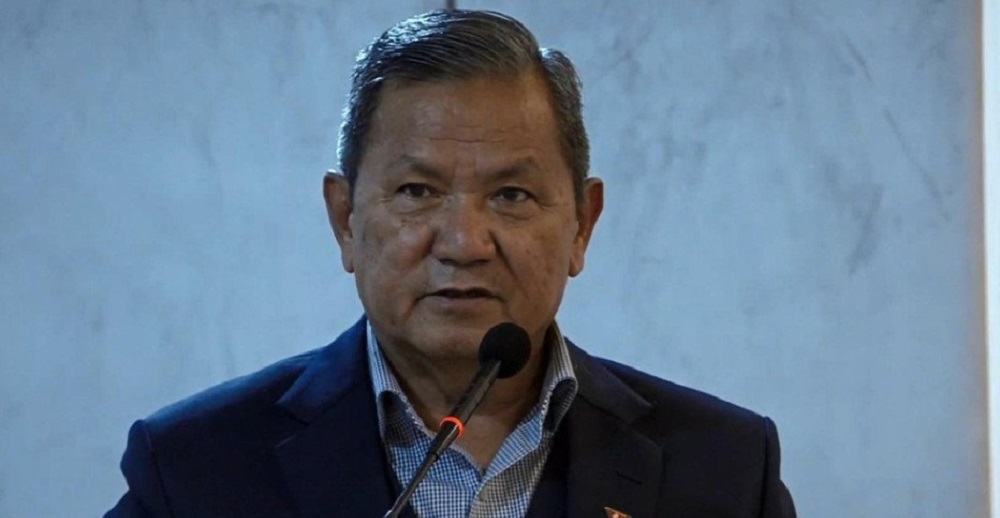
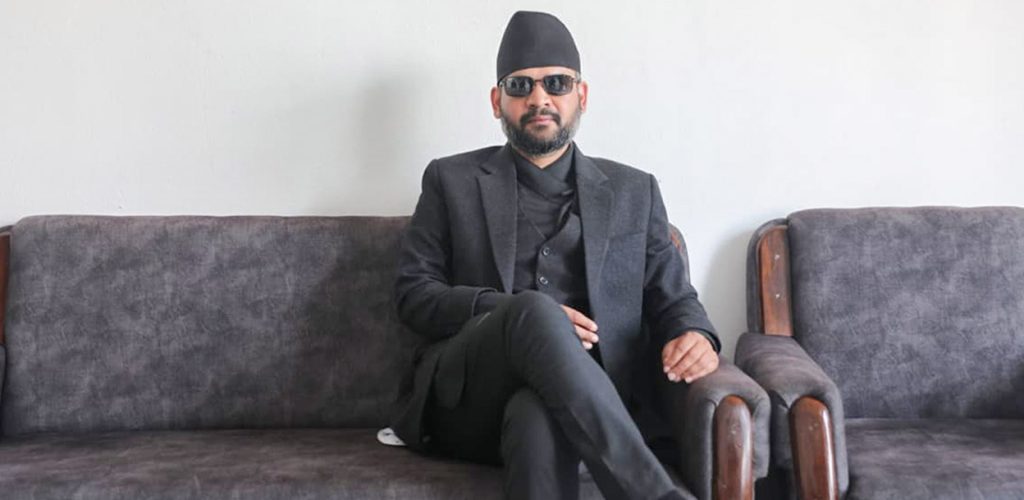
KATHMANDU: Then Minister for Communications and Information Technology Prithvi Subba Gurung has told an inquiry commission that the decision to restrict social media during the Gen-Z protests was not driven by personal impulse but by legal and institutional obligations.
In his statement to the high-level commission led by former high court judge Gauri Bahadur Karki, Gurung said the move was taken in compliance with court orders, existing directives, and Cabinet decisions.
“The decision to block social media was not based on any personal impulse. It was carried out as a responsibility to comply with court orders, regulatory provisions, and decisions of the Council of Ministers,” he stated.
According to the report, Gurung emphasized that the issue of social media regulation was not merely a technical matter for the government but a serious concern linked to legal frameworks, policy considerations, and public interest.
Here is full text of Gurung’s statement:
As the Minister for Communication and Information Technology, I believed that the issue of social media was not merely a technical question for the government, but a serious matter linked to legal, policy, and public interest. The Government of Nepal had repeatedly published public notices urging social media platforms to list themselves with the Ministry, appoint contact points and contact persons within Nepal, and come within the scope of government regulation.
In the meantime, the Honorable Supreme Court had already issued a mandamus order to regulate social media, and the “Social Media Use Management Directive, 2080” also made the provision for listing and establishing contact points mandatory. Therefore, the then government moved forward with the process of regulating social media to implement these legal and policy provisions, and necessary steps were taken as per the Council of Ministers’ decision dated 2082/05/09.
On the 23rd of Bhadra, I was in my office at the Ministry in Singha Durbar and later participated in a meeting with the Honorable Prime Minister. The bill regarding the regulation of social media had already been prepared before I became Minister; I made necessary amendments and sent it to Parliament during my tenure. Through that bill, we sought to implement provisions such as licensing social media platforms, listing, establishing contact points, grievance redressal, content regulation, user safety, and ensuring legal accountability.
The primary objective was to make social media organized and accountable by controlling digital crime, character assassination, misinformation, and misleading information. In my capacity as Minister, I consulted with the Ministry’s Secretary, Joint Secretary, expert leadership of regulatory bodies, and security agencies within my contact, and ultimately, the decision of the Council of Ministers was implemented.
The decision to block social media was not made out of personal impulse, but as a responsibility to comply with court orders, the provisions of the Directive, and the decision of the Council of Ministers. Platforms like Reddit and Discord were prioritized and identified separately as high-risk.
Following the events of Bhadra 23, I remained at the Prime Minister’s Office, engaging in continuous discussions and consultations with the Home Minister and others.
After analyzing the sequence of events, the process to reopen social media was initiated that same night according to the decision, which involved the collective decision of the Prime Minister, Chief Secretary, and others.