Kathmandu
Monday, June 15, 2026





Consumers of the Thangkhola Community Forest in Chitwan reverse environmental damage by harvesting harmful alien weeds, generating a sustainable source of income, organic fertilizer and local employment.
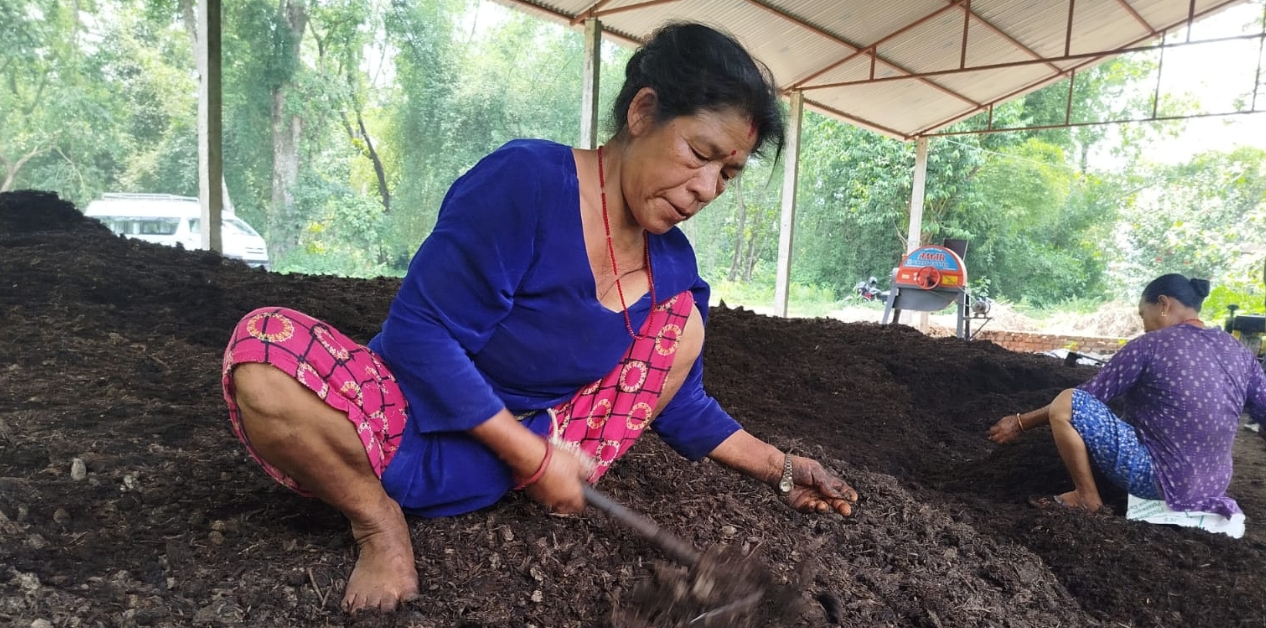
CHITWAN: Invasive plant species, which have long posed a severe threat to native flora, grasslands and wildlife, are being transformed into a lucrative source of income by the consumers of Thangkhola Community Forest in Kalika Municipality, Chitwan. Local residents have begun collecting alien invasive weeds such as Mile-a-minute (Mikania micrantha), Siam weed (Chromolaena odorata), water hyacinth and parthenium weed to produce and market organic compost fertilizer.
“Until last year, we used to clear these troublesome invasive bushes and burn them once they dried up,” says Ram Bahadur Karki, chairperson of the Thangkhola Community Forest Users Committee. “Starting this year, those very bushes have become a pathway to earning money.”
The Thangkhola Community Forest serves 1,967 consumer households. Out of the forest’s total area of 199.85 hectares, the consumers have started decomposing invasive plants spread across 28 hectares to manufacture compost.
According to Karki, 70 quintals of fertilizer were sold between June 8 and June 13. “We have packaged the compost in 5-kilogram and 25-kilogram sacks. On a single day, June 13, we sold up to 10 quintals,” he says.
He estimates that approximately seven tons of fertilizer will be generated in the first batch. The committee sells the organic fertilizer to its internal consumers at Rs 20 per kilogram, while external buyers are charged Rs 50 per kilogram.
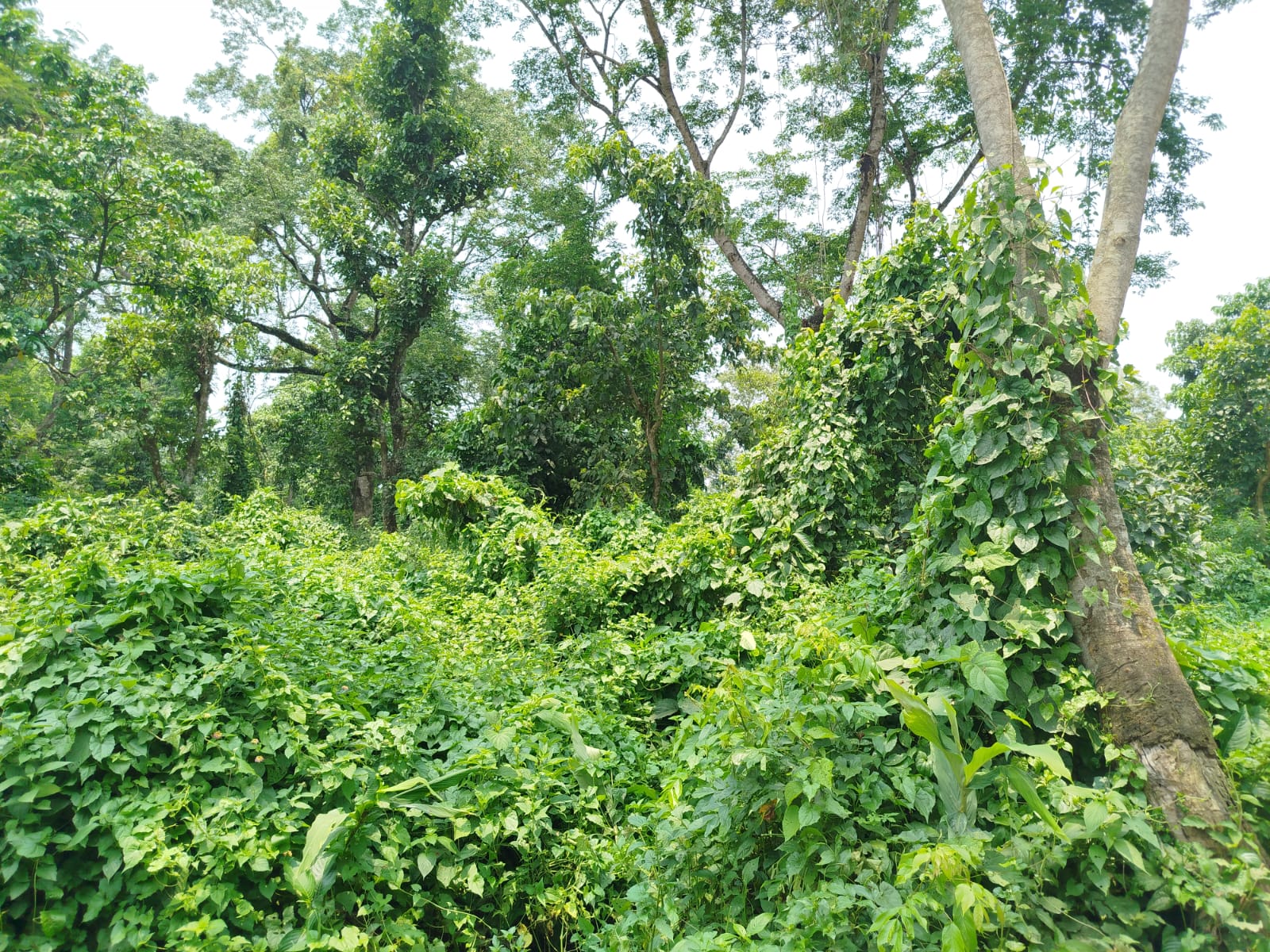
An expansive growth of the invasive Mikania species covering a community forest area in Chitwan. Photo: Bidhya Rai
Initiated on December 5, 2025 by the consumers of Thangkhola Community Forest, the project operates with financial and technical assistance from the Division Forest Office Chitwan and the World Wildlife Fund (WWF) Nepal.
Working in collaboration with the Sahamati organization under the Nature-based Solutions program, WWF Nepal provided a financial grant of Rs 681,600. This fund was utilized to construct a shed for collecting invasive weeds, processing fertilizer, and packaging. Essential machinery, including a chaff cutter to finely chop dried plants, a mini-tiller, and other necessary tools, were also purchased. Additionally, consumers received specialized training in cutting, collecting, manufacturing, and packaging the invasive weed fertilizer. The Division Forest Office Chitwan further contributed a grant of Rs 480,000 to cover the labor costs of clearing the invasive species.
Consumers systematically cut down dense thickets of Mikania, Siam weed, malabar nut, stinging nettle, mugwort and fern species. Once dried, these plants are transported and stored in the processing shed. After being finely chopped using the chaff cutter, the plant material is mixed with soil and water to undergo decomposition. Roughly 10 percent soil is integrated into the mixture, and water is added as required. The fertilizer becomes fully mature after decomposing for approximately three months.
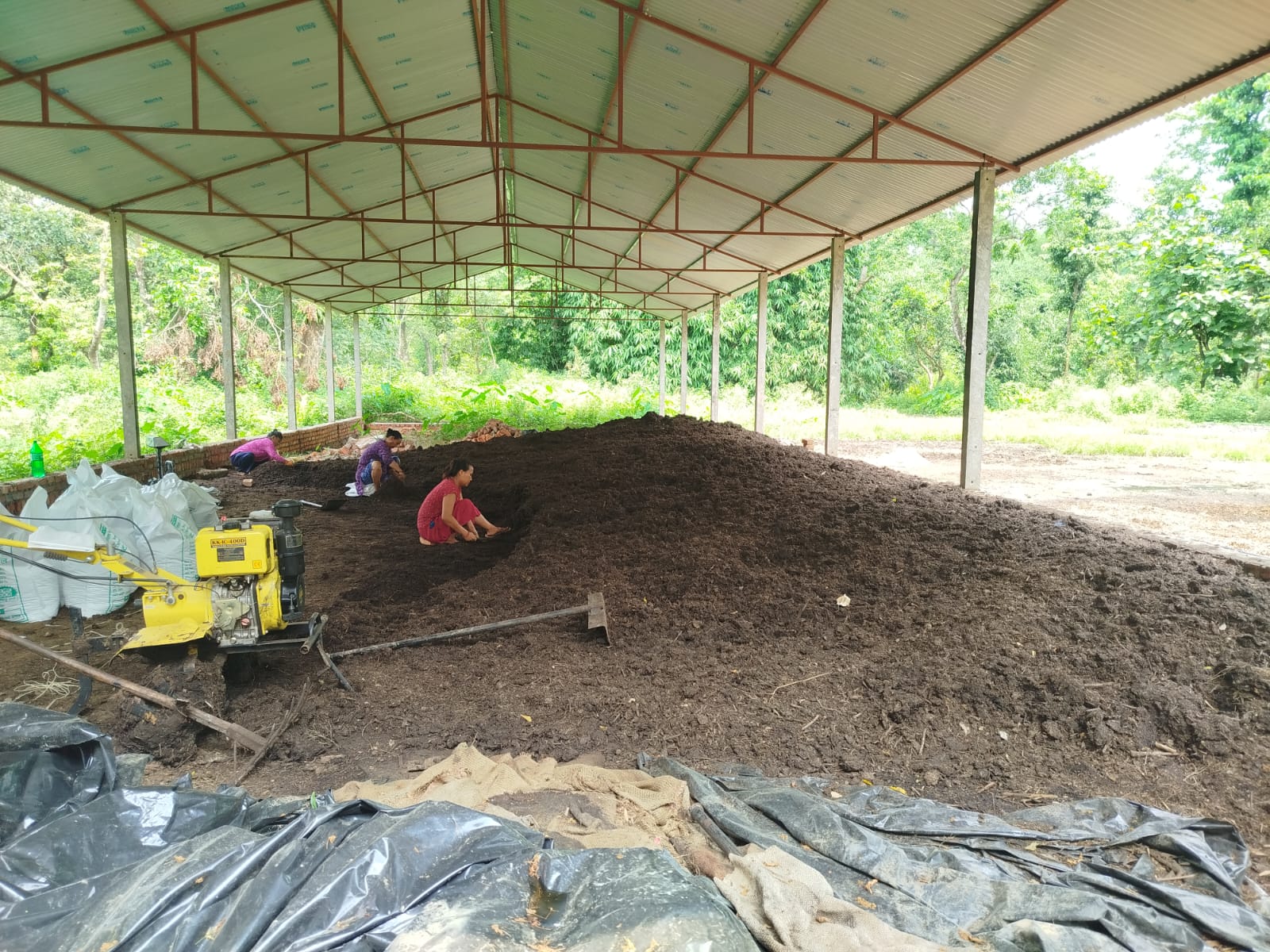
The dedicated compost fertilizer production center located inside the Thangkhola Community Forest in Kalika Municipality, Chitwan. Photo: Bidya Rai
The production process has simultaneously generated vital employment opportunities for local consumers. Chairperson Karki highlights that families with an annual income of less than Rs 25,000 are given primary preference for the jobs.
Among them is 50-year-old Bindu Maya Tamang from Bijaytol. Previously occupied entirely with household chores and seasonal agricultural labor, she now utilizes her spare time to prepare and pack compost fertilizer. Her family of five resides in a landless people’s settlement. While the family primarily sustains itself by sharecropping agricultural land owned by others, Bindu Maya’s new income has made it significantly easier to manage household expenses.
“To find manual labor, we used to have to travel far and wide,” she reflects. “Now, I have secured a job just a ten-minute walk from my house.”
Alongside Bindu Maya, her neighbor, 58-year-old Kanchhi Maya Blon, expresses similar gratitude for securing employment so close to home.
Manju Pokharel Kafle, treasurer of the user committee, emphasizes that converting invasive weeds into fertilizer has proven to be highly beneficial. “Previously, the practice was to cut and burn them, which carried a severe risk of triggering forest fires,” she explains. “Now that we have started producing fertilizer, consumers are getting jobs, the community forest is earning extra revenue, and it will also help alleviate the shortage of chemical fertilizers.”
Thangkhola is actively encouraging its consumers to adopt organic manure in their agricultural practices. Chairperson Karki adds, “I wish to expand this practice widely, with the long-term vision of making Nepal self-reliant in organic fertilizer.”
According to Bishnu Prasad Acharya, Forest Officer at the Division Forest Office Chitwan, the Nabajagriti Community Forest in Bharatpur has also begun producing fertilizer from invasive plants, mirroring the successful model established by Thangkhola.
Scientific data highlights the urgency of such interventions. A study led by environmental science researcher Uttam Babu Shrestha reveals that all 20 protected areas in Nepal face a high risk of invasive plant infestation. According to the research article published on December 8, 2024, in the international journal Biological Invasions, up to 20 invasive species have already penetrated 17 out of the 20 protected areas.
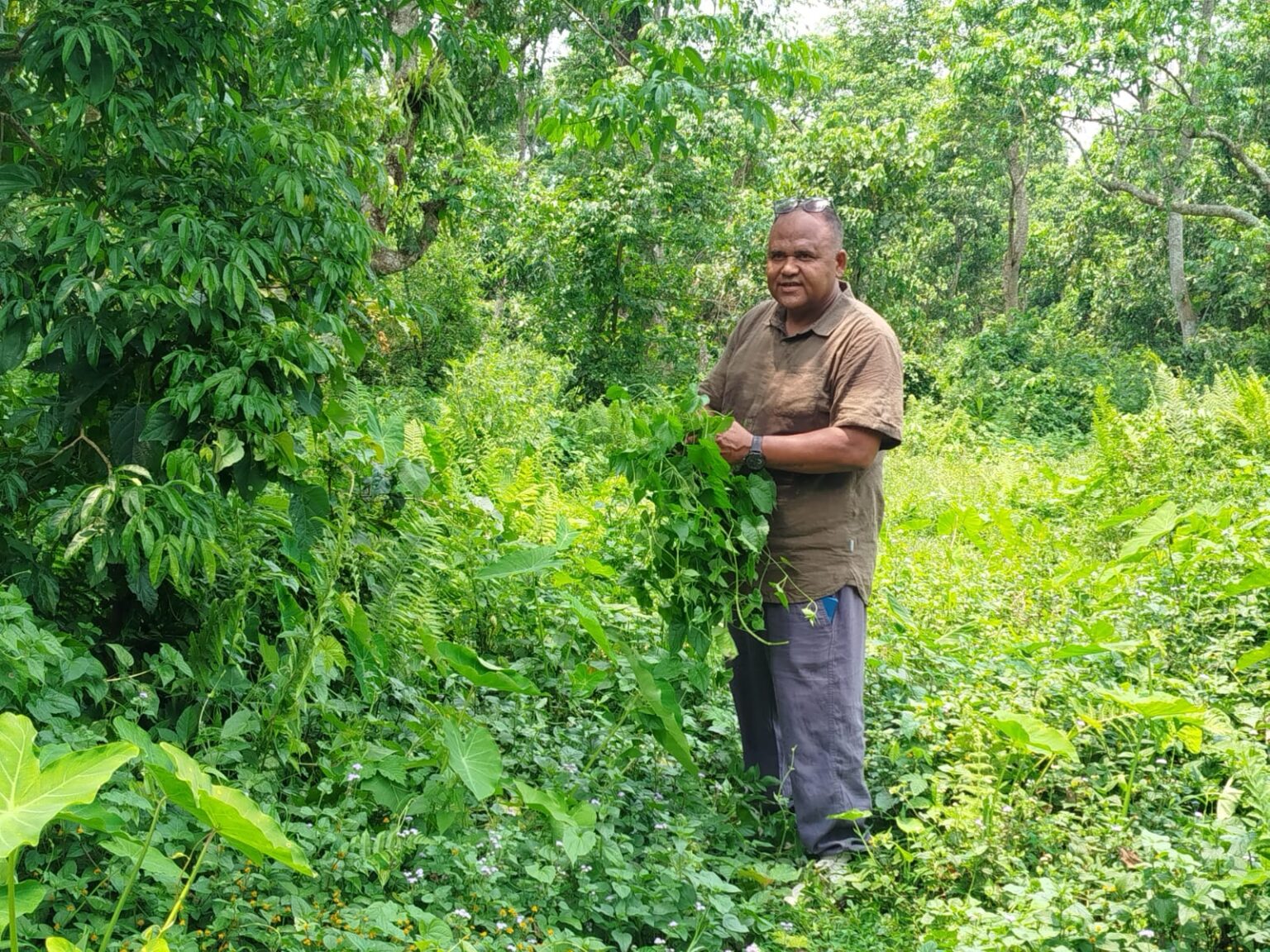
Ram Bahadur Karki, Chairperson of the Thangkhola Community Forest Users Committee. Photo: Bidhya Rai
Data from the Forest Research and Training Centre shows that 29 alien invasive plant species have been identified in Nepal. Among these, five species found in the country—Lantana camara (wild sage), Mikania micrantha (mile-a-minute), Chromolaena odorata (Siam weed), Pontederia crassipes (water hyacinth) and Sphagneticola trilobata (Bay Biscayne creeping oxeye)—have been listed by the International Union for Conservation of Nature (IUCN) among the world’s top 100 worst invasive alien species.
The introduction of new alien invasive species continues to threaten the country, as documented in the Forest Research and Training Centre’s ‘National Strategy and Implementation Plan for the Management of Invasive Alien Species, 2024-25’.
Forest Officer Acharya explains that these plants form dense, unwanted thickets that displace native trees, ignite forest fires, and severely disrupt biodiversity and local ecosystems.

Manju Pokharel Kafle, Treasurer of the Thangkhola Community Forest Users Group. Photo: Bidhya Rai
Acharya estimates that invasive weeds have already overrun 15 to 20 percent of Chitwan’s total forest area. Various studies demonstrate that the aggressive expansion of these weeds into grasslands and wetlands has pushed several wildlife species in Chitwan National Park to the brink of crisis. Very few community forests in Chitwan remain unaffected by the nuisance of invasive vegetation.
Controlling these species represents a escalating challenge, not just for Chitwan but for forest management across all of Nepal. However, the sustainable model demonstrated by Thangkhola highlights a major opportunity: if properly managed, communities can transform ecological hazards into fertilizer, local employment, and a sustainable source of revenue.