Kathmandu
Friday, June 19, 2026





By imposing rules that permit the exercise of freedom of expression only under specific flags, the state is attempting to practice autocracy.
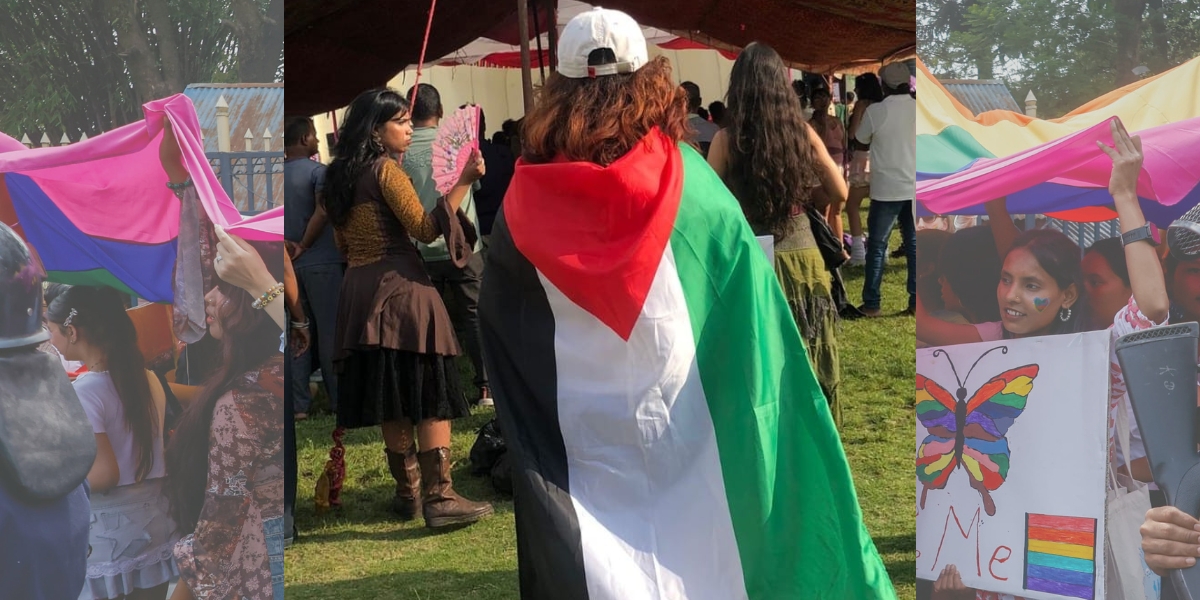
KATHMANDU: On June 13, the Nepali LGBTQIA+ community organized the eighth Nepal Pride Parade in Kathmandu. The Pride Parade, which is understood as a movement for liberation, equality, and rights, carries a long history. The beginning of Pride was not as a celebration, but as resistance. Therefore, this is not merely a celebration; it is also a medium of public solidarity against injustice, exclusion, and oppression.
In the previous seven years, the Pride Parade was held in Nepal while expressing solidarity against colonialism, occupation of geography and sovereignty, imperialism, the caste system, capitalism, and various oppressive structures. Solidarity with justice and the oppressed is the core essence of this march. However, this time, I experienced how the state is intervening in that very essence.
The designated starting point of the parade was Shanti Batika in Ratna Park. Arriving there around 1 o’clock, I was sitting peacefully. But the situation suddenly turned strange. A group of about 10 male police officers, including one Deputy Superintendent of Police, surrounded me and repeatedly asked, “Are you a Nepali citizen or not?” The reason for this was that I was wearing the flag of Palestine draped over my shoulders.
I argued that I am a Nepali citizen, that the constitution grants the right to freedom of expression, and I think Palestine as a nation. However, the police claimed that the Palestinian flag is sensitive issue. Though I was forced to hide the flag at that moment due to police pressure, I wore it again after some time. No legal basis was shown for the claim that the flag is banned. As a citizen, my belief that I have the right to disagree with the state, express solidarity with oppressed people, and express my views through symbols is precisely what inspired me to do so.
However, the same scene repeated itself in the evening. A few friends were taking photos with the Palestinian flag. Just then, the Nepal Police arrived and intervened. They said, “We told you not to wear it this morning, yet you are letting others take photos too! This is not allowed to be worn.”
We asked for the reason. They again claimed that the Palestinian flag is ‘banned’ in Nepal. We asked where that decision is written, which body made it, or where the notice was published. One police officer replied, “This is the law itself; who walks around carrying it in their pocket!”
We were told to go to the District Administration Office if we wanted to understand more about this ‘ban’. After my friend Sara mentioned initiating formal legal proceedings if the flag was not allowed to be used, the police backed off. We were not arrested, but our activities were monitored for as long as we remained there.
After returning home and discussing it, we concluded that the incident was not a coincidence. The primary basis for this was the experience shared by another friend, Pratham, who was told to cover the Palestinian flag during the Gen Z protest on September 8, 2025. He shared that Sudan Gurung, who is currently the Home Minister, made him wear a jacket to hide the flag.
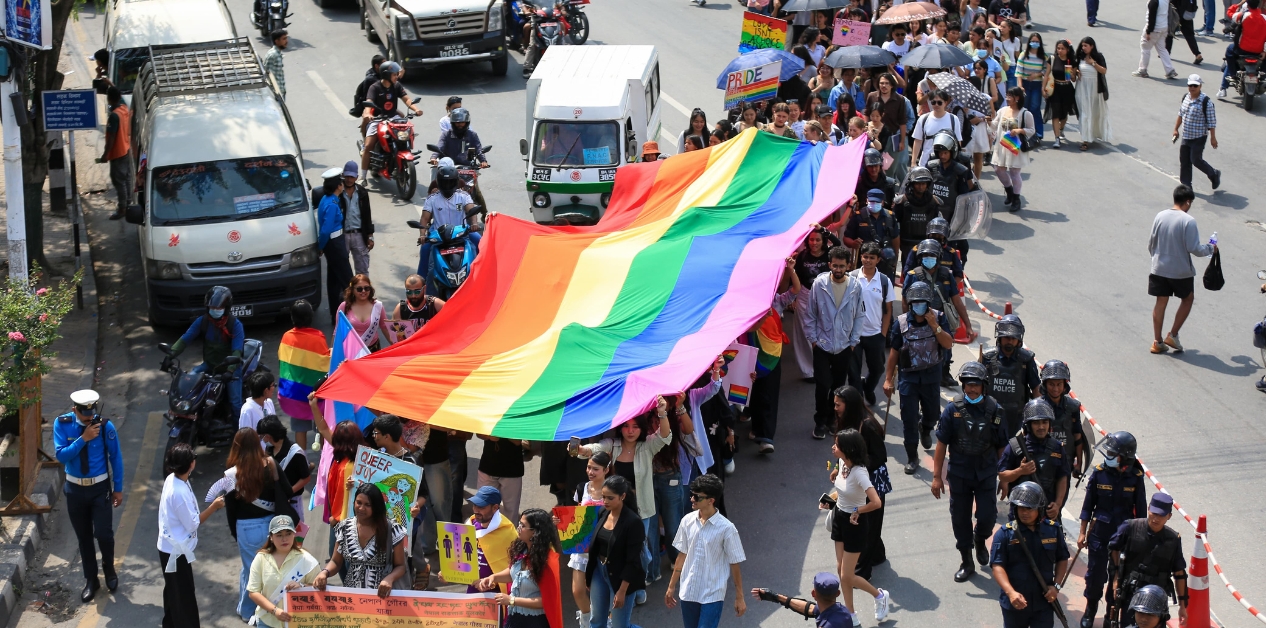
Members of the sexual and gender minority community march through Kathmandu during the Pride Parade on Saturday, June 12. Photo courtesy: Nepal Photo Library
From this, it is clear that the state is actively policing which issues citizens are allowed to express solidarity with on the streets of Kathmandu. This raises serious questions about the current government, the home administration, and our policies.
For instance—has our non-aligned foreign policy come to an end? Due to geographical, economic, and other types of sensitivities, Nepal has been adopting a non-aligned foreign policy. While maintaining neutrality by the state on issues like war, occupation, and colonialism might be one aspect, the state does not have the right to stop the citizens of the country from symbolically standing on the side of the oppressed people of the world who are becoming victims of genocide. Have we secretly abandoned our non-aligned policy and started fueling Israel and American imperialism? The question is bound to arise.
Through what legal process did the decision that ‘the Palestinian flag is banned’ come about? The Nepal Police are not the ‘pocket people’ of the Home Minister; they are soldiers who implement the laws made by the legislature, meaning the Parliament. By utilizing them under the backing of the American empire, by what authority is an unwritten rule being imposed on the public forbidding them from carrying the flag of an oppressed nation facing genocide?
Before being a leader, we saw Home Minister Gurung as a ‘ringleader’ of the movement. The critical citizen class still comments on him as ‘the water-distributing boy who hijacked the movement’. We remember how he struggled during the press conference immediately following the rebellion last September, not even knowing basic things like ‘what the constitution is’. But the question arises—how did Gurung, who does not know basic subjects like the constitution, know about the Palestinian flag as early as September 8? With what authority and awareness did he order the protestors to hide that flag?
This raises the question—has Article 17 (Right to Freedom) of the Constitution of Nepal become completely inactive? If the state wishes to criminalize solidarity toward Palestine and wants to support the genocidal, apartheid occupier side, let it register a bill in Parliament, pass a law, and prove the allegation of being an ‘imperialist agent’ that has been leveled against Gurung and this government. The government must have that much ‘courage’. After that, let it face the rage that comes from the public. The act of imposing such an invisible and unwritten dictatorial rule on ordinary citizens by utilizing lower-level police officers deployed on the streets must be stopped.
Our country and democracy seem to be heading downhill in new ways every day. At this time, we must speak out about how autocratic and baseless rules are being created on the streets. And every conscious citizen must resist it.
(Sapkota is a queer feminist writer.)