Kathmandu
Tuesday, July 21, 2026





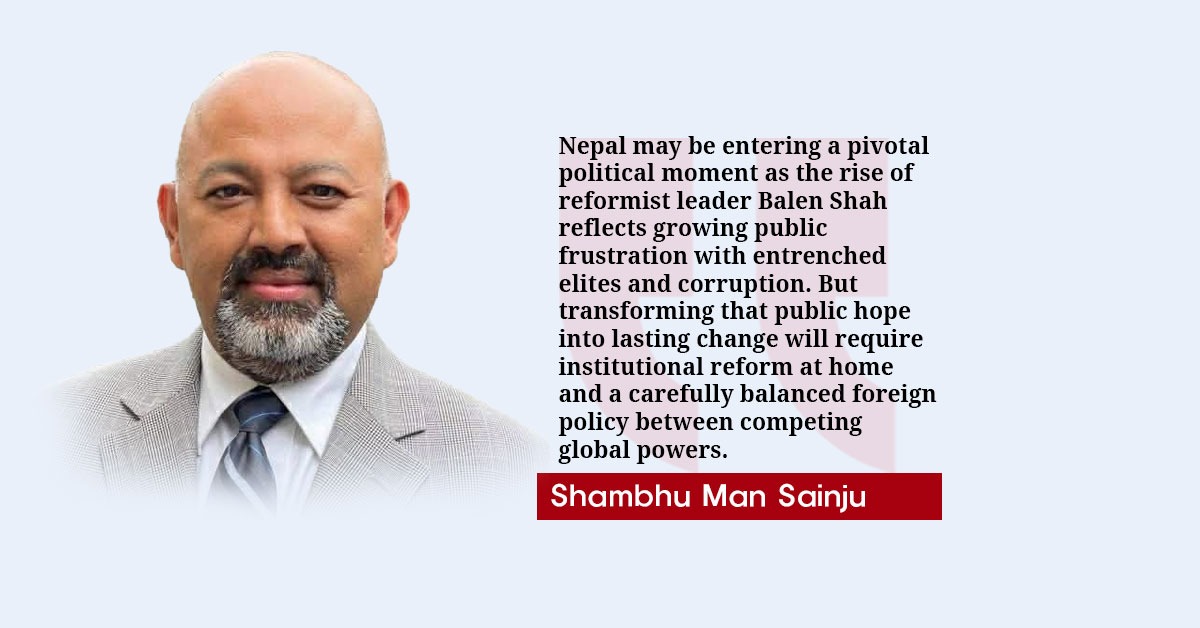
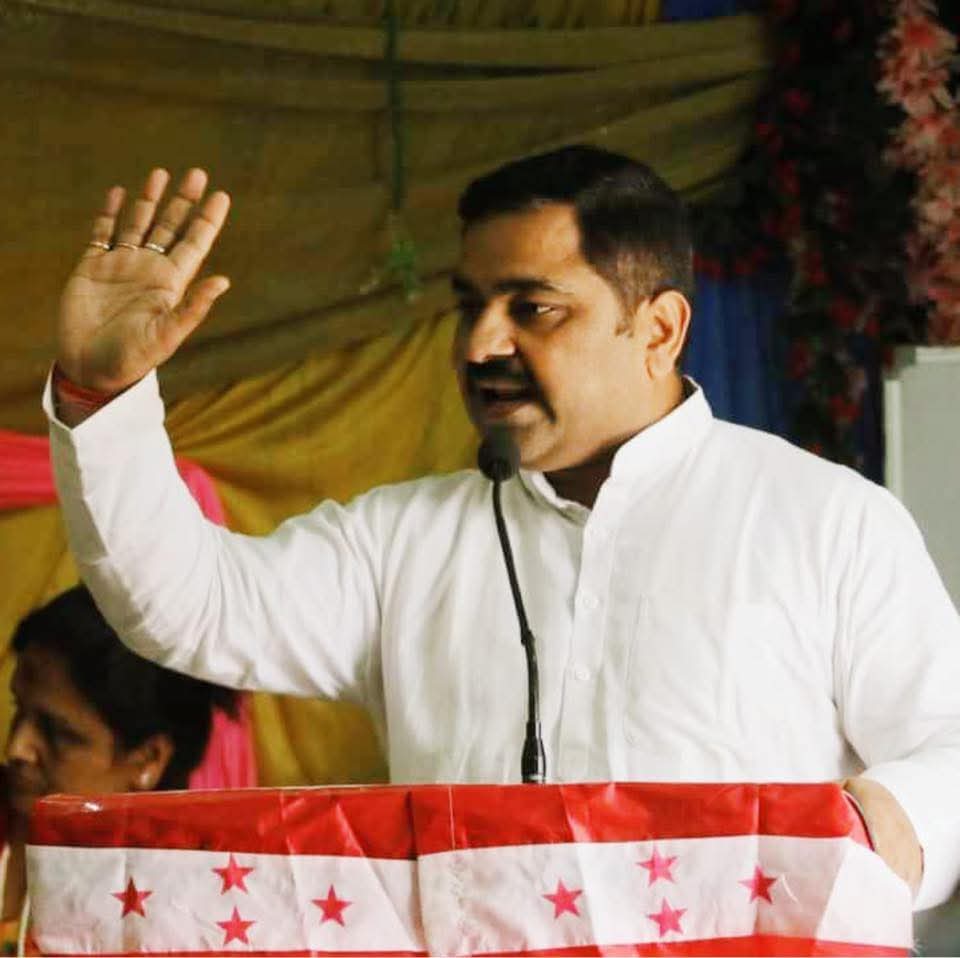
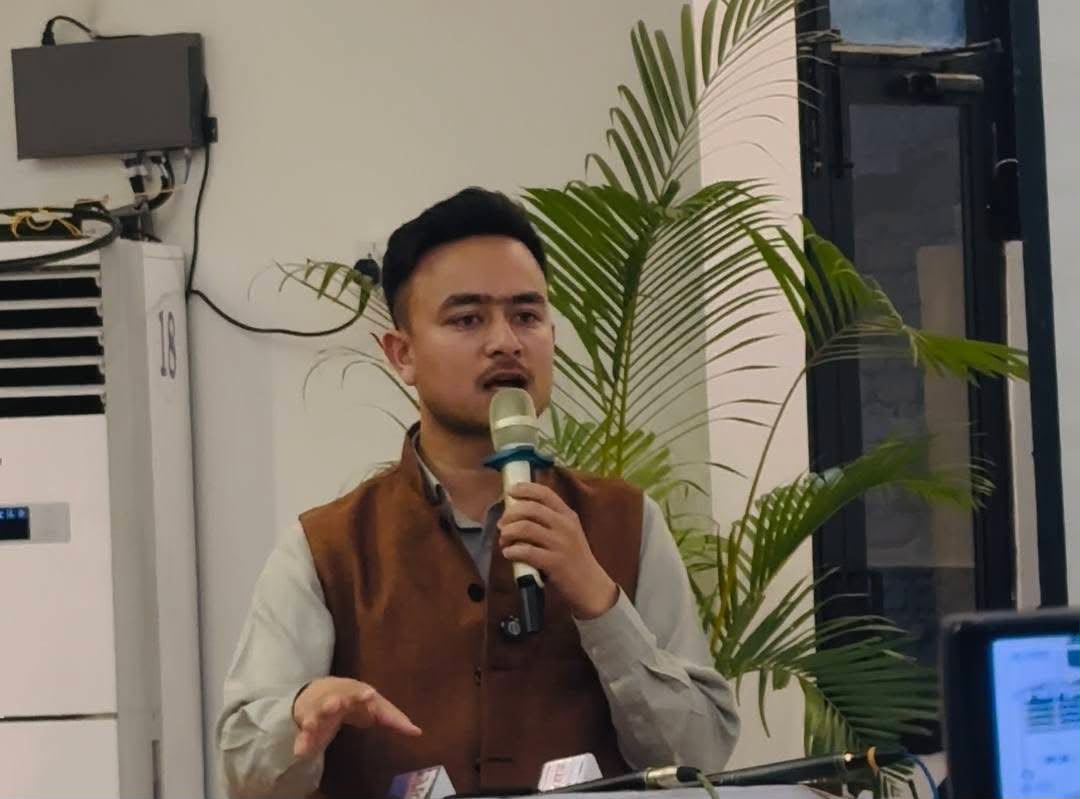
Nepal may be standing at the threshold of a profound political transformation. The electoral victory of reformist leader Balendra Shah – popularly known as Balen – signals not only the rise of a new political figure but also the growing demand among Nepal’s citizens for transparency, accountability, and a decisive break from the country’s entrenched political culture. For many Nepalis, Shah represents a generational shift: a leader who emerged not from traditional party hierarchies but from civic activism, public service, and a reputation for confronting corruption.
The significance of Shah’s rise extends beyond personality politics. It reflects a deeper frustration among Nepal’s voters with decades of unstable coalition governments, allegations of corruption, and anemic economic progress. Young voters in particular have increasingly rejected the dominance of traditional parties led by figures such as KP Sharma Oli and other long-time political elites. Shah’s popularity as mayor of Kathmandu and his blunt criticism of political corruption resonated with a generation eager for change.
Yet electoral victory is only the beginning. If Shah assumes the office of prime minister, he will inherit a nation facing formidable challenges – both domestically and internationally. Success will require not only bold reforms at home but also a carefully balanced foreign policy in a region increasingly shaped by geopolitical competition.
When Revolutions Resemble Animal Farm
Nepal’s political history over the past three decades mirrors the arc of George Orwell’s enduring allegory, Animal Farm. The novel tells the story of animals who overthrow their human farmer in the hope of building a society based on equality and justice. Yet as the story unfolds, the pigs who lead the revolution gradually consolidate power, manipulate language, and transform the new system into one that resembles the old tyranny they replaced. The famous line – “All animals are equal, but some animals are more equal than others” – captures the tragic irony of revolutions that promise equality but ultimately reproduce inequality.
Nepal’s political journey after the end of absolute monarchy in 1990 and subsequently its abolition in 2008 has reverberated this narrative for many citizens. The overthrow of the monarchy and the establishment of a federal democratic republic were moments of immense hope. Political leaders promised a new era defined by inclusion, transparency, and democratic governance. Yet over time, many citizens came to feel that the political class – regardless of party affiliation – had become entrenched in power.
Like the pigs in Orwell’s magnum opus who gradually adopted the habits of the humans they once opposed, Nepal’s political parties often appeared to mirror the Machiavellian behaviors they had once criticized. Political alliances shifted frequently, coalition governments collapsed, and allegations of corruption continued to dominate public discourse. Leaders who once spoke passionately about reform became part of a system that many citizens perceived as resistant to change.
This sense of disillusionment has been particularly strong among Nepal’s younger generation. Many young Nepalis grew up hearing promises of transformation following the civil war and the transition to democracy. Yet persistent unemployment, labor migration, and political instability have left many questioning whether the ideals of the democratic movement were fully realized.
In this context, the rise of Balen Shah represents something different. His political appeal stems partly from the perception that he is not a product of the old political structure. Like the animals at the beginning of Orwell’s story, many voters are once again expressing hope that a new leader might restore the original ideals of accountability and fairness. The challenge for Shah, however, will be to ensure that this new movement does not repeat the same cycle described in Animal Farm—where revolutionary rhetoric eventually gives way to the consolidation of power.
What may distinguish Shah from his predecessors is precisely the source of his authority: he built his mandate outside party structures, through demonstrated results in Kathmandu’s streets and neighborhoods rather than through coalition bargaining. That outsider credibility is both his greatest asset and his most fragile one.
Lessons from Singapore’s Transformation
Another instructive example for Nepal’s future leadership can be found in the governance model established by Lee Kuan Yew, the founding prime minister of Singapore. When Singapore became independent in 1965, it was a small, resource-poor nation facing serious political instability, ethnic tensions, and economic uncertainty. Under Lee’s leadership, however, Singapore transformed into one of the world’s most efficient governments and prosperous economies.
While Nepal and Singapore differ greatly in geography, culture, and political structure, there are several principles from Lee Kuan Yew’s leadership that Shah could adapt to Nepal’s context.
First, Lee Kuan Yew built a strong and professional civil service based on meritocracy. Government officials were selected for competence rather than political loyalty, and they were paid competitive salaries to discourage corruption. Nepal could benefit from similar reforms. A transparent and merit-based bureaucracy would allow Shah’s administration to implement policies more effectively and restore public trust in state institutions.
Second, Lee pursued a relentless anti-corruption campaign. Singapore’s Corrupt Practices Investigation Bureau became one of the most effective anti-corruption agencies in the world, empowered to investigate even high-ranking officials. Nepal’s citizens have long demanded a similar level of accountability. If Shah establishes independent institutions capable of investigating corruption without political interference, he could signal a decisive break from past governance failures.
Third, Lee Kuan Yew prioritized long-term national planning. Rather than focusing solely on short-term political gains, Singapore invested heavily in infrastructure, education, housing, and industrial policy. Nepal, with its vast hydropower potential and tourism resources, could benefit from a similar long-term development vision. Strategic investments in energy production, transportation networks, and digital infrastructure could stimulate economic growth and reduce dependence on remittances.
However, Nepal must also remember that Singapore’s model evolved within a very different political environment. Nepal’s democratic system and vibrant civil society require that reforms be implemented transparently and with public participation. The goal should not be to replicate Singapore exactly but to adapt its emphasis on integrity, competence, and long-term planning. Nor should Nepal overlook the tensions embedded in Lee’s legacy: his government restricted press freedom, curtailed political opposition, and prioritized stability over pluralism. Nepal’s hard-won democratic freedoms are not incidental to its development – they are part of the foundation that any lasting reform must be built upon.
A Delicate Geopolitical Balance
Nepal occupies one of the most sensitive geopolitical positions in the world. Situated between the Asian giants India and China, the Himalayan nation has long practiced a cautious diplomacy designed to maintain friendly relations with both neighbors. Any misstep in this balancing act can carry serious economic and political consequences.
Relations with India remain vital to Nepal’s economy. The open border between the two countries allows millions of Nepali citizens to work, travel, and trade freely. India also serves as Nepal’s primary transit route for international commerce. However, past tensions – including border disputes and trade disruptions – have demonstrated how fragile this relationship can be.
Shah’s government must therefore pursue a pragmatic and cooperative relationship with New Delhi. Expanding energy trade, improving cross-border infrastructure, and deepening economic integration could strengthen ties while promoting Nepal’s development. At the same time, Nepal must maintain its political independence and ensure that domestic policy decisions remain sovereign.
China presents a different set of opportunities and risks. Beijing has increasingly invested in infrastructure projects across Nepal, many connected to the ambitious Belt and Road Initiative. These investments could significantly improve Nepal’s connectivity, energy capacity, and trade routes. Yet heavy reliance on Chinese financing could create long-term economic vulnerabilities.
For Shah, the goal should not be choosing between India and China but engaging both partners while safeguarding Nepal’s national interests. A strategy of balanced diplomacy – welcoming investment from both sides while maintaining transparency and financial sustainability – would allow Nepal to benefit from regional cooperation without becoming entangled in geopolitical rivalries.
Navigating Western Partnerships
Nepal must also manage its relationships with Western democracies, particularly the United States and the European Union. These partners have supported Nepal’s democratic transition, disaster recovery, and economic development for decades. Programs related to infrastructure, governance reform, and education have played an important role in strengthening Nepal’s institutions.
However, Western engagement in South Asia increasingly intersects with broader strategic competition involving China. Shah’s government must therefore engage with Washington and Brussels in a way that emphasizes development and democratic cooperation while avoiding the perception that Nepal is aligning itself with any geopolitical bloc. The contentious 2022 debate over the US Millennium Challenge Corporation compact – which passed parliament only after fierce political controversy amid accusations of compromising sovereignty – illustrates how sensitive Western partnerships have become. Shah would be well served by framing future cooperation in terms of concrete development outcomes rather than strategic alignment, making the benefits to ordinary Nepalis the centerpiece of any partnership narrative.
The Fight Against Corruption
While foreign policy will be important, Shah’s greatest test will likely come at home. His electoral success was driven largely by public anger over corruption and mismanagement. Delivering meaningful reform will therefore be essential to maintaining public trust.
One critical step would be strengthening independent anti-corruption institutions. Investigative agencies must have the authority and resources to pursue corruption cases regardless of political affiliation. Transparency reforms – particularly in government procurement and infrastructure contracts – could reduce opportunities for misuse of public funds.
However, accountability must be pursued carefully. Efforts to prosecute past corruption should follow clear legal procedures rather than political retaliation. Establishing special anti-corruption courts and strengthening financial oversight institutions could help ensure that justice is both fair and credible.
Equally important is reforming Nepal’s civil service. Bureaucratic inefficiency and political interference have often hindered policy implementation. A merit-based system for recruitment and promotion, combined with professional training and digital governance tools, could significantly improve the effectiveness of government institutions.
Mobilizing the Nepali Diaspora
Nepal’s global diaspora represents one of its most under deployed national assets. Millions of Nepalis live and work abroad – in the United States, United Kingdom, Australia, Canada, and across the Middle East and Asia. Their annual remittances form one of the largest pillars of the domestic economy. Yet financial transfers are only the most visible dimension of what this community could contribute to Nepal’s renewal.
Across these communities, Nepali professionals have built careers in technology, medicine, finance, engineering, public administration, and entrepreneurship. Many maintain deep emotional and cultural ties to their homeland. A reform government under Shah could treat this network not as a passive source of remittances but as an active partner in national development – one that brings capital, expertise, and global connections that Nepal’s institutions currently lack.
Concrete mechanisms could make this vision operational. A formal advisory body – a Global Nepali Council composed of accomplished diaspora professionals – could provide policy guidance, mentorship, and investment brokerage to the government. “Brain circulation” programs, which have proven effective in India, Taiwan, and South Korea, could enable skilled Nepalis abroad to spend defined periods working within Nepal’s public institutions, universities, and emerging industries, transferring knowledge without requiring permanent relocation.
Attracting diaspora investment also requires structural reform at home. Transparent regulations, streamlined business registration, and protection against bureaucratic obstruction are preconditions for diaspora capital to flow into hydropower, tourism, technology, and infrastructure. India’s Non-Resident Indian programs, Israel’s sovereign innovation bonds, and Ireland’s diaspora engagement strategy all demonstrate that purposeful policy frameworks can convert emotional ties into durable economic partnerships.
Beyond economics, diaspora communities serve as informal ambassadors whose daily interactions shape global perceptions of Nepal. Shah could harness this soft power deliberately – through cultural diplomacy, academic exchange, and structured policy dialogue with diaspora organizations – giving Nepal a more coherent and credible international voice than it has traditionally projected.
The underlying ambition is to shift the relationship between the Nepali state and its citizens abroad from extraction – collecting remittances – to genuine partnership. If Shah can build institutional trust with the diaspora and offer credible pathways for contribution, he will transform one of Nepal’s defining economic vulnerabilities into a source of durable national strength.
A Defining Moment for Nepal
Nepal’s political history has been marked by dramatic transitions – from monarchy to republic, from civil conflict to democratic governance. The rise of Balen Shah represents yet another watershed moment. His popularity reflects a powerful desire among Nepalis for honest leadership and effective government.
But the expectations surrounding his leadership are immense. Balancing relations with India and China, maintaining constructive ties with the United States and Europe, combating corruption, and revitalizing the economy will require both political skill and institutional courage – the willingness to act against the very networks that helped bring him to power.
For now, Nepal stands at a rare moment of possibility. Whether that possibility becomes lasting change will depend not only on the leadership of Balen Shah but also on the resilience of Nepal’s democratic institutions and the determination of its citizens to demand accountability.
The animals on Orwell’s farm believed, at first, that this time would be different. Nepal’s citizens believe the same thing today. The difference – and it is a crucial one – is that they have seen the cycle before, and they are watching closely.
(The author is a senior executive of global project finance. He also serves as an Adjunct Professor of Computer Science at Georgetown University, Washington, DC. )