Kathmandu
Saturday, July 25, 2026





Ministry of Home Affairs turning lethargic after remaining ministerless for a month

KATHMANDU: The Ministry of Home Affairs has been without leadership since Minister Sudan Gurung resigned on April 22. For the past month, Prime Minister Balendra Shah has taken charge of the ministry himself. Because this sensitive ministry has been leaderless for so long, many crucial tasks tied to state governance have started to suffer.
The Ministry of Home Affairs is not just an administrative body; it is a mechanism directly connected to daily public life, handling peace and security, disaster management, immigration, citizenship, prisons, and police administration. The lack of political leadership in such a ministry has not only delayed decision-making but has also left bureaucrats in a state of confusion and anticipation.
In the absence of a minister, employees have been forced to look to the Prime Minister during emergencies. According to ministry officials, staff must daily carry decision files requiring a minister’s signature over to the Prime Minister’s Office. As a result, the Home Ministry’s personnel are being used simply to shuttle files back and forth to the PM’s office.
Although the physical distance is not far, the Prime Minister does not visit the Home Ministry to work. Employees have to wait at the Prime Minister’s door for crucial Home Ministry matters. Even after gaining entry, work gets delayed due to the Prime Minister’s busy schedule.
Prime Minister Shah has neither appointed a new minister nor handed over the responsibility of the Home Ministry to another minister. Consequently, the Secretary, who would normally brief the minister daily, must now brief the Prime Minister.
“The Secretary can only meet based on the Prime Minister’s time and availability,” a ministry official says. “The Prime Minister does not prefer frequent meetings, so daily briefings, plans, and operations are naturally getting disrupted.”

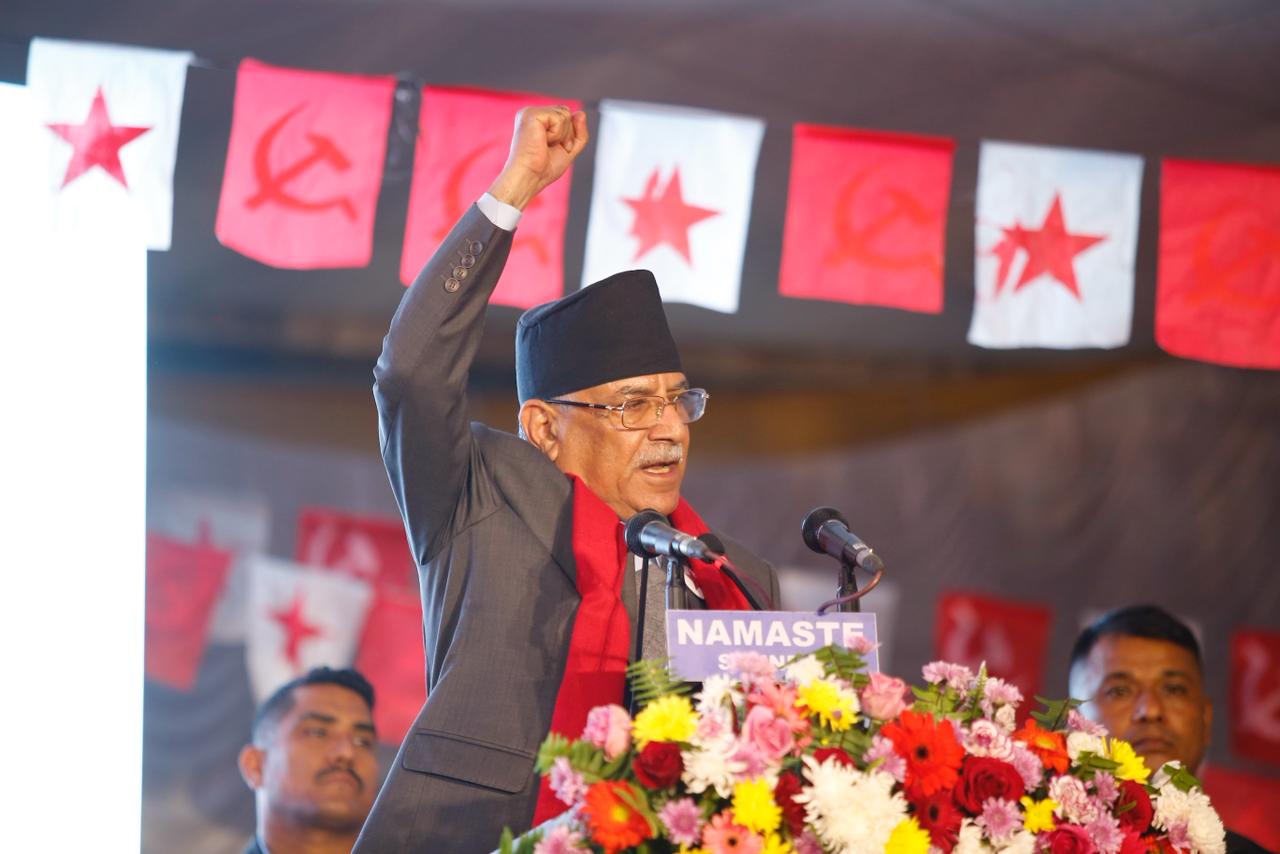
Photo: Prime Minister’s secretariat
If an emergency arises, the Home Ministry must take immediate political decisions. With the ministry ministerless, even during such sensitive moments, officials must rely entirely on the Prime Minister. The official adds that when immediate decisions are needed regarding security challenges, violent incidents, disasters, or administrative complexities, employees have to wait for the Prime Minister’s contact and approval.
In normal times, the coordination, direction, and political responsibilities handled by the Home Minister are now directly centralized at the Prime Minister’s Office. However, due to the Prime Minister’s busy schedule and multi-dimensional responsibilities, the Home Ministry has been unable to perform at its expected pace.
This was evident on April 24. When the Ministry of Urban Development requested security assistance to clear landless people settlements in Kathmandu and Bhaktapur, there was no Home Minister. In the minister’s absence, the Prime Minister had to summon security chiefs to issue directives. The Prime Minister himself had to receive moment-by-moment security updates.
The monsoon season is a period when the National Disaster Risk Reduction and Management Authority (NDRRMA) remains highly active. Legally, the Home Minister chairs the authority. Due to the lack of a minister, the Prime Minister currently has to chair the authority’s meetings. Because of the Prime Minister’s limited time, these meetings have turned into mere formalities. Without a departmental minister to lead monsoon disaster response and preparedness, the authority has been unable to perform effectively.
Similarly, the absence of a Home Minister has disrupted Central Security Committee meetings. The committee has not discussed the country’s peace and security situation for a month. However, Home Ministry Spokesperson Aananda Kafle claims otherwise:
“The ministry runs on a system; regular tasks of the ministry are ongoing. Public service delivery is being carried out smoothly.”
When disasters hit districts, Chief District Officers (CDOs) are deployed immediately for relief, rescue, and market monitoring. Currently, two districts are without Chief District Officers. Dadeldhura has been without a CDO for a month, while Dhankuta has lacked one for a week. No decision has been made regarding the deployment of CDOs to these districts.
“The file for transferring CDOs must be approved by the Home Minister, but the file has not been able to reach the Prime Minister, who is handling the ministry’s responsibilities,” say ministry officials.
The role of a CDO in a district is not limited to administration; officiating heads do not have the authority to adjudicate cases. Although an officiating head can set bail amounts, they are forced to seek endorsement later when the CDO resumes office.
Furthermore, the Department of National ID and Civil Registration has been leaderless for a week. The minister has the authority to appoint departmental heads. In the absence of a minister, the officiating minister must sign transfer decisions. Therefore, Prime Minister Shah himself must make the decision to appoint the head of the Civil Registration Department. However, that task has not moved forward yet.
Departmental ministers usually take files to the Prime Minister to endorse crucial ministry decisions. According to rules, these must be passed by the Council of Ministers only after the Prime Minister’s consultation and advice. Prime Minister Shah has been doing these tasks at his own convenience by squeezing time out of his busy schedule.
“The established norm is that a ministry with such a heavy workload as Home needs a full-time minister; a minister is necessary for operational ease,” says former Home Secretary Bhoj Raj Pokharel. “If there is understanding and trust between the bureaucracy and the elected leadership, bureaucrats can handle many tasks themselves. However, bureaucrats rarely make decisions without consulting the political leadership.”
With the Prime Minister handling the responsibility himself, delays are occurring in the daily operation of the home administration, disaster preparedness, security coordination, personnel management, and district-level decision-making. This has made the direct presence of political leadership at the ministry even more indispensable. Even though claims are being made that the ministry is running formally, home officials state that administrative efficiency has weakened due to the increasing centralization of the decision-making process and the obligation to wait for the Prime Minister’s time.