Kathmandu
Saturday, July 25, 2026






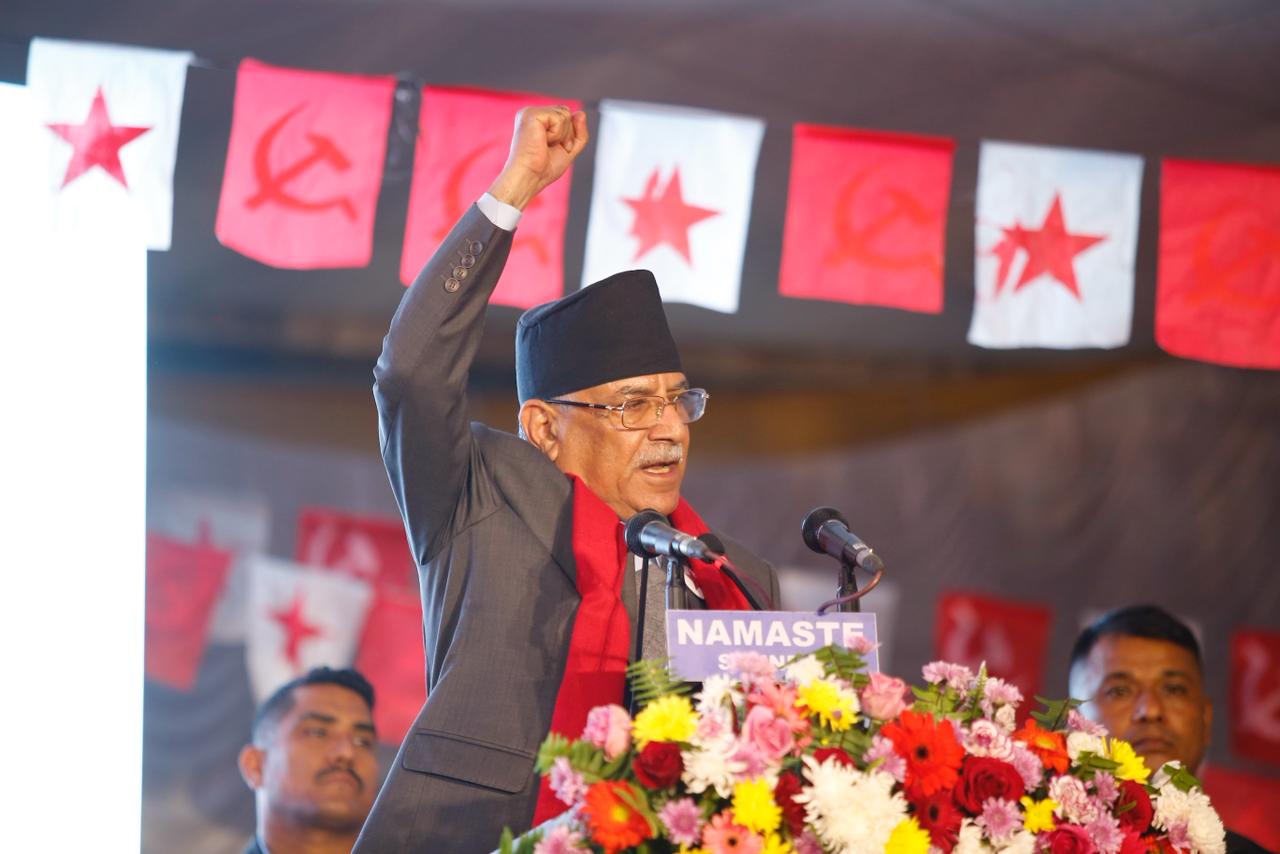
KATHMANDU: The Communist Party of Nepal (Unified Marxist–Leninist), abbreviated CPN (UML) Chairperson K.P. Sharma Oli dominated Nepali politics for decades, building a nationalist image and a cult of personality. He twice commanded two-thirds of parliament through a Maoist alliance, but internal splits ended his rule. Rising from underground communist politics, Oli survived civil war, monarchy abolition, and Nepal’s democratic transition. His fall came amid Gen Z protests in September 2025, forcing him out.
Ramesh Lekhak played a key mediating role in the CPN (UML)-Congress coalition. Politically weakened after the Gen Z protests and with fragile party positions following the March 5 elections, the former leaders were arrested by the new government.
Below is the timeline of their alliance, rise to power, fall, arrest, and Supreme Court verdict to bail.
01 July 2024: The Nepali Congress (NC) and CPN (UML), Nepal’s two first and second largest parliamentary parties, unveiled plans to form a national unity government aimed at amending the 2015 constitution.
Although the agreement stipulated that CPN (UML) chair KP Sharma Oli would serve as prime minister for the first 18 months to drive constitutional reforms, followed by NC leader Sher Bahadur Deuba assuming office to oversee the 2027 general elections, this arrangement did not materialize.
15 July 2024: CPN (UML) chairman KP Sharma Oli was sworn in as Nepal’s 45th prime minister, heading a Nepali Congress–CPN (UML) coalition government. Ramesh Lekhak of the Nepali Congress was appointed Home Minister. Oli’s fourth tenure, under Article 76(2) of the Constitution, secured more than a two-thirds parliamentary majority with the support of smaller parties.
04 September 2025: The Government of Nepal ordered the shutdown of 26 social media platforms, including Facebook, X, Instagram, YouTube, LinkedIn, Reddit, Signal, Snapchat, Pinterest, Threads, and Clubhouse, for failing to register under new Ministry of Communication and Information Technology rules. Since November 2023, authorities had issued five public notices and repeatedly contacted major platforms.
The then-Minister Prithvi Subba Gurung said companies ignored reminders and extensions, and the final seven-day deadline issued on 28 August had expired. Users turned to VPNs and OpenDNS for social media access. The move drew widespread criticism across Nepal.
06 September 2025: The social media ban began to significantly impact Nepal’s political economy, disrupting communication and habitual online activity. Critics alleged the shutdown was triggered by a viral trend exposing the privileges of political elites’ children dubbed “Nepo Kids,” which fueled widespread public anger, especially among Gen Z users.
Activists compared it to similar online movements in the Philippines, highlighting corruption and elite excess. Protest groups circumvented the ban using VPNs and circulated flyers with QR codes to continue mobilizing and sharing content.
07 September 2025: In the days leading up to nationwide protests, young activists organized peaceful demonstrations through digital networks, notably Discord, gathering in school and college uniforms at 9 a.m. in Maitighar, with simultaneous rallies planned in other major cities. Originally focused on anti-corruption and social media bans, the platform became the hub for coordination.
08 September 2025: A leaderless youth movement erupted across Nepal, protesting social media bans and government corruption. Coordinated through digital platforms, Gen Z activists carried no party banners or ideological manifestos, uniting solely over frustration with censorship, unaccountable governance, and widespread corruption.
08 September 2025: By early evening, authorities reported 19 protesters killed and over 100 injured in demonstrations against social media bans and corruption. Prime Minister KP Sharma Oli convened an emergency cabinet meeting, and Ramesh Lekhak resigned as Home Minister. Social media platforms were reopened that evening.

A gathering of youth at New Baneshwor in the midst of the Gen Z protest. Bikram Rai/Nepal News
09 September 2025: Fresh protests erupted nationwide despite curfews. Cabinet ministers began resigning as mobs attacked and set fire to government offices and the residences of political leaders. Members of the Rastriya Swatantra Party (RSP) announced collective resignation, while offices of the Nepali Congress and CPN (UML) were also torched.
Prime Minister KP Sharma Oli formally resigned. Security forces were barred from using lethal force even as Parliament, the president’s residence, courts, and party headquarters were attacked. By night, the military took control to restore order and called on Gen Z activists to negotiate an end to the political unrest.
12 September 2025: After a week of violent protests, President Ram Chandra Poudel appointed former Chief Justice Sushila Karki as caretaker prime minister to lead an interim citizens’ government. Youth delegates, representing the Gen Z protest, insisted that Parliament be dissolved before the caretaker government’s appointment.
Sudan Gurung, a Gen Z representative, warned that failure to dissolve Parliament would bring protesters back onto the streets. After discussions with military and youth representatives, the president relented, formalizing Karki’s appointment.
12 September 2025: On the recommendation of the new caretaker government, President Ram Chandra Poudel announced early general elections for 5 March 2026 to elect the 275 members of the House of Representatives.
21 September 2025: The cabinet formed a judicial inquiry commission to investigate the killings and destruction during the Gen Z protests of 08-09 September 2025. Chaired by former high court judge Gauri Bahadur Karki, the commission included former additional inspector general of police Bigyan Raj Sharma and legal expert Bishweshwar Prasad Bhandari. Initially given a three-month mandate, the commission’s term was extended multiple times.
19 December 2025: Rastriya Swatantra Party (RSP) President Rabi Lamichhane was released on bail of Rs 37.48 million by the Rupandehi District Court in Bhairahawa. The Butwal bench of the Tulsipur High Court, led by Judges Basudev Acharya and Tej Narayan Paudel, ordered his release in the Supreme Cooperative fraud case, imposing five conditions.
Lamichhane had earlier been asked to post Rs 10 million bail on January 26, 2025. Following his release, he immediately began uniting new political forces and launched a more aggressive election campaign.
28 December 2025: Balendra “Balen” Shah formally unified with the Rastriya Swatantra Party (RSP). A seven-point agreement was signed at 4 AM by RSP Chairperson Rabi Lamichhane and Balen.
Under the agreement, Lamichhane would continue to lead the party, Balen was designated as the future prime minister, and the party’s election symbol (bell) would remain unchanged.
11-14 January 2026: Nepali Congress held its special general convention, which led to significant internal changes. The convention dissolved the previous working committee and elected a new leadership under Gagan Thapa on January 14, amid strong opposition from the faction led by Sher Bahadur Deuba.
The process was marked by disputes over its legitimacy and constitutionality.
16 January 2026: The Election Commission gave legitimacy to the special convention and declared Gagan Thapa as the new president of Nepali Congress. It weakened the strength of Deuba faction including Ramesh Lekhak.
18 January 2026: Kathmandu Metropolitan City Mayor Balendra “Balen” Shah resigned three and a half years into his five-year term to contest the March 5 parliamentary elections. His team is exploring from Jhapa-5, challenging KP Sharma Oli, as the Rastriya Swatantra Party’s (RSP) prime ministerial candidate.
The Election Commission set January 20 as the deadline for candidate registration, and by law, elected representatives must resign before contesting. Following his resignation, Balen visited the RSP office at Banasthali, Kathmandu, to formalize his candidacy.
20 January 2026: Ramesh Lekhak, a trusted ally of former NC president Sher Bahadur Deuba and key figure in the UML-Congress coalition, was denied a ticket to contest the upcoming general elections by the new Congress leadership emerging from the special convention.
Several other heavyweight leaders aligned with Deuba also did not receive tickets, deepening factional rifts within the party.
24 February 2026: CPN (UML) Chairperson KP Sharma Oli announced the mobilization of the party’s National Volunteer Force during a program in Jhapa.
He directed party committees to form volunteer units of at least 30 members per polling booth to maintain peace and order during the March 5 elections and to counter what he described as anarchic activities.
5 March 2026: The House of Representatives (HoR) delivered one of Nepal’s most stunning electoral shocks, as the Rastriya Swatantra Party (RSP) swept to a landslide victory with 182 seats, leaving traditional powerhouses the Nepali Congress (NC) and the Communist Party of Nepal (Unified Marxist–Leninist), abbreviated CPN (UML), reeling from an unprecedented rejection.
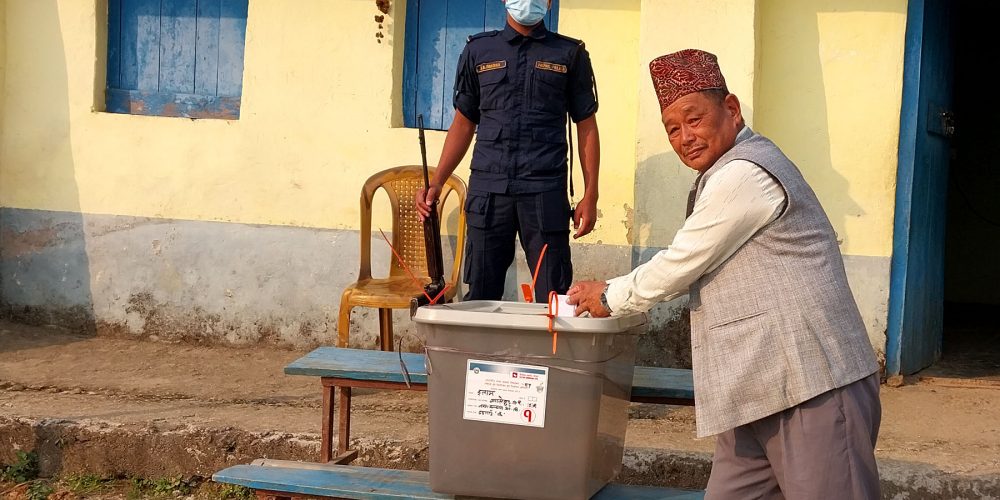
File photo
The established parties fared dismally: NC secured 38 seats, CPN (UML) 25, Nepali Communist Party 17, Shram Sanskriti Party 7, and Rastriya Prajatantra Party 5. In the proportional representation vote, the RSP made a clean sweep with 5,161,289 votes (47.8%), while the NC and CPN (UML) lagged far behind with 1,756,474 (16.27%) and 1,453,140 (13.46%) votes, respectively, a sharp decline from their previous HoR tallies.
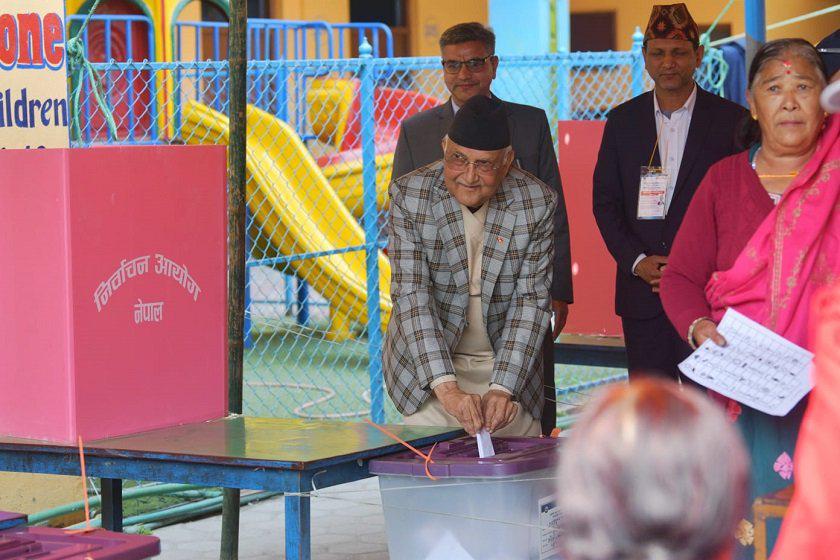
On March 5, CPN-UML Chairman KP Sharma Oli casts his vote at Mahendra Shanti School polling center in Balkot, Bhaktapur, during the House of Representatives election.
The election employed a mixed system: 165 members through first-past-the-post (FPTP) and 110 members via proportional representation (PR).
Across the country, 3,487 candidates competed, including over 1,200 independents, with men making up 2,589 of the candidates and women 391, roughly ten percent of the total, highlighting both the scale of participation and the gender disparity in Nepali politics.
8 March 2026: After missing several deadlines, former Justice Gauri Bahadur Karki submitted the long-awaited 907-page report of the commission investigating the September 8–9, 2025 Gen Z protests to Prime Minister Sushila Karki.
The commission, comprising Karki as chair, former Nepal Police Additional Inspector General Bigyan Raj Sharma, and legal expert Bishweshwar Prasad Bhandari, interrogated around 200 individuals and, following expert consultations, recommended actions against those found guilty.
The report called for criminal indictments under Sections 181 and 182 of the National Penal Code against former Prime Minister KP Sharma Oli, former Home Minister Ramesh Lekhak, and then Inspector General of Police Chandra Kuber Khapung for failing to prevent the killings of Gen Z protesters, noting that police bullets continued taking lives for nearly four hours in what it described as complete negligence.
It highlighted deep issues in the relationship between security agencies, administrative machinery, and political influence, pointing to indiscipline, unclear decision-making, and the shadow of politics within state institutions.
Actions were also recommended against then Home Secretary Gokarna Mani Duwadi, APF Inspector General Raju Aryal, NID Chief Hutraj Thapa, Chief District Officer Chhabilal Rijal under Section 182, and against several police and APF officers-including Siddhi Bikram Shah, Om Bahadur Rana, Bishwo Adhikari, Deep Shumsher JB Rana, Rishiram Kandel, Narayan Datta Paudel, Suresh Kumar Shrestha, and Jeevan KC-under relevant police and armed forces regulations.
Despite repeated calls from Gen Z leaders and rights activists to make the report public, the government has yet to release it, while the law provides for three to ten years imprisonment and fines of Rs 30,000 for violations under Sections 181 and 182.
27 March 2026: Following the Rastriya Swatantra Party’s historic landslide in the House of Representatives elections, parliamentary leader Balen Shah was appointed prime minister, formally marking the party’s ascendancy over Nepal’s traditional political establishment.
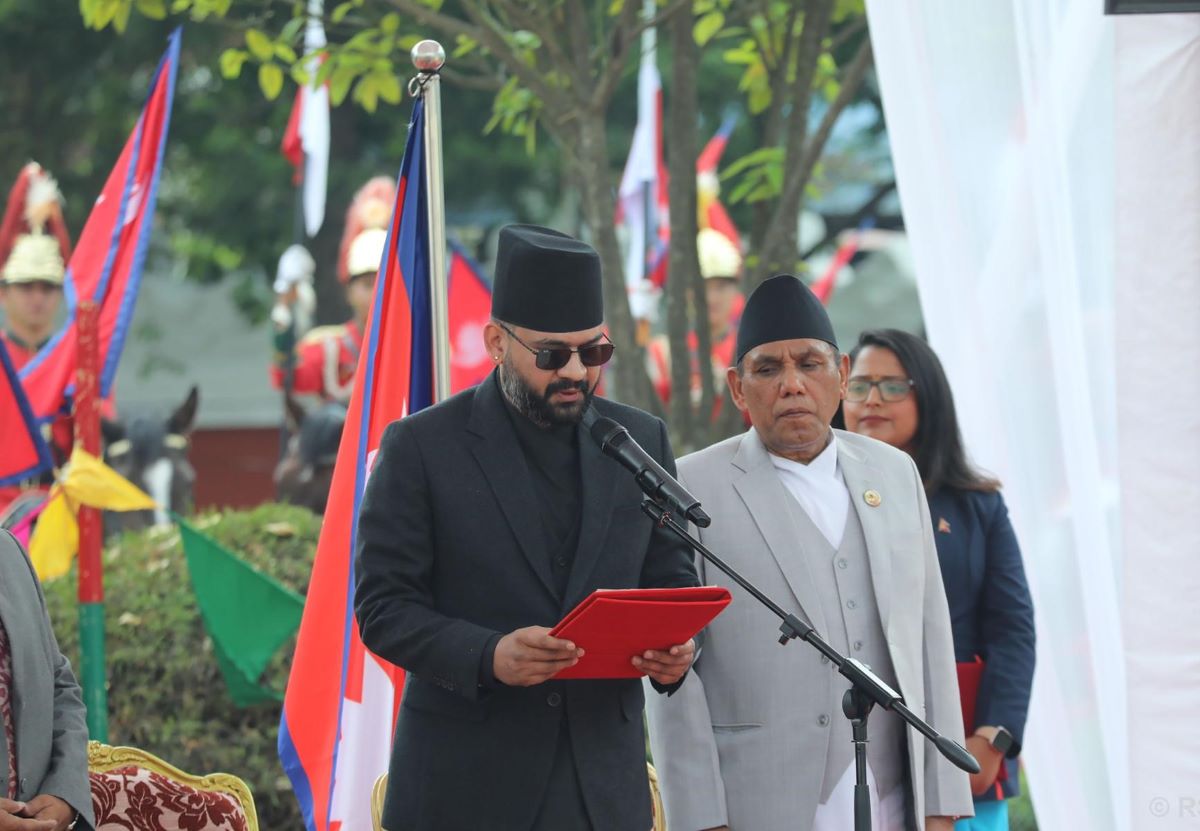
Swearing-in ceremony Of PM Balen
Prime Minister Shah (Balen), along with his 14 ministers, was sworn in by President Ramchandra Paudel, signaling the start of a new government. Soon after, government spokesperson Sasmit Pokharel announced that the cabinet had decided to implement the Karki Commission report, forming a committee to study matters related to security agencies while moving directly toward action on other individuals under investigation.
The commission’s report specifically recommended a criminal investigation into former Prime Minister KP Sharma Oli, former Home Minister Ramesh Lekhak, and then Inspector General of Police Chandra Kuber Khapung for their roles during the September 8 and 9, 2025, Gen Z protests.
28 March 2026: Following the government’s decision to implement the Gauri Bahadur Karki Commission report on the September 8 and 9, 2025, Gen Z protests, police arrested former Prime Minister KP Sharma Oli and former Home Minister Ramesh Lekhak for their roles in the crackdown that left 19 protesters dead.
Oli was taken into custody early in the morning at his Gundu residence after police had been attempting to arrest him since the previous night, while Lekhak was arrested at his home in Kutunje, Bhaktapur.
Home Minister Sudan Gurung posted on Facebook, “PROMISE IS A PROMISE”: No one is above the law. We have detained former Prime Minister KP Sharma Oli and outgoing Home Minister Ramesh Lekhak. This is not vengeance against anyone; it is simply the beginning of justice. I believe the country is now headed in a new direction.”
The arrests mark the first time in Nepal’s history that a former chief executive has been detained on suspicion of murder, highlighting a historic shift in the accountability of political leaders, as previous prime ministers were never held in criminal investigations, though they had been placed under police control during political incidents and protests.
29 March 2026: In a pivotal step for the ongoing legal proceedings, the Kathmandu District Court officially granted a request from law enforcement to place both Oli and Lekhak into judicial custody. Presiding over the hearing, the court issued a five-day remand order, effectively authorizing the police to hold the suspects for more rigorous interrogation.
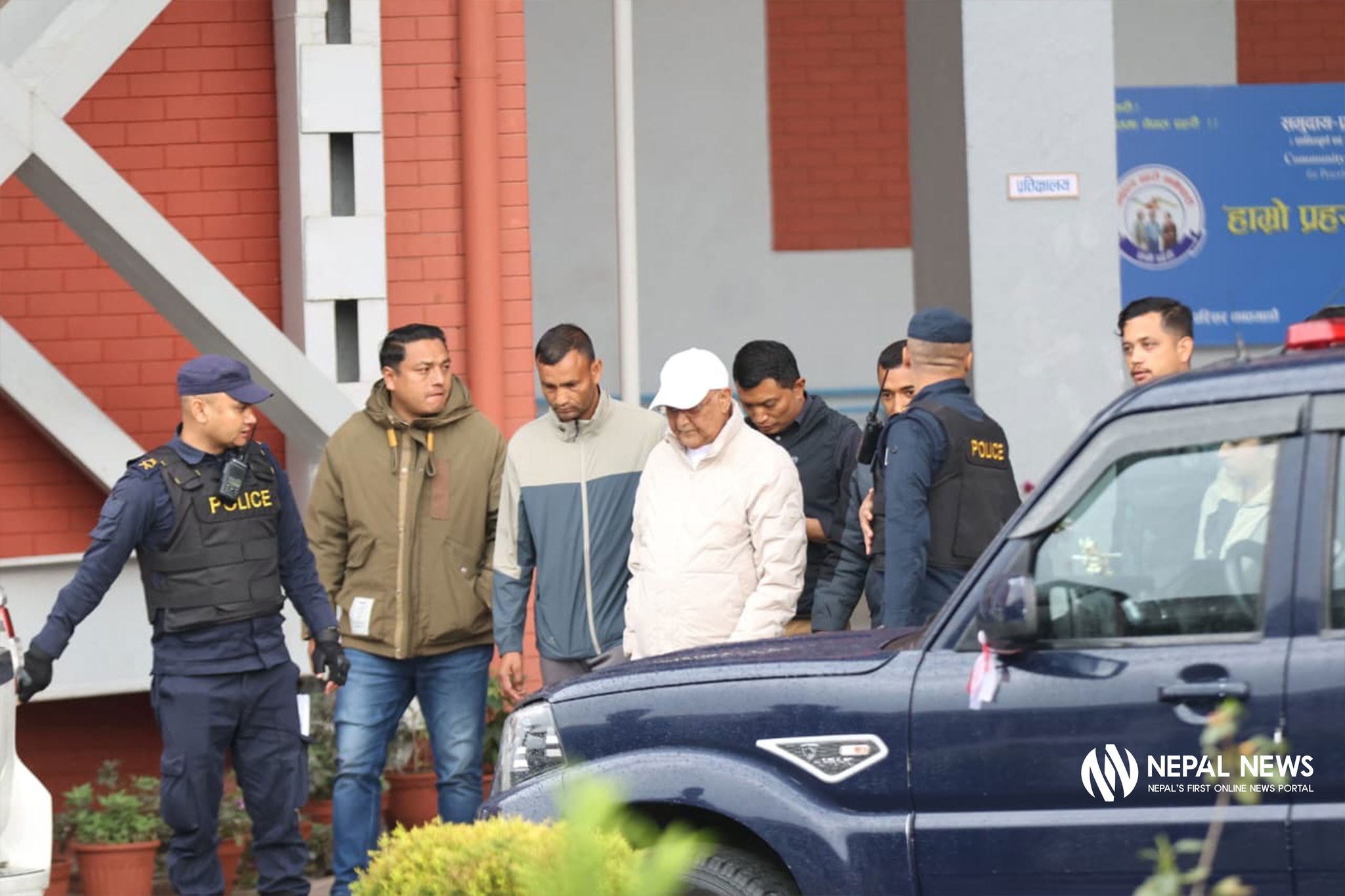
Security personnel escorting former PM KP Sharma Oli after arrest
30 March 2026: Following an immediate appeal by the defense counsel, the Supreme Court of Nepal reviewed the legality of the detention. However, the apex court ultimately rejected the initial bail petitions filed on behalf of Oli and Lekhak.
The bench ruled that the gravity of the charges and the current state of the investigation necessitated continued detention. By upholding the lower court’s remand, the Supreme Court signaled that the probe must proceed without the possibility of the suspects’ release, ensuring that the judicial process remains uncompromised as further evidence is gathered.
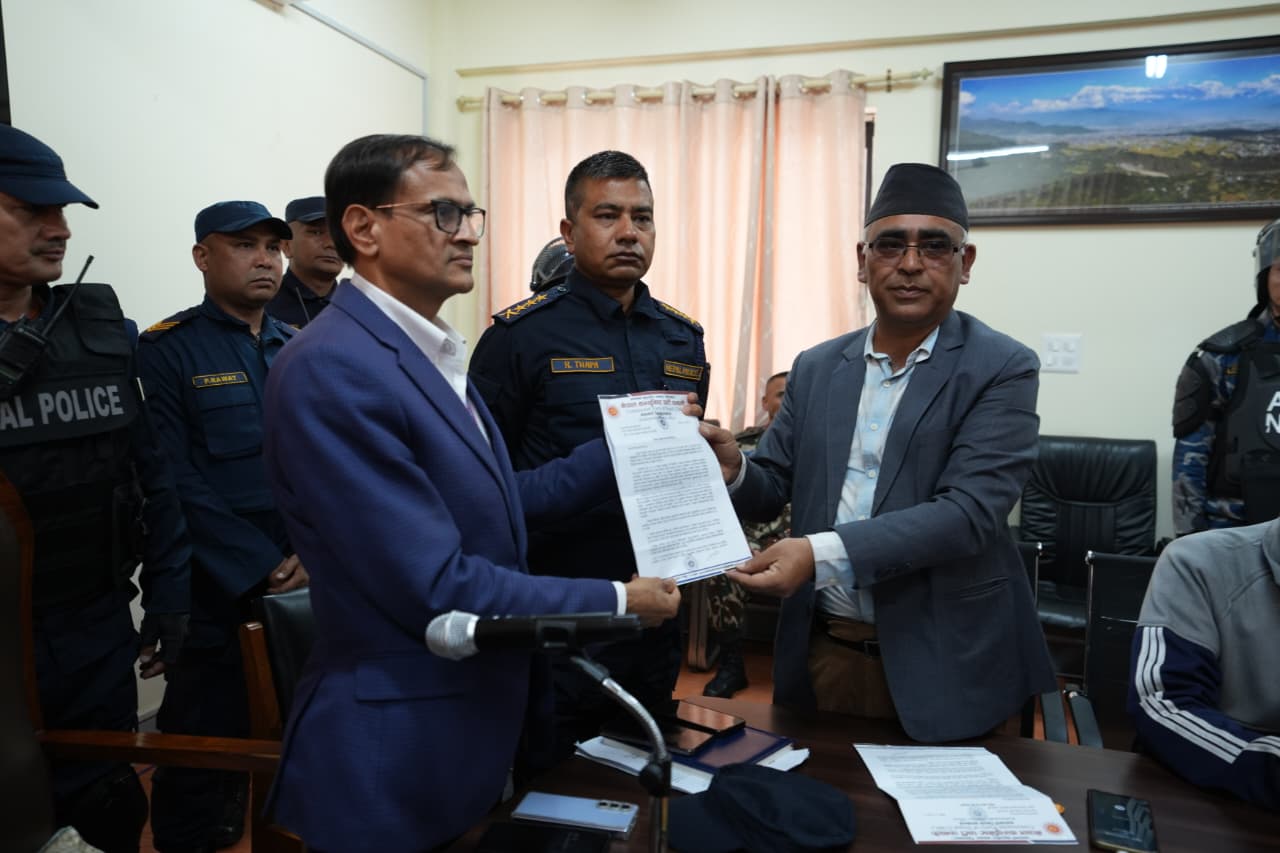
On March 29, CPN (UML) leader Dipak Niraula submit a memorandum to Chief District Officer Ishwor Raj Poudel at the District Administration Office in Babarmahal, Kathmandu, demanding the release of party chairman KP Sharma Oli, as part of a nationwide submission across all 77 districts.
31 March 2026: The CPN (UML) announced a two-week-long series of protests against the arrest of party chairman KP Sharma Oli and Nepali Congress leader Ramesh Lekhak.
The program includes municipality-level demonstrations on April 11 and ward-level protests on April 16, with further plans for provincial capitals and a major gathering in Kathmandu later in April.
Party leaders vowed to fight both politically and legally.
6 April 2026: The Supreme Court issued a decisive ruling that set a firm expiration date on the detention of former Prime Minister KP Sharma Oli and former Home Minister Ramesh Lekhak.
While a division bench composed of Justices Binod Sharma and Sunil Kumar Pokharel technically validated the existing remand, they simultaneously issued a writ of mandamus directing the government to conclude the custodial phase of the investigation.
The court specifically mandated that if formal charges are not filed by the end of the current third remand period, which was set by the Kathmandu District Court to expire on Wednesday, the authorities must release both leaders by Thursday, April 9.
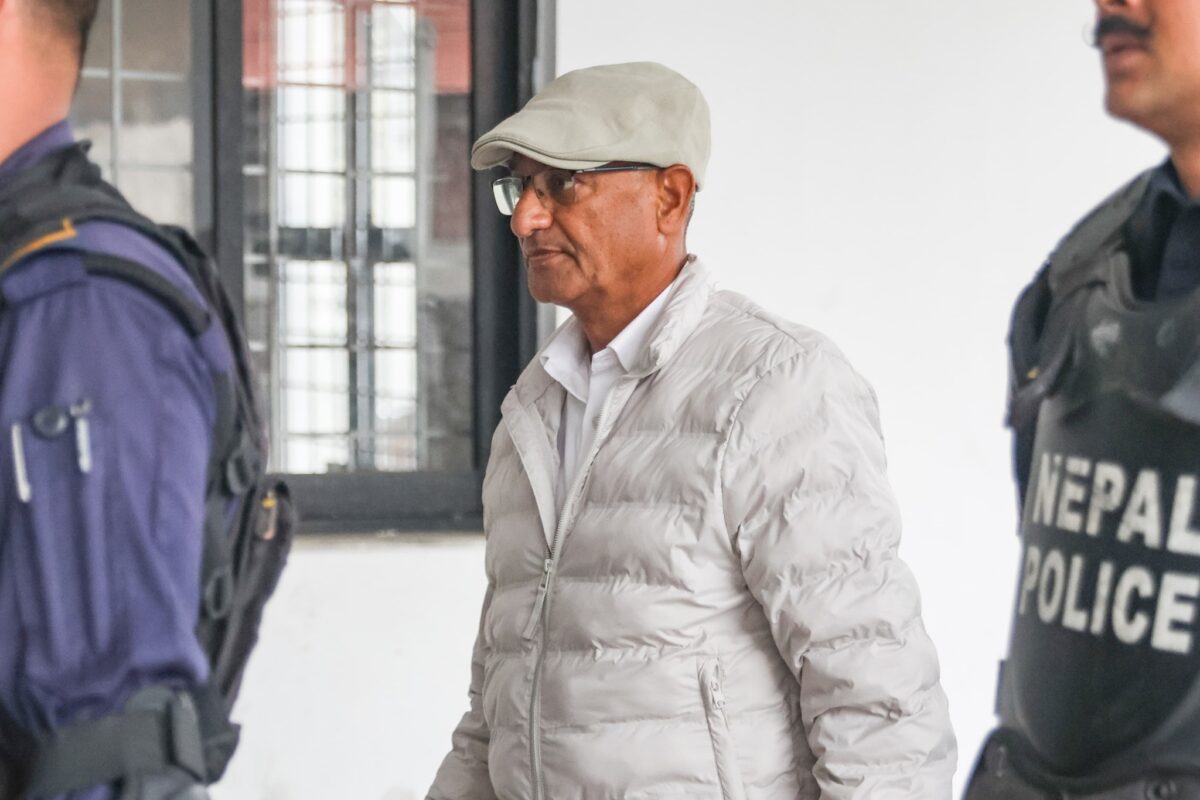
Security personnel escorting former Home Minister Ramesh Lekhak after arrest
The court took into account that both Oli and Lekhak were currently observing traditional mourning rituals for their parents and noted Oli’s fragile health, which had recently necessitated his transfer to the Tribhuvan University Teaching Hospital.
The sequence of events highlights a remarkable chapter in Nepali politics: from coalition-driven power under Oli’s nationalist banner, through a youth-led digital-age uprising, to an electoral tsunami that empowered a new generation and enforced unprecedented accountability on established leaders.
The final Supreme Court intervention on 6 April underscores the judiciary’s role in balancing justice with legal safeguards in this high-profile case.