Kathmandu
Saturday, July 25, 2026






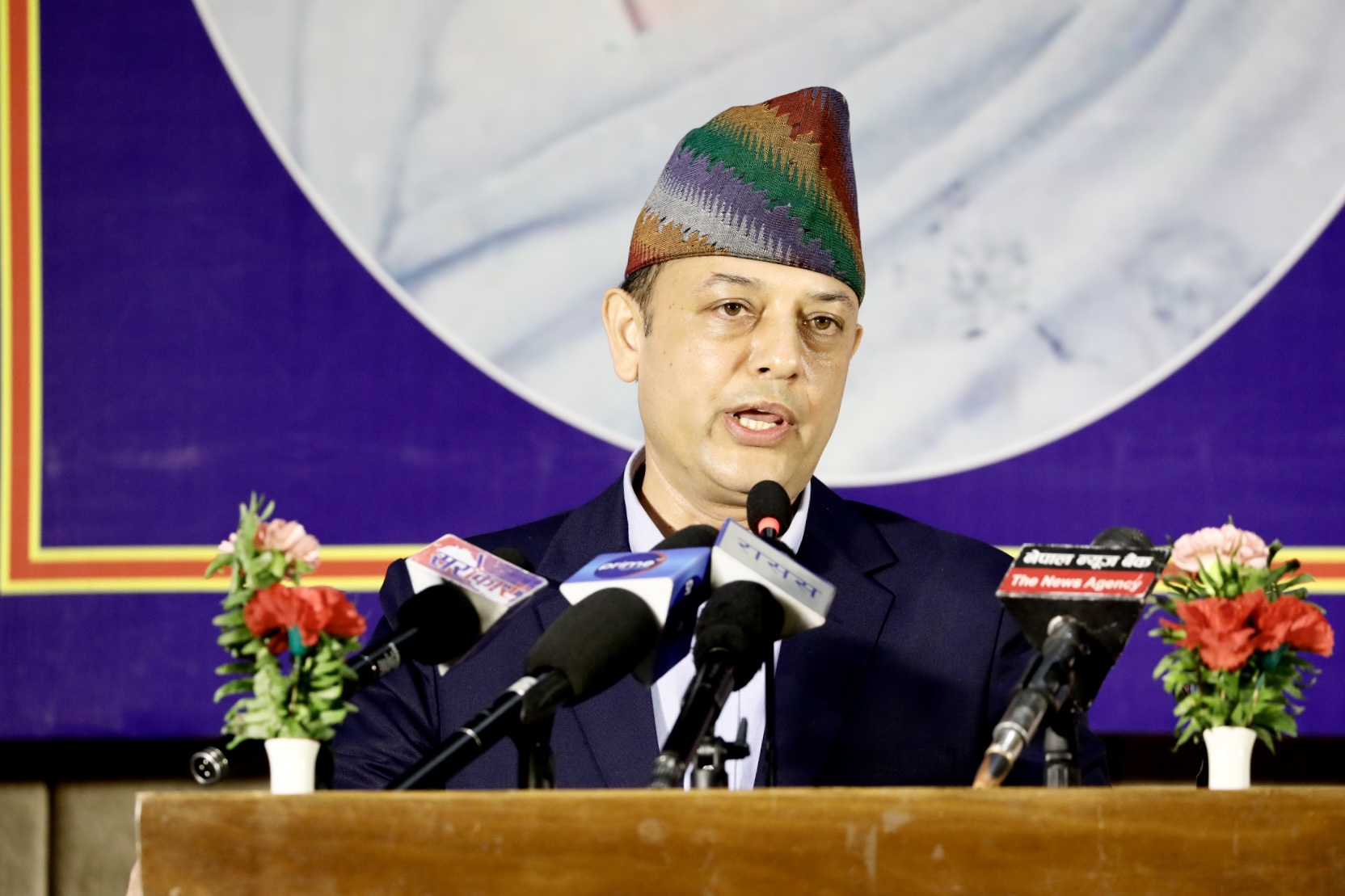
KATHMANDU: Two weeks after Balendra Shah took office as prime minister, early differences have surfaced within his governing party over key appointments, including the Home Ministry and the Deputy Speaker post, with party Chairman Rabi Lamichhane’s preferences increasingly diverging from the prime minister’s decisions.
Though still in its infancy, the working relationship between Prime Minister Shah and Chairman Lamichhane is already being shaped by competing priorities between party and government-raising the familiar risk that policy disagreements could harden into personal rivalry, and once again turn political ambition into instability.
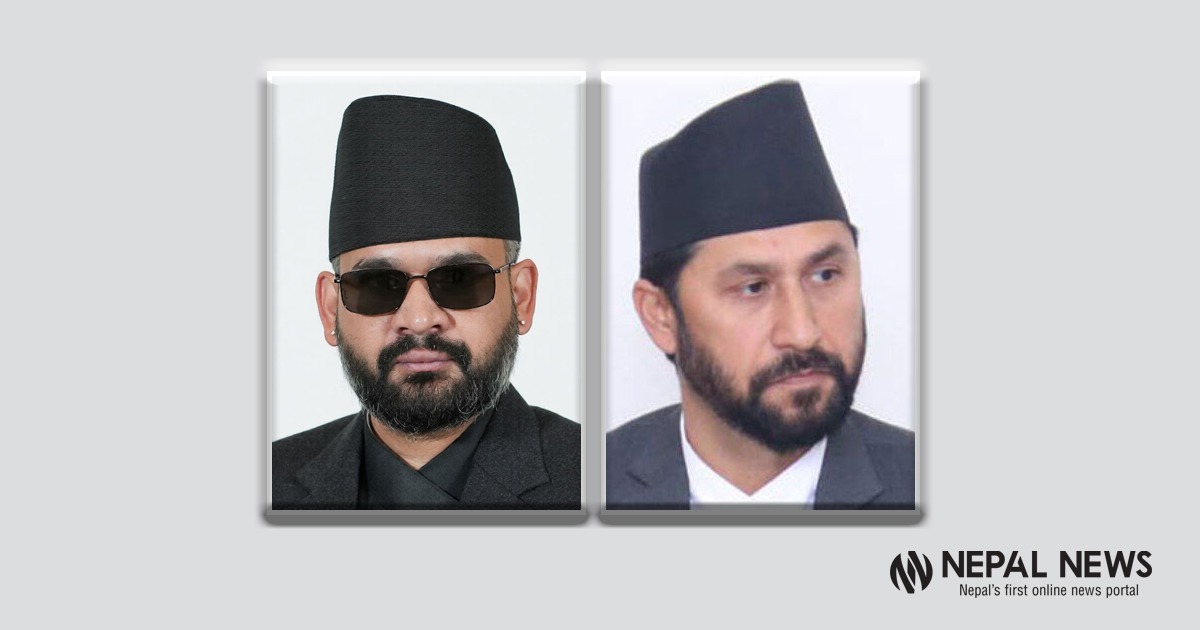
Balendra Shah vs Rabi Lamichhane — New-generation faces, competing vision
The Rastriya Swatantra Party has secured Nepal’s fifth parliamentary majority and one of the strongest popular mandates in its electoral history, coming close to a two-thirds threshold alongside past dominant victories of the Nepali Congress under B.P. Koirala in 1959 and more than the UML–Maoist alliance in 2017 which was later turned into Communist Party of Nepal after merger.
Yet no majority government in Nepal’s modern democratic history in 1951 or post-1990 history has completed a full five-year term. Despite clear electoral mandates, governments have repeatedly collapsed mid-term, driven less by electoral arithmetic than by internal breakdowns with top leadership rivalry.
The consistent pattern is rivalry among top leaders, weak coordination between party and government, and intra-party fragmentation.
History suggests that elite conflict, more than any other factor, has been the defining cause of instability—even in Nepal’s strongest governments.
Voters in Nepal have repeatedly delivered strong mandates, often two third majorities to outright majorities, expecting stable five-year governments. Yet no prime minister in the post-1990 democratic era has completed a full term. Over the past three and a half decades, Nepal has seen 30 prime ministers, with governments rising and falling in rapid succession.
The pattern is consistent: electoral victories have been undone not by voters or opposition alone, but by internal feuds among top party leaders. Even majority governments have collapsed mid-term as personal rivalries, not parliamentary arithmetic, have dictated political outcomes.
Nepal News analysis explores how Nepal’s governments have repeatedly collapsed due to rivalries among top leaders, clashes between party and government leadership, and fragile power-sharing within ruling parties.
From modern Nepal to the 2017 super-majority, history shows that personal rivalries-not electoral arithmetic alone-have been a persistent driver of political instability in Nepal.
Oli vs Prachanda: When egos trumped a super-majority
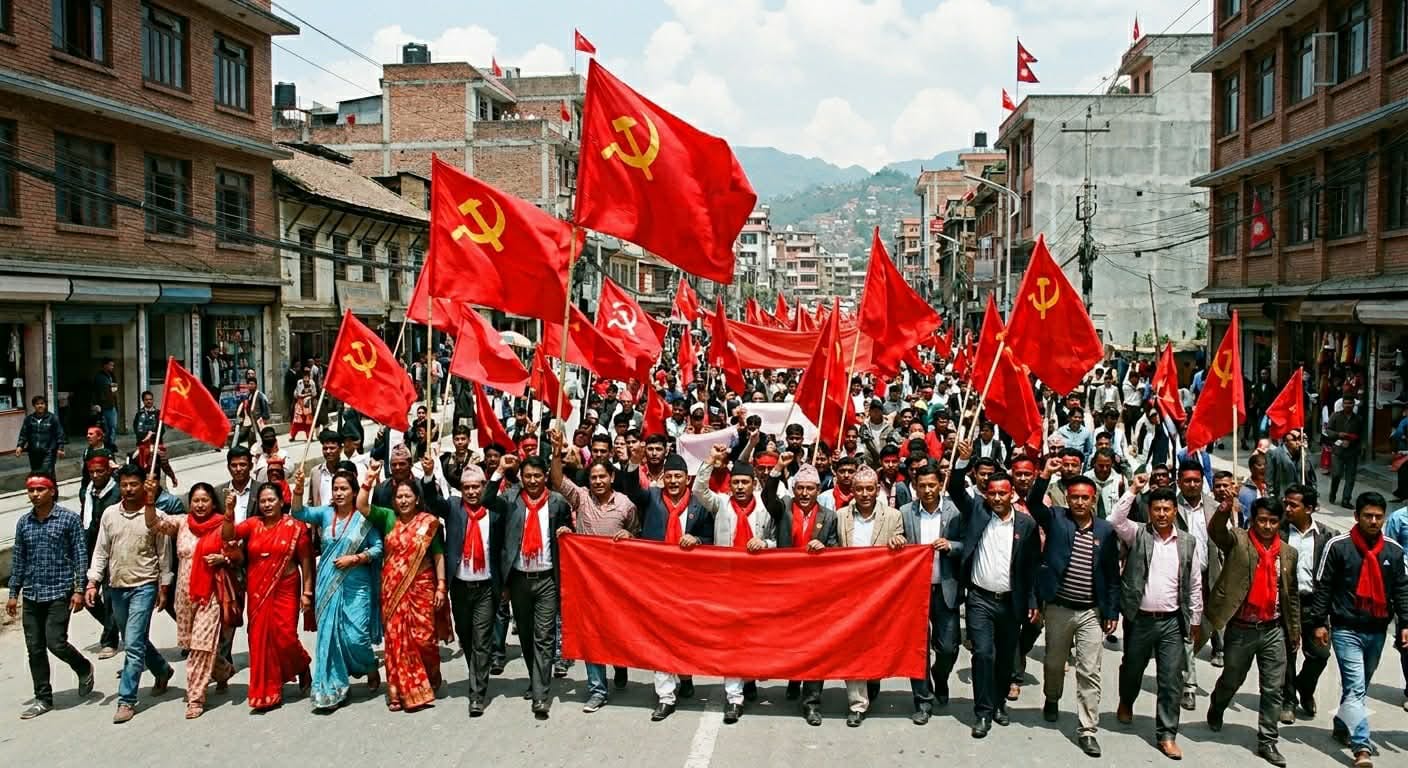
Nepal’s left once promised stability. It delivered something closer to deja vu. The general election of 2017 was meant to reset the country’s turbulent politics. Two communist forces-the Communist Party of Nepal (Unified Marxist-Leninist) and the Communist Party of Nepal (Maoist Centre)-forged an electoral alliance with a grander ambition: eventual unification. Voters responded emphatically.
The UML emerged as the largest force with 121 seats, while the Maoists secured 53, together commanding a near two-thirds majority in the 275-member House of Representatives. In vote share, the UML garnered over 3.17 million ballots (33.25%), dwarfing the Maoists’ 1.3 million (13.66%).
Eight months later, in May 2018, the alliance consummated its promise. The two parties merged to form the Communist Party of Nepal, an unwieldy but formidable political machine controlling 213 seats in the federal parliament.
For a country accustomed to revolving-door governments, the arithmetic appeared decisive. A single party dominated the center and six of seven provinces. For once, Kathmandu’s elite spoke of a full five-year term-an eternity in Nepali politics-and the possibility of steady governance to underpin economic growth.
Yet the triumph concealed contradictions. Nepal’s communists, long divided by ideology and personality, had united less out of conviction than convenience. The alliance that swept the polls was, as some wryly noted, “communist in name, capitalist in practice”-a coalition of factions bound by electoral expediency rather than shared doctrine.
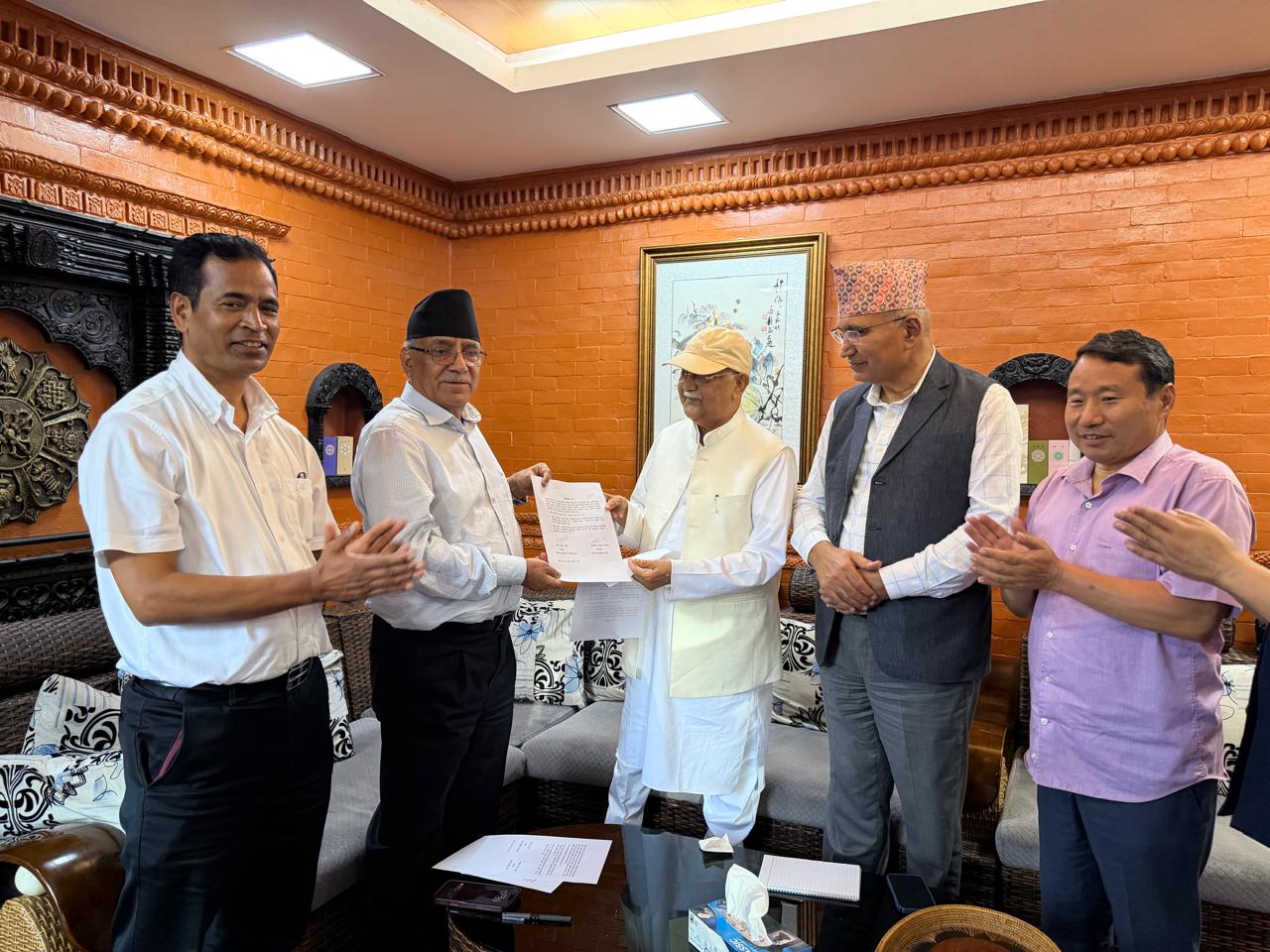
At its apex stood two men: K P Sharma Oli, the assertive UML leader who became Prime Minister, and Pushpa Kamal Dahal ‘Prachanda,’ the rebel-turned-establishment figure who co-chaired the party. Their uneasy partnership soon defined the fate of the new order.
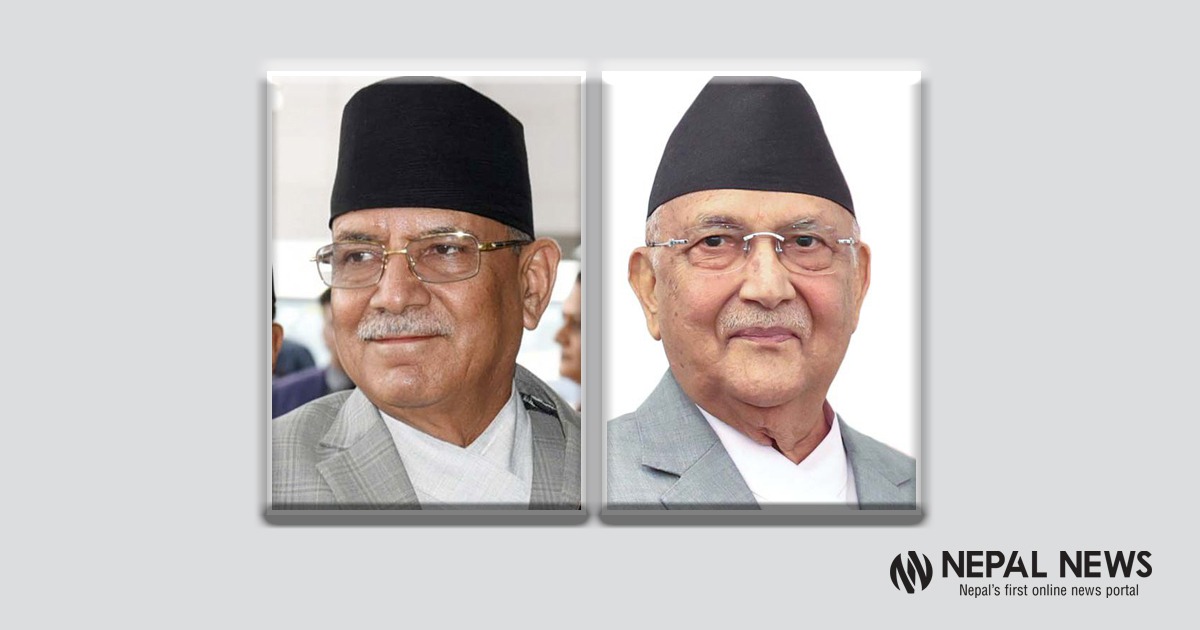
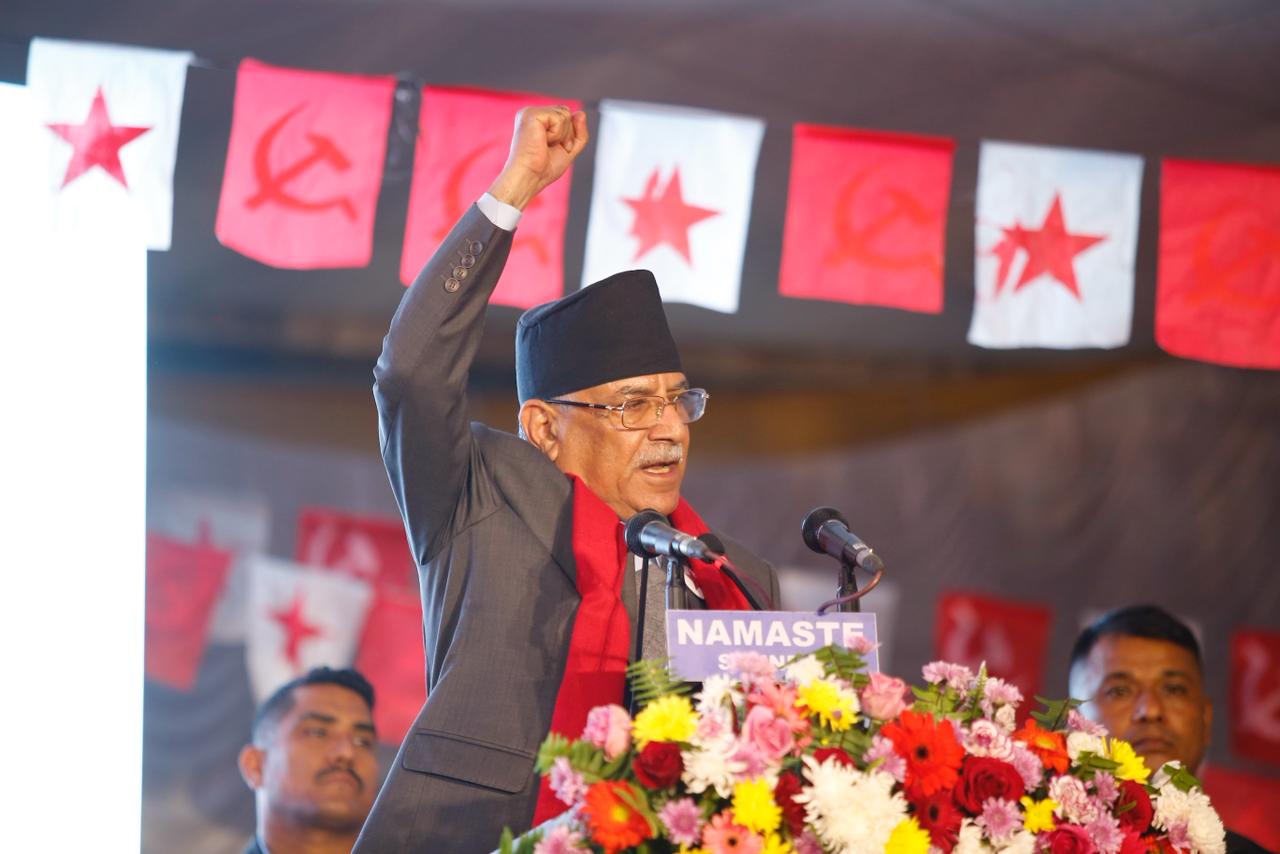
Pushpa Kamal Dahal vs KP Sharma Oli — Power struggle at the heart of modern politics.
From the outset, unity proved brittle. The merger had papered over years of rivalry, and the distribution of power-state authority in Oli’s hands, party control nominally shared-satisfied neither camp. A “one post, one person” formula was agreed, allowing Oli to remain prime minister while Dahal steered party affairs. In theory, it was a neat separation. In practice, it deepened mistrust.
By 2020, the strains were unmistakable. The government, entering its second year, was beset by criticism: a halting response to the COVID-19 pandemic, persistent allegations of corruption, and deteriorating relations with India over border disputes. Governance faltered even as the party’s internal feuds intensified.
What followed was less ideological schism than a clash of egos. Dahal accused Oli of unilateralism and failing to heed party decisions; Oli, in turn, resisted calls to relinquish power. Their dispute spilled into formal documents—dueling political dossiers presented at party meetings in November 2020, each cataloguing the other’s alleged failings. The tone was less that of comrades in disagreement than rivals preparing for divorce.
As the pandemic tightened its grip-hospitals strained, deaths rising-the leadership was consumed by intrigue. Dahal’s faction moved to assert control, eventually withdrawing support from Oli.
The Prime Minister, facing the loss of his parliamentary majority, escalated the crisis. In December 2020, he dissolved the House of Representatives and called for snap elections, a dramatic move that pushed the country into constitutional uncertainty.
The rupture was complete. What had been heralded as a historic unification unraveled within two years. By the end of 2020, the Nepal Communist Party had effectively split, reviving its former incarnations-the UML and the Maoist Centre-as separate entities once more. The grand experiment in left unity had collapsed under the weight of personal rivalry.
Nepal’s voters had delivered a mandate for stability. Instead, they received a reminder of a familiar pattern: strong numbers, weak cohesion. The episode underscored a persistent truth about the country’s politics. Institutions remain fragile, but personalities loom large.
The “red wave” of 2017 promised a new era. By 2020, it had receded, leaving behind the same old fault lines-proof that in Nepal, political arithmetic can be decisive, but it is rarely sufficient.
How Koirala, Bhattarai and Deuba destroyed two parliamentary majorities and four governments
Nepal’s first decade of restored democracy was not undone by opposition obstruction, constitutional design or public disillusionment alone. It was sabotaged, repeatedly, from within.
Democratic instability in 1990s is often blamed on constitutional weaknesses, palace interference or insurgency. Those factors may mattered. But the specific reason is clear: much of the instability was self-inflicted of top leaders personal rivalry.
Twice in the 1990s, voters handed the Nepali Congress clear parliamentary majorities. Twice, the party squandered those mandates through personal rivalries, factional warfare and an inability to separate party management from government leadership.
The consequences were profound: collapsing governments, chronic instability, a weakened democratic order and, ultimately, the fragmentation of the country’s most powerful democratic force.
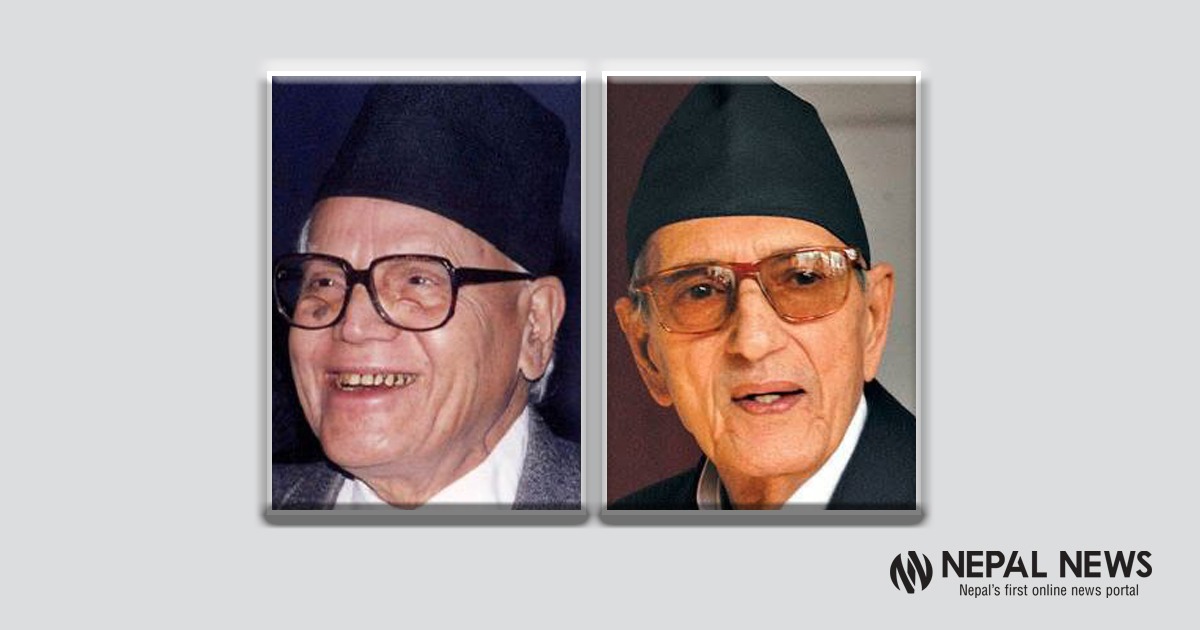
Krishna Prasad Bhattarai vs Girija Prasad Koirala — Ideals clash within the same party.
The principal protagonists were the party’s towering but deeply divided leaders-Krishna Prasad Bhattarai, Girija Prasad Koirala and later Sher Bahadur Deuba-whose competing ambitions repeatedly brought down their own governments.
Following the restoration of multi-party democracy in 1990, Nepal promulgated a new constitution in 1990, and parliamentary elections were held on May 12, 1991 for the 205-member House of Representatives. The Nepali Congress secured 110 seats, enough for a clear majority. The CPN-UML won 69 seats, while smaller parties and independents shared the remainder. Yet the seeds of instability were planted before the government had even begun.
Although Krishna Prasad Bhattarai had served as the face of the democratic movement and interim prime minister during the transition and party president, he lost his parliamentary seat in the election. That opened the way for Girija Prasad Koirala, then the party’s powerful general secretary, to become Nepali Congress prime minister on May 26, 1991.
The decision humiliated Bhattarai’s camp and intensified longstanding tensions between the party’s senior triumvirate: Bhattarai, Koirala and supreme leader Ganesh Man Singh. What should have been a moment of democratic consolidation quickly devolved into factional trench warfare.
The party split into rival camps of Koirala & Bhattarai, famously labelled the “group of 36” and the “group of 74”, reflecting parliamentary loyalties within the Congress itself rather than ideological differences. Governance increasingly became secondary to intra-party maneuvering of top leaders personal rivalry.
The rivalry escalated further after Bhattarai suffered a second humiliating electoral defeat.
Following the death of UML leader Madan Bhandari in the Dasdhunga accident, a by-election was held in Kathmandu-1.
Bhattarai contested the seat, hoping to re-enter parliament and reclaim political authority. He lost again. That defeat deepened bitterness inside the party top leadership.
By November 1994, the internal rebellion had become unmanageable. Thirty-six Nepali Congress MPs rebelled against Prime Minister Koirala during a key parliamentary vote. On July 10, 1994, during a vote of thanks on the government’s policy and programme, dissident lawmakers remained absent, depriving the government of its majority.
Koirala resigned, dissolved parliament and recommended fresh elections to King Birendra. Thus, Nepal’s first post-democratic majority government collapsed not because of opposition pressure or coalition arithmetic, but because the ruling party imploded from within. The subsequent mid-term election in 1994 stripped the Nepali Congress of its majority.
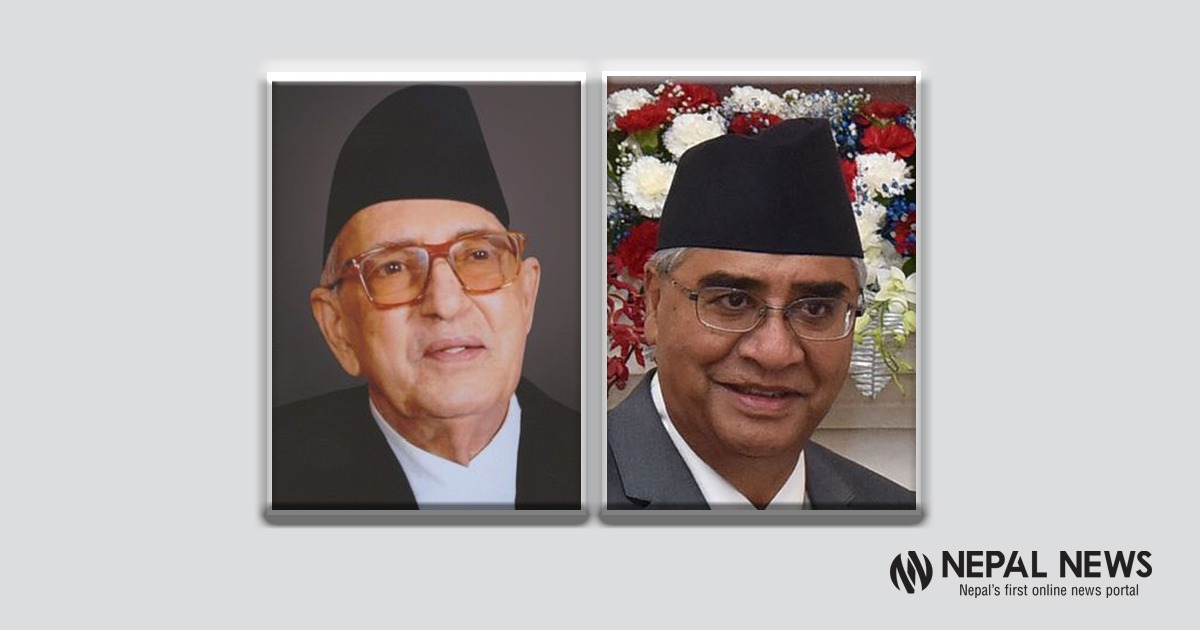
Girija Prasad Koirala vs Sher Bahadur Deuba — Leadership battles shape the party’s course.
The party’s return to power in 1999 should have offered a lesson learned. Instead, it became a repeat performance. In parliamentary elections held in two phases on May 3, 1999 and May 14, 1999, the Nepali Congress again secured a majority-winning 111 of 205 seats. The UML won 71 seats, while the Rastriya Prajatantra Party was reduced to 11.
To preserve internal balance, the party projected Krishna Prasad Bhattarai as its prime ministerial candidate before the election, in part to appease his faction and compensate for his earlier sidelining. Bhattarai became prime minister on May 31, 1999. But peace inside the party top leadership proved temporary.
Within months, tensions resurfaced between Prime Minister Bhattarai and party president Girija Prasad Koirala, who had by then consolidated control of the Nepali Congress organisation.
Bhattarai held the government, but Koirala controlled the party machinery-a dual power arrangement that soon became untenable. Just ten months later, 69 Nepali Congress lawmakers submitted signatures against Bhattarai, effectively forcing him from office.
Bhattarai resigned on March 16, 2000, ending his brief tenure and largely withdrawing from parliamentary politics thereafter. Once again, a majority government had been toppled by its own party.
Within months, tensions resurfaced between Prime Minister Bhattarai and party president Girija Prasad Koirala, who had by then consolidated control of the Nepali Congress organisation.
After Bhattarai’s resignation, Girija Prasad Koirala returned as prime minister. But the cycle of internal instability persisted.
The next phase of conflict emerged between Koirala and Sher Bahadur Deuba, a rising leader with his own support base from Bhattarai camp inside the party. Disputes over authority, policy and control of the party-government relationship intensified as Nepal simultaneously faced the growing Maoist insurgency and mounting national crisis. The rivalry culminated on September 22, 2002, when internal divisions split the Nepali Congress itself.
What had begun as a personal feud between Koirala and Bhattarai evolved into a broader structural dysfunction: the party could not reconcile leadership ambitions with institutional discipline. Prime Ministers and party Presidents operated as rival power centres rather than complementary ones. This paralysis weakened civilian governance just as Nepal confronted existential national challenges-the escalating Maoist insurgency, deepening state fragility to royal coup.
In October 2002, Prime Minister Deuba dissolved parliament, further destabilising the political system. The prolonged democratic dysfunction helped create the conditions for King Gyanendra’s subsequent assertion of direct royal power on February 1, 2005.
Voters repeatedly delivered strong mandates. The tragedy was that the country’s dominant democratic party proved incapable of governing itself. Between 1991 and 2002, the Nepali Congress transformed majority governments into revolving-door administrations through a toxic mix of: personality cults over institutions, factional patronage over party discipline and personal ambition over national stability.
Nepal’s first democratic experiment did not fail merely because institutions were young. It faltered because the country’s most powerful democratic leaders repeatedly placed faction above function and ego above governance. Koirala and Bhattarai treated parliamentary majorities not as mandates to govern, but as prizes to control. In doing so, they turned internal rivalries into national crises.
A landslide undone: Mahendra vs BP and the royal coup
In 1959, Nepal briefly flirted with parliamentary rule-and swiftly recoiled. The Nepali Congress, led by B.P. Koirala, secured a commanding 74 of 109 seats in the country’s first election under universal adult franchise. It was a decisive mandate, the sort that ought to settle questions of authority. Instead, it sharpened them.
At the center stood two men: Koirala, an ardent democrat shaped by India’s anti-colonial ferment; and King Mahendra, a monarch steeped in absolutist instinct yet alert to the language of modern statehood. They agreed on nationalism, but diverged on power.
For Koirala, sovereignty flowed from the electorate. For Mahendra, it remained anchored in the crown.
The contradiction proved fatal. Though elections were held in early 1959, Mahendra delayed the formation of a government until May. Even then, executive authority remained ambiguously shared. Koirala’s administration moved quickly-abolishing the birta land system, nationalizing forests, and chipping away at feudal privilege.
Reform, however, bred resistance. Landed elites, royalists and uneasy party colleagues recoiled.
Nepal at the time was ill-prepared for democratic contestation. Universities were scarce, literacy low, and the media feeble. The monarchy, by contrast, enjoyed near-mystical reverence; the king was widely treated as divine.
In such a setting, Koirala’s project was not merely political—it was social transformation. It ran ahead of its terrain.
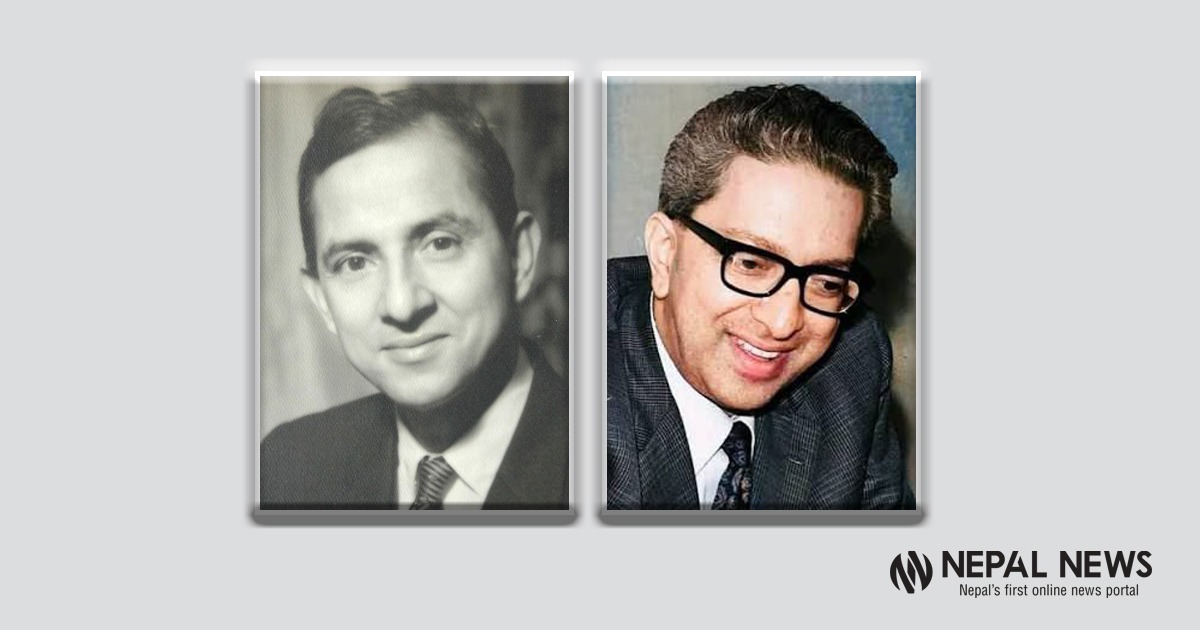
Bishweshwar Prasad Koirala vs King Mahendra — Democracy confronts monarchy.
Nor was his own party a solid base. Splits had already weakened the Nepali Congress. Figures once close to Koirala-such as Tulsi Giri and Bishwabandhu Thapa—gravitated towards the palace, drawn by ambition and proximity to power. Mahendra exploited these fissures with care, cultivating defectors and amplifying dissent.
Koirala, for his part, appears to have underestimated the threat. Preoccupied with governance and reform, he misjudged both the king’s resolve and the fragility of his own coalition. There was, too, a hint of overconfidence: a belief that democratic legitimacy would suffice to deter royal intervention. It did not.
On December 15, 1960, Mahendra acted. He dismissed the government, dissolved parliament and jailed Koirala along with other leaders. The experiment was over after just 18 months. In its place came direct royal rule.
The consequences outlasted the coup. By overturning an elected government so swiftly, Mahendra set a precedent: that political authority in Nepal could be reset from above. Instability became a feature, not a bug, of the system. Ironically, in seeking to preserve monarchical supremacy, the king may have hastened its long-term erosion.
History resists simple moralizing. Nepal in 1960 was not Nepal today; democratic norms were thin, institutions thinner. Yet the central lesson endures. A two-thirds majority collapsed not only because of structural weakness, but because of a duel of wills—between a monarch unwilling to yield and a reformer unable to secure his flank. In that contest, the crown prevailed. The system did not.
Party vs Prime Minister: B.P. and Matrika Koirala’s personality clash
In the early years after the 1951 political change, Nepal’s fledgling democracy was quickly tested not only by monarchic influence but by an internal contradiction at the heart of party politics: who truly governs-the party president or the prime minister? That question came into sharp relief in 1952, when a dispute between two brothers, Nepali Congress leaders B.P. Koirala and Matrika Prasad Koirala, helped set a precedent for recurring executive instability.
Both men had emerged from the revolution as towering figures in the Nepali Congress. Yet their relationship-bound by family ties but divided by political vision-soon became the personality rivalry a defining fault line in Nepal’s early democratic experiment.
The immediate trigger was the question of leadership after the political transition. Despite B.P. Koirala’s growing influence within the party, King Tribhuvan appointed Matrika Prasad Koirala as Prime Minister. The decision created an uneasy balance of power between the party leadership and the head of government, and more importantly, between the two brothers themselves.
Matrika Prasad Koirala, who would become Nepal’s first commoner Prime Minister, favored a pragmatic working relationship with the monarchy. B.P. Koirala, by contrast, represented a more ideological strand of democratic socialism, insisting that executive authority should remain firmly subordinated to party discipline. What might have remained a theoretical disagreement and personal rivalry soon became an institutional crisis.
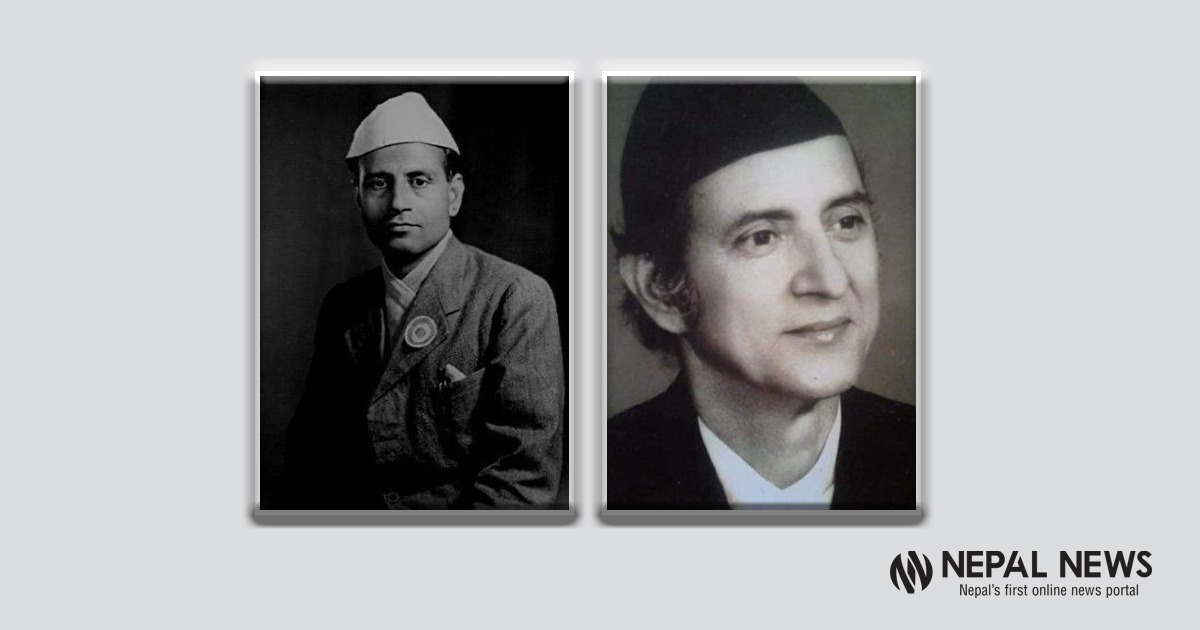
Matrika Prasad Koirala vs Bishweshwar Prasad Koirala — Brothers divided by power and political vision.
Within three months of Matrika Prasad Koirala assuming office, B.P. Koirala confronted him with a stark demand: he must choose between remaining Prime Minister or continuing as a figure beholden to party authority.
The ultimatum exposed a structural ambiguity in Nepal’s new parliamentary practice-whether elected party leadership could override executive discretion once in government. The dispute rapidly escalated beyond procedural disagreement into a struggle over legitimacy itself.
By 1952, the confrontation reached its peak when Nepali Congress president B.P. Koirala expelled Prime Minister Matrika Prasad Koirala on grounds of failing to abide by party directives. The move deepened divisions within the party and crystallized rival factions, many of which aligned themselves either with institutional authority in government or ideological control within the party.
Tensions were further formalized during the Nepali Congress’s fifth General Convention in Janakpur, where B.P. Koirala was elected party President. The consolidation of his authority came at a cost: internal dissent intensified, and several leaders—including Bhadrakali Mishra—were expelled for opposing the emerging party line.
The rivalry was not merely personal, although the symbolism of two brothers on opposite sides of a political rupture gave it unusual intensity. It also reflected competing visions of Nepal’s post-revolutionary state.
Matrika Prasad Koirala’s tenure as Prime Minister leaned towards accommodation with the monarchy, while B.P. Koirala sought to assert the supremacy of party ideology over state executive power.
The consequences were swift and destabilizing. The persistent confrontation between party and government paralyzed decision-making. Eventually, the party central committee demanded Matrika Prasad Koirala’s resignation along with that of his supporters. He stepped down after a brief tenure of just 8 months and 25 days, bringing his government to an abrupt end.
The fallout extended beyond one administration. Political instability lingered, and the pattern of executive disruption became embedded in Nepal’s democratic trajectory. The unresolved tension between party control and governmental authority reappeared in later decades, including in 1994, when Girija Prasad Koirala dissolved the House amid disputes with Nepali Congress President Krishna Prasad Bhattarai and senior leader Ganesh Man Singh.
Seen in retrospect, the 1952 Koirala split was more than a family dispute. It was an early demonstration of how fragile institutional boundaries were in Nepal’s young democracy.
The rivalry between B.P. and Matrika Prasad Koirala did not merely end a government; it helped establish a recurring political logic in which personal authority, party discipline and executive power would repeatedly collide-often at the expense of stability.
A tyranny of history: How personal rivalries shaped Nepal’s politics
In Nepal’s long political history, institutions often appear less decisive than individuals. Again and again, the course of the state has been shaped not by durable systems or ideological struggle, but by something more intimate and volatile: personality clashes at the very top of power.
From the royal places of the early state to the fragile coalitions of the modern republic, personal rivalry has repeatedly triggered abrupt political U-turns, institutional breakdowns, and long periods of political instability.
One of the earliest recorded examples is the case of Bhim Malla in the 17th century. A trusted minister celebrated for administrative competence; Malla fell victim to royal intrigue after rivals persuaded the monarch that he posed a threat to the throne. His execution, widely remembered in Nepal’s political memory, illustrates an enduring pattern: success in governance becoming a liability when filtered through the anxieties and ambitions of competing elites. In this reading of history, politics was not yet institutionalized; it was personalized, fragile, and highly vulnerable to courtly persuasion.
The pattern did not disappear with the rise of the Shah dynasty. Instead, it became more complex. Rivalries between Queen Rajendra Laxmi and Bahadur Shah, both competing for influence over the royal succession and state authority, deepened divisions within the ruling elite.
Royal politics hardened into factions, weakening coherence at the center of power. In this environment, Bhimsen Thapa rose as a dominant figure, consolidating authority for more than three decades. Yet his tenure was also marked by sustained elite conflict, including tensions with other military and administrative leaders, which weakened strategic coordination at a critical moment in Nepal’s confrontation with the expanding British Empire.
The Anglo-Nepal (November 1, 1814 – March 4, 1816) war and the subsequent territorial losses exposed not only military constraints but also the consequences of fragmented decision-making within the ruling class and humiliating loss of Bhimsen Thapa.
Elite rivalry, rather than collective strategic planning, increasingly shaped state behavior. The execution of Damodar Pande earlier in the political struggle between the Thapa and Pande factions further deepened cycles of vengeance and mistrust, embedding personal enmity into the structure of governance itself.
These dynamics did not end with the collapse of Bhimsen Thapa’s dominance swiftly. On the contrary, they paved the way for the new cycle of rivalry between royal trusted top officials that instigated the rise of the Rana regime, which itself emerged from royal conspiracies and violent elite competition.
The Kot Massacre of 1846, triggered by rivalries among courtiers and the ambitions of Jung Bahadur Rana, marked a decisive turning point. What followed was a 104-year hereditary rule in which state power was concentrated within a single family, yet still internally shaped by personality clash, suspicion, factionalism, and periodic purges.
Even the Rana system, designed to eliminate instability, reproduced it internally. Successive generations witnessed repeated struggles for succession and influence within the ruling clan. Power was preserved through control, but control required constant vigilance against rivals within the same elite structure.
After the democratic opening of 1951, personality-driven politics did not fade. The confrontation between King Mahendra and B.P. Koirala quickly escalated into a defining rupture of Nepal’s modern political trajectory. In 1960, Mahendra dismissed the elected government and introduced the Panchayat system, centralizing authority under the monarchy.
While ideological and constitutional arguments were present, the episode was also shaped by mistrust and rivalry between dominant political actors, with regional geopolitical pressures adding further complexity.
The post-1990 democratic era was expected to shift politics away from individuals towards institutions. Yet personality rivalry, coalition instability, party splits, and leadership disputes repeatedly suggested otherwise. Governments rose and fell less on policy coherence than on shifting personal alignments among party leaders. Constitutional mechanisms existed, but were frequently subordinated to intra-party competition and individual ambition.
Across centuries, Nepal’s political evolution thus reveals a recurring theme: when institutions are weak, personality becomes decisive; and when personality dominates, institutions remain weak. The result is a cycle in which political stability is repeatedly undermined not only by ideology or external pressure, but by the enduring weight of elite rivalry at the top of the state.