Kathmandu
Sunday, July 12, 2026





Displaced from their settlements, the poor face severe physical and mental distress inside holding centers, while the education of over 3,000 children has been completely disrupted.

KATHMANDU: Born in Banke in 1964, Maiya Ale was not driven to Kathmandu by desire, but by sheer necessity. In Banke, she had neither a house nor a single piece of land. Following the death of her parents, her elder brother, Purna Thapa Magar, brought the then 13-year-old Maiya to Kathmandu.
At that tender age, she was in no condition to work. However, her brother’s earnings alone were insufficient to sustain the household in the city. It was from that moment on that she began working in a hosiery (knitting) factory. “I lived in a rented room in Ravi Bhawan with my brother and sister-in-law. My brother worked as a driver, but the earnings weren’t great. He got me a job at the hosiery factory. I used to spend the whole day knitting socks, sweaters, and other clothes,” she recalls.
While working at the hosiery factory, Maiya met Bal Bahadur Ale (Krishna) from Ramechhap. As her closeness grew with Bal Bahadur, who was a driver, Maiya married him at the age of 17.
It was only after the marriage that she learned Bal Bahadur’s life was also filled with pain similar to her own. Orphaned at the age of 12, he had entered Kathmandu from a remote village in Ramechhap. He had neither a house nor land in Ramechhap.
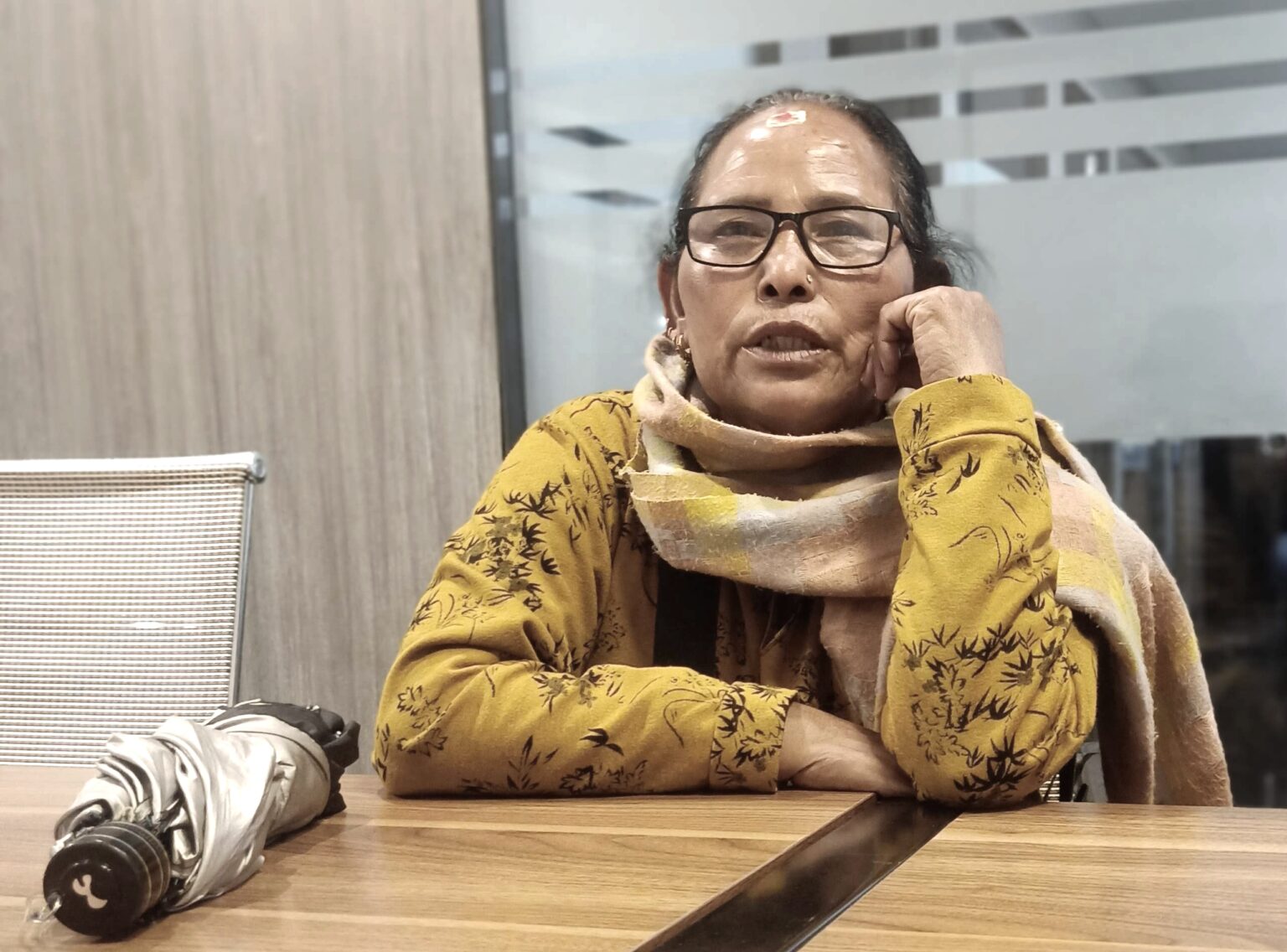
The two grief-stricken souls began their struggle together in the city. Bal Bahadur shed his sweat driving a rickshaw at times and a tractor at others. Maiya offered her labor in other people’s homes. Over time, they began living by taking shelter in various places.
Initially, they lived in a narrow room in Basantapur. “The scarcity was such that we used to sleep using bricks as pillows. There was absolutely nothing to cover ourselves with or sleep on. It was during such times that our daughter was born later,” she recalled the hardships of her married life.
Later, they moved to a rented room near the Pachali temple in Teku.
But suffering was not a constant baseline in their lives; the layers of misery only kept adding up.
Bal Bahadur, the primary breadwinner, was gripped by various illnesses. Maiya, who did domestic work, also could not earn as much as expected. Due to inflation, it even became difficult for them to pay the room rent. From 1999, they built a hut and started living in the Banshighat area of Teku. They became members of a landless settlement.
Even in his illness, Bal Bahadur worked as a laborer. Maiya worked at a Marwari household. Saving money by depriving themselves of food from the couple’s earnings, they built a one-story cement house in the settlement over eight to ten years. By that time, two daughters and a son had already been born. Later, another daughter was born as their fourth child.
Hardship upon hardship
In the meantime, blow after blow was dealt to Maiya’s life journey. Her already faltering life was further disrupted after the government cleared the Banshighat settlement during the last week of April, as part of its campaign to vacate squatter settlements in Kathmandu. This time around, she does not even have her husband by her side to support her. Bal Bahadur, who was bedridden due to paralysis, passed away on December 25, 2013 after months of treatment.
Maiya says, “There is pain upon pain. Some was given by fate, some by destiny. Right now, it is being given by the government.”
Her eldest daughter, Preeti, could not study beyond grade eight due to financial constraints. After that, she followed in her mother’s footsteps and began doing domestic work to become a financial pillar for the household. However, seeing that the grim living conditions in Banshighat would not improve with a small income, Preeti decided to go for foreign employment. But that very decision became a thunderbolt for Maiya. The daughter who went abroad has been missing since 2008.
“She used to say, ‘I will go abroad, earn money, buy our own house and land, and give my mother and father happiness.’ Now, she herself is not with me. Which sinner made my daughter disappear?” Maiya says, bursting into tears. “I have already filed complaints with the police and Maiti Nepal. Eighteen years have passed, and there is absolutely no trace of her.”
Even after her daughter’s disappearance and her husband’s demise, more upheavals continued to hit her life. Her second daughter fell severely ill. The daughter contracted rheumatic disease, but while undergoing treatment, it affected her heart. “Now, two heart valves need to be replaced, and the treatment is still ongoing,” she said with her eyes full of tears.
Her youngest daughter suffered from mental health issues. She has recovered slightly after treatment. Around 2019, Maiya herself became disabled after fracturing her left leg. Unable to walk around and perform hard labor, she had to lose her domestic work, which had been the baseline of her livelihood for a long time. This felt like the breaking of her family’s financial backbone. “After my leg broke, I didn’t get domestic work. I can’t even stand or walk properly. A rod has been placed in my leg,” she says.
After becoming physically disabled, she came into contact with Nepal Mahila Ekata Samaj, an organization active for the rights and welfare of landless squatters and women living in informal settlements. The organization worked to apply some balm to her pain. She received 50,000 rupees in assistance from the organization. Her neighbors in Banshighat advised her to start a business. “To run the family, I started a Nanglo shop (a small shop displaying goods on a flat bamboo tray) with that money,” she says.
She started her Nanglo shop in Tripureshwor. Selling miscellaneous items on the bamboo tray to manage two meals a day became her daily routine.
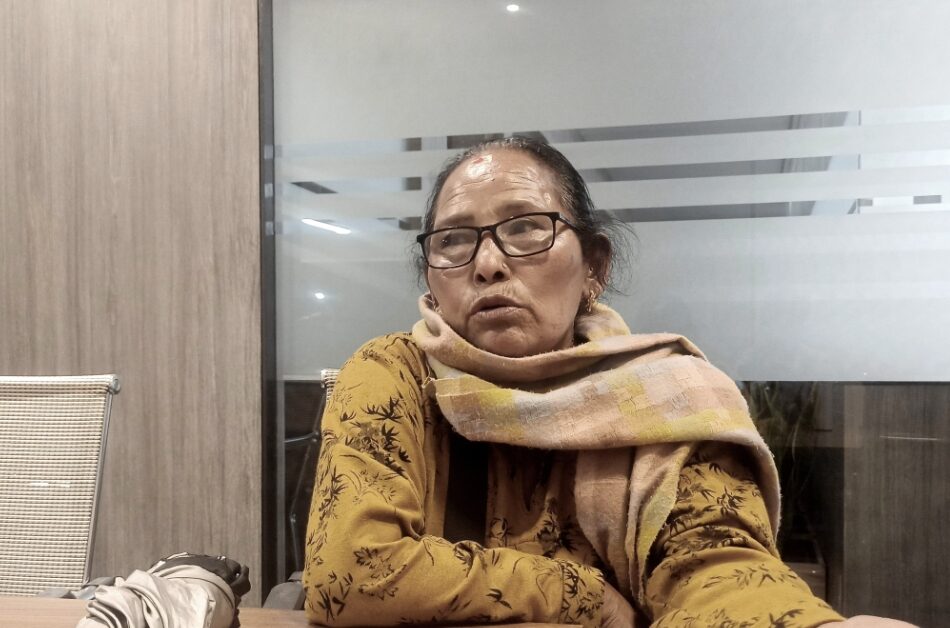
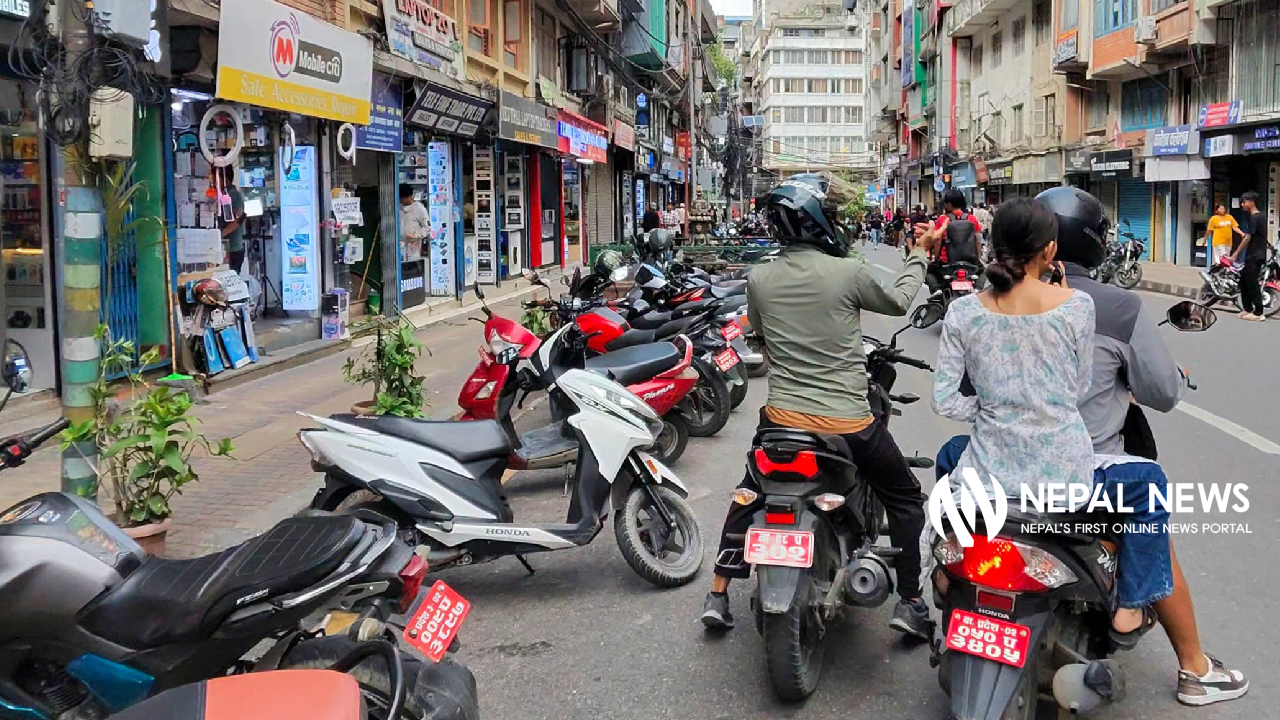
Life had begun to ease up a bit with the earnings from the Nanglo shop, but her happiness did not last long. Following the 2022 local elections, Balendra Shah was elected as the Mayor of Kathmandu Metropolitan City. Shah adopted a strict policy to eliminate sidewalk businesses.
Along with other sidewalk vendors in Tripureshwor, Maiya’s Nanglo also became a target of the metropolitan police. The police not only confiscated her goods but also chased her away and displaced her from there. There is no account of how much police containment and humiliating behavior she had to endure while trying to save her goods.
In a conversation with Nepal News, she poured out her lament, “The Balen government has made it impossible for us to even survive. It has given this much pain!” After that, her words choked up in her throat. After a while, she questioned, “Pashupatinath must be watching, right? Will those who make us cry ever experience well-being?”
When Balen became the Mayor of Kathmandu, the basis of survival for many impoverished citizens like Maiya was snatched away in the name of sidewalk management. When she was not allowed to operate her Nanglo business, she started trading by carrying goods in a bag. “They didn’t let me do even that. First, they snatched the path of livelihood; now, the government has demolished the house itself by deploying bulldozers,” she says.
Many squatters, who had been doing daily wage labor and employment in one place, have been taken and kept at a distant, completely different location in the name of temporary housing arrangements. Because of this, their work and income generation have ground to a halt.
On May 1, after a bulldozer rolled into the squatter settlement located at Banshighat, Kathmandu Metropolitan City-11, destroying her home, she wandered around for a few days. Because her second daughter, a heart patient, requires regular health check-ups and nutrition, she did not stay at the ‘holding center’ arranged by the government as temporary shelter.
After some time, she did move into a rented room in Sanepa, Lalitpur, but in the absence of a source of income, the anxiety of how to pay the rent torments her. “I know that if I cannot pay the rent, I will have to leave this place, but I took the room out of fear that my daughter’s health would deteriorate further if we stayed at the holding center,” she says.
Currently, neither does she have any work, nor have the other members of her family been able to find employment. She has already registered her name by reaching the Dasharath Stadium, the site for data collection of landless settlers. Sometimes she reaches Maitighar Mandala in the hope of assistance, and sometimes she frequents the stadium.
Many landless settlers, who had been doing daily wage labor and employment in one place, have been taken and kept at a distant, completely different location in the name of temporary housing arrangements. Because of this, their work and income generation have ground to a halt.
The lament of the displaced
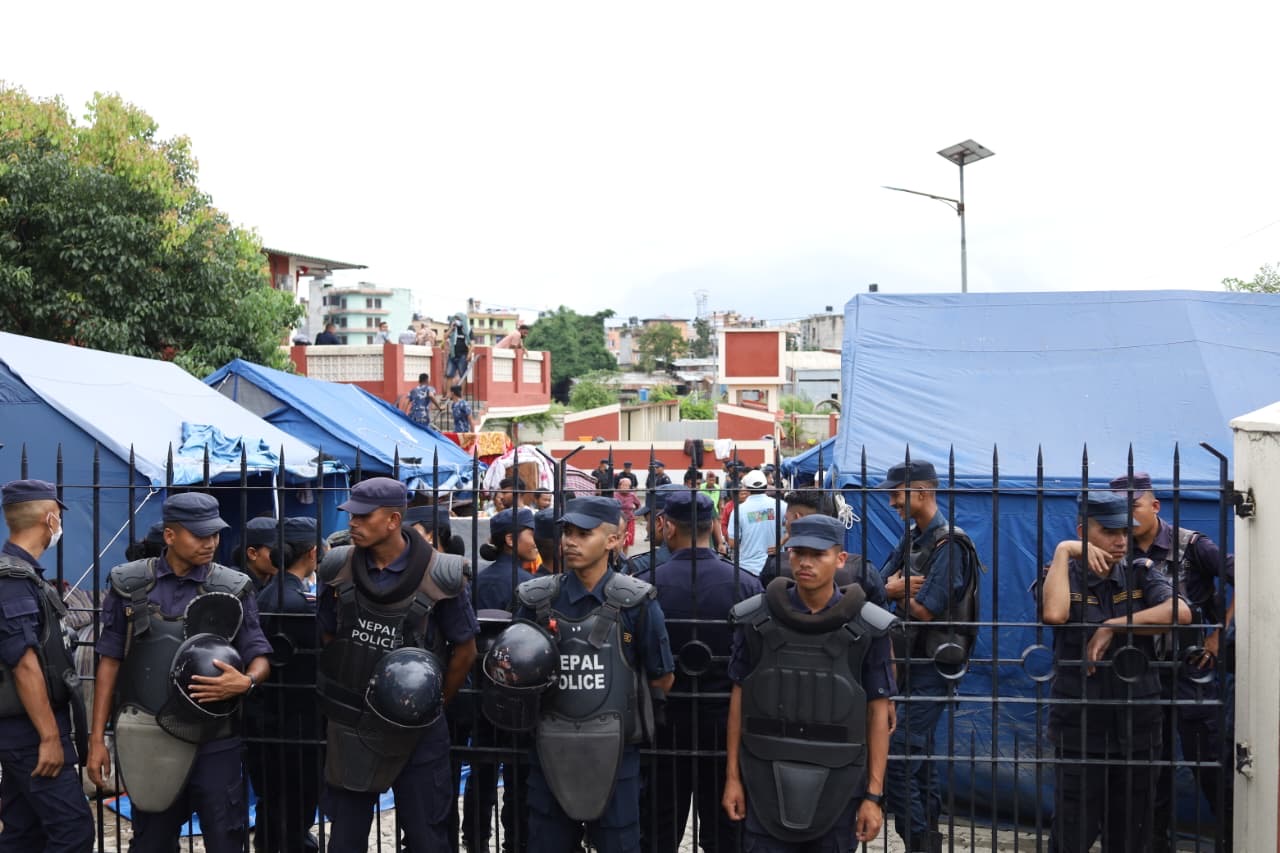
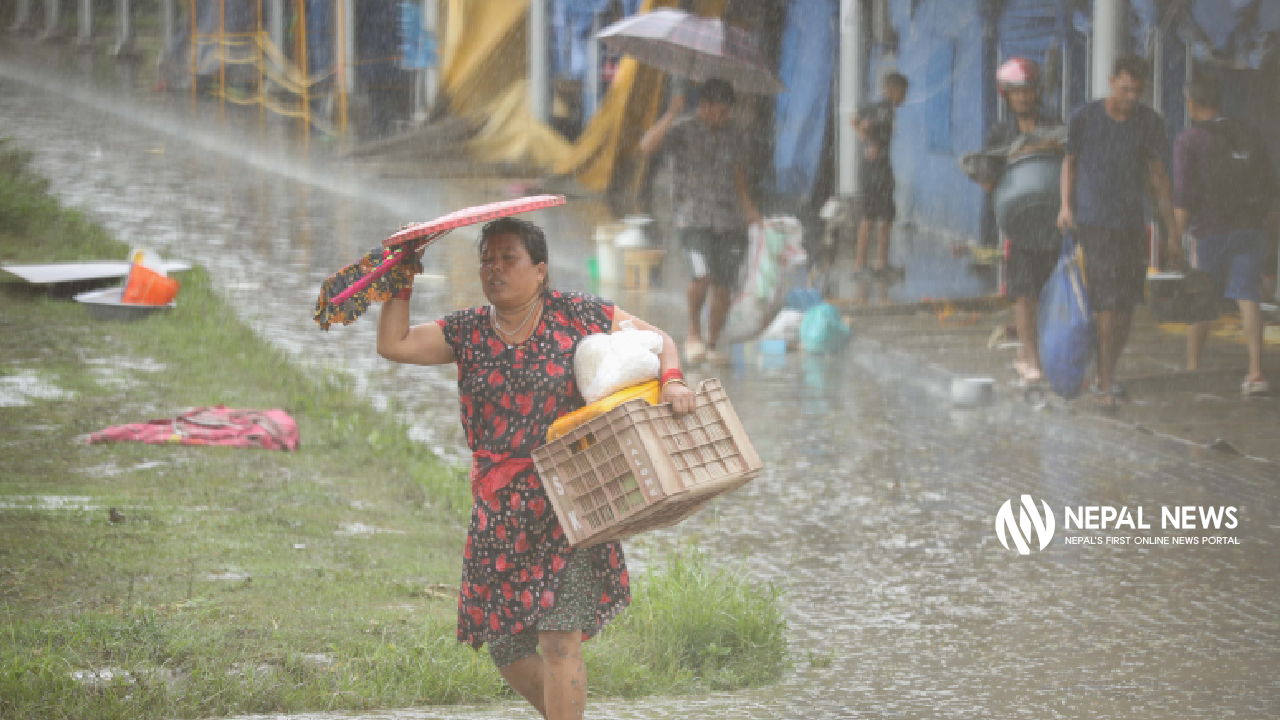
The lives of those staying inside the ‘holding centers’, where the government has placed the displaced settlers until a management alternative is met, are extremely chaotic and filled with uncertainty. Children, postpartum mothers, and senior citizens who have reached the holding centers are physically and mentally exhausted and worn out. The education of children has been disrupted, while postpartum mothers lack nutritious food and the sick lack treatment.
The squatters inside the shelter located at Ichangunarayan have even been pressured not to speak outside about the problems there. Rabina Thapa, who is taking shelter there, says, “They do not let people come from outside, and even if they come, they are not allowed to speak with us. They tell us not to speak either. A delusion has been spread outside that everything is fine. Only we know the real experience.”
According to Rabina, members of parliament from the ruling RSP (Rastriya Swatantra Party) met her and told her to remain quiet, saying, ‘Management will happen, do not speak anywhere outside.’ The movement of leaders and MPs is quite frequent in holding centers like Ichangunarayan. However, they say no seriousness has been shown to solve the problems of the displaced squatters.
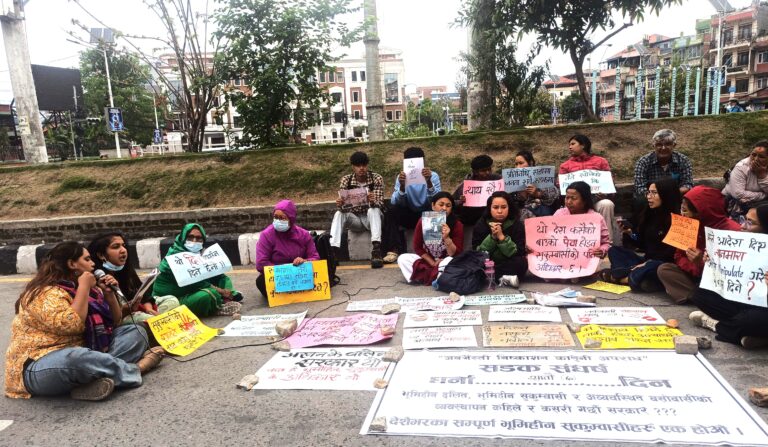
Maiya Ale participating in the protest held at Maitighar.
Rabina reached Ichangu after being displaced from the squatter settlement in Shantinagar. She has been provided with a simple bed, similar to the ones given in hospitals. Two meals a day have been arranged. However, her children are deprived of going to school.
The landless settlers were brought to Ichangunarayan after being kept in a hotel for some time. Rabina states that the food and water here are unhygienic. “One day, we were made to drink water mixed with sewage. After finding out about it, we quenched our thirst with water given by neighbors,” Rabina shares. “The bedding to sleep on is also like a hospital’s; it gets very cold. Many people have fallen sick due to the food and contaminated water.”
Mental impact on children
After the government forcefully displaced the landless squatters without preparing an alternative for management, they have fallen into physical and mental problems. Children, in particular, are in a predicament. From seeing their homes ruined to being confined within the narrow spaces of holding centers and having their studies disrupted, students are under stress.
Kritika Bhusal is a grade 10 student at Aadarsha Secondary School in Sanothimi. But after arriving at the holding center in Ichangunarayan, her studies have stopped. She has started to be plagued by anxiety regarding what will happen to her studies and future. She says, “The school is in Sanothimi. After being moved to this place, there is anxiety about how to go to school now, and what to do.” She claims that nobody has come to understand their problems.
The government has not made public the integrated data on how many children belong to the displaced squatter families whose education has been affected.
Like Kritika, other students studying in grades 9 and 10 are also under mental pressure. “I am experiencing a lot of mental stress. Even if I go to school, I am not in a position to study. There is a fear that the same problem might repeat when going to live elsewhere,” Kritika says. “My friends also say the same.”
For some children in temporary housing, however, the government has made arrangements to send them to school.
The government has not made public the integrated data on how many children belong to the displaced squatter families whose education has been affected. However, looking at the studies and data carried out by Mahila Ekata Samaj and individuals active in the landless movement, the education of more than three thousand children has been impacted when bulldozers were driven through 19 informal settlements in Kathmandu. Even though the new academic session has already begun, the educational future of the displaced children has ended up confined within the narrow rooms of the holding centers.
Children located at the Radha Soami Satsang Beas Ashram in Kirtipur, however, seem to have started going to school. The mental and psychological impact on the children who have gone to school runs deep.
Januka Pokharel, who was displaced from the settlement in Thapathali and is living in the ashram in Kirtipur, is worried about her livelihood and her children’s education alongside their dwelling. Her large family is forced to live in a single small tent. Her daughter-in-law is a postpartum mother. But she has not received the nutritious food required at such a time. Januka is a patient with sugar, cholesterol, and blood pressure. She has also not received her medicines on time. When going outside to get medicine, she has to endure strict surveillance and interrogation by the police.
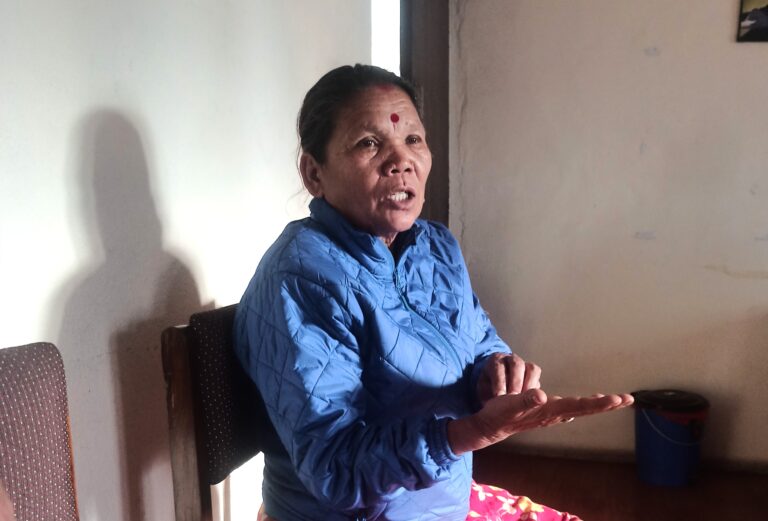
Januka Pokharel at the Kirtipur Holding Center.
Januka says, “I am sick. Our employment was snatched away. The problem became severe. We have to live bound like prisoners. The government had said it would manage things within 15 days of removing us from the settlement; now, there is nothing at all!”
Another character spending an uncertain and suffocating life after being displaced is Subhadra Neupane, who is at the holding center in Bode, Bhaktapur. Her family, which had been living in the Manohara settlement for the past 25 years, is now homeless. Seeing her house turned into dust by the government’s bulldozer tears Subhadra’s heart to pieces.
Subhadra still flinches when remembering that moment when the government suddenly displaced them without giving adequate time to move places and shift belongings. “We were forcefully taken out of the house and a bulldozer was driven right before our eyes. I couldn’t even watch,” she says.
Various organizations, activists, and legal experts have concluded that this style of the government is a severe violation of the fundamental rights guaranteed by the constitution and human rights.
When the house was being demolished, Subhadra’s daughter’s grade 12 examinations were ongoing. Amid the mental stress under the harrowing condition of the house being demolished, she could not give her exams well. “To have your home demolished means losing everything,” Subhadra says. “We were moved from Manohara to a hotel, and from there to the holding center again. Where the government will take us from here, nothing is known. Are they going to not even let us live?!”
Subhadra’s family was moved from the hotel to the temporary housing in Bode on May 4. After not finding an appropriate space in this holding center, she has kept her belongings inside a shutter, where she owns a small bicycle shop. Her son spends the night inside that very shutter.
Subhadra, who has left her daughter under the refuge of acquaintances, is waiting for the government management at the holding center. “On one hand, there is the suffering of staying here, and on the other hand, due to the uncertainty of when the management will happen, we are physically and mentally worn out,” she says.
Relentless government
During the process of removing the squatter settlements, the government had claimed it would ensure housing after collecting records and verifying the squatters. However, its effective implementation has not been seen in practice. There is no certainty as to how long the squatters will have to live in the chaotic housing of the holding areas.
Various organizations, activists, and legal experts have concluded that this style of the government is a severe violation of the fundamental rights guaranteed by the constitution and human rights. They state that by deploying bulldozers without alternatives and proper management, the government has become extremely relentless and irresponsible toward the landless squatters.
Geographer Sabin Ninglekhu, an expert on urban poverty and landlessness, states that the state has become extremely relentless toward landless and poor citizens. He says, “The state has created a disaster for the landless. Evicting citizens while exhibiting inhumane behavior is not justifiable from any perspective. The state committed a kind of crime against the landless.”
According to the data from the Ministry of Urban Development and Kathmandu Metropolitan City, those displaced from various settlements have been kept in temporary shelters at Radha Soami Satsang Beas in Kirtipur, Kharipati in Bhaktapur, Bode, Nagarkot, Banepa, and Nagarjun.
In addition to this, there are also displaced people in lodges around the Balaju, Machhapokhari, and New Bus Park areas. The biggest impact of the displacement seems to have fallen upon children, the sick, postpartum mothers, and senior citizens.
The constitution has placed housing under the fundamental rights of citizens. Advocate Kabita Bahing states that the government displaced the landless squatters and unmanaged residents by violating such fundamental rights. “The state is supposed to protect citizens who have nothing, but here, the government itself committed excesses against the landless,” she says. “Evicting citizens without arranging alternative housing is a crime committed by the state.”
On May 8, the Supreme Court issued an interim order not to evict landless Dalits, landless settlers, and unmanaged residents without making proper alternative arrangements, and to ensure just management for those forcefully displaced. However, defying the said order, the government continues the task of ruining homes by operating bulldozers in various locations across the country.