Kathmandu
Tuesday, July 14, 2026





The new Balen government’s sweeping plan to investigate the assets of Nepal’s top officials since 1991 raises hopes of accountability. But past failures, missing records, and political will could determine whether this anti-corruption push delivers real change.

KATHMANDU: The government of Prime Minister Balendra Shah approved 100 governance reform agenda items at its first cabinet meeting on March 27 and released them publicly the following day. One item on the list, to be completed within 100 days, has sent ripples through political and administrative circles while energizing the general public. That item is the scrutiny of assets held by senior political officials and high-ranking civil servants who have held public office since 1991.
To carry out the scrutiny, the government is preparing to form an empowered asset investigation committee comprising experts in law, finance, revenue, and research. The committee will operate under the Office of the Prime Minister and Council of Ministers.
In the first phase, asset details of senior political officials and high-ranking civil servants who held public office from 2005/06 to the present, 2025/26, are to be collected, verified, and investigated. The second phase is intended to cover officials and civil servants who held public office from 1991/92 to 2005/06. The agenda states that the investigation process will be conducted according to legal standards, based on evidence, and impartially, and that the committee’s report and recommendations will be implemented through the relevant agencies.
Both the citizens’ contract and the manifesto that the Rastriya Swatantra Party (RSP) published ahead of the March 5 House of Representatives election included the target of investigating, through legal processes, the assets of individuals who have held important public office since 1990. Having formed a government with close to a two-thirds majority, the RSP government is now moving to prioritize its election pledges.
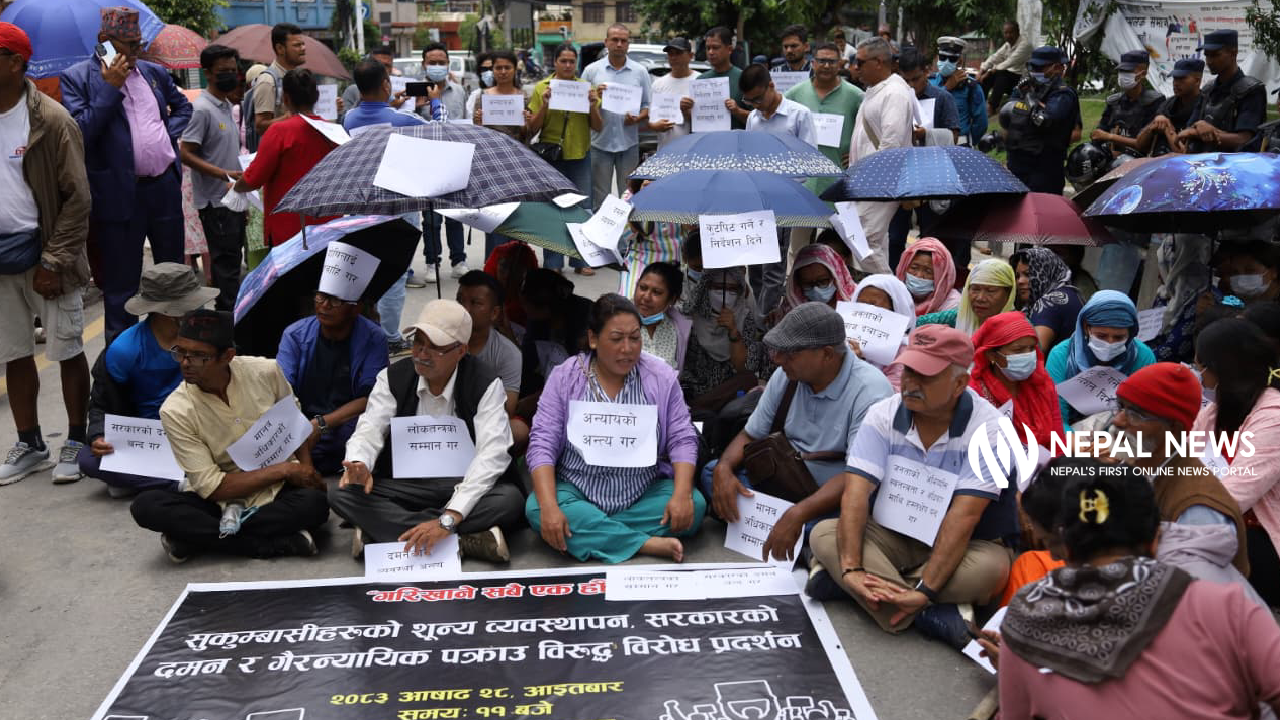
Last September, the Gen Z movement erupted in protest against the social media platform ban, demanding an end to corruption and opposing the misrule of old parties. Having built a strong government from the election that followed the movement’s toppling of the government and dissolution of parliament, RSP now appears to be pursuing a campaign against corruption in keeping with the movement’s mandate.
After long years of politicians pledging in speeches that the corruption of the three-and-a-half decades since the restoration of democracy must be investigated along with the assets of public officials, the door to actually doing so now appears to be opening.
Yet important questions remain about how the scrutiny of public officials’ assets since 1991 will actually proceed and how the investigation committee will conduct its work, because this step is not only ambitious but equally challenging to implement.
The pledge issued by Nepali Congress for the March 5 House of Representatives election also included the scrutiny of assets held by all senior officials and public office holders since 1990/91.
According to the 2025 report of Transparency International (TI), Nepal ranks among the more corrupt countries. On the Corruption Perceptions Index, where 100 represents a corruption-free country and zero the most corrupt, Nepal scored 34 last year. Nepal has consistently appeared in TI’s annual reports as a high-corruption country. This reflects the failure of the political parties that have governed Nepal repeatedly over the years to take concrete action against corruption. The illicit accumulation of wealth by leaders and senior officials, and the lavish lifestyles of their children, were among the targets of public anger during the Gen Z movement. TI Nepal’s report explicitly states that the state of the index appears to confirm the basis for arguing that growing corruption was a cause of the Gen Z movement of last September 8 and 9 and the irreplaceable loss of life and property the country suffered.
The pledge issued by the Nepali Congress for the March 5 election also included the scrutiny of assets held by all senior officials and public office holders since 1991. The Nepali Congress had stated that if it won a majority and formed a government, it would establish a high-level empowered investigation commission within six months.
Political parties have long made the scrutiny of assets held by public officials a political agenda item. Corruption control and zero-tolerance policies against corruption became little more than stock phrases for leaders. But the policy and the agenda never moved from paper and discussion into actual practice.
Members of Parliament (MPs) in the previous parliament had themselves called for the formation of a powerful commission to investigate public officials’ assets. At the House of Representatives meeting held May 6, 2025, Nepali Congress MP Dhanraj Gurung demanded that a high-level commission be formed to investigate the assets of leaders and civil servants.
The demand for investigating the assets of senior officials was not new. As the unexplained wealth and lifestyles of public office holders became visible, the issue had been raised periodically for some time. An inquiry commission was even formed on 8 March 2002 – but the report of that commission, established to investigate corruption and hidden assets, was simply kept under wraps. This is precisely why how the new government’s investigation committee will work – and how its report will be implemented – has become the central question people are waiting to see answered.
The challenge of investigation
The new government says the first phase will involve collecting, verifying, and investigating asset details of officials and senior civil servants who held public office over the two decades from 2005/06 to 2025/26. Since the overall plan covers officials from 1991 onwards, this is a 34-year accounting exercise. Questions are beginning to be raised about how straightforward the investigation can realistically be, because three decades ago, there was no advanced information technology of the kind available today. Government offices across the country operated entirely on paper. The questions of what condition those documents are in and how secure they remain are yet to be answered.
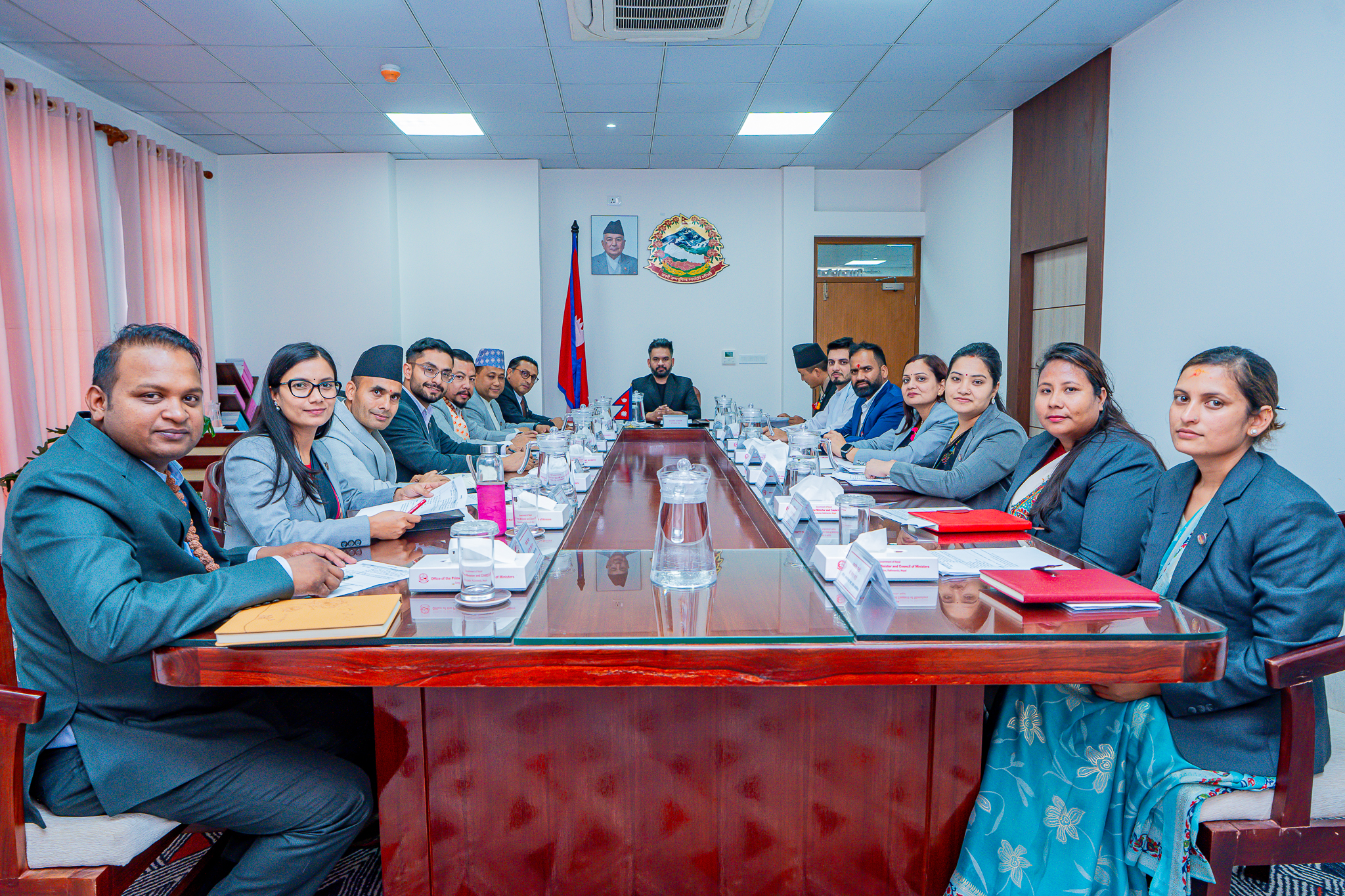
The second Cabinet meeting held on March 30. Photo: Prime Minister’s Secretariat.
Political economist Mohan Das Manandhar says that investigating assets of public officials over the most recent 20 years – the first phase – should be relatively manageable. Since all records have been digitally registered in recent times, asset verification will be more straightforward, he says. “Property registered in the names of the individual and family members can easily be pulled from land revenue records. Finding out how much is in the banks is not difficult,” he says. “How much gold, silver, and cash someone holds may be harder to determine. Registered assets such as vehicles can be traced through the registration authority.”
Manandhar says the second-phase scrutiny covering 1991/92 to 2005/06 could be more difficult. “There may be some challenges because registration systems were not in place from 1991/92 to 1994/95. Tracing cash held in foreign banks will likely prove difficult,” he says. Investigating civil servants’ records, however, should not be hard, he adds.
Madan Krishna Sharma, president of TI Nepal, says that while there are many challenges involved in investigating the assets of political figures, it is achievable if the leadership acts with firm resolve and in accordance with the law.
He recommends building a clear standard from the assets themselves and conducting the investigation on the basis of earlier reports. “Before beginning the investigation, clear criteria must be set for how far down the ladder to go — from ministers to which level of civil servant. It must be settled whether all positions appointed by the government in public bodies fall within the scope, or only the most senior ones,” he says.
Sharma says that while there are many challenges, the process is achievable if the leadership acts with firm resolve and in accordance with the law, and that a strong legal framework should be built so those who have engaged in corruption can be held to account. “Looking at very old records in particular could be challenging,” he says. “On the other hand, because public office holders are watched by society, it is easier to assess them and gather evidence.”
He says the narrative that politicians are untouchable by law no matter what they do must be changed. He sees the problem as rooted in treating politics as a profession rather than public service. “Politics is not a field you enter to make money; it is a field you enter to serve the country and the people. Yet those in politics are seen to have accumulated greater wealth than traders and businesspeople,” he says.
The Lamsal Commission report
Work on investigating the assets of public office holders is not without precedent. In 2022, the government of Prime Minister Sher Bahadur Deuba formed a Judicial Inquiry Commission on Assets under the chairmanship of then-Supreme Court Justice Bhairav Prasad Lamsal, after criticism that public officials had amassed illicit wealth.
The commission took about 13 months to prepare its report, which was submitted to King Gyanendra on March 18, 2003. The report has never been made public. However, for purposes of implementation, the then-government of Lokendra Bahadur Chand forwarded it to the Commission for the Investigation of Abuse of Authority and, in the case of judicial officials, to the Judicial Council. On the basis of that report, CIAA investigations led to cases against leaders including Khum Bahadur Khadka, Jay Prakash Prasad Gupta, Govinda Raj Joshi, and Chiranjivi Wagle on corruption charges.
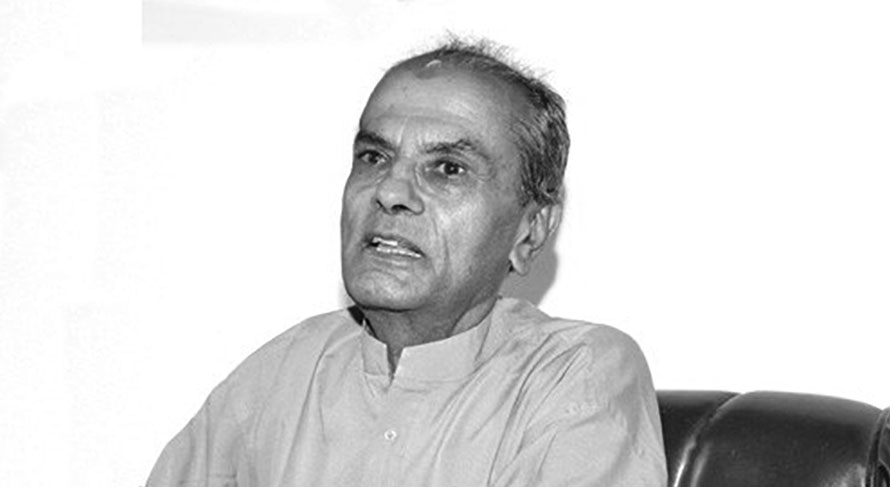
Bhairav Prasad Lamsal
The Lamsal Commission requested asset declarations from 41,941 individuals who had received government benefits between mid-April 1990 and mid-April 2002. Not all of them submitted declarations. According to figures made public at the time, 30,599 individuals’ assets were investigated. Of those, 602 were recommended by the commission for action on corruption charges for having accumulated wealth beyond their means. The commission also recommended that those who failed to submit asset declarations be blacklisted and subjected to action.
The report noted that the source of wealth could not be established for 50 percent of the political leaders and civil servants investigated. Those found to have unexplained assets included then-police chiefs, ministers, officials of constitutional bodies, office heads, police and army officers, court staff, and judges. The source of wealth was particularly unexplained among those directly interfacing with the public – staff at customs, land revenue, and revenue offices.
Senior advocate Shree Hari Aryal says the government’s current target of investigating public officials’ assets since 1990/91 is ambitious. “It would be enough to implement the work already done by the Lamsal Commission in 2002/03 and then investigate the remaining period,” he says. “Repeating work the previous commission has already done is a political stunt. We should not be acting like children.”