Kathmandu
Friday, July 24, 2026





Dipendra, captaining for the first time, delivered a composed and mature performance in both matches
KATHMANDU: When the final squad for the two-match T20I series against the United Arab Emirates (UAE) at the TU Cricket Ground in Kirtipur was made public, Nepal national team head coach Stuart Law was himself caught off guard. It was natural for him to be surprised by the return of some players and the inclusion of some new ones.
Appointed on 28 March 2025, he was not disheartened by this. Entrusted with the team’s responsibility for two years, he appeared even more enthusiastic. Before the match, he had said, “The selection of some players was unexpected for me too. Some of them had played before but had been out for a long time. I am very excited to see what these players are capable of.”
His point was fair enough. A player’s capability could not be gauged from net practice. To understand true ability, it had to be seen under match pressure. Under that pressure, the team suffered a 6-wicket defeat in the first match by the Duckworth-Lewis-Stern (DLS) method. In the second match, however, the team bounced back with an outstanding performance to claim an 8-wicket victory. With this, the series ended level at 1-1.
This was Nepal’s first match in this format since playing against Scotland in the final group stage match of the ICC T20 World Cup on 17 February 2026. Nepal had begun their World Cup campaign with a narrow four-run defeat against Test nation England, then suffered a 10-wicket defeat against emerging team Italy. After that, they were beaten by nine wickets against another Test nation, West Indies.
However, by beating Associate nation Scotland by seven wickets, Nepal registered their first World Cup victory in 12 years. Even so, the win was not as comfortable as coach Stuart Law had expected. Nepal had to wait until the final four balls to win the match.
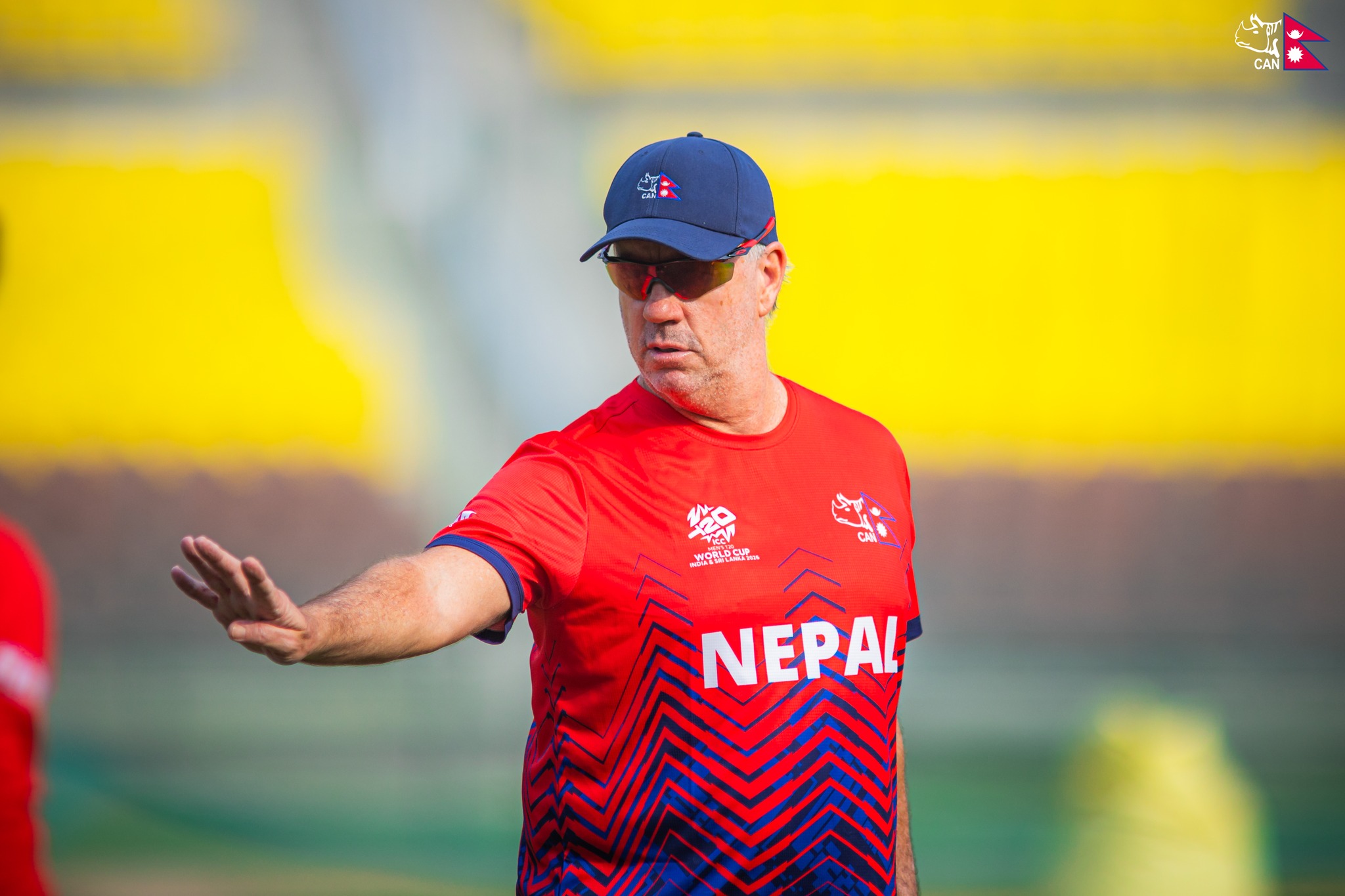
Stuart Law. Photo: CAN
He had his own views about the World Cup performance. A lack of discipline among players emerged as a major problem. In particular, he had taken seriously the issue of Kushal Bhurtel and middle-order batter Sandeep Jora using social media during the tournament.
In the match played approximately two months and three days after the World Cup, Kushal and Jora remained in the regular squad. By contrast, captain Rohit Kumar Paudel, opener Aasif Sheikh, all-rounder Gulshan Kumar Jha, spinner Lalit Narayan Rajbanshi, and pace duo Sompal Kami and Karan KC could not make it into the squad.
Instead, allrounder Kushal Malla, wicketkeeper-batter Arjun Saud, and spinner Shahab Alam – who had been absent for a long time – successfully made their return to the squad. Similarly, pacer Hemant Dhami, who had played for Nepal ‘A’, and U-19 team all-rounder Santosh Yadav both made the squad for the first time, adding new energy. However, against UAE, a side of comparable standard, the performance of players other than Hemant was not particularly impactful. The returning players Kushal, Arjun, and Shahab could not perform to expectations.
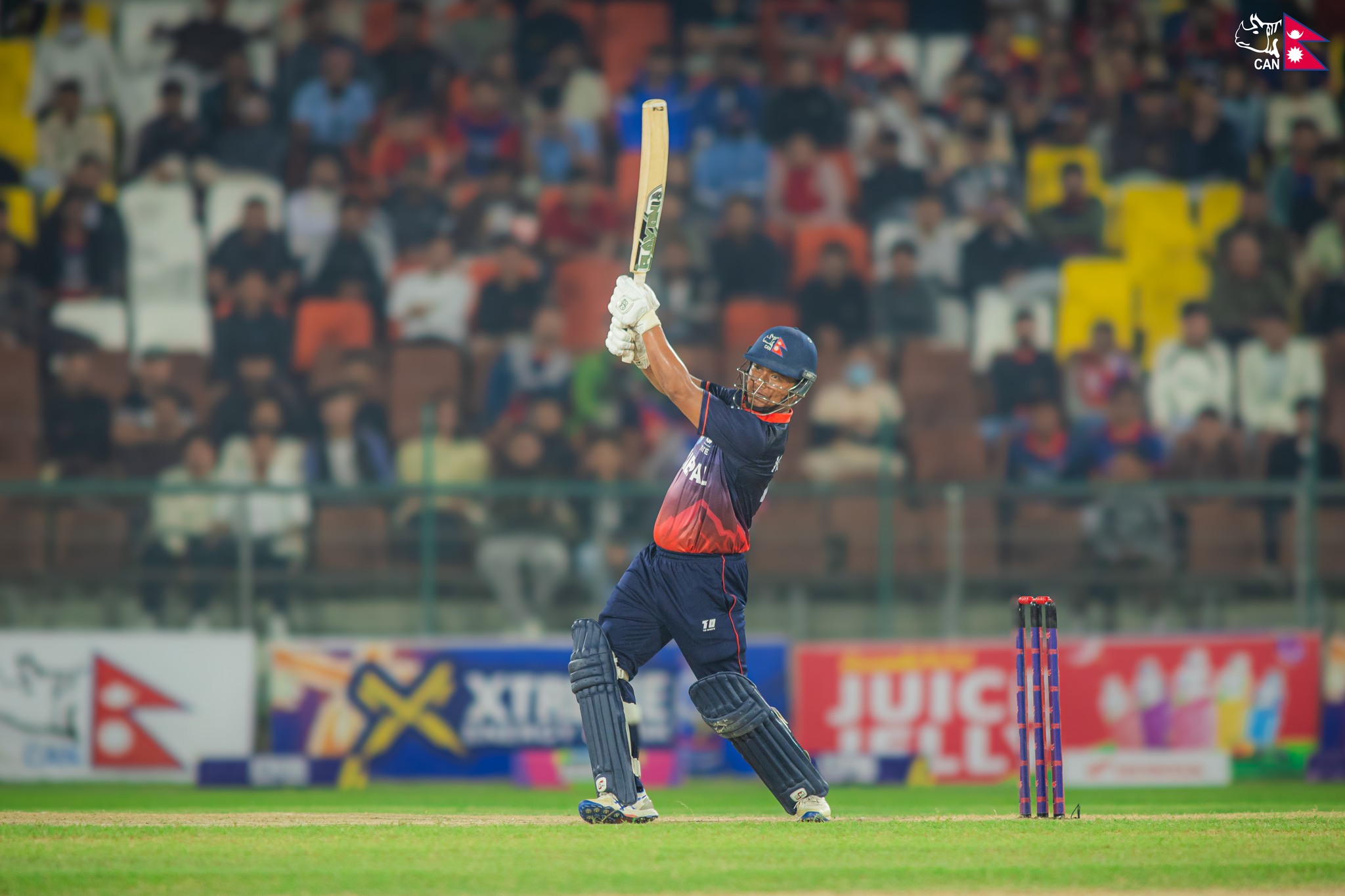
Kushal Malla. Photo: CAN
“We selected players who performed excellently in the Prime Minister Cup. The idea was to develop the team with the next World Cup in mind. Players could not perform as we had expected,” captain Dipendra Singh Airee had said after the first match.
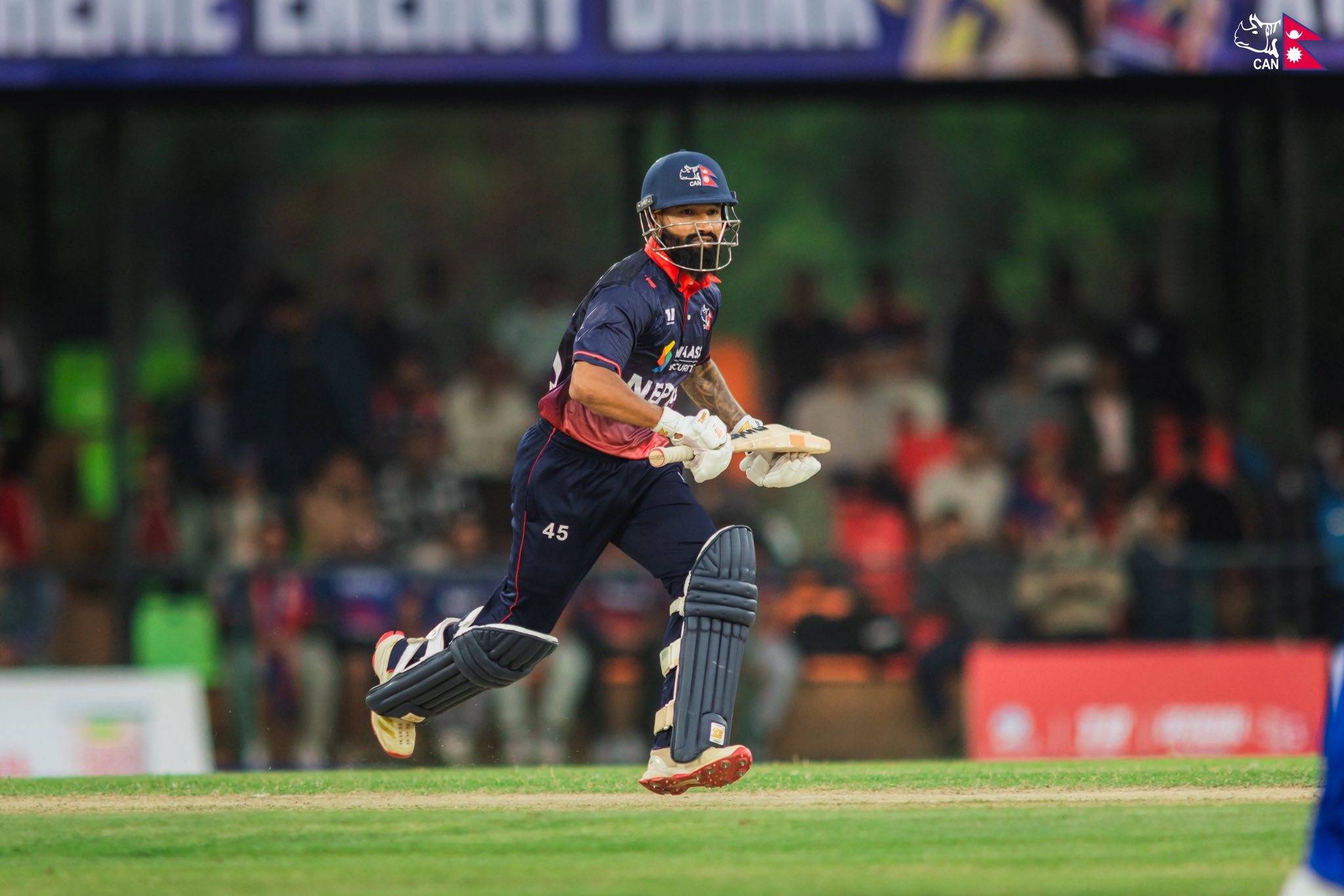
Dipendra Singh Airee. Photo: CAN
Twenty-year-old Hemant had delivered a remarkably impressive performance in the Prime Minister Cup, taking 27 wickets to lead Sudurpashchim to the final for the first time. It was on the basis of that performance that he earned his place in the national squad. In his very first international match, failing to manage the pressure, he bowled a costly over conceding 20 runs. That over proved decisive for UAE captain Muhammad Waseem, who was chasing a DLS target of 78, and the direction of the match changed. Because of this weak performance from Hemant, even leg-spinner Sandeep Lamichhane’s economical bowling – conceding just eight runs in two overs – became ineffective. UAE went on to claim a comfortable 6-wicket victory, taking a 1-0 lead in the series.

Sandeep Lamichhane. Photo: CAN
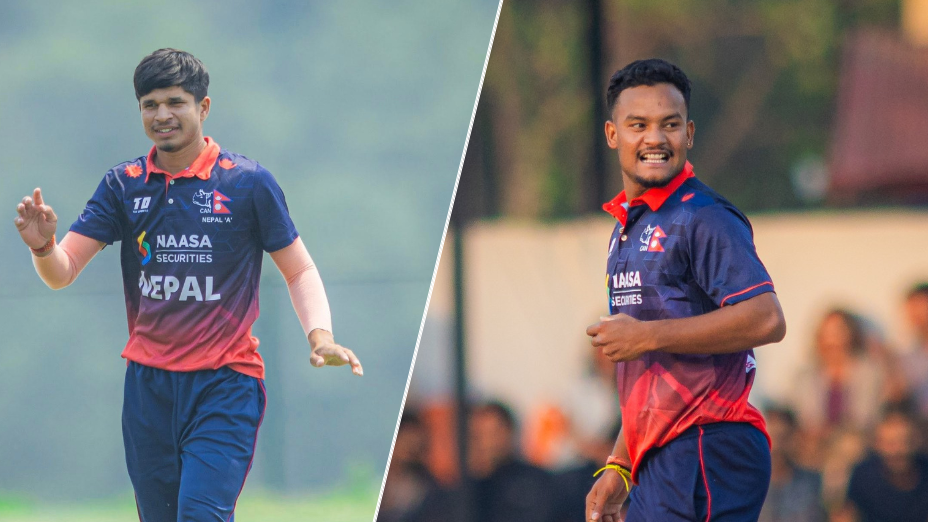
In the second match, Hemant made an outstanding comeback, dismissing Waseem for a golden duck among his two wickets and re-proving his ability. Along with him, coach Stuart had also expected a similarly impressive performance from 19-year-old Santosh Yadav, seen as a rising player.
Santosh, one of the most promising players of the Prime Minister Cup, had contributed significantly with both bat and ball to help Lumbini Province reach the top six. After scoring 265 runs and taking 21 wickets in eight innings, he was established as a future ‘genuine all-rounder’. On making his debut in international cricket, he could not make an immediate impact. Making his senior team debut in the second match, he could only score one run before returning to the pavilion. This highlighted the gap between domestic and international cricket.
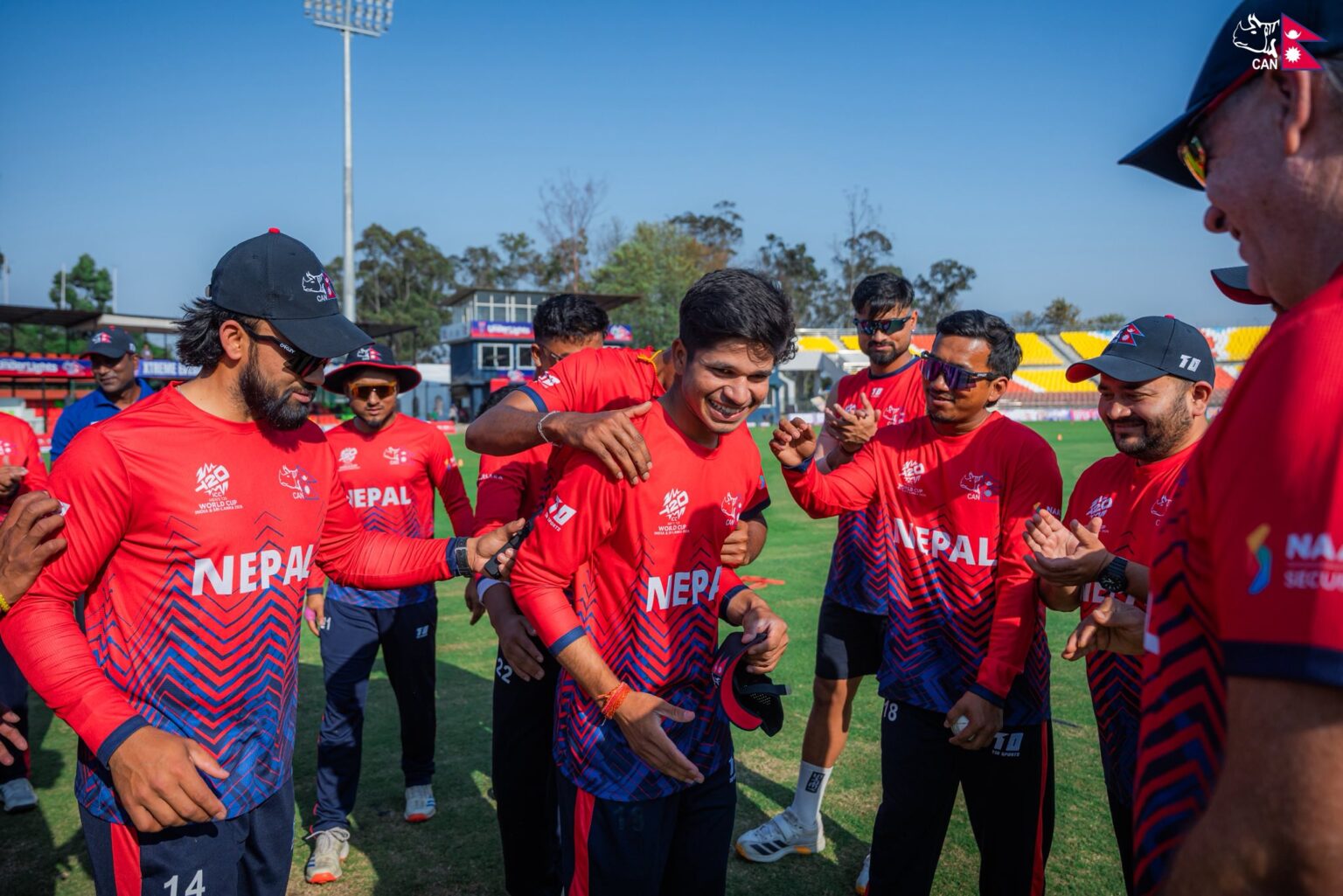
Santosh is happy after receiving his debut cap. Photo: CAN
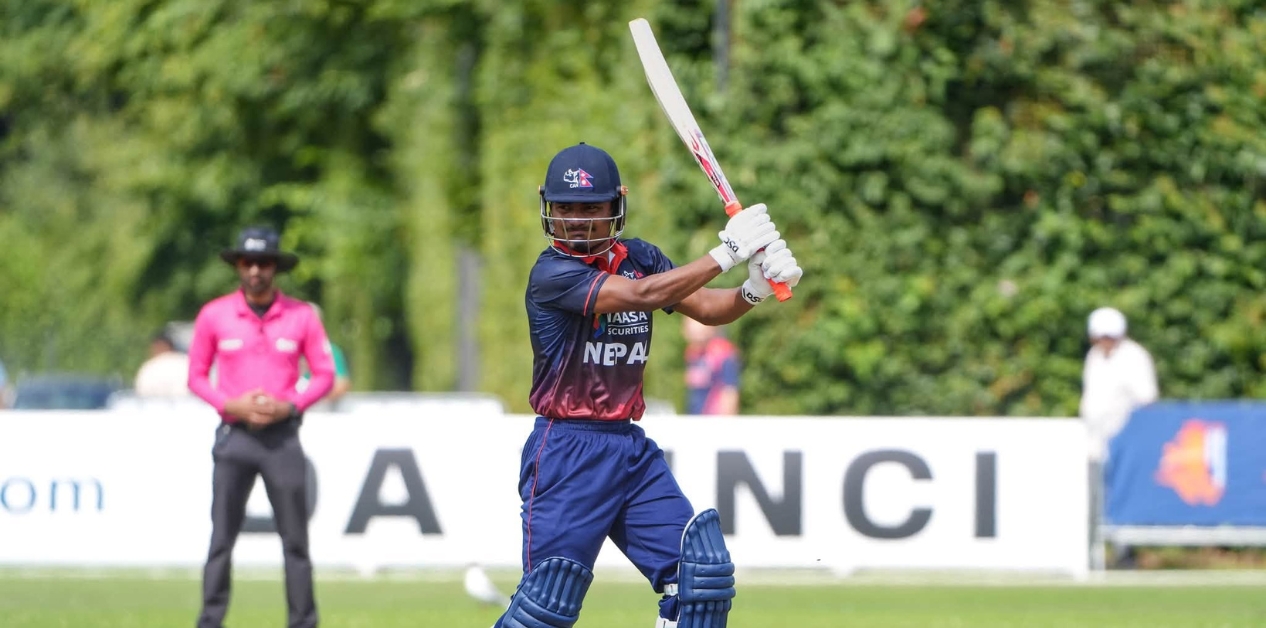
Arjun Saud returned to the national squad as wicketkeeper-opener after three years and eight months. Kushal Malla, currently under criticism for poor form, was also in the squad. Neither could make the start expected of them. As a result, to salvage the series, the Nepal team was once again dependent on experienced players. Kushal Bhurtel not only steadied the team with an outstanding unbeaten 84-run innings in the second match but also delivered an impressive 8-wicket victory. Dipendra, captaining for the first time, showed composure and maturity in both matches, accumulating a total of 55 runs.
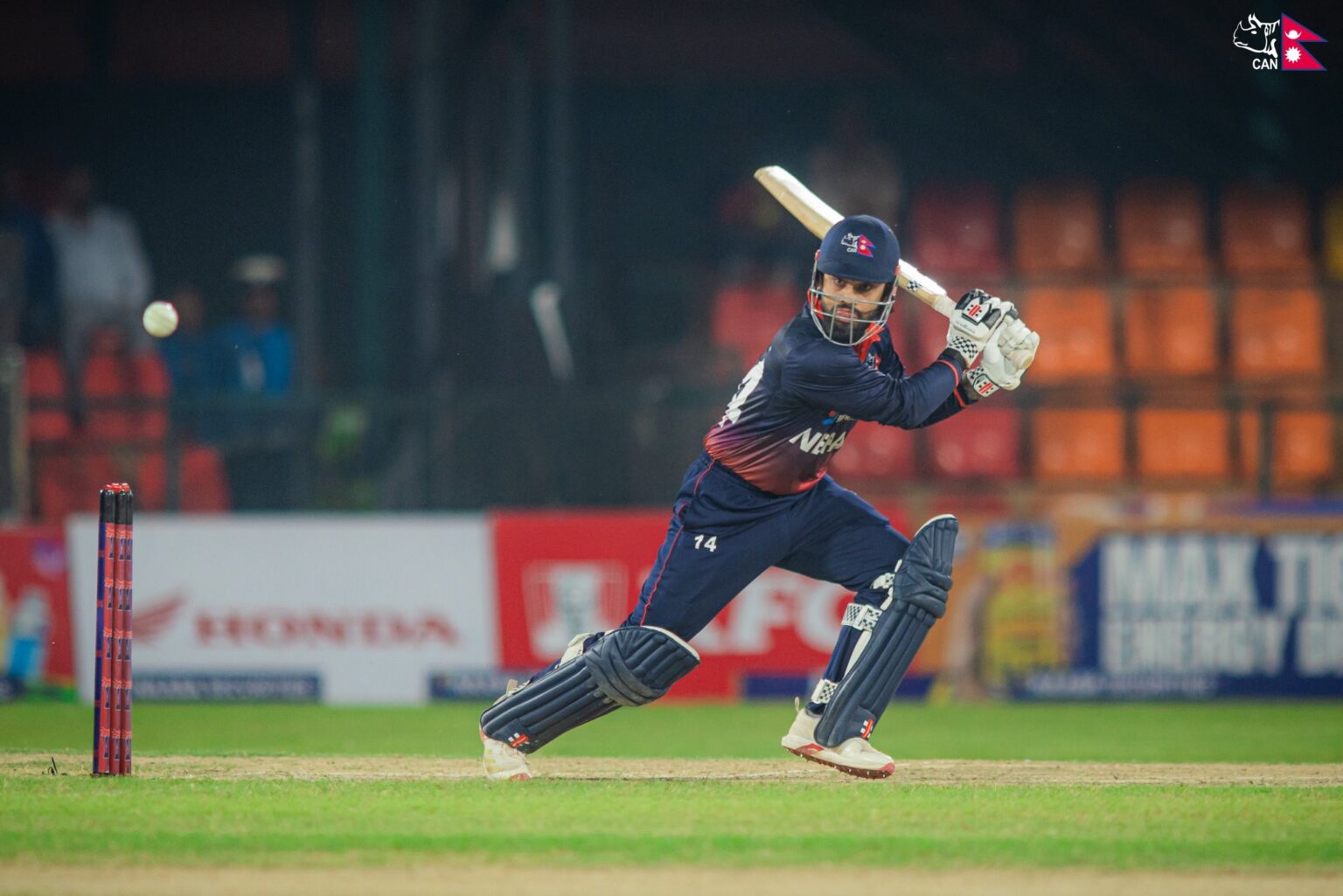
Kushal Bhurtel. Photo: CAN
In the spin department, although Shahab took one wicket, Sandeep’s ‘global icon’ image and experience proved decisive. Sandeep re-proved his commanding presence by taking a total of 6 wickets across both matches to become the series’ leading wicket-taker. This performance also signals that replacements for these experienced players in the team are not yet ready.
Even after losing the first match that was winnable, Sandeep did not appear critical about team selection. He says, “My job is to come and play. I give the team everything I can from my side. I cannot say anything more.”
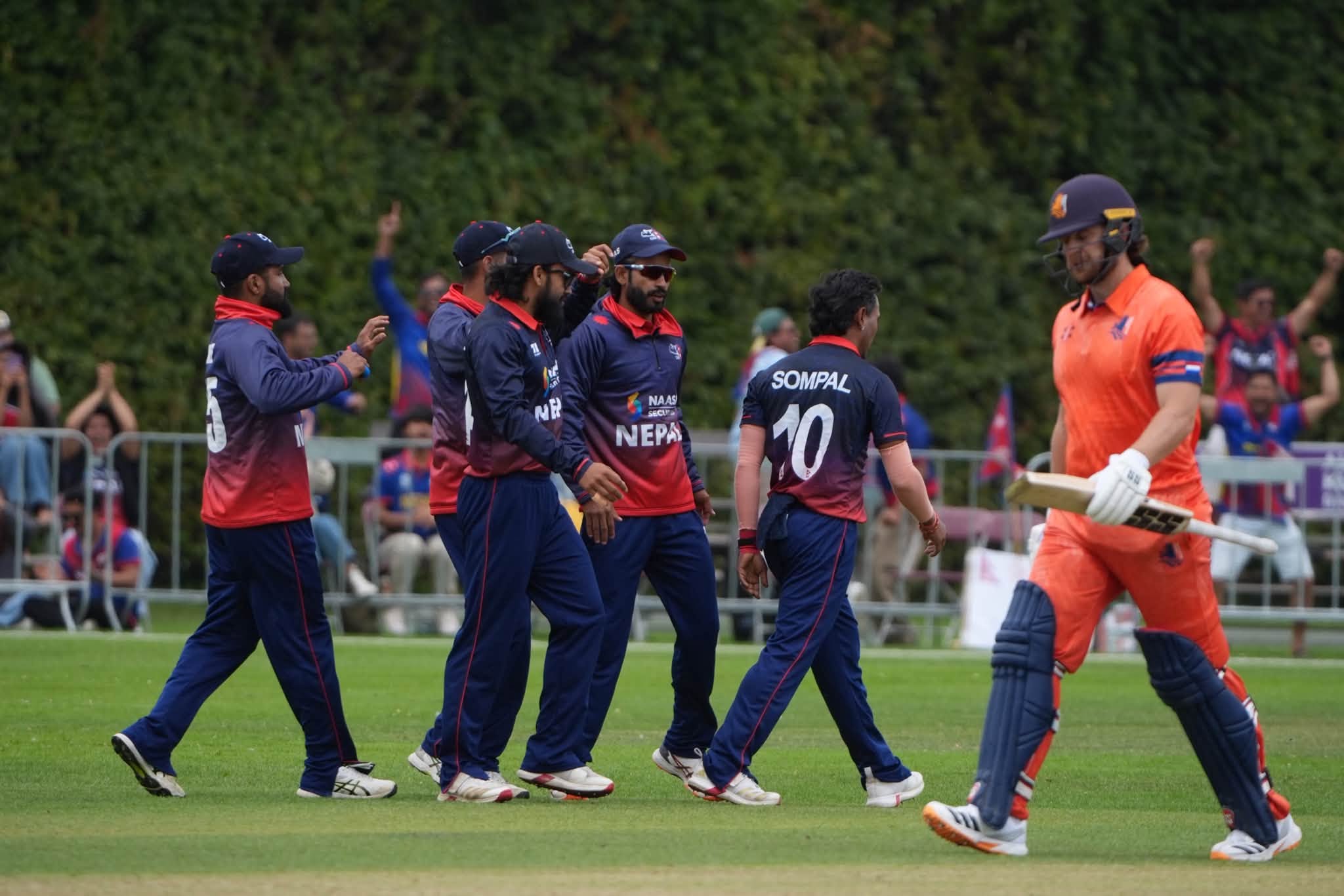
Nepal had made their historic debut at the T20 World Cup in 2014. Pacer Sompal Kami, one of the important members of that squad, is still part of the national team. Although established as an experienced player over time, his playing career now appears headed toward retirement. Having participated in the World Cups co-hosted by the USA and West Indies in 2024 and India and Sri Lanka in 2026, there are signs that his international career has entered its final phase.
Sompal has taken 84 wickets in 88 innings, a record that cannot be considered weak by any measure. In recent times, however, his performance has appeared to decline. There has been some drop in aspects such as pace, line-and-length, and death overs. Even so, team management has continued to give him opportunities. The main reason for this is Sompal’s experience and his ability to handle pressure situations.
Karan KC, who has been Sompal’s long-standing bowling partner, has now turned 34. Since making his debut against the Netherlands in 2015, he has taken 106 wickets in 88 innings. Karan’s aggressive bowling style and ability to take wickets at crucial moments had made him the team’s primary weapon. Due to age and fitness, he too is now increasingly being confined to short-term strategies rather than long-term plans.
The decision to leave both experienced pacers out of the squad at once is not an easy one. Doing so risks upsetting the team’s balance, placing excessive pressure on new players, and exposing a lack of leadership and experience. For this reason, management has adopted a strategy of gradual transition, says former Nepal player and former coordinator of the national team selection committee, Dipendra Chaudhary.
“New players have been included to prepare for the next World Cup. All the new players who came into the squad are from the PM Cup. But the PM Cup and this format are different. Since they also did not have time to practice against UAE, it can be said that the performance was moderate,” he says.
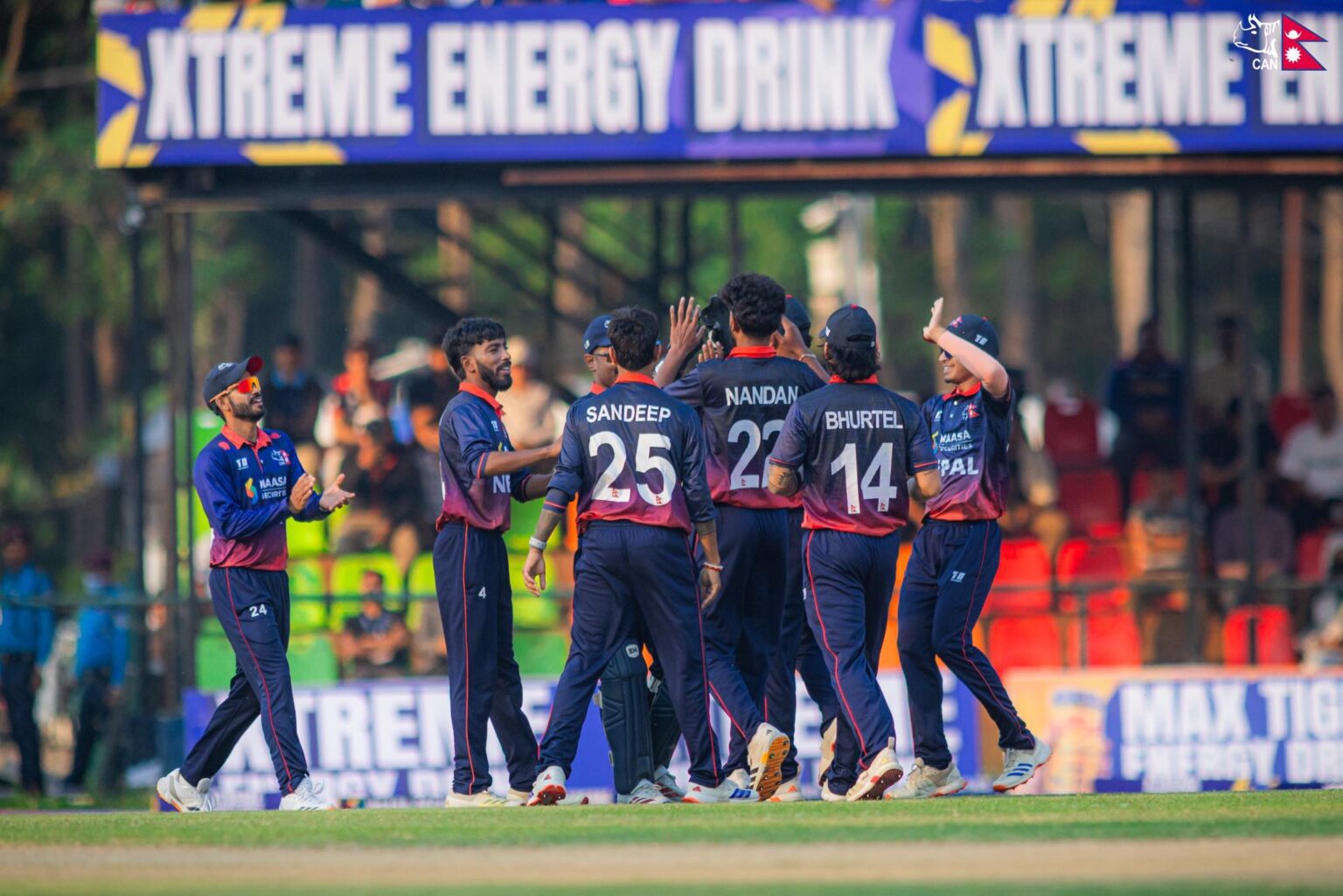
Nepali team playing against UAE. Photo: CAN
The 11th edition of the T20 World Cup is scheduled to be held in Australia and New Zealand in October-November 2028. Having been eliminated at the group stage in the latest edition held in India and Sri Lanka, Nepal will again have to play qualifying rounds this time too. By the next World Cup, players like Karan and Sompal along with Kushal Bhurtel and Aasif Sheikh will likely head toward retirement. For this reason, Nepal is under compulsion to build a good ‘backup’ now. The Cricket Association of Nepal (CAN) is also giving opportunities to some new players. Spinner Sher Malla, who took 17 wickets in the Nepal Premier League, is the latest example of this.
Having made his debut in the T20 World Cup against England on 8 February 2026, stepping in for regular spinner Lalit Narayan Rajbanshi, he had taken Phil Salt’s wicket with the very first ball. He could not get an opportunity in subsequent matches. In the first match against UAE, however, he returned and maintained his dominance by conceding just seven runs in two overs. Such players can become ‘match winners’ for Nepal in the future, Chaudhary says.
“Nepal has a new team. UAE is also a good team. So the series could even have gone 2-0. It is difficult for new players to adjust to the environment. Even at such a time, Hemant has made a good comeback. There is hope that as such players gradually adjust to the environment, new match winners can also be born,” he says.
Nepal will now focus on the ICC Cricket World Cup League 2. Of the new players who played T20Is against UAE, only Hemant is in the reserve for the ODI squad. He will get an opportunity only if Sompal, Karan, or Nandan Yadav is injured. For that to happen, he will also need to outperform fellow young pacer Rizan Dhakal in net practice. Will he get a chance in his ‘favorite’ format as well, just as he did in T20Is? With this, the generational transition in Nepal’s cricket team has begun.