Kathmandu
Thursday, June 25, 2026





Although lightning has caused nearly a thousand deaths in 12 years, exacting a devastating toll across Nepal, the state has no early warning system, no dedicated policy, and no action plan to address it
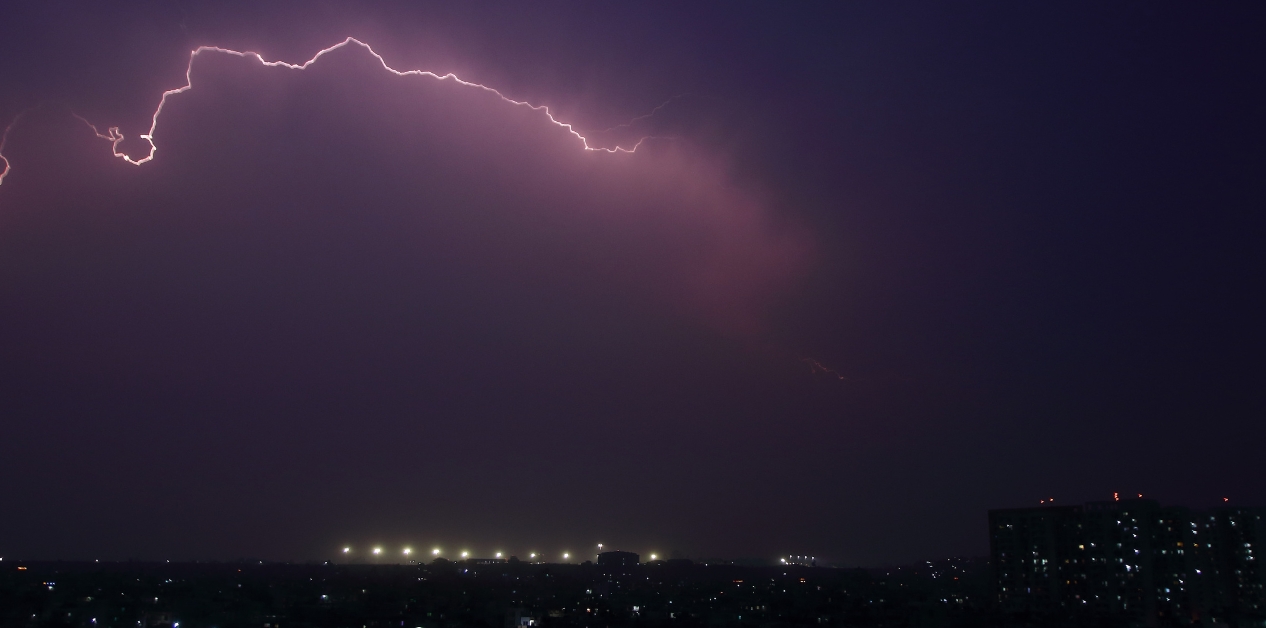
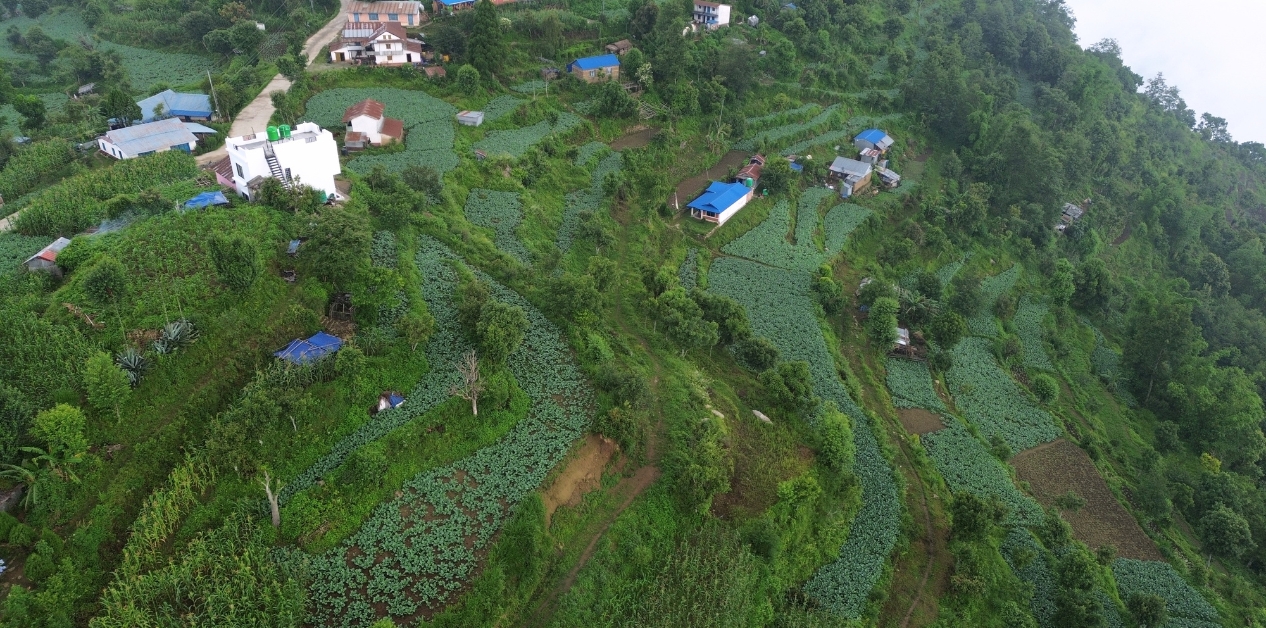
KATHMANDU: Every time dark clouds begin to gather in the sky, Smita Baniya (17), of Okhre in Ram Prasad Rai Rural Municipality-1 of Bhojpur, is gripped by dread. When lightning flashes and thunder rolls, her body trembles with fear. It has been this way since she was struck by lightning and injured in February 2020. “I keep fearing something like that will happen again,” she says.
Smita was 11 years old and in class six when lightning struck her. On that day six years ago, she had returned from school and was having a snack inside the house. Outside, a hailstorm was raging with strong winds. She had barely stepped to the doorway with her grandmother to watch when a lightning bolt hit, injuring both her eyes and her body. Her right eye was left unable to see. Her grandmother suffered an injury to her right arm.
Smita lost consciousness after being struck and did not regain it for ten hours. Her grandmother regained consciousness after an hour and a half. The strike had left the right side of her grandmother’s body paralyzed. She recovered after treatment in Biratnagar, but is seized by fear the moment thunder begins to rumble.
After receiving initial treatment at the district hospital, Smita was taken to Tilganga Eye Hospital in Kathmandu for further care. Surgery there restored her sight, but her right eye remains weak. Without plus-two power glasses, she cannot see distant objects clearly. For about a year after the surgery, she required monthly follow-up visits. Travel, accommodation, and treatment costs totaled more than Rs 500,000. “Even now I need follow-ups every six months. Because my eye is weak, I get dizzy spells and headaches from time to time,” she says.
Lightning strikes in Okhre, Bhojpur, almost every year. A few years before Smita was struck, a 13-year-old girl from a neighboring household died in just such a strike. The class nine student was changing clothes in her room at around half past nine in the morning, preparing to leave for school, when lightning killed her on the spot. “She was related to us as an aunt. She died right there; there was no time even for first aid,” says Smita’s uncle DB Baniya. Unable to remain in their ancestral home after losing their daughter, the family moved to Madhesh within a year of the incident.
According to DB, a lightning strike in 2021 split a neighboring house apart. Residents of Okhre are bewildered by the recurrent strikes and the human and material losses they bring. “No study has been done to find out exactly why so many lightning strikes hit this area. The elders in the village say these incidents increased after electricity lines arrived and after Telecom put up a tower above the village,” DB says.
964 deaths in 12 years
Government records show that lightning ranks third among disasters causing human casualties, after landslides and fires. On average, 80 people die and 265 are injured by lightning strikes each year. According to the disaster portal under the National Disaster Risk Reduction and Management Authority, a total of 3,209 lightning incidents were recorded across the country from 2014 to 2025, killing 964 people and injuring 3,179.
Of those killed, 451 were males, 295 females, and 218 of unidentified gender. Over the 12 years since 2014, damage to physical structures and livestock from lightning has amounted to Rs 115.6 million. This translates to an average annual loss of approximately Rs 10 million in private property and infrastructure.
District-level analysis shows that Makwanpur is the most frequently struck district. Over the 12-year period, lightning hit the district 168 times, and it also recorded the highest number of deaths and injuries from lightning.
During this period, 68 people died and 267 were injured due to lightning in Makwanpur alone. After Makwanpur, the districts with the highest death tolls are Morang (40), Udayapur (38), Jhapa (29), Baglung (27), and Saptari (26). According to Nepal Police data, from fiscal year2013/14 to 2024/25, a total of 4,096 families across the country were affected by lightning.
These figures reflect only incidents reported to the police and the authorities. Lightning expert Shriram Sharma notes that because lightning disproportionately affects remote and impoverished families in rural areas, many incidents may never make it into official records.
People are struck by lightning while herding cattle, working in the fields, or gathering fodder and firewood. Yet no comprehensive study has been conducted in Nepal on the causes of lightning strikes and their impact.
Research by lightning expert Sharma shows that strikes occur predominantly in hilly areas, with settlements at higher elevations suffering greater damage. “The damage has been to older structures in those settlements built with little or no iron reinforcement. If iron rods are used, the energy generated by a lightning strike flows away along the outside of the structure, reducing the risk by 50 percent,” he says.
According to Sharma, people living in villages are constantly at risk from lightning. In urban areas too, a strike can trigger fires through electrical appliances and wiring, putting entire settlements at risk.
Preparedness and precaution neglected
Unlike other disasters, lightning does not linger; it claims lives and property in an instant. Despite the toll rising year after year, the government has paid scant attention to preparedness for public safety. Nothing of substance has been done to develop early warning systems or adopt precautionary measures for risk reduction. The National Disaster Risk Reduction and Management Authority under the Ministry of Home Affairs is mandated to work on disaster risk reduction and management across the country, but beyond maintaining records of damage, it has done little of note to reduce lightning risk.
The Authority’s Under-secretary Rajendra Sharma also acknowledges that no dedicated work on lightning has been possible. “Lightning cannot be stopped. We do include safety measures in broader disaster discussions, and we post awareness content on social media. But we have not been able to conduct lightning-specific studies, research, or develop dedicated policies,” he says.
Sharma says the Authority is fully aware of the human and material losses caused by lightning. Yet not even the initial steps toward a lightning action plan have been taken, even as the Authority draws up annual response plans for floods, landslides, fires, wildfires, snowfall, cold waves, and heat waves.
Under-secretary Sharma says that while plans exist to work on early warning systems, progress has fallen short. “The reason is that Nepal has very few personnel with expertise in lightning,” he says. He adds that the Authority’s response to lightning casualties and losses has been limited to providing relief and assistance, much as it does for floods, landslides, and earthquakes.
How does lightning strike?
According to Barun Paudel, senior meteorologist at the Weather Forecasting Division of the Department of Hydrology and Meteorology, lightning is a natural phenomenon caused by electrical current flowing between clouds and the earth, or between clouds. It is governed by wind flow, wind speed, and cloud activity associated with seasonal change. As winter gives way to the warm season, the sun shines throughout the day, water from rivers and lakes evaporates, moisture-laden air rises, clouds form and rupture, friction occurs, and strikes happen as clouds collide with high mountain terrain. “Lightning is more frequent during the pre-monsoon and monsoon seasons, when temperatures rise and wind activity intensifies,” Paudel says.
The pre-monsoon is the meteorological period before the main monsoon or rainy season begins, characterized by rising temperatures, strong winds, and thunderstorms accompanied by lightning and rain. In Nepal, the pre-monsoon generally lasts from March to early June. The main monsoon then sets in from mid-June, with the average monsoon arrival date in Nepal being 13 June.
According to lightning expert Sharma, strikes peak in May and June. The frequency decreases after the monsoon sets in, though some lightning activity is again observed in August and September, and in the Karnali region even during the winter months.
Lightning occurs in three forms. Two of them discharge within the sky and dissipate there – one produced when electrical currents at opposite poles of a single large cloud collide, and another when two separate clouds strike each other. These remain confined to the atmosphere. The third, which strikes the earth, is the dangerous kind. When a charged cloud collides with tall mountains, structures such as buildings, trees, or electricity poles, lives and property are lost. “Many people think damage is caused by lightning coming directly from the sky, but the harm actually occurs as the electrical current in the cloud flows through the ground. When this happens, the strike can cause damage even 500 meters away,” says lightning expert Sharma.
Beyond death, lightning can cause paralysis, blindness, and ruptured eardrums from the force of the thunderclap.
To protect homes in both rural and urban areas from lightning, earthing – that is, a lightning protection system – must be installed. The system can be set up using sheets or rods of prescribed thickness made from metals such as copper, aluminum, or galvanized iron.
Due to local wind patterns, lightning most commonly strikes between 2 p.m. and 7 p.m. On occasion, however, the influence of westerly winds or air masses from the Bay of Bengal and the Arabian Sea can produce strikes in the morning or at night.
As global temperatures rise, so does the frequency and destructive force of lightning. “For every one-degree rise in the earth’s temperature, the likelihood of lightning increases by 10 to 12 percent,” says Sharma. “Because temperatures are rising globally, extreme weather systems are expanding, and the rate of lightning strikes has increased as a result.”
How to stay safe from lightning
Lightning cannot be stopped or blocked. Staying safe and reducing harm requires vigilance and preparedness, with precautions to be observed both indoors and outdoors.
When thunder begins while one is outdoors, senior meteorologist Paudel advises against sheltering under trees, staying in open fields, or standing near metal structures such as electricity poles. One should get indoors as quickly as possible. But caution is necessary indoors as well. According to Paudel, during a storm one should avoid using electrical appliances, talking on corded telephones, or bathing and washing directly under a tap. Windows and doors should be kept closed, and one should stay away from walls rather than leaning against them.
To protect homes from lightning, earthing – a lightning protection system – must be installed in houses both in villages and towns. Lightning expert Sharma recommends fitting sheets or rods of prescribed thickness in metals such as copper, aluminum, or galvanized iron. Correctly installed, these materials provide the electrical current from a strike a direct path to the ground, reducing the damage caused by the current flow.
The National Disaster Risk Reduction and Management Authority, however, does not have data on how many homes across the country have earthing systems installed.
The Makwanpur model in early warning
An early warning system has been installed in Raksirang Rural Municipality of Makwanpur to reduce lightning-related casualties and losses. The system was established in April 2025 with financial support from People in Need, a non-profit organization from the Czech Republic, and technical assistance from the South Asian Lightning Network, chaired by lightning expert Sharma.
The system can issue warnings approximately 16 minutes before a lightning strike. Once it detects electrical charge in the atmosphere, it activates sirens within a 16-kilometre radius. Sharma says the system was first installed permanently in Raksirang after successful trials at Nagarkot, on the border of Kavrepalanchowk and Bhaktapur districts. The early warning system comprises one main sensor and nine sirens. “The community has been requesting additional sirens, saying the system has helped them avoid lightning incidents,” Sharma says.
The government has yet to implement a lightning early warning program of this kind. Senior meteorologist Paudel says, “Most lightning occurs within clouds. A storm typically lasts between half an hour and one hour. At present, the earliest we can forecast the likelihood of lightning is six hours in advance.”
The Department of Hydrology and Meteorology publishes weather forecast bulletins on its website and social media platforms. However, a dedicated community-level lightning early warning system has not been rolled out across all areas. Paudel advises the general public to follow weather updates regularly and take precautions accordingly.