Kathmandu
Saturday, July 18, 2026





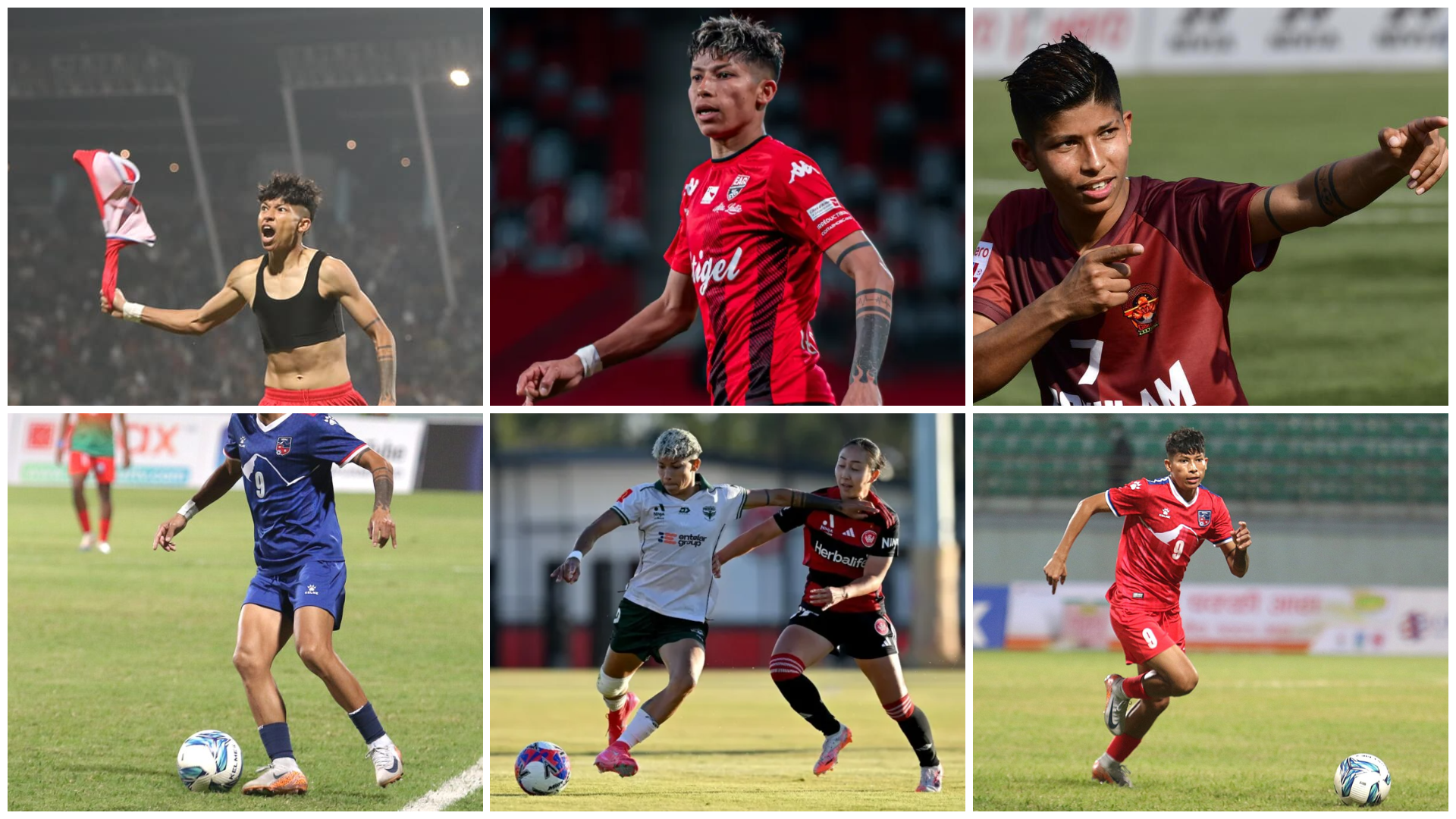
With 66 goals in 60 international matches, Samba stands as Nepal’s all-time leading scorer, a record that underscores both her dominance and the void her absence has created
KATHMANDU: In the final of the tripartite football tournament held at Jawaharlal Nehru Stadium in October 2025, Nepal faced the hosts, India, in what initially appeared to be a match of mere pride.
Having already exited the title race after a 3-0 defeat to Iran on October 24, 2025, Nepal entered the contest with little at stake. Yet, against a side that had consistently tested them over the past one and a half years, the fixture evolved into something more meaningful, an opportunity to reclaim belief and reset momentum.
Nepal rose to the occasion, clinching a crucial 2-1 victory. At the heart of it was Sabitra Bhandari, better known as ‘Samba,’ who delivered both goals with clinical precision, once again underlining her status as the team’s decisive force.
Just two days later, the two sides met again in an informal fixture, where Nepal needed a penalty shootout to edge past their rivals. Notably, the Indian lineup lacked several senior players, adding a different complexion to the contest.
The months that followed, however, exposed Nepal’s growing dependence on their talisman. Consecutive defeats in friendlies against Indonesia and Chinese Taipei in November and December underscored a glaring void, one left by the absence of Samba. Without her, the team’s attacking edge appeared blunted.
Now, as Nepal gears up for the FIFA Women’s Series in Thailand and, subsequently, the SAFF Women’s Championship in Goa, India, scheduled from May 25 to June 7, 2026, they must navigate a challenging stretch without their leading striker.
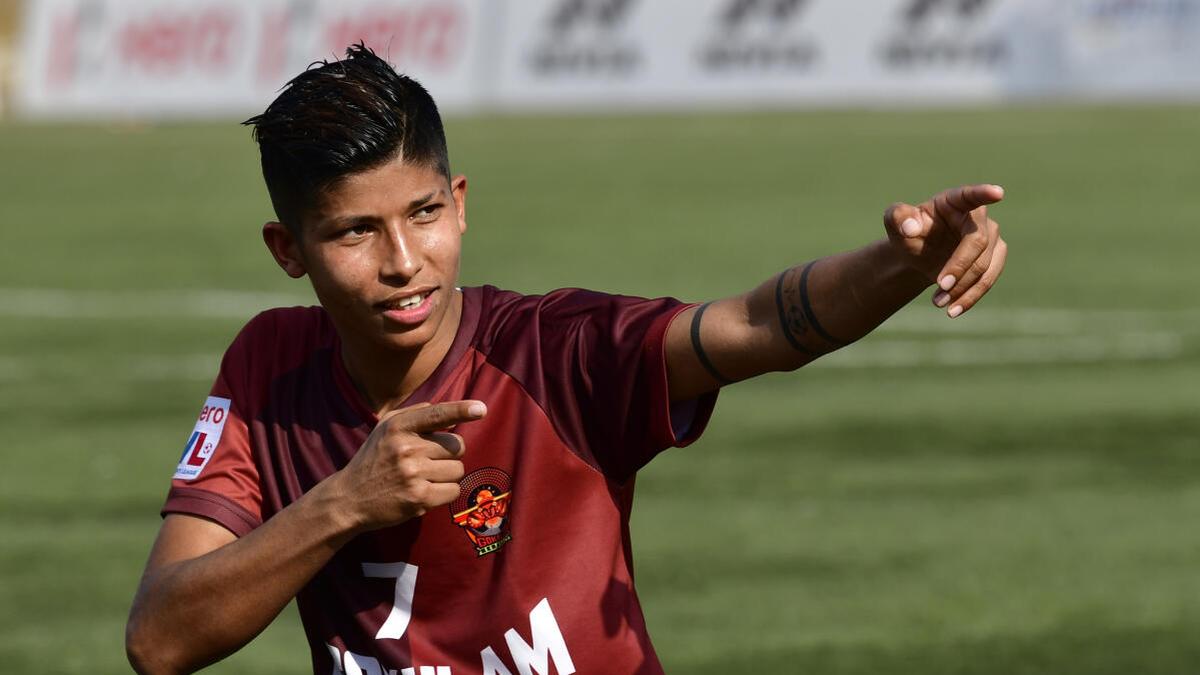
Samba competing in the I-League. Photo credit: The Hindu
According to All Nepal Football Association (ANFA) spokesperson Suresh Shah, Samba faces a lengthy spell on the sidelines.
“Her knee surgery has just been completed. Recovery will take at least nine to 12 months,” Shah said. “She will miss these upcoming competitions.”
In her absence, Nepal must not only reorganize tactically but also rediscover the confidence that Samba so often embodied.
From Lamjung’s grounds to Kathmandu’s stadiums
Samba announced her arrival on the international stage during the SAFF Women’s Championship held in Islamabad, Pakistan, from November 11 to 21, 2014, a tournament that quietly marked the beginning of a transformative journey.
Nepal, still reeling from final defeats to India in 2010 and 2012, entered that edition in search of renewal. Head coach Kumar Katwal responded by reshaping the squad. At the time, APF Club striker Jamuna Gurung was at the peak of her powers, having cemented her place as Nepal’s leading forward with eight goals in the 2012 SAFF Championship in Colombo, Sri Lanka.
But as the next tournament approached, injury sidelined Gurung, opening an unexpected window. Stepping into that space was a 16-year-old Samba, already making waves within APF. Katwal saw in her not just a replacement but also a long-term solution. Ironically, the rising star herself had grown up idolizing Gurung, a self-confessed ‘die-hard’ fan.
Born in Pamchowk, Ward 9 of Marsyangdi Rural Municipality in Lamjung, Samba grew up in a household where academics were prioritized. Her father, Thaman Bhandari, and mother, Muna Bhandari, encouraged her to focus on studies. Yet, the influence of local seniors, who often invoked names like Jamuna Gurung and Anu Lama, nudged her steadily toward football.
Though she excelled in athletics and volleyball, it was football that captured her imagination. It became her refuge, often taking precedence over both studies and household responsibilities.
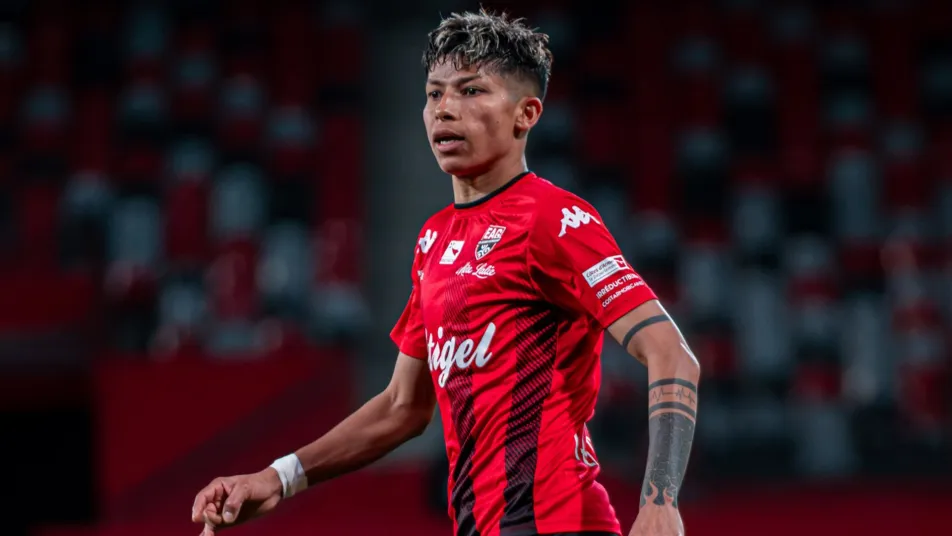
Samba in her Guingamp jersey. Photo courtesy: A-League
“I would slip away to play with friends whenever I got the chance,” Samba recalls. “Sometimes that meant not just scolding, but even getting beaten when my parents found out.”
Her school years became the foundation of her footballing identity. Starting from a village school, her talent quickly stood out. With the support of a teacher, she began competing through a local club, gradually proving her potential.
A defining moment arrived towards the end of 2013, during a women’s football tournament in Ghanpokhara, Lamjung. There, Samba led her team to the title and earned a prize of Rs 15,000, a breakthrough that would alter the course of her life. Watching from the sidelines was Shukra Tamang, an ANFA assistant referee from her village.
Impressed instantly, Tamang approached her after the match with a proposition: a chance to move to Kathmandu and join APF.
At the time, she had just completed her SLC exams, now known as SEE. The idea of playing in the city, alongside players she had only heard about, and sharing a dressing room with them, was irresistible. She agreed without hesitation.
But the call she awaited did not come immediately. Days turned into weeks, and anxiety began to creep in. The fear of a missed opportunity lingered.
“I would slip away to play with friends whenever I got the chance,” Samba recalls. “Sometimes that meant not just scolding, but even getting beaten when my parents found out.”
Nearly two months later, the phone finally rang.
Tamang personally brought her to Halchowk Stadium in Kathmandu, where she was formally inducted into APF Club.
“That place was new, yet familiar,” Samba says. “There was a huge poster of Jamuna Gurung. I kept wondering when I would become like her.”
At APF, she found herself among established names like Jamuna Gurung, Anu Lama, Sarjana Rana Magar, Renuka Nagarkoti, and Bhagwati Thapa. Their encouragement eased her transition into professional football.
Arriving in Kathmandu at just 16, Samba had stepped into a system that would shape her future. According to APF head coach Jibesh Kumar Pandey, that moment defined her trajectory.
“We identified and brought in players like Samba and Anjila Tumbapo Subba through scouting,” Pandey says. “It benefited not just our club, but Nepali football as a whole.”
What began as a leap of faith from a small village in Lamjung had, by then, already started to rewrite the story of Nepali women’s football.
Since the tournament’s inception in Cox’s Bazar, Bangladesh, in 2010, Nepal had steadily established itself as a rising force in women’s football. Yet, at every decisive moment, one obstacle remained constant, India.
“That place was new, yet familiar,” Samba says. “There was a huge poster of Jamuna Gurung. I kept wondering when I would become like her.”
Back-to-back final defeats in 2010 and 2012 left unfinished business. Determined to rewrite that narrative, Nepal arrived in Islamabad for the 2014 SAFF Women’s Championship with a clear objective: to finally claim the title. Among the squad was a young and emerging Samba.
Placed in Group ‘B’ alongside Bhutan, Sri Lanka, and Pakistan, Nepal was widely expected to progress, particularly with Bhutan considered the tournament’s weakest side.
It was against Bhutan that Samba first made her mark. Introduced in the opening match, she found the net in the 88th minute, contributing to an emphatic 8-0 victory. Despite featuring in five matches, including the final, that goal remained her only contribution on the scoresheet in the tournament.
“Making it to the national team was an indescribable feeling,” Samba recalls. “My family, especially my father and mother, were overjoyed. Scoring on my debut made it a truly lucky and proud moment.”
What followed, however, was the evolution of a striker finding her true rhythm.
By the fourth edition of the SAFF Women’s Championship, held two years later, Samba had transformed into a formidable force. In the opening match against Bhutan, she delivered a staggering performance, scoring 6 goals in an 8-0 win, a record that still stands unbroken in Nepali football. She followed it up with another explosive display, netting 5 goals against the Maldives, powering Nepal into the semifinals as group winners.
Yet again, the script turned familiar.
Facing India in the semifinals, Nepal’s campaign unraveled. Despite Samba finding the net, the team suffered a 3-1 defeat, falling short of the final once more. The disappointment deepened in 2016, when Nepal met India again in the final of the South Asian Games (SAG), only to endure a heavy 4-0 loss.
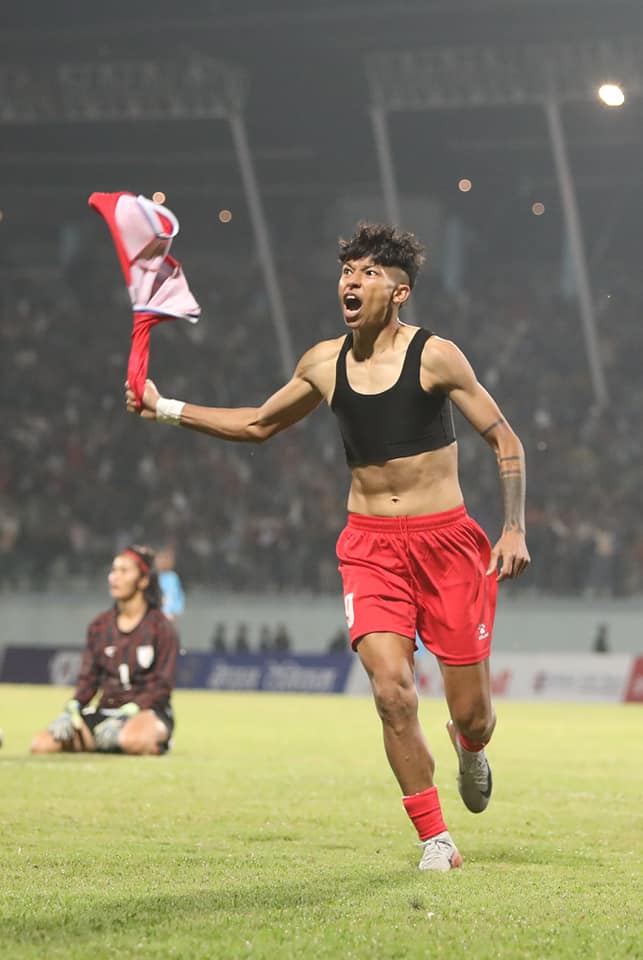
Samba celebrating after scoring against India in the 2024 SAFF Women’s Championship semi-final by removing her jersey. Photo courtesy: ANFA
That match exposed not just individual struggles but also a collective dip in rhythm and coordination. The result was another painful reminder, Nepal, once again, settling for runner-up finishes in major competitions.
“Our men’s team was in Guwahati, while we played in Shillong,” Samba reflects. “With it being their home ground, it was natural for India to have strong support. That made us nervous, and our coordination suffered, which ultimately led to the defeat.”
In the years that followed, Nepal continued to chase continental relevance. The team competed in the SAFF Championship three times, hosted the SAG once on home soil, and featured in a range of international tournaments, including the Asian Games (Asiad), Hero Gold Cup, Nadezhda Cup, West Asian Football Federation Championship, International Women’s Championship, AFC Asian Cup Qualifiers, and Olympic Qualifiers.
Despite consistent participation, silver remained a recurring outcome. Nepal finished runners-up three times in the SAFF Championship and once in other competitions, excluding the Asian Games, Asian Cup Qualifiers, and Olympic Qualifiers.
Through victories and defeats alike, one constant endured, Samba’s decisive presence in front of goal.
With 66 goals in 60 international matches, Samba stands as Nepal’s all-time leading goal scorer, a record that underscores her influence and consistency.
Former national team head coach Rajendra Tamang sums it up succinctly: “We may not have won the title, but it is Samba who brought Nepal to this level. Without her, perhaps we would not have come this far. There is little left to teach her; she is a complete player in herself.”
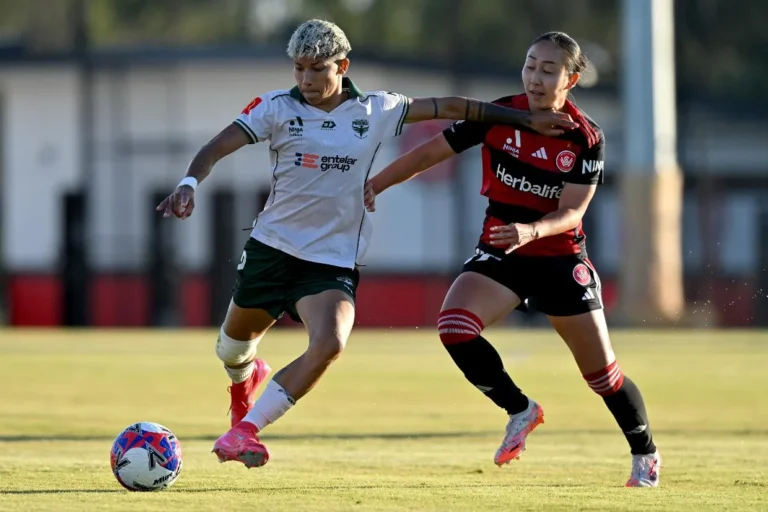
Sabitra Bhandari of Wellington Phoenix scoring in the match against Western Sydney. Photo credit: Ayush Kumar
In a team often defined by near-misses, Samba remains its most defining certainty.
First Nepali woman to compete in Europe
For Samba, 2018 marked the beginning of a broader horizon, as she started gaining international exposure at a time when Nepal’s women’s league structure was also showing signs of gradual progress.
Yet, just as she was building momentum, the global disruption of COVID-19 in 2019 and 2020 brought her journey to an abrupt halt, stalling competitions and breaking her rhythm.
The setback deepened after the league resumed post-2020. A serious knee injury forced her out of action for nearly one year. Medical examinations revealed extensive damage; her ACL, meniscus, and LCL were almost torn, while even the MCL showed signs of injury. The entire ligament structure of her knee had weakened significantly.
Doctors advised a long road to recovery, at least nine months post-surgery, and close to one year for a full return.
The physical pain was only part of the battle.
“At that time, I didn’t even feel like I could return to football,” Samba recalls. “I thought I might never play again.”
Her turning point came in 2021, following specialized treatment at Aspetar in Qatar, where she began the process of rebuilding not just her body but also her belief.
From there, she moved to the Indian league, gradually rediscovering her rhythm. What began as a two-season stint extended into three seasons, during which she netted an impressive 60 goals, reasserting her identity as a prolific forward.
But Samba’s ambitions stretched beyond regional success. She had her sights set firmly on European football.
“At that time, I didn’t even feel like I could return to football,” Samba recalls. “I thought I might never play again.”
The pathway, however, was not straightforward. A lack of proper representation initially slowed her progress until the then Nepal national team coach, Vincenzo Alberto Annese, connected her with his agent associate, Lindy. That introduction would prove pivotal, laying the groundwork for the next phase of her career.
Soon after the Indian season concluded, opportunity arrived.
In June 2023, Samba signed with Israeli club Hapoel Ra’anana AFC, stepping into European football. Yet, her time there was cut short. After approximately five months, the outbreak of war created uncertainty and risk.
“It was impossible to predict when the war would start or stop,” she says. “Staying there no longer felt safe.”
Choosing stability, she moved to France, joining En Avant Guingamp for a half-season spell. The transition proved fruitful. Her performances earned her a two-year contract, and she went on to score 7 goals for the club, including 2 standout goals against Paris Saint-Germain (PSG).
Despite her individual brilliance, the team struggled collectively, and in 2025, Guingamp was relegated from the top division.
Her journey then took her to Australia, though this chapter proved less stable than anticipated. In July 2025, Wellington Phoenix FC announced her signing on a two-year deal, offering yet another fresh start.
On December 20, 2025, in a Ninja A-League clash against Sydney FC, Samba delivered a memorable performance, scoring 2 goals and providing 1 assist in just her fourth appearance. It was also her first goal-scoring outing for the club and a historic one, as she became the first Nepali footballer to score in the Women’s A-League.
But just as she seemed to be regaining consistency, injury struck again.
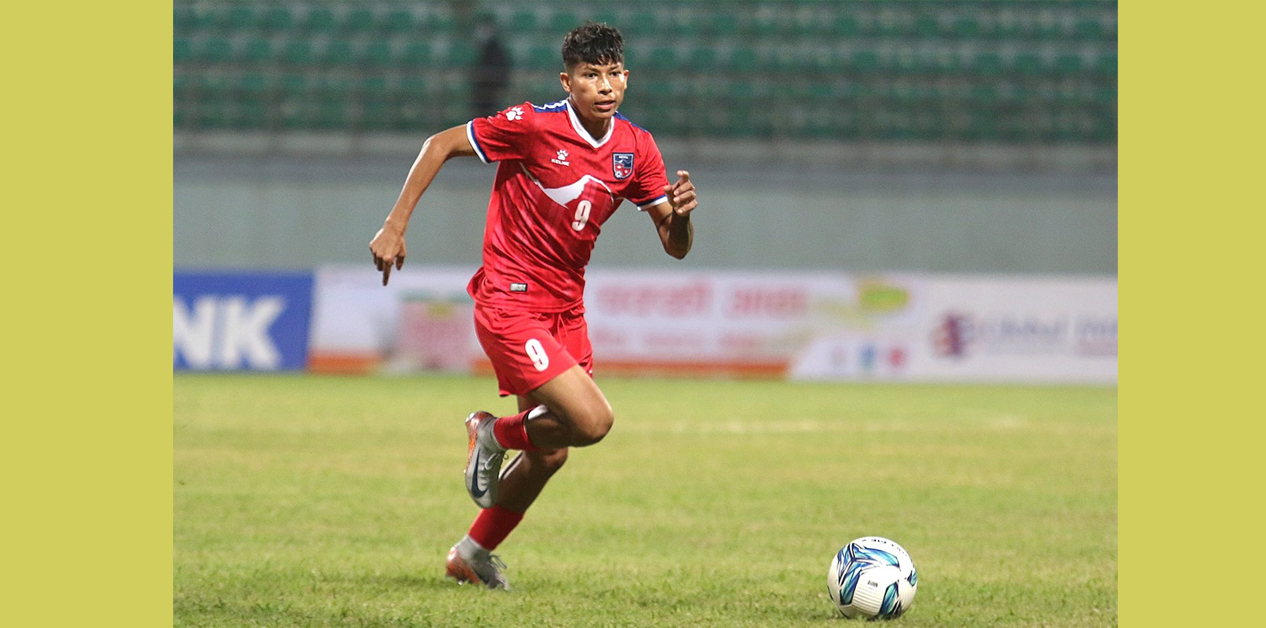
Samba in action against Sri Lanka during the 2024 SAFF Women’s Championship. Photo courtesy: ANFA
On January 3, 2026, a collision with Brisbane Roar FC goalkeeper Chloe Lincoln aggravated her previous knee injury. The recurrence forced her back to the sidelines, halting her progress once more.
After weeks of uncertainty, Samba finally underwent knee surgery on March 25, beginning yet another long and demanding road to recovery.
For a player who has repeatedly risen through adversity, this is not unfamiliar terrain, but perhaps her most defining test yet.
Who can fill Samba’s shoes?
Having crossed 29 years of age, Sabitra Bhandari ‘Samba’ now stands at a defining crossroads. Whether she can return to her pervious rhythm has become a pressing question within Nepal’s women’s football circle. The answer, inevitably, lies in time, but what is already evident is the void her absence has created.
Nowhere is that absence more visible than in the number 9 role, a position that once guaranteed goals, consistency, and belief. Without Samba, Nepal’s attacking edge appears diminished, lacking a striker capable of delivering with the same certainty.
As the SAFF Women’s Championship approaches, her injury has added a layer of complexity to the team’s preparations. For head coach Nabin Neupane, this is more than just the loss of a key player; it is a disruption to the team’s entire tactical balance.
“There is no player like her,” Neupane admits, a statement that underscores Samba’s immense influence within the national setup.
Her success, however, has never been a matter of raw talent alone. It is the result of relentless discipline, tireless effort, and an unyielding commitment to improvement. Samba has built her identity on resilience, pushing forward through adversity, refusing to yield even in the most challenging circumstances.
According to Neupane, it is her mentality that truly sets her apart.
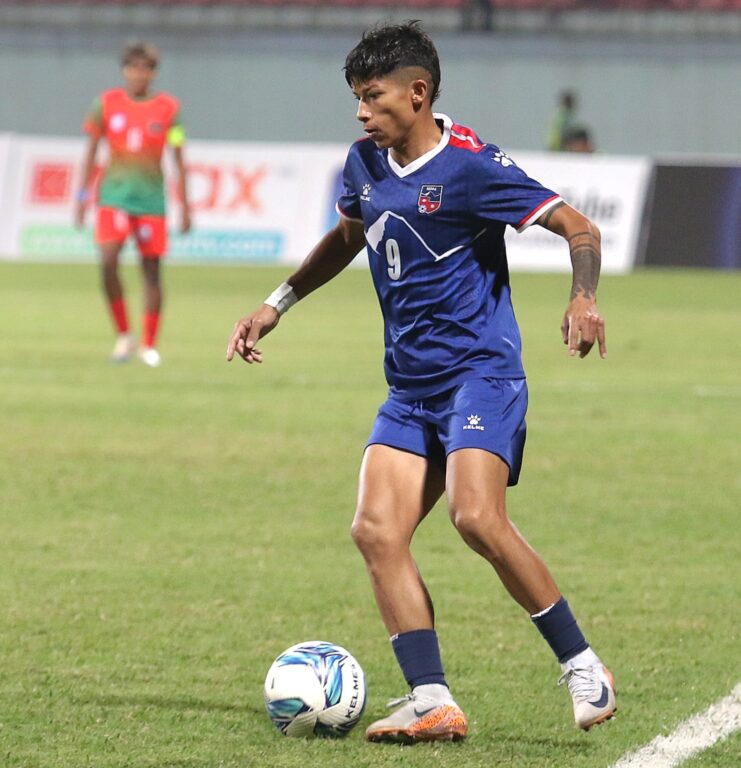
Samba during the SAFF Women’s Championship match against Bangladesh at Tripureshwor’s Dasharath Stadium. Photo courtesy: ANFA
“The ability to stay composed under pressure, to turn challenges into opportunities, and to inspire the team are the qualities she possesses. Others are still developing that,” he says.
In her absence, Neupane has turned to emerging talents like Purnima Rai and Senu Pariyar, both seen as potential successors. Purnima, the top scorer of the SAFF U-20 Women’s Championship last year, netted 10 goals, including 2 hat-tricks, guiding Nepal to a runner-up finish. Senu, too, has shown promise, scoring at least 2 goals and steadily building her case.
Yet, the transition remains incomplete.
Despite being part of the senior squad, Purnima is still awaiting her official debut, while Senu continues to fight for a consistent place in the lineup.
For Neupane, the gap is not merely technical but psychological.
“I see strong potential in both,” he says. “But the belief, the mindset of ‘why can’t I do what Samba does,’ is still missing. Until that confidence emerges, replacing her will not be easy.”
In a team searching for its next focal point, Samba’s shadow still looms large, a reminder that some players are not just part of a system but the very force that defines it.