Kathmandu
Monday, July 13, 2026





In Week One, the Prime Minister’s Office has, for the first time, truly and authoritatively appeared as the “command center of a fast government”, setting the tone, tempo and direction of governance. As a result, unlike the broad, aspirational policy documents of previous governments, the 100-point reform agenda of the Balen government is detailed, time-bound, and explicitly tied to delivery.

Hopes had been set significantly high when Balendra Shah (Balen) prepared to swear in as the 43rd Prime Minister of Nepal on March 27, 2026. Unlike the typical politician making his way through the traditional channels of power within established political parties, Balen was a disruptor driven by the frustration of the masses toward the past rulers. However, even for those who had been hoping for a change, few could have imagined the sequence of events that was soon to follow, characterized by rapidity, grandeur, and an attempt to reframe the syntax of governance in Nepal.
It has been just about a week since the Balen government was formed but, from the very outset, the new administration has exhibited a sense of momentum that is rarely associated with the halls of Singha Durbar. The new government began its tenure with an ambitious and comprehensive plan for governance reforms comprising 100 items. While previous administrations often engaged in lengthy discussions about the distribution of ministerial positions and general policy goals in the early days, this one wasted no time and offered a roadmap right away.
In essence, the past one week became a period when the notion of “delivery-based governance” was seemingly given an important role. Rather than simply being required to operate efficiently, ministries were supposed to produce deliverables, meeting strict deadlines for doing so. The rhetoric alone signaled change. In place of the process-related bureaucratic jargon, there was a focus on the outcome, on the goals and the deadlines by which they were to be met.
And while the agenda of reform had established the tone, it was the decisions made by the government that provided the political edge. Within hours of assuming power, action had already been taken on the key political figures associated with deaths during the Gen Z revolt. At the same time, investigations also started involving businesspeople who have been working under the cover of political protection for many years. However, it is important to note that these moves were not only administrative but rather symbolic. One of the most consistent criticisms regarding the governance in Nepal over the years has been that of a culture of impunity in which some people always felt that the law does not apply to them because they are politicians or wealthy businessmen.

Home Minister Sudan Gurung/File photo
The initial arrests and investigations by the Balen government are an attempt to confront such perceptions directly. The point was clear: nobody, in theory at least, would be beyond suspicion. For citizens who had come to expect such accusations to simply disappear into bureaucratic purgatory, this was a profound change.
But the importance of the above-mentioned measures cannot be limited to their intended effects only; it has to do with their immediate implementation too. By taking the necessary steps quickly, the government managed to dodge another pitfall typical of many preceding governments – progressive loss of political will. In other cases, even reformist governments were forced to operate in conditions of coalition politics, internal opposition or just complex political reality.
There is another very important point of difference. Over the last few years, Nepal has witnessed political instability, unstable coalitions and quick changeovers from one government to another. As a result, there has never been much policy continuity, and decisiveness was not common either. But in the case of the Balen government, things look different as the new government seems to be moving decisively toward its goals.
Another aspect of the first week worth noting is the way in which the new government has combined symbolic actions with systemic changes. The decision by the new government to issue a public apology to historically disadvantaged groups, such as Dalits, can be viewed in this context. Although symbolic actions may not change the ground realities, they have political as well as moral value and send out a message about efforts being made to shift the nature of the citizen-state relationship.
The other dimension to the current efforts is the focus on administrative reforms, especially with respect to the use of faceless services. The intention behind this initiative is to minimize personal contact in order to eliminate petty corruption. This reflects the technocratic approach to development.
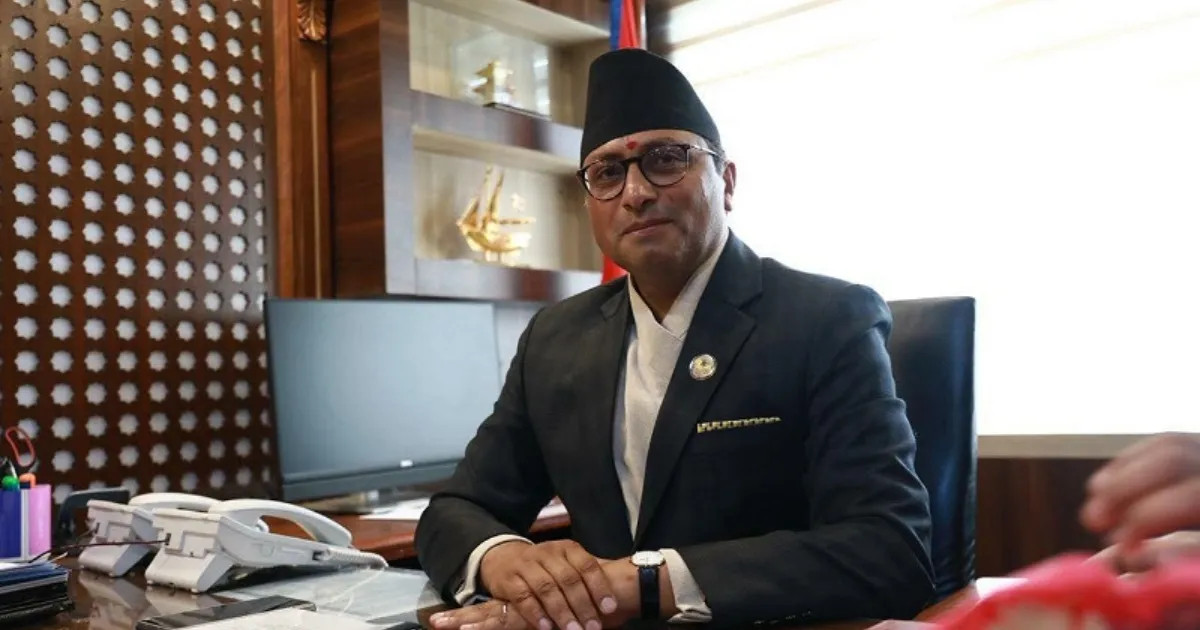
Finance Minister Swarnim Waglé/File photo
As a whole, these actions point toward a government attempting to work on several different levels at once: legal responsibility, efficiency, justice, and policy development. This is an ambitious strategy; one perhaps required by the demands of public opinion and expectations.
And those expectations are immense. Indeed, the same factors which contributed to Balen’s ascension, such as disgust at corruption, exasperation with political turmoil, and the desire for a visible difference, make this a standard hard to reach. In many respects, the first week has delivered just that. However, it has also set up an even more complicated challenge: sustaining this level of activity.
Challenges
History offers reasons for caution. Fast decisions, although politically savvy in the short run, come with their own set of risks. Legal actions launched on impulse could be met with obstacles if lacking sufficient evidence and procedural integrity. Reforms introduced through administrative actions could meet with opposition from the bureaucracy, which is equally important for implementing any policy change. Good intentions aside, policies could be ineffective if they exceed the government’s absorptive capabilities.
Analysts have already pointed out this problem. While the new government’s initiatives have not been opposed, the question of the sustainability of such decisions has been raised. Fast decisions are sometimes seen as a sign of boldness and determination, but they can also mean overstepping one’s bounds.
For the Balen government, it will now be a matter of transforming momentum into substance. The 100-point plan, for example, can be judged according to whether it is delivered on time or not. Making timelines can be easy, but following them will not. A delivery-oriented government may imply a different kind of evaluation from what we are used to, but it will also entail the creation of new ways to hold the government accountable.
This applies equally to the arrests and inquiries that have been made. They need to lead to something substantive if they are to serve as a turning point in the country’s struggle with impunity in politics. But if they fall short, they may be seen as just another example of empty theatrics.
There is also the question of political capital. At present, however, the mandate enjoyed by the Balen government is significant; indeed, it is one of the very few times in Nepal’s democratic history that the government has had such a mandate. For the Balen government, therefore, there exists some amount of stability that the government can use in dealing with the numerous issues it will face in the coming days. The mandate itself, however, does not stay in place.
What may prove to be a significant problem for the new government, on the other hand, will be the fact that it is operating under the assumption that the problems of Nepal can only be solved via dramatic change rather than through gradual improvement.
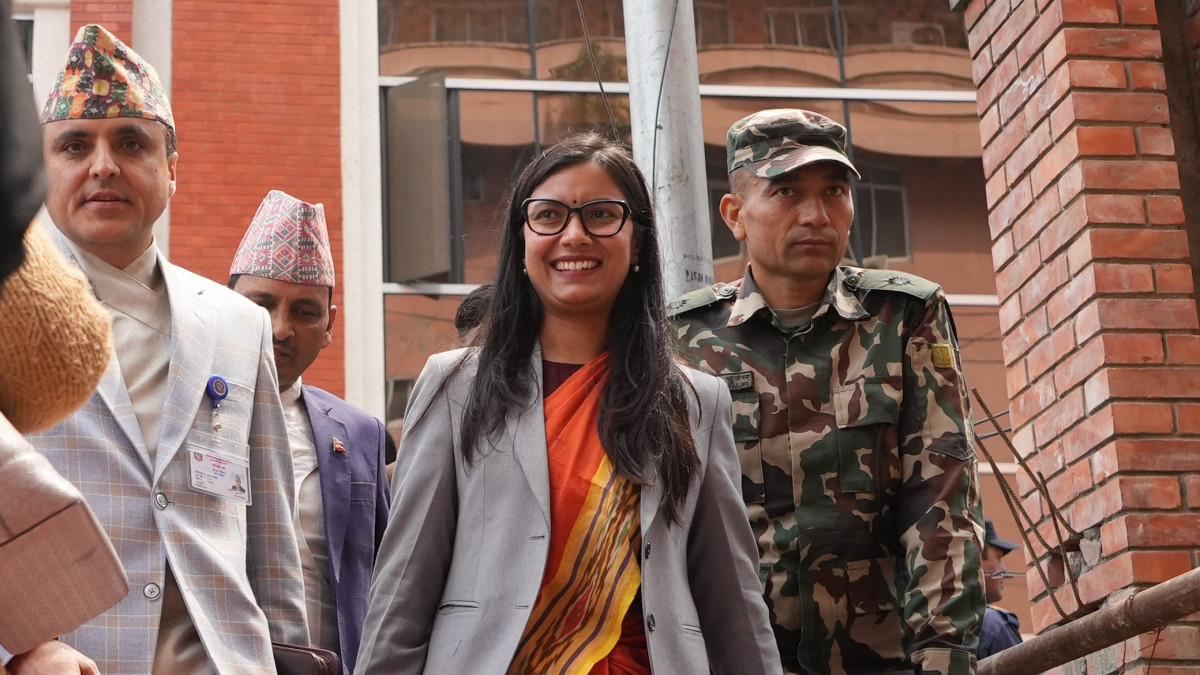
Minister for Law, Justice and Parliamentary Affairs Sobita Gautam/ File photo
Perhaps, in many ways, what differentiates the Balen government from the others that have preceded it is its narrative. But narratives, like policies, must be sustained. For the coming five years, the government will have to progress from the initial stage of decision-making to the tougher one of governance in relation to economic planning, development of infrastructure, socio-economic policies, and institution-building. These tasks involve more complicated challenges, which can take longer time.
However, it could also be seen as an opportunity for the government to establish itself as one that is capable of accomplishing much more than what it was able to achieve within the first seven days.
Performance-driven culture
The first week of Balen’s government is largely about creating the expectations rather than reducing them. Balen has managed to demonstrate that the state can make decisions quickly; that important decisions do not take months of negotiations before implementation; and that influential people can be forced to take responsibility for their actions.
But the real test is yet to come. Speed has been the essence of the start. But sustainability could become the hallmark of its legacy. It all depends on whether the government is able to marry speed and sustainability, moving ahead at full steam while at the same time putting in place the institutions to back itself up. Otherwise, it may turn out to be nothing more than another chapter in the country’s long story.
In Nepal’s recent political memory, the first week of a new government has often been a period of quiet calibration – coalition management, portfolio familiarization, and cautious signaling. The first week of the government led by Balen has unfolded very differently.
Instead of a slow start, the new administration has moved with unusual speed, issuing directives, launching investigations, and attempting to impose a performance-driven culture across ministries.
Yet beneath the flurry of announcements lies a more nuanced reality: this has been a week defined less by individual ministerial initiatives and more by a highly centralized push from the Prime Minister’s Office (PMO), with line ministries acting as the execution arms of a broader reform agenda.
In Week One, the Prime Minister’s Office has, for the first time, truly and authoritatively appeared as the “command center of a fast government”, setting the tone, tempo and direction of governance. As a result, unlike the broad, aspirational policy documents of previous governments, the 100-point reform agenda of the Balen government is detailed, time-bound, and explicitly tied to delivery. It requires the ministries not simply to perform but also to produce measurable outcomes within defined timelines.
The message is clear: this is going to be a government that truly believes in “delivery-based governance”, shifting Nepal’s administrative culture from process to performance. So, it will act quickly, and is prepared to confront entrenched power structures in the course. In effect, the PMO has functioned not just as a coordinating body but as the central engine of decision-making, compressing what would traditionally be weeks of deliberation into days.
Conclusion
If the PMO had determined the agenda, the Ministry of Home Affairs was the most visible executor of such an agenda. In the immediate hours after the government assumed power, the law enforcement agencies launched operations on political leaders such as the previous prime minister KP Oli and previous home minister Ramesh Lekhak with respect to the killings in the Gen Z protests. Additionally, investigations have been opened against the businessmen who have been accused for years of running their businesses protected by politics.
There is no novelty in such practices in Nepal, but the timing is exceptional since sensitive issues in Nepal had been dealt with in a very long period of time, usually in line with political considerations. The message is twofold: first, that the government is willing to test the boundaries of political accountability; and second, that it intends to do so immediately, before inertia or opposition can build.
On the other hand, this also entails a huge responsibility for the ministry. Efficiency in the execution of the rule will need to be complemented by thorough investigations. The cases that have been raised hastily will eventually be evaluated based on their evidential weight and legal proceedings, which have always been a subject of criticism in Nepal.
Similarly, the finance ministry needs to match its aspiration with its means. The move toward outcome-oriented governance is also expected to be mirrored by the process of planning and allocating resources. Initial indications point to an effort toward “results-based budgeting”, wherein funds are more heavily reliant on performance indicators. The problem the ministry faces is to reconcile the government’s highly ambitious agenda with the country’s financial constraints.
Overall, it can be concluded that in the first week, we saw the government functioning in a very centralized way. In fact, it is quite obvious that the PMO has been in charge of setting the agenda, influencing decisions and exercising control over how everything has been presented. This marks a stark contrast with previous administrations in Nepal, in which ministers were able to operate as their own autonomous power centers, and where there was no single Prime Minister who could unite them in practice.
It should be acknowledged that the benefits of such an approach are numerous, especially regarding the speed and clarity of decision-making.
However, one has to wonder about sustainability. After all, governance is not only about making decisions; it is also about implementing them across a complex administrative system.
The first week of the Balen government has been defined by urgency and ambition. It has demonstrated that the machinery of the state can be mobilized quickly, and that political will, when combined with a strong mandate, can translate into immediate action. The coming weeks and months will test whether this approach can endure.
For now, the distribution of roles is clear: The PMO as the ‘decision engine’; the home ministry as the ‘enforcement arm’; the law ministry as the ‘guardian of legal viability’ and other ministries as ‘implementers in transition’. Whether this structure evolves into a stable system of governance, or remains a burst of early energy, will determine not only the success of the government’s first week, but also the trajectory of its full five-year term.
In Nepal’s political history, beginnings have often promised more than they delivered. This one has certainly delivered more than almost all beginnings. The question is whether it can keep doing so.