Kathmandu
Monday, July 27, 2026





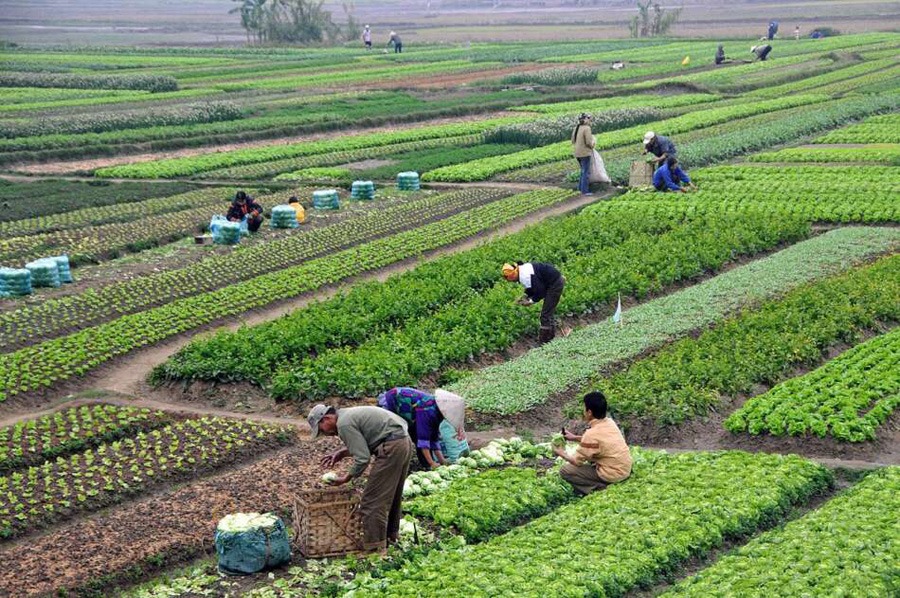
KATHMANDU: Agriculture remains the heartbeat of Nepal, yet it is a sector in profound flux.
As of mid-2026, the sector contributes approximately 22-24% to the national GDP. While this is a decline from the 30% seen a decade ago, it is not a sign of the sector’s failure but rather a reflection of the rapid growth in services and tourism.
Agriculture still employs roughly 60-62% of the workforce, though the nature of this labor is shifting.
Under the newly implemented NDC 3.0 (submitted May 2025), Nepal has pivoted toward “Climate-Smart Agriculture” (CSA) to combat erratic monsoons and rising temperatures.
This roadmap aims for a 26.79% reduction in net emissions by 2035, primarily through better livestock management and reduced post-harvest losses.
Despite these high-level policies, the “implementation gap” remains a hurdle, as smallholder farmers struggle with fragmented land and rising costs.
What is the current economic importance of agriculture in Nepal?
Agriculture remains the bedrock of the Nepali economy, serving as the primary source of livelihood for approximately 60% of the population.
As of the 2025/26 fiscal year, the sector contributes roughly 23% to the national Gross Domestic Product. While this percentage has seen a gradual decline from over 30% a decade ago, it does not signify a shrinking agricultural output; rather, it reflects the rapid expansion of the service and remittance-driven sectors.
Agriculture’s economic role extends beyond mere production; it is the fundamental driver of rural poverty reduction. Research consistently shows that agricultural growth in Nepal is more than twice as effective at reducing poverty among the lowest income deciles compared to growth in any other sector.
Furthermore, the industry is a critical pillar for food security, providing the calories necessary for a population of over 30 million.
It also fuels the burgeoning agro-processing industry, which includes flour mills, sugar refineries, and juice production facilities.
Despite its declining share of GDP, agriculture remains the most significant employer in the country, particularly for those without access to formal education or urban migration opportunities.
Consequently, the stability of the national economy is tethered to the performance of this sector, as any fluctuation in crop yields due to weather patterns or input shortages ripples through the market, affecting inflation rates and national trade balances.
How do traditional farming practices define agriculture in Nepal?
Traditional farming in Nepal is defined by a sophisticated, centuries-old adaptation to one of the most challenging topographical landscapes on Earth. These practices are characterized by an integrated subsistence model where livestock, forest resources, and crop cultivation are inextricably linked.
In the mid-hills and mountains, this is most visibly manifested in the intricate terrace systems that transform steep slopes into productive land, a feat of indigenous engineering designed to manage water runoff and prevent soil erosion. These systems traditionally rely on manual labor and animal traction, specifically the use of bullocks for ploughing, though this is slowly changing.
Farmers utilize a diverse array of landrace seeds that have evolved to thrive in specific micro-climates, providing a natural resilience against local pests and weather variability.
The nutrient cycle is typically closed; livestock provide manure for fertilizer, while crop residues and forest fodder sustain the animals. This reliance on organic inputs was born out of necessity due to the geographical isolation of many villages, but it has left a legacy of “organic by default” farming that is now being recognized for its high commercial and environmental value.
This traditional ethos emphasizes community-based resource management, such as the guthi (land trust) or communal labor exchange systems like parma, which ensure that labor-intensive tasks like planting and harvesting are completed through collective effort.
What are the main crops and how do they vary by region?
Nepal’s agricultural profile is dictated by its dramatic altitudinal gradient, which ranges from near sea level to the highest peaks in the world.
In the fertile Terai plains, often referred to as the “grain basket” of the country, the climate is tropical to subtropical, allowing for the intensive cultivation of paddy rice, wheat, and sugarcane. Rice is the undisputed king of crops here, covering the largest area of land and serving as the primary dietary staple for the nation.
Moving upward into the mid-hills, the temperate climate shifts the focus toward maize and millet, which are often grown on unirrigated slopes.
The hills have also become the primary hub for high-value horticultural crops, including citrus fruits like oranges and various off-season vegetables that command high prices in urban markets.
In the high-altitude mountain regions, the growing season is short and the conditions are harsh, limiting production to hardy crops like buckwheat, naked barley, and potatoes. These high-altitude tubers are prized for their flavor and nutritional density.
Beyond staples, Nepal has developed specific regional niches for cash crops; the eastern hills are world-renowned for large cardamom and orthodox tea, while the western regions produce high-quality ginger and medicinal herbs.
This regional specialization is a critical survival strategy, ensuring that even the most remote areas can produce unique commodities for trade.
How has agriculture’s contribution to GDP changed over recent years?
The structural transformation of Nepal’s economy has seen the agricultural sector’s contribution to GDP drop from nearly 33% in the early 2010s to roughly 22-24% by 2026.
This downward trend is a common feature of developing economies where the service, construction, and manufacturing sectors begin to grow at a faster pace than primary production. However, this statistical decline is somewhat deceptive.
While agriculture’s relative share has shrunk, the absolute value of agricultural production has continued to grow, albeit at a modest annual rate of approximately 2.5% to 3.5%.
This growth has been driven by increased yields in poultry, fisheries, and high-value vegetables rather than traditional cereal crops. The sector has faced significant headwinds, including the massive 2015 earthquake, the COVID-19 pandemic, and erratic weather patterns, all of which disrupted supply chains and productivity.
Furthermore, the massive influx of remittances from migrant workers has shifted the economic focus away from domestic production toward consumption, often leading to increased food imports.
By 2026, the government has recognized that for the GDP contribution to stabilize or grow, a transition from subsistence to commercialization is mandatory.
This involves moving away from low-value staples toward high-value agro-forestry and processed goods that can compete in the international market, thereby improving the sector’s value-added component within the national accounts.
What employment trends are evident in Nepal’s agriculture?
The most significant trend in Nepal’s agricultural labor market is the phenomenon of “feminization.” As millions of young men have migrated to the Gulf states, Malaysia, and urban centers in search of higher-paying jobs, the responsibility for maintaining the nation’s farms has fallen squarely on the shoulders of women.
Today, women constitute over 60% of the agricultural workforce, performing tasks that were traditionally gender-segregated, such as land preparation and irrigation management. This shift has led to a dual reality: while it has empowered many women by giving them control over household production and cooperatives, it has also increased their “triple burden” of farm work, domestic chores, and childcare.
Simultaneously, there is a noticeable “aging” of the farming population. The average age of a Nepali farmer has risen significantly as the youth perceive agriculture as a low-status, high-risk, and low-return profession.
This has resulted in a critical shortage of seasonal labor, driving up daily wages and making traditional labor-intensive farming less viable.
To combat this, there is a slow but steady emergence of a new class of “agri-entrepreneurs”—educated youth and returning migrants who are applying modern business principles to farming, focusing on high-tech interventions like hydroponics and commercial poultry, though they still represent a small minority of the total workforce.
How has rural outmigration influenced agricultural practices?
Rural outmigration has acted as a double-edged sword for Nepali agriculture. On one hand, the exodus of the most productive age group has led to the widespread abandonment of arable land, a phenomenon known as banjho jagga.
In many hill districts, entire terraces have been left fallow because there are simply not enough hands to maintain them. This has led to an increase in soil erosion and the encroachment of invasive species, further degrading the land’s future potential.
The loss of local labor has also forced a transition toward less labor-intensive crops; for instance, many farmers are moving away from paddy, which requires intensive transplanting and weeding, toward fruit trees or fodder grass.
On the other hand, the remittances sent home by these migrants have provided a vital source of liquid capital. In a country where formal agricultural credit is difficult to obtain, remittance money is often used to purchase improved seeds, chemical fertilizers, or small-scale machinery like mini-tillers.
Furthermore, returning migrants often bring back new perspectives and technical skills, leading to the adoption of modern greenhouse techniques or advanced livestock management. However, the overall impact remains a net challenge for national food self-sufficiency, as the ease of buying imported food with remittance money often disincentivizes the hard work required to maintain a productive farm.
In what ways is climate change affecting Nepali agriculture?
Climate change is no longer a distant threat but a daily reality for the Nepali farmer, manifesting through increasingly erratic and extreme weather patterns.
The traditional monsoon, which provides the vast majority of the country’s water for irrigation, has become unpredictable, characterized by “bursts” of intense rainfall followed by prolonged dry spells. These intense rain events trigger devastating landslides in the hills and flash floods in the Terai, washing away topsoil and destroying standing crops.
Conversely, rising temperatures are shifting the agro-ecological zones; for example, apple orchards in the lower altitudes of Mustang are failing as the “chill hours” required for the fruit to set are no longer met, forcing farmers to move to higher elevations.
In the Terai, the increasing frequency of “heatwaves” during the wheat-filling stage is significantly reducing yields.
Furthermore, warmer winters have facilitated the spread of pests and diseases into higher altitudes where they were previously unknown, such as the Fall Armyworm and various fungal blights.
The melting of Himalayan glaciers also poses a long-term threat to the permanent rivers that feed the nation’s largest irrigation systems.
Farmers are attempting to adapt by planting drought-resistant varieties and adopting “climate-smart” techniques, but the pace of climatic change is currently outstripping the capacity of traditional and local knowledge systems to respond effectively.
What are the primary challenges facing Nepali farmers?
Nepali farmers navigate a complex landscape of structural and systemic challenges that keep productivity levels among the lowest in South Asia.
At the core is the issue of input insecurity; despite heavy government subsidies, there is a chronic and predictable shortage of chemical fertilizers during the peak planting seasons, often forcing farmers to buy low-quality smuggled alternatives.
Beyond inputs, the lack of reliable irrigation is a massive hurdle; with only about 30% of land having year-round water access, most farmers remain “gamblers on the monsoon.” Market access is another critical bottleneck.
Due to poor road infrastructure and the lack of a functional “cold chain,” post-harvest losses can reach as high as 40%, particularly for perishable fruits and vegetables. This is compounded by a fragmented supply chain dominated by multiple layers of middlemen who capture the lion’s share of the profit, leaving the primary producer with minimal returns.
Furthermore, the extension services provided by the government are often underfunded and understaffed, meaning that the latest agricultural research and technologies rarely reach the remote smallholders who need them most.
Finally, the lack of affordable and accessible agricultural insurance means that a single bad season or a localized disaster can push a farming household into a cycle of permanent debt, stifling any incentive for future investment or risk-taking.
How fragmented are landholdings, and what does this mean?
Land fragmentation is perhaps the most significant structural barrier to the modernization of agriculture in Nepal.
Due to traditional inheritance laws that require land to be divided equally among all heirs, the average farm size has shrunk to approximately 0.5 hectares, often split into several non-contiguous plots. This “parcelization” makes it economically and logistically impossible for a farmer to invest in large-scale mechanization, such as tractors or combine harvesters, as the machines cannot be efficiently moved or operated on tiny, scattered fields.
Furthermore, fragmented landholdings complicate the implementation of modern irrigation systems, as a single tube-well might need to serve dozens of different owners with different cropping schedules.
From a management perspective, fragmentation increases the time and labor required for transport and monitoring, reducing overall efficiency. This has led to a “subsistence trap” where the land is just large enough to feed a family in a good year, but too small to generate a commercial surplus.
To address this, the government has begun promoting “land pooling” and “contract farming” models in the 2025-2026 policy cycle, encouraging farmers to manage their plots as a single block.
However, deep-seated cultural attachments to land ownership and complex land titling issues make these reforms difficult to implement on a national scale, leaving the majority of farmers stuck with inefficient, micro-scale operations.
What is the status of irrigation and rural infrastructure?
While Nepal possesses immense water resources, the infrastructure required to deliver that water to farm gates remains woefully inadequate. Currently, only about one-third of the total cultivated area has access to year-round irrigation.
Many of the existing systems are “farmer-managed,” which, while culturally significant, often lack the engineering resilience to withstand major floods or siltation.
Large-scale “National Pride” projects, such as the Bheri-Babai Diversion, promise to transform the Terai’s productivity, but these have been plagued by decades of delays and cost overruns.
In the hills, the situation is even more dire, as farmers must rely on small-scale lifting systems or gravity-fed canals that are highly susceptible to landslides. Beyond water, the “soft” infrastructure of agriculture—roads, electricity, and storage—is equally underdeveloped.
While the expansion of the rural road network has improved market access, many of these roads are “fair-weather” tracks that become impassable during the monsoon, precisely when the harvest needs to be moved. The lack of reliable electricity in rural areas hinders the establishment of cold storage facilities and agro-processing units, forcing farmers to sell their produce immediately after harvest when prices are at their lowest.
Significant investment is currently being channeled into “Agro-Industrial Parks” and solar-powered irrigation, but the gap between policy goals and ground-level infrastructure remains a primary constraint on sector growth.
What are the cornerstone government policies for agriculture?
The primary policy framework governing the sector is the Agriculture Development Strategy (ADS 2015–2035), a 20-year roadmap designed to transform Nepal’s agriculture from a subsistence-based system into a competitive, commercialized industry.
The ADS focuses on four pillars: governance, productivity, profitable commercialization, and increased competitiveness.
It aims to achieve this through the creation of specialized “zones” and “super zones” under the Prime Minister Agriculture Modernization Project (PMAMP), which provides targeted support for specific commodities in high-potential areas.
Complementing this is the National Agriculture Policy, which emphasizes the conservation of biodiversity and the promotion of organic farming.
Since the transition to a federal system, provincial and local governments have gained more authority to design their own agricultural programs, leading to more localized interventions such as “One Village, One Product” schemes.
In recent years, there has been a significant shift toward digital governance, with the introduction of the Farmer Listing Program, intended to create a comprehensive database to better target subsidies and technical support. However, the effectiveness of these policies is often hampered by poor coordination between the three tiers of government and a lack of technical manpower at the local level to execute complex programs.
Despite these hurdles, the policy environment is increasingly focused on reducing the trade deficit by boosting domestic production of staples and high-value exports.
What recent policy shifts focus on climate resilience and modernization?
The most significant recent policy evolution is the submission and implementation of the Third Nationally Determined Contribution (NDC 3.0) in 2025. This document marks a departure from general climate goals toward highly specific, measurable agricultural interventions.
It prioritizes the scaling of “Climate-Smart Agriculture” (CSA), which includes the distribution of stress-tolerant seed varieties, the promotion of solar-powered drip irrigation, and the implementation of weather-index-based insurance.
A major focus of NDC 3.0 is the reduction of greenhouse gas emissions through improved livestock management—specifically by upgrading breeds and improving fodder quality to reduce methane output.
The policy also sets ambitious targets for reducing post-harvest losses to 15% through the investment in green-energy-powered cold chains. On the modernization front, the 2025-2026 federal budget introduced significant tax incentives for “Agri-tech” startups and imports of precision farming equipment.
There is a growing emphasis on “digital extension,” using mobile apps and satellite data to provide farmers with real-time weather forecasts and market prices. This modernization push is not just about technology; it includes a focus on “nature-based solutions,” such as regenerative agriculture and agro-forestry, recognizing that long-term productivity depends on the restoration of soil health and biodiversity.
These policies represent an attempt to align Nepal’s agricultural development with global sustainability standards while addressing the immediate needs of a vulnerable farming population.
How effective are subsidy and input support programs?
Subsidies, particularly for chemical fertilizers and seeds, are the most visible and controversial tools of Nepali agricultural policy. Each year, the government allocates tens of billions of rupees (approximately Rs 30 billion in 2025/26) to make fertilizers affordable for smallholders.
While these subsidies are essential for maintaining cereal production, their effectiveness is frequently undermined by massive logistical failures. The state-run corporations responsible for procurement often fail to secure supplies on time, leading to acute shortages during the critical “paddy transplanting” and “wheat sowing” windows.
This creates a flourishing black market where farmers pay double the subsidized rate for unverified products smuggled across the open border with India.
Furthermore, there are growing concerns about the “subsidy trap,” where heavy reliance on chemical inputs is leading to soil acidification and the degradation of long-term soil health.
In response, recent policy shifts have begun to diversify the subsidy pool to include organic fertilizers and bio-pesticides, though these currently make up a small fraction of the total budget.
Credit subsidies are also a major focus, with the government mandating banks to provide “concessional loans” to farmers. However, the “effectiveness gap” remains high, as the most marginalized farmers—those without land titles or formal collateral—rarely benefit from these programs, which tend to be captured by larger, more politically connected commercial operators.
What opportunities exist for high-value crops and agricultural exports?
Nepal’s diverse geography provides a unique comparative advantage for the production of “niche” high-value crops that are in high demand globally. Large cardamom is the most prominent example; Nepal is the world’s leading producer, and by early 2026, export prices reached record highs due to increased demand in the Middle East and South Asia.
Orthodox tea from the eastern hills is another major success story, increasingly gaining international recognition and “Geographical Indication” (GI) status, which allows it to compete with Darjeeling tea in European and American markets.
Beyond these established exports, there is significant potential in medicinal and aromatic plants (MAPs) harvested from the high Himalayas, such as Timur (Szechuan pepper) and essential oils, which are highly valued in the global fragrance and pharmaceutical industries.
The organic sector represents perhaps the greatest untapped opportunity. As global consumers move toward healthier diets, Nepal’s “organic by default” mountain products—such as buckwheat, ginger, and turmeric—could command premium prices if they can meet international certification standards.
To capitalize on these opportunities, the government is focusing on building “export-ready” infrastructure, including laboratory facilities for quality testing and improved branding. However, the challenge lies in the “volume-quality trade-off”; to be a major player, Nepal must move beyond small-batch production and create reliable, large-scale supply chains that meet the stringent sanitary and phytosanitary requirements of international trade partners.
How is the role of women and youth changing in agriculture?
The changing demographics of rural Nepal have forced a fundamental re-evaluation of who a “farmer” is. With the mass migration of young men, women have transitioned from “invisible helpers” to the primary decision-makers on the farm.
This shift is being reflected in policy, with recent budgets increasing “gender-responsive” allocations to over 40%, specifically targeting women-led cooperatives with grants for machinery and training. This has led to an increase in financial literacy and community leadership among rural women.
For youth, the narrative is more complex. While the general trend is away from the farm, there is a burgeoning movement of “New Farmers”—educated young people who see agriculture not as a legacy of poverty, but as a business opportunity.
These youth are introducing innovative models such as commercial strawberry farming, high-density apple orchards, and sophisticated fisheries. Many are returning migrants who have seen modern farming techniques in Israel, South Korea, or Japan and are eager to apply them in Nepal.
To support this, the government has launched the “Youth Self-Employment Fund,” providing low-interest loans for agri-businesses. However, for the majority of rural youth, the lack of modern amenities in villages and the high risk of farming compared to urban jobs remains a deterrent.
Success in the future depends on making agriculture “cool” and profitable through the integration of technology and stable market linkages that can provide a middle-class lifestyle.
What progress has been made toward mechanization and technology?
Mechanization in Nepal is undergoing a transition from “heavy and large” to “small and smart.” While the Terai has seen a steady increase in the use of 4-wheel tractors and combine harvesters, the hilly topography has necessitated a different approach.
The introduction of “mini-tillers”—small, hand-held motorized ploughs—has been a game-changer for hill farmers, significantly reducing the physical drudgery of land preparation and compensating for the shortage of bullocks and male labor.
Beyond basic machinery, the adoption of “Agri-tech” is accelerating in urban-adjacent areas. This includes the use of greenhouses with automated irrigation systems and the deployment of “smart sensors” to monitor soil moisture and nutrient levels.
Digital technology is also bridging the information gap; more farmers are using smartphones to access weather alerts and to sell their produce directly to consumers through social media or dedicated e-commerce platforms.
In the livestock sector, there has been progress in artificial insemination and the use of digital monitoring for dairy herds. However, the overall level of mechanization remains low compared to regional neighbors, largely due to the high cost of equipment and the lack of local repair services.
Public-private partnerships are now being encouraged to set up “custom hiring centers” where smallholders can rent expensive machinery on an hourly basis, making technology accessible without the burden of ownership.
How significant are post-harvest losses, and what is being done?
Post-harvest losses represent a massive “invisible tax” on the Nepali agricultural system, with estimates suggesting that between 20% and 50% of certain crops are lost before they ever reach the consumer.
For perishables like tomatoes, cabbage, and fruits, the lack of a continuous “cold chain”—refrigerated transport and storage—means that a significant portion of the harvest rots in the heat or is damaged during transport over bumpy mountain roads.
These losses not only reduce the income of farmers but also contribute to higher food prices for urban consumers and increase the national food trade deficit.
To address this, the NDC 3.0 and the 2026 development plans have prioritized the construction of a network of solar-powered cold storage units at the local level.
The government is also promoting “value addition” at the farm gate, such as drying ginger and large cardamom or processing fruits into jams and juices, which increases shelf life and profit margins.
Improved packaging techniques and the establishment of “modern collection centers” are also being scaled up through the PMAMP. Furthermore, there is an increasing focus on training farmers in proper handling and sorting techniques to minimize physical damage.
Reducing these losses is seen as a “low-hanging fruit” for food security; by simply saving what is already grown, Nepal could significantly improve its domestic food availability without necessarily increasing the area under cultivation.
What strategies are recommended for sustainable and modern agriculture?
The path to a sustainable and modern agricultural sector in Nepal requires a delicate balance between high-tech commercialization and ecological preservation.
One key strategy is the promotion of “Agroforestry,” where fruit and nut trees are integrated with traditional crops, providing a diversified income stream while stabilizing the soil in landslide-prone hill regions.
Another recommendation is the scaling of “Regenerative Agriculture,” which focuses on restoring soil organic matter and biodiversity, reducing the reliance on expensive chemical inputs.
To modernize, Nepal must invest heavily in “Agricultural R&D” to develop local varieties that are resilient to the specific pests and climatic conditions of the Himalayas.
Strengthening “Value Chain Integration” is also vital; this means connecting smallholders directly to processors and exporters through transparent contract farming arrangements, ensuring that farmers get a fair price.
Furthermore, the expansion of “Agri-insurance” and “Digital Credit” is essential to de-risk the sector and encourage long-term investment. Education and extension services must be overhauled to include digital literacy and business management training for farmers.
Finally, the government must improve “inter-agency coordination” to ensure that when a new irrigation project is built, the roads, electricity, and market linkages are also in place. By adopting a holistic, ecosystem-based approach, Nepal can build a sector that is not only productive and profitable but also resilient to the uncertainties of the 21st century.
How does agriculture support food security and poverty alleviation?
Agriculture is the primary buffer against hunger and extreme poverty in Nepal. For the vast majority of the rural population, the ability to grow their own food is what separates them from absolute destitution.
In times of national crisis—such as the 2015 earthquake or the economic disruptions caused by global pandemics—the agricultural sector has proven to be the country’s most resilient safety net, absorbing unemployed labor and providing a basic level of food security.
Economically, agricultural growth is deeply inclusive; because land ownership is relatively widespread, improvements in productivity directly translate into higher incomes for millions of smallholders.
This “multiplier effect” stimulates the rural economy, as farmers spend their increased earnings on local services and goods. However, the definition of food security in Nepal is shifting from “availability” (having enough rice) to “accessibility and nutrition” (having a balanced diet).
Despite being an agricultural nation, many parts of the high mountains still face seasonal food shortages, and malnutrition remains a significant challenge. Therefore, the strategy for poverty alleviation is increasingly focused on “Nutrition-Sensitive Agriculture,” encouraging the production of protein-rich legumes, leafy vegetables, and animal products.
By moving beyond subsistence and increasing the purchasing power of rural households, agriculture remains the most powerful tool Nepal has for achieving the Sustainable Development Goals of zero hunger and no poverty.
What is the future outlook for agriculture in Nepal?
The future of agriculture in Nepal stands at a crossroads between decline and transformation. If the current trends of land abandonment and youth outmigration continue without intervention, the country risks becoming entirely dependent on food imports, leaving it vulnerable to global price shocks. However, there is a more optimistic scenario where agriculture becomes a vibrant, tech-driven engine of green growth.
By 2030 and beyond, the success of the sector will likely be defined by how well it adapts to climate change. The strategic implementation of the NDC 3.0 and the ADS 2015-2035 could lead to a future where Nepal is a regional leader in organic and high-value niche products.
We are likely to see a more “consolidated” agricultural landscape, with larger-scale commercial operations co-existing with high-tech “boutique” smallholders. The integration of AI and satellite technology will likely make farming more precise and less risky, while the branding of “Himalayan Organic” goods could turn Nepal into a major exporter of premium health foods.
The “feminization” of the sector could lead to more equitable land rights and more sustainable farming practices. Ultimately, the transformation of agriculture is not just an economic necessity; it is a matter of national sovereignty and resilience.
If Nepal can bridge the financing and technology gaps, the sector will transition from a declining legacy of the past into a modern, sustainable, and inclusive cornerstone of a prosperous future.