Kathmandu
Sunday, July 26, 2026





As the government blocks thousands of online betting sites under its governance reform agenda, users quickly shift to VPNs and alternative platforms, exposing the limits of enforcement, rising cyber risks, and the persistence of a culture of online gambling in Nepal

KATHMANDU: At a tea shop in Changathali, Lalitpur, on the eve of the Nepali New Year, three young men were found busy on their mobile phones. During conversation, it was revealed that they were playing online gambling. They were among those who continued using betting apps after the government recently shut down betting applications and related websites by using alternative methods.
“After the government blocked betting sites, we were quite restless,” said one of them. “A friend taught us how to use a VPN, and since then it has been fun.”
Among the 100-point governance reform agenda approved in the first meeting of the Council of Ministers led by Balendra Shah on 27 March 2026, one decision was to shut down betting apps and related websites. This decision, included in point number 42, was assigned to the Ministry of Communications and Information Technology for implementation within 24 hours.
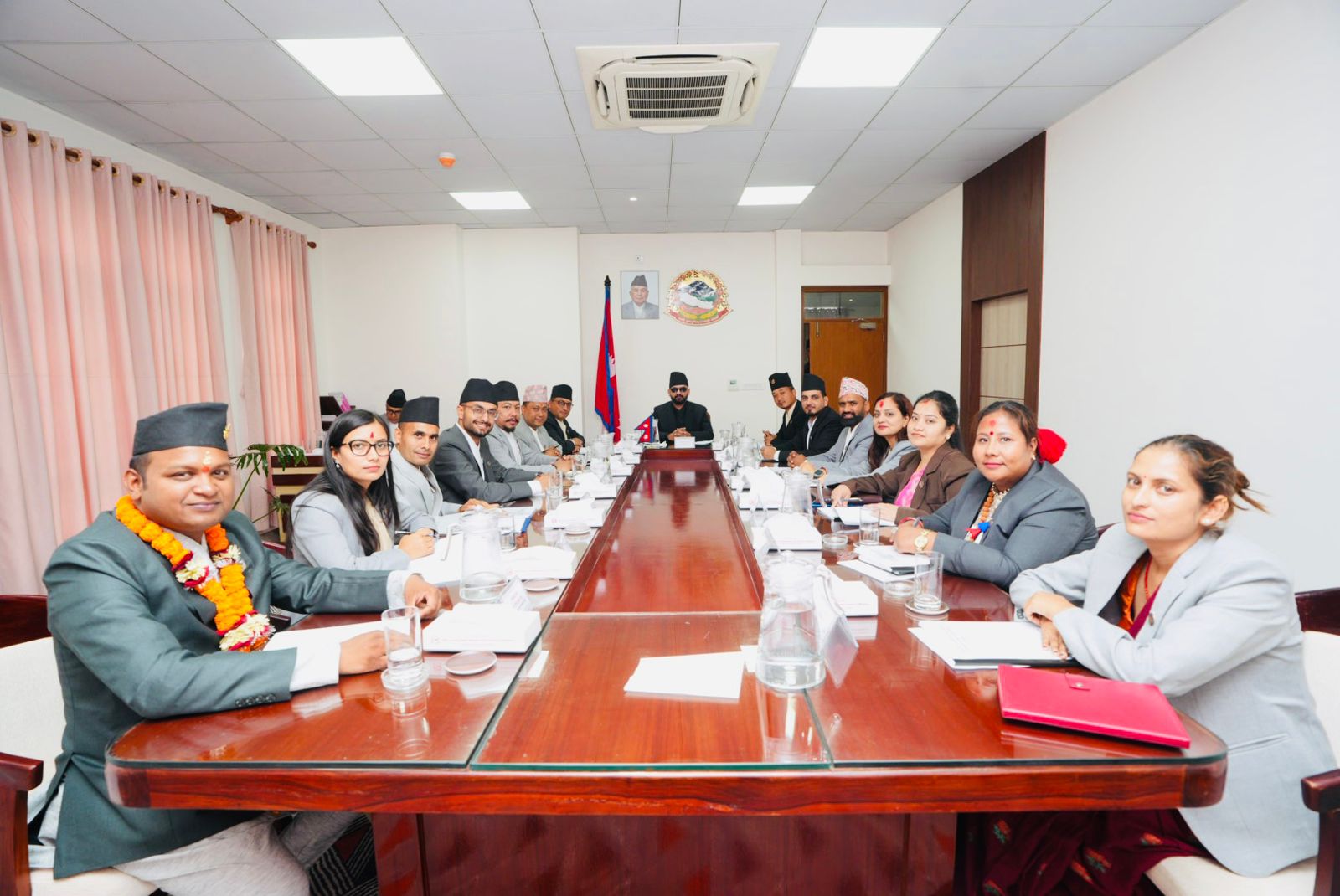
First meeting of the Council of Ministers held on March 27 at the Office of the Prime Minister and Council of Ministers in Singha Durbar. Photo courtesy: Prime Minister’s Secretariat/RSS
Accordingly, on March 29, Minister for Communications and Information Technology Bikram Timilsina instructed the ministry’s secretary and division heads to shut down betting apps and websites in a meeting. The same day, the ministry sent a letter to the regulatory body, the Nepal Telecommunications Authority (NTA), directing it to shut down betting apps and websites within 24 hours. Since then, in coordination with internet service providers, the authority has been working to block all identified betting apps and websites, according to NTA Deputy Director Surya Prasad Lamichhane.
According to him, more than 10,000 betting sites had been blocked by April 15, 2026. He claims that sites were identified and blocked based on coordination with internet service providers as well as complaints received from citizens via phone calls, emails, WhatsApp, Viber, and other social media platforms. “Initially, we used to receive over 100 complaints daily,” he says. “Now the number has dropped to around five to seven per day.” The government had requested that if anyone found betting apps or websites operating or being used, they should inform the authority’s contact person via phone or email.
The Ministry of Communications claims that all domestically operated sites have been completely shut down, and those operated from abroad have been restricted so they cannot function in Nepal. During this process, digital wallets such as Khalti and apps like Hamro Patro were also asked for clarification through the Advertising Board, according to ministry Under-Secretary Rabindra Prasad Paudel. However, he says that it has not yet been fully possible to block the process where advertisements appear on legitimate apps or websites and, when clicked, redirect users to betting sites.
“If we receive complaints that VPN is being used for online gambling or if the state suffers losses, action will be taken; otherwise, the government cannot really do anything about it.”
“We keep removing them, but new pages and sites keep appearing,” he says, noting that shutting down betting sites and raising public awareness must continue simultaneously. “It is not enough to say we have blocked 10,000 sites; betting apps will not stop unless people’s mentality of earning easy money changes.”
In a press release issued on March 29 instructing the shutdown of betting apps and websites, the ministry stated that “if anyone is found operating or using unauthorized betting apps and websites, strict action will be taken by the competent authority in accordance with prevailing law.” Accordingly, while identified betting sites are being shut down rapidly, Deputy Director Lamichhane admits that those operating through alternative methods such as VPNs cannot be stopped.
He says, “Since VPN itself is a technology feature, it is difficult to block.” Ministry spokesperson and Under-Secretary Paudel also holds a similar view. “If we receive complaints that VPN is being used for online gambling or if the state suffers losses, action will be taken; otherwise, the government cannot really do anything about it,” he says. He clarified that the ministry cannot monitor individuals’ mobile phones or computers in a way that violates personal freedom. Instead, he stresses that responsible citizens should avoid taking illegal and risky routes themselves.
Risks of VPN
VPN, or “Virtual Private Network,” is a technology that establishes a secure network to protect internet users’ data and privacy. According to IT expert Rajib Subba, most Nepalis use freely available VPNs, which increases cyber risks.
“Free VPNs are not monitored by anyone, and their features are not strong or secure,” he says. “Free VPNs can also download ransomware and viruses. This can affect all systems running on the device. The risk of privacy breaches, data theft, or hacking increases.” He states that the best option for digital safety is not to engage in activities declared illegal and unauthorized by the state.
Nepal’s law also considers betting illegal. Section 125(4) of the National Penal Code Act, 2017 states that no one shall engage in or facilitate betting. Those who violate this provision are liable to imprisonment of up to one year and a fine of up to Rs 10,000. Any property used in the offense is also confiscated.
Similarly, Section 5(1)(b) of the Advertisement (Regulation) Act, 2019 prohibits advertisements that encourage gambling, facilitating gambling, or buying/selling unauthorized lottery tickets. Violations are punishable under prevailing law; where no specific penalty is mentioned, the punishment is up to one year of imprisonment and a fine of up to Rs 10,000.