Kathmandu
Saturday, June 6, 2026






KATHMANDU: Nepali Congress leader and former Energy, Water Resources and Irrigation Minister Deepak Khadka was arrested on March 29, 2026, by Nepal Police’s Central Investigation Bureau in a money laundering case linked to burnt currency notes recovered from his Budhanilkantha residence after it was set ablaze during September 2025 Gen Z protests.
He faces parallel probes by the Commission for Investigation of Abuse of Authority (CIAA) for corruption and the Department of Revenue Investigation for tax evasion, including alleged illegal occupation of Nepal Scouts land and irregularities in a major hydropower project.
On April 16, 2026, the Supreme Court ordered his immediate release, citing illegal arrest and remand procedures, while imposing a travel ban.
Who is Deepak Khadka and what is his political and business background?
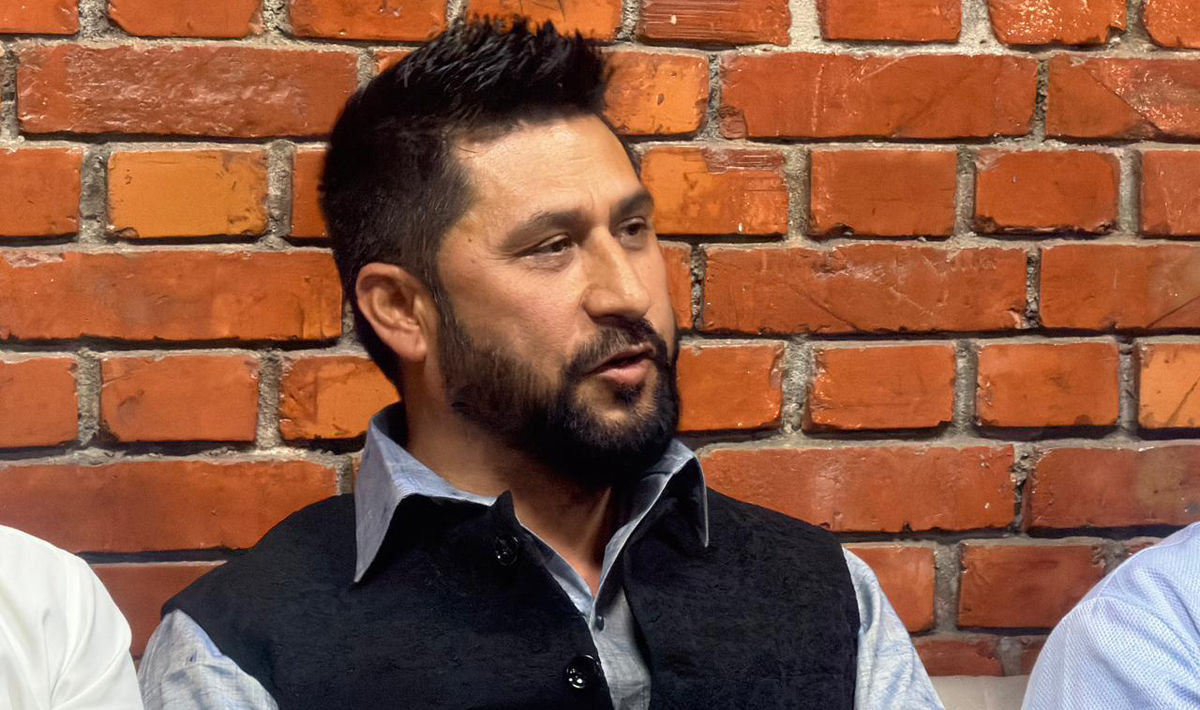
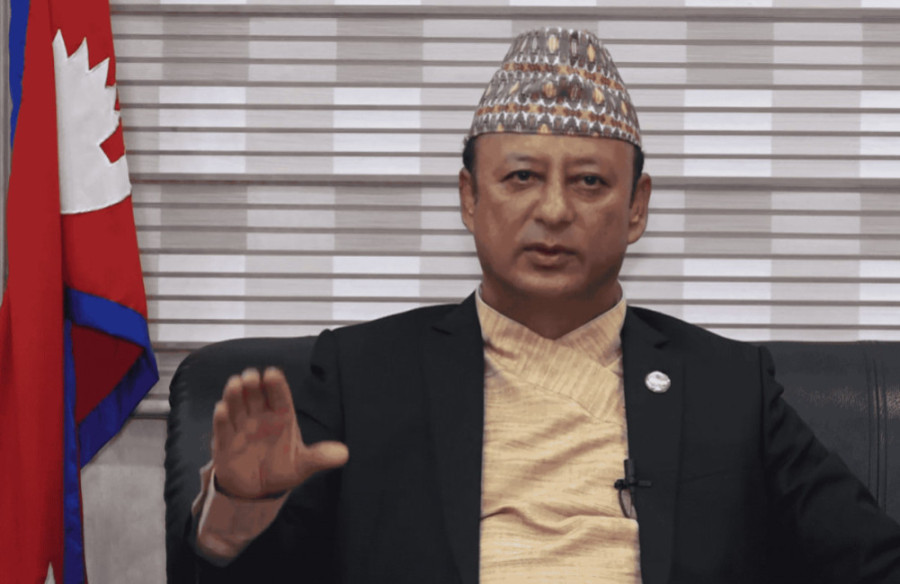
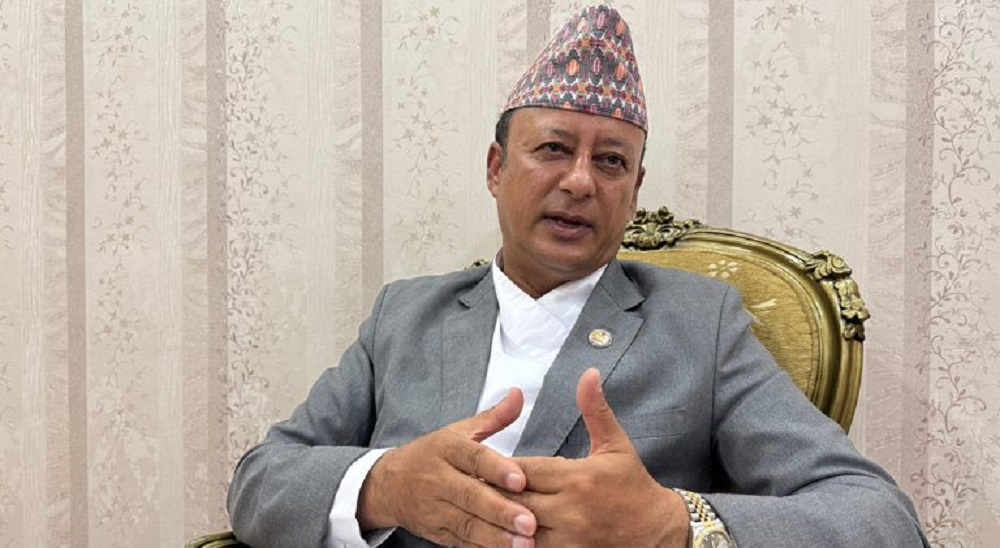
Deepak Khadka, born on June 29, 1971, in Dharmadevi Municipality, Sankhuwasabha district, is a prominent Nepali Congress politician and businessman who has served as a two-time Member of Parliament and two-time minister.
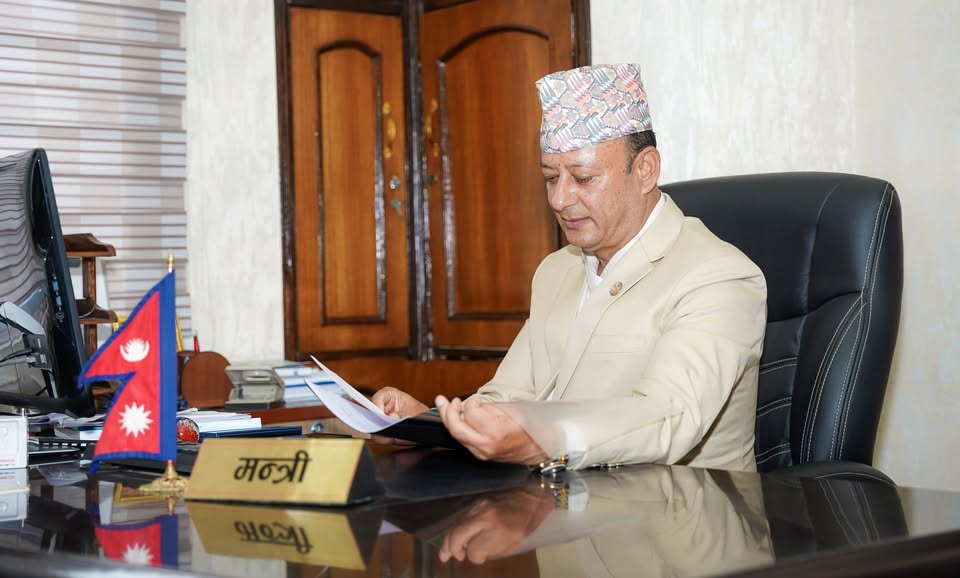
He held the position of Minister for Energy, Water Resources and Irrigation from July 15, 2024, to September 9, 2025, in the fourth KP Sharma Oli-led cabinet.
Earlier, he served as State Minister for Water Supply and Sanitation in a Pushpa Kamal Dahal-led coalition government that included the Nepali Congress and the then CPN (Maoist Centre).
Khadka is known for his dual role in politics and business; he owns Khadka Land Development Pvt Ltd and has interests in hydropower projects, hotels, and other ventures.
His asset declarations as a public office holder have come under scrutiny for inconsistencies with his bank transactions, company shareholdings, and reported wealth.
Critics have long portrayed him as a businessman-politician whose influence in licensing and contracts has raised questions about potential conflicts of interest.
Despite these controversies, Khadka remains an active figure within the Nepali Congress, representing a blend of political ambition and private enterprise that is common among many Nepali leaders.
His rapid rise and business dealings have made him a frequent subject of public and media attention, especially during periods of political transition.
When and why was Deepak Khadka initially arrested?
Deepak Khadka was arrested on March 29, 2026, early Sunday morning from his Budhanilkantha residence by the Central Investigation Bureau (CIB) of Nepal Police. The arrest was carried out at the request of the Department of Money Laundering Investigation (DoMLI) as part of an ongoing probe into suspected money laundering offenses.
The primary trigger was the recovery of burnt Nepali and foreign currency notes from his residence following the September 9, 2025, Gen Z protests, during which protesters damaged and set fire to his house.
Videos and images circulating on social media showed charred banknotes and ashes, which forensic analysis later confirmed. Investigators collected fragments of burnt notes and surrounding ash as evidence.
The Department of Money Laundering Investigation initiated a preliminary inquiry into whether the cash represented unexplained wealth or proceeds from illicit activities.
Khadka was produced before the Kathmandu District Court the same day, which granted an initial seven-day judicial remand for interrogation. The case quickly gained national attention as it coincided with arrests of other high-profile figures from the previous Oli government, raising questions about the timing and political motivations behind the action.
Authorities emphasized that the arrest was based on evidence gathered from the protest-related incident rather than purely political grounds.
What is the connection between Khadka’s arrest and the 2025 Gen Z protests?
The arrest is directly linked to events during the September 2025 Gen Z protests that ultimately led to the dissolution of the KP Sharma Oli government.
On September 9, 2025, demonstrators targeted several high-profile residences, including Khadka’s Budhanilkantha home, which was damaged and set on fire. Social media footage showed burnt currency notes—both Nepali rupees and foreign currency—scattered around the property, along with intact notes allegedly taken by protesters.
Forensic teams later verified the presence of charred banknotes and ash. The Department of Money Laundering Investigation treated this as potential evidence of large-scale cash holdings whose origin required scrutiny, suspecting it could be proceeds of corruption or money laundering.
Home Minister Sudhan Gurung publicly confirmed the arrest on social media, stating it was specifically for investigating the “money recovered from his residence during the protest.” This incident occurred while Khadka was serving as Energy Minister in the Oli cabinet.
The protests were marked by widespread anger against the government over various issues, including governance and economic concerns.
Khadka’s case became emblematic of broader accountability demands post-protests, with investigators arguing that the discovery warranted a formal probe into whether the cash represented unexplained wealth accumulated during his ministerial tenure.
The timing—months after the protests—has fueled debate about whether the investigation reflects genuine anti-corruption efforts or selective targeting.
What are the allegations of illegal land occupation involving Nepal Scouts?
Khadka faces serious accusations of illegally occupying approximately seven ropani (0.36 hectares) of land belonging to the Nepal Scouts in Lainchaur, Kathmandu. Through his company, Khadka Land Development Pvt Ltd, he allegedly operated a commercial “party palace” (banquet hall) on the property for years, starting around 2008.
The lease agreement reportedly expired long ago, yet the occupation continued without proper authorization or full payment of dues. Nepal Scouts had been attempting to reclaim the land, and following the 2025 protests, the company paid Rs 24.2 million in outstanding rent.
However, authorities allege the occupation was illegal from the outset and involved unauthorized construction and commercial use of public land. The Commission for Investigation of Abuse of Authority (CIAA) is actively investigating these claims as part of broader corruption probes.
Critics argue that Khadka leveraged his political influence to maintain control over the prime-location property for personal business gain. The issue gained renewed attention when Nepal Scouts initiated proceedings to seize structures and assets built on the land due to non-payment and lease violations.
This allegation fits into a pattern of complaints regarding misuse of public resources during his political career, highlighting tensions between private business interests and public land management in Nepal.
What procurement irregularities are alleged in the Jagdulla Hydropower Project?
Khadka is under investigation for alleged irregularities in the procurement process for the Rs 16 billion Jagdulla Hydropower Project. The project’s civil and hydromechanical works tender was initially invited by the Jagdulla Hydropower Investment Company on May 2024. After the bidding process, the contract was allegedly cancelled under suspicious circumstances, only to be awarded later to specific companies—High Himalayan Hydro Construction and AGE—through intermediaries.
Complainants allege that a two percent commission was directed toward the minister (Khadka), with payments shared among other bidding contractors in a collusive arrangement.
The CIAA is examining evidence of financial manipulation, favoritism, and abuse of authority during his tenure as Energy Minister.
These claims suggest that the tender cancellation and re-award process may have been engineered to benefit select firms, potentially at the expense of competitive bidding and public interest.
The project, a significant infrastructure initiative, has drawn scrutiny because such irregularities could inflate costs and delay development.
Investigators have linked these allegations to broader complaints about license issuance and contract awarding in the hydropower sector during Khadka’s ministerial period.
The Department of Money Laundering Investigation referred aspects of the case after identifying suspicious financial flows tied to the project.
This probe underscores ongoing concerns about transparency in Nepal’s multi-billion-rupee energy sector contracts.
What other financial and corruption probes is Deepak Khadka facing?
Beyond the money laundering case, Khadka is subject to parallel investigations by the CIAA for corruption and by the Department of Revenue Investigation for suspected tax evasion.
The DoMLI conducted a preliminary review of his and his family’s financial transactions, bank accounts (often mixing personal and business use), asset declarations filed during his time as MP and minister, tax payment records, and shareholdings in multiple companies.
Officials described significant discrepancies as “unusual,” prompting referrals to specialized agencies after establishing predicate offenses under amended laws.
The CIAA is handling earlier complaints related to abuse of authority, including hydropower licensing and contract facilitation where bribes were allegedly received in the minister’s quarters.
Tax authorities are scrutinizing potential evasion through under-reported income or unexplained wealth. These probes were consolidated following the money laundering referral, allowing coordinated action. Khadka’s business empire, including hydropower interests and real estate, has come under the microscope for possible links to his political positions.
The investigations reflect a post-2024 legal framework that limits direct DoMLI jurisdiction in some unexplained wealth cases, requiring primary offenses to be pursued first by CIAA or revenue bodies.
Khadka has denied wrongdoing, maintaining that all assets are legitimately acquired through business activities.
The multi-agency approach highlights Nepal’s efforts to address high-level financial crimes through specialized oversight.
What was the Supreme Court’s decision on April 15, 2026, regarding Khadka’s habeas corpus petition?
On April 15, 2026, a division bench of Supreme Court justices Til Prasad Shrestha and Shanti Singh Thapa heard the habeas corpus petition filed by Khadka’s wife, Binita Thapa.
The court ordered that Khadka remain in his current situation—judicial custody—while directing the Department of Revenue Investigation to submit the full investigation file, remand extension documents from Lalitpur District Court, and a written response detailing grounds for detention by midday on April 16.
The bench did not grant immediate release, effectively maintaining the status quo pending further review. Arguments were presented by senior advocates for Khadka and by government law officers.
This interim order came after earlier remands by district courts and reflected the court’s cautious approach to evaluate procedural compliance and evidence before ruling on legality. The decision set the stage for the next day’s hearing by a different bench.
It underscored the judiciary’s role in scrutinizing detention in high-profile cases, ensuring that arrests meet constitutional standards of due process.
The court sought clarification on whether proper legal formalities had been followed in the initial arrest and subsequent extensions, foreshadowing the procedural issues that would dominate the April 16 ruling.
Why did the Supreme Court order Deepak Khadka’s release on April 16, 2026?
On April 16, 2026, a joint bench of Acting Chief Justice Sapana Pradhan Malla and Justice Shrikanta Poudel ruled that Khadka’s arrest and remand extensions were procedurally illegal and ordered his immediate release via a habeas corpus writ.
The court found that the “urgent arrest warrant” was misused without justifiable grounds such as risk of flight or evidence tampering. It noted that no sufficient basis existed for custody, as preliminary reports from the property laundering department showed no prior criminal record and no identified predicate offense at the time of arrest.
Key violations included failure to produce Khadka before the concerned judge during remand extensions and lack of documented reasons justifying detention over investigation outside custody.
The bench emphasized that the nature of the alleged offenses—under the Revenue Evasion Act—allowed for settlement via fine and compensation without mandatory imprisonment, and the investigation could proceed without holding him.
The ruling cited established legal principles that detention must follow due process; otherwise, it violates fundamental rights. This decision overturned the previous day’s maintenance of custody by a different bench, highlighting the Supreme Court’s commitment to procedural justice even in sensitive cases involving former ministers.
What conditions were attached to Khadka’s Supreme Court-ordered release?
While ordering immediate release on April 16, 2026, the Supreme Court imposed a clear restriction: Khadka must obtain prior permission from the concerned court before traveling abroad.
The bench explicitly stated that any foreign travel requires formal approval to ensure he remains available for ongoing investigations. This travel ban serves as a safeguard against potential flight risk while respecting the finding that continued custody was unjustified.
No other restrictions, such as house arrest or regular reporting, were mentioned in the order. The ruling stressed that the investigation into the alleged offenses could continue effectively with Khadka at liberty, given the non-custodial nature of the probe.
Khadka’s wife’s petition succeeded in securing freedom on procedural grounds, but the conditional release underscores the court’s balance between individual rights and the state’s investigative needs.
Authorities from the Revenue Investigation Department and CIAA are expected to proceed with questioning and document collection without detaining him further at this stage.
This outcome has been widely reported as a victory for due process while keeping accountability mechanisms intact.
What is the current status of investigations against Deepak Khadka following his release?
Despite his release on April 16, 2026, investigations by multiple agencies remain fully active and ongoing. The Department of Money Laundering Investigation, CIAA, and Department of Revenue Investigation continue examining the burnt currency evidence, asset discrepancies, Scouts land occupation, and Jagdulla Hydropower irregularities.
Khadka is required to cooperate with authorities, including appearing for statements and providing documents as requested. The Supreme Court’s order does not halt or dismiss any probes; it only addresses the legality of his pre-trial detention.
Officials have indicated that evidence collection, forensic analysis, and financial audits will proceed, potentially leading to formal charges if sufficient proof emerges.
The travel restriction ensures his availability. Legal experts note that release on procedural grounds does not equate to exoneration, and the case could still result in trial or settlement under relevant laws (such as revenue evasion provisions allowing fines).
Khadka’s legal team has welcomed the ruling as upholding constitutional rights, while investigators maintain focus on substantive allegations.
Public and political interest remains high, with the outcome viewed as a test of Nepal’s anti-corruption framework’s ability to balance speed, fairness, and thoroughness.
What is the broader political and legal significance of the Deepak Khadka case?
The Khadka case exemplifies Nepal’s evolving struggle with high-level accountability, procedural justice, and the intersection of politics and business.
Legally, the Supreme Court’s April 16, 2026, ruling reinforces the principle that arrests and detentions must strictly adhere to due process, even for influential figures, setting a precedent against arbitrary custody in white-collar crime investigations.
It highlights judicial oversight of remand procedures and the preference for non-custodial probes when offenses permit. Politically, as a Congress leader who served in an Oli-led cabinet, the case occurs amid post-Gen Z protest scrutiny of former officials, raising questions about selective enforcement versus genuine anti-corruption drives.
The multi-agency probes into land misuse, hydropower contracts, and unexplained wealth reflect public demand for transparency in governance and infrastructure sectors.
Critics argue it exposes systemic vulnerabilities where ministerial positions enable private gain, while supporters see it as politicized targeting.
The swift release on technical grounds has sparked debate on whether courts prioritize procedure over substance.
Overall, the case tests Nepal’s institutions: Can the judiciary protect rights while agencies deliver justice? Its outcome may influence future high-profile investigations, public trust in rule of law, and political discourse on corruption in a country where business-political nexuses remain contentious.