Kathmandu
Saturday, June 13, 2026





High Court Janakpurdham's efforts to ease access to justice through service seeker assistance, SMS alerts, and virtual hearings
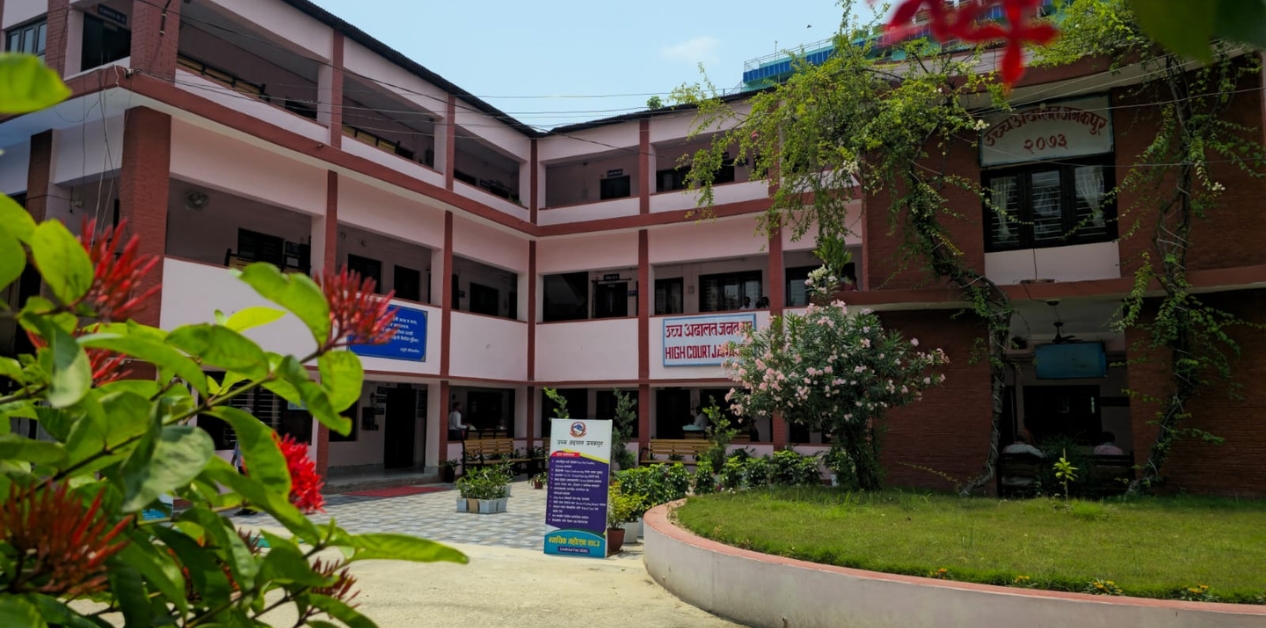
For about a year, 70-year-old Anuruddh Sah of Tarapatti-Sirsiya, Dhanusha, who has been frequenting the High Court Janakpurdham for a land dispute case, used to get a headache just remembering the days he had to go to court. Whether it was winter or summer, he was forced to wait for hours, stand outside due to a lack of seating space, and constantly inquire about when the pleading of his case would begin.
However, his experience has recently changed somewhat. Now, he sits on a bench installed in the court premises and can watch and listen to the arguments of his case from an LCD screen set up right in the courtyard.
“Previously, there was no place to sit; we had to go and wait in the lawyer’s chamber. We had to wander around the courtroom wondering when our turn for the pleading would come,” Sah says. “Now, we can sit right in the courtyard and listen to the arguments on the TV. It has also become comfortable with water, fans, and a seating area.”
Another relief for Sah is the ‘Help Desk.’ In the past, one had to rely on outside scribes (petition writers) or other people even to get a simple application written. Writing a single application used to cost anywhere from 500 to 1,000 rupees. He says that after the help desk was set up inside the court, the compulsion to wander outside for minor tasks has decreased. He says, “Previously, we had to beg someone even for an application. Now that there is a help desk, it has become very easy.”
The latest practices of the High Court Janakpurdham have begun to challenge the traditional image of courts, which is often associated with piles of old files, the hassle of scheduling dates, crowds of service seekers, and the despair of “the turn for the case did not come today either.”
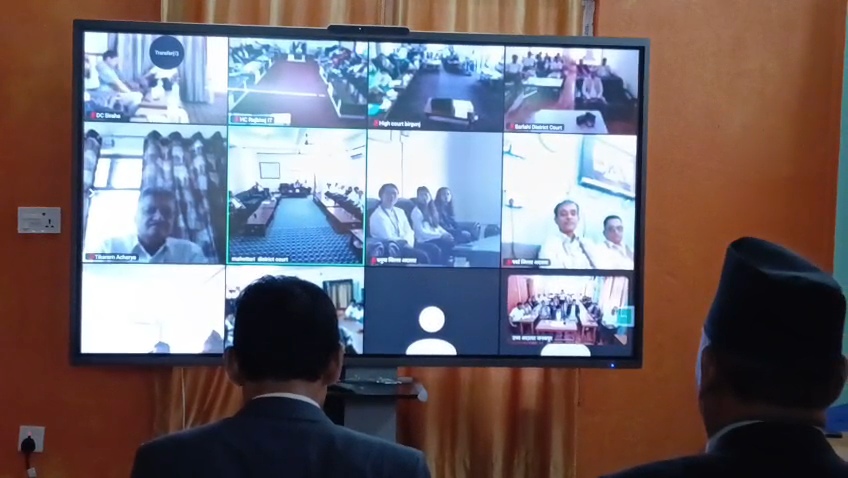
Pleadings being conducted online.
It is not just physical decoration or amenities that have been added to the court; some new practices have been started with the aim of reducing initial confusion for service seekers, lack of information, dependence on middlemen, long waiting times, and delays in the case process. Among them, the help desk, service seeker assistants, SMS alerts, LCD displays, online pleadings, virtual hearings directly from prisons, and judicial dialogues with the community are prominent.
Confusion reduced by the help desk
The role of Ajay Kumar Sah, who entered the High Court Janakpurdham as an office assistant about six years ago, has changed recently. He has now become the first resort for many service seekers.
Explaining to the service seekers coming to the court which room to go to, which courtroom to reach, what application is needed, where to sign, and how to advance the process has become his daily duty. He facilitates more for service seekers who are less educated, elderly, disabled, or visiting the court for the first time. If a disabled service seeker arrives, he even takes them to the relevant room in a wheelchair.
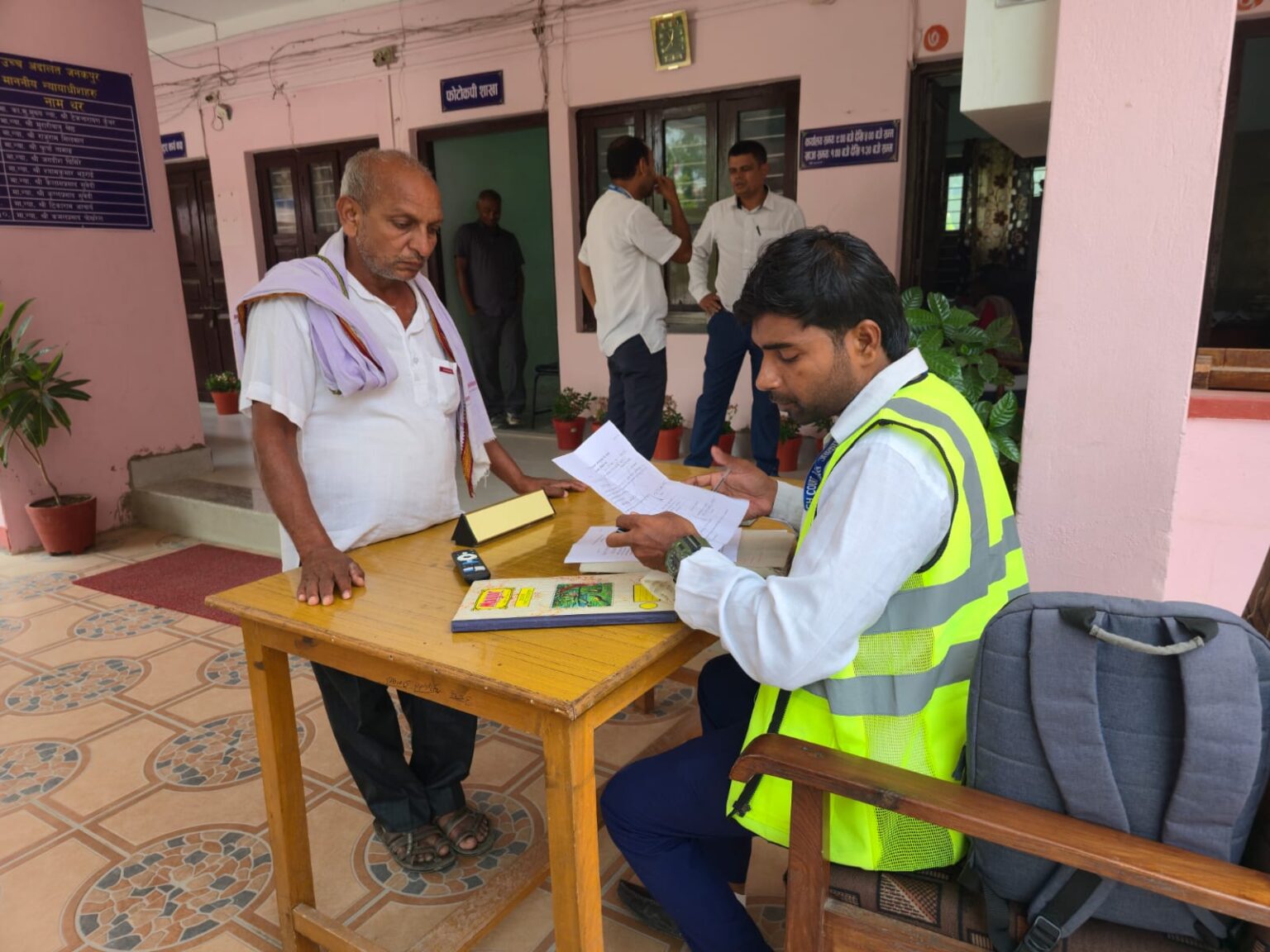
Staff facilitating service seekers.
“I feel happy to help the service seekers coming to the court,” he says. “Previously, out of ignorance, many service seekers used to fall into the traps of middlemen. Now, both their time and money have been saved.”
According to him, service seekers arriving in the summer are first asked to sit under a fan, given drinking water, and then assisted by asking what business they have come for. He states that the help desk has proven useful for less-educated individuals coming to the court.
According to Sah, more than 100 service seekers receive facilitation services from the help desk daily. He mentions that since arrangements have been made to write simple applications inside the court free of cost, the situation of having to pay 500 to 1,000 rupees to scribes no longer exists. According to court officials and service seekers, the help desk and SMS notifications have reduced dependence on middlemen.
Small amenity, big relief
Ramrijhan Mahato of Golbazar, Siraha, has to frequent the court for a case related to land. Sometimes his wife, Lalita Mahato, also comes along. For Lalita, some of the amenities added to the court might seem ordinary, but they provide practical relief.
Sanitary pads have been placed in two locations for women in the court. Arrangements have also been made to heat food for service seekers who bring their snacks or lunch from home.
“Even though this thing seems ordinary, it has provided relief from the suffering women face during their menstruation periods,” Lalita says. “With amenities like seating space, water, and sanitary pads being added, confidence to come to court has increased somewhat.”
Receiving the court’s verdict is not the only definition of access to justice; the kind of treatment, information, waiting management, and basic facilities citizens receive upon entering the court is also a part of it. The latest practice of the Janakpur High Court seems to address this very aspect.
Along with technology
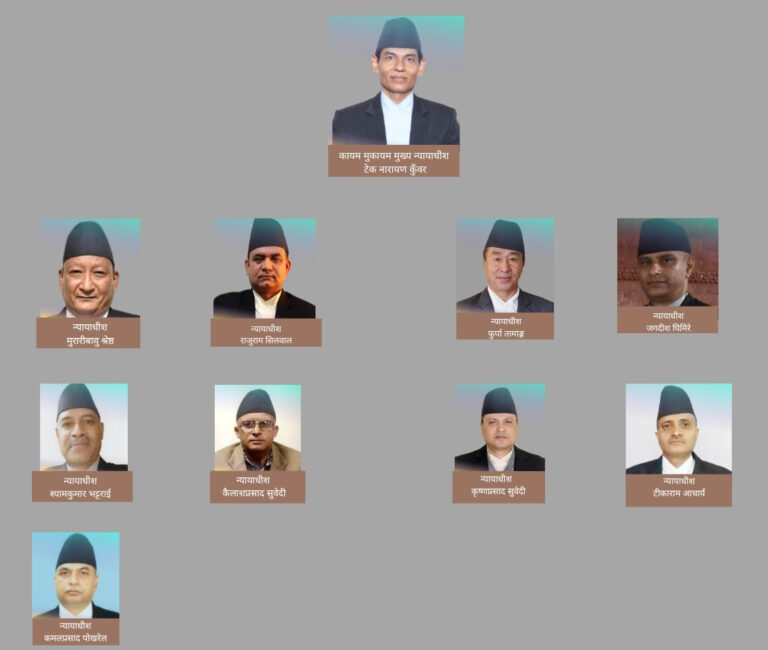
The Acting Chief Judge of the High Court Janakpurdham, Tek Narayan Kunwar, was transferred from the Special Court and arrived in Janakpur on August 15, 2025. Court officials say that since his arrival, priority has been given to the cleanliness of the court premises, amenities for service seekers, and technology-friendly service delivery.
Information Officer Kuber Dhungel states that since the efforts to make court operations technology-friendly began last Kartik, the unnecessary crowd of service seekers on the court premises has decreased somewhat. Arrangements have been made to send information regarding case registration, scheduled dates, and verdicts to service seekers and legal practitioners via SMS. This is expected to reduce the situation of having to visit the court repeatedly or depend on others to know the status of a case.
According to legal practitioner Rajkumar Mahaseth, since SMS notifications started arriving, it has become easier to know when a specific case is scheduled for pleading. “When a message arrives, it becomes clear to us as well which case we need to plead,” he says. “Work has become easier after technology was integrated.”
The LCD screens installed on the court premises have also made it easier for service seekers. The situation of having to crowd inside the courtroom just to hear the pleading of one’s case has reduced. For less-educated service seekers, however, facilitation by staff is still required to understand the information displayed on the screen.
Decreasing travel and expenses
Another practice adopted by the High Court Janakpurdham is online pleading. According to the court’s Information Officer Dhungel, pleadings have been conducted online in 65 cases so far.
On May 19, Advocate Dipendra Jha, along with other legal practitioners, conducted pleadings from Kathmandu via online medium in a forgery and fraud case related to Ram Roshan Das, the successor Mahanth of the Janaki Temple. Jha, who is also the former Chief Attorney of Madhesh Province, says that online pleading has made it convenient for both legal practitioners and the parties involved in the cases.
“This has saved the time of legal practitioners, while the expenses of the persons hiring the legal practitioners have also decreased,” Jha says. “Coming to Janakpur from the federal capital involves airline tickets, lodging expenses, and food expenses altogether. If the hearing date gets postponed for some reason, the same expense is repeated. Online pleading has reduced that hassle.”
According to Dhungel, previously, even when Janakpur’s legal practitioners were out of town, situations arose where hearings had to be postponed. The court claims that now, since pleadings can be done via video from anywhere, the problem of hearing postponements has reduced to some extent.
Bimal Mishra, President of the Janakpurdham Bar Association, also says that both service seekers and legal practitioners have found it convenient as the court links up with technology. He considers being able to conduct online pleadings even while outside a positive practice.
In hearings directly from prison
Defendants in custody have begun to be connected to virtual hearings directly from prison. On May 28, a defendant held in Jaleshwar Prison for a case related to rape was connected to his case hearing directly from the prison. As it was a closed courtroom, the general public was not allowed entry; legal practitioners were conducting virtual pleadings while the judge even asked questions to the defendant.
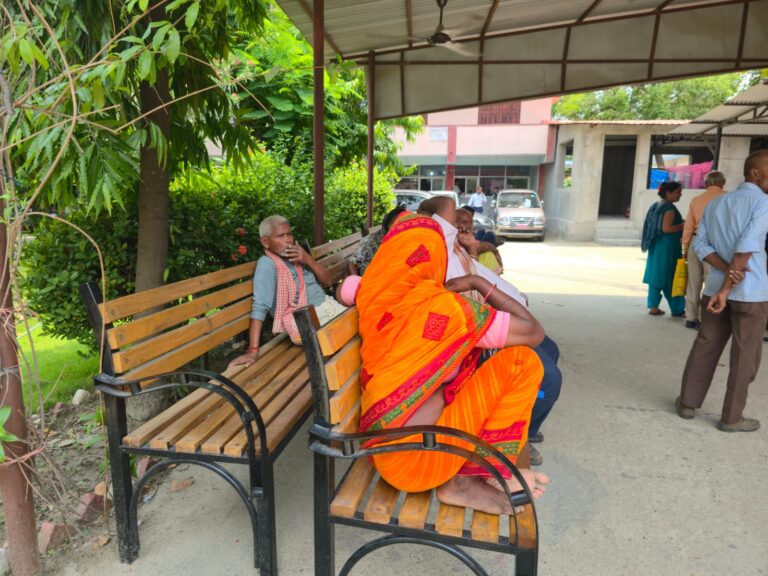
Service seekers waiting for their turn.
The court stated that on that day, defendants in three cases were connected to hearings through virtual means directly from prison. Dhungel mentions that prisoners kept in Mahottari, Sindhuli, and Sarlahi prisons are connected to hearings virtually whenever required.
This has reduced the expenses, time, and security arrangement hassles involved in bringing persons in custody to the court. Court officials say that the experience of defendants being able to present their points directly to the judge through virtual means can increase trust in the judicial process.
However, some sensitive questions are also tied to this practice. Can defendants consult confidentially with their legal practitioners? Do internet, audio, or visual issues affect the hearing? Do all parties get an equal opportunity to present their case? Clear procedures on these matters are necessary to make virtual hearings a long-term system.
Summons delivery and case disposal
According to court officials, the process of summons delivery, which used to take months in the past and occasionally raised suspicions of foul play, has now started to become faster since online and digital mediums began to be used. In their claim, this has reduced delays in the initial process of cases by up to 90 percent. However, the court has not made public the comparative data of the average time before and after the reform.
The court has disposed of 3,115 cases up to mid-May of the current fiscal year 2025/26. Out of a total of 5,651 cases—comprising 2,267 cases carried over from the previous year and 3,384 newly registered ones—2,536 cases remain to be disposed of.
According to the court, 374 cases between one year to 18 months old, 70 cases between 18 months to two years old, and four cases exceeding two years are still pending. The court stated that the number of cases registered by the end of January 2025 and remaining pending is 124. The court has set a target to dispose of 4,546 cases in the current fiscal year.
Acting Chief Judge Kunwar states that to make judicial service delivery more effective, transparent, and citizen-friendly, transformation is needed not just in speech but in practice.
“To maintain citizens’ trust in the judiciary, swift, impartial, and effective administration of justice is necessary,” he says. “The court is working by prioritizing the disposal of old cases. Expanding citizens’ access to justice is also our priority.” He believes this will increase the public’s trust in the court.
Judges reaching out to the community
Along with internal court reforms, the High Court Janakpurdham has also started the practice of direct dialogue with the community. The court stated that the ‘Judicial Dialogue with the Community’ program has been conducted with the objective of making the judicial process simple, smooth, and accessible to the general public.
Under the program, judges reach out to various local levels to interact with citizens, gathering suggestions regarding citizens’ expectations, experiences, challenges, problems, and solutions in the administration of justice.
According to the High Court, such programs have already taken place in Dhanushadham Municipality, Mithila Bihari Municipality, Kamala Municipality, Hansapur Municipality, Janaknandini Rural Municipality, and Mukhiyapatti Musaharniya Rural Municipality.
During the dialogue, legal information was provided on issues such as loan sharking, check bounce, domestic violence, property division, matrimonial disputes, juvenile delinquency, cybercrime, and drug abuse. The court stated that discussions were also held on the judicial committees of local levels, the mediation system, and dispute resolution processes.
Lawyers listening to pleadings online
Sukhadev Yadav, Mayor of Kshireshwarnath Municipality in Dhanusha, states that the court has reached out directly to the people for the first time. He believes such programs will not only reduce the distance between the court and citizens but also increase judicial awareness.
Acting Chief Judge Kunwar states that they have operated such programs because the court is not just an institution that passes verdicts, but also a responsible body that expands the rule of law and judicial awareness in society. He says, “Such programs increase legal literacy as well as citizens’ trust in the justice system. This is necessary to strengthen democracy.”
An exemplary practice
The recent practice of the High Court Janakpurdham has shown that to improve access to justice, not only technology but also a humane system that facilitates service seekers within the court is required. Measures such as the help desk, SMS alerts, LCD displays, online pleadings, virtual hearings from prison, and judicial dialogue with the community are of a nature that can be implemented in other courts as well.
Both Advocate Dipendra Jha and legal practitioner Rajkumar Mahaseth say that expanding such practices to other courts would make it convenient for both service seekers and legal practitioners.
Bimal Mishra, President of the Janakpur Bar Association, also says that connecting the court with technology is positive. According to him, being able to receive information regarding scheduled dates, pleadings, and case status through technology makes it easier for both legal practitioners and service seekers.
He points out that since the willpower of the leadership alone is not sufficient for such practices, there is a need for a regular budget, staff training, technology maintenance, consideration of service seekers’ language and digital access, and an institutional system that continues to function even after a change in leadership.