Kathmandu
Saturday, June 13, 2026





Seven global airline turnarounds show that even deeply troubled national carriers can recover through governance reform, professional management, and strategic discipline. For Nepal Airlines Corporation, the lesson is clear: without ending political interference and fixing safety, structure, and accountability, revival will remain out of reach

KATHMANDU: There is a small, telling detail in the institutional history of Nepal Airlines Corporation that says more about the organization than any audit report. In September 2007, when one of its Boeing 757 aircraft developed a technical fault, the national carrier sacrificed two goats in front of the plane at Tribhuvan International Airport to appease Akash Bhairab, the Hindu god of sky protection. A spokesperson confirmed, apparently without irony, that after the ceremony, the aircraft resumed its flights. The snag, it was said, had been fixed.
The story became an international joke. But inside Nepal, it was received mostly as a curiosity, perhaps even a reassurance, a reminder that the airline operated on its own terms, by its own logic, insulated from consequence by layers of political protection and institutional inertia.
That same insulation allowed deeper problems to pile up.
A USD 209.6 million aircraft deal was later found by US courts to involve USD 2.5 million in bribes to Nepali officials. A 12-year-old Lauda Air Boeing 767 was taken on lease under opaque terms, causing losses of Rs 335 million with no one held accountable.
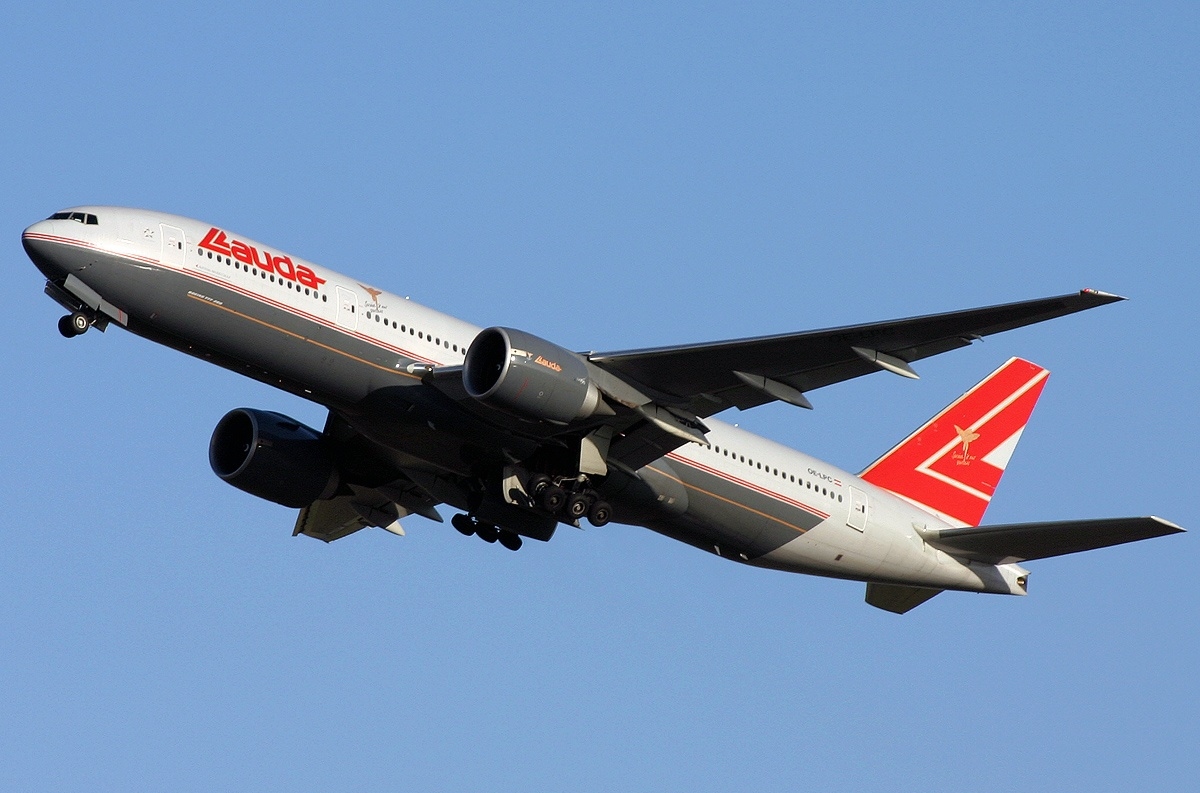
Lauda Air Boeing 777-200ER. Photo courtesy: Lauda Air/Website
A former chairman was jailed for corruption. The European Union imposed a ban on all Nepali airlines that has now stretched beyond twelve years.
Liabilities have climbed to nearly Rs 50 billion. And most recently, an operations director was caught attempting to place his own relative in a foreign training program, bypassing established rules.
Nepal Airlines has been in crisis before, and reforms have been announced before. Committees have convened, audits have been damning, and charges have occasionally been filed.
Each time, the organism has found a way to absorb the shock and return to familiar patterns. The question worth asking now, in 2026, with a new government that came to power on the promise of systemic change, is not whether Nepal Airlines is broken—that has been established beyond reasonable doubt—but whether it can be fixed and what fixing it would actually require.
The answer, it turns out, has already been written. Not in Kathmandu, but in Addis Ababa, Istanbul, Singapore, Kigali, Almaty, Kuala Lumpur, and Muscat.
THE WEIGHT OF HISTORY
Nepal Airlines Corporation was born in 1958 as Royal Nepal Airlines Corporation, a single Douglas DC-3 Dakota connecting Kathmandu to a handful of domestic strips and Indian cities. For its first decades it was genuinely admired.
At its peak, it flew to London, Frankfurt, Paris, Amsterdam, Hong Kong, Tokyo, and Osaka. It was the largest employer in the country and the single biggest generator of foreign currency. Its aircraft were maintained. Its staff were trained. And then democracy arrived.
The restoration of multiparty democracy in 1990 transformed the airline from a national carrier into a vehicle for patronage. Successive governments treated board appointments as political rewards, stuffed management with loyalists, awarded contracts to party allies, and treated the aircraft procurement process as a pipeline for personal enrichment.
The airline’s market share, which had once been near-total, collapsed to 5 percent domestically as private carriers absorbed what the state had abandoned.

Nepal Airlines Corporation. Photo: Bikram Rai/Nepal News
Internationally, the story was even bleaker: by 2013, the European Commission banned every single Nepali airline from European airspace, citing a regulatory architecture so compromised that the civil aviation body simultaneously served as both service provider and safety regulator — a structural conflict of interest that ICAO had flagged, that reform advocates had flagged, and that successive governments had simply refused to address because the current arrangement suited too many people too well.
The ban remains in place as of April 2026. Thirteen years on, Nepal Airlines cannot fly to Europe. It cannot fly repatriation flights for EU citizens stranded in Nepal. It cannot leverage the enormous European tourist market that sends nearly a fifth of its arrivals by air.
And while governments have annually pledged reform in budget speeches, the key legislation needed to separate CAAN’s regulatory and operational functions — the foundational demand of both ICAO and the EU — has been passed, stalled, and abandoned multiple times, most recently dying when the House of Representatives ended its five-year term without passing two aviation bills it had already discussed at length.
Meanwhile, the Airbus A330 scandal confirmed what insiders had known for years: procurement at Nepal Airlines was not merely inefficient, it was a structured extraction operation. US court documents, arising from a Foreign Corrupt Practices Act conviction, established that Deepak Sharma, a Nepal-born British executive at the US aviation company AAR Corporation, paid USD 2.5 million in bribes to Nepali officials between 2014 and 2017 to secure the USD 209.6 million wide-body aircraft contract.
The aircraft delivered were not even to the specifications originally demanded, arriving with a lower maximum takeoff weight than required for Kathmandu’s high-altitude conditions. The parliamentary Public Accounts Committee documented corruption amounting to Rs 4.35 billion. The CIAA filed cases against 32 individuals in 2024. None has yet resulted in a conviction.
This is the institution that Nepal’s new government has inherited. It is not merely an airline with management problems. It is a case study in how political capture, when sustained over decades, transforms a public enterprise into something that superficially resembles its stated purpose while actually serving entirely different ends: employment of the connected, procurement as a revenue stream, and operational continuity as cover.
The question of whether it can be turned around is one that seven airlines across four continents have already answered.
ETHIOPIA: THE PATIENCE OF DECADES
No airline in the developing world offers a more instructive parallel to Nepal’s situation than Ethiopian Airlines. In 1946, Ethiopia was a country with no runways, an illiteracy rate above 96 percent, two secondary schools, and no tertiary institutions. The idea of establishing a commercial aviation industry was treated, in mainstream economic thinking of the day, as an absurdity, a category error, an industry entirely mismatched with a country’s comparative advantage.
The Ethiopian government, however, made a decision that would prove transformational. It approached Trans World Airlines, an American carrier of global standing, and signed a partnership agreement that gave TWA full authority to establish and manage the new airline.
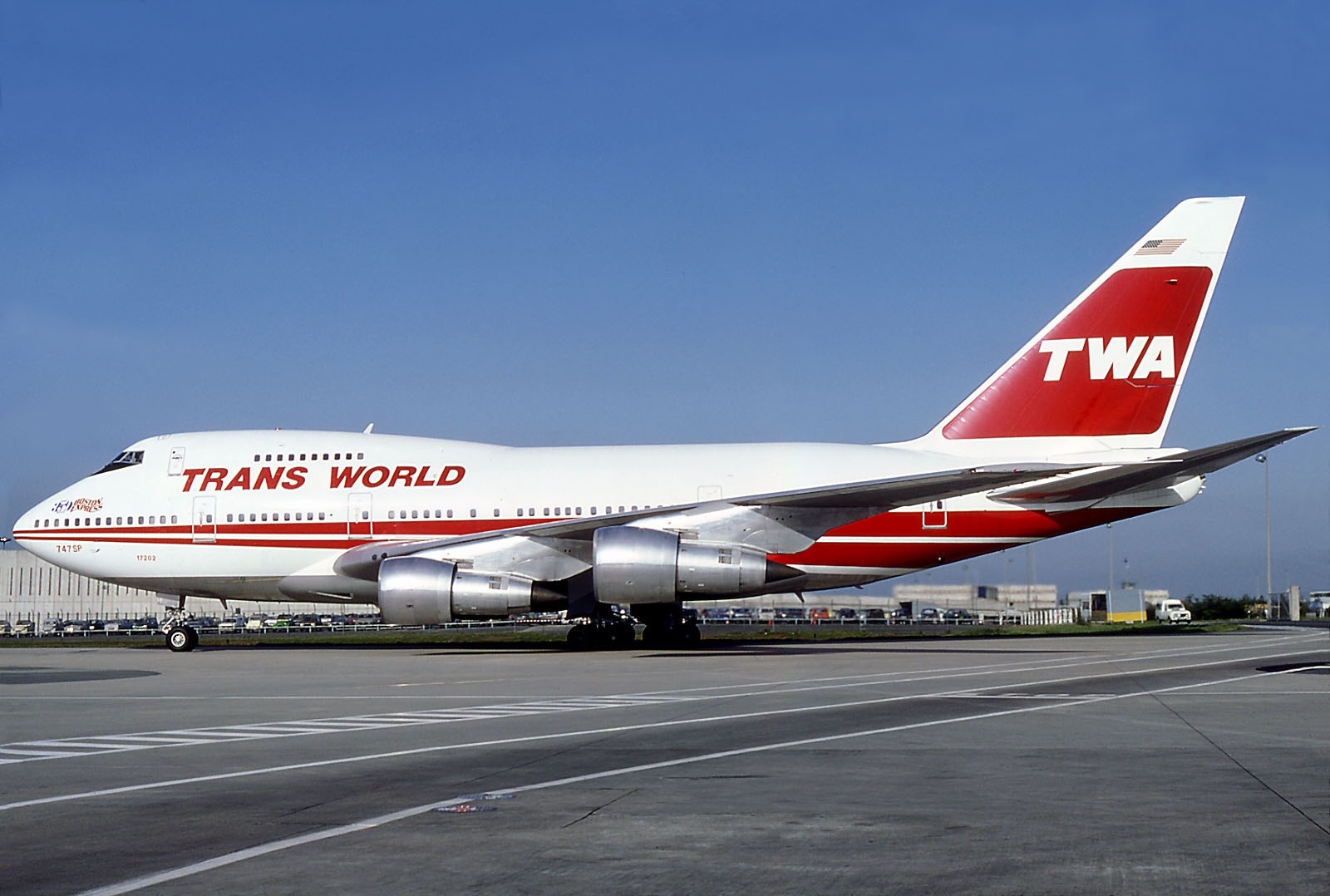
Boeing 747SP-31 of Trans World Airlines (TWA) in Paris. Photo courtesy: TWA
From the outset, the arrangement contained a provision that distinguished it from mere foreign management: from day one, the stated and formalized purpose of the partnership was Ethiopianization the systematic transfer of knowledge, skills, and operational authority to Ethiopian nationals. The second TWA agreement, signed in 1953, stated explicitly that the airline’s ultimate aim was to be operated entirely by Ethiopian personnel.
What followed across the next three decades was a deliberate, disciplined process of institutional capability building. Technical training facilities were established in 1957. A pilot school opened in 1964. An aviation academy followed.
Ethiopians were recruited from the air force, held to standards equal to those of their American counterparts despite the widespread racism of the era, and gradually elevated into management roles. The transition was contentious TWA repeatedly clashed with Ethiopian authorities over the pace of localization but the principle was never abandoned. By 1971, the first Ethiopian CEO had taken office. By 1975, the partnership ended and the airline was run entirely by its own people.
The Ethiopian Airlines story is not one of unbroken success. Between 1975 and 2000, the airline weathered a totalitarian military regime that forced it to nearly go bankrupt, attempted to compel it to buy Soviet aircraft rather than Boeings, and killed the airline’s most capable management by political appointment.
The airline survived because the culture, the discipline, and the institutional memory that TWA had helped build proved stronger than the political interference that surrounded it. When the Derg regime ordered the purchase of Soviet aircraft, EAL management threatened collective resignation. The government backed down. The airline ordered Boeing 767s.
By the early 2000s, with the Derg gone and experienced airline veterans returning to leadership, Ethiopian Airlines launched Vision 2010, a five-year growth plan. It exceeded every target. Vision 2025 followed, even more ambitious. Today Ethiopian Airlines serves more than 120 international destinations, carries over 12 million passengers annually, employs 50,000 people directly and indirectly, contributes 4 percent of Ethiopia’s GDP, and has joined Star Alliance. It is the most profitable airline in Africa, and the only African carrier to have successfully established itself as a continental hub for both passenger and cargo traffic.
The lessons for Nepal are precise and actionable.
First: a long-term strategic partnership with a credible international airline partner, structured explicitly around knowledge transfer and eventual Nepali operational independence, can substitute for the institutional capability that years of political interference have destroyed.
Second: Ethiopianization the insistence that the purpose of foreign expertise is its own elimination must be formalized from the beginning, not left to goodwill.
Third: corporate culture, once built, survives political upheaval if it has been embedded deeply enough. The years of discipline during the TWA partnership meant the airline could withstand the Derg.
Fourth: when a government attempts to use the airline for political purposes and the management resists collectively, it can win — but only if the culture of institutional independence has already been established.
Nepal has had foreign management before, but never with Ethiopianization as its explicit and legally embedded purpose. That distinction is everything.
SINGAPORE: THE PREMIUM DISCIPLINE
Singapore Airlines is, by most measures, the finest airline in the world. It was the first to introduce personal entertainment systems in all cabins, the first to fly the Airbus A380, the first to operate the world’s longest non-stop flight, and the recipient of more Skytrax five-star ratings than any carrier in history. It is also 53.4 percent owned by the Singapore government, through Temasek Holdings.
The story of Singapore Airlines matters to Nepal not because Nepal can replicate its service quality tomorrow, but because Singapore Airlines represents the deliberate, government-directed creation of a genuinely world-class national carrier through the application of one principle above all others: from the beginning, the airline was designed to compete on merit, not protected from competition by state privilege.
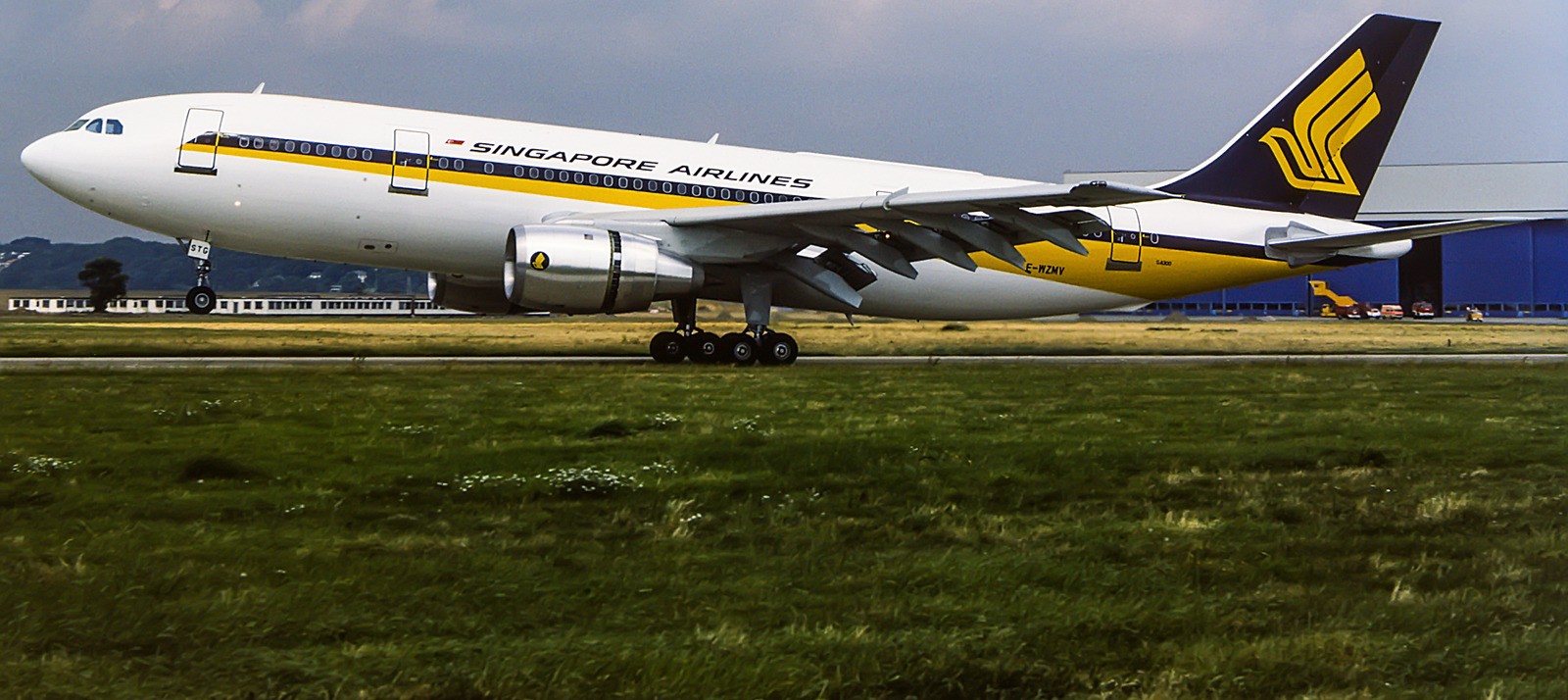
F-WZMV Singapore Airlines Airbus A300B4-203. Photo credit: Planespotters/Website
When Singapore Airlines was established in 1972, following the dissolution of the jointly owned Malaysia-Singapore Airlines, it found itself in an unusual position. Singapore had no domestic routes. It could not shelter behind a captive home market.
If it flew at all, it had to compete immediately with international carriers for routes, airport slots, landing rights, and passengers. Its code, SQ, was chosen to represent Superior Quality — not as a marketing slogan but as an operational imperative, because without quality, there was nothing else to sell.
This structural reality — the absence of a protected home market — created the discipline that political protection destroys. Singapore Airlines could not staff its management with loyalists, because loyalists could not fill planes in competition with British Airways and Cathay Pacific.
It could not defer fleet renewal, because aging aircraft meant passenger defection to better-equipped competitors. It could not tolerate poor service, because international travellers had choices, and they exercised them.
The government’s role was not to shield the airline from market forces but to ensure it had the capital, the infrastructure — Changi Airport is a product of deliberate national strategy — and the regulatory framework to compete at the highest level.
Temasek’s majority ownership has provided long-term capital stability without the short-term political pressures that have repeatedly distorted decision-making at Nepal Airlines. When COVID-19 devastated the aviation industry, Temasek underwrote a capital raising of USD 15 billion, giving Singapore Airlines the resilience to survive a crisis that destroyed competitors.
The specific lesson for Nepal is structural rather than operational. As long as Nepal Airlines is managed as a political asset, it will be run as a political asset. Partial privatization, long promised and long deferred since 2004 when a 49 percent private ownership model was first proposed, would not solve all problems overnight.
But it would introduce a category of stakeholder — private shareholders — whose interests are definitionally opposed to nepotism and procurement corruption, because both directly destroy the financial value that shareholders hold. The Singapore model does not require Nepal to surrender control: 53 percent state ownership, combined with professional management insulated from political appointment, has proved entirely compatible with world-class performance.
TURKEY: THE TRANSFORMATION OF AN ENTIRE ECOSYSTEM
Turkish Airlines in the 1980s and 1990s looked, in important respects, like Nepal Airlines in the 2010s: government-managed, inefficient, technically troubled, characterized by poor customer relations, and losing money. By 2023, Turkish Airlines flew to more countries than any other carrier in the world — 126 — and had been named the best airline in Europe for six consecutive years.
The transformation was not a single decision but a sustained process that coincided with, and was actively supported by, a broader national political commitment to aviation as an instrument of economic development. When the AKP government came to power in 2003, it explicitly articulated a vision: that every Turkish citizen should fly at least once in their life.
This was not sentimentality. It was a recognition that aviation access is a driver of economic integration and national cohesion. What followed was a program of domestic market deregulation, aggressive expansion of bilateral air service agreements from 81 in 2003 to 143 by 2012, the creation of a new executive board at Turkish Airlines, and a fleet renewal program that replaced aging aircraft with modern Airbus and Boeing jets.
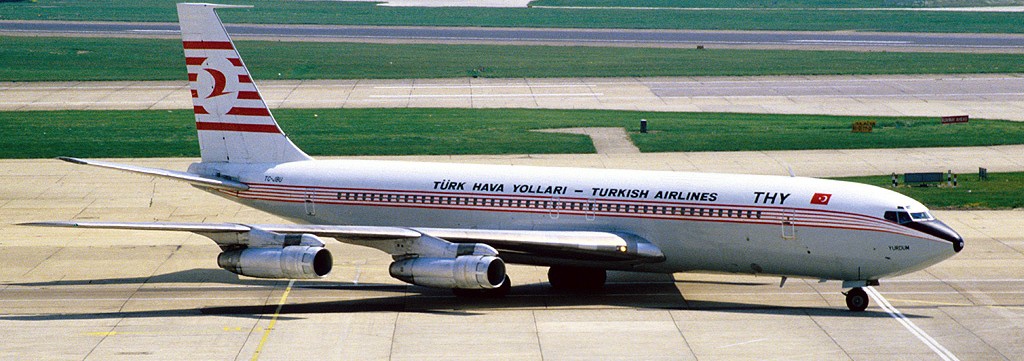
Boeing 707-321B of Turkish Airlines. Photo credit: Airliners/Website
Under CEO Temel Kotil, Turkish Airlines transformed its hub strategy, leveraging Istanbul’s unique geographical position — sitting at the crossroads of Europe, Asia, Africa, and the Middle East — to build a spoke network that could connect passengers through Istanbul to virtually anywhere on earth. This hub model, rather than simply serving point-to-point demand, was the strategic breakthrough.
Between 2003 and 2013, Turkish Airlines grew its passenger numbers from 10.4 million to 48.3 million, a compound annual growth rate of 16.6 percent, more than double the global aviation industry average. Operational profits have been sustained continuously since 2002.
Two lessons stand out for Nepal. First, the political commitment was to aviation as a national development strategy, not to any single airline as a protected institution. When the government deregulated the domestic market, Turkish Airlines was exposed to competition — and it responded by improving, not by demanding protection. Second, geography is strategy. Kathmandu sits at the intersection of South Asia, the Indian subcontinent, and the Tibetan plateau, with direct relevance to the growing Chinese outbound travel market, the Indian domestic aviation boom, and the Southeast Asian tourist circuits.
Nepal’s mountain geography — which is currently treated almost entirely as an operational liability, a reason why European safety auditors are unimpressed — could, with the right fleet and safety infrastructure, be reframed as a premium positioning. No other airport in the world is Kathmandu.
KAZAKHSTAN: BUILDING FROM NOTHING WITH OUTSIDE HELP
Air Astana’s origin story is perhaps the most directly applicable to Nepal’s situation, because it most closely resembles the starting conditions — a post-Soviet aviation collapse, limited domestic capabilities, deep scepticism from the political establishment, and the choice to seek a credible foreign partner.
Founded in 2001 as a joint venture between Kazakhstan’s sovereign wealth fund Samruk-Kazyna, holding 51 percent, and BAE Systems of the UK, holding 49 percent, Air Astana commenced operations in 2002 with initial capital of a mere ten million pounds, five million from each partner. The founding agreement contained a principle that has defined the airline’s entire subsequent history: no further capital injections from shareholders.
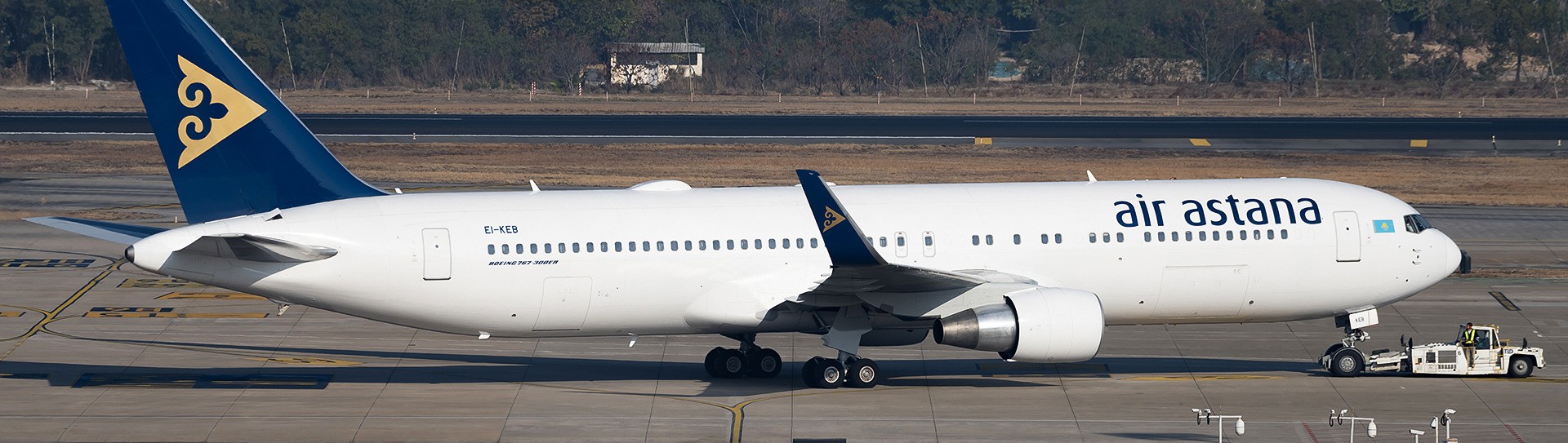
EI-KEB Air Astana Boeing 767-3KYER(WL) in China. Photo credit: Planespotters/Website
The airline would either stand on its own commercial feet or fail. This was not indifference to the airline’s success — the government wanted it to succeed — but a deliberate structural decision to prevent the airline from becoming a mechanism for government subsidy and political spending.
Under CEO Peter Foster, who led the airline for two decades, Air Astana built what analysts would later describe as “the best corporate governance of Kazakhstan’s state-owned enterprises.” Operations were insulated from political appointment. Management was professional and internationally recruited.
Safety standards met European and international benchmarks from the outset. When every other Kazakh airline was banned from EU skies in 2009 following an adverse ICAO audit, Air Astana alone was exempted — because its governance and safety record had been built to international standards, not domestic political convenience.
By 2024, Air Astana had dual-listed on both the Kazakhstan and London Stock Exchanges, carried nearly 12 million passengers, commanded 69 percent of Kazakhstan’s domestic market, and been named Best Airline in Central Asia and CIS by Skytrax for thirteen consecutive years.
Even during the COVID-19 pandemic, when almost every airline in the world went to its government or shareholders for emergency funds, Air Astana did not. It negotiated with creditors, restarted domestic operations rapidly, and relied on its accumulated financial discipline to survive without subsidy.
For Nepal, the Air Astana model offers perhaps the most practical template. A joint venture with a credible international aviation partner — a BAE Systems equivalent, or an experienced regional carrier with governance credibility — with a legally binding no-bailout clause and a mandate to operate to international standards, could create the institutional separation from political interference that no amount of internal reform has thus far achieved.
The 51 percent state stake preserves sovereign control and national symbolism. The 49 percent partner stake introduces the commercial discipline and international credibility that political management has consistently destroyed.
RWANDA: AMBITION AS POLICY
RwandAir’s significance lies less in its current scale — it remains a small airline by global standards, carrying just over a million passengers annually — than in what it represents as a deliberate act of national strategy. In 1994, Rwanda experienced a genocide that killed 800,000 people and destroyed most of its institutions.
Its national airline ceased to exist. By 2002, the government had relaunched it. By 2025, RwandAir was flying to 35 routes in 21 countries, had acquired Boeing 737-800s, was in advanced talks to join the Oneworld global alliance, and had attracted a 49 percent investment commitment from Qatar Airways, one of the most sophisticated aviation operations on earth.
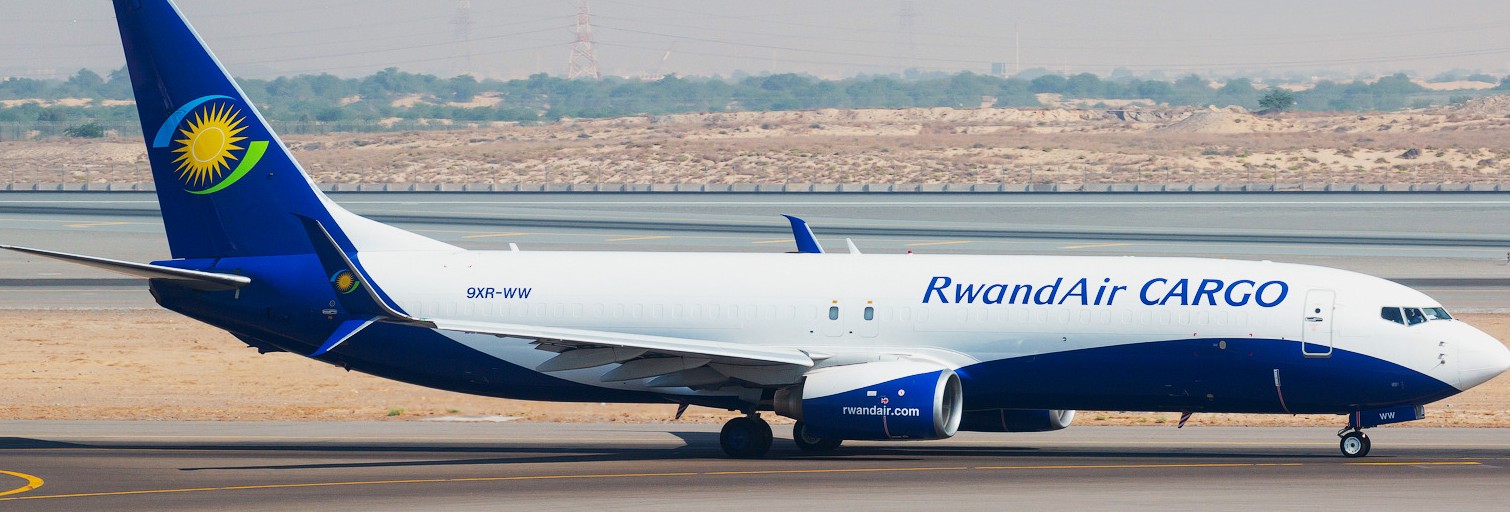
9XR-WW RwandAir Boeing 737-8K5(BCF)(WL) in UAE. Photo credit: Planespotters/Website
The Rwanda model is instructive precisely because of the scale of the starting deficit. If a country that emerged from genocide could build a functional, professionally managed, internationally competitive national airline within two decades, the limits on Nepal Airlines’ recovery are not structural or geographic or economic. They are political.
Rwanda has achieved this through an unambiguous government commitment to aviation as a development instrument, sustained investment in the new Bugesera International Airport, a visa-free policy for African citizens that generated aviation demand, and — crucially — management insulation.
RwandAir’s board has included veterans like Girma Wake, the former Ethiopian Airlines CEO who is widely regarded as one of the great aviation executives in African history. The airline has been treated as a professional institution, not a patronage vehicle.
The lesson for Nepal is temperamental as much as operational. Rwanda made a decision to be serious about aviation. That decision had to come from political leadership before it could be implemented by management. Nepal’s aviation crisis is, at its deepest level, a political failure. The remedy must therefore begin with a political commitment of comparable seriousness.
MALAYSIA: THE CAUTIONARY TALE WITHIN THE LESSONS
Not every airline transformation is a success, and Malaysia Airlines deserves its place in this accounting precisely because it illustrates what happens when restructuring is technically competent but politically incomplete.
By 2014, following the twin catastrophes of MH370 and MH17 and years of accumulated losses, Malaysia Airlines was technically bankrupt. Malaysia’s sovereign wealth fund Khazanah Nasional, which held 69 percent of the airline, issued a comprehensive 12-point recovery plan.
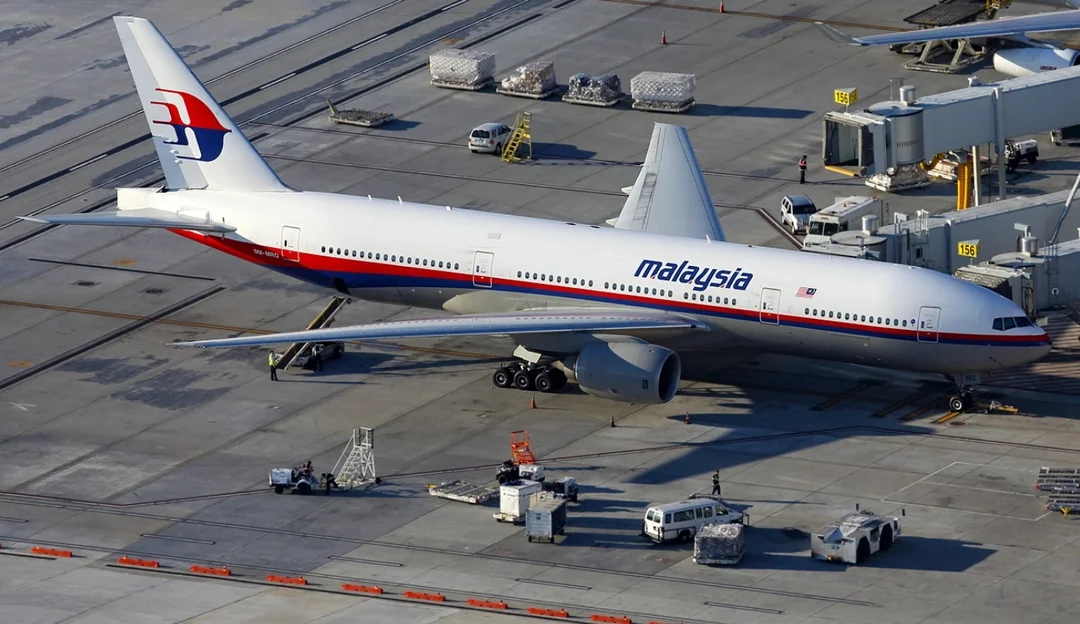
March 8th 2014 Malaysia Airlines Flight MH370, a Boeing 777 with 239 people on board, vanished during a flight from Kuala Lumpur to Beijing, setting off a massive search. Photo credit: Reddit
The airline was taken private, delisted, renamed Malaysia Airlines Berhad, and reduced from 19,500 to approximately 13,000 employees. A new CEO was brought in from outside. Unprofitable routes were cut. A Governance and Ethics Committee was established. The plan was professionally designed and publicly documented, with quarterly progress updates published to maintain transparency.
And yet by 2017, the restructured airline had lost a cumulative RM 2.35 billion in three years, far exceeding targets. Three CEOs departed in rapid succession. The underlying culture of political expectation — that the national carrier existed to serve political purposes, not commercial ones — had not been decisively broken. The restructuring reformed the structure without reforming the system.
Nepal’s reformers must read Malaysia Airlines as a warning: restructuring that is genuine at the executive level but shallow at the governance level will fail. The political class must be genuinely removed from operational decision-making — not formally excluded while remaining informally present through proxies, committee appointments, and the unspoken expectation that contracts will continue to flow in familiar directions. Half-reform is sometimes worse than no reform, because it consumes credibility without generating results.
OMAN: THE DISCIPLINE OF REINVENTION
Oman Air’s recent transformation offers the most current and timely lesson in this constellation of cases. For most of its existence, Oman Air accumulated government-guaranteed debt while operating persistent losses, eventually reaching OMR 1.6 billion in long-term liabilities. Between 2007 and 2023, Khazanah’s Omani equivalent had injected OMR 1.25 billion into the carrier. The financial situation, by 2023, had become unsustainable.
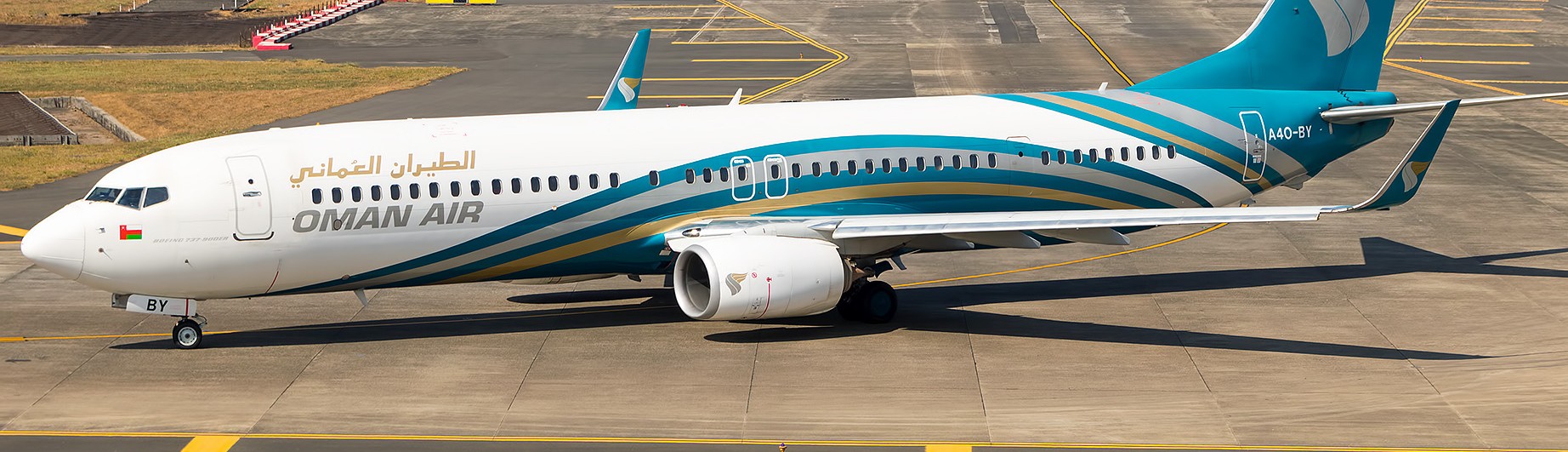
A4O-BY Oman Air Boeing 737-91MER(WL) in India. Photo credit: Planespotters
The response was radical and rapid. A new CEO was appointed with a specific mandate not to expand but to restructure. The airline retired its Airbus A330 fleet, eliminated First Class, sold 13 excess aircraft — reducing fleet size by 29 percent in a single year — and cut approximately 1,000 of its 4,300 jobs.
The commercial strategy was overhauled: rather than competing with Emirates and Qatar Airways for connecting traffic through Gulf mega-hubs, Oman Air refocused on point-to-point demand, capturing higher yields on routes where Oman had genuine competitive advantage rather than chasing volume it could never profitably serve.
The results have been striking. In 2025, Oman Air recorded its first positive EBITDA in 15 years. It is not yet fully profitable, and the journey continues. But the direction is unambiguous, and the mechanism that produced the change is clear: a government that stopped defending the existing model and authorised genuine structural change, paired with management that implemented it with discipline rather than softening it for political comfort.
For Nepal Airlines, the Oman Air lesson is this: sometimes the path to sustainability requires getting smaller before getting bigger. An airline with six functioning aircraft, massive debt, and a safety record that keeps it off European runways is not best served by immediately ordering new wide-bodies. It is served by stabilizing what it has, building operational competence on a defensible scale, establishing the governance reforms that will eventually restore international credibility, and growing only when the foundation can support growth.
Nepal Airlines’ instinct, repeatedly through its history, has been to reach for visible expansion — new aircraft, new routes — before the internal conditions for sustainable operation have been met. The result has been procurement scandals rather than operational progress.
WHAT NEPAL MUST DO
Across these seven cases, certain principles recur with the consistency of law rather than suggestion.
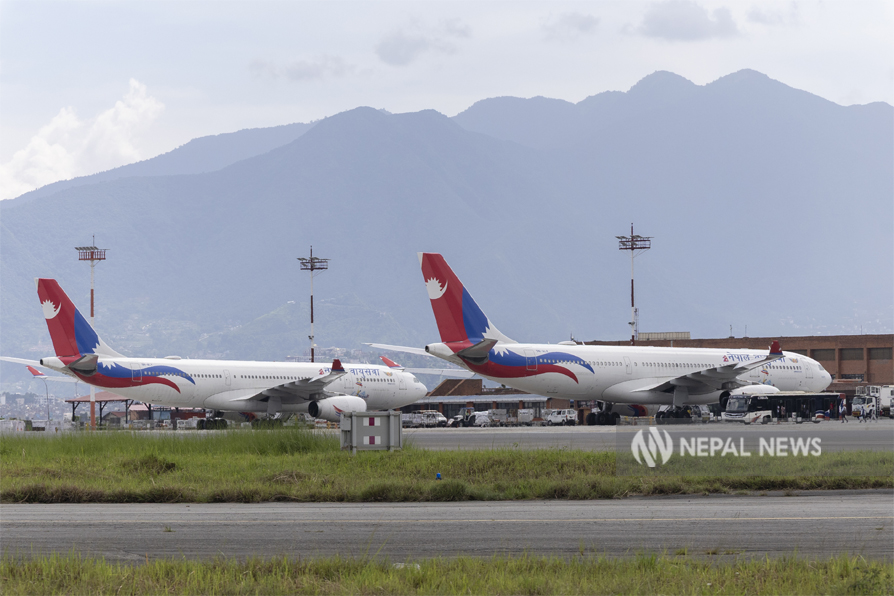
Nepal Airlines aircraft parked at Tribhuvan International Airport. Photo: Bikram Rai
The first is the separation of governance from politics. Every airline that has successfully transformed has done so by creating structural separation between its board, its management, and the political apparatus that formerly controlled appointments and contracts.
This separation need not mean privatization — Singapore Airlines, Air Astana, and Ethiopian Airlines all retain majority state ownership. But it requires that appointments be made on the basis of professional qualification and that a formal, legally enforced mechanism prevents political interference in operational decisions.
In Nepal’s case, this almost certainly requires external anchoring: a credible foreign partner or institutional investor whose presence makes political interference structurally costly rather than merely theoretically prohibited.
The second is the non-negotiable priority of safety and regulatory reform. Nepal Airlines cannot fly to Europe. It cannot, therefore, serve the country’s largest inbound tourist markets through their most natural transit points. It cannot build a hub model that includes European connections.
Every strategic aspiration is downstream of the EU ban, and the EU ban will not be lifted until Nepal separates CAAN into independent regulatory and operational bodies — a reform that has been recommended by ICAO since 2008, demanded by the EU since 2013, passed in one legislative chamber, and repeatedly abandoned.
The new government must treat this as existential rather than administrative. It is not a bureaucratic reorganization. It is the gateway to every other possibility.
The third is the formalization of knowledge transfer. Nepal Airlines needs a strategic partnership with an experienced international airline — an Ethiopian Airlines, a Singapore Airlines subsidiary, a Turkish Airlines affiliate — structured explicitly around the transfer of operational capability to Nepali personnel over a defined period, with Nepali leadership as the stated end point.
The Ethiopianization model is not charity. TWA built EAL’s capability because TWA’s reputation was tied to EAL’s performance. Any credible partner will bring similar incentives. The key is that the partnership agreement must explicitly prohibit what has historically happened: the use of foreign partnership as cover for continued political management, with expatriate experts running the technical side while Nepali politicians run the commercial side for their own benefit.
The wide-body case has produced charges against 32 individuals and no convictions. The structural message of this track record is that accountability in Nepal Airlines is performative — an appearance of consequence without actual consequence.
The fourth is fleet rationalism over fleet ambition. Nepal Airlines currently has twelve aircraft, of which only six are in operation. Before it acquires new aircraft, it must reliably operate the ones it has. Before it opens new routes, it must demonstrate operational competence on existing routes.
Before it negotiates wide-body procurement, it must ensure that procurement is transparently competitive, independently audited, and legally insulated from the kickback mechanisms that the Airbus A330 case documented so precisely. A small airline that is safe, punctual, and financially disciplined is a recoverable institution. A large airline that is unsafe, politically captured, and financially insolvent is not.
The fifth is accountability as policy, not rhetoric. Every government that has overseen Nepal Airlines since 1990 has pledged reform. Committees have been formed. Auditors have reported. Charges have occasionally been filed. The Lauda Air case is still pending after more than two decades.
The wide-body case has produced charges against 32 individuals and no convictions. The structural message of this track record is that accountability in Nepal Airlines is performative — an appearance of consequence without actual consequence.
The Commission for the Investigation of Abuse of Authority must be empowered to pursue aviation corruption cases to conclusion, with the same urgency that the new government has applied to other corruption prosecutions. If those who loot the national carrier know that the statute of limitations is reliably longer than institutional memory, they will continue to loot it.
The sixth, and perhaps most fundamental, is the recognition that Nepal Airlines is not primarily an aviation problem. It is a governance problem that manifests in aviation. Turkish Airlines succeeded because Turkey made a political decision to treat aviation as national development strategy.
Singapore Airlines succeeded because Singapore’s leadership recognized that without a world-class airline, a city-state with no hinterland and no resources had less of a future. Ethiopian Airlines succeeded because successive Ethiopian governments, despite their many failings, never lost sight of the airline as a national strategic asset whose integrity they could not afford to compromise beyond certain limits.
RwandAir is succeeding because Paul Kagame, whatever one thinks of his politics, decided that Rwanda would be taken seriously in Africa, and that an airline was part of how that seriousness would be signalled.
Nepal’s new government came to power promising a break from the patronage culture that has defined post-1990 politics. Nepal Airlines is perhaps the single clearest test of whether that promise is institutional or merely rhetorical. The airline has been flying for nearly seven decades. It has survived coups, massacres, genocide would not be its context but chronic institutional bleeding has been.
The question is not whether it can be saved. It is whether the people who now hold power have the will to save it by doing the things that will make saving it politically costly in the short term — removing the connected, ending the contracts, splitting the regulator, accepting external governance discipline — in exchange for an institution that, over time, could once again be what it was born to be: a source of national pride, a driver of economic integration, and a bridge between a landlocked mountain republic and the world it is trying to reach.
The sky, for Nepal Airlines, is not the limit. The limit is political will. And the world has already written the instruction manual.