Kathmandu
Monday, June 22, 2026





A decade after Nepal Airlines procured six Chinese aircraft under a government-to-government deal, the fleet has turned into a costly liability grounded since 2020, generating zero revenue and adding billions in losses through debt, maintenance, and failed disposal attempts
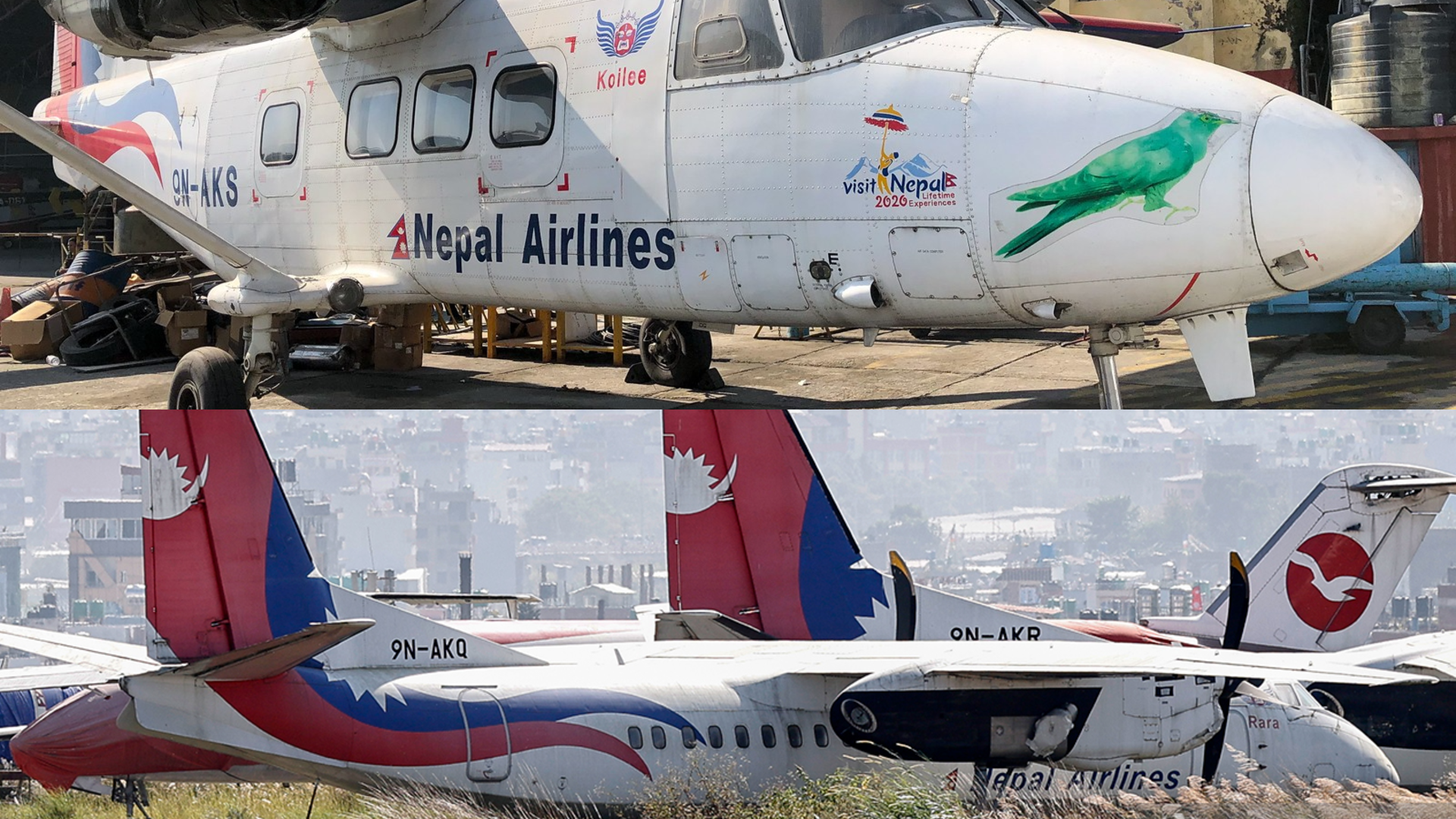
KATHMANDU: Between 2014 and 2018, Nepal Airlines acquired six Chinese-built aircraft, at least two 56-seat Xian MA-60s and four 17-seat Harbin Y-12Es through a government-to-government deal with China’s Aviation Industry Corporation of China (AVIC).
Two arrived as grants and four via a concessional loan of approximately Rs 3.14 billion (part of a total 408 million yuan package worth Rs 6.67 billion at the time). Intended to boost domestic and remote-area flights, the fleet instead became a liability due to high operating costs, technical issues, pilot shortages, and poor suitability for Nepal’s terrain.
Grounded since July 2020 (with one Y-12E crashing in Nepalgunj in March 2020), the five remaining planes have generated zero revenue while incurring massive losses from operations, insurance, parking, and accruing loan interest.
As of April 2026, repeated failed attempts to sell, lease, or return them to China continue to burden the debt-laden national carrier.
What exactly were the Chinese aircraft acquired by Nepal Airlines, and how many remain operational today?
Nepal Airlines procured two Xian MA-60 turboprop airliners (56 seats each) and four Harbin Y-12E twin-engine utility aircraft (17 seats each) under a 2012 intergovernmental agreement with China.
The MA-60s were manufactured by Xi’an Aircraft Industrial Corporation, while the Y-12Es came from Harbin Aircraft Industry Group, both subsidiaries of state-owned AVIC. Delivery began with the first MA-60 on April 27, 2014, followed by the first Y-12E later that year; additional units arrived in 2017 and February 2018.

Nepal Airlines 9N-AKQ, a Xian Modern Ark-60 aircraft
One Y-12E crashed on March 28, 2020, during landing at Nepalgunj Airport, rendering it a total loss, though insurance proceeds were received. As of April 2026, the remaining five aircraft—two MA-60s (9N-AKQ and 9N-AKR) and three Y-12Es—sit idle and deteriorating at Tribhuvan International Airport’s remote parking bay.
They have not flown commercially since the board’s unanimous grounding decision on June 29, 2020 (fully implemented by August 2020). No revival has occurred despite a recent Finance Ministry directive to explore re-operation, as officials estimate over Rs 2 billion would be needed for training, spares, and repairs.
This fleet, once promoted as a game-changer for domestic connectivity, now symbolizes procurement failure amid Nepal’s challenging high-altitude and short-runway operations. The aircraft continue to rust visibly, reflecting years of exposure without utilization.
What was the total cost and financing structure of the Chinese aircraft deal?
The six aircraft were acquired for a combined value of approximately Rs 6.67 billion (408 million yuan at prevailing exchange rates). China provided two aircraft—one MA-60 and one Y-12E—as outright grants worth 180 million yuan (roughly Rs 2.94 billion).
The remaining four (one MA-60 and three Y-12Es) were financed through a soft loan of 228 million yuan (about Rs 3.14–3.72 billion) from China’s EXIM Bank at 1.5% annual interest plus 0.4% service fees.
Nepal’s Ministry of Finance borrowed the funds and on-lent to Nepal Airlines at 1.75%. The deal included a seven-year grace period on principal and interest, ending in March 2021, after which semi-annual repayments began (first installment due around October 2020).
Customs duty of Rs 120 million was covered via government resources. By April 2026, the outstanding loan principal plus accrued interest exceeds the original amount, with the past year alone adding over Rs 681 million in interest to Nepal Airlines’ liabilities.
The Ministry of Finance retains ownership until full repayment, complicating any disposal. This concessional structure masked initial risks but has now locked Nepal into long-term obligations without corresponding benefits, exacerbating the airline’s overall debt burden exceeding Rs 50 billion.
What did the November 25, 2011 technical evaluation report conclude about the MA-60 and Y-12E aircraft?
A five-member Nepal Airlines technical team, led by the then Deputy Director Ganesh Thakur and including pilots and engineers, visited China from November 16–21, 2011, to assess the MA-60 and Y-12E. Their November 25, 2011 report was overwhelmingly positive, recommending both types for Nepal’s routes.
The MA-60 was deemed comparable to or better than the ATR-42/72 in power, operating costs (claimed USD1,745/hour vs ATR-42’s USD1,702, with lower per-seat costs), payload, and suitability for trunk routes like Kathmandu to Biratnagar or Pokhara, plus potential cross-border flights.
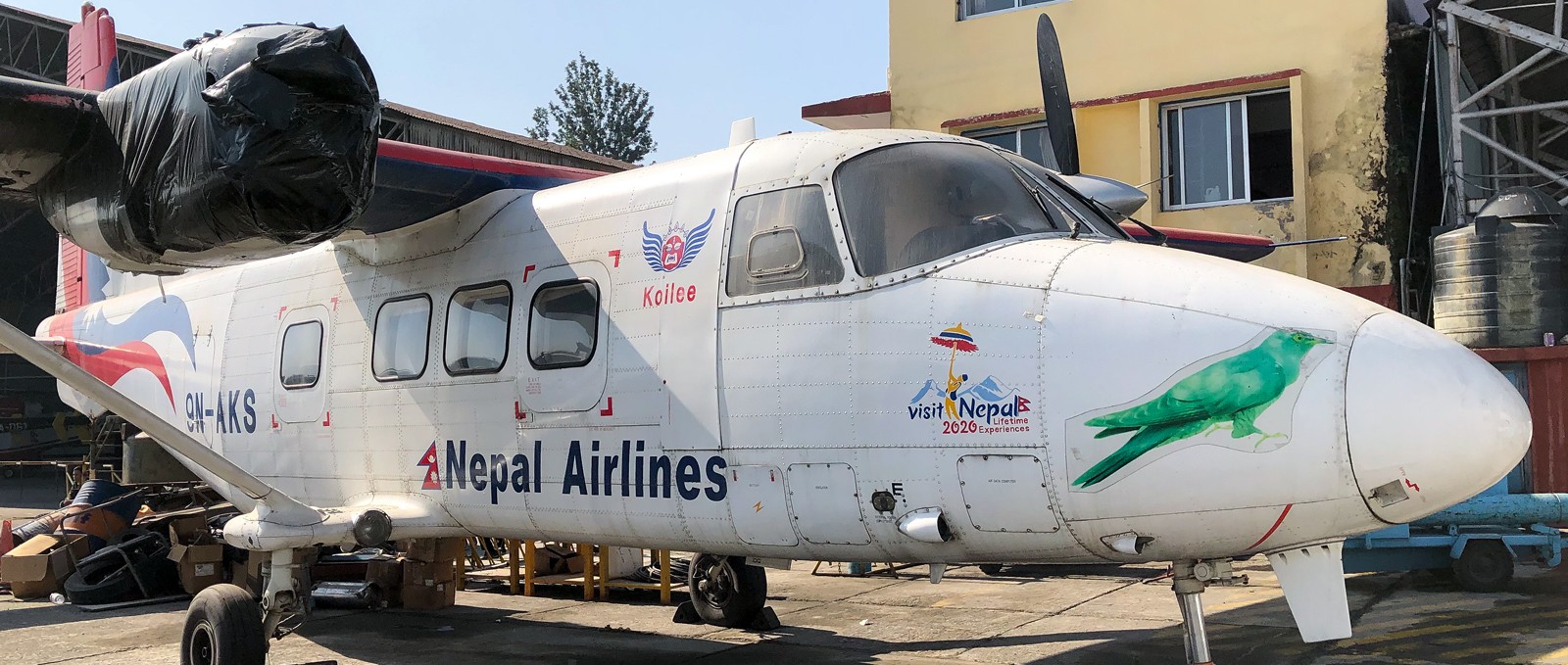
Nepal Airlines 9N-AKS, a Harbin Y-12E turboprop aircraft (Koilee)
It highlighted a 25-year life, 60,000 flight hours, and “hot and high” performance. The Y-12E was praised over the DHC-6 Twin Otter and Dornier for superior load capacity, lower fuel burn, faster speeds, and STOL capabilities in remote mountainous airfields like Manang or Lukla.
The team claimed weaknesses in earlier Y-12 models (example, landing gear issues seen in 1991 Nepal Airways operations) had been fixed in the Y-12E. This report formed the basis for proceeding, despite Bangladesh’s concurrent rejection of the same types as unsuitable.
Later committees and audits heavily criticized it for lacking rigorous fuel consumption, payload, spares availability, and terrain-specific testing, calling it flawed and influenced by political pressure.
Why did Nepal Airlines proceed with the purchase despite Bangladesh rejecting the same Chinese aircraft models?
Bangladesh evaluated the MA-60 and Y-12E around 2011 but declined, citing unsuitability for its operational needs, including terrain challenges and high lifecycle costs. Nepal’s team, however, returned with a glowing report, leading to the 2012 agreement.
Political momentum was strong: the then Prime Minister Baburam Bhattarai’s government pushed for quick connectivity to remote areas, with the then Tourism Minister Lokendra Bista Magar and the then Finance Minister Barshaman Pun backing the deal.
A Cabinet decision on November 26, 2012, approved the G2G framework, and subsequent meetings under various ministers (including Posta Bahadur Bogati and Ram Kumar Yadav) overrode internal NAC concerns.
High-level lobbying, including by local agent Suraj Vaidya, and China’s attractive grant-plus-loan package (two free aircraft) created irresistible diplomatic and financial incentives.
Nepal ignored red flags like the aircraft’s limited international certifications (no EASA approval for Y-12E; MA-60 lacking both FAA and EASA) and AVIC’s after-sales support gaps. Successive NAC boards and ministries prioritized bilateral ties over commercial viability, even after early problems with the first deliveries.
Critics, including former board member Achyut Pahari and the 2023 Dipendra Bahadur Kshetry Committee, later described the decision as politically driven greed for commissions rather than evidence-based, contrasting sharply with Bangladesh’s cautious approach.
What were the main operational challenges that made the Chinese aircraft unsuitable for Nepal Airlines?
From day one, the fleet faced insurmountable hurdles. Pilot and instructor shortages were chronic: Chinese trainers arrived late or departed early, and language barriers hindered training (manuals often not in English).
By 2020, only limited captains and co-pilots were qualified, with no Y-12E instructor pilots remaining. Fuel inefficiency was severe—the MA-60 consumed 4.72 liters per seat per 100 km versus 2.53 for a comparable ATR, while Y-12Es burned up to 67% more per seat-hour than Twin Otters.
Payload restrictions plagued performance: MA-60s carried only 34–46 passengers from regional airports (versus 49–54 from Kathmandu), and Y-12Es had 200 kg less capacity than advertised. Spare parts were expensive (example, MA-60 brake units cost USD56,050 vs USD17,657 for Boeing equivalents) and slow to arrive (weeks or months instead of 24–48 hours promised).
Insurance premiums were 12–15% of value (double other fleets), maintenance manuals were incomplete or untranslated, and simulator training costs were 50–78% higher. Frequent groundings from bird strikes, radar failures, and anti-skid issues eroded reliability.
Nepal’s short, sloped runways and hot/high conditions exposed design limitations the 2011 report overlooked. These factors turned the aircraft into “white elephants,” as confirmed by multiple internal reports ignored due to political pressure.
How much financial loss did Nepal Airlines incur while operating the Chinese aircraft from 2014 to 2020?
During roughly six to seven years of sporadic operations (2014–2020), the fleet generated cumulative losses of approximately Rs 1.9–2 billion, averaging Rs 500 million annually.
Year-on-year figures showed escalating deficits: Rs 276.20 million in the first year, rising to Rs 577 million in the final full year (FY 2019/20). The four Y-12Es alone accounted for Rs 971.4 million in losses, while the two MA-60s contributed Rs 1.51 billion.
Revenue was minimal—one report noted just Rs 10 million from Y-12Es against Rs 650 million in maintenance—because low payload, high fuel burn, and frequent grounding limited flights. Insurance alone totaled Rs 1.086 billion over six years (Rs 621.6 million for MA-60s, Rs 474.7 million for Y-12Es).
Additional costs included parking/landing fees (Rs 4.9 million/year for Y-12Es, Rs 1 million for MA-60s) and repairs. Even partial utilization proved unsustainable, with operating expenses often nine times revenue in early years.
These losses were documented in NAC internal reports submitted to the Tourism Ministry but not acted upon decisively until the 2020 grounding. By April 2026, this operational red ink, combined with subsequent grounded costs, has compounded the airline’s broader Rs 50+ billion debt crisis.
Why and when did Nepal Airlines decide to ground the entire Chinese fleet?
The board of directors unanimously decided on June 29, 2020, to halt operations permanently, citing insurmountable losses and operational inviability; full grounding occurred by August 1, 2020.
The then-Executive Chairman Sushil Ghimire, who had earlier been involved as Tourism Secretary, led the move after repeated internal studies showed costs far exceeding revenues. Key triggers included the March 2020 Nepalgunj Y-12E runway excursion (pre-dating full grounding but highlighting risks), chronic pilot shortages, spare parts delays, and annual losses averaging Rs 500 million.
A 2014–2015 NAC report under the then Managing Director Madan Kharel had already flagged high insurance, low payload, and poor after-sales support, yet political pressure kept planes flying.
By 2020, the fleet had never operated at full capacity—MA-60s never flew together simultaneously—and maintenance/insurance burdens persisted even during downtime. The decision aimed to stem further bleeding, though grounded costs continued.
As of April 2026, five aircraft remain parked at Tribhuvan International Airport, visibly rusting, with officials noting revival would require over Rs 2 billion in fresh investment for training and parts—funds the cash-strapped carrier lacks. The grounding reflected years of ignored warnings, prioritizing fiscal survival over diplomatic optics.
What happened to the Y-12E aircraft that crashed, and how did it affect the fleet?
On March 28, 2020, one Y-12E overran the runway at Nepalgunj Airport during landing, skidding approximately 60 meters and stopping in grassland. No fatalities occurred, but the aircraft was declared a total loss and remains derelict at the airport.
Nepal Airlines received insurance payout for the hull, mitigating some financial impact. This reduced the fleet to five aircraft: two MA-60s and three Y-12Es. The incident underscored longstanding concerns about the Y-12E’s performance on Nepal’s shorter, often sloped or high-elevation runways, where payload limits and braking issues were prevalent.
It occurred after the 2020 grounding decision but during occasional test or repositioning flights. The crash accelerated calls for permanent disposal and prompted further scrutiny of the original procurement. Insurance claims were settled, but it added to the narrative of unsuitability. The remaining five planes continue incurring Rs 200 million annually in upkeep, with no operational recovery. The event highlighted AVIC’s inadequate support, as parts and technical aid remained problematic even pre-crash.
What were the repeated attempts to lease or sell the grounded Chinese aircraft, and why did they fail?
Nepal Airlines first issued a public lease notice on September 14, 2022 (extended to November 16), offering dry leases with spares; no bidders emerged. Sale efforts followed: a January 19, 2023 appraisal RFP led to a U.S. firm valuing the five aircraft at just Rs 220 million (scrap-like) in 2023.
Fearing anti-corruption probes over low prices, management commissioned an internal valuation setting asking prices at USD19.58 million total (example, USD8.23 million for one MA-60).
A third auction attempt was prepared by April 2024 but stalled without board approval; subsequent notices in late 2024–2025 also drew zero sealed bids. Email expressions from Thai and other firms were non-binding or conditional.
Failures stemmed from poor market perception—limited certifications, high maintenance needs, and Nepal-specific wear—plus diplomatic hurdles requiring Beijing’s approval for any transfer under the G2G deal.
No successful lease or sale has occurred despite multiple rounds. A recent Pakistani private party showed interest in Y-12Es via diplomatic channels, but it remains pending Chinese consent. These repeated flops have left the planes rotting, underscoring the aircraft’s limited resale value globally.
What diplomatic efforts has Nepal made with AVIC and China to return or offload the aircraft?
In December 2024, then-Executive Chairman Yubaraj Adhikari met AVIC representatives, formally requesting the supplier take back the five planes as a “goodwill gesture” given Nepal-China ties, citing the original intergovernmental transfer. AVIC declined immediate consent, clarifying the aircraft passed through the Chinese government before handover, requiring Beijing approval for any return or sale.
They offered assistance identifying operators (noting Y-12E use in China) or domestic users like the Nepal Army/CAAN but insisted on clearing overdue technical/spares invoices first (Nepal Airlines agreed to verify and pay). Follow-up minutes were sent to Nepal’s Finance Ministry.
Earlier 2023–2024 trilateral talks (NAC-AVIC-government) also sought alternatives. As of April 2026, no resolution; the Finance Secretary has instead directed exploration of re-operation, conflicting with disposal goals.
A Pakistani buyer’s interest (2025–2026) requires Chinese nod. These efforts highlight G2G complexities: Nepal cannot unilaterally dispose without risking bilateral strains.
AVIC’s limited support—resuming after-sales only post-payment—has frustrated officials. The diplomatic impasse perpetuates the burden, with planes deteriorating while interest accrues.
What is the current status of the Chinese aircraft as of April 2026, including annual costs?
As of April 20, 2026, the five remaining aircraft remain fully grounded at Tribhuvan International Airport’s eastern parking bay, exposed to elements and visibly rusting after nearly six years idle. No revenue is generated, but fixed costs persist.
Annual upkeep totals around Rs 200 million for insurance, parking, engine preservation, and manual revisions (Rs 115 million for MA-60s, Rs 85 million for Y-12Es per Auditor General reports). Loan interest added over Rs 681 million in the past year alone, with combined annual drain estimates reaching Rs 881 million in some analyses.
Nepal Airlines’ total debt exceeds Rs 50 billion, and these planes deepen the crisis. A Finance Ministry directive pushes for revival feasibility studies, estimating more than Rs 2 billion needed for pilots, parts, and upgrades—deemed unviable by officials.
No new bids or diplomatic breakthroughs have succeeded. Market silence persists due to certification issues and condition. One Pakistani inquiry exists but hinges on Beijing. Without resolution, deterioration accelerates value loss (2023 appraisal: Rs 220 million total). The status quo burdens taxpayers while NAC struggles with core operations.
How has the Chinese aircraft issue impacted Nepal Airlines’ overall financial health and debt?
The debacle has significantly worsened Nepal Airlines’ finances. Operational losses reached Rs 1.9–2 billion by 2020; grounded costs have added another Rs 1 billion+ in insurance/parking over five years. Loan interest now accrues without repayments (grace period ended 2021), contributing more than Rs 681 million yearly.
Combined with original procurement, total direct/indirect impact approaches Rs 6–10 billion per various estimates. This compounds the carrier’s Rs 50+ billion debt, limiting investments in viable fleets like Twin Otters or Western turboprops. Insurance premiums were disproportionately high (12–15% vs 1.5–7% for others), and spares/training inflated expenses.
Failed disposal means ongoing liabilities without assets yielding returns. Reputationally, it has hurt market share and investor confidence. Government ownership of planes via the Ministry of Finance ties disposal to broader diplomacy. The Kshetry Committee (2023) noted it damaged NAC’s image and reliability.
With no offloading, the ‘white-elephant’ fleet drains resources that could modernize operations, perpetuating losses and reliance on subsidies amid competitive domestic aviation.
What role did political pressure and lobbying play in the original acquisition decision?
Political interference was central. The 2011 technical team’s positive report followed high-level visits by ministers and officials. The then Prime Minister Bhattarai’s government issued directives in 2012 economic plans threatening action if procurement stalled. Ministers like Lokendra Bista Magar, Posta Bahadur Bogati, and Ram Kumar Yadav advanced the deal despite NAC reservations.
Local agent Suraj Vaidya allegedly lobbied aggressively. Even after 2014–2015 reports flagged issues, officials cited “China relations” to import remaining aircraft against NAC advice. Successive boards under varying governments ignored red flags.
The 2023 Kshetry Committee explicitly blamed the 2011 team’s inadequate analysis—failing to assess fuel, payload, spares, or test flights—for the failure, attributing it to political expediency over due diligence.
No commissions probe has occurred due to G2G nature. Experts called it “one of the worst decisions,” alleging vested interests. This pattern—greed and bilateral optics overriding commercial sense—led to the current impasse, with accountability absent even a decade later.
Have there been any investigations or accountability measures regarding the Chinese aircraft procurement?
Despite massive losses and repeated parliamentary scrutiny (example, International Relations Committee reports in 2019–2020 recommending disposal and diplomatic pressure), no formal anti-corruption investigation or prosecutions have materialized.
The Commission for the Investigation of Abuse of Authority has not pursued cases, citing the G2G framework’s sensitivity. Internal NAC reports (2014 Kharel committee, 2020 grounding rationale) and the 2023 Kshetry Committee highlighted flawed evaluation and ignored warnings but recommended no punitive action.
Calls from aviation experts for probes into the 2011 technical team and decision-makers have gone unheeded. As of April 2026, focus remains on disposal rather than past accountability.
This lack of scrutiny perpetuates perceptions of impunity in politically driven deals, contrasting with other NAC controversies. The Auditor General has flagged ongoing costs but not pursued graft angles. Without probes, lessons on due diligence remain unlearned, risking future procurements.
How do the MA-60 and Y-12E compare in performance and costs to alternatives like ATR or Twin Otter in Nepal’s context?
The Chinese types underperformed dramatically. MA-60 fuel burn per seat (4.72L/100km) nearly doubled ATR-42/72 figures (2.53L), with higher maintenance (78% costlier simulator training) and payload limits (30% restrictions on regional routes).
Y-12E consumed 33–67% more per seat-hour than Twin Otters (17.64L vs 13.68L), with inferior STOL on sloped fields and 200kg payload shortfalls. Insurance was double; spares 3x costlier and slower.
ATR/Twin Otter fleets achieved higher utilization and profitability for competitors like Buddha Air. MA-60 lacked EASA/FAA certification advantages; Y-12E had FAA but not EASA approval.
Nepal’s terrain exposed design gaps the 2011 report overstated. Alternatives offered better hot/high performance, English manuals, and global support networks. This mismatch drove losses and grounding, validating Bangladesh’s rejection. Revival costs exceed benefits, per officials.
What specific recommendations have government committees made about the Chinese aircraft?
The 2019 parliamentary International Relations Committee urged diplomatic efforts for concessions or sale. The 2023 Kshetry Committee (Structural Reform) blamed the 2011 report’s “hasty” recommendations without proper studies, calling it the root cause of losses and reputational damage; it advocated selling at block/scrap value or converting to grants.
Earlier NAC internal panels (Kharel 2014–15) pushed for free 10-year maintenance, reduced insurance, English docs, and payload guarantees from AVIC—all unmet.
The 2020 board recommended grounding to cut losses. Post-grounding, subcommittees explored lease/sale with appraisals. As of 2026, Finance Ministry directives favor revival studies despite Rs 2B+ costs. No committee achieved enforcement; implementation failures stem from diplomacy and politics.
What lessons has the Chinese aircraft saga taught Nepal Airlines and the government about aircraft procurement?
It underscores the need for independent, rigorous due diligence—including test flights, full lifecycle costing, terrain-specific simulations, and third-party audits—over political or diplomatic pressure. Political interference must not override commercial viability; G2G deals require ironclad after-sales guarantees. Diversified suppliers and certifications (EASA/FAA) are critical for resale/support.
Pilot training and spares logistics must be contracted upfront. The saga highlights risks of “gifts” masking long-term costs. Future procurements should prioritize proven types like ATR/Twin Otter for Nepal’s needs.
Accountability mechanisms, including probes into flawed reports, are essential to deter repeats. By April 2026, NAC’s struggles reinforce focusing on sustainable fleets amid debt.
What are the potential future options for resolving the stranded Chinese aircraft issue?
Options remain limited: (1) Scrap/sell at block value (~Rs 220 million per 2023 appraisal) via renewed auctions, risking low returns and scrutiny; (2) Diplomatic return to China/AVIC post-invoice clearance, pending Beijing approval; (3) Lease/sale to niche operators (example, Pakistani interest) with Chinese consent; (4) Domestic repurposing (Army/CAAN), as AVIC suggested; or (5) Costly revival (>Rs 2B) per recent directive, unlikely given history.
Hybrid approaches like parts cannibalization could recover minor value. No preferred path has government consensus, perpetuating costs.
Tourism Ministry coordinates, but Finance holds leverage via ownership. Resolution requires high-level Nepal-China talks balancing ties and economics.
How has the lack of spare parts and after-sales support from AVIC contributed to the problems?
AVIC’s support fell short of promises (24–48 hour parts delivery). Delays of weeks/months grounded planes repeatedly (example, propeller after 2014 bird strike, radar issues). Spares were monopolized and overpriced; repairs required China-based expertise with language barriers.
Manuals were incomplete/untranslated. Post-grounding, technical aid halted over unpaid invoices. This exacerbated utilization (fleet flew only ~9,829 hours total).
The 2011 report assumed robust support; reality proved otherwise, inflating costs and eroding trust. By 2026, it hinders disposal/revival. AVIC offered limited help in 2024 meetings conditional on payments.
What impact has the Chinese aircraft issue had on Nepal Airlines’ pilot training and human resources?
The Chinese aircraft acquisition has caused serious and long-lasting disruptions to Nepal Airlines’ pilot training programs and overall human resource management. From the beginning, the airline faced chronic shortages of qualified pilots and instructor pilots for both the MA-60 and Y-12E types.
Chinese training crews frequently arrived late and left after providing only minimal flying hours, often well below the 50-hour requirement set by the Civil Aviation Authority of Nepal for new type ratings.
Language barriers further complicated training because many technical manuals and communications were not properly translated into English. Training fees demanded by the Chinese side were exorbitantly high — USD85,000 to USD90,000 per pilot for Y-12E and MA-60 type ratings, compared to just USD10,000–USD12,000 for equivalent training on Boeing or Airbus aircraft.
By the time the fleet was grounded in 2020, the situation had become critical: the airline had no qualified instructor pilots left for the Y-12E, while the number of MA-60 instructors was also insufficient.
Without regular recurrent training and simulator sessions, the licenses of the few type-rated pilots began to expire, leading to a gradual loss of hard-earned qualifications.
Any future attempt to revive the fleet would require hiring scarce and expensive international instructor pilots and investing several years and hundreds of millions of rupees in rebuilding a sustainable training pipeline.
This entire episode diverted precious training budgets and management attention away from the airline’s core fleet (such as Airbus A320 and Twin Otter operations), worsening broader manpower shortages and increasing reliance on costly contract crew.
The legacy of this misadventure continues to constrain Nepal Airlines’ ability to expand or modernize its pilot cadre efficiently.
Why has the international market shown little interest in purchasing or leasing these aircraft?
The international market has shown almost no genuine interest in purchasing or leasing Nepal Airlines’ five grounded Chinese aircraft for several structural and practical reasons.
First, both the MA-60 and Y-12E suffer from limited global certifications. The MA-60 lacks both FAA and EASA approval, while the Y-12E has only FAA validation and no EASA certification, making it unattractive to most regulated operators worldwide.
Second, the aircraft carry a poor operational reputation due to their high maintenance history, frequent technical problems, and documented poor performance in Nepal’s challenging terrain. Years of storage have caused visible deterioration and weathering, raising serious concerns about current airworthiness and the high cost required to return them to service.
Third, the diplomatic restrictions attached to the original government-to-government deal require approval from the Chinese government for any sale or transfer, adding significant legal uncertainty and complexity for potential buyers.
Fourth, the 2023 independent appraisal by an American firm valued the entire fleet at only around Rs 220 million — essentially scrap or parts-recovery levels — which reflected their sharply diminished market value.
Even when Nepal Airlines set much higher internal asking prices totaling nearly USD19.58 million, no credible bids materialized. Global operators strongly prefer aircraft with mature support networks, readily available spares, and proven reliability.
As of April 2026, despite multiple tender notices and lease invitations, the market response has remained completely silent, confirming that these aircraft are widely viewed as high-risk, high-cost assets with very limited commercial appeal.
How does the current annual financial drain compare to original acquisition costs?
The current annual financial drain from the five grounded Chinese aircraft has become so substantial that it now approaches or even exceeds the scale of losses experienced during their active operating years, and in cumulative terms is beginning to rival a significant portion of the original acquisition cost.
The six aircraft were originally acquired for a total package value of approximately Rs 6.67 billion (including grants and the Rs 3.14 billion concessional loan).
While the planes were flying, Nepal Airlines incurred roughly Rs 1.9–2 billion in operational losses over six to seven years. Since the full grounding in 2020, the airline has continued to bear heavy fixed costs.
Annual expenses for insurance, parking, basic engine preservation, and technical documentation now stand at around Rs 200 million. On top of this, interest on the outstanding loan has added more than Rs 681 million in the past year alone.
The combined yearly burden from upkeep and interest is therefore approaching Rs 881 million or higher in recent estimates. Over the five-to-six years of idleness, these carrying costs have already accumulated to well over Rs 1 billion.
Importantly, Nepal Airlines has not yet repaid any principal on the loan, meaning the outstanding balance continues to grow through compounding interest. In effect, the stranded fleet is now costing the airline an amount equivalent to a large slice of the original investment every few years — all while generating zero revenue.
This unsustainable situation explains why officials repeatedly describe the Chinese aircraft as a continuing “white elephant” that actively undermines the carrier’s financial recovery.
What was the role of the 2011 technical team members, and have they faced consequences?
The five-member technical evaluation team that visited China in November 2011 played a decisive role in enabling the entire Chinese aircraft acquisition. Led by then-Deputy Director Ganesh Thakur and including pilots Captain Bijay Lama and Captain Srawan Rijal along with engineers from various departments, the team spent six days in China and submitted its report on November 25, 2011.
This report was overwhelmingly positive, describing the MA-60 as comparable or superior to the ATR series and the Y-12E as better than the Twin Otter for Nepal’s needs. Their conclusions were repeatedly cited in subsequent Nepal Airlines board meetings and ministerial decisions to justify proceeding with the government-to-government deal.
Later reviews, particularly the 2023 Kshetry Committee report, heavily criticized the team’s assessment as hasty and inadequate. It pointed out serious shortcomings such as insufficient analysis of real fuel consumption, payload performance in Nepal’s hot-and-high conditions, long-term spares availability, and the absence of actual test flights or rigorous terrain-specific trials.
Despite this strong criticism and repeated public calls — including from former board member Achyut Pahari — for a proper investigation into possible negligence or external influence, no formal disciplinary action, professional consequences, or public accountability measures have been taken against any member of the 2011 technical team as of April 2026.
The lack of any repercussions has been widely cited by critics as evidence of a broader culture of impunity when politically sensitive procurement decisions go wrong.
How do insurance and parking fees factor into ongoing losses?
Insurance and parking fees constitute a major and unavoidable component of the continuing financial losses from the five grounded Chinese aircraft. Unlike variable operating costs, these are mandatory fixed expenses that must be paid whether the planes are flying or parked.
Insurance premiums for the MA-60 and Y-12E have historically been significantly higher than for the rest of Nepal Airlines’ fleet — typically 12–15 percent of the insured value compared to 1.5–7 percent for other aircraft.
This elevated rate reflects underwriters’ concerns over the Chinese types’ limited international certifications, past technical problems, and weak manufacturer support. Parking and landing fees at Tribhuvan International Airport add another steady cost, especially since the aircraft occupy premium remote bay space for long periods.
According to reports from the Office of the Auditor General, the combined annual expenditure on insurance, parking, and basic preservation for the five aircraft totals approximately Rs 200 million, with roughly Rs 115 million attributed to the two MA-60s and Rs 85 million to the three Y-12Es.
Because the planes generate no revenue whatsoever, every rupee spent on these items represents a pure loss that ultimately falls on the airline or the government. Over the years since grounding, these mandatory costs have accumulated to more than Rs 1 billion.
The high insurance rates, in particular, create a self-reinforcing cycle of elevated carrying expenses that makes the stranded fleet even more burdensome.
Could the aircraft be repurposed domestically, and why has this not happened?
In theory, the five grounded Chinese aircraft could be repurposed for non-commercial domestic roles such as pilot training, disaster relief support, or limited logistical duties by government agencies like the Nepal Army or the Civil Aviation Authority of Nepal.
During diplomatic discussions in December 2024, AVIC representatives themselves suggested this possibility, noting that some Y-12E aircraft continue to see limited use inside China. However, several practical and financial barriers have prevented any meaningful domestic repurposing to date.
The aircraft would still require a substantial investment — estimated in hundreds of millions of rupees — to restore basic airworthiness, including overdue maintenance checks, spare parts procurement, and regulatory recertification.
Pilot availability remains a critical issue, as Nepal Airlines currently lacks sufficient qualified instructors and type-rated crew for these specific models. Operating costs would continue to be high due to poor fuel efficiency and expensive maintenance requirements.
Government agencies facing their own budget constraints have shown little appetite for absorbing these additional financial and operational burdens. Furthermore, the original government-to-government nature of the deal adds diplomatic and legal complications to any internal transfer.
Despite occasional informal suggestions, no concrete proposal for domestic repurposing has been formally advanced or approved by the concerned ministries.
The aircraft therefore remain in long-term storage at Tribhuvan International Airport, continuing to incur costs without delivering any practical utility to the state.
What broader effect has this had on Nepal’s aviation sector reputation?
The Chinese aircraft fiasco has damaged Nepal Airlines’ credibility and, by extension, cast a shadow over Nepal’s broader aviation sector in the eyes of international partners, investors, and travelers.
Repeated mechanical issues, prolonged groundings, and the very public spectacle of expensive new aircraft sitting idle for years have reinforced perceptions of inefficiency and poor management at the national carrier.
The episode has been widely covered in both Nepali and international media, contributing to negative narratives about public sector project execution in Nepal. It has also indirectly affected confidence in Nepali-registered aircraft more generally, occurring against the backdrop of the long-standing European Union ban on Nepali carriers operating into Europe due to safety oversight concerns.
Potential lessors, financiers, and manufacturers may now approach future deals with Nepal Airlines with greater caution, demanding stricter guarantees and higher risk premiums.
The failure has highlighted systemic weaknesses in procurement, technical evaluation, and contract management within the aviation bureaucracy, potentially complicating Nepal’s efforts to modernize its overall air transport infrastructure and attract private investment in the sector.
Even a decade later, the rusting aircraft at Tribhuvan International Airport serve as a highly visible symbol of these challenges, affecting the country’s image as a serious aviation player in the region. Restoring confidence will require not only resolving the current stranded fleet but also demonstrating clearer commitment to transparent, commercially sound decision-making in all future aircraft acquisitions and fleet planning.
Are there any positive aspects or limited successes from the Chinese fleet period?
While the overall Chinese aircraft program is overwhelmingly viewed as a costly failure, a few limited positive aspects can be acknowledged in hindsight. The fleet did provide some additional seating capacity on domestic trunk and regional routes during its operational years, helping Nepal Airlines maintain a presence on certain sectors when other aircraft were unavailable.
The grant portion of the deal (two aircraft provided free of charge) reduced the immediate cash outlay compared to a fully commercial purchase. Insurance proceeds from the 2020 Nepalgunj crash recovery offered partial financial mitigation for that specific airframe.
Operation of the aircraft also generated some practical experience for a small number of Nepali pilots and engineers in handling new turboprop types, even if that experience proved limited and costly.
The episode has, ironically, served as a powerful case study that has informed subsequent internal reform discussions and committee recommendations regarding procurement processes.
However, these marginal positives are vastly outweighed by the multi-billion-rupee losses, reputational damage, and ongoing carrying costs. No sustained commercial success, route expansion, or profitability was ever achieved.
The dominant legacy remains one of financial burden and missed opportunity rather than any meaningful long-term gain for Nepal’s aviation development.
How has media and public scrutiny influenced government responses?
Intensive and sustained media coverage of the Chinese aircraft issue since the early operational problems in 2014, and especially after the 2020 grounding, has played a significant role in shaping government and Nepal Airlines responses, albeit with mixed results.
Nepali newspapers, television channels, and online platforms have regularly highlighted the mounting losses, grounded planes, failed sale attempts, and lack of accountability, keeping the issue alive in public discourse. This scrutiny pressured the airline’s board to finally implement the 2020 grounding decision and to pursue leasing and sale processes more actively than might otherwise have occurred.
Parliamentary committees were compelled to examine the matter and issue recommendations for diplomatic engagement and disposal. Public outrage over the visible rusting aircraft at Tribhuvan International Airport has made it politically difficult for successive governments to simply ignore the problem or quietly absorb the losses.
However, media pressure has also contributed to defensive decision-making, such as the airline’s reluctance to accept the low independent valuation for fear of anti-corruption investigations.
Continued coverage continues to push the Tourism and Finance Ministries toward finding some form of resolution, even if progress remains slow due to diplomatic complexities.
Overall, media and public attention has prevented the issue from being completely buried but has not yet succeeded in forcing full accountability or a swift, cost-effective exit from the stranded assets.
What is the estimated total value loss if sold today versus original cost?
If the five remaining Chinese aircraft were sold today at realistic market values, the financial loss compared to the original acquisition cost would be devastating. The combined grant and loan package was valued at approximately Rs 6.67 billion when the aircraft were new.
The independent 2023 American appraisal valued the entire five-aircraft fleet at only around Rs 220 million in their current grounded and deteriorated condition—representing a depreciation of more than 95 percent in less than a decade.
Even the airline’s own internal valuation, which set a much higher asking price of approximately USD19.58 million (roughly Rs 2.6 billion), would still result in a massive shortfall once transaction costs, outstanding dues, and diplomatic complexities are factored in.
When adding the Rs 1.9–2 billion in operational losses during the flying period and the additional Rs 1+ billion in grounded carrying costs (insurance, parking, and interest), the total economic damage far exceeds the original investment.
Any actual sale proceeds would likely fall much closer to the independent appraisal figure than to the optimistic internal estimates, especially given the lack of buyer interest in previous tenders.
The gap between original cost and recoverable value today underscores the extent to which the procurement decision has destroyed rather than created value for the national carrier and Nepali taxpayers.
With further deterioration occurring monthly, the recoverable value continues to decline, making an early resolution financially critical.
Looking ahead, what key action should Nepal Airlines and the government prioritize to close this chapter?
Looking forward, the single most important action Nepal Airlines and the government must prioritize is to reach a swift, pragmatic, and diplomatically coordinated resolution to finally divest or otherwise dispose of the five stranded Chinese aircraft, thereby stopping the continuous financial hemorrhage and allowing the national carrier to focus on genuine fleet modernization and operational recovery.
This will likely require elevating the matter to the highest levels of Nepal-China bilateral engagement, seeking explicit approval from Beijing for either a goodwill return to the manufacturer or an assisted sale to a third-party buyer (such as the interested Pakistani party).
Simultaneously, Nepal Airlines should clear any verified outstanding technical and spares invoices with AVIC to unlock potential manufacturer cooperation. A transparent, internationally benchmarked valuation process—ideally involving a fresh independent appraisal—should be conducted to set realistic expectations and minimize the risk of future controversy.
Clear legislative or Cabinet-level authorization for disposal at market value, even if it results in a significant book loss, must be secured to enable decisive action. Parallel to resolving the current assets, the government and airline should implement binding procurement reforms, including mandatory independent technical audits, full lifecycle costing, and clear exit clauses in all future aircraft deals.
Continued delay only increases storage costs, accelerates asset deterioration, and compounds interest liabilities. Closing this painful chapter cleanly and learning its lessons will be essential for restoring public confidence in Nepal Airlines and for ensuring that scarce national resources are directed toward sustainable aviation infrastructure rather than perpetuating the burden of past mistakes.