Kathmandu
Saturday, June 20, 2026





From fading folk traditions to rising Maithili rap, Mithila’s music stands at a crossroads of survival, transformation, and cultural reinvention
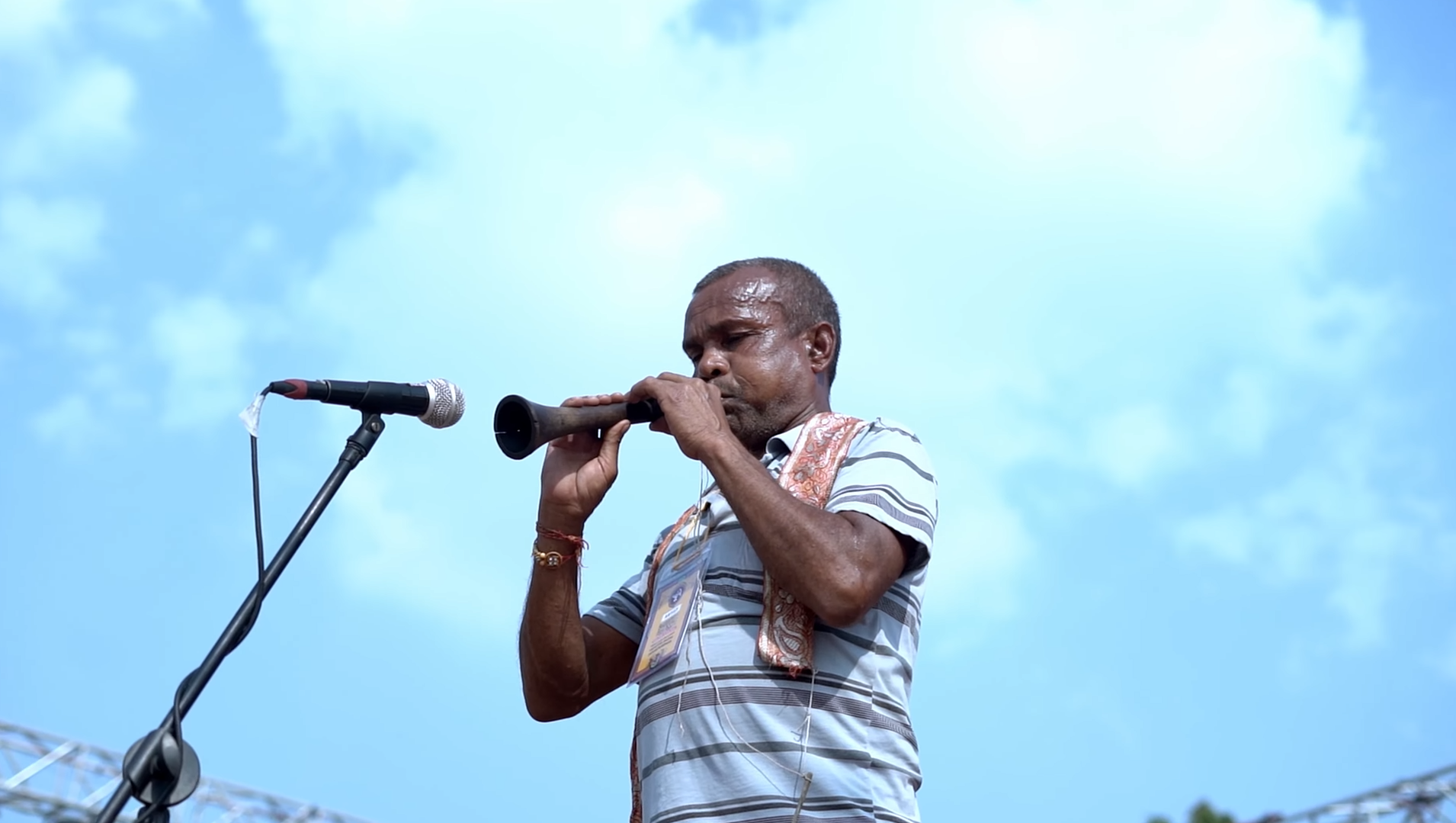
Music is the spiritual pulsation and the highest expression of cultural consciousness of any civilization. This statement feels even more relevant in the context of the Mithila land and Maithili language, where every ritual, thought, and emotion of life is woven into some form of sentiment and melody.
Geographically and demographically, the spread of the Maithili language exists across both Nepal and India. The cross-border Indian Mithila region is massive in terms of geography, population, and market size. However, when speaking of the true essence of Maithili music, the preservation of its classical foundation, and the meaningful contemplation within it, a pleasant and proud reality emerges—the Nepali Mithila region has proven to be more vibrant and progressive when it comes to safeguarding the Maithili musical heritage and articulating it with a new consciousness.
In Indian Mithila, music seems to be losing its originality to a great extent due to short-term commercialization, a market-oriented economy, and the heavy influence of Hindi and Bhojpuri cinema. On the other hand, in the eastern Terai of Nepal and the overall Maithil cultural ecosystem, Maithili music has firmly held onto its roots.
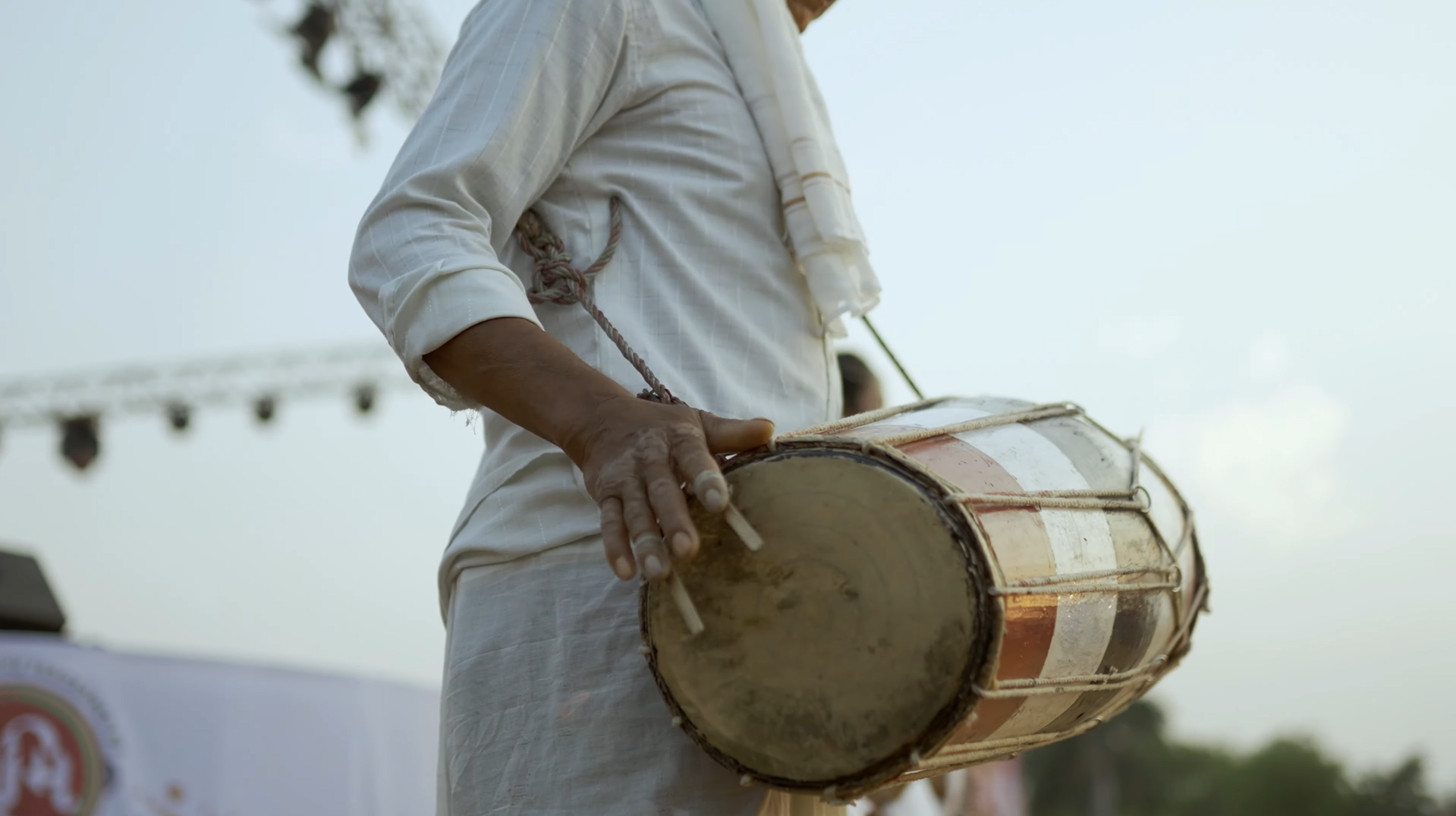
Mithila’s popular musical instrument, the Dholak (two-headed hand drum)
Whether it is the context of elevating the folk songs of the people pushed to the absolute bottom of society and establishing them on the national stage, or the determination to keep centuries-old musical traditions moving on their own strength despite state neglect—the collective awakening shown by Nepal’s Maithil practitioners, indigenous communities, and non-Maithil cultural activists is incomparable. Therefore, as of today, to witness the genuine and resilient face of Maithili music, we must observationally examine the geography of Nepal, its villages, and its musical activities as a definitive trend.
The eastern Terai region of Nepal is such a living museum of Maithili music where even the storm of modernity and political-social pollution has not been able to displace the old ragas and styles. A major link to this is Naradi music, which has reached an endangered state even in the central core of Mithila. Troupes singing Naradi, an ancient style of Maithili vocal performance, remain active today in the rural areas of Morang and Sunsari.
Poet Vidyapati is the central element in Maithili literature and music. Without discussing him, the musical history of Mithila remains incomplete. Vidyapati’s songs are a confluence of romance, devotion, and philosophy. Although ritualistic ceremonies like the Vidyapati Memorial Festival have perhaps not flourished as much on the Nepali side, its social relevance is extremely significant. From a sociological viewpoint, Vidyapati’s songs have found a distinct uniqueness, respect, and preservation among indigenous communities such as the Tharu, Danuwar, and Gangai of eastern Nepal.
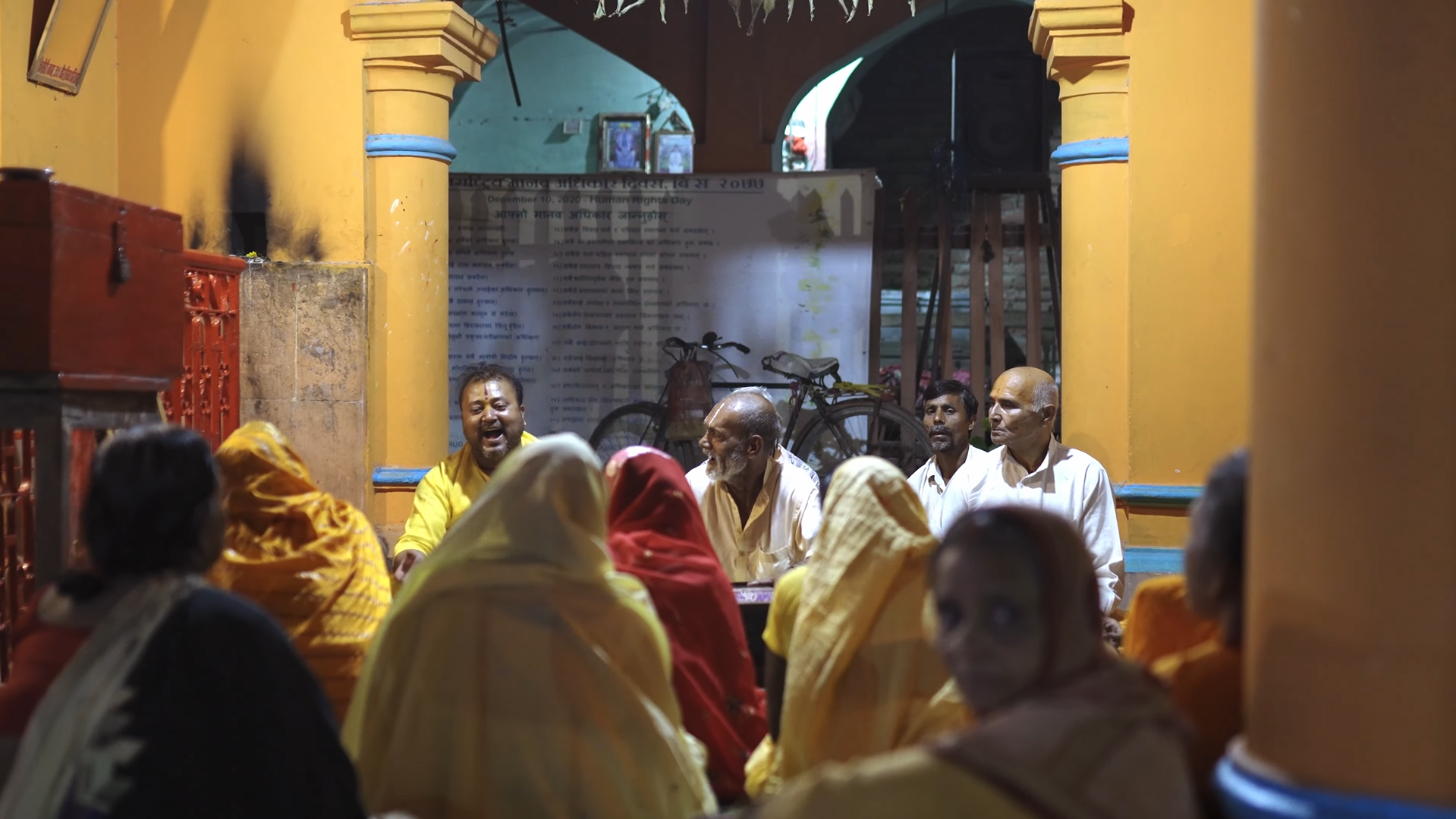
Artists of Janakpur participating in devotional hymns
Lately, politically motivated social activities aimed at erasing the identity of Mithila have reached a peak in intentionally ignoring or overshadowing cultural icons. Even under such circumstances, indigenous communities have confidently kept Vidyapati’s songs as an integral part of their own traditional instruments, styles, accents, and cultural festivals.
Similarly, even when society drifts toward modernity or chases the market, these indigenous communities have kept the musical integrity of Vidyapati intact as a ‘historical trust’. Furthermore, the historical folklore Vidyapat—which encompasses the saga and core working processes of Vidyapati—has found continuity through them.
This is an excellent example of Mithila’s civilization and Nepal’s multicultural integration, where society views a timeless poet like Vidyapati as a cultural hero and has linked his music with their way of life.
Mithila boasts a long and rich tradition of folklore dances. This is a theatrical genre that maintains a triangular relationship between drama, dance, and music. However, its backbone is music itself. Due to adversities created by the flow of time and digital means of entertainment, these dances are on the verge of collapse. Even in such a critical state, some rural troupes in Nepal remain equally active in these folk dances to this day. They continue to carry their heritage, even if it is on aging shoulders.
Dance troupes in Nakati Raipur and Akbarpur of Saptari, as well as several rural areas of Siraha and Dhanusha, still provide continuity to saga dances such as Raja Salhesh, Gopichan, Kumar Brijbhan, and Aalha-Udal. Despite financial scarcity, social neglect, and the challenges of generational transmission, the role of these troupes is highly significant from the perspective of cultural preservation.
The geography of Maithili music is not confined only to the Terai or the Mithila region. In the fourteenth century and the days that followed, the poetic influence and popularity of Poet Vidyapati expanded vastly toward Bengal, Assam, Odisha, and the Nepal Valley (Kathmandu Valley) as well.
In this connection, a strong and historical root of Maithili music is linked with the Newar community of the Kathmandu Valley. During the Malla period, the kings here were themselves profound lovers, writers, and composers of the Maithili language. Maithili plays and music were regularly created and staged in Malla palaces. Honoring that historical heritage, the interest and proactive engagement shown by the Newar community of the Kathmandu Valley in preserving Maithili music is extraordinary.
When it comes to cultural preservation in Nepal, the awakening and continuity observed in communities like the Newar, Rai, Limbu, Tharu, and Far-Western societies are extremely admirable in nature. Because of their commitment to take pride in their traditions and keep them alive, or rather due to their distinct ethnic character, Maithili music has also found respect and protection among the Newars. Even the modern youth of the Newar community appear equally aware and committed to the preservation and promotion of their traditional music.
As a result of this awareness, Maithili music continues to echo in various locations across Lalitpur and Kathmandu. Various organizations in Lalitpur, including the Shree Haribhajan Mridanga of Sunakothi and the Vidyapati Bhajan Khalah of Chapagaun, are prominently seen in campaigns to protect, sing, and take pride in this cultural inheritance of Mithila.
Recently, during the Janakpur Literature Festival organized in Janakpurdham, around 40 members of the Shree Haribhajan Mridanga from Sunakothi reached Janakpur by managing their own resources. Their objective in traveling there without any financial assistance from the state or any large commercial house was not just to deliver a performance, but rather a sacred enthusiasm to respectfully return the musical inheritance of Mithila, which the Valley had protected for centuries, back to its own courtyard. This trend confirms that various castes and communities of Nepal have contributed to brightening the face of Maithili music through deep cultural solidarity.
Preserving tradition is one aspect, but it is equally natural and necessary for the forms and genres of music to change with the pace of time. In this perspective, the new generation raised in the atmosphere of social media and global culture is seen giving a new lease of life to Maithili music. The powerful rise of Maithili rap and multilingual fusion is a direct result of this.
This hip-hop and rap style is a new, rebellious, and emerging wave that has recently entered along with digital mediums. The youth have molded the native power of traditional songs—such as storytelling, satire, and social commentary—into modern ‘spoken expression’, Western ‘beats’, rapid delivery, and sharp ‘punchlines’. Reflecting the borderland linguistic environment, these tracks contain a natural blend of Maithili, Nepali, Hindi, and English words, where youth struggles, unemployment, the fight for identity, and the reality of the streets have become the main themes.
No matter how severe the crisis becomes, as long as the fundamental fertility of Mithila’s soil remains intact, the native, sweet, and powerful face of Maithili music will not turn gloomy. These are the paths of hope, and standing on the foundation of these trends, Maithili music will map out its journey toward a pleasant future.
The use of harsh and weighty metaphors within this wave has created a distinct linguistic and symbolic fusion, challenging the condescending mindsets and bringing the social class divide as well as the mindsets between Madhesh and the Hills to an equal level. Nevertheless, traditionalists and academic purists often accuse such aggressive and multilingual experiments of ruining the sweetness of the language and disrupting its classical dignity by introducing Western styles. However, the involved artists consider this to be a realistic expression of contemporary society.
This musical wave has spread as a cross-border ecosystem between the geographies of Nepal and India. A trending and leading name in this stream currently is Maniya (Rahul Kumar Mandal), who started his journey from Biratnagar in 2018 through ‘DJ Wala’ and turned Maithili hip-hop into a medium. After meeting another rapper, AK RA!N, in Janakpur, the song ‘Maithop’ that they released upon coming to Kathmandu became a breakthrough in their careers.
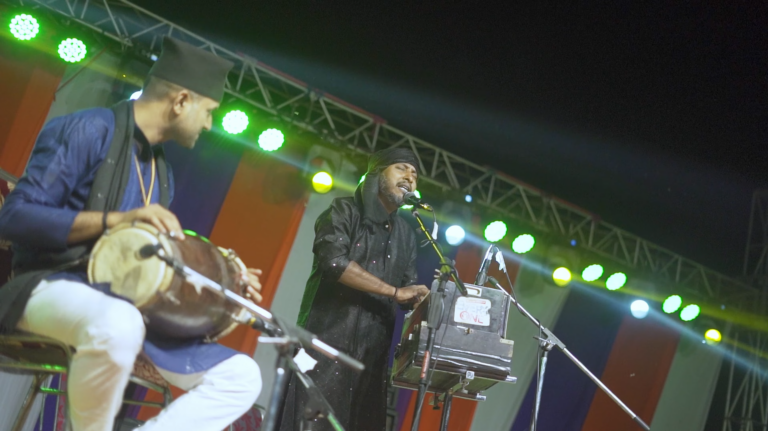
An artist performing at the Bhumi Festival
Maniya’s tracks like Anti Love, Nikamma, Shivaji, Ghurmi Nachade, and Bhagatai gained immense popularity. By casting local friends from his own socially marginalized community in music videos, he has continuously showcased the capabilities of purely grassroots people. Nonetheless, this practice appears to continue in other formats of Maithili music and song as well. Musical collaboration has long broken numerous social barriers in Mithila.
The role of DK Sagar is also vital in strengthening this rap music, whose social consciousness was given a digital platform through tracks like Jan-Chetana, Phutal Naseeb, and the collaboration track Xutkara with Kaal Kavi, all produced by MadhesiBeats (Birendra Keshari). Similarly, Sanjay Kushwaha has given a hip-hop voice to the labor and struggle of Mithila through songs like Kisaan.
Across the border in India, Anuj Mithilawasi has been promoting the initial stages of this stream since 2017. In this era of digital democracy, the youth have built a powerful new parallel genre of Maithili music, which has bound both Nepali and Maithili-speaking listeners into a single musical intimacy.
Even though Maithili rap faces a smaller market, is mostly confined to YouTube, and suffers from a lack of institutional archiving compared to Nepali rap, it has successfully managed to make the land of Vidyapati converse with the modern hip-hop flow. This has been achieved by riding on channels like Madhesi Beats and Maithop, local studio culture, and platforms like TikTok.
Between the pride of history and the struggles of the present, Maithili music is displaying its indomitable vitality. The multicultural geography of Nepal, the sense of ownership felt by its various ethnic groups (especially the Newar and the indigenous communities of the Terai), and the selfless dedication of local musicians are the real lifelines of this music.
In widening the new path for Maithili music, today’s generation has turned globalization and modern technology into a strong weapon. Looking beyond individual discussions of specific names, there are currently three main thematic trends active in Maithili music, playing a crucial role in establishing it on the world stage.
First is the modernization of folk songs and technical refinement. One group consists of musicians who have traveled from Janakpur to Mumbai or other modern studios to connect traditional Maithili folk tunes and Vidyapati’s compositions with international-standard music arrangement and modern technology. This has elevated the technical quality of Maithili music to a global standard. The works of Pravesh Mallick, Priya Mallick, and Gautam Jha, among others, fall into this category.
Second is the purity of folk forms and classical stance. Despite the rapid commercialization and Westernization of the market, another strong trend persists that retains and popularizes the original and pure form of folk songs. This trend proves that the real power of Maithili folk songs lies in the fragrance of its soil. Maithili Thakur, who has maintained her musical journey even after becoming a lawmaker, and Shivani Bhagat are representative artists of this category.
Third is contemporary pop-fusion and youth appeal. The third stream is the trend of molding traditional folk songs into modern pop and Western music structures to make them ‘trending’ among the younger generation, which has already been discussed above.
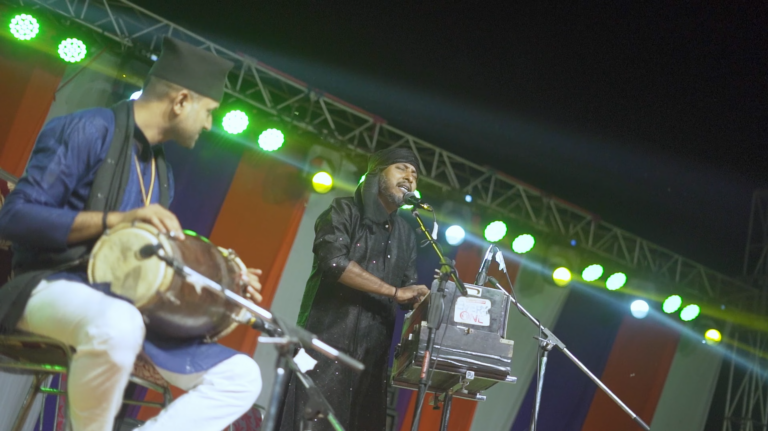
An artist performing at the Bhumi Festival
Additionally, staying grounded on the local soil, numerous artists such as Sunil Mallick, Subhash Birpuriya, Lalit Kamat, Jagesh Thakur, Bhagwat Mandal, Shailendra Vishwakarma, Teju Maithil, Jyoti Bishwakarma, Birendra Jha, Harishankar Chaudhary, and Sanu Maya Yadav have not let the foundation of creative music die. They continuously work on collecting original folk melodies, teaching new talents, and creating a strong stream of Maithili soft melodies (Sugam Sangeet).
Although the glorious history and some present experiments appear pleasant, the internal reality and future of this art are surrounded by serious challenges. For music to survive, its knowledge, skill, and emotion must be physically transferred from one generation to the next. However, due to economic and geographical displacement, this link has currently been badly broken.
Most villages in the Mithila region, on both the Nepalese and Indian sides, have now become devoid of youth. From house to house in the villages, young people have migrated to Gulf countries, Malaysia, or major cities in India for employment. Since the youth who could learn music from the elders and carry it forward are missing from the villages, the musical festivals taking place in rural areas have faced disruption.
The movements for social awakening that took place in the Terai region of Nepal over the past decades were justifiable and historic in themselves. However, certain emotional decisions made during those movements had an unexpected and negative impact on Maithili music. In the past, playing certain traditional instruments (such as the Dhol, Tasa, Pipahi, and Sahnai) was considered a ‘compulsory traditional occupation’ and a symbol of caste-based humiliation.
In the heat of the movement, those communities decided to boycott the discriminatory occupations. Although this was a battle for self-respect from the standpoint of social justice, the state or society failed to make alternative arrangements to preserve those native instruments as ‘everyone’s shared art’. As a result, the ancestral skill of playing these instruments was lost.
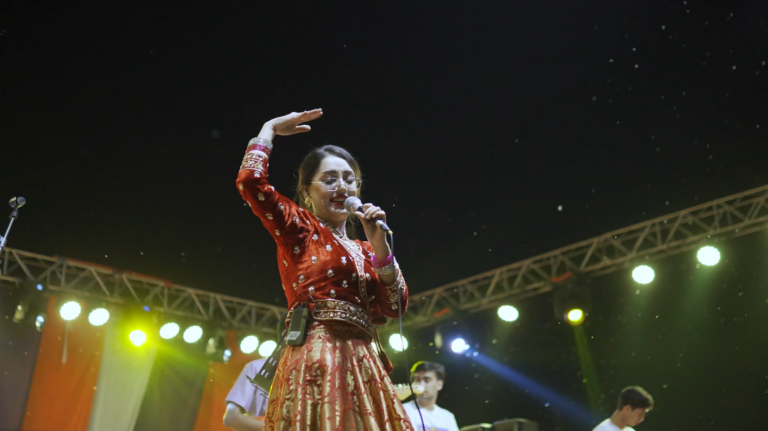
An artist performing at the Bhumi Festival
In the commercial market of the Indian Mithila region, a trend of copying catchy rhythms and vulgar lyrics from Hindi and Bhojpuri songs has flourished heavily in the illusion of gaining quick fame and money. This has delivered a massive blow to creative music and the sophisticated musical reputation of Mithila. It feels as if the era of creating new melodies or producing genuine composers has come to an end. Even in this context, the work of preserving the core seeds continues to take place within the Mithila region of Nepal.
If the vital breath of Maithili music has not stopped despite so many challenges and disappointments, the credit goes to certain institutional efforts and the attachment of diaspora (migrant) youth.
The most beautiful and emotional picture of hope in this direction often comes from the deserts of Arab-Qatar.
The Maithil youth who left their homes and villages for employment in Qatar, Saudi Arabia, Dubai, and Malaysia have not let their music die despite their grueling labor there. These young people gather in rooms to sing cultural songs of Hori, Chhath, and Bhagwati Jagaran. Lately, images have appeared on social media showing them initiating religious activities like ‘Hanuman Aradhana‘ and starting a tradition of regular hymns even amid the hot winds of the desert.
Institutional revival of ritual songs
A solid pillar of Maithil society is the ritual song (Sanskar Geet). The singing of melodies by women (such as Sohar, Samdaun, and Kohbar) during every ritualistic and ceremonial occasion like birth, tonsure, sacred thread ceremony and marriage forms the main ground of Maithili music. However, due to urbanization and modernity, these songs were beginning to disappear from the throats of women.
Nevertheless, an exceptional initiative has recently been started in Biratnagar by the Maithili Development Campaign. The organization has begun hosting Maithili Ritual Song Competitions by creating an annual calendar. Remarkable enthusiasm and participation from women and young girls of various age groups have been observed in this competition.
Similarly, musical festivals like the Bhumi Music Festival, steps taken by composer Rashmiranjan Jha, and the practice of including special musical performance segments in the literature, art, and theater festivals organized by the Maithili Development Fund have turned Maithili music into a subject of academic and intellectual discourse.
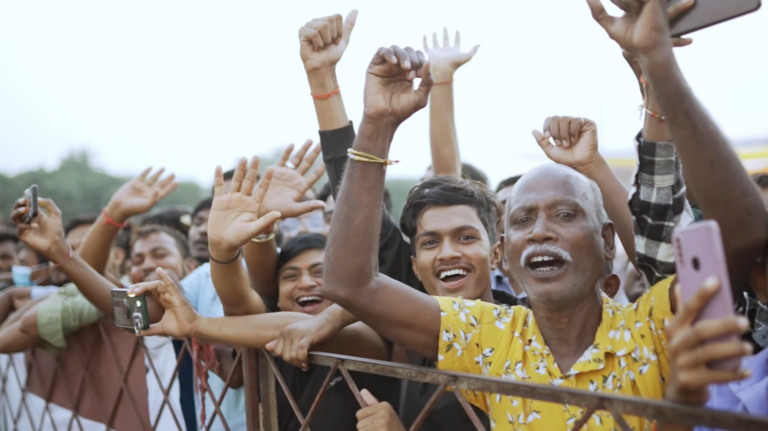
Participants at the Bhumi Festival
In conclusion, the face of Maithili music stands at a historical crossroads today. One side of it is pressed down by anxiety, scarcity, a generational gap, and the distortions of the modern market. The other side, however, shines with the rap of the new generation, the zeal of fusion, the brilliance of institutional festivals, and the warmth of the working youth in the Gulf.
Even if the process or chain of generational transmission has broken, the new generation is preparing itself in its own way, utilizing its own language, metaphors, and technology. Between the pride of history and the struggles of the present, Maithili music is displaying its indomitable vitality.
The multicultural geography of Nepal, the sense of ownership felt by its various ethnic groups (especially the Newar and the indigenous communities of the Terai), and the selfless dedication of local musicians are the real lifelines of this music.
To make the Maithili music of tomorrow more secure and prosperous, it is now necessary for the three tiers of government in the country to protect its classical genres, establish academies to teach traditional instruments, and move forward by giving formal genre recognition to the rap and fusion experiments of the new generation.
No matter how severe the crisis becomes, as long as the fundamental fertility of Mithila’s soil remains intact, this native, sweet, and powerful face of Maithili music will not turn gloomy. These are the paths of hope, and standing on the foundation of these trends, Maithili music will map out its journey toward a pleasant future.