Kathmandu
Thursday, June 25, 2026





In South India’s unique political tradition, where film stardom fuels mass leadership, Vijay’s ascent signals both continuity and disruption
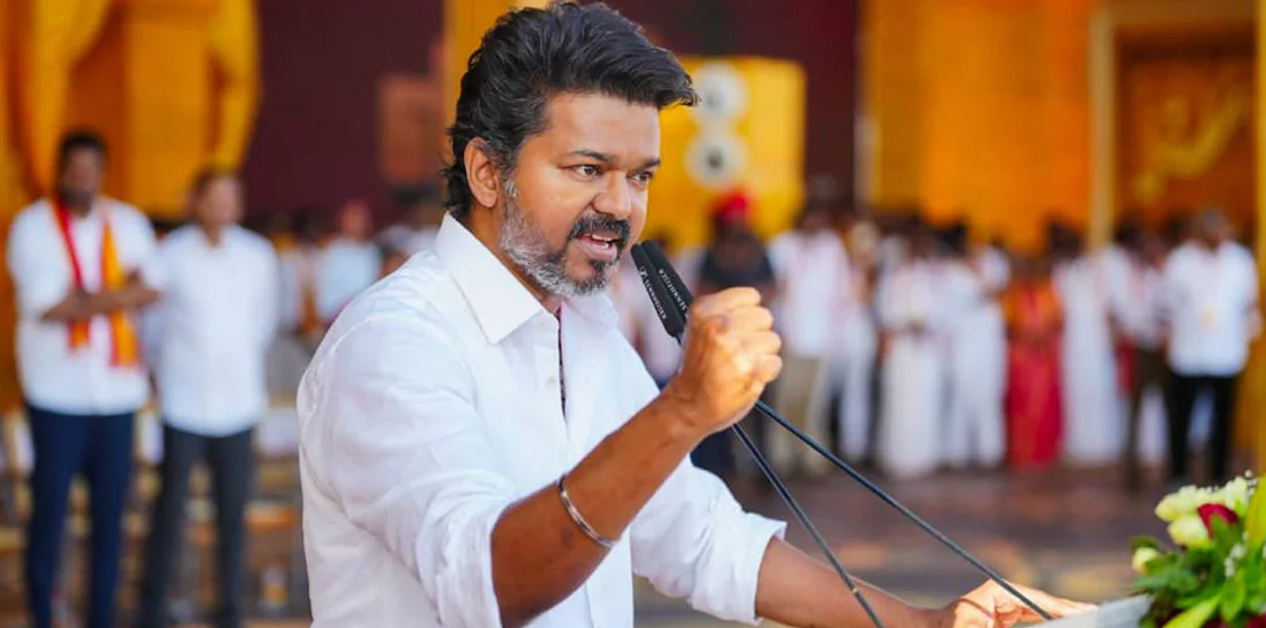
KATHMANDU: A car number once seen as cinematic fiction is now being read as political prophecy.
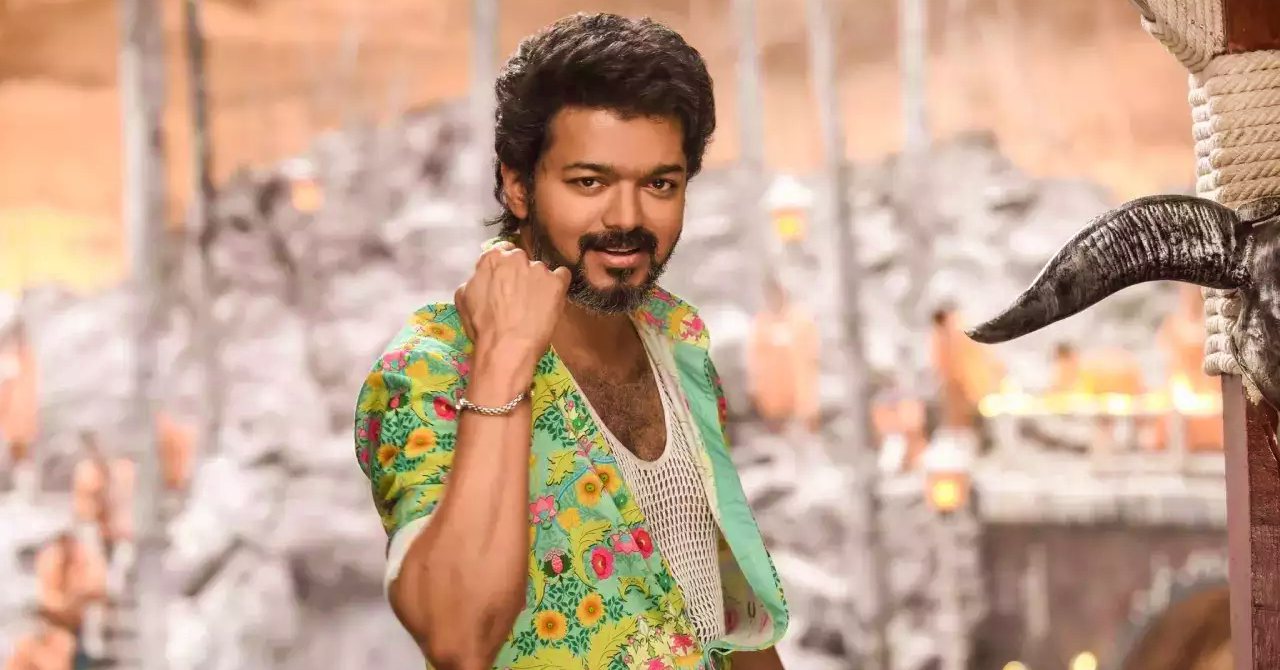
Following Tamil superstar Vijay’s historic victory in the recent Tamil Nadu assembly elections, an old film scene has resurfaced online, drawing widespread attention to a striking detail: a vehicle bearing the number “TN 07 CM 2026.” The clip, now viral across social media, is from his 2024 blockbuster The Greatest of All Time, also marketized as GOAT.
In the scene, Vijay is seen driving the car, with the number plate interpreted by fans as “Tamil Nadu, Chief Minister, 2026.” The symbolism has gained fresh traction after his electoral success, prompting supporters to revisit the film and read the moment as an early hint of political intent.
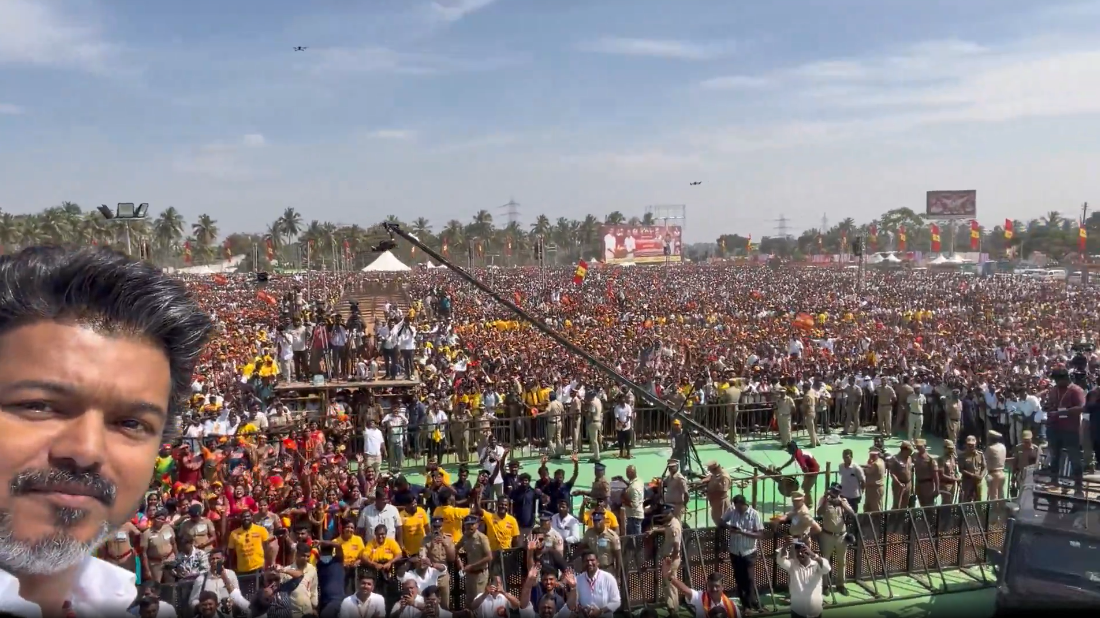
Speculation about Vijay’s political ambitions had already been building since he launched his party, Tamilaga Vettri Kazhagam (TVK), in 2024. The resurfaced clip has further fueled the narrative that his transition from cinema to politics was carefully staged, blending screen image with real-world aspirations.
Vijay had planned to release what he described as his final film, Jana Nayagan, ahead of the elections, but the release was stalled amid opposition resistance, adding another layer of political tension to his campaign phase.
In the 234-member assembly, TVK emerged as the largest party with 108 seats, ending more than five decades of dominance by the Dravida Munnetra Kazhagam (DMK) and the All India Anna Dravida Munnetra Kazhagam (AIADMK). Since 1977, power in Tamil Nadu had alternated exclusively between these two parties.
Vijay’s victory not only disrupts that entrenched two-party system but also marks a rare political breakthrough, with his party achieving a majority position within just two years of its formation.
Tamil politics and its cinematic links
Regionalism has been a defining force in South Indian politics, with demands for state reorganization along linguistic lines at its core. Film-led political movements have played a central role in articulating these aspirations, creating a deep and enduring overlap between cinema and politics. The heroic personas crafted by actors on screen have often translated into real political capital.
After India gained independence in 1947, the Madras Presidency was reorganized into Madras State. Distinct from North India in language and culture, the southern regions saw rising demands from Dravidian language groups for a separate nation, Dravida Nadu. These calls were politically mobilized by the Dravidar Kazhagam, led by Erode Venkatappa Ramasamy, widely known as Periyar.
The movement’s ideas were effectively communicated through theater and cinema, bringing issues of identity, inequality, and regional pride to the masses. At the time, the Indian National Congress dominated the region, with the first four Chief Ministers of Madras State drawn from the party.
A major turning point came in 1949 with the formation of the Dravida Munnetra Kazhagam (DMK). Conjeevaram Natarajan Annadurai, popularly known as Perarignar Anna, emerged from the Dravidar Kazhagam and used plays and film scripts to energize the movement. However, following India’s defeat in the 1962 war with China, the separatist demand narrowed into an anti-Hindi movement.
In the 1967 Madras assembly elections, Annadurai led the DMK to victory, making it the first non-Congress party to secure a majority in an Indian state. In 1969, Madras State was renamed Tamil Nadu, and Annadurai became its first chief minister, though he died just 20 days after assuming office.
He was succeeded by Muthuvel Karunanidhi, popularly known as Kalaignar, who also came from a cinematic background. Like Annadurai, he wrote film scripts aligned with the Dravidian movement. Karunanidhi, who passed away in 2018, served as chief minister for a total of 6,863 days across multiple terms.
Following differences with Karunanidhi, Tamil cinema superstar Maruthur Gopalan Ramachandran left the DMK and formed the All India Anna Dravida Munnetra Kazhagam (AIADMK). Widely admired for never portraying negative roles on screen, MGR was revered by the public. His party won the 1977 elections, and he became chief minister.
After MGR’s death in 1987, his wife, Vaikom Narayani Janaki Ramachandran, briefly assumed office as chief minister. She was also an actress. Soon after, Jayaram Jayalalithaa, who had starred alongside MGR in numerous films, emerged as his rightful successor, setting the stage for a new phase in Tamil Nadu’s cinema-driven politics.
In the 1989 elections, Vaikom Narayani Janaki Ramachandran and Jayaram Jayalalithaa contested through separate factions. While Muthuvel Karunanidhi’s Dravida Munnetra Kazhagam (DMK) won the election, the battle over Maruthur Gopalan Ramachandran’s political legacy was decisively claimed by Jayalalithaa, with public support firmly aligning behind her as his rightful successor.
In the years that followed, the DMK and the All India Anna Dravida Munnetra Kazhagam (AIADMK) remained at the center of power, with Karunanidhi and Jayalalithaa alternating as chief minister. Jayalalithaa, who served as Chief Minister of Tamil Nadu six times, came to be widely known as “Amma,” meaning the people’s mother, reflecting her enduring mass appeal.
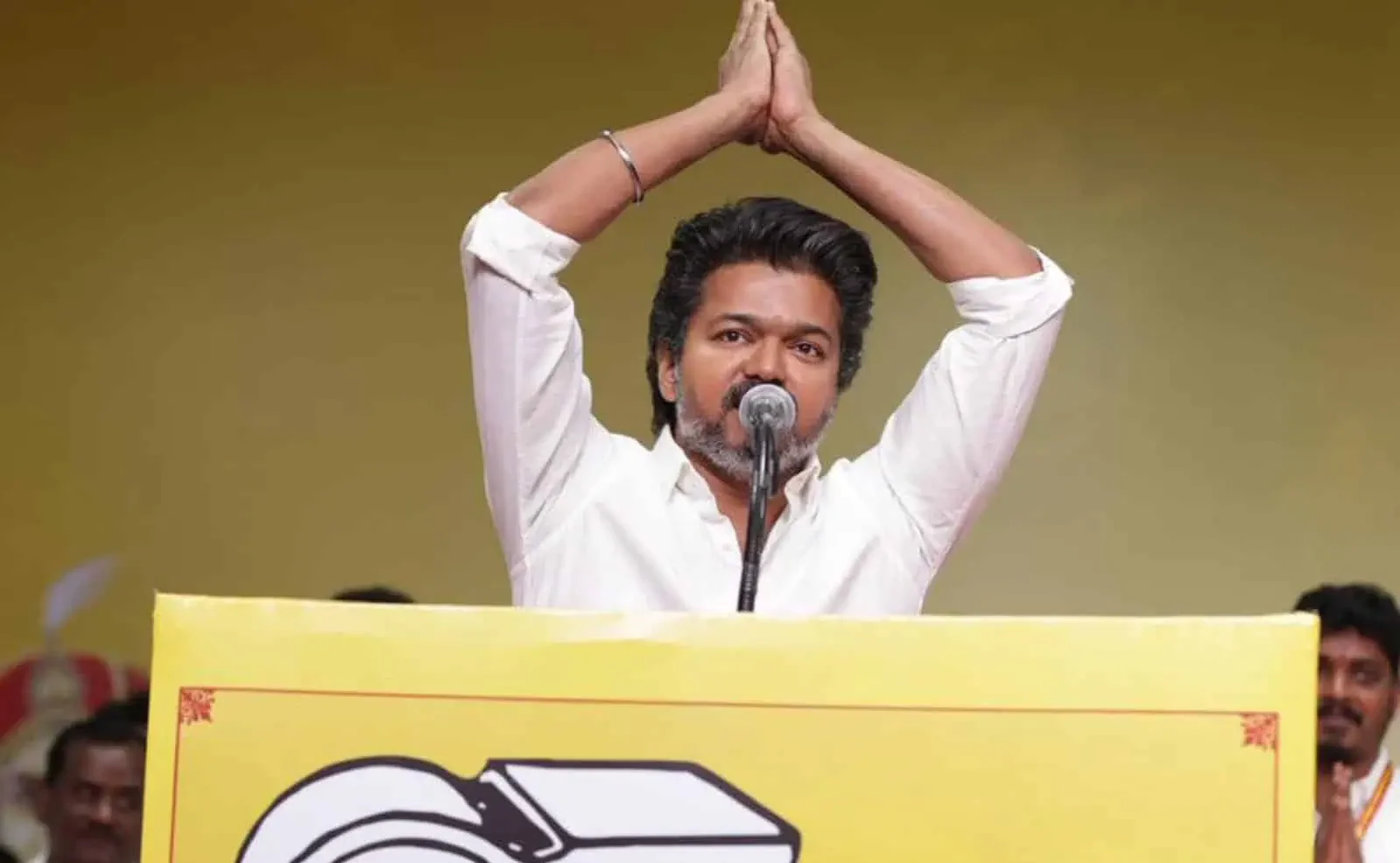
Vijay is a product of this very tradition where cinema and politics intersect. In films such as Mersal, Kaththi, Sarkar, Leo, and Master, he has consistently been portrayed as a rebellious action hero confronting corruption and injustice. This carefully cultivated screen image translated directly into his political messaging, where he positioned himself as a defender of ordinary citizens. In recent years, he also built a distinctly anti-government image at both the state and central levels.
His political inclination first became visible during his 2013 hit film Thalaivaa, which carried the tagline “Time to Lead.” When Vijay’s father stated in an interview that his son intended to enter politics, then Chief Minister Jayalalithaa reacted strongly. The film was briefly banned in Tamil Nadu and was only released after the tagline was removed. The episode helped solidify Vijay’s image as an anti-establishment figure.
The foundation of his political entry was laid during the 2021 local elections, when members of his fan clubs contested as independent candidates. Of the 160 individuals aligned with him, 115 won, demonstrating significant grassroots support. This outcome provided a concrete base for Vijay to formally enter politics.
He announced the formation of his party, Tamilaga Vettri Kazhagam (TVK), in 2024. With this move, his fan base transitioned into an organized political force. Thousands of fan clubs across Tamil Nadu were integrated into the party structure, allowing it to expand rapidly at the grassroots level.
With his historic electoral victory, Vijay Thalapathy has now joined the list of film personalities who successfully converted cinematic popularity into political power. “Thalapathy,” meaning commander, is no longer just a screen title. His political journey has entered a decisive phase, where the narrative will be shaped not by cinema, but by the public itself.