Kathmandu
Thursday, June 25, 2026





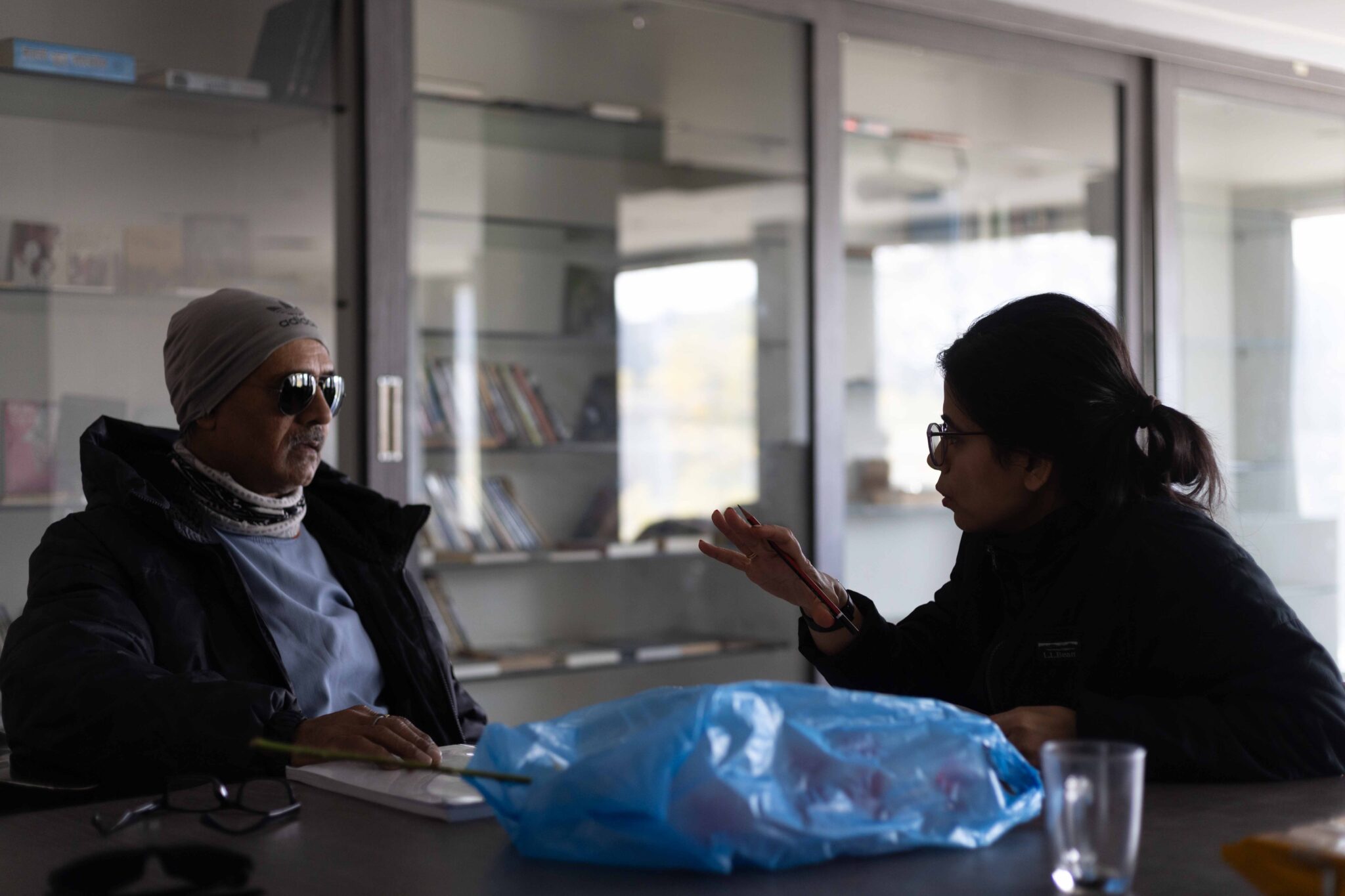
In this conversation, Sahara Sharma opens up about storytelling, migration, women in filmmaking, and why her films are filled with people searching for somewhere to belong

Sahara Sharma, a postgraduate in communication from Bangalore University, India, is the founder of ‘Gauthali Entertainment.’ Her debut television film, Indreni Khojdai Jada (Chasing Rainbows), won the Nepal Panorama award at the Kathmandu International Mountain Film Festival (KIMFF 2013) and the Critics Award at the Toronto Nepali Film Festival. Along with short films such as Shikha Mainbattiko (Candle’s Wick) and Raasleela, Sharma has produced and directed the television series Gauthali Ka Katha Haru and Maya Bhanne Chij Yastai Ho.
Her first international co-production, Ek Mutthi Badal, is set to be released on May 15. Here is an edited excerpt of the conversation between director Sharma and Prabhakar Gautam for Nepal News:
Stories start at home. What was your family environment like?
I have loved reading stories since childhood. I read stories like Cinderella, Snow White, Rapunzel, and Jack and the Beanstalk while still in school.
Beyond reading and listening to stories, I enjoyed telling them even more. I used to tell the stories I read to my younger siblings in a somewhat theatrical way.
My grandmother used to read a lot, especially religious and mythological books like Shree Krishna Charitra and Shrimad Bhagwat. She took pleasure in telling those stories orally to others.
The whole family would sit together to listen. There would be songs in between, and my younger sister would dance. It was a very vivid and fun atmosphere.
My grandmother’s stories, her narration style, and that kind of family interaction sparked a deep interest in me toward stories and self-expression. The poem ‘Pompeii ko Phool’ included in Ek Mutthi Badal is actually my grandmother’s creation.
At what stage did your habits of writing and watching films started?
After grade eight, I started watching films on television without fail. I watched many movies on channels like HBO and Cinemax.
However, even before the habit of watching films developed, I loved to write. My father bought me a diary, saying, ‘Write whatever you feel like.’ After that, I started writing, sometimes imitating film dialogues and sometimes making up my own stories. I also poured emotional matters into that diary.
Even though I was practicing writing, I didn’t write thinking I would become a writer.
While practicing journalism, you also wrote film reviews. How much does review writing help in building a cinematic perspective?
I started working as an intern at Republica magazine. At that time, there weren’t many people writing film reviews. The company of brothers like Dipendra Lama and Narayan Wagle became a learning opportunity and inspiration for me.
Review writing proved useful in refining my understanding of film and building my own perspective.
Was there a specific reason or context for moving from the world of words to the visual genre?
Rather than through much planning, this became a process of fulfilling one desire or dream after another as I kept working. Since I had an interest in stories, cinema was always going to be attractive. First of all, a few friends and I got together and made a music video.
In many ways, that video was raw, but it became an experiment for us. After that, we participated in an international short film competition and reached the top five. That gave us hope that we too could make cinema and that our stories could be liked.
What was your thought process when you went to Bengaluru for formal cinema studies?
While making the music video, I realized that if I was going to make films, I had to understand them seriously. I went to Bengaluru and completed a master’s in media studies and communication. In the second year, we had to study film direction. That gave me a chance to understand film from theoretical and creative perspectives. Since the teachers there were directly connected to the film industry, the learning became more practical and ‘authentic.’
Your first cinema, Chasing Rainbows, was produced as part of that college project, right?
The story idea for Chasing Rainbows sparked after an incident. One day, I reached college a bit early. At that time, a boy entered with me. Later I found out that he reached college early every day not to study, but to bathe.
He was living in a shutter-style room in Kathmandu. Since there was no place to bathe there, he would come as soon as the college opened to bathe. This was a very unusual thing for me.
Then I realized what I am complaining about in life, how small my problems are! How are other people my age living? I tried to understand his life by talking to him. After talking to him, I found out that it was a shared reality for many youths, not just one person.
That incident gave me a basis for forming a perspective on the daily struggles of youths who come to study in Kathmandu or other cities, live in rentals, stay away from family, and face financial crises.
At first, I wrote it as a feature story in a magazine. The response was good, yet I couldn’t be satisfied. Even after writing that story, I felt something was left to be said. That story did not stop following me.
Starting from that small but real-life incident, a large emotional world was gradually built. Finally, I reached the decision that the story should be shown in visuals, not just words. That was the seed of Chasing Rainbows.
When transforming real events into a film story, how did you manage the combination of fact and fiction?
The process of transforming real events into a film is not like copy-pasting. For me, the most important thing is not the facts, but the feeling they provide.
In the film, if I had tried to show the story of that youth I met in college exactly as it was, it would have been limited and incomplete. In it, I created a new story by mixing the experiences of other people, moments from my own life, and small details I saw around me.
Since my background is in journalism, research is at the center of the filmmaking process. During that, I note down people’s thoughts, behaviors, worries, and dreams. I talk to strangers on public transport. I note down everything where they live, how they are surviving, and what they are thinking. I adopted this same process during the production of Chasing Rainbows.
When I sit down to write the film’s story, not everything I noted comes directly into the story, but it makes the characters lifelike. While studying film in India, I too had experienced conditions such as the lives of students living on rent, the fear of running out of money at the end of the month, the compulsion to find cheap food, ways to save costs with friends, and waiting for money from home. Therefore, I feel those things came naturally into the film.
As it was a cinema made as a college project, Chasing Rainbows was technically raw. Was the rawness in the narrative style your choice or a compulsion?
Yes, as it was a college project, there were limits on experience, resources, and time. Those limits are reflected in the film.
However, the choice of narrative style was also the thought of me and my team. I don’t have much faith in traditional story structures. Rather than the Three Acts (beginning-middle-end), I believe in fragments of life. Life itself is not organized; therefore, my thought is that the film should be the same.
What was the experience like while directing your first cinema and after it was released?
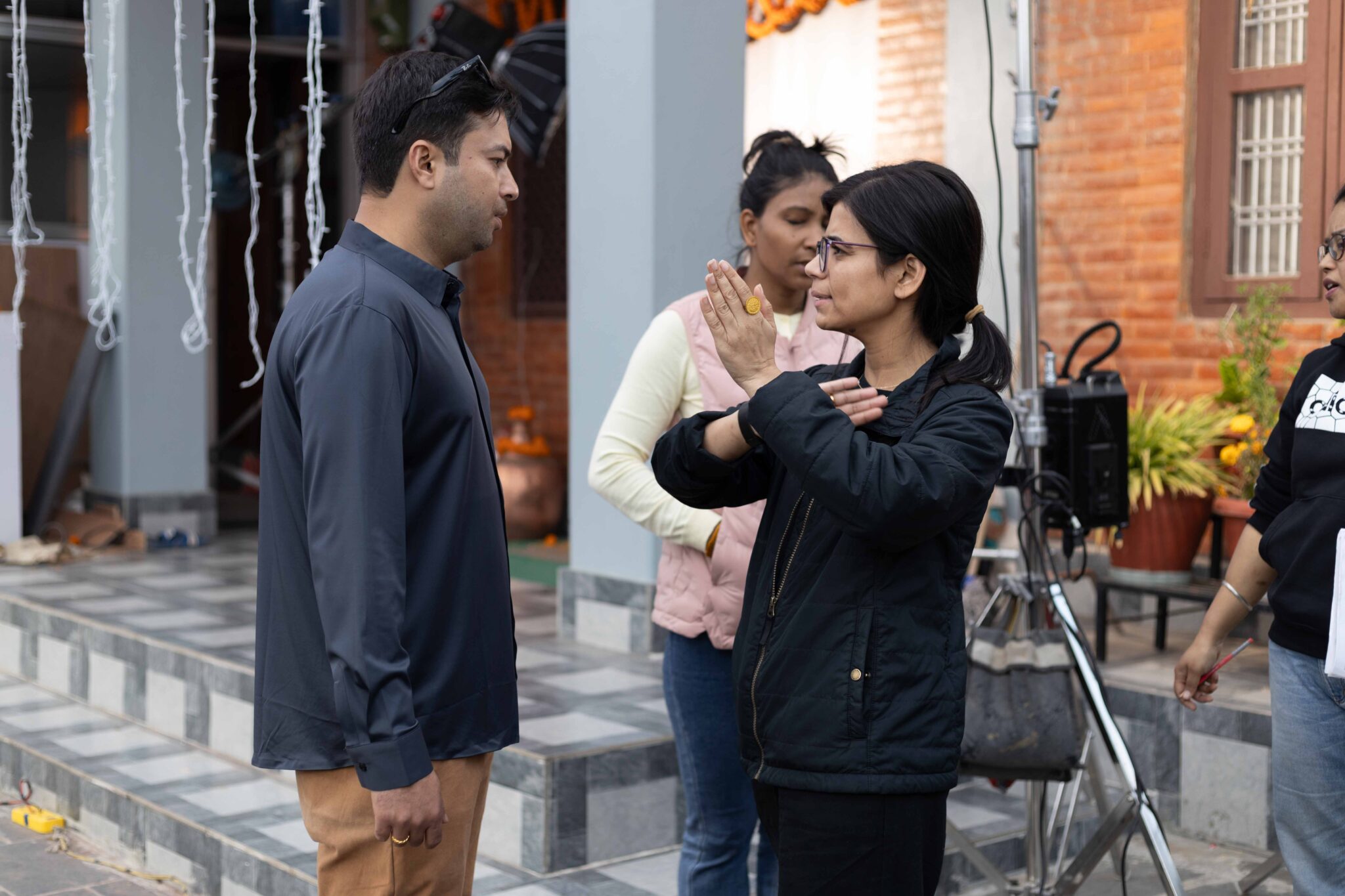
A college project without a very big plan took a large form as we kept working. I had written the script, and I was holding the camera myself. Therefore, naturally, I had to do the direction as well.
Since I am a bit of an ‘opinionated’ person, the responsibility for the final decision fell to me. Other friends, including producer Abhimanyu Dixit, were a bit more ‘relaxed.’ Thus, I ended up in the role of director. But there was ‘input’ from everyone in every task.
The film won several awards. Among them, awards like KIMFF and TNFF were important. This became a big surprise for us. Receiving a check of USD 1,500 was another surprise.
At that time, more than money, we were in need of ‘validation.’ The praise and awards from college teachers, classmates, and people in the film sector encouraged me to make another cinema.
How did your group, Gauthali, start?
After finishing the master’s, there was an opportunity for Abhimanyu and me to take good jobs in India. But our dream was to make cinema; therefore, we returned to Nepal.
By then, we had already set a clear perspective on making cinema. To give that a concrete shape, we started ‘Gauthali Entertainment’ in 2015 after returning to Nepal.
Why the name Gauthali?
The Gauthali (Barn Swallow) is a small bird that flies freely, reaches every house, and carries small stories. We liked that symbolism. I feel our work matches the nature of the bird, bringing small stories from inside the house out and taking the experience of one place to another. As an institution that does small, independent, and story-oriented work, this name reflects our objective.
What kind of work does Gauthali do? What is its goal?
Instead of raising issues directly, we prefer to speak through stories. Our priority is to show how big social changes affect the daily routine of a family or an individual through the characters’ lives, relationships, and experiences.
The goal of Gauthali is to build a platform where we can bring stories of new filmmakers, especially women and other marginalized communities. To bring such stories, we want to help new filmmakers from story development to production.
Since it is necessary to create opportunities to tell stories full of diversity, we want to become the medium for that.
How do you view the debate and division between independent films, art-house films, and commercial films? Is the distance between these two trends of films decreasing?
This is not a new debate; it has been going on for more than two decades. The perspective of keeping films with artistic value and commercial films in two different trends still exists. But it feels like the distance between these two trends is gradually decreasing.
Now, the understanding that art and business are not each other’s enemies is also becoming stronger. The film industry becomes sustainable only if both these aspects can be taken together. People who make films also need money. From their work, they also need artistic recognition, festival recognition, and respect from society.
Chasing Rainbows was a college project. The new film, ‘Ek Mutthi Badal,’ seems to have taken the path of both festivals and commercial competition. Are you in the middle ground of the artistic and commercial trends?
Yes, I feel so. This path is not easy to walk, but it is necessary. Because, ultimately, we are all working in the same industry. I didn’t write the story thinking from the start that it was a commercial, festival-centric film.
There was a subjective emotion that was making me uncomfortable, and I expressed that in the story. In that story, things like family, relationships, father-mother, and the dynamics inside the house were gradually added. While writing the story, I wasn’t influenced by things like a big budget or a big market. I just wanted to tell a story.
Due to Covid, production work stopped. After that, we started looking for festivals and international support. That was also a struggle, but it gave the film a new direction.
How was the process of gathering investment?
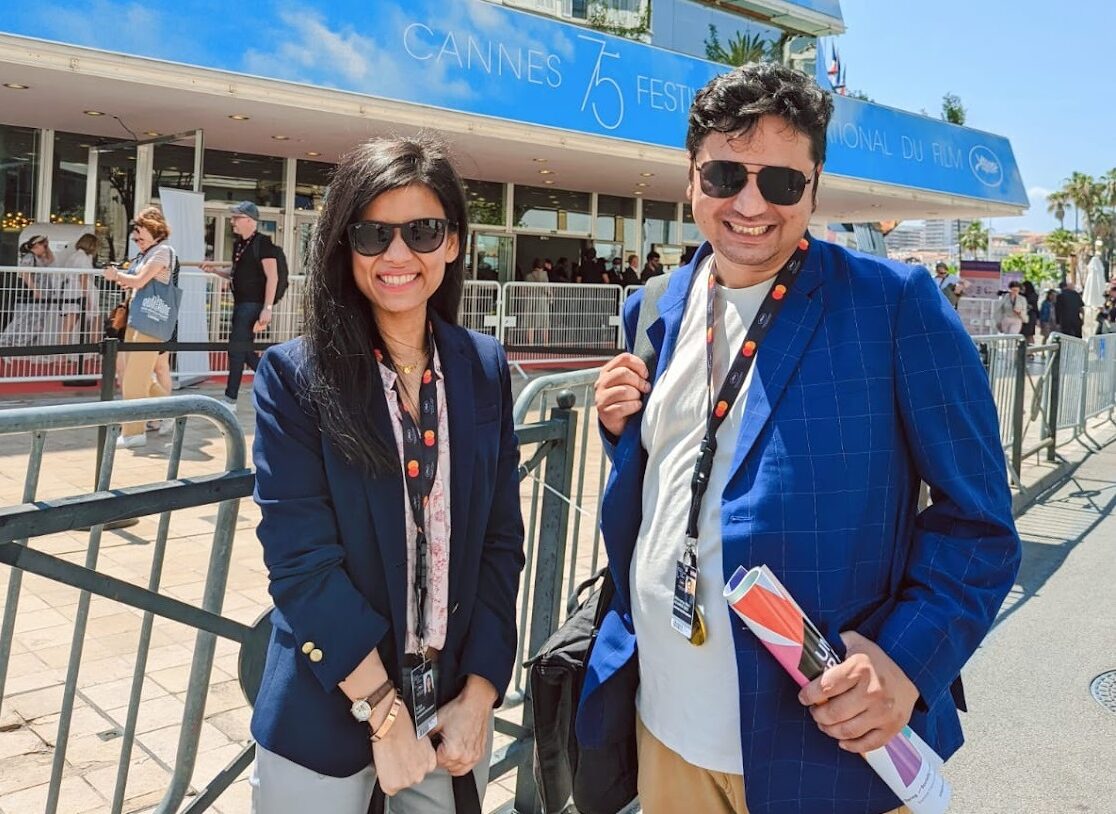
This is the most difficult stage. During this, we got connected with Mon Productions. We sought help through various platforms for networking labs and marketing. In India’s NFDC Film Bazaar, our producer Abhimanyu Dixit won the ‘Rotterdam Bazaar’ award. After being selected for the Cannes lab, I started looking at and understanding the story of Ek Mutthi Badal, which I was writing, in a new way.
What was the experience of working with a large team?
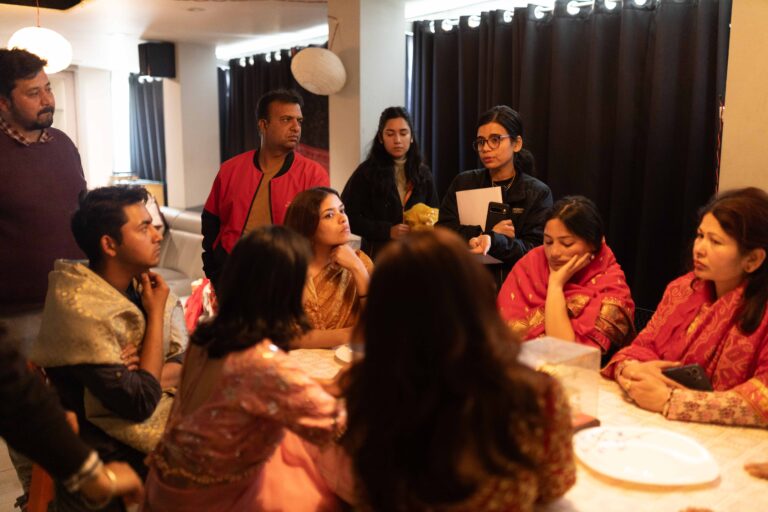
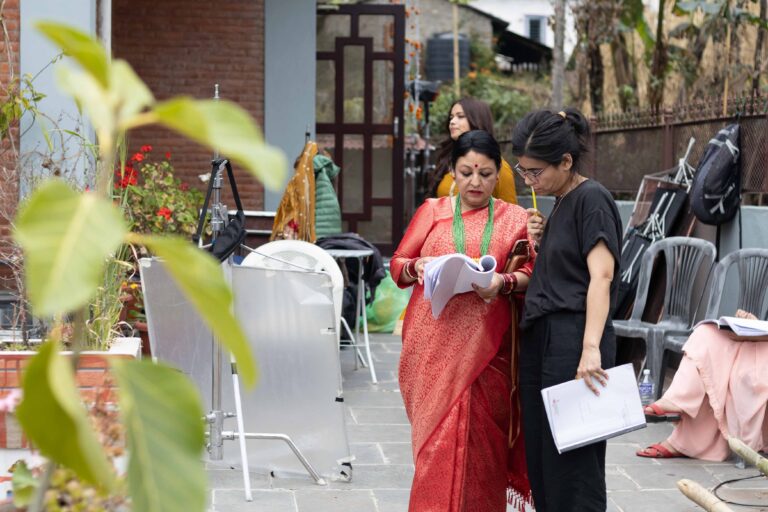
This was a new experience for me. Previously, I used to work in a small team of up to 10 people. This time, there was a team of about 70 people.
At first, I was also scared about how I could take responsibility for so many people. But it became easy with everyone’s support.
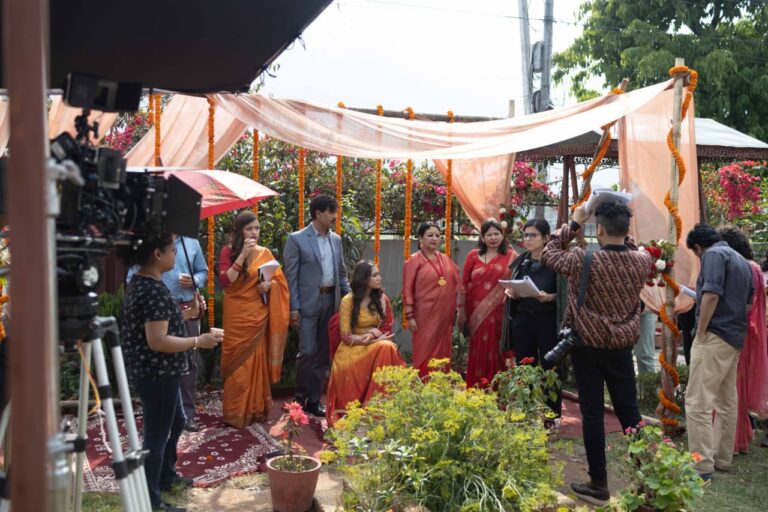
While working, I realized that a team runs on relationships rather than names. I used to talk to friends in every unit, including gaffer, sound, and art. I also tried to sit with everyone during meal times. That increased trust within the team. It made the relationships intimate.
In ‘Ek Mutthi Badal,’ there is a dominance of women among the director, unit heads, and actors. Is this a planned decision?
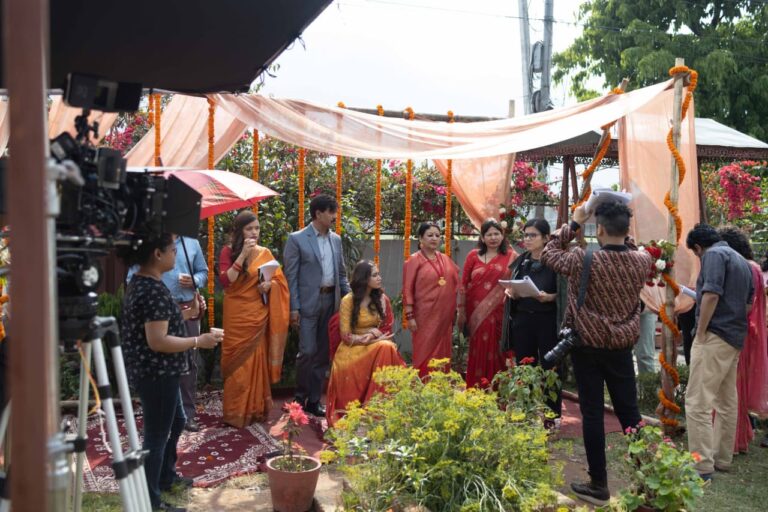
Instead of being planned, female leadership and participation occurred naturally in units including production design, costume, editing, assistant director, and audio mixer. Upon reflecting later, this is a very important thing. Because it brings a new perspective and establishes new practices.
In our film, women are not just assistants; they are in the main structure. The biggest thing on our set was respect.
During filming, I told everyone not to use abusive language with any member. I requested everyone use ‘please’ and ‘thank you.’ Later, the gaffer team themselves said, ‘This is the first set where no one has had to hear abuse.’
Hearing that, I felt even a small change makes a big difference.
The participation of women as actors, singers, and producers in cinema is quite good. But the number of women in roles such as screenwriting, cinematography, and direction is low. As a female director, how do you view this?
In cinema, until today, groups other than straight men have had very few opportunities. The same types of male-dominated stories have been repeated over and over. Women and other groups are deprived of telling their own stories. It is possible to bring out stories of groups other than straight men.
Only if we increase the access of missed groups and communities to cinema will new stories come. New styles and experiments will become possible. The market will also expand. Perspectives will change. Along with perspectives, thoughts and behavior can change.
Compared to before, women seem to have advanced in various roles in the cinema sector. But there are still many challenges. The biggest thing is the lack of trust. People still hesitate to accept women’s leadership and invest in their abilities. They hesitate to give responsibilities related to money. Therefore, in every sector, the pressure on women to prove themselves is higher than on men. This is a structural problem.
Did you have to face any problems while working in such an environment?
I don’t stay thinking much about problems. If I start thinking about all the structural problems, I won’t be able to work at all. Therefore, I focus myself on the work.
My belief is that if everyone works with honesty, the system will gradually change. The Nepali cinema industry is currently in a phase of change.
Lines of division and prejudices are gradually fading. The new generation and new thoughts are starting to find a place. New support systems are in the process of being established.
For women and other marginalized groups/communities, structural, social, and economic challenges are still deep. This journey of change is long.
What role does/should film play in social change?
Film is an extremely powerful medium. It doesn’t ask for education, and there is no limitation of language. The use of the visual genre has been seen as effective even for establishing habits like washing hands and brushing teeth. Film can change our thoughts; it can change society. But we haven’t yet used that capacity fully.
Cinema for me is not just entertainment; it is a medium of change. It is a tool for understanding society, asking questions, and changing thoughts.
Where does the role of the state lie in bringing such change?
To grow crops in a field, sometimes extra water is needed, sun is needed, and fertilizer is needed. The cinema sector is also like that. The state must provide basic support.
Ways such as investing in the production of a certain number of films per year or creating a state-level fund or a Kickstarter fund could be adopted. Such work should target women and marginalized groups. The state must take the initiative to balance the gender, linguistic, ethnic, and regional imbalances in the cinema sector.
What is cinema for you? Why do you make cinema?
For me, cinema is not just a medium of entertainment; it is a ‘record of time.’ I want my films to become a reference for the future so that when people watch them, they can understand the society, the youth, and their lives of that time.
Specifically, I want to show the real lives of youth, the life that is often not seen in mainstream cinema. Their financial struggle, emotional insecurity, the complexity of relationships, and the effort to find their own place, all these things feel important to me.
I don’t want to give prepared conclusions to the audience. Rather, I want them to think for themselves, raise questions, and connect the film with their own experience.
What is your filmmaking ‘approach’?
My approach is more emotion-oriented than event-oriented. I want to create an experience rather than tell a story. After the audience watches the film, I feel the question ‘How did it feel?’ is more important than ‘What happened? ’.
Characters are the most important element for me. I pay more attention to small behaviors than to the characters’ big achievements. Rather than what big task a character did in life, things like how they laugh, how they get angry, and how they stay silent feel more important to me.
I give a lot of time to characters to understand them, feel them, and stay with them. Sometimes I ask myself if someone suddenly pushes this character, what will they do? If they are alone, what will they think? These things are not seen directly in the film, but they make the character strong.
How much of you is found in ‘Ek Mutthi Badal’?
In this film, every character is searching for their home. But that is not a physical home; it is ‘metaphorical.’
Everyone feels if this thing happens, I will find a home; if that thing were fulfilled, I would be complete. But the thing one wants to obtain is always far away. Ek Mutthi Badal is like a desire that one tries to hold in the hand but cannot.
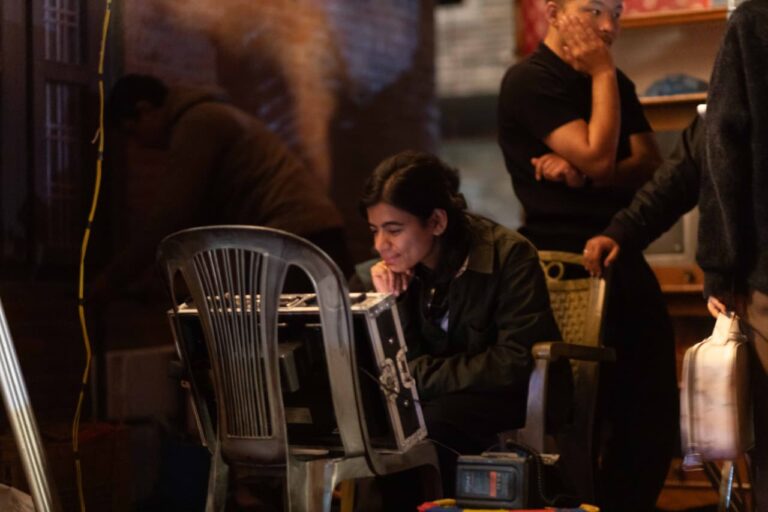
I was born in Nepalgunj and grew up in Gulariya. I studied while staying in a hostel in Lucknow. After that, I came to Kathmandu and studied. Now I live in New York, America. I am moving along, changing different dwellings. Until today, I haven’t felt ‘this is my home.’ Perhaps this is what comes out in my writing. My characters are also like characters who haven’t found a home, characters who haven’t been able to be fully comfortable anywhere.