Kathmandu
Thursday, July 23, 2026





From George Mallory’s haunting 1921 reconnaissance mission to Kami Rita Sherpa’s record-breaking 32nd summit in 2026, the history of Mount Everest is a saga of ambition, tragedy, endurance, innovation, and human obsession with the world’s highest peak.

KATHMANDU: For more than a century, Mount Everest has stood at the center of humanity’s greatest mountaineering ambitions. Explorers, climbers, Sherpas, scientists, and adventurers from across the world have risked their lives attempting to conquer the 8,848.86-meter peak.
The mountain’s history is marked by groundbreaking firsts, mysterious disappearances, deadly disasters, technological advances, and extraordinary feats of endurance.
From the first reconnaissance expeditions in the 1920s to the era of commercial climbing and record-breaking ascents, Everest continues to symbolize both human triumph and peril.

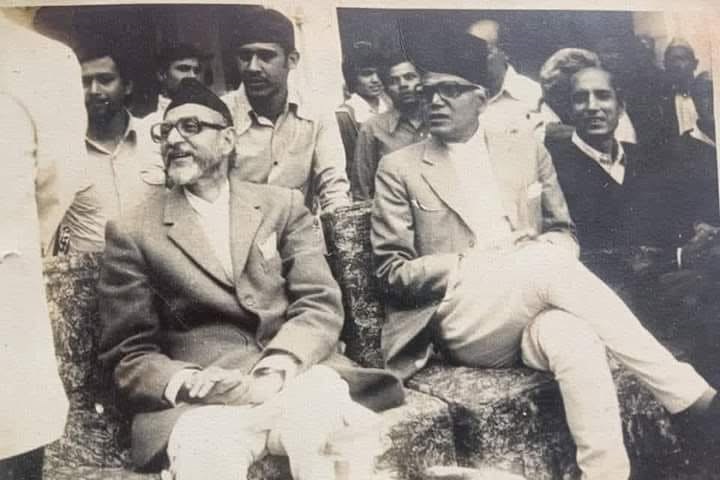
George Mallory/File photo
September 23, 1921: George Mallory, Guy Bullock, and Edward Oliver Wheeler reach the North Col at 7,020 meters during the first British reconnaissance expedition led by Colonel Charles Howard-Bury. It is the first organized effort to map a potential climbing route, primarily from the Tibetan north side. Mallory writes to his wife from base: “We are about to walk off the map.”
May 21, 1922: During the second British expedition under General Charles Bruce, Mallory and Edward Lisle Strutt’s team climbs to 8,225 meters on the North Ridge, becoming the first humans ever to ascend above the 8,000-meter mark on any mountain on earth.
May 22, 1922: George Finch and Geoffrey Bruce climb to 8,321 meters on the North Ridge using bottled oxygen for the first time in Everest history, a pioneering application of supplemental oxygen at extreme altitude.
June 7, 1922: An avalanche strikes the descending team during the second British expedition, killing seven Sherpa porters — the first recorded deaths on Everest.
June 4, 1924: Edward Norton pushes to 8,573 meters without any supplemental oxygen on a solo push during the third British expedition — a record without bottled oxygen that would stand for 54 years.
June 8, 1924: George Mallory and Andrew Irvine depart their high camp at 8,138 meters and vanish somewhere high on the Northeast Ridge. Whether they reached the summit before perishing remains one of mountaineering’s greatest mysteries.
April 3, 1933: A British-funded aircraft formation led by the Marquess of Clydesdale flies over Everest’s summit, producing the first aerial photographs of the mountain’s upper terrain and unknown snowfields.
June 1, 1933: Percy Wyn-Harris and Lawrence Wager find an ice axe near the First Step on the Northeast Ridge at around 8,460 meters, likely belonging to either Mallory or Irvine from the 1924 expedition.

Photo courtesy: Chhang Dawa Sherpa
1934: British eccentric Maurice Wilson, with almost no climbing training, attempts a solo ascent of Everest from the Tibetan side after flying illegally from England to India. He makes several futile attempts before perishing somewhere below the North Col.
1935: Eric Shipton leads a small monsoon-season reconnaissance that also marks the first time Tenzing Norgay participates in an Everest expedition, hired as a high-altitude porter.
May 25, 1947: Canadian engineer Earl Denman, Tenzing Norgay, and Ang Dawa Sherpa enter Tibet illegally and attempt the mountain. They are beaten back by a violent storm at around 6,700 meters and retreat safely.
1949: Nepal opens its previously sealed borders to foreign visitors for the first time, making the southern approach to Everest accessible to Western expeditions.
November 1950: Bill Tilman, Charles Houston, and a small party are the first Westerners to walk the approach route from the south through the Khumbu valley, scouting what would eventually become the standard approach to Everest Base Camp.
September 30, 1951: Eric Shipton and Edmund Hillary, perched at 6,100 meters on nearby Pumori, observe the full length of the Western Cwm and conclude that a route up through the Khumbu Icefall and Lhotse Face to the South Col could theoretically reach the summit.
May 27–28, 1952: Swiss climbers Raymond Lambert and Tenzing Norgay reach approximately 8,595 meters — the highest anyone had ever stood at that point — before being forced to turn back just short of the South Summit due to exhaustion and dwindling supplies.
November 1952: A second Swiss expedition pushes to 8,100 meters in autumn but is stopped by brutal winter conditions, unable to improve on the spring attempt.
May 26, 1953: Charles Evans and Tom Bourdillon make the first ascent of Everest’s South Summit at 8,750 meters, the closest anyone had come to the top — but are forced to retreat due to oxygen equipment problems and fading daylight.

Mountaineers ascending Mount Everest. Photos credit: Chhang Dawa Sherpa’s Facebook
May 29, 1953, 11:30 AM: Edmund Hillary of New Zealand and Tenzing Norgay of Nepal stand on the summit of Mount Everest, completing the first confirmed ascent of the world’s highest mountain via the South Col route. They spend approximately fifteen minutes on top, taking photographs and burying a small cross and sweets in the snow.
June 2, 1953: News of the first summit reaches London just in time to be published the morning of Queen Elizabeth II’s coronation, becoming one of the most celebrated pieces of news in British history.
1953: Tenzing Norgay is awarded the George Medal by Britain, while Nepal bestows upon him its highest honor. Sir Edmund Hillary is knighted by Queen Elizabeth II.
May 25, 1955: Britain’s height survey is revised, and Everest’s official elevation is updated to 8,848 meters (29,029 feet), superseding the earlier 1856 figure of 8,840 meters.
May 23, 1956: Ernst Schmied and Juerg Marmet of Switzerland become the third and fourth people to reach the summit, and the first to do so since the original 1953 ascent, completing a Swiss expedition via the South Col route.
May 25, 1956: Hans-Rudolf von Gunten and Adolf Reist of the same Swiss expedition summit, making it the first time four people reach the top in a single season.
May 25, 1960: Chinese climbers Wang Fuzhou, Gonpo (Konbu), and Qu Yinhua reach the summit via the North Ridge at 4:20 AM, becoming the first people to ascend Everest from the Tibetan side. The claim is initially disputed by Western mountaineers due to limited photographic evidence.
May 1, 1963: James Whittaker becomes the first American to summit Everest, reaching the top via the South Col route accompanied by Nawang Gombu Sherpa.
May 22, 1963: Willi Unsoeld and Tom Hornbein complete the first ascent of the West Ridge and then descend via the Southeast Ridge, achieving the first traverse of Everest — two separate sides of the mountain climbed in one expedition.
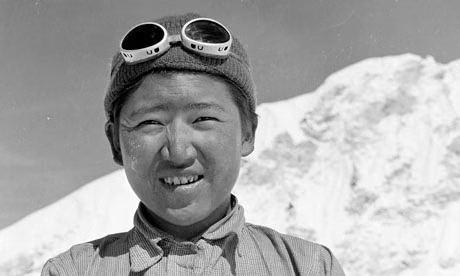
Nawang Gombu Sherpa/File photo
May 20, 1965: Nawang Gombu Sherpa becomes the first person in history to summit Everest twice, joining the ninth Indian expedition to the peak.
May 22, 1970: Japanese skier Yuichiro Miura descends from the South Col at 7,986 meters on skis, covering an extraordinary vertical drop — the first ski descent attempt on Everest’s slopes, later immortalized in an Academy Award-winning documentary.
May 1970: An avalanche on the Khumbu Icefall during a large Japanese expedition kills six Sherpa climbers and injures several others, prompting questions about the dangers of the standard southern approach route.
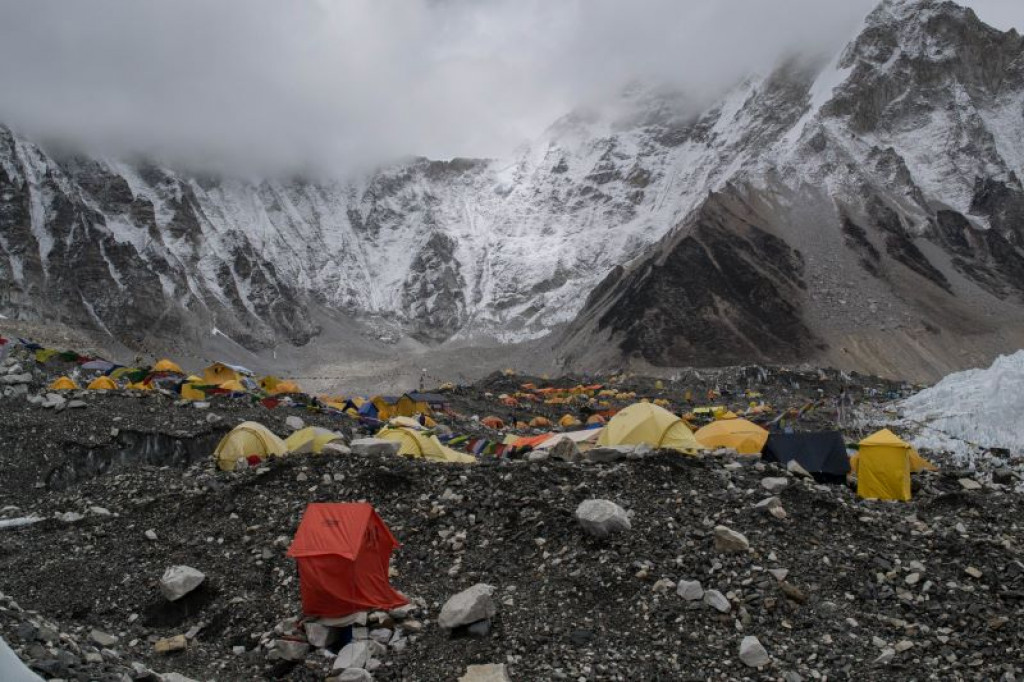
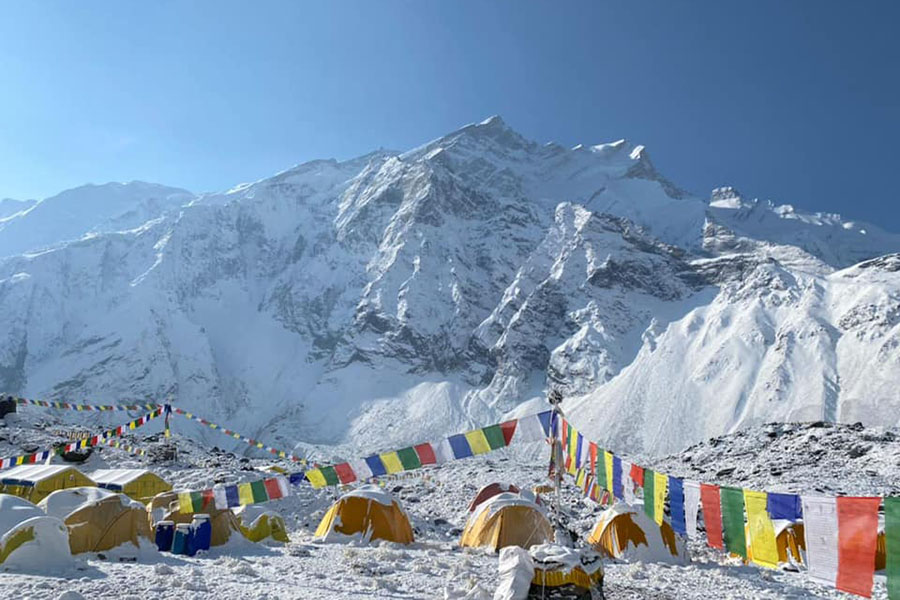
Everest Base Camp on a Stormy Day. File photo
May 16, 1975: Junko Tabei of Japan, accompanied by Sherpa guide Ang Tsering, becomes the first woman in history to stand on the summit of Everest, reaching the top via the Southeast Ridge. Her all-female Japanese expedition had survived a serious avalanche just twelve days earlier.
May 27, 1975: Tibetan climber Phanthog reaches the summit with the Chinese expedition via the North Ridge, becoming the second woman to summit Everest and the first woman to do so from the northern Tibetan route.
September 26, 1975: Doug Scott and Dougal Haston of a British team led by Chris Bonington reach the summit via the challenging Southwest Face, completing the first ascent of that formidable wall. At the top they discover the Chinese survey tripod left the previous spring.
1975: The Chinese expedition fixes a metal ladder to the crucial Second Step on the Northeast Ridge — a ladder that remains in place and has aided every subsequent ascent from the north.
May 8, 1978: Reinhold Messner of Italy and Peter Habeler of Austria summit Everest without any supplemental oxygen, shattering the widely held belief that the human body could not survive the extreme hypoxia near the summit without bottled air.
October 2, 1979: Hannelore Schmatz of West Germany becomes the fifth woman to summit Everest and the first woman to die on the mountain, perishing during her descent. Her body remains visible on the mountain for years.
April 24, 1979: Yugoslav climbers led by Tone Skarja complete the first ascent of the full West Ridge Direct from Lho La Pass, a formidable technical achievement.
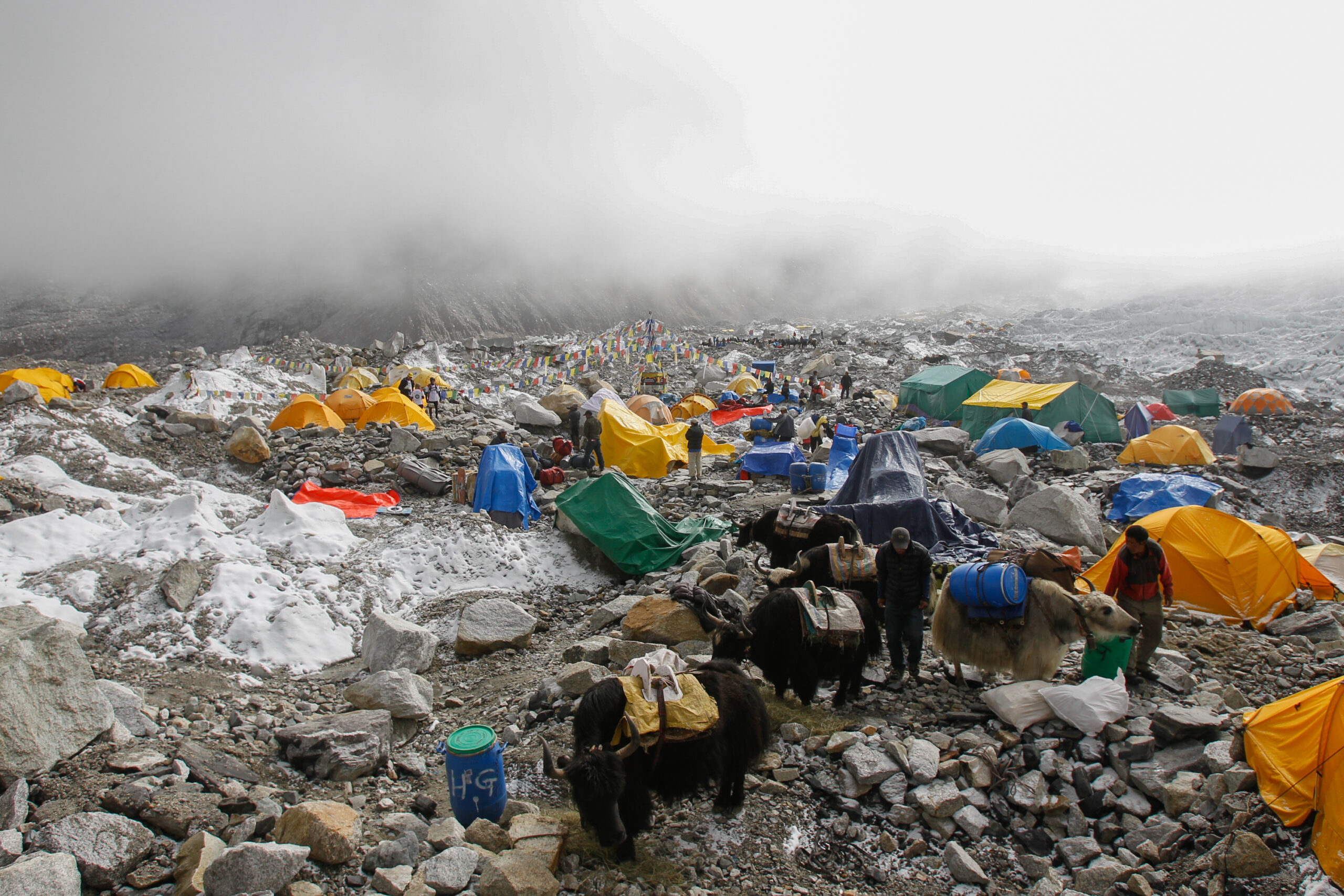
Everest Base Camp. Photo: Bikram Rai
August 20, 1980: Reinhold Messner completes the first solo ascent of Everest, climbing a new route up the North Face over three days without bottled oxygen during the monsoon season — widely regarded as one of the greatest feats in mountaineering history.
February 17, 1980: A Polish expedition led by Krzysztof Wielicki and Leszek Cichy reaches the summit in the dead of winter, completing the first winter ascent of Everest — the only one accomplished in that era.
May 3, 1982: A Soviet expedition led by Evgeny Tamm climbs a challenging new route up the left buttress of the Southwest Face. Eleven Soviet climbers ultimately reach the summit, the most from a single expedition at that time.
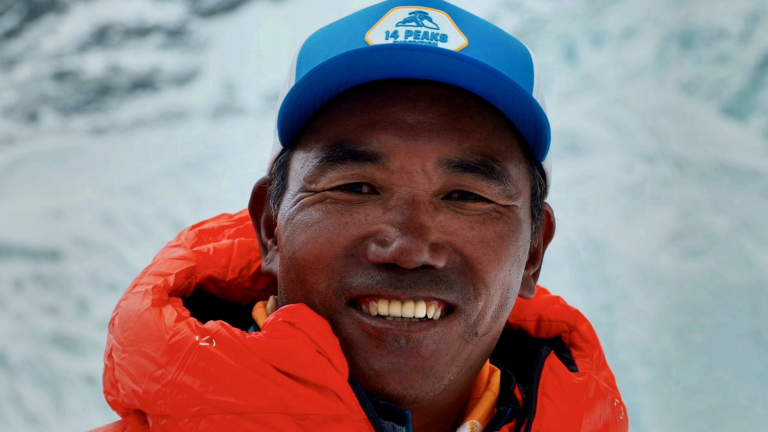
Ang Rita Sherpa/File photo
May 23, 1983: Ang Rita Sherpa, later nicknamed “Snow Leopard,” makes his first Everest summit, assisting a German-American expedition — the first of what would become ten summits, all accomplished without supplemental oxygen.
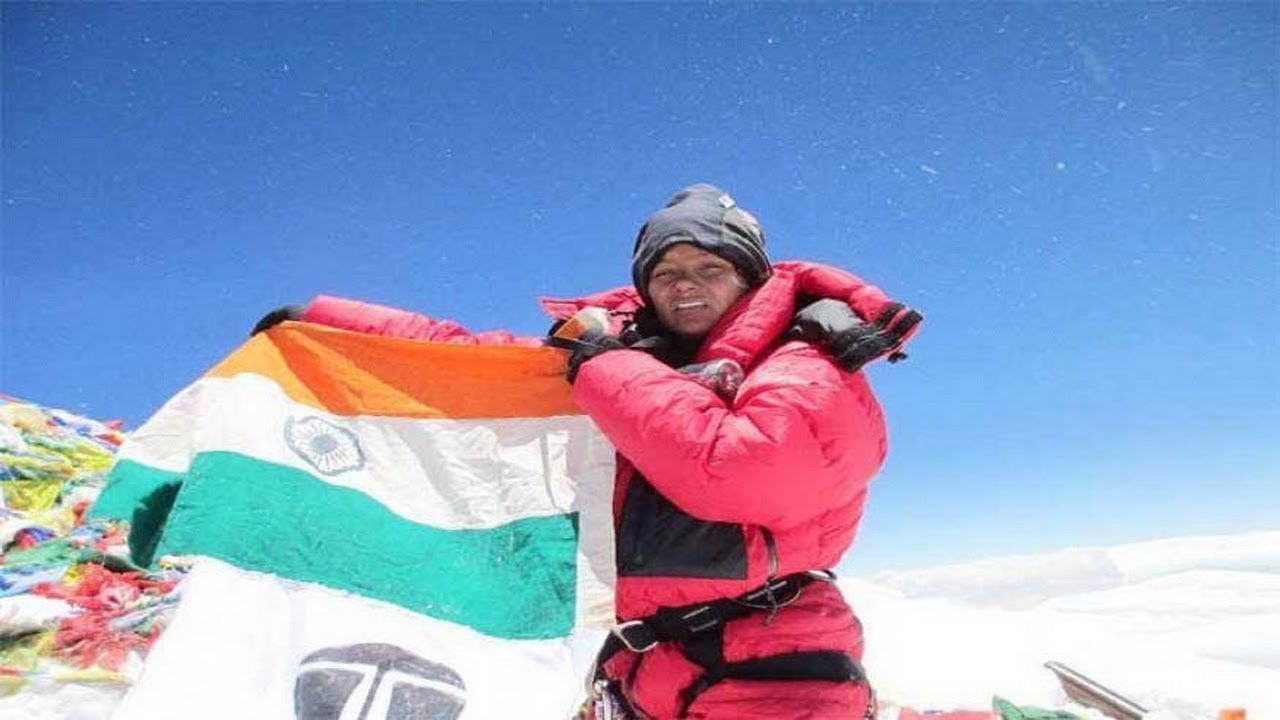
May 23, 1984: Bachendri Pal of India becomes the first Indian woman and the fifth woman overall to summit Everest, reaching the top via the South Col route despite surviving an avalanche at Camp III just days before.
October 8, 1985: Richard Bass of the United States, at 55 years old, completes a summit of Everest, becoming — at that time — the oldest person to reach the top.
May 20, 1986: Sharon Wood of Canada becomes the first North American woman to summit Everest, climbing the challenging West Ridge with Dwayne Congdon.
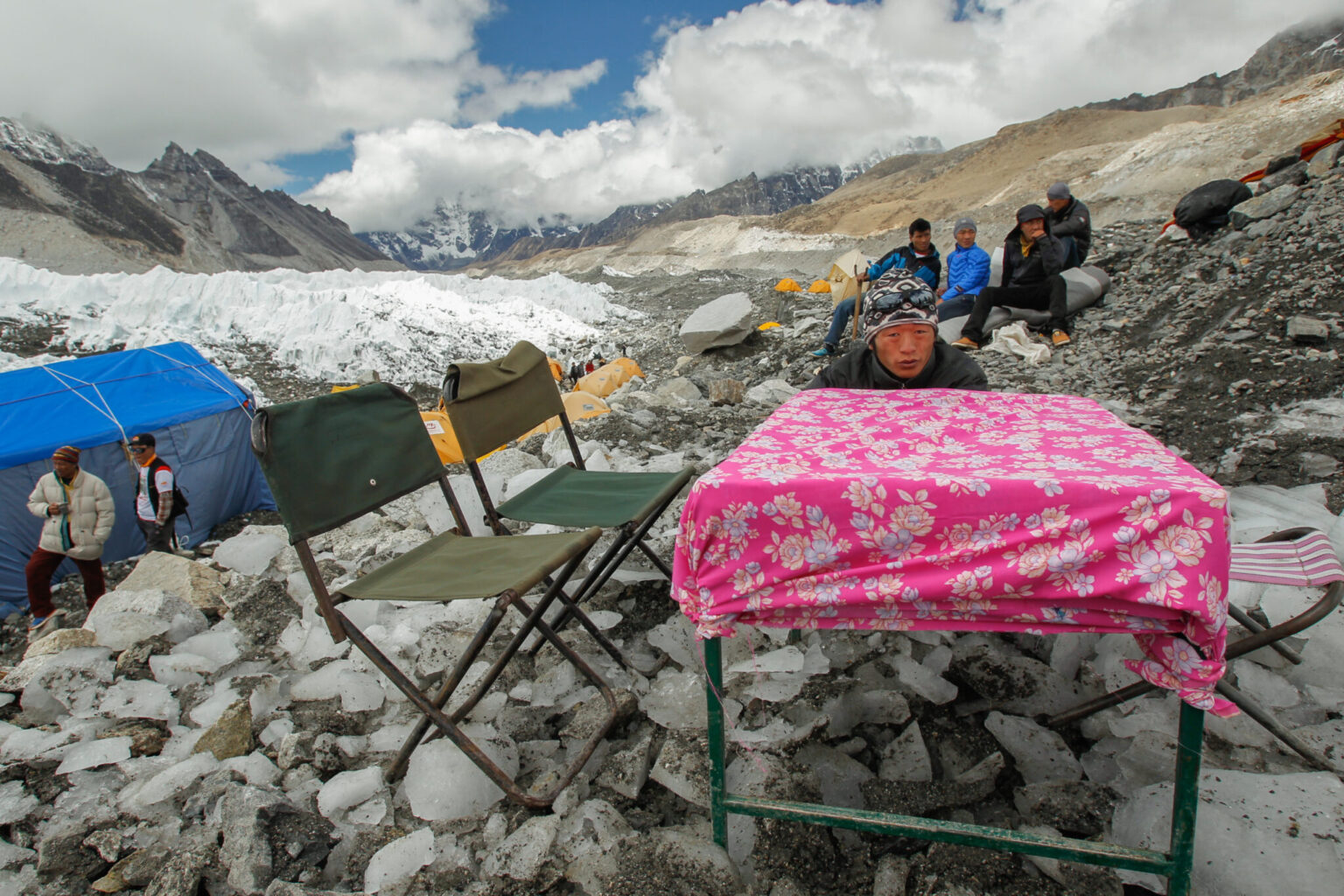
Sherpa guides setting camps and tents at the Everest Base Camp. Photo: Bikram Rai
September 5, 1986: Swiss climbers Erhard Loretan and Jean Troillet complete an audacious ascent of the North Face without oxygen, tents, or ropes in a non-stop 42-hour push, mostly climbing at night, then glissading down the entire face in under five hours.
December 22, 1987: Ang Rita Sherpa completes the first winter ascent without supplemental oxygen, a feat recognized by Guinness World Records.
September 14, 1988: French climber Jean-Marc Boivin launches from the summit in a paraglider and descends to Camp II in approximately eleven minutes — the first paraglider descent from Everest’s summit.
May 12, 1988: Marc Batard of France sets a new speed record for the Southeast Ridge route, reaching the summit from Base Camp in just 22 hours and 30 minutes without supplemental oxygen.
September 12, 1988: French climbers Christophe Profit and Marc Batard complete a notable alpine-style ascent of the North Face in a single push.
September 26, 1988: Stephen Venables of Britain becomes the first person from his country to summit Everest without supplemental oxygen, as part of the first ascent of the East Face (Kangshung Face) by a small American-British team with no Sherpa support.
May 10, 1990: Rob Hall of New Zealand and Gary Ball lead their first guided commercial summit team to the top via the South Col route, establishing what would become one of the most successful guided operations in Everest history.
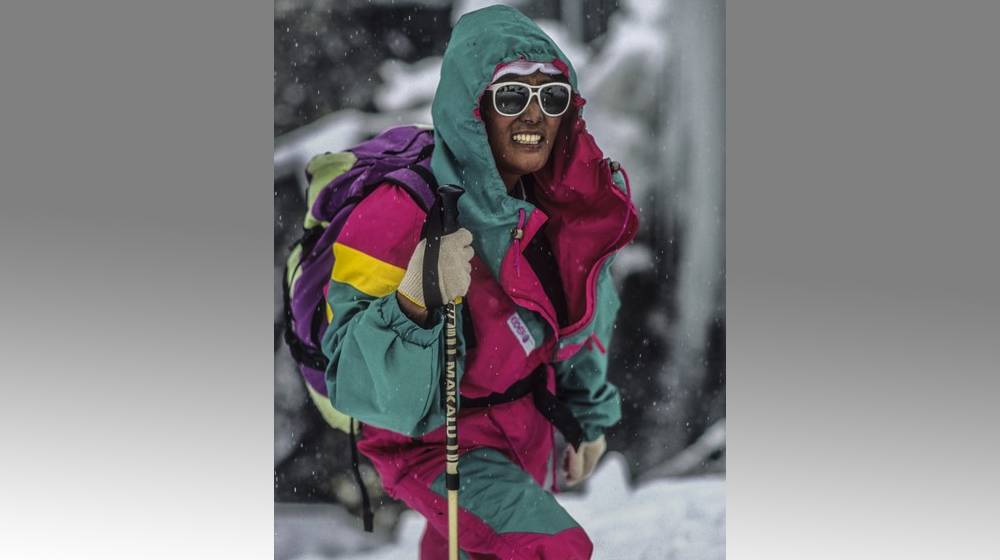
Pasang Lhamu Sherpa/ File photo
April 5, 1993: Pasang Lhamu Sherpa of Nepal becomes the first Nepali woman to reach the summit of Everest on April 22, 1993, via the North Ridge. She perishes during her descent, dying at around 8,750 meters in deteriorating weather on April 24, 1993.
May 10, 1993: Araceli Segarra of Spain is among the early female climbers from Europe, and the broader 40th anniversary season sees a surge in summit attempts as commercialization of the mountain accelerates.
May 9, 1993: Kenton Cool of Britain makes his first of many Everest summits. Over subsequent decades, he becomes the non-Nepali climber with the most ascents.
May 10, 1993: Rebecca Stephens of Britain becomes the first British woman to summit Everest.
May 22, 1995: Alison Hargreaves of Britain becomes the first woman to summit Everest solo and without supplemental oxygen.
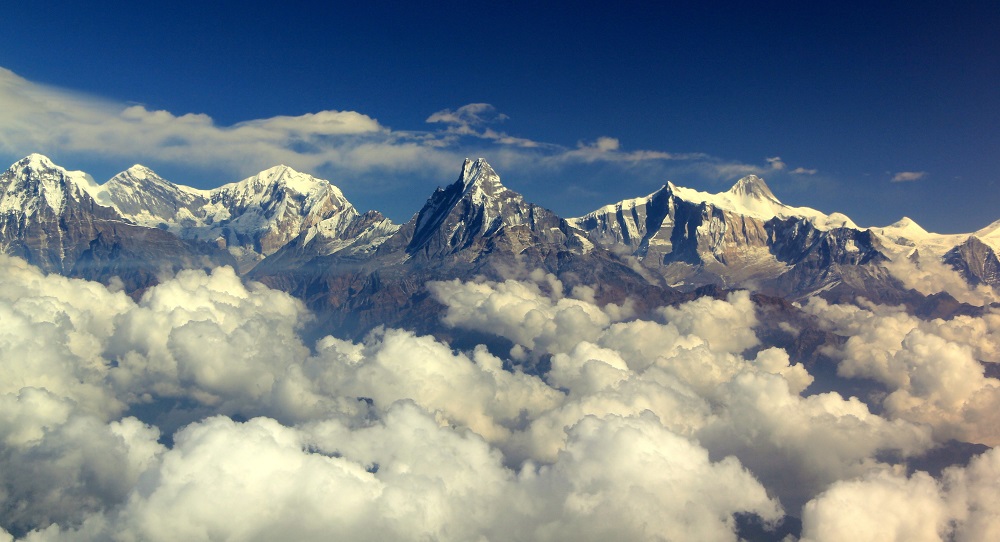
May 10–11, 1996: A violent and unexpected afternoon blizzard traps several guided expedition teams high on the Southeast Ridge. Eight climbers perish during the storm and its aftermath, including celebrated guides Rob Hall of New Zealand and Scott Fischer of the United States. It is the deadliest 24-hour period in Everest history up to that time. Jon Krakauer’s account, Into Thin Air, makes the disaster internationally known.
September 26, 1996: Slovenian alpinist Davo Karnicar establishes a new route during an attempt that contributes to later ski descent history.
May 7, 1999: A Mallory and Irvine Research Expedition team member, Conrad Anker, discovers George Mallory’s body at approximately 8,155 meters on the North Face, 75 years after Mallory and Irvine disappeared. The body reveals rope injuries but no camera that could confirm whether they reached the summit.
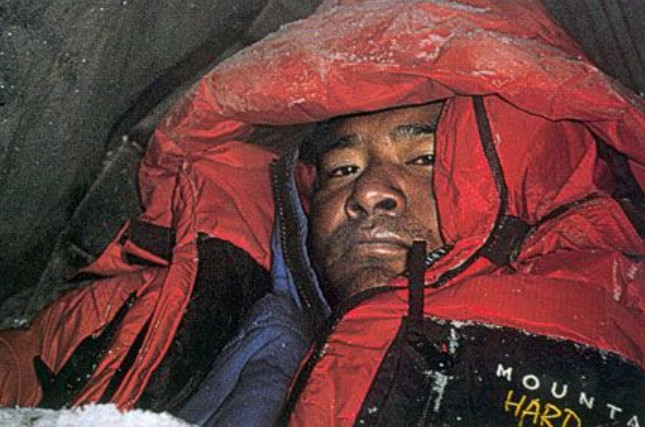
Babu Chiri Sherpa/ File photo
May 22, 2000: Babu Chiri Sherpa of Nepal spends a record-breaking 21 hours and 30 minutes on the summit of Everest without supplemental oxygen — the longest documented stay at the top.
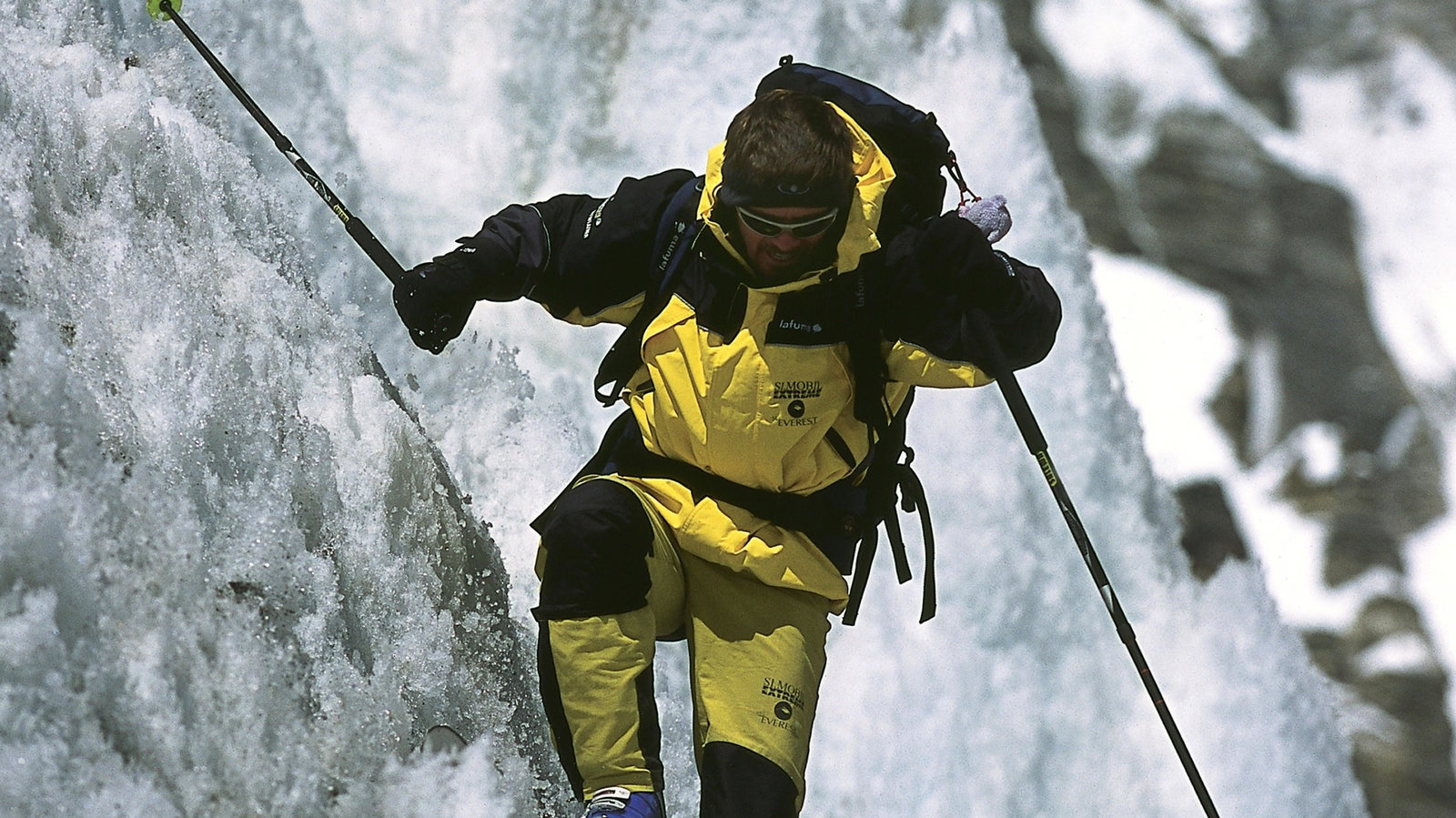
Davo Karnicar/File photo
May 26, 2000: Davo Karnicar of Slovenia completes the first continuous ski descent of Everest from the summit all the way to Base Camp without removing his skis.
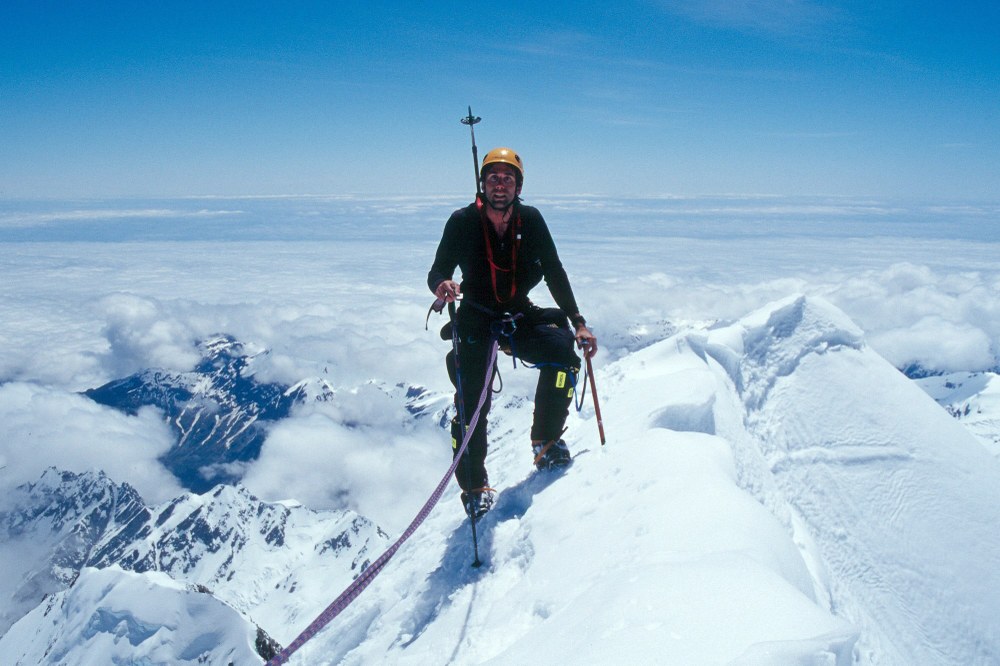
Erik Weihenmayer/File photo
May 26, 2001: Erik Weihenmayer of the United States becomes the first blind person to summit Everest, reaching the top via the Southeast Ridge with a highly coordinated team.
May 25, 2001: Marco Siffredi of France snowboards from the summit of Everest down the Hornbein Couloir, completing the first snowboard descent of the mountain.
May 26, 2001: In the same landmark season, 64-year-old Sherman Bull of the United States becomes what was then the oldest person to summit Everest, accompanied by his son Brad.
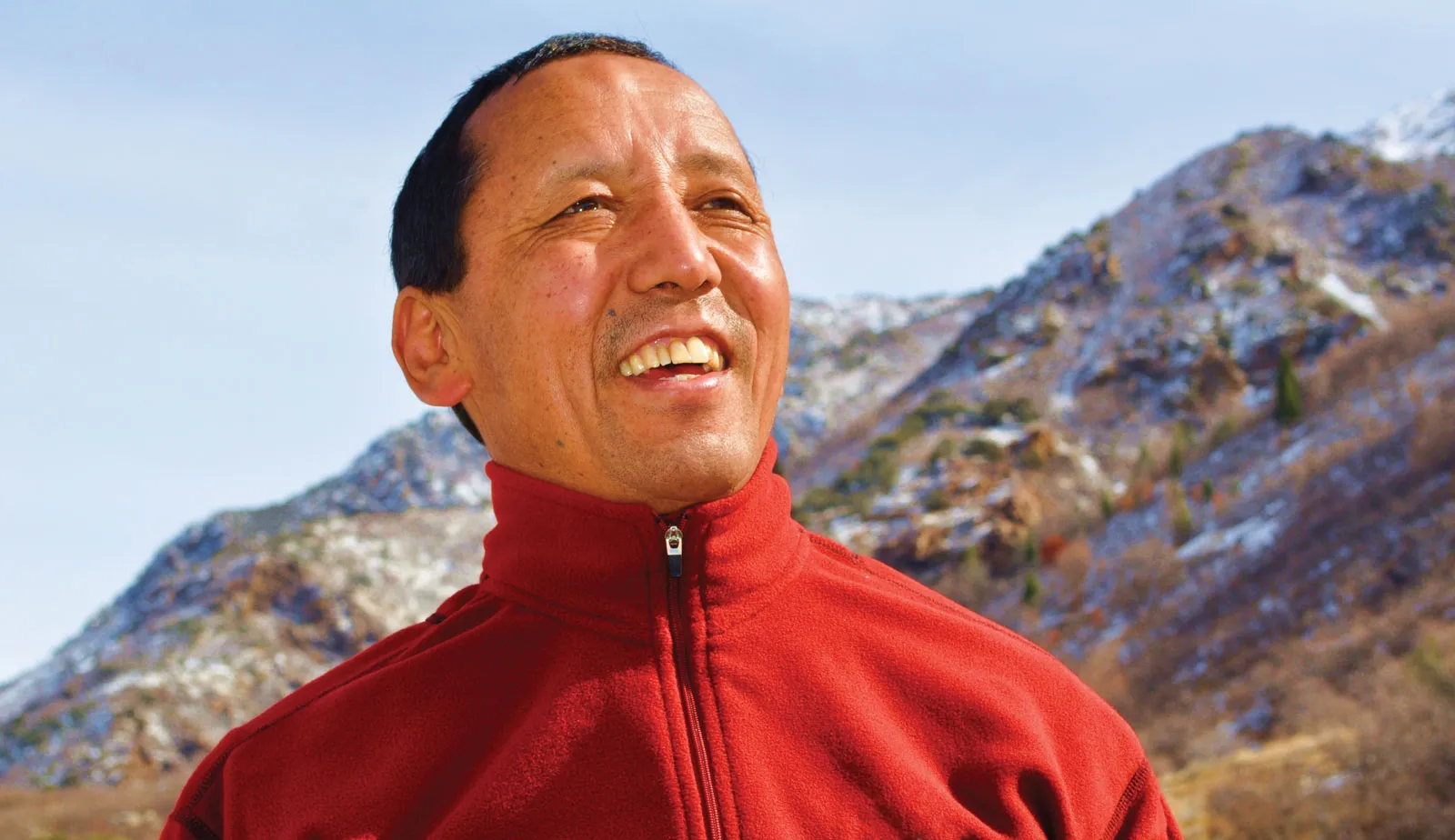
May 22, 2003: Apa Sherpa reaches the summit for the 13th time during the 50th anniversary celebrations, part of an extraordinary summit rush with scores of climbers reaching the top before the anniversary date.
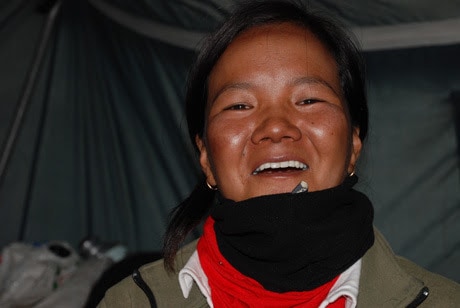
Ming Kipa Sherpa/ File photo
May 22, 2003: Ming Kipa Sherpa of Nepal, at age 15, becomes the youngest person to summit Everest at that time, climbing with her older sister Lhakpa Sherpa.
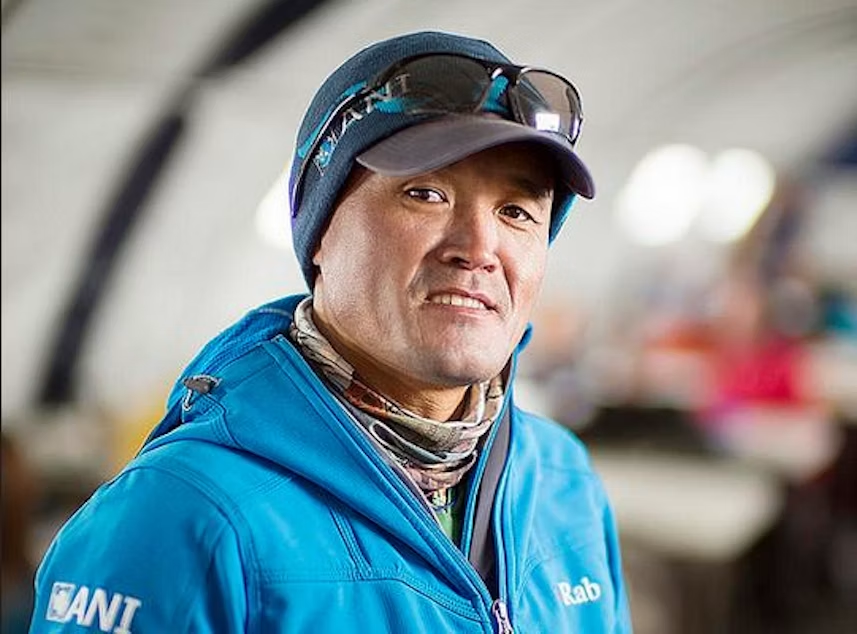
Lhakpa Gelu Sherpa/File photo
May 26, 2003: Lhakpa Gelu Sherpa sets the speed record from Base Camp to summit via the Southeast Ridge at an astonishing 10 hours and 56 minutes — a record recognized by Guinness World Records that stands for over two decades.
May 22, 2003: Yuichiro Miura of Japan reaches the summit at age 70, becoming the oldest person to summit Everest at that time, decades after his famous ski descent attempt in 1970.
May 23, 2003: Peter Hillary (son of Sir Edmund Hillary) calls his father via satellite phone from the summit of Everest during the 50th anniversary expedition.
Pemba Dorje Sherpa/File photo
May 16, 2004: Pemba Dorje Sherpa of Nepal claims a new speed record of 8 hours and 10 minutes from Base Camp to summit, though his record is disputed by competing claims from Lakpa Gelu.
May 30, 2005: Nepali couple Pem Dorjee Sherpa and Moni Mulepati become the first people to get married on the summit of Everest during the Rotary Centennial Everest Expedition.
October 2005: A Nepalese government campaign removes approximately two tons of garbage from Everest’s slopes, drawing attention to the growing waste problem on the mountain.
May 15, 2006: New Zealander Mark Inglis becomes the first double above-knee amputee to summit Everest, reaching the top on two prosthetic legs via the South Col route.
May 16, 2006: Australian climber Lincoln Hall is found alive near the summit after being left for dead the previous day — one of the most remarkable survival stories in Everest history.
May 25, 2008: Yuichiro Miura of Japan makes a second summit at age 75, becoming again the oldest person to reach the top at the time.
May 25, 2008: The Olympic torch is carried to the summit of Everest by a relay team ahead of the Beijing Summer Olympics — the first time the Olympic flame has burned at the world’s highest point.
April 25, 2009: Scott Parazynski, a former NASA astronaut, becomes the first person to have both traveled to space and reached the summit of Everest, summiting via the Southeast Ridge.
May 22, 2010: Jordan Romero of the United States, aged just 13 years and 10 months, becomes the youngest person ever to summit Everest, climbing via the North Ridge from Tibet with his father, stepmother, and three Sherpas. Nepal’s minimum age rules at the time do not cover the Chinese-administered north side.
May 2010: China introduces age restrictions barring anyone under 18 from attempting Everest on the Tibetan side, effectively making Jordan Romero’s record nearly impossible to break.
September 2011: Jordan Romero, now 15, completes the Seven Summits by ascending Antarctica’s Vinson Massif, becoming the youngest person to climb the highest peak on every continent.
May 19, 2012: Tamae Watanabe of Japan reaches the summit at age 73, shattering her own record as the oldest woman to summit Everest, which she had first set in 2002 at age 63.
May 23, 2012: Chhurim Sherpa of Nepal becomes the first woman to summit Everest twice in the same season, summiting on May 12 and May 19 of 2012.
May 23, 2013: Yuichiro Miura of Japan reaches the summit for the third time at the age of 80, becoming the oldest person to summit Everest, a record that still stands.
May 25, 2014: Malavath Purna of India, at 13 years and 11 months old, becomes the youngest woman ever to summit Everest, climbing via the North Ridge from Tibet.
April 18, 2014: A massive ice serac collapses in the Khumbu Icefall shortly after 6:30 AM, killing 16 Sherpa guides who are carrying equipment to higher camps. It becomes the deadliest single day on Everest in history at that time, and Nepal cancels the entire 2014 spring climbing season following Sherpa protests.
April 25, 2015: A 7.8-magnitude earthquake strikes Nepal at 11:56 AM local time. The tremor triggers an avalanche from Pumori that sweeps directly through South Base Camp, killing at least 22 people and injuring dozens more. The entire 2015 climbing season is subsequently called off.
May 2015: Apa Sherpa, having climbed Everest 21 times, announces his retirement from high-altitude guiding. He holds the record for most ascents for several years before Kami Rita surpasses him.
Nepal introduces minimum age rule of 16: Nepal’s Department of Tourism formally establishes a minimum age of 16 for all Everest permits issued on the Nepali side, responding to controversy over very young climbers.
May 2016: Lhakpa Sherpa of Nepal, based in the United States, becomes the first woman to summit Everest seven times, continuing her incremental record-breaking through subsequent seasons.
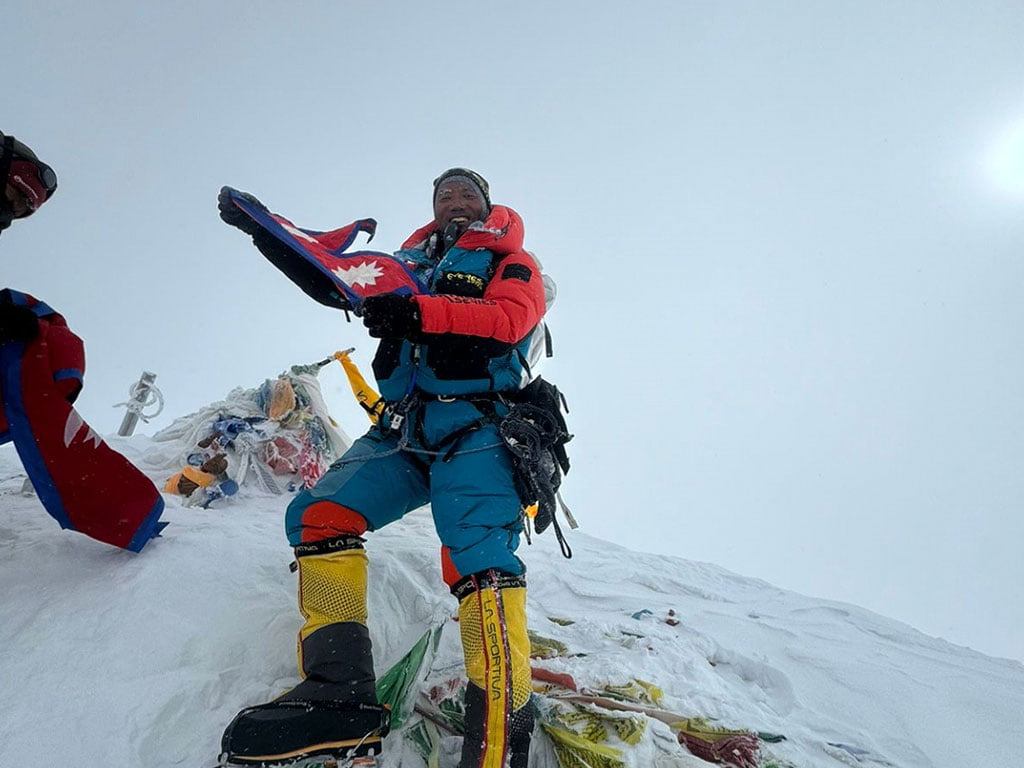
Kami Rita Sherpa at the summit of Mount Everest after his record-breaking ascent.
May 12, 2018: Kami Rita Sherpa summits Everest for the 22nd time, surpassing the record he shared with Apa Sherpa and Phurba Tashi Sherpa to claim the outright record for most Everest summits by a single climber.
May 2018: Nepal issues a record number of climbing permits in a single season, with over 350 foreign climbers receiving permission to attempt the summit.
October 29, 2019: Nirmal “Nims” Purja of Nepal completes climbing all 14 of the world’s 8,000-meter peaks in just 6 months and 6 days, smashing the previous record of over 7 years. His feat includes three summits of Everest in a single season.
May 22, 2019: Nirmal Purja photographs a massive queue of approximately 320 climbers waiting on the narrow ridge below Everest’s summit. The image goes viral and ignites a global debate about overcrowding and permit limits on the mountain.
May 15, 2019: Kami Rita Sherpa summits Everest for the 23rd time, then returns five days later on May 20 to summit a 24th time — the first person ever to summit Everest twice in the same week.
May 2019: At least 11 climbers die on Everest during the spring season, largely due to overcrowding in the Death Zone during a narrow weather window, prompting Nepal to promise regulatory reviews.
May 27, 2020: A Chinese survey team reaches the summit from the Tibetan north side during the COVID-19 pandemic — the only expedition on Everest that year — and spends over two hours making precise measurements with GPS and laser equipment.
December 8, 2020: Nepal and China jointly announce a new official height for Everest: 8,848.86 meters (29,031.69 feet), settling a decades-long dispute. The figure, derived from both countries’ survey data, is immediately accepted by major geographic bodies worldwide.
2020: The COVID-19 pandemic closes Everest to all climbers. It is the first time since 1974 that no summit attempts are made in a spring season.
May 12, 2022: Lhakpa Sherpa of Nepal summits Everest for the tenth time, extending her own record as the woman with the most Everest summits.
May 21, 2022: Kami Rita Sherpa reaches the summit for the 26th time, again breaking his own record for the most ascents of Everest by any individual.
May 17, 2023: Kami Rita Sherpa summits Everest for the 27th time, reclaiming the record from rival Pasang Dawa Sherpa who had tied the mark days earlier.
May 23, 2023: Kami Rita Sherpa reaches the summit a 28th time within the same season, once again summiting twice in a single spring climbing window.
May 2023: Nepal issues a record 478 climbing permits in a single season, surpassing all previous records. Including guides and Sherpas, more than 900 people attempt the summit — the most ever in a single season.
May 2023: Kenton Cool of Britain reaches Everest’s summit for the 17th time, extending his own record for the most ascents by any non-Nepali climber.
May 12, 2024: Kami Rita Sherpa sets his 29th summit, then returns to summit again for the 30th time on May 22, 2024 — becoming the first person ever to summit Everest 30 times.
May 2024: Nepal’s Department of Tourism issues 492 climbing permits for the spring season, approaching another record in a year marked by both record summits and fatal incidents.
May 2024: Lhakpa Sherpa summits Everest for the 11th time, again extending her record as the woman with the most summits of Everest, bringing her career total further ahead of all other female climbers.
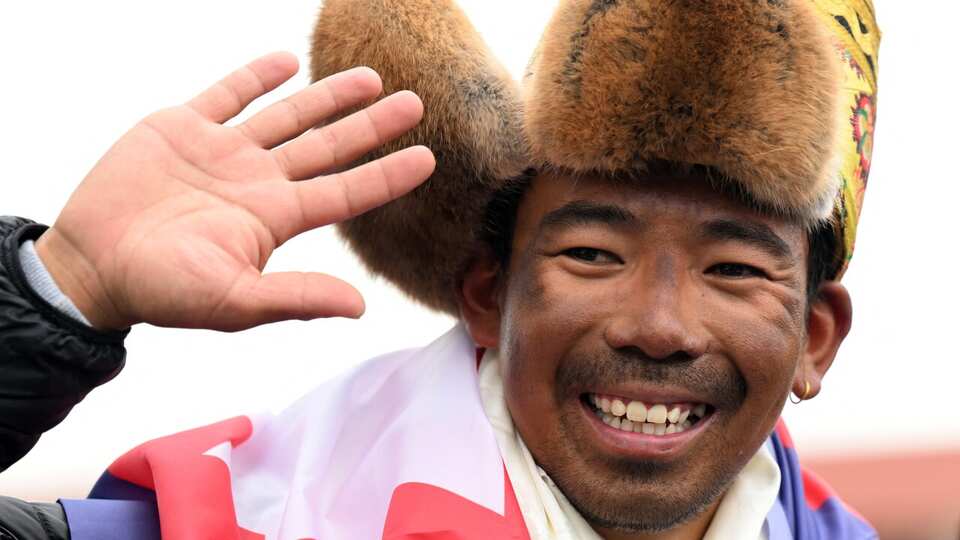
Tashi Gyalzen Sherpa /file photo
May 9, 2025: Tashi Gyalzen Sherpa of Nepal makes his first summit of the season as part of a rope-fixing team, beginning what becomes a historic series of ascents.
May 14, 2025: Tashi Gyalzen Sherpa summits Everest for the second time in the 2025 season.
May 19, 2025: Tashi Gyalzen Sherpa summits Everest for the third time in 2025.
May 23, 2025: Tashi Gyalzen Sherpa completes his fourth summit of Everest in a single season, achieving all four within just 15 days. The feat earns him a Guinness World Record for the most Everest summits in a single season.
May 27, 2025: Kami Rita Sherpa, age 55, reaches the summit of Everest for the 31st time, guiding a 22-member Indian Army team alongside 27 other Sherpas — extending his own record to a seemingly unassailable level.
May 17, 2026: Kami Rita Sherpa, now 56 and widely known as “Everest Man,” reaches the summit of Everest for an extraordinary 32nd time at 10:12 AM Nepal time. On the same day, Lhakpa Sherpa completes her 11th ascent, maintaining her women’s record. Both achievements occur simultaneously from opposite sides of the mountain.
May 21–22, 2026: A record 270 climbers summit Everest’s south side in a single 24-hour window, eclipsing previous single-day records and reigniting global debate about the sustainability of commercial climbing on the world’s highest peak.
May 29, 2026: Nepal and the global mountaineering community observe the 73rd anniversary of the first summit of Mount Everest. Nepal’s Department of Tourism has issued 492 permits for the 2026 spring season. Kami Rita Sherpa, having stated this may be his last Everest climb, is celebrated as the greatest summit record holder in the mountain’s history, with 32 ascents — a record no non-Sherpa climber has come remotely close to matching.