Kathmandu
Tuesday, July 21, 2026





Looking at the incompetence or minor weaknesses of the leaders of the democratic republic and seeking an alternative to the system itself is not wise; rather, we must unite toward making this very system more advanced and people-oriented.

I was very young when the Maoist conflict severely plagued western Nepal. In our villages, the tragedy of the conflict and the desire for change stirred simultaneously. As the 10-year-long armed war came to an end and the autocratic rule of the king collapsed, we too were growing up into a new era—that is, a democratic republic.
The more we grew up, the more we came to know about the values and principles of a democratic republic. After studying in Tikapur until Grade 10, I later came to Kathmandu for further studies. After arriving here, my perspective on the republic became even broader when I engaged in the continuous debates between political consciousness and civil rights.
By that time, the country had already taken a historic turn. From a constitutional monarchy, the country had already become the “Federal Democratic Republic of Nepal.” Even before declaration of a republic by Kathmandu, the debate on the republic had begun in western Nepal, including my village Tikapur. I had felt the enthusiasm shining in the eyes of ordinary people for a change in the system while I was still in Tikapur.
The constitution with federalism, inclusivity, social justice, and democratic values was the vision of this republican system. This republican system did not come from anyone’s mercy or charity. The democratic republic came to the country through the sacrifice and martyrdom of people who refused to bow down before rulers and eagerly set out to script their own future. This is the fruit of a vivid dream seen by citizens oppressed for generations for self-respect, equality, and freedom.
I did not personally have to experience much of what a closed and restricted governance felt like. I began taking my first steps of awareness under the open and wide sky of a democratic republic.
The republic is not just a change in the system; it is the name of the actual realization of citizens’ self-respect and freedom, which needs to be felt in the rights of every citizen rather than just in words.
Therefore, in my understanding, a republic is not just about throwing a king off the throne or ending the dynastic rule of a single family. It is a system where the voices of ordinary citizens—who have been suppressed, crushed, and left voiceless for centuries—receive the supreme position of the state.
When my mother and father talk about the old days at home and when turning the pages of history books, I learned that in the previous governance system, there used to be a massive, unbridgeable gap between the king and the people. The palace and the rulers always held the supreme position above the ordinary citizens who shed their blood and sweat. The expectations and desires of the citizens, who are considered the true owners of the country, were never addressed properly; they would wither away waiting for the command and mercy of the palace. At that time, ordinary Nepali people were merely slaves of dynastic rulers, who did not even have the right to look up, let alone question.
When the country entered the new era of a republic, power escaped from the fist of a single individual and rights came to the people. Separation of powers, democratic values, federalism taking the rights of the state to every village, and a relationship between the citizen and the state were established. The constitution ensured the rights of marginalized communities including women, Dalits, indigenous groups, Madheshis, and Tharus. This is the achievement of the democratic republic. The republic is such a strong foundation where the people, not the rulers, are strong, and the government is accountable to the citizens.
I always feel that this historic change did not come easily or for free at all; there is the sacrifice of thousands at its foundation. There is a glorious yet painful history of ordinary people shedding blood for their natural rights and freedom. Therefore, a republic is not just the name of a system; it is the right of the people. The beautiful and egalitarian vision that the children of an ordinary farmer, laborer, or oppressed Nepali can also become the supreme Prime Minister or President of this country on the strength of their qualifications and capabilities exists within this democratic republic. The core essence of this system was to make the citizens sovereign.
The immense pain, tears experienced by ordinary citizens during the Maoist conflict, and the cruel behavior of the autocratic ruler are precisely what ignited the fire of rebellion inside the people. Standing on the foundation of that consciousness, the ordinary public rose up against dynastic rule. The struggle and sacrifice that took place in the People’s Movement of 2006 against the monarchy is the most golden page in Nepali history. We obtained this open sky on the strength of the struggle of those who took to the streets, oblivious to hot bullets and batons, to lay the foundation of the republic and support it with their shoulders.
The freedom we are breathing today, the self-respect with which we are living, and the confidence with which we are able to question—all of this became possible on the strength of their rebellion. The country can never forget that, and it must never forget.
Right now, certain groups are actively engaged against the fundamental values of the democratic republic and this entire system. They are spreading negativity and illusion among ordinary citizens, claiming that “this system has completely failed.” However, looking at the incompetence or minor weaknesses of recent leaders and starting to search for an alternative to the system itself is not wise at all.
The new rulers who emerged in the republic stripped away democratic values and democratic institutions, trampling upon the rights given by the republic. They strangled development, good governance, justice, and civil rights. They imposed partisan political control over public institutions. However, this anomaly is not the character of the democratic republic; rather, it is the tendency of the rulers in power.
Against such a tendency of the rulers and bad governance, our generation also had to take to the streets in protest. The Gen Z protest of September 2025 was not against the democratic republican system; it was against leader-oriented, autocratic and arbitrary styles of governance, social injustice, and corruption.
The democratic republic is the most progressive, liberal, and excellent system in the world, at the center of which are the people. Only within this system can the self-respect, freedom, and natural rights of every citizen remain secure. Therefore, we should not change the system, but rather make it even more consolidated and people-oriented.
Today, some people are excited to choose the old autocratic rule, saying, “this system did not do anything for so many years.” But the beautiful aspect of a republic is that even those friends who are harsh opponents get to put forward their views freely and fearlessly.
Because Nepal is a democratic country, we have all been able to express our opinions. Because our society is democratic, some friends are able to say today that “we need autocratic rule itself.” The republic is so liberal that even those who advocate for autocracy have the full right to speak.
A poignant point is mentioned in the famous book How Democracies Die. It says, “Democracy fails not because of anyone else, but because of the wrong steps and tendencies of undemocratic people who have reached the supreme chairs of democratic institutions.”
This has been seen in our context as well. The republic has faced a greater threat from rulers who enjoy luxury under the shelter of this system and then stab it in its heart. After reaching the pinnacle of power in the very system for which thousands shed their blood, they completely forgot public aspirations. The system changed, but the tendency of the rulers did not change. Therefore, the threat to the republic is not other external elements, but the very rulers who sit under the shade of this system and try to make the people “slave” once again.
The irony became that the mindset of those who climbed the ladder of the democratic system to reach the throne could not be a single bit different from that of the erstwhile Shree 5 (the King). Standing on the foundation of the people’s blood and sweat, their thinking of considering themselves the “master” and the people as “slaves” hurt the citizens. The people are not angry with the system, but rather irritated against the tendency of the “new kings” hidden under the garb of the system. The result of that is the Gen Z protest.
Our generation neither experienced the closed Panchayat system nor saw the direct and autocratic rule of the king. Perhaps that is why many in my generation might have slightly less information about the old movements and many facets of history that took place for democracy and the republic. But this does not mean at all that my generation is illiberal toward democracy. Even if they did not get to see and experience history, our generation understands democratic values and the republican system through deep study. They do not want the old autocratic or dictatorial rule under any circumstances.
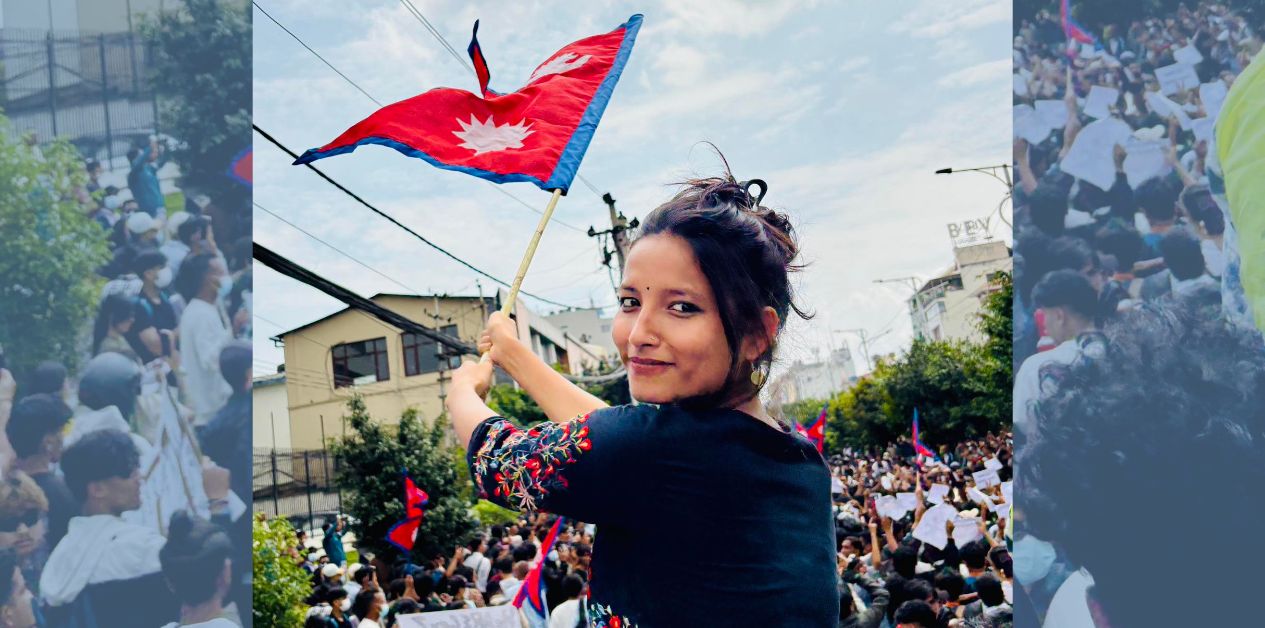
Photo: Rakshya Bam’s Facebook
My generation wants to live in the open air of freedom, where one is allowed to question and where there is no discrimination. Today’s youth are ready to fight and rebel at all times, from the streets to social media, against the prevailing bad governance, corruption, and delays in the country. This anger of theirs is not disillusionment toward the system, but rather an intense restlessness and hunger to make democracy even more vibrant and just.
Speaking of my generation, we know very well that the greatest beauty of a democratic republic is to respect each other’s views and accept the existence of every citizen. Respecting different views that disagree with one’s own just as much, and being able to question the rulers without any fear, is the real beauty of this system.
We have not received this free sky that we are enjoying today easily; for this, we must respect every movement that took place in history and their contributions. A new thought or the vision of a prosperous future can never exist by undervaluing past sacrifices and movements. One feels proud just reading about those transformative and glorious movements of history. Therefore, I feel that the alternative to democracy can only be a more advanced, more refined democracy. And there can be no other system more beautiful than this as an alternative to the democratic republic.
We chose this system so that the people would be at the center of every development, policy, and prosperity. Let the supreme bodies of the state—the legislature, the executive, and the judiciary—make the ordinary citizen feel strongly that “this is my nation-state too.”
Although today the people might have to face hardships in our government bodies due to anomalies, corruption, and delays, democracy possesses a wonderful and unique quality that no other system in the world has. It repeatedly gives citizens the opportunity to correct their own mistakes and make a new beginning. This system never stops; it always keeps showing the way forward.
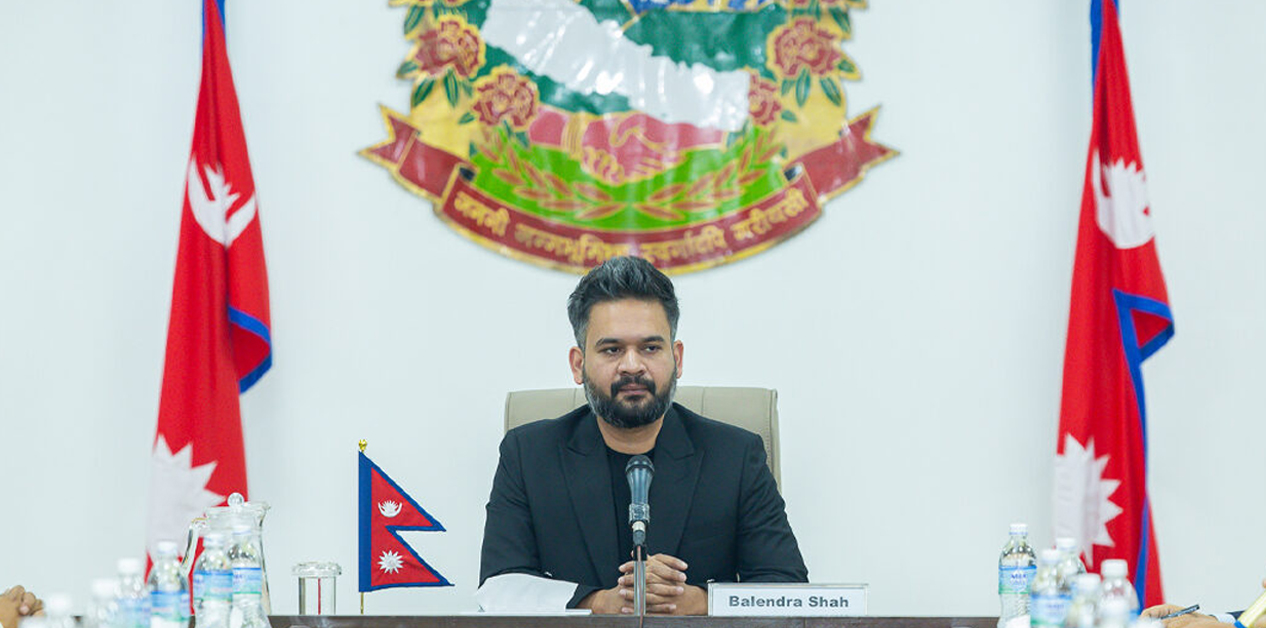
A new narrative is currently being constructed in the market. Following the movement carried out by our generation and the rise of people like Balendra Shah (Balen), the public brought new forces, including the Rastriya Swatantra Party (RSP), close to power with great hope. Some people are saying, “If this government also does nothing, the masses will go into depression. Everything will be over.”
I disagree with this. In a democratic republic, there is never a “final exam” where everything is over once you fail! In democracy, there are only many “assignments”—that is, homework—for the welfare of citizens, for the democratic republic.
The current government is also doing an “assignment.” How many marks it secures will be evaluated by the people in the upcoming election. But if this government fails, democracy will not end. Instead, another new alternative will take its place.
New characters and tendencies keep arriving continuously in politics. The republic does not let us lose hope by saying “we are tired of testing again and again.” Another thing is that in this system, we as citizens must not forget our responsibility either. Voting is not the only job of a citizen; even after casting the vote, the public must possess the capability to continuously alert the rulers, ask questions, and keep them in a system of checks and balances.
The Nepali people must firmly believe that no one’s legacy or lineage works in a republic. In this system, the RSP or Balen are not our final hopes. If the current government engages in activities against democratic values and the system, or fails to meet public expectations, the people will correct their decisions through a new public mandate.
(Based on a conversation with Rakshya Bam, Coordinator of the Nepal Gen Z Front, conducted by Lokendra Bishwokarma)