Kathmandu
Tuesday, July 21, 2026





Sometimes, in a life running its monotonous course, a single day brings such an astonishing event that it gives life an entirely new rhythm, another meaning, and a distinct purpose. It brings a new light.
Such a day arrived in my life as well, in May of 1997.
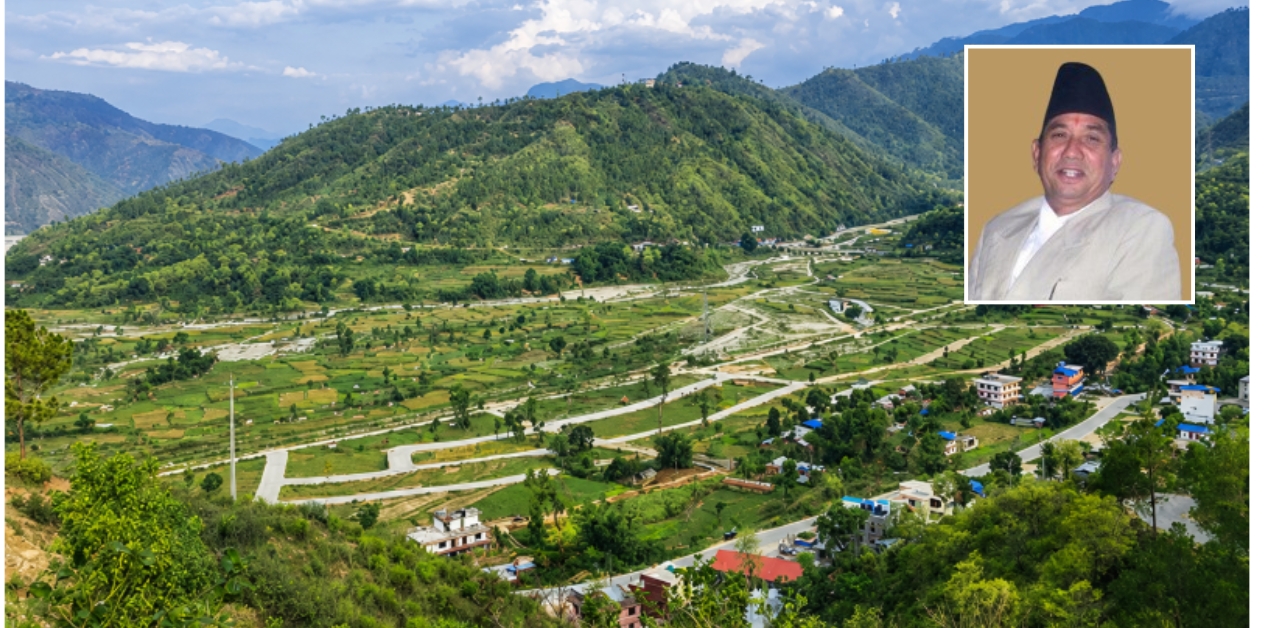
Prometheus, who stole fire from heaven to bring it to earth, had descended straight from the pages of Greek mythology into the Dalit settlement of Khurkot, Sindhuli.
That day, I was returning home after school was dismissed. The house by the roadside was visible from a distance. As I looked, I noticed our courtyard was packed with people. Did some disaster occur?
I reached home in one breath. People were standing all over the courtyard. I had never seen such a massive crowd gather at our house before.
It turned out Father had also returned early from his office.
In the courtyard, some people were standing while others were seated. And at the center of it all was one man. He was of a short stature. His beard was cleanly shaved, and his short hair was swept to the left. He wore a white shirt, black trousers, and a brown waist-coat. An energetic individual, he was talking to the people while gesturing actively with his hands.
My adolescent mind could barely grasp the words he was speaking.
At moments he was mentioning Lenin’s name, and at other moments, Karl Marx.
And Mao Zedong also frequently entered his conversation.
He was talking about communist rule, social change, and reform—and so many other things. His words were beyond the realm of my understanding. Yet, I was enjoying it. People surrounded him. They were showering him with various questions and curiosities. A session of question-and-answer was underway.
He treated everyone’s questions with equal respect and keen interest, answering them thoroughly. It seemed as though he had an answer for everything. It felt as if there was nothing on this earth that he did not know. The people were spellbound by his talk.
Someone asked, “When will development come to our region?”
Another expressed curiosity, “When will the condition of us Dalits change?”
Then someone else inquired, “Why did you slap the Speaker?”
(During this physical altercation incident, Ramchandra Paudel was the Minister for Local Development and Agriculture. By the time Golche Sarki reached Khurkot, Paudel was the Speaker of the House of Representatives.)
He treated everyone’s questions with equal respect and keen interest, answering them thoroughly. It seemed as though he had an answer for everything. It felt as if there was nothing on this earth that he did not know. The people were spellbound by his talk. I kept asking myself: who is this man pulling people toward himself like a magnet pulling iron?
Slowly, darkness began to cover the surroundings. The crowd thinned out. And in the end, only that extraordinary man remained at our house.
The light of a 60-watt bulb was scattered in the room. Father and that amazing man sat on a straw mat in the corner, conversing. Mother was busy cooking in the kitchen. A rooster had been slaughtered. Fish from the Sunkoshi River were being fried. The house was filled with a rich aroma.
My elder brother, my sister, and I were with Mother in the kitchen. I kept staring at him fixedly.
Father glanced toward us and said, “Do you kids recognize him? He is a big leader. Golche Sarki. Do you know him?”
We nodded our heads to signify that we knew.
Oh my goodness, such a big leader in our house!
I was finding it hard to believe.
The conversation between Father and the big leader continued until late at night. Even though we didn’t understand the head or tail of their conversation, we were delighted for no specific reason. That night, it felt as if our house had shed its old skin. Our home was illuminated by Golche’s vibrant presence.
“Have you been educating the children or not?” Golche spoke, fixing his eyes on Father, “You must educate them well. In today’s times, there is nothing greater than education. If I need to do anything for the children, please tell me without any hesitation.”
Then, with a gesture of his hand, he called all three of us toward him. We approached him timidly. He took my sister onto his lap and affectionately stroked her hair.
“Tell me, what do you want to become when you grow up?” he asked.
My sister said in a soft voice, “A nurse.”
My brother had already passed his SLC exams with the best marks in the district. He stated his life goal, “A doctor.”
Now, it was my turn.
Why should I lag behind?
I spoke up, “I will become an engineer.”
At that moment, Father’s face glowed brightly. It was as if he had instantly become the father of a nurse, a doctor, and an engineer.
The dialogue between the big leader and us concluded. But the conversation between Father and the big leader continued until late at night. Even though we didn’t understand the head or tail of their conversation, we were delighted for no specific reason. That night, it felt as if our house had shed its old skin.
Our home was illuminated by Golche’s vibrant presence. The entire house was brightened, and our hearts were enlightened.
Golche: A character, a myth, a ‘brand’
Khurkot, Sindhuli.
Three houses thatched with straw—the shelter for our family. Seen from afar, those three houses looked as if they were sitting quietly like a heap of manure.
Our house was right beside the road. A house with a small balcony. A wide courtyard.
A little further away were the Devkota and Mainali settlements, comprising about 50 to 55 houses. Houses roofed with corrugated zinc sheets and stones. Located at the upper tier of the caste hierarchy, the roofs of the Devkota and Mainali houses naturally gave a greater or lesser expression of affluence.
Below lay a four-house settlement of the Majhi community. Capturing the sorrows and sighs of the Majhi settlement, the Sunkoshi River roared nearby, flowing endlessly. This river had given everything to the Majhis. Most importantly, it gave them fish. It provided a means of livelihood to sustain life in the form of fish.
To win elections, Golche was almost indispensable. Yet, the caste system had placed him on the lowest step of the ladder. The doorstep of any non-Dalit communist was not open to him. He was not permitted to enter the houses of communists who held equality as their ideal .
Holding that very Sunkoshi River as a witness, our house stood firm. The school was a 15-minute distance from the house. And my life had also crossed a distance of fifteen years. I was preparing for the upcoming SLC examinations. I had to carve a new path in life by crossing the SLC, which was famously or infamously known as the ‘Iron Gate’. The SLC was, in a way, an icon of fear and terror. Its very name induced fear in the heart. Perhaps the SLC was an weapon used by the Nepali educational system to inflict violence upon tender adolescents?
The next morning, even before the daylight could fully break, our courtyard was filled to capacity once again. After tea, the famous leader took to the road immediately.
Golche left, but my mind and brain kept following him. He kept resonating within me.
One question remained unanswered—why on earth did such a big leader come to our house?
The local body elections of 1997 had completely gripped the country. In the electoral environment, the villages and towns echoed with slogans of victory and condemnation. It turned out Golche was a ‘celebrity’ leader of the UML. A central committee member of the party and a member of the National Assembly. He was so popular that even audio cassettes of his speeches were sold.
I felt that it was indeed possible for a person from our community to become so prominent. He felt like one of my own, just like a family member. Otherwise, why would he come and stay at our house?
The local leaders had invited Golche for the election campaign. Since Sindhuli had a very large Dalit population, Golche’s presence during the election season was highly significant.
But a dilemma arose when the question came up: where to feed Golche at night? Where to accommodate him for sleep?
The local leaders themselves devised a solution: at the Khardar’s (Non-gazetted second-class official’s) house. Meaning, at our house.
To win elections, Golche was almost indispensable. He was a prominent communist leader who gave powerful speeches. His fame extended from the district to the center. He was influential as a leader. Yet, the caste system had placed him on the lowest step of the ladder. The doorstep of any non-Dalit communist was not open to him. He was not permitted to enter the houses of communists who held equality as their ideal.
Khat-khat-khat-khat … was the all-time melody of our house. A beloved melody. We had become so accustomed to its rhythm and music that we found more sweetness in it than in the songs of Narayan Gopal, Aruna Lama, Jhalakman Gandharva, or Dilmaya Khati. A kind of intimacy was attached to the organic chant of the khat-khat .
To feed Golche one meal and house him for one night, they ultimately had to search for a Dalit named Krishna Bahadur Pariyar.
The previously unanswered question—why on earth did such a big leader come to our house—surfaced clearly with an answer. No matter how big a leader he was, he was ultimately a Dalit. No non-Dalit possessed a heart large enough to arrange a welcome for Golche Sarki in their own home!
There was no major hardship regarding food and accommodation in our house. Father was a government employee; the chief of the Area Post Office in Khurkot. Probably the only government employee from the Dalit community in the entire district. Immediately after passing his SLC, he had become a ledger-keeper (Bahidar) at the post office.
Father was famous in the village by the name Khardar . Because of his helpful and generous nature, he was loved by everyone. He was an ‘indispensable man’ for the village.
If anyone fell ill in the village—Khardar!
If anyone needed to send a letter—Khardar!
If anyone needed to withdraw their provident fund—Khardar!
If anyone faced an emergency—Khardar.
If anyone needed clothes stitched—Khardar.
Father never allowed us to touch the sewing machine. We also possessed a great desire to pull the handle of the machine to produce the khat-khat-khat sound. But the moment we stepped onto the threshold of the room containing the machine, he would shout, “Do not put your energy into the sewing machine; put your energy into books.”
It felt as though my Khardar Father was like oxygen for the village. It seemed as if the village could not breathe without him.
When we woke up, Father would already be bent over the sewing machine. The khat-khat-khat sound of the machine would emerge continuously. Around nine o’clock, he would head toward the post office. In the evening, he would return home carrying some letters and newspapers. We would immerse our eyes in the pictures and letters of the newspapers. We became the first readers of newspapers in the village. Father, however, would sit at the machine, completely absorbed in the same khat-khat .
During festivals like Dashain, Father would be completely dedicated to stitching twenty-four hours a day. We would fall asleep to the sound of the machine and wake up the next morning to the very same sound.
Khat-khat-khat-khat … was the all-time melody of our house. A beloved melody. We had become so accustomed to its rhythm and music that we found more sweetness in it than in the songs of Narayan Gopal, Aruna Lama, Jhalakman Gandharva, or Dilmaya Khati. A kind of intimacy was attached to the organic chant of the khat-khat .
In the life of my father, Khardar Krishna Bahadur, there was either the post office or the sewing machine!
He would make someone joyful by delivering new and auspicious news. And he would delight another by dressing their body in a brand-new garment. How grand his life was! A man whose goal was to invent happiness and cheerfulness for others.
His life had a single mantra: work, work, and work…
We never saw him at leisure. We never saw him killing time by gossiping about others. We never saw him staggered by alcohol or wandering around aimlessly. We never saw him creating a ruckus at a tavern, nor did we see him boasting at a tea shop.
For him, habit, dedication, entertainment—whatever you call it—was work.
Everyone needed work. Therefore, he was a beloved figure to all.
He never allowed us to touch the sewing machine. We also possessed a great desire to pull the handle of the machine to produce the khat-khat-khat sound. But the moment we stepped onto the threshold of the room containing the machine, he would shout, “Do not put your energy into the sewing machine; put your energy into books.”
Perhaps Father had so much faith in books that he felt if anything could bring a change, an elevation in our lives—in a Dalit’s life—it would be brought by books.
On the day Golche Sarki stayed at our house, Father pointed toward him and told us, “Did you see? You too must become a big person like him!”
I passed my SLC in 1998. And I arrived in Kathmandu for further studies.
Golche used to tell his close friends, “While I was speaking, Ramchandra kept mocking and looking down on me from the desk where the ministers sit. I felt deeply insulted. Unable to tolerate it, I struck him.”
However, I did not have a physical meeting with Golche.
In Nepali politics, Golche would occasionally make headlines. Because of him, politics would sometimes become turbulent.
His background was filled with struggle. It had to be. Because if there is anything abundant in a Dalit’s life, it is struggle itself. Before entering politics, Golche used to stitch shoes sitting at New Road, Pipalbot. This means of livelihood continued for a long time. While living, enduring, and experiencing, he became attracted to communist politics and eventually became a worker for the then-CPN (ML).
In the local elections of 1987, the then CPN (ML) gave Golche the ticket for Pradhan Pancha (village head) as a pro-people candidate. Only after that did his connection with Pipalbot break. He finally retired from the job of stitching shoes.
In Nepal’s parliamentary history, Golche Sarki’s name is linked with the ‘Punching Incident’. On July 21, 1993, he punched Ramchandra Paudel (the current President) during a meeting of the National Assembly. There are various versions and anecdotes surrounding this episode.
The day after that physical assault incident, the national daily Kantipur published the news under the headline, ‘Assault on Minister Paudel: MP Sarki Suspended’. Other newspapers of that time also covered this event prominently. According to the news published in Kantipur, Golche had punched Paudel, who was the Minister for Local Development and Agriculture and was also handling the responsibility of the Home Minister (the then Home Minister Sher Bahadur Deuba had gone to Bhutan). “While returning from the rostrum, Sarki landed four punches on Paudel, who was sitting in a front-row chair of the parliament building with his hand on his cheek,” the news stated.
Following the punching incident, Golche became a ‘hero’ in the eyes of some, while in the eyes of others, he became a ‘villain’. One group romanticized the punch to such an extent that it was made into Golche’s brand. From what I heard, a song was even composed about this incident, the lyrics of which went—Golche Sarki slapped Ramchandra.
According to Kantipur, a dispute was escalating between the government and the UML regarding the Dasdhunga accident. UML MPs who participated in the traffic strike (chakkajam) had been arrested. Paudel had presented himself at the National Assembly in his capacity as the Home Minister to provide an answer on that very issue. Before Paudel could reply, UML MP Sarki obtained an opportunity to speak on behalf of the MPs arrested during the strike. The punching incident took place while he was returning from the rostrum.
Subsequently, Golche was suspended from the National Assembly for one week.
Following the punching incident, Golche became a ‘hero’ in the eyes of some, while in the eyes of others, he became a ‘villain’. One group romanticized the punch to such an extent that it was made into Golche’s brand. From what I heard, a song was even composed about this incident, the lyrics of which went—Golche Sarki slapped Ramchandra.
The exact reasons why Golche resorted to a physical attack on Paudel have now faded into the womb of the past. From what I heard, he used to tell his close friends, “While I was speaking, Ramchandra kept mocking and looking down on me from the desk where the ministers sit. I felt deeply insulted. Unable to tolerate it, I struck him.”
After the mid-term elections of 1994, Paudel became the Speaker of the House of Representatives. Following that, some MPs reportedly used to tell Golche, “Your hand seems to be very fertile. Why don’t you land one or two punches on me as well? Perhaps I would also become the Speaker!” Politicians who share such jokes and humorous anecdotes can still be found today.
Following the party unification, Golche grew extremely dissatisfied with the UML. After the then King Gyanendra took power into his own hands, he appointed him as the Assistant Minister for Labour and Transport. In this manner, the progressive politics of a Dalit leader came to an end.
A bit later, I received the news of his death. That night, I remained awake for a long time. Even though he participated in regressive, anti-democratic, and dark politics during the later phase of his life, he had once carried the bright torch of consciousness.
Toward that Golche, who was once like Prometheus, a certain kind of attached love exists in a corner of my heart even today.
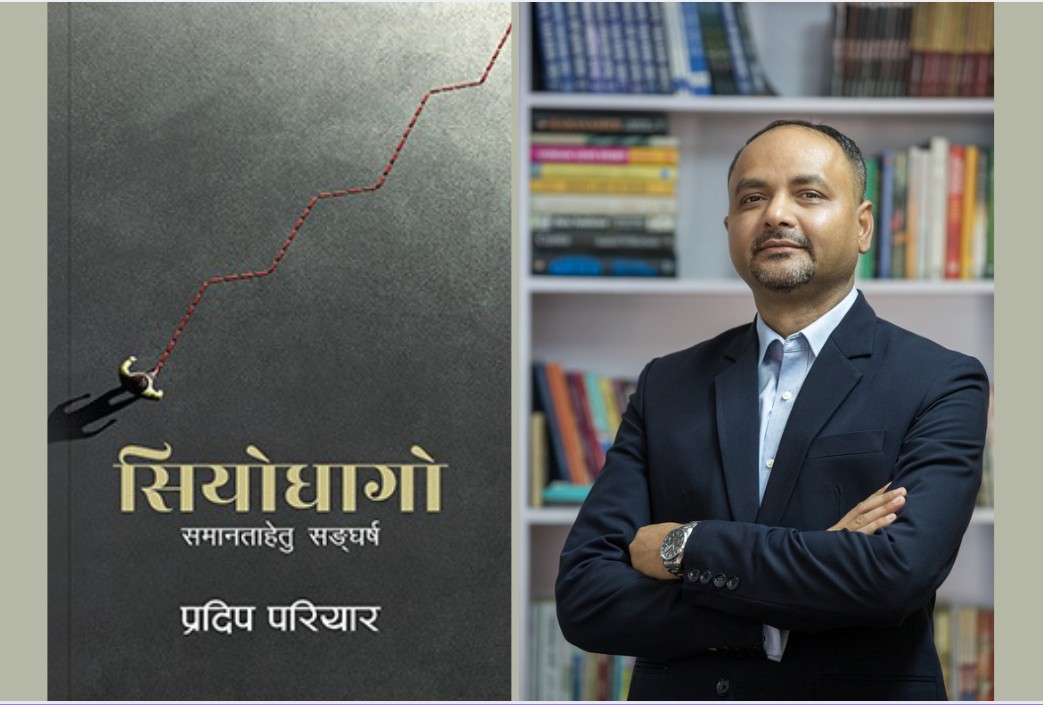
(An excerpt from Pariyar’s memoir book ‘Siyo-Dhago’ [Needle and Thread])