Kathmandu
Friday, July 24, 2026





RSP lawmakers, including Sudhan Gurung, were involved in preparations that began a year before the Gen Z movement.
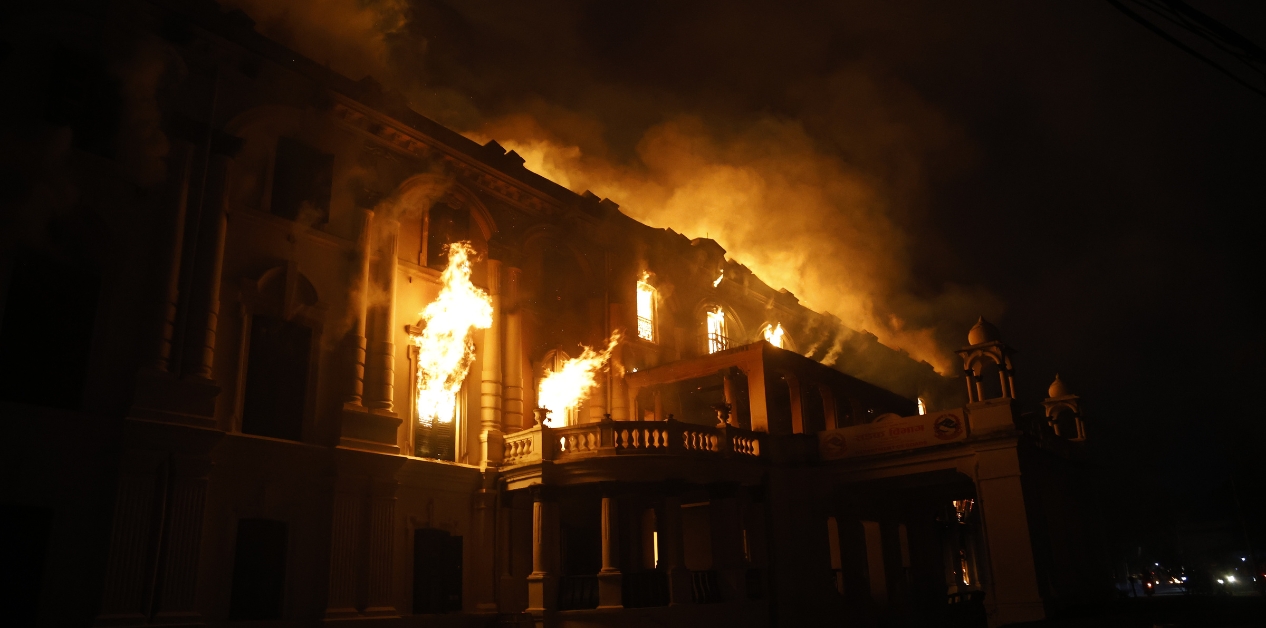
KATHMANDU: Nine months have passed since the Gen Z protest. This period witnessed numerous political events and upheavals, including the formation of an interim electoral government, the submission of the High-Level Investigation Commission’s report on the movement’s incidents, and the formation of a majority government by the Rastriya Swatantra Party (RSP) following the elections. However, one question remains unanswered: Was the sudden transition of the peaceful Gen Z protest into a destructive and violent one a result of prior preparation and a planned conspiracy, or spontaneous public anger?
A classified report by the National Investigation Department (NID), the country’s intelligence agency, reveals that a prior plan by interest groups was responsible for the violence. According to the report, the movement’s descent into violence was not accidental but driven by premeditated plans orchestrated by activists, social media influencers, and others. It notes that they worked in an organized manner to make the movement destructive.
According to the classified NID report obtained by Nepalnews, activists held meetings where they concluded that a Bangladesh-style uprising needed to be replicated in Nepal, and top leaders should be chased away just as they were there.
Activists associated with various organizations began mobilizing, asserting that “following the student movement in Bangladesh in July and August 2024, a similar movement must be launched in Nepal to overthrow the regime.” The report states that activists Hemraj Thapa, Dr. Nicholas Bhusal, Som Sharma, and Bablu Gupta, among others, began organized preparations around July–September 2024. According to the report, they adopted a strategy of exaggerating issues of corruption and governance to mobilize the youth and turn the general public against the incumbent government.
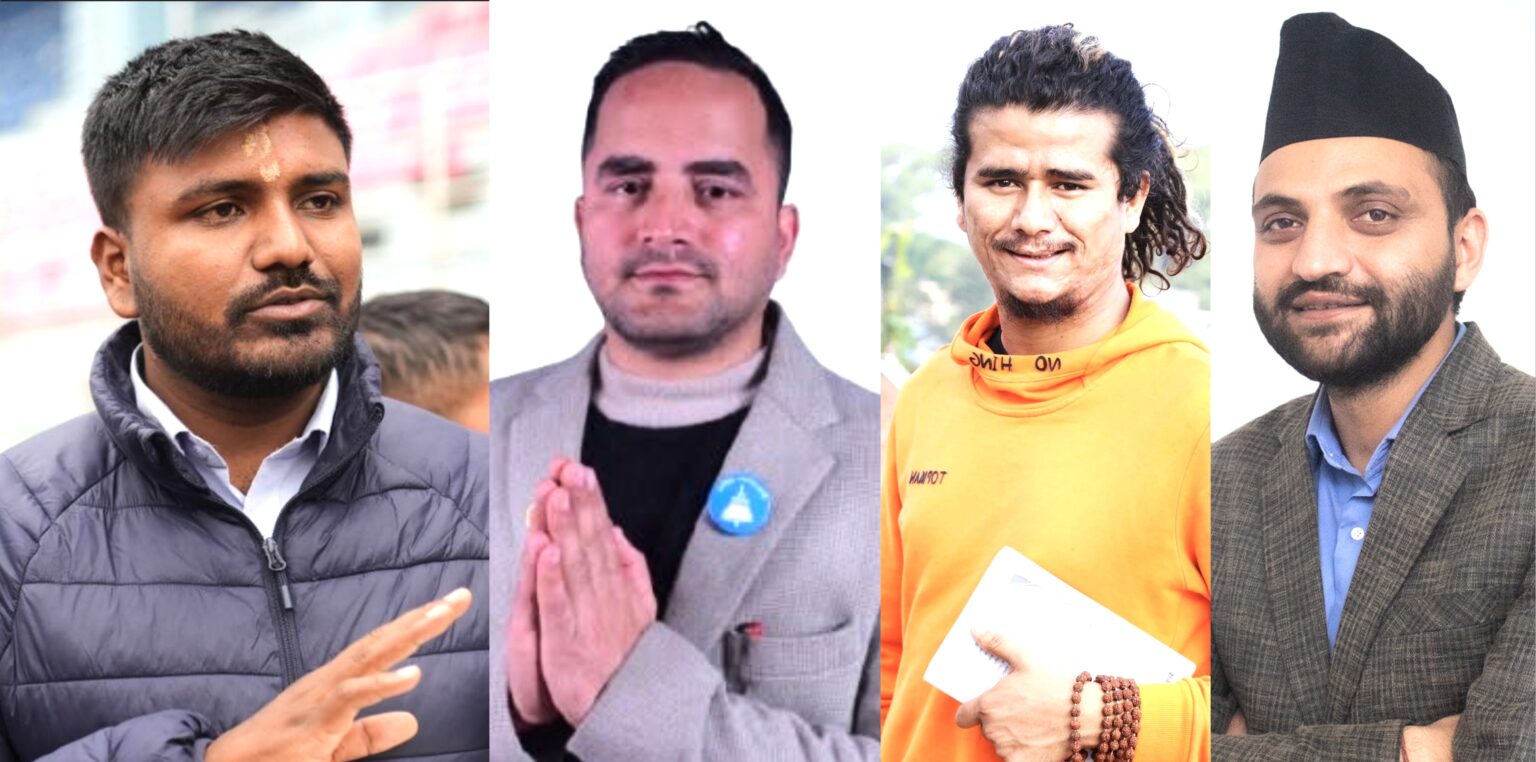
From left to right: Bablu Gupta, Som Sharma, Hemraj Thapa, and Nicholas Bhusal.
Following the movement, Thapa contested the House of Representatives election on March 5, 2026 from Bajura Constituency No. 1 as an RSP candidate but was defeated. Meanwhile, Sharma and Gupta were elected as RSP members of parliament, winning seats from Baglung-2 and Siraha-1, respectively. Bablu Gupta, a member of the ‘Hundred Plus Group’, also served as the Minister for Youth and Sports in the interim electoral government formed under the leadership of Sushila Karki after the movement.
The report reveals that on September 7, 2024, a meeting was held at the Hardik Hotel in Bagbazar involving Gupta of the Hundred Plus Group, Senior Advocate Balkrishna Neupane, and Advocate Swagat Nepal, among others. The meeting concluded that “since the government has failed to control corruption and maintain good governance, major leaders must be chased away like in Bangladesh to provide leadership opportunities to capable youth.” Pointing to the historical precedent of a major uprising occurring in Nepal every ten years, the meeting participants resolved that it was time for a ‘Third People’s Movement’.
The department’s report concludes that it was after this meeting that certain organizations, groups, and individuals active under the banner of civic society and activism developed the consensus that a Bangladesh-style regime change was absolutely necessary.
Although Senior Advocate Neupane acknowledges attending various events at Hardik Hotel, he denies being involved in any decision-making process regarding chasing away political leaders.
“I frequently visit Hardik Hotel for various programs. I don’t remember the exact date, but a long time ago, I went to speak at an event there. There was a large presence of people from the Terai region,” Neupane said. “I might have spoken against corruption and for good governance against political leaders. My name might have been included in the attendance list. However, I was not part of any decision-making process.”
He does, however, claim credit for setting the stage for the Gen Z protest. “We awakened the public and prepared the background for the movement,” he added, “but someone else hijacked it.” Neupane has long been active in campaigns advocating for the restoration of the monarchy.
The department’s 13-point report was submitted to the Ministry of Home Affairs during the Sushila Karki-led government and was also forwarded to the Gauri Bahadur Karki-led Investigation Commission and the National Human Rights Commission (NHRC). A high-ranking NID official stated: “We reported this to various agencies. Later, we also submitted it to the commission formed to investigate the Gen Z incidents. The report should be with the Human Rights Commission as well.”
According to the intelligence report, an array of individuals were linked to the prior planning of the movement. These included Hemraj Thapa, Nicholas Bhusal, Som Sharma, Bablu Gupta, Dr. Nawaraj Bhusal, former Chief Justice Sushila Karki, Hami Nepal founder Sudhan Gurung, Lauro Campaign founding chairman Ananta Raj Ghimire, royalist activists Advocate Swagat Nepal, Rama Singh, Balkrishna Neupane, Kesar Bahadur Bista, Kamal Thapa, Durga Prasai, Routine of Nepal Banda administrator Victor Paudel, and Pathao ride-sharing company operator Asim Man Singh Basnyat.
The report highlights that Nicholas Bhusal’s group, operating under the name ‘Global Youth Parliament’, mobilized youth across 165 constituencies using the slogan “165 Youth MPs,” fueling anti-government protests in the Kathmandu Valley and various districts. Furthermore, on October 4, 2024, a youth gathering of 190 to 200 people was organized under the banner of the ‘National Youth Parliament’ at the National Nachghar in Jamal, where a roadmap for the movement was presented. The report notes that Nabaraj Bhusal, former Chief Justice Karki, and Hami Nepal founder Gurung attended this event.
Nicholas Bhusal and others were reportedly spreading discontent among the public via social media by broadcasting provocative statements, including demands to exile political leaders.
When contacted via phone and email to comment on their alleged roles in planning the destructive movement and concluding that “major leaders must be chased away like in Bangladesh,” Bablu Gupta and Som Sharma did not respond. Similarly, attempts to contact Sudhan Gurung and his associate Kailash Paswan yielded no response.
The report also indicates that the movement’s activities were further institutionalized by forming operational alliances with various groups active under the guise of fighting corruption, ensuring good governance, and defending cooperative victims. Consequently, starting in November/December 2024, the Joint Nationalist Citizen Movement, led by Ananta Ram Ghimire’s Lauro Campaign, initiated protests centered in the Kathmandu Valley. The report notes that individuals supporting a Hindu monarchy, including Rama Singh, Balkrishna Neupane, Swagat Nepal, Kesar Bahadur Bista, Kamal Thapa, and Durga Prasai, provided direct or indirect support.
Durga Prasai, coordinator of the ‘Nation, Nationality, Religion, Culture, and Citizen Rescue Campaign’, appeared highly active in cultivating an anti-government environment. By continuously spreading commentary laced with rumors about the government and traditional political parties, he worked to foster resentment. He also directed hate speech toward corporate houses, banks, and financial institutions. During the movement, properties ranging from leaders’ residences to commercial establishments faced vandalism, arson, and looting.
“Prasai repeatedly claimed that the general public was suffering because the government ignored the plight of cooperative victims, sugarcane farmers, loan shark victims, and foreign employment issues. He asserted that the country’s economy was destroyed by Marwari businessmen, and by publicizing photos and videos labeling specific individuals as corrupt businessmen, he directly and indirectly incited the public to revolt against the government.”
A group led by Prasai and Swagat Nepal turned a protest at Tinkune, Kathmandu, violent on March 28, 2025, leading to their arrest by the police. The NID report asserts that they played a role in the prior preparation to make the Gen Z protest destructive.
While these protests were ongoing, the removal of Kulman Ghising from his position as the Managing Director of the Nepal Electricity Authority further galvanized the activist groups. They escalated both individual and collective demonstrations across the Kathmandu Valley and various districts. The report mentions that efforts were made to instigate youth to join the protests, express their dissatisfaction on the streets, and establish a narrative that demands could only be met through street agitation.
The report explicitly states that the destruction during the Gen Z protest was institutionalized, noting that the RSP, the then CPN (Maoist Centre), Prasai’s campaign, RPP, and RPP-Nepal issued official statements supporting the movement.
“…During the demonstration supported by them on September 8, 2025, leaders and cadres of the mentioned parties and groups infiltrated the crowd and instigated Gen Z youth to engage in destructive acts like arson and vandalism,” the report specifies.
The intelligence report further alleges that Gupta of the Hundred Plus Group, Paudel of Routine of Nepal Banda, and Basnyat, the then-director of Pathao, played supporting roles in turning the movement violent. It notes that they appealed to their followers and well-wishers on social media days prior to participate actively in the Gen Z protest, which added momentum to the destruction.
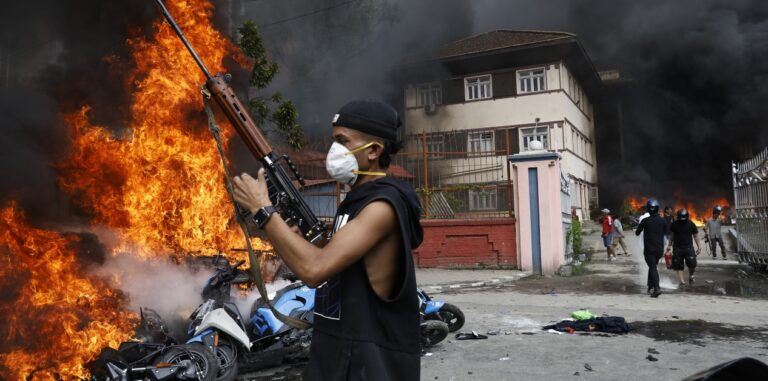
Protesters in front of the Supreme Court on September 9, 2025, the second day of the Gen Z protest. Photo: Bikram Rai
The NHRC’s study report on the Gen Z protest also corroborates findings from the NID report. Section 16 of the published NHRC report states: “Although the incidents of September 9 began due to angry individuals influenced by the events of September 8, the simultaneous nature and uniform objective of the September 9 events across the country indicate that these were organized criminal acts carried out according to a pre-existing plan. There is no basis to dispute the opinion of the investigation report.”
According to the commission’s report, some individuals, including organizers of the protest, used a TikTok account named ‘Wakeup Nepal’ a day before the protest to call on participants to bring petrol bombs (Molotov cocktails). The report highlights that they incited arson on social media by posting: “Anything can happen in tomorrow’s protest, so keep Molotov cocktails ready.”
Additionally, AI-generated, deceptive photos and videos showing the Parliament Building and Singha Durbar on fire were circulated on social media before the protests occurred. The commission’s report exposes a dual strategy: keeping the movement outwardly peaceful while systematically planning destruction. Item 3 of the fact analysis section reads:
“It appears from media sources and statements during hearings that two distinct groups were preparing for the protest on September 8, 2025 —one group intending to keep it peaceful and another group planning online to make it destructive. This confirms that another group was actively plotting to turn the demonstration violent.”
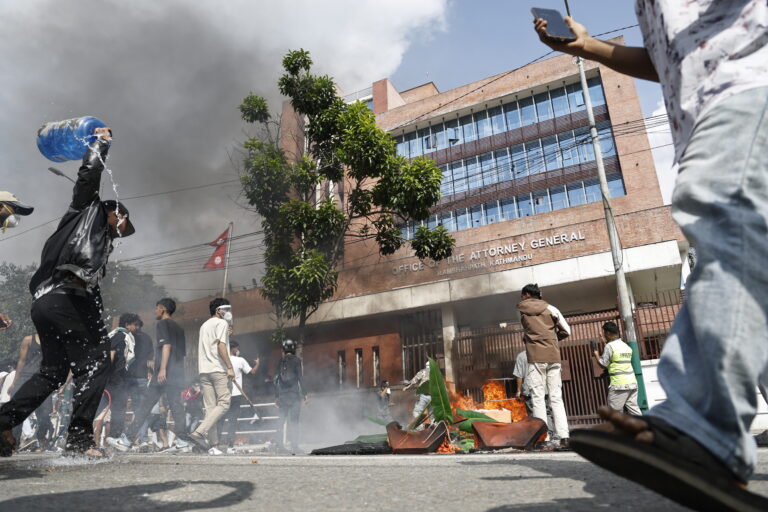
Protests held on September 9, 2025, the second day of the Gen Z protest. Photo: Bikram Rai
Lily Thapa, coordinator of the NHRC study team and member of the commission, stated that various individuals and activists directed participants to use children as human shields, taught them how to make bombs, and instructed them to attack security personnel.
According to her, the commission’s team reviewed roughly 35 verified videos showing high-ranking figures and activists incitement to violence. Speaking at an event organized at the Nepali Congress central office in Sanepa, Lalitpur, on June 6, 2026, she said:
“We have video evidence showing individuals who currently hold high offices saying things like: ‘Make bombs this way, come with water bottles and bags, put students at the front, create a human shield, apply this to your eyes.’ Finding such facts meant we could not simply skip recommending them for further investigation.”
The commission’s report has recommended that the government investigate and take legal action against Sudhan Gurung, Bablu Gupta, Hemraj Thapa, Som Sharma, Durga Prasai, Victor Paudel, and Asim Man Singh Basnyat if found guilty.
When asked about the intelligence report submitted to the NHRC, NID Chief Tekendra Karki stated he was unaware of the specifics because he assumed office after the Gen Z protest. He noted that the previous investigation directors would have details. “The documents and reports handed to the Human Rights Commission and the Karki Commission were provided by directors before my tenure,” he said. “I believe they handed them over during one-on-one meetings with honorable members of the commission. No copies of those documents remain within the organization.”
The Sudhan group’s involvement in violence
The NID report explicitly links Sudhan Gurung’s group to the violence during the movement. Gurung had previously attended the program outlining the movement’s roadmap.
Following the post-movement elections, Gurung was elected as an MP from Gorkha-1 and was subsequently appointed Home Minister. However, he resigned from the post on April 22, 2026 after facing questions regarding his source of wealth and stock investments in a company owned by controversial businessman Deepak Bhatt. An investigation committee formed to look into his wealth has already submitted its report to the Prime Minister.
The report notes that Bablu Gupta and Som Sharma, identified as key instigators of the destruction, were active members of Sudhan’s group during the Gen Z protest.
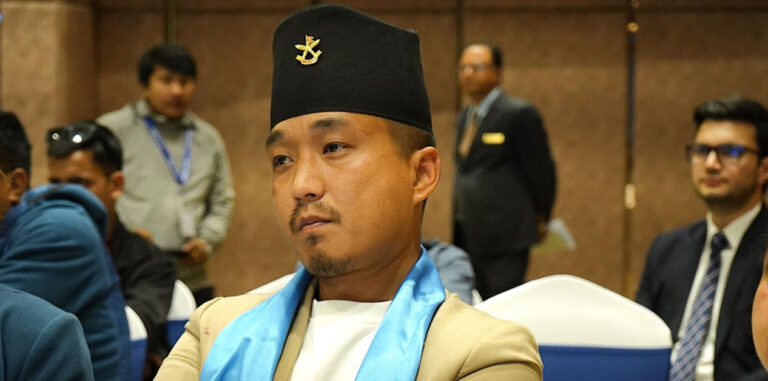
Former Home Minister Sudhan Gurung.
According to the NHRC study report, the movement was initially peaceful until individuals like Sudhan Gurung, president of the Hami Nepal organization, incited the crowd. Sections 6 and 7 of the ‘Facts and Analysis’ chapter state that on September 8, 2025, after a crowd of 20,000 to 25,000 gathered in front of the Everest Hotel in New Baneshwor, Gurung took charge of the crowd around 12 noon. The crowd included youth wearing T-shirts marked ‘TOB’ and bearing ‘TOB’ tattoos on their arms and bodies, who provoked the crowd to breach police barricades and enter prohibited zones. This triggered clashes, rioting, and a total loss of crowd control.
The commission’s report points heavily toward logistical preparation for violence. The setting up of tents, the presence of masked volunteers, and the deployment of three ambulances during a supposedly spontaneous, peaceful protest were flagged as highly suspicious by the commission. The report states that all these arrangements were made by the Sudhan group.
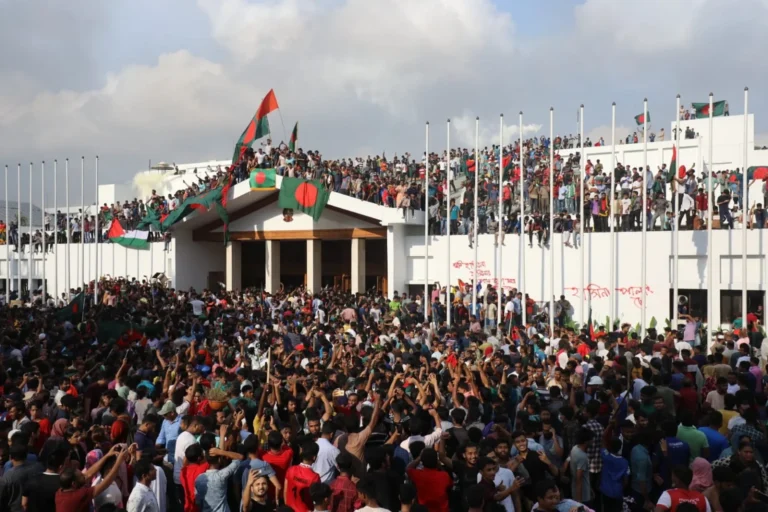
Protests by youth against the government in Bangladesh in 2024 AD. Photo Source: Prothom Alo
While the commission detailed his role in inciting the crowd, it stopped short of recommending direct immediate punishment for Sudhan. Instead, points 9 and 10 of the ‘Recommendations’ section urge the government to conduct further criminal investigations against Gurung and his associates.