Kathmandu
Sunday, June 14, 2026





Ganesh Prasad Pant, a Pandit (priest) from Baitadi, stands firmly against Chhaupadi (menstrual exile) and caste-based untouchability through the medium of ritualistic performance.
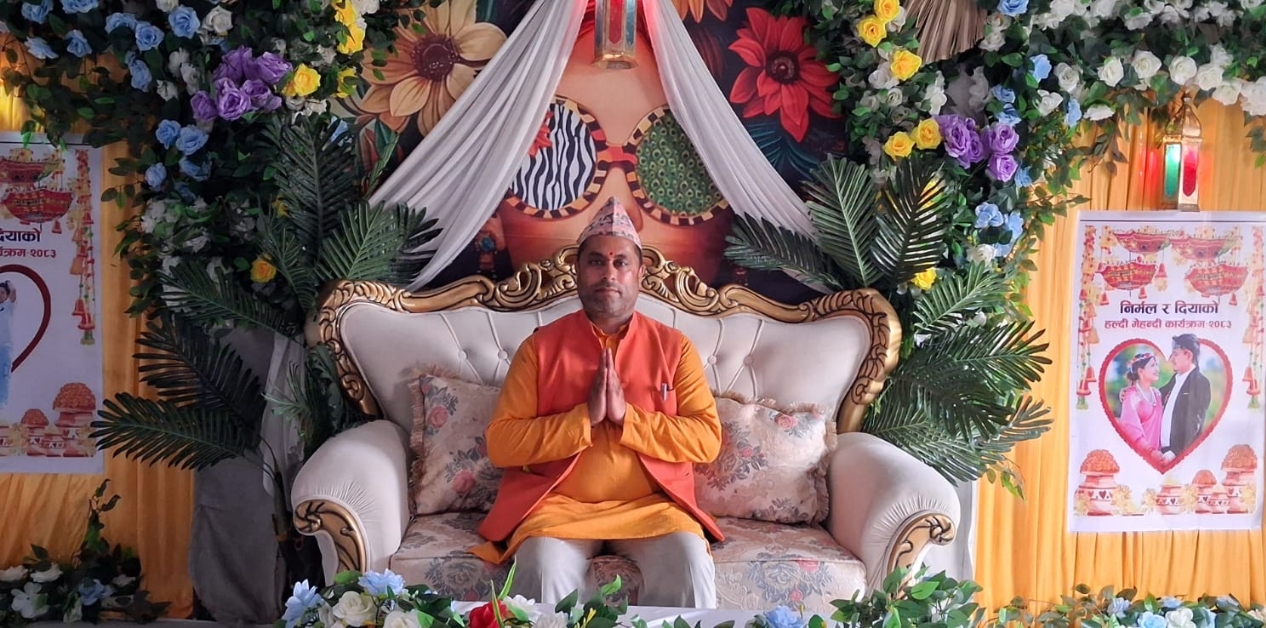
SURKHET: Astrologer and Pandit Ganesh Prasad Pant, a resident of Khodpe Jasulikhali in Patan Municipality-8, Baitadi, has been performing religious rituals within the Hindu Dalit community for the past 27 years. Viewing his work not merely as priesthood but as a campaign against cultural discrimination, he considers untouchability, Chhaupadi, and caste discrimination to be social evils sustained under the guise of religion.
On June 4, 2006, Nepal was legally declared an untouchability-free nation. In practice, however, numerous forms of discrimination persist. Caste-based discrimination remains deeply entrenched in the remote areas of Sudurpashchim and Karnali provinces. The practices of refusing water touched by members of the Dalit community, barring them from entering kitchens, and segregating them during religious ceremonies remain socially pervasive. Amid this social reality, Pandit Pant has visited the settlements of Hindu Dalits to perform more than a hundred religious rituals, including Saptaha (week-long scripture recitations), Bratabandha (sacred thread ceremonies), marriages, Nwaran (baby-naming ceremonies), Vastu Puja (home rituals), and Griha Pravesh (housewarming ceremonies).
Born in 1983, Pandit Pant grew up in a family tradition of astrology and priesthood. He began performing rituals using Vedic methods at the tender age of 16. Currently serving as the head priest of the Banarasidham Vishwanath Jyotirlinga in Baitadi, he is widely recognized today as the Pandit who conducts religious rituals for the Dalit community.
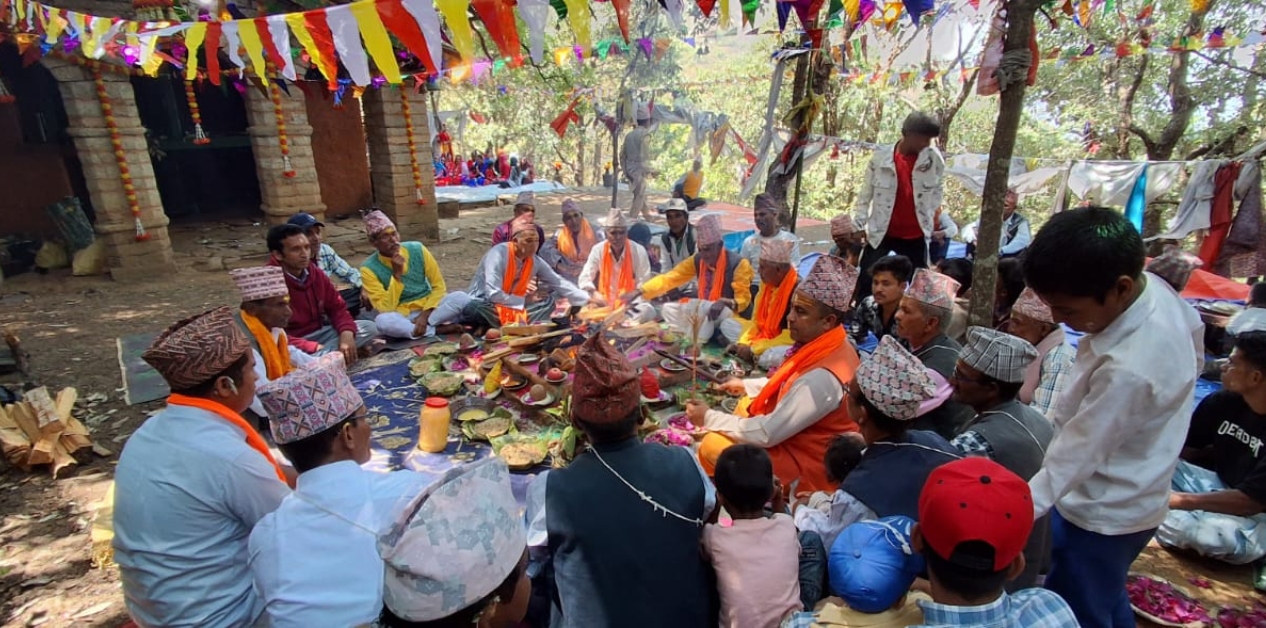
Pandit Ganesh Pant participating in a prayer ritual (Puja) inside a Dalit settlement.
Through his campaign, Pandit Pant has so far conferred the Janai (sacred thread) upon 1,375 individuals from the Hindu Dalit community. Similarly, he states that he has adorned 299 women from the Hindu Dalit community with the ‘Dudhago Dorak’ (a sacred thread ritual). Pant explains that this is done to express the ideology that scriptures do not discriminate based on caste or gender against Dalits, women, or anyone else. He believes that religious leaders play a crucial role in eradicating the prevailing Chhaupadi system and caste discrimination from society. He argues that religious pioneers must step forward to abolish social evils and malpractices.
“Even today in Sudurpashchim, it is not customary for Brahmins to visit Dalit settlements to perform rituals like Nwaran, marriages, and Bratabandha. Not only that, caste discrimination is practiced even during death rituals here,” Pant says. “Therefore, I have dedicated myself to this campaign to eradicate such evils. I despise the discrimination that Dalits face.”
Pandit Pant, who performs religious rituals in Dalit settlements, does not discriminate in the kitchen either. “There is discrimination even within the Dalit community itself. One sub-community practices untouchability against another,” he observes. “To inspire them to abandon this behavior, I dine with the community alongside performing religious activities.”
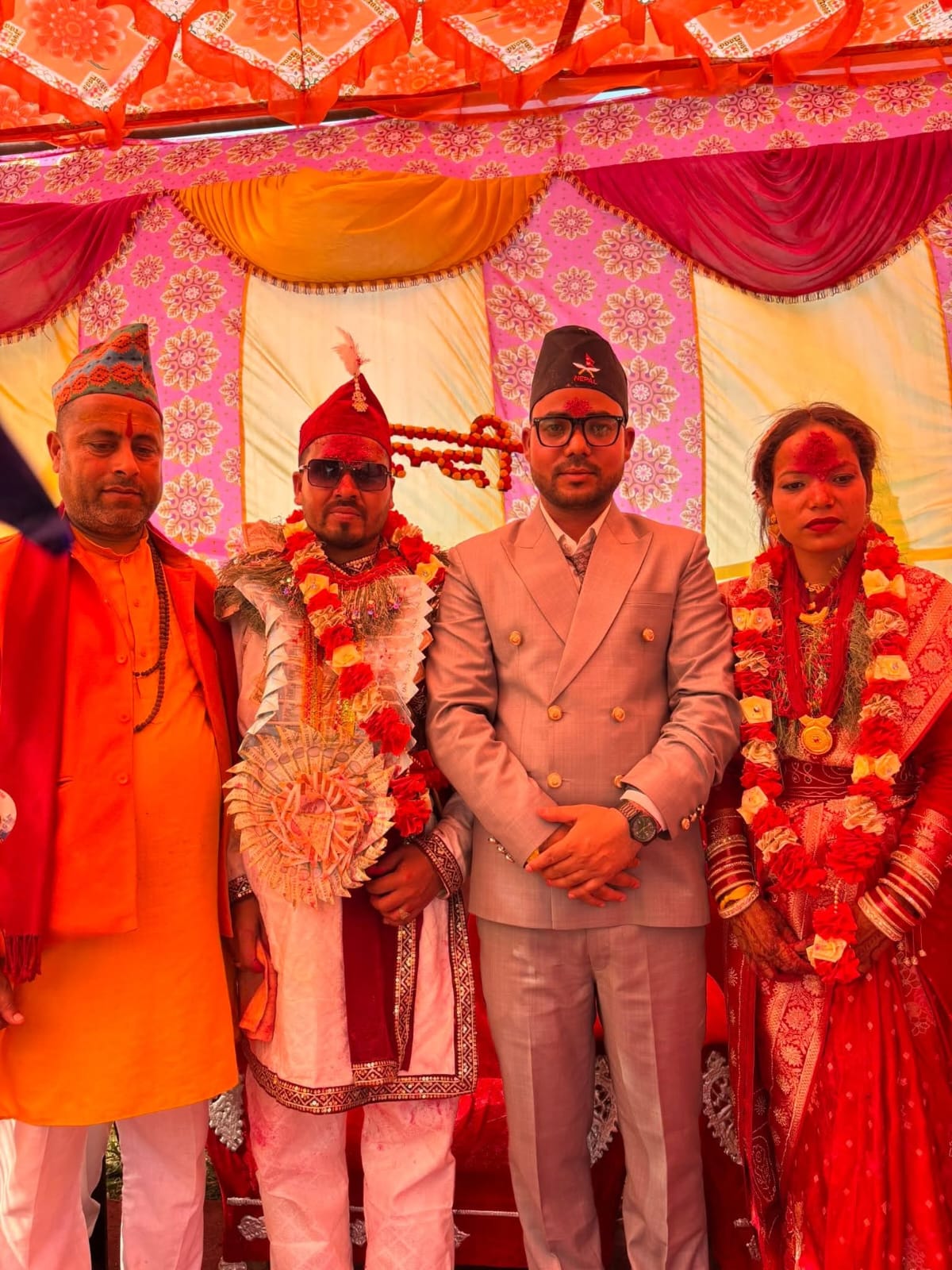
Pandit Ganesh Pant participating in a wedding ceremony.
Pandit Pant maintains a meticulous record of the religious rituals he has conducted within the Dalit community. According to his ledger, he has successfully facilitated:
37 Saptaha recitations, 23 Shivapuran recitations, 287 Laghurudrabhishek rituals, 181 Maharudrabhishek rituals, Over 411 other rituals, including Nwaran, Bratabandha, marriages, Satyanarayan Puja, Grahashanti Puja (astrological peace rituals), Shatachandi, and Akhanda Ramayan recitations.
Even today, a tradition persists during Sandhya Puja (evening prayers) where water is dropped onto the ground after chanting from the Atharvaveda, under the pretext that ‘this is the Veda of the Dalits.’ Pandit Pant strongly opposes this practice. He views it as an injustice against the artisans and craftsmen who use the knowledge derived from the Atharvaveda to create modern physical objects. He says, “It is on the foundation of the knowledge contained in the Atharvaveda that mobile phones, radios, televisions, vehicles, and airplanes were built. We all utilize these things. Yet, the very artisans who construct these objects are discriminated against. Such social evils must be eradicated.”
Pandit Pant began reaching out and supporting the Dalit community through his deeds during his childhood. Ever since he mastered the art of ritual performance, he has been conducting religious events for them. He even organizes religious functions for economically disadvantaged families by raising charitable funds. “Our grandfather and father also performed rituals for the Dalit community in the past,” he shares. “Their objective was also to end untouchability. I have simply continued that legacy.”
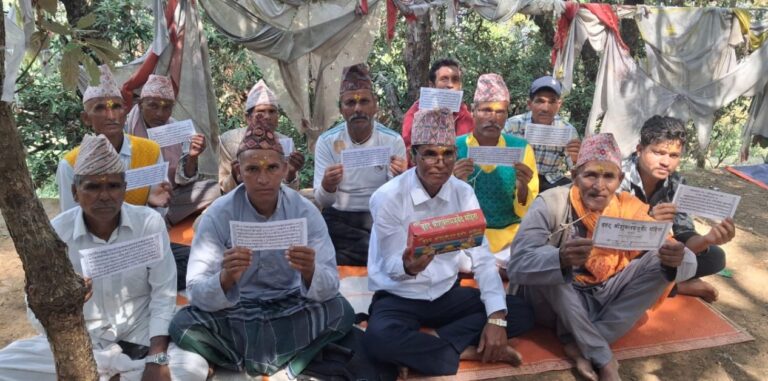
Pandit Pant asserts that no religious scripture mandates untouchability, discrimination, or any other social evils. He states that after studying numerous documents related to religion, his family reached the conclusion that there should be no discrimination in religious rituals. Pandit Pant is well-known as an expert in various disciplines, holding titles such as Shastrarthakeshari, Yajniksamrat, Agnihotri Jyotishacharya, Shuklayajurvedacharya, Vastu expert, and Panchangakar (almanac maker).
Dissatisfaction from the non-Dalit community
Since he started performing religious rituals in the Dalit community, non-Dalits have stopped inviting Pandit Pant to their homes. When he initially began his work in Dalit settlements, members of the non-Dalit community advised him against it. However, because he persisted with his work as a dedicated campaign, he notes that the non-Dalit community grew resentful.
“Prominent households that used to hire my ancestors for religious rituals are now angry with me. In attempting to eradicate this social evil, I have lost the patrons handed down by my ancestors,” Pant says. “But I have no regrets about this. I will continue my campaign.”
According to his records, he has lost 575 Yajamans (patrons/clients) due to this initiative. He laments that ever since he launched this campaign to eradicate cultural malpractices, he has been subjected to vile abuse on social media. “I receive insults and threats on social media. Some relatives also backbite about me,” he says. However, Pant remains absolutely determined not to deviate from his path under any circumstances.
He envisions installing the Vedas, Puranas, Shaligram (sacred stones), Tulsi shrines, conch shells/bells, and shrines of the Panchayan deities in the home of every Hindu without an ounce of discrimination. Pant conducts these rituals not just in his home region, but travels to various parts of the country to do so.
“On the basis of scriptures, there are only two castes—male and female; there are no other castes,” he asserts. “Discriminatory texts, including the Manusmriti, must be amended.” He stands firmly in favor of making all religious sites and prayer rituals inclusive for everyone.
Praise from Hindu Dalits
Pandit Pant claims that while non-Dalits are angered by his campaign, the Hindu Dalit community is deeply gratified. Although he lost several Yajamans dating back to his grandfather’s time, new Dalit patrons are aligning with him across the nation.
Laxman Nepali, a resident of Patan Municipality-8, Khodpe, Baitadi, states that Pandit Pant’s work has made it seamless for the Hindu Dalit community to observe religious ceremonies. Pant previously performed a Shraddha (ancestral death anniversary ritual) at Laxman’s house. Even now, whenever a religious function needs to be organized, his family turns to Pandit Pant. “His work has made things very dignified for us. He performs the religious rituals and dines right alongside us,” Laxman shares. “When he does that, some people speak ill of it, which makes us feel bad.”
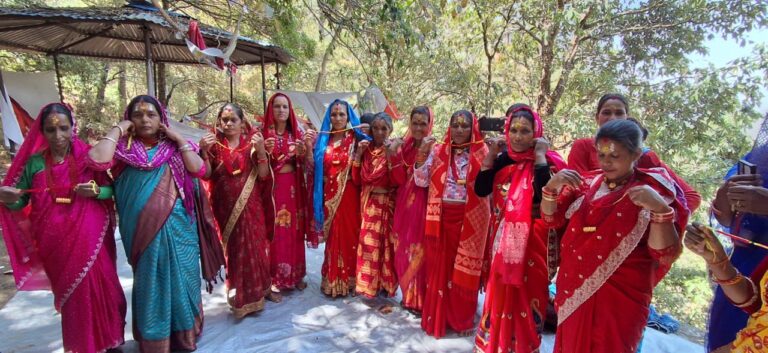
Similarly, CB Luhar from Shuklaphanta Municipality-5, Kanchanpur, openly praises Pandit Pant’s dedication. He highlights that Pant has played a remarkable role as a religious leader in bringing an end to untouchability.
“Untouchability, which has no place in our constitution or laws, still persists within communities,” Luhar observes. “At a time when those in responsible positions have failed to act towards its eradication, the work he is doing is truly commendable.”