Kathmandu
Monday, June 15, 2026





As the patronage pipeline dries up and his closest organizational lieutenants lead the transitional mutiny, the historic collapse of CPN (UML) exposes the absolute limits of personalized, anti-democratic command.

KATHMANDU: There is a particular cruelty in political decline when it arrives not from without but from within. The Communist Party of Nepal (Unified Marxist-Leninist), or CPN (UML), once the steel spine of Nepal’s post-1990 democratic order, is today a party disintegrating under the weight of one man’s refusal to let go and a structural rot that has been decades in the making. What we are witnessing today is not merely a leadership squabble or temporary factional turbulence. It is the terminal phase of a prolonged identity crisis that the party has been running from since the very moment it chose organizational survival over ideological evolution.
To understand where UML stands today, one must go back to where it began, not in the comfortable committee rooms of Kathmandu but in the bloodied fields of Jhapa in the early 1970s. Young radicals, inspired by the Naxalbari uprising across the Indian border, launched armed campaigns against landlords in the eastern Terai. A teenage KP Sharma Oli was among them. He spent fourteen years in prison for it. That formative experience of sacrifice, of being a rebel against an established order, defines the central paradox at the heart of UML today: its chairman has become the entrenched power that a new generation of both citizens and internal party members rebels against, and he cannot recognize the symmetry.
The party that emerged from the Jhapa ashes chose parliamentary paths over armed insurrection. After multiple mergers and consolidations, CPN (UML) formally came into being in January 1991. The following years were defined by the genius of Madan Bhandari, whose concept of People’s Multiparty Democracy, proclaimed in 1993, became the philosophical cornerstone of UML’s identity. Bhandari managed something genuinely difficult: he provided a credible Nepali adaptation of Marxism-Leninism that did not require abandoning parliamentary democracy. It was a synthesis, not a compromise, and it gave the party an ideological coherence that its rivals lacked. But Bhandari died in a suspicious road accident in 1993, and with him died the last UML leader who could hold ideas and organization in the same hand without letting one crush the other.
What followed was a gradual migration from ideology to power. The Madan Bhandari Foundation, established in memory of the party’s key ideologue, became itself a site of later political contest, eventually appropriated and then deliberately disassociated by Oli as his rift with Bhandari’s widow, former President Bidya Devi Bhandari, turned personal and irreversible. That disassociation tells you everything about how hollow the party’s ideological inheritance has become: Oli stripped the Madan Bhandari legacy of its symbolic power the moment it threatened to become a platform for his rivals.
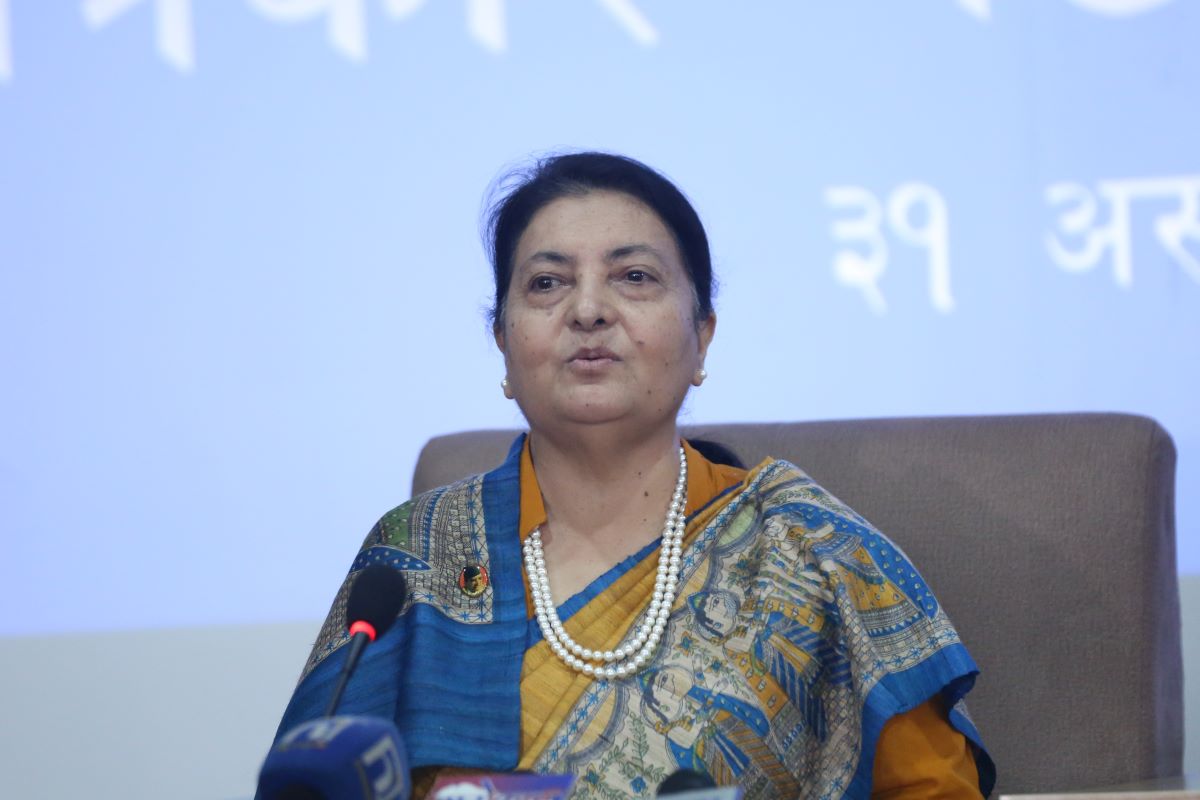
Former President Bidya Devi Bhandari. File photo
The 2018 merger with then CPN (Maoist Centre) to form the Communist Party of Nepal was the most dramatic illustration of this hollowness. Two parties with fundamentally incompatible histories, with blood between their cadres from a decade-long civil war, merged not because of any ideological convergence but because Oli and Prachanda calculated that they would be electorally unbeatable if united. The calculation was correct: the 2017 electoral alliance, followed by the formal merger in May 2018, produced what was effectively a near two-thirds majority in parliament, a historic mandate that Nepal had not seen in decades. Nepal’s left had never been closer to the transformative governance it had promised the country for generations.
Oli squandered every bit of it.
The power-sharing agreement between Oli and Prachanda stipulated that each would serve as prime minister for two and a half years. Oli never took that agreement to the party’s committee for ratification, effectively burying it and daring Prachanda to force the issue. When Prachanda’s faction and Madhav Kumar Nepal’s group began pressing Oli to honor the arrangement, Oli dissolved parliament. Not once but twice.
The first dissolution in December 2020 was overturned by the Supreme Court as unconstitutional. Oli dissolved it again in May 2021.
That too was struck down by the constitutional bench, which ordered the appointment of Sher Bahadur Deuba as prime minister within 28 hours. Two consecutive unconstitutional dissolutions of a parliament built on a historic near two-thirds mandate: this is what Oli made of the greatest political opportunity Nepal’s left had ever received. He converted a mandate for transformation into a vehicle for personal survival.
The split was inevitable at that point. Prachanda and Madhav Kumar Nepal had already been publicly alleging, with considerable specificity, that Oli was acting in coordination with external forces. Prachanda stated explicitly that Oli had held a three-hour private meeting with Samant Goel, the then chief of India’s Research and Analysis Wing, at his official Baluwatar residence, without any third party present, immediately before the parliament dissolution. Oli confirmed the meeting but disputed the characterization, saying he had merely discussed Nepal’s national interests.
The admission itself, however, undermined Oli’s image as the so-called guardian of Nepali sovereignty. A leader who had built an entire political persona on nationalism against Indian influence was now acknowledging a secretive three-hour session with India’s top spy chief on the eve of his most consequential unilateral political action. Whatever the content of that meeting, the optics were exactly the opposite of the nationalist image Oli had cultivated.
This brings us to the most revealing contradiction in Oli’s political biography: his relationship with nationalism is entirely tactical, not principled.
In 1996, as coordinator of UML’s Mahakali Treaty Study Team, Oli played a central role in pushing through parliamentary ratification of the Mahakali Treaty, an agreement with India covering the Sarada Barrage, the Tanakpur Barrage, and the proposed Pancheshwar Multipurpose Project. The treaty was ratified by a two-thirds parliamentary majority on September 20, 1996, pushed through in what multiple analysts described as extreme haste, with serious doubts and objections set aside. Oli’s study team produced a report claiming Nepal would earn an astonishing Rs 120 billion annually from the Pancheshwar project, a figure so inflated that it was never taken seriously even within the party. Bam Dev Gautam and CP Mainali viewed the treaty as anti-national and eventually split from UML over it. The very act that fractured UML in the late 1990s was one Oli had helped orchestrate.
The treaty’s implementation never materialized. Three decades later, the Pancheshwar Detailed Project Report has still not been completed. Nepal received negligible benefits. The treaty, which recognized the Mahakali River as a boundary river, was particularly controversial because it touched on the Kalapani-Lipulekh-Limpiyadhura territory, which Nepal claims lies at the origin of the Mahakali River. By ratifying a treaty that accepted India’s geographic framing of the Mahakali, Nepal effectively undermined its own territorial argument in Kalapani.
Fast forward to May 2020. Oli, now prime minister for the fourth time, published a new map of Nepal incorporating Kalapani, Lipulekh, and Limpiyadhura as Nepali territory. The map passed parliament with near-unanimous support. Domestically, Oli was celebrated as a nationalist hero. Internationally, it provoked a sharp reaction from India and created one of the most visible bilateral strains in recent Nepal-India relations.
The land in question is legitimately Nepal’s, by historical treaty, cartographic evidence, and the Sugauli Treaty of 1816. That is not in dispute. What is in dispute is whether Oli’s invocation of that territorial claim in 2020 was a spontaneous act of sovereign assertion or a calculated political maneuver timed to serve his internal party needs. The evidence strongly suggests the latter.
The timing of the map’s publication coincided precisely with the peak of his internal conflict with Prachanda and Madhav Kumar Nepal, when he needed a nationalist issue to rally the public and party cadre behind him and deflect attention from his unconstitutional moves. When his government later came under pressure, he publicly reversed course and defended the Mahakali Treaty as having been wrongly criticized, calling the controversy a fake issue invented by people who just wanted to appear more nationalist than others.
The same Oli who had championed the Kalapani map was now saying the treaty that complicated the Kalapani argument was completely fine. Nationalism, for Oli, has always been a costume he puts on when power demands it and removes when circumstances change.
This is the character of the man whose authoritarian grip on UML has brought the party to its present crisis.
Bidya Devi Bhandari’s story within UML encapsulates the same dynamic. Bhandari, widow of Madan Bhandari and former two-term president of Nepal, had played a critical role in Oli’s elevation to UML chairmanship at the party’s 9th convention in 2014.
She was his political patron before she became his political problem. After completing her presidential terms, she sought to return to active UML politics, renewing her party membership through the party’s organization department. Oli’s central committee rejected her membership renewal in July 2025, declaring it automatically inactive because she had served as a constitutional office holder. Bhandari held a press conference and challenged the decision, saying no one could take away the membership that Madan Bhandari himself had granted her 45 years ago.
The manner of her exclusion was characteristically Oli: no formal charge, no process, no democratic deliberation. The then Senior Vice Chairman Ishwar Pokhrel, who later challenged Oli for the chairmanship, registered a formal note of dissent at the secretariat, calling the membership suspension wrong and inconsistent with party statute. He noted that Bhandari had publicly represented UML during a visit to China at the party’s own request. Oli dismissed all this, calling her membership claim deception. He then moved to formally separate the Madan Bhandari Foundation from UML’s organizational structure, an act of cultural violence against the party’s ideological inheritance, done purely to ensure that Bhandari could not use the Madan Bhandari platform to build political capital.
Bhandari’s response was to throw her backing behind Pokhrel’s challenge to Oli at the December 2025 convention. She was influential in Koshi, Bagmati, and Sudurpaschim provinces, and her support gave Pokhrel genuine organizational weight outside Kathmandu. But Oli’s control over the delegate selection process was too deep. The convention result, 1,663 votes for Oli against 564 for Pokhrel, was a comprehensive rout that reflected not the sentiments of UML’s broader membership but the effectiveness of Oli’s machine.
Even in the run-up to the convention, there were clear signs of manipulation: Oli expanded the number of office-bearer positions from 11 to 19 to accommodate as many loyalists as possible, a maneuver that his own people, including Bishnu Paudel, initially resisted, with Paudel reportedly threatening to quit the Oli panel if Shankar Pokhrel was nominated for another term as general secretary.
That episode is worth pausing on. At the December 2025 convention, with Pokhrel’s external challenge in full view, Oli was simultaneously fighting a war within his own camp over who would be general secretary. Bishnu Paudel, perhaps the most organizationally capable leader in Oli’s inner circle, openly backed Pradeep Gyawali for the post. Shankar Pokhrel wanted a second term. Prithvi Subba Gurung also wanted the position. Gyawali walked out of discussions at Gundu when Oli formally nominated Pokhrel again. Paudel stayed in the camp but his resentment was noted and registered.
Oli had built his entire political strategy on keeping his inner circle dependent on him and suspicious of each other, but the strategy works only when there is state power to distribute. When the party is in opposition with 25 seats, the patronage dries up and the resentments become explicit.
Prachanda’s trajectory through all of this is instructive. He entered the 2018 merger with Oli on the promise of transformative left unity, spent years being manipulated and then ejected from power, aligned with Madhav Kumar Nepal and Sher Bahadur Deuba to overthrow Oli’s unconstitutional moves, then cycled through multiple coalitions as prime minister himself from 2022 onward. By November 2025, as Nepal’s political landscape was being scrambled by the Gen Z uprising and its aftermath, Prachanda reconstituted his base by merging the Maoist Centre with nine smaller left formations to create a new Nepali Communist Party.
CPN (Unified Socialist), the party formed by Madhav Kumar Nepal and Jhala Nath Khanal after their 2021 departure from UML, formally dissolved itself and its members merged into Prachanda’s new formation. Khanal had by then publicly admitted that the very rationale for the 2021 split, Oli’s authoritarianism, could not justify the existence of a separate party, which was a damaging concession revealing that Nepal’s left splits are ultimately about ego architecture rather than ideological conviction.
Prachanda’s new Nepali Communist Party won 17 seats in March elections which was catastrophically far from the dominance both parties had imagined for themselves a decade earlier. The Rastriya Swatantra Party’s sweeping mandate of 182 seats consigned both of Nepal’s communist formations to the margins of a parliament they once hoped to transform.
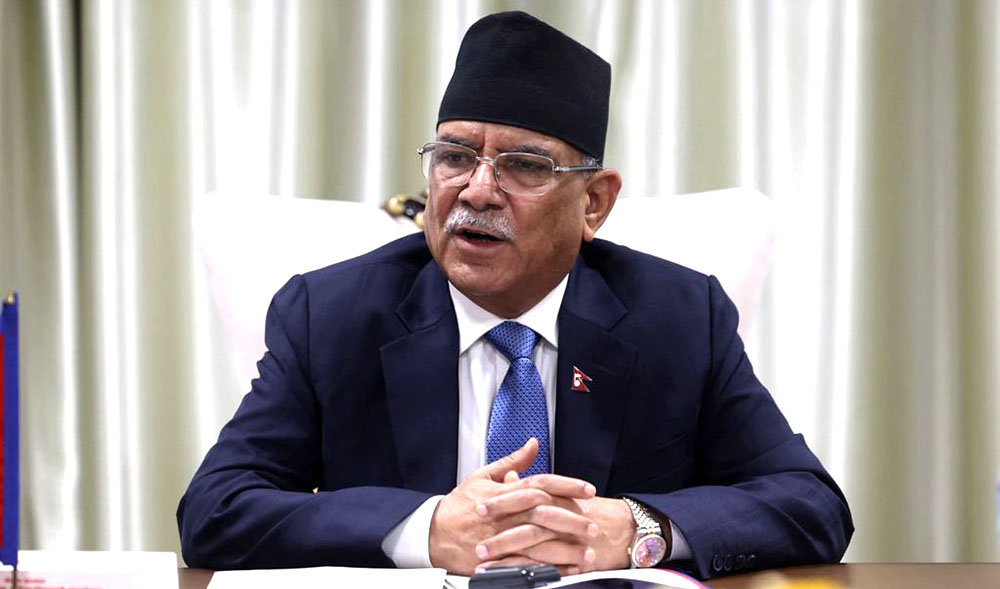
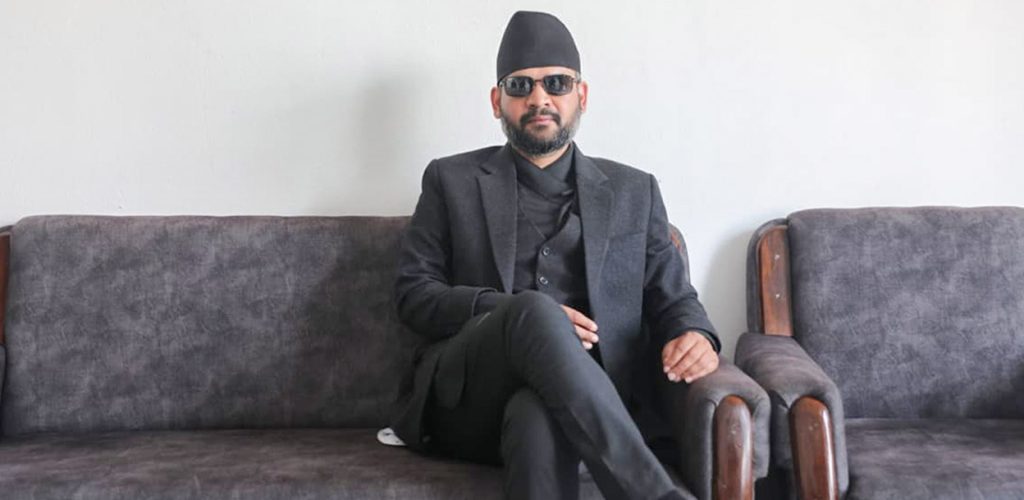
Pushpa Kamal Dahal
After the March 2026 electoral disaster, the UML began its most prolonged and public internal crisis yet. The September 2025 Gen Z uprising had already toppled Oli’s government after nineteen students were killed during the crackdown. Oli was arrested on March 28, 2026, over those killings, on the recommendation of a probe commission, becoming the first sitting party chairman in Nepal’s history to be taken into police custody in such circumstances. He underwent surgery for gallbladder stones and recovered at his Gundu, Bhaktapur residence, where political meetings became the default venue for the entire party machinery because Oli refused to relinquish control even from his sickbed.
The Gundu residence in Bhaktapur became a kind of court where supplicants came to present their views to a chairman who had lost a general election, lost his own constituency to Balen Shah, and was recovering from surgery while facing criminal charges, yet still would not consider stepping aside.
Central Committee members were summoned one by one in the weeks after the election, with Oli trying to map the extent of internal opposition, repeating the same tactical approach he had used in every previous internal challenge. Some central committee members reportedly declined to engage directly, finding the exercise pointless without first addressing the underlying structural problems.
Then came the secretariat meetings of May 2026, held at Gundu, which became the definitive exposure of how isolated Oli had become. He opened the floor himself, inviting members to speak freely about the party’s future. What followed was an avalanche. Across four days of sessions, 14 of the 19 secretariat members spoke against his continued leadership in various degrees. The specifics are damning.
Yogesh Bhattarai, a deputy general secretary, explicitly demanded Oli’s resignation and said the party could not move forward under him. Gokarna Bista called for leadership change. Raghubir Mahaseth warned of complete organizational collapse if nothing changed. Prithvi Subba Gurung and Raghuji Panta collectively concluded, along with Bishnu Paudel, that Oli must go.
General Secretary Shankar Pokhrel, the man Oli had fought to keep in his post just months earlier against Paudel’s objections, told the meeting that the party could not continue in its current condition and that restructuring was necessary. Padma Aryal, Chhabilal Bishwakarma, and Lekharaj Bhatta all expressed reformist positions of varying degrees. Only Ram Bahadur Thapa Badal and Mahesh Basnet defended Oli without qualification.
This was not an opposition faction doing what opposition factions do. These were people Oli had elevated, protected, and sometimes battled for. Bishnu Paudel, the vice chairman who had been Oli’s closest organizational ally for years, was now calling for new leadership, having been alienated first by Oli’s insistence on keeping Shankar Pokharel as general secretary at the December convention against Paudel’s wishes, and then further by Oli’s decision, upon his arrest, to designate Ram Bahadur Thapa Badal as acting chairman instead of Paudel, who expected that responsibility. Oli had bypassed Paudel twice in succession, and Paudel had drawn the obvious conclusion.
Shankar Pokharel’s defection is perhaps even more significant. Pokharel had spent his entire political career as Oli’s instrument, described by party observers as a generally illiberal figure who advocated a two-party system and concentrated authority. His decision to signal at the secretariat that the status quo was unsustainable represented the clearest possible indication that Oli’s inner sanctum had collapsed. The Bagmati Province Committee and various district committees had also been holding informal meetings about post-Oli leadership, adding organizational momentum to what had been a leadership conversation.
Oli’s response to all this was entirely consistent with his political personality over three decades. He rejected every call to resign.
He told the secretariat that he had been elected through a legitimate process and had not been picked off the street. He became visibly irritated when Yogesh Bhattarai spoke, repeatedly interrupting him to ask that he be dignified and brief. He warned that once the UML leadership was touched, the country could be brought to a standstill.
He began holding private meetings at Gundu with Bagmati province leaders and other central committee members, trying to build a counter-bloc through direct outreach, aiming to bypass the secretariat where he now lacked support and seek legitimacy instead from the broader central committee. Party insiders noted that Oli appeared to believe he could still secure a majority in the larger central committee even if he had lost the secretariat, because the central committee’s 251 members include many provincial figures whose futures remain tied to the Oli organizational machine.
Sources within the party have also quoted Oli as privately characterizing Bishnu Paudel and Shankar Pokhrel in deeply personal terms, describing them as ungrateful opportunists who were now working against him after years of being shielded and promoted under his leadership. The characterizations, which reportedly use language suggesting greed and betrayal, have circulated within party networks and have intensified the breach rather than narrowing it.
Meanwhile, a signature campaign invoking Article 72 of the party statute for a special general convention was gathering pace by April 2026. The statute requires two-thirds of district committees or a majority of convention representative council members to formally demand it in writing before the central committee is obligated to convene such a convention within six months. Around 600 of the 2,200 convention delegates had signed the petition in the early weeks after the election, not yet at the threshold but moving in that direction. Party members note that the pace of signatures correlates with the pace of Oli’s rejection of internal demands, and that both are accelerating simultaneously.
The deeper philosophical crisis of UML runs beneath all of this and predates Oli’s personal dominance, though he has greatly accelerated its manifestation. The party was built on the premise that a communist movement could operate with genuine discipline and ideological coherence within liberal democratic structures. Madan Bhandari’s People’s Multiparty Democracy was the theoretical framework for that premise. Over decades, two parallel corruptions occurred. The first was the shift from class politics to coalition politics, where electoral calculation replaced ideological conviction as the organizing principle of party strategy. The second was the centralization of authority within the party to the point where internal democracy became purely ceremonial.
Under Oli, both corruptions reached their logical extreme. He proposed a departure from People’s Multiparty Democracy at the 2025 statute convention, floating the concept of “Nepali style of socialism” as a new political line, a move so vague it amounted to ideological amputation without replacement. He concentrated authority in the party chairman’s office by removing age and term limits, scrapping the senior vice-chairman post, and giving the chairmanship formal authority over decision-making that previously required collective deliberation. The party became, structurally and operationally, a personal vehicle for his political survival.
When the Gen Z mobilized in September 2025, they did so without party flags, without ideological banners, and without the cadre organizations that UML had spent decades building. They represented a political culture that the party had no vocabulary for, one defined by individual dignity, digital transparency, and revulsion at precisely the governing style that Oli embodied. His government’s instinct was to call them anarchists and tools of foreign interests. The students who were killed in the crackdown were young Nepalis whom UML’s founding ideology was supposed to champion. The party’s response permanently alienated a generation it had presumed to represent.
The March 2026 elections delivered the statistical confirmation of that rupture. In Kathmandu Valley, 11 of UML’s 15 candidates lost their security deposits. KP Sharma Oli, who had won his constituency six times in seven attempts since 1991, lost to Balen Shah. The party received 13.4 percent of the proportional vote nationally, down from a position of dominance it had occupied for years. The Rastriya Swatantra Party’s 47.84 percent of the proportional vote was built almost entirely on voters who had previously given their mandate to parties like UML and found them wanting.
The ramifications of this rift extend far beyond the party’s internal corridors. Nepal’s left, historically the political home for organized labor, educated urban lower-middle class voters, and rural communities in hill districts, is in disarray precisely when a politically activated young generation is searching for progressive alternatives to RSP’s technocratic centrism. Prachanda’s Nepali Communist Party holds 17 seats but is also built on personality politics rather than organizational strength, and has itself suffered from leadership contradictions its entire history. If UML fractures or enters prolonged managed dysfunction, that progressive space remains unoccupied.
Nepal’s governance accountability also suffers. The RSP’s landslide has produced a parliament where the largest opposition bloc, 38 seats for the Nepali Congress, lacks the critical mass to effectively interrogate government policy on economic questions, labor rights, or federal resource distribution. A coherent, organized left opposition would serve as a necessary counterweight. UML, consumed by its own war, cannot play that role.
The geopolitical dimension is also significant. Oli had aligned UML with a distinctive foreign policy posture: rhetorically militant on border disputes with India, visibly warm toward Beijing as demonstrated by his attendance at China’s Victory Day Parade in September 2025 alongside Putin and Kim Jong-un, and suspicious of Western engagement framed as interference. A weakened UML disrupts the triangular balance of influence that India, China, and Western countries have cultivated within Nepali politics through their respective party relationships. Both New Delhi and Beijing will be watching the UML’s internal evolution closely because the party’s organizational network in hill and Terai districts remains a significant political asset regardless of its parliamentary headcount.
The most searing irony in all of this is that KP Sharma Oli is, at his core, a product of rebellion against entrenched power. He spent his youth in prison for confronting a system he judged unjust. He built his political career on being the outsider who would disrupt the party establishment. He now is the establishment, using every instrument of party machinery to suppress dissent from within, including the same organizational suppression tactics he once condemned when used against him. When Bhim Rawal challenged him at the 2021 convention, Rawal was eventually pushed entirely out of UML and ended up in Prachanda’s new party.
When Madhav Kumar Nepal built an internal faction, Oli threatened disciplinary action against anyone attending their meetings. When his own general secretary and four of his five vice chairmen tell him in May 2026 that the party cannot continue under his leadership, he absorbs four days of secretariat criticism, rejects it entirely, and starts calling party members to his Gundu residence one by one to try to rebuild a counter-majority.
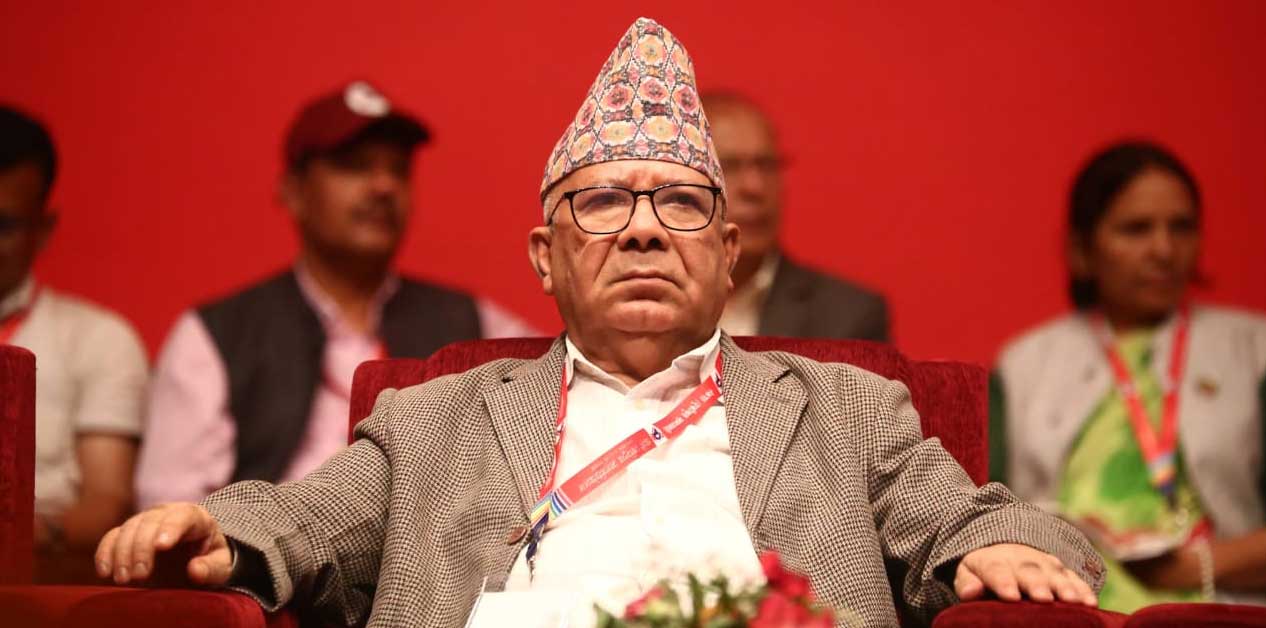
Madhav Kumar Nepal. File photo
There is a dimension to this beyond ego that must be acknowledged. Oli’s refusal to relinquish the chairmanship is not simply stubbornness. For a man who has now been arrested once on charges related to the deaths of young protesters, who faces potential further legal exposure for his governance decisions, and who has operated for decades in a political system where the line between political immunity and criminal liability is defined by institutional position, the chairmanship is not merely a title. It is a form of protection. The moment he leaves, he becomes fully exposed, not just politically but legally. His defiance is in part the calculation of a man who understands that the exit from power might be the entrance to a prison cell. That calculation, more than ideology or organizational loyalty or democratic conviction, is the engine of his persistence.
UML is on the brink. Whether the brink gives way into formal split, managed fragmentation, or a forced leadership transition remains genuinely uncertain. What is certain is that the party’s existential crisis did not begin with the March 2026 elections. It began the moment UML chose organizational consolidation over ideological renewal, the moment it decided that holding power was more important than understanding why it deserved power.
The Gen Z protests and the electoral rout were not the disease. They were the symptoms of a party that had been quietly hollowing out for years, held together by state resources, cadre discipline, and one man’s extraordinary, ultimately destructive capacity to make himself irreplaceable.
Nepal’s left built its identity on the promise of transformation. A party that cannot transform itself has forfeited the moral right to that promise. And a chairman who burned a historic two-thirds mandate to ash rather than share power, who stripped a widow of her dead husband’s party membership to neutralize a rival, who called students killed on the streets tools of foreign conspiracy, who now sits in his Gundu compound calling his departing loyalists greedy while the organization he spent his life building disintegrates around him, is not a victim of circumstances. He is their architect.