Kathmandu
Sunday, June 21, 2026





A decade of government data shows Nepal spent close to Rs 197 billion on agricultural subsidies, yet auditors say much of it bypassed the small farmers it was meant to help.
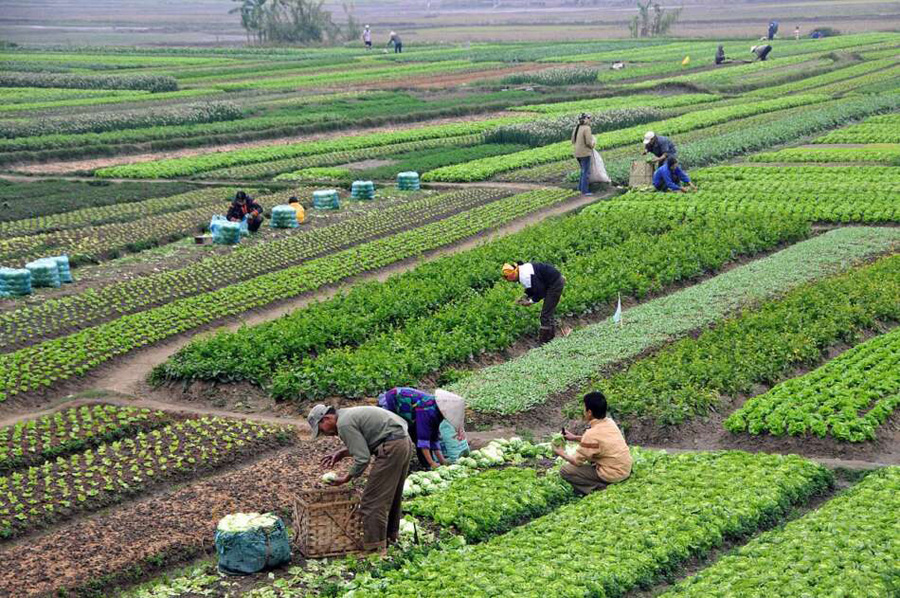
KATHMANDU: Nepal’s Office of the Auditor General has tracked agricultural subsidy spending across ten fiscal years, from 2015/16 through 2024/25, totaling roughly Rs 197.13 billion.
Around Rs 150 billion of that went toward chemical fertilizer subsidies alone, while close to Rs 48 billion was channeled to individual and corporate farms.
Annual audit reports have repeatedly flagged poor targeting, absence of integrated farmer records across federal, provincial and local governments, and a pattern where politically connected entities capture benefits meant for ordinary cultivators.
How much has Nepal spent on agricultural subsidies over the past decade, according to the Auditor General’s records?
The Office of the Auditor General’s compiled annual reports put total agricultural subsidy disbursement at approximately Rs 197.13 billion across ten fiscal years, running from 2015/16 through 2024/25. This figure represents direct subsidy outflow recorded in the office’s annual audit reports and does not necessarily capture every ancillary cost, such as administrative overhead, transport subsidies tied to fertilizer movement, or losses absorbed informally at the local level.
Year-on-year, the figure climbed unevenly, starting near Rs 10 billion in the earliest year tracked and ending above Rs 32 billion in the most recent year for which full figures exist.
The scale of spending alone places agriculture among the largest subsidy categories in Nepal’s federal budget, alongside fuel and social security transfers, and successive auditor general reports have used this cumulative total to argue that subsidy spending has grown faster than measurable gains in farm productivity or food self-sufficiency.
How was this Rs 197 billion broken down between fertilizer and other subsidy categories?
Of the total amount, close to Rs 150 billion, or roughly three-quarters of all agricultural subsidy spending over the decade, was directed toward chemical fertilizer purchase and distribution programs run jointly by the Agricultural Inputs Company and the Salt Trading Corporation.
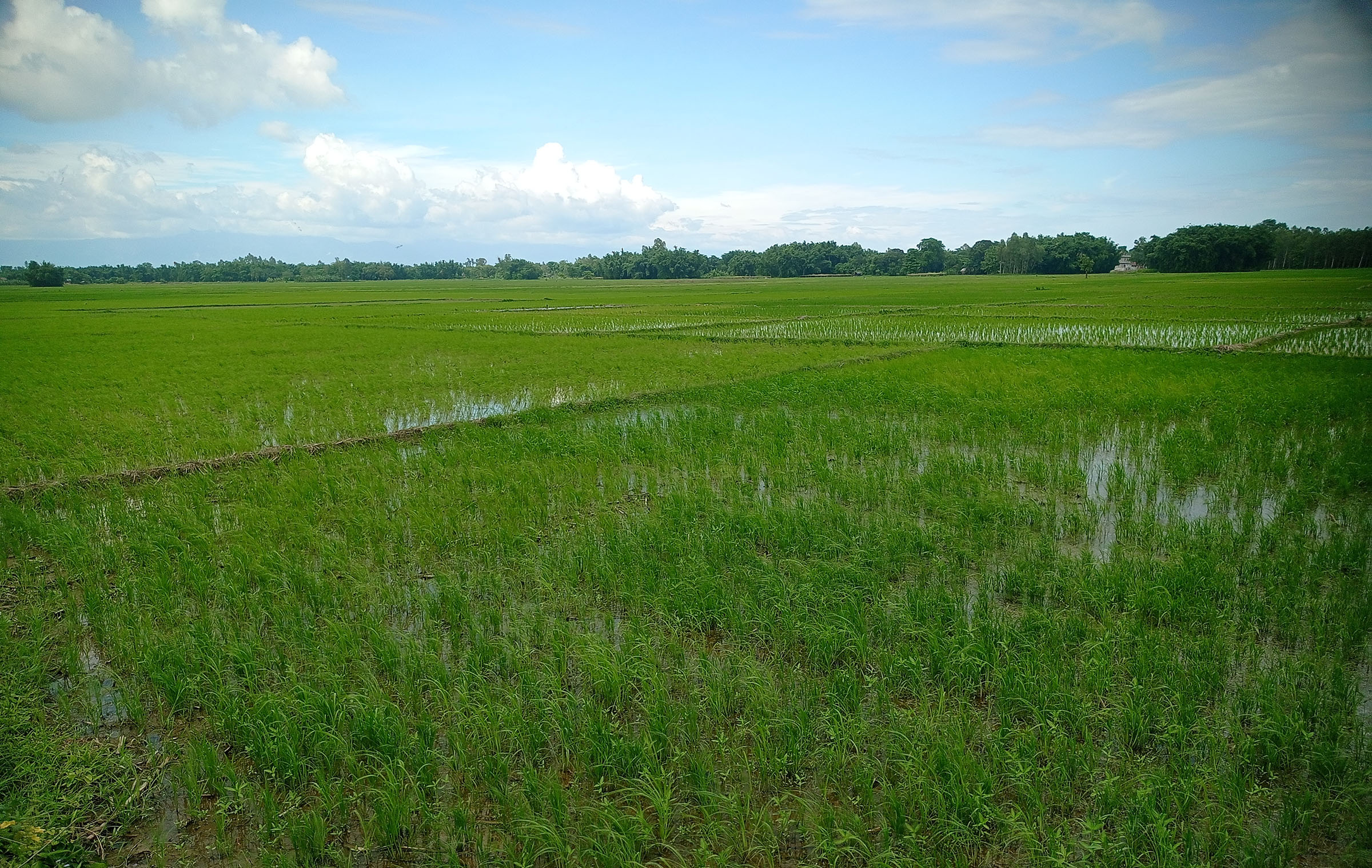
The remaining amount, approximately Rs 48 billion, went to individual farmers and business-registered farms through interest subsidies on agricultural loans, equipment grants, irrigation support, and various provincial and local-level grant schemes.
In the most recent fiscal year alone, auditors found that more than 83 percent of one year’s agricultural ministry disbursement went purely to fertilizer procurement, leaving a comparatively small share for diversification programs such as horticulture, livestock, or agro-processing support.
This heavy tilt toward fertilizer has drawn criticism because fertilizer subsidies are price-support mechanisms tied to import volumes rather than productivity outcomes, meaning the money is spent regardless of whether yields actually rise.
Which fiscal years saw the steepest jumps in subsidy spending?
According to the Auditor General’s year-wise figures, spending rose from about Rs 10.04 billion in fiscal year 2015/16 to Rs 10.78 billion the following year, then dipped slightly to Rs 8.77 billion before climbing again.
The sharpest jump came between fiscal years 2018/19 and 2022/23, when annual subsidy outlay rose from roughly Rs 12.29 billion to Rs 36.04 billion, more than tripling within four years.
This period coincided with global fertilizer price spikes following supply disruptions linked to the COVID-19 pandemic and the Russia-Ukraine war, which pushed import costs higher and forced the government to expand subsidy allocations just to maintain existing fertilizer volumes.
Spending eased slightly to Rs 29.34 billion in 2023/24 before rising again to about Rs 32.13 billion in 2024/25, the latest year for which detailed figures are available, suggesting the elevated spending plateau has persisted rather than reverting to pre-pandemic levels.
What does the Auditor General mean when it calls the subsidy system “unproductive and disorganized”?
The characterization stems from repeated audit findings that subsidy money has not translated into proportionate gains in agricultural output or productivity, despite spending roughly doubling within six years.
Auditors point to several structural weaknesses: the absence of a unified, cross-verified farmer registry that spans federal, provincial and local governments; weak monitoring of whether subsidized inputs or cash actually reach intended beneficiaries; and a near-total lack of follow-up evaluation on whether funded programs continued operating after disbursement.
Provincial-level rules in some regions, such as Sudurpaschim, explicitly limit a beneficiary to one subsidy program per fiscal year, but auditors found no monitoring mechanism enforcing even that single-province rule consistently.
In one cited case, agencies in Sudurpaschim Province distributed over Rs 380 million in subsidies without any subsequent check on whether the funded projects generated the promised employment or production increases.
Because each level of government runs its own subsidy programs independently, with no shared database, the same individual or organization can potentially draw benefits from multiple agencies for the same activity, a risk auditors explicitly flagged as the system’s most basic design failure.
Is there evidence that subsidy money has been claimed twice by the same recipients?
The Auditor General’s reports do not provide a single nationwide count of confirmed double-claims, but they consistently warn that the risk is structurally built into how subsidies are administered.
Because federal, provincial and local governments each run independent agricultural subsidy programs without sharing a common farmer database, the same person, cooperative, or business entity can apply to more than one tier of government for grants covering similar or identical activities, such as irrigation equipment or livestock purchase, without any cross-check flagging the overlap.
Provincial-level rules in some regions, such as Sudurpaschim, explicitly limit a beneficiary to one subsidy program per fiscal year, but auditors found no monitoring mechanism enforcing even that single-province rule consistently.
The absence of a unified registry means duplicate or near-duplicate disbursement is plausible at scale, even though documenting every individual instance would require matching records across dozens of separate district and provincial offices that currently operate in isolation from one another.
Have wealthy businesses or large agro-industrial firms benefited from subsidies meant for small farmers?
Yes. Investigative reporting and earlier audit findings have documented cases where interest subsidies on concessional agricultural loans, a scheme originally designed to help returnee migrants and small entrepreneurs without collateral access bank credit, were instead claimed by large, already-established agribusiness houses.
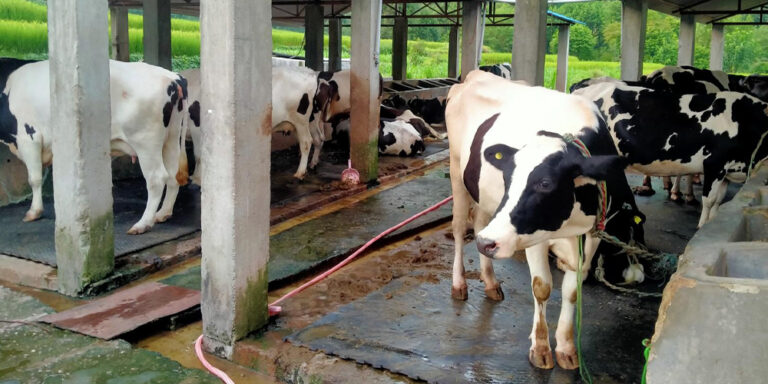
Big dairy processors and a major tea-estate operating company were among entities found to have received hundreds of thousands of rupees in interest subsidy payments tied to loans that were not capped tightly enough to exclude large borrowers.
A former finance ministry official involved in designing the scheme has acknowledged that lawmakers never envisioned large industrial operators as beneficiaries when the concessional lending facility was created.
Because the loan ceiling for subsidized interest rates was set high enough to cover substantial agribusiness borrowing, and because banks process the subsidy claims without strict verification of the borrower’s existing wealth or company size, the structure effectively allowed established business groups to access the same subsidized credit intended for first-time, capital-constrained farmers.
What did the internal government investigation into commission-taking by field staff find?
A ministry-appointed review team, formed in mid-2018 to examine reported irregularities in farm subsidy distribution, found that roughly 35 percent of subsidy money meant for farmers in certain programs was being withheld as informal commission by local agricultural staff before reaching beneficiaries.
In one documented case from Bardiya district, a farmer group had been approved for a cash subsidy of about Rs 65,000 for cooperative farming and small irrigation work, but bank and office records showed the group actually received only around Rs 42,000, with the remaining Rs 23,000, exactly the commission rate the team later calculated nationally, unaccounted for.
The review concluded this was not an isolated incident but a recurring pattern across multiple district offices, where officials responsible for verifying and releasing subsidy payments extracted a cut before farmers ever saw the funds, effectively reducing the real value of subsidies far below their budgeted amount.
Has subsidy spending actually improved Nepal’s food self-sufficiency or reduced agricultural imports?
The data suggests otherwise. Despite a six-year period in which cumulative agricultural subsidy spending roughly doubled, Nepal’s import bill for agricultural and food products kept climbing rather than shrinking.
In the year immediately following that period, the country imported close to Rs 198 billion worth of agricultural and food-related goods, a figure comparable to the entire decade’s subsidy spending being tracked in this report.
Within just four months of a subsequent fiscal year, agricultural imports already exceeded Rs 68 billion. Food grain production has also shown volatility tied largely to monsoon patterns rather than subsidy levels, with at least one year recording a production decline even after a substantial subsidy increase.
This disconnect between rising subsidy outlay and rising import dependence is central to the Auditor General’s repeated conclusion that the spending has not delivered proportionate productivity gains, reinforcing concerns that subsidies are functioning as a recurring fiscal transfer rather than a genuine productivity investment.
Why does fertilizer continue to dominate the subsidy budget instead of more diversified support?
Fertilizer subsidies are politically and administratively simpler to execute than productivity-linked programs because they involve a small number of bulk procurement contracts handled by two state-linked trading entities, rather than thousands of small, individually verified grants.
Successive agriculture ministers have also cited domestic political pressure, since farmers experience fertilizer shortages directly and visibly during planting seasons, making fertilizer subsidies a highly visible and electorally sensitive commitment that governments are reluctant to scale back even when budgets tighten.
Procurement delays caused by public procurement law requirements have further entrenched the reliance on subsidy-linked bulk import deals, since ministries argue that without subsidized pricing, farmers would face international market rates that spiked sharply after global supply shocks.
The result is a budget structure where fertilizer subsidy alone consumed more than 83 percent of one recent year’s entire agricultural subsidy allocation, leaving comparatively little room for newer, output-linked programs such as agro-processing grants, mechanization support, or climate-resilient seed development that auditors and economists argue would more directly raise productivity.
What changes has the agriculture ministry proposed in response to the audit criticism?
Ministry officials have indicated they are developing a new farmer registration and classification system intended to create the unified record auditors say is currently missing, which would allow subsidy applications to be checked against a single database rather than fragmented local registers.
This system is meant to distinguish between genuine smallholder cultivators and larger commercial operators so that future subsidy rules can apply different eligibility thresholds rather than a uniform policy that currently allows large businesses to qualify for the same concessional schemes as subsistence farmers.
Separately, recent federal budget announcements have signaled a shift toward private-sector partnership models, including incentives for private fertilizer production through arrangements with the national electricity utility to support so-called green urea manufacturing, which would reduce reliance on imported fertilizer over time.
However, none of these proposed reforms have yet been implemented at the scale needed to address the structural monitoring gaps the Auditor General has flagged across more than one consecutive annual report, and ministry officials themselves describe the registry work as still in a preparatory data-collection phase.
How has the fertilizer subsidy budget evolved most recently, and is it considered adequate?
For the upcoming fiscal year, the government has allocated about Rs 32.46 billion specifically for chemical fertilizer purchase, even as the overall agriculture and livestock sector budget was reduced to roughly Rs 46.92 billion from approximately Rs 57.48 billion the previous year, an overall cut of around Rs 11 billion.
Despite this overall reduction, the agriculture minister has separately stated that the fertilizer subsidy budget remains insufficient to meet actual import and distribution costs, telling a parliamentary committee that supply bottlenecks persist not because fertilizer cannot be sourced internationally but because allocated funds run out before adequate volumes can be procured and transported to depots in time for planting seasons.
This recurring funding shortfall has been cited as a major reason farmers in various regions report fertilizer arriving late or in quantities far below demand, even in years when the nominal subsidy allocation appears larger than previous years on paper.
Does Nepal’s federal structure make agricultural subsidy oversight more difficult?
Yes, and auditors have identified this directly as a contributing factor. Since the implementation of federalism, all three tiers of government, federal, provincial, and local, now run their own agricultural subsidy programs simultaneously, often covering overlapping categories such as seed support, irrigation equipment, or livestock grants.
Because no single tier currently maintains records that are shared with or cross-checked against the others, a recipient in one municipality could theoretically receive a subsidy for the same stated purpose from their local government, their province, and a federal program in the same fiscal year without any of the three offices being aware of the others’ disbursement.
This fragmentation also makes it harder for journalists, auditors, or oversight committees to compile a true national picture of subsidy spending, since data must be manually gathered from hundreds of separate provincial and local offices that follow inconsistent reporting formats, a problem the Auditor General has cited as a basic precondition that must be fixed before any meaningful evaluation of subsidy effectiveness can occur.
What has happened to plans for a domestic fertilizer factory that would reduce dependence on imports and subsidies?
Plans for a domestic urea fertilizer plant have been discussed by Nepal’s investment promotion authorities for roughly two decades, beginning with budget allocations for a factory initiative first proposed in the early 2010s, yet no plant has been built.
A feasibility study conducted by the national investment board years ago estimated that establishing a domestic urea industry would cost approximately Rs 70 billion, primarily because Nepal lacks the natural gas reserves typically used as feedstock for urea production and would need to rely on an energy-intensive alternative production process.
This heavy tilt toward fertilizer has drawn criticism because fertilizer subsidies are price-support mechanisms tied to import volumes rather than productivity outcomes, meaning the money is spent regardless of whether yields actually rise.
The most significant obstacle identified across multiple study rounds has been the energy supply requirement, since fertilizer manufacturing demands a large, consistent and affordable electricity or gas source that Nepal has historically struggled to guarantee, alongside the need to import raw materials from India or other markets regardless of where the finished fertilizer is manufactured.
Recent budget documents reference a renewed effort involving the national electricity utility and private investors to develop a “green urea” production model using domestic hydropower, though this remains at an early planning stage rather than active construction.
Who ultimately bears the cost when subsidy money is misallocated or captured by non-target groups?
The direct fiscal cost falls on Nepal’s general taxpayers and the national treasury, since agricultural subsidies are funded through the regular federal budget rather than a ring-fenced agricultural development fund, meaning misallocated subsidy spending reduces the resources theoretically available for other public priorities such as health, education or infrastructure.
The indirect cost falls on smallholder farmers themselves, who are the policy’s stated intended beneficiaries but who auditors and independent investigations suggest often receive a diminished or delayed share of subsidy value, whether through field-level commission-taking, late fertilizer delivery caused by budget shortfalls, or competition for the same subsidy pool from better-connected commercial applicants.
Over time, this combination erodes public trust in subsidy programs generally, since farmers experiencing repeated shortages or delays become skeptical that announced subsidy increases will translate into tangible support, even as published budget figures show subsidy totals rising year after year, creating a persistent gap between the government’s stated commitment to agriculture and farmers’ lived experience of the support.
What would meaningful reform of Nepal’s agricultural subsidy system require, according to auditors and analysts?
Based on the recurring recommendations across multiple Auditor General reports, meaningful reform would require at minimum a single, verified national farmer database accessible to and updated by all three tiers of government, replacing the current fragmented record-keeping that makes duplicate claims and untracked spending possible.
It would also require shifting at least part of the subsidy structure away from blanket fertilizer price support toward programs more directly tied to measurable productivity or income outcomes, alongside mandatory post-disbursement monitoring so that ministries can determine whether funded projects, equipment, or livestock purchases actually remained in operation rather than simply confirming that money left government accounts.
Analysts have additionally called for hard eligibility caps that exclude large, already-capitalized businesses from schemes explicitly designed for smallholder and first-time farmers, closing the loophole that allowed established agribusiness and dairy companies to draw concessional interest subsidies alongside subsistence cultivators.
Without these structural changes, auditors warn that subsidy totals will likely keep climbing in nominal terms while productivity and self-sufficiency indicators continue moving in the opposite direction, repeating a decade-long pattern the data has already established.