Kathmandu
Tuesday, June 23, 2026





Despite mobile banking, digital wallets, and social media reaching villages, lack of awareness about safe usage leaves the general public vulnerable to scams.
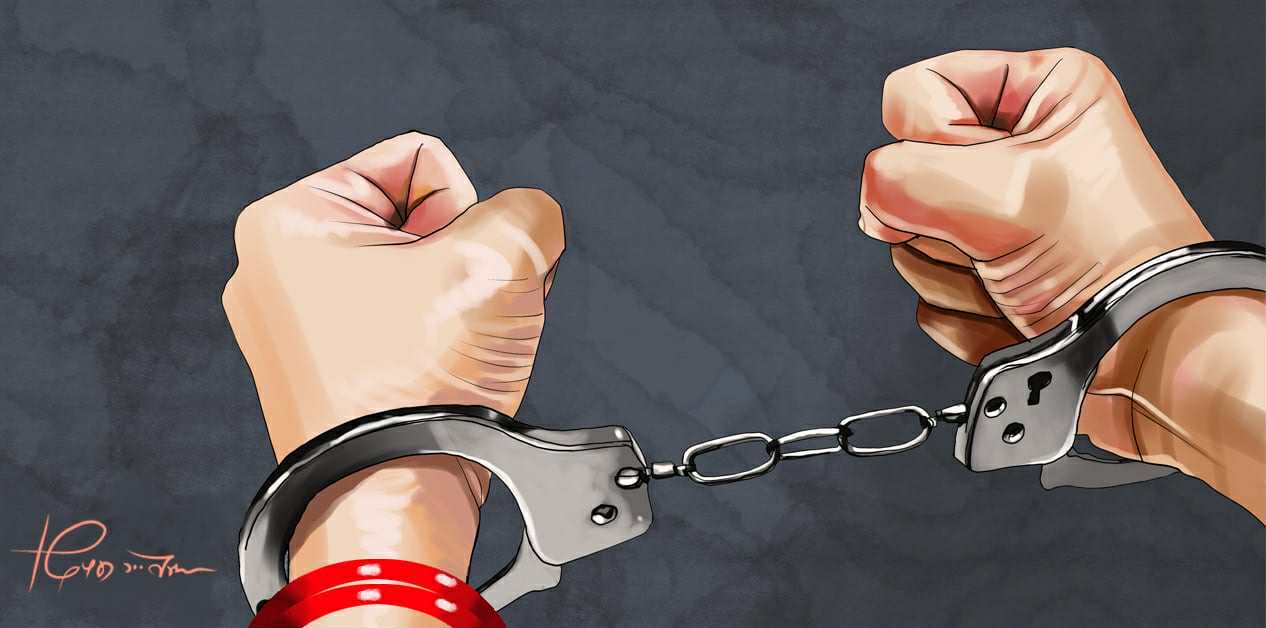
JANAKPURDHAM: Bishal Kumar Bhujel, the proprietor of Mama Bhanja Traders—a money transfer business operating in Dhanushadham—was arrested on December 26, 2025, on charges of fraud. He used to collect citizenship copies and photographs as evidence from customers who came to withdraw money. According to the District Police Office, Dhanusha, he utilized those collected documents to obtain mobile SIM cards and open digital wallet accounts, including eSewa, by filling out the Know Your Customer (KYC) details. Police stated that ten individuals, including Bishal, were arrested after investigations revealed their involvement in scams using such accounts.
Prior to this, Dhanusha Police arrested seven individuals on May 8, 2025, on charges of committing fraud by opening fake accounts on social media. The police claim that they swindled Rs 26 million 309 thousand and 312 through online mediums.
According to Dhanusha Police, they used to post advertisements on social media claiming that goods were available at cheap rates, demand advance payments, and become unreachable once the amount was deposited. Police stated that they used 21 fake accounts and pages on social media, alongside 29 accounts on eSewa and 16 accounts on Khalti.
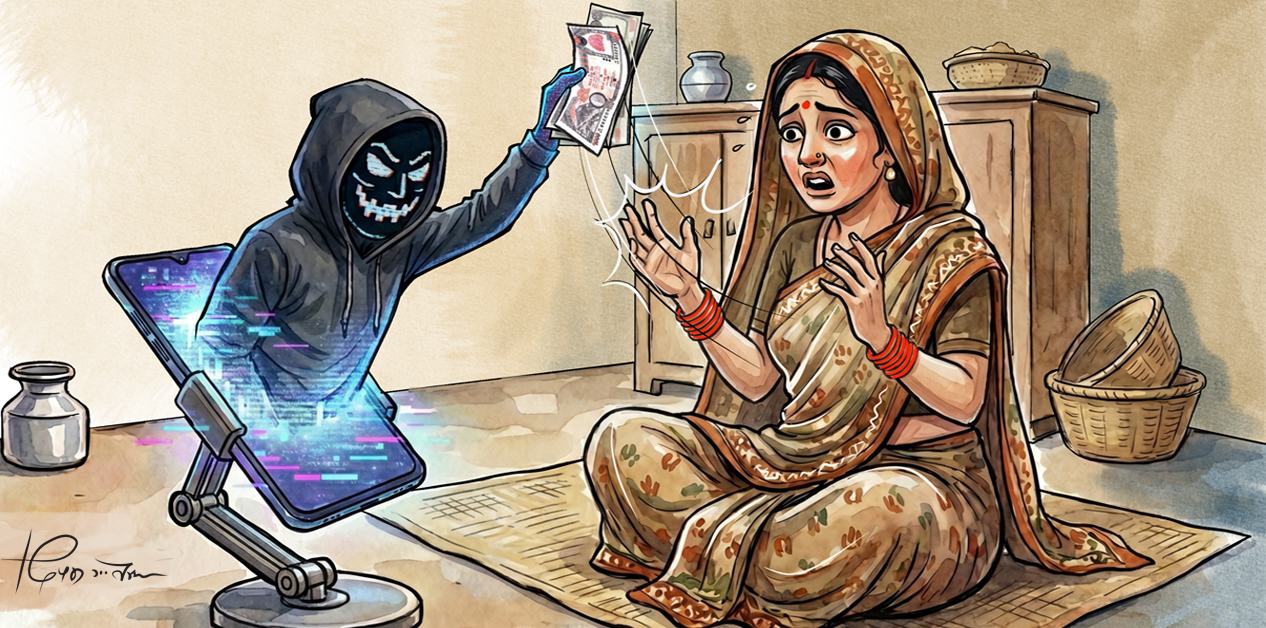
As access to mobile banking, digital wallets, and social media reaches the villages of Madhesh, online fraud has begun emerging as a new challenge. Technology has made daily transactions easier, but due to a lack of adequate information regarding safe usage, the general public is falling victim to scams through the misuse of citizenships, photographs, OTPs, bank accounts, and digital wallets.
According to the police, family members of those in foreign employment who visit money transfer agencies to withdraw cash, as well as customers lacking sufficient knowledge about banking procedures and digital transactions, are becoming the victims of such frauds.
The police report that incidents of demanding money by tempting people with cheap goods, highly effective medicines, bank account renewals, and foreign opportunities are on the rise. According to the police, since many people do not file complaints when scammed for small amounts, it has become easier for fraud syndicates.
Various forms of online fraud
On February 22, 2025, an Indian citizen named Ravi Shankar Thakur was arrested from a rented house in Murli, Birgunj Metropolitan City-12 of Parsa, on charges of operating online gambling. From his room, police seized electronic devices including laptops, routers, and headphones.
Similarly, on January 31, 2024, 26-year-old Damber Sah of Dumri, Rajbiraj Municipality-10 in Saptari, was arrested on charges of managing accounts where funds from online fraud were sent. According to the police, the money swindled via social media networks like WhatsApp, Facebook, and Imo under the pretext of sending parcels was managed across various accounts. The police claim that funds were deposited into Sah’s Udgam Venture Capital, Profist Group, and his personal account, and were later provided to the fraud syndicate via cash, crypto, or bank transfers.
On April 23, 2023, Dhanusha Police arrested six individuals on charges of directly and indirectly swindling Rs 4,909,500 from 1,091 people by making them open accounts in an American organization called Tallwin Life using internet browsers.
According to statistics from the Police Headquarter, nine cases of online fraud were registered in Madhesh Province in the fiscal year 2024/25. The data notes that fraud amounting to Rs 1,929,000 occurred in those incidents.
Similarly, four cases were registered in the fiscal year 2023/24, with fraud amounting to Rs 4,051,000. In the fiscal year 2022/23, two cases were registered, with fraud amounting to Rs 3,704,000. In the fiscal year 2021/22, 17 cases were registered, showing fraud worth Rs 5,731,000. In the fiscal year 2020/21, 15 cases were registered, with fraud worth Rs 4,732,000 recorded in the police files.
Rising access
With the expansion of internet and smartphone access, recharging, paying water and electricity bills, purchasing movie and entertainment tickets, insurance premiums, school fees, and other daily transactions are being conducted online. Banks, financial institutions, and payment service providers are also prioritizing digital transactions.
According to the Economic Study Report 2025/26 published by Nepal Rastra Bank, there are 1,759 branches of banks and financial institutions licensed by the central bank in Madhesh Province. Among the operating branches, commercial banks account for 587, development banks for 86, finance companies for 53, and microfinance institutions for 1,033.
Nepal Rastra Bank
The report mentions that district-wise, the presence of banks and financial institutions is highest in Dhanusha, Bara, and Sarlahi, while it is lowest in Rautahat. The number of ATMs in the province has reached 511. The highest number of ATMs is in Dhanusha with 83, and the lowest is in Rautahat with 44.
The expansion of the banking sector has increased financial access for the general public. However, the risk has also intensified due to a lack of adequate information regarding account security, OTPs, passwords, PIN numbers, wallet codes, KYC, unfamiliar links, and suspicious messages received on social media.
The Assistant Spokesperson of the Madhesh Police Office, SP Bhesh Raj Rijal, stated that the misuse of others’ citizenships, photographs, bank accounts, and mobile numbers has been observed in fraud cases. Rijal, who also holds experience working in the Cyber Bureau, says that both fraud and banking offenses are connected in such incidents.
“In some instances, it is observed that fraud transactions are conducted by opening accounts even in the name of deceased persons,” Rijal says. “There is also a trend where people are given money to use their existing accounts, and transactions are funneled through them.”
According to him, many incidents occur due to greed, carelessness, and a lack of awareness regarding digital security. He stated that a trend has been observed where advertisements are posted on social media offering a Rs 10,000 item for Rs 2,000, requesting the money via eSewa or other wallets, and subsequently changing the phone number.
DSP Subash Bhatta notes that a high number of online fraud complaints are received in Parsa. According to him, not only the uneducated but also the educated class fall victim to online fraud. He says, “Knowing how to operate technology and knowing how to operate it safely are two different things.”
DSP Madhusudan Neupane of the District Police Office, Dhanusha, stated that many individuals become victims of fraud after falling for allurements. According to him, the problem has grown due to deficient knowledge on how to operate social media safely, what kind of details should not be given to unfamiliar persons, and how to keep banking information secure.
The need for digital awareness
Banking experts maintain that protecting account confidentiality is the foremost step in digital security. According to Kamal Kandel, Manager of Nepal Investment Mega Bank in Janakpur, passwords, OTPs, bank details, or wallet codes should never be given to anyone. He says, “Passwords must be kept secure. They should not be shared with anyone. Even if someone asks for an OTP, it must not be given.”
He suggests not opening unfamiliar links, remaining alert to suspicious calls or messages, not providing confidential details over calls made in the name of banks or wallets, and immediately informing the service provider or police if fraud is suspected.
In this context, economist Bhogendra Jha stated that banks, financial institutions, and local levels must advance financial and digital literacy as a regular campaign. According to him, although incentives for digital transactions have increased, the aspect of how to conduct safe transactions remains weak.
“We are encouraging people to open bank accounts and conduct digital transactions, but digital literacy remains secondary,” Jha said. “Customers must be informed about safe transactions right at the time of opening an account.”
According to Jha, the risk of fraud can be mitigated if banks, local levels, and financial institutions run digital literacy campaigns in villages. He added that the monitoring of agencies connected to money transfers and digital transactions must also be strengthened.
The Madhesh Province Police Chief, DIG Govinda Thapaliya, stated that such incidents have increased due to the ubiquity of social media, the mindset of making quick money, and a lack of awareness regarding safe transactions. According to him, since cybercrime incidents have risen in Madhesh Province, complaints are now taken and investigations are advanced at the district level itself. He mentioned that when necessary, district case branches coordinate with the Cyber Bureau to handle everything from registering cases to carrying out investigations.
“Banks are encouraging online transactions. However, awareness on how to stay safe while transacting is low,” Thapaliya said. “Alongside the consumers, the banking sector must also spread safety awareness. It is necessary for local levels to allocate budgets and raise awareness about digital literacy in every village.”