Kathmandu
Wednesday, June 24, 2026





Merchants' vehicles from the Terai plains were heading uphill to collect the cauliflower. Therefore, he was in a rush to get around 100 kg of cauliflower ready. His wife, Rama Limbu, was also assisting him in harvesting the crop. Khadga Bahadur is putting his hard work into land he leased for an annual rent of Rs 50,000.
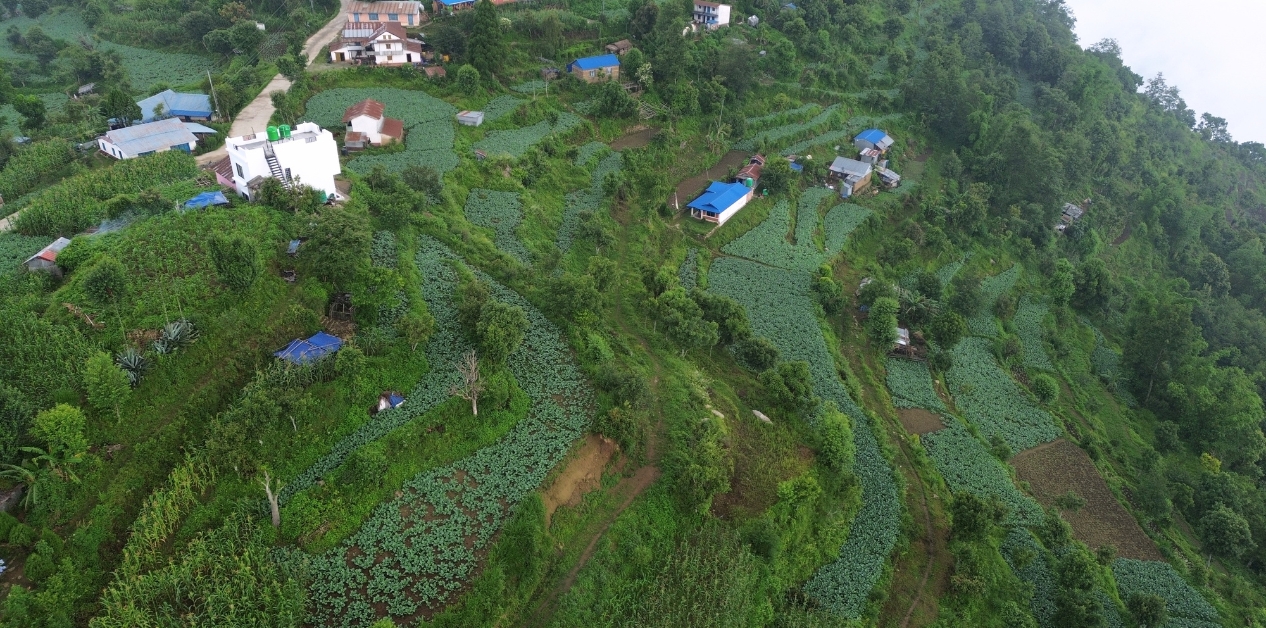
DHANKUTA. The fog had not yet cleared in Dandabazar, located in Sangurigadhi Rural Municipality-5. A gentle, cool breeze was blowing. From as early as 6 am, 45-year-old Khadga Bahadur Limbu was busy in his field, drenched in the morning dew. Carrying a sickle in his hand and a doko (wicker basket) on his back, he entered his cauliflower field.
Merchants’ vehicles from the Terai plains were heading uphill to collect the cauliflower. Therefore, he was in a rush to get around 100 kg of cauliflower ready. His wife, Rama Limbu, was also assisting him in harvesting the crop. Khadga Bahadur is putting his hard work into land he leased for an annual rent of Rs 50,000.
“This is the fruit of our sweat,” Khadga Bahadur says while harvesting the cauliflower. “In this barren hillside where only maize and millet used to grow, these white flowers (cauliflowers) have started blooming, and our lives have changed too.”
Khadga Bahadur’s family grows two crops of cauliflower a year. As the first crop of this year, he has planted cauliflower on 6,104.9 square meters of land. Cauliflowers weighing up to one kilogram have grown in the field. Although pests had caused trouble in previous years, he is happy that the harvest is good this season.
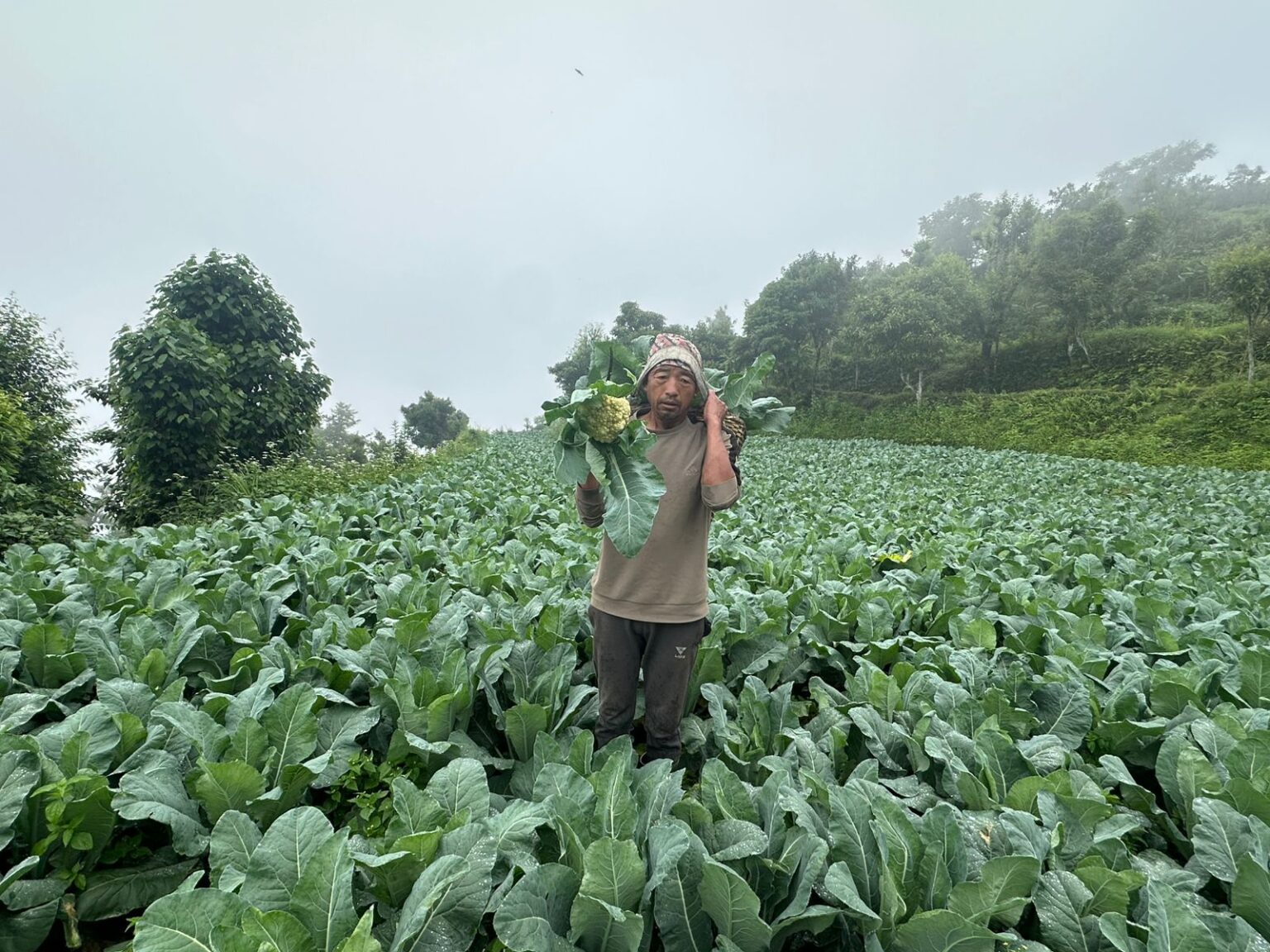
Khadga Bahadur Limbu
He says, “Last year, pests gave us a hard time, but this time the crop has thrived. We estimate a production of up to 60 quintals.”
Domestic tourists visiting Dandabazar also buy vegetables to take back with them. A group including Vivek Gautam from Biratnagar, who had come to Dandabazar to escape the heat as temperatures soared in the Terai, returned with 50 kg of vegetables. They purchased 28 kg of cauliflower directly from Khadga Bahadur’s field. He notes, “Since we came here for a visit, we decided to take back some fresh hill vegetables too.”
Khadga Bahadur sells cauliflower directly from the field to tourists for Rs 50 per kg. Merchants, however, pay him only RS 30 to 35 per kg. Despite this, he estimates an income of Rs 300,000 to 400,000 during the season.
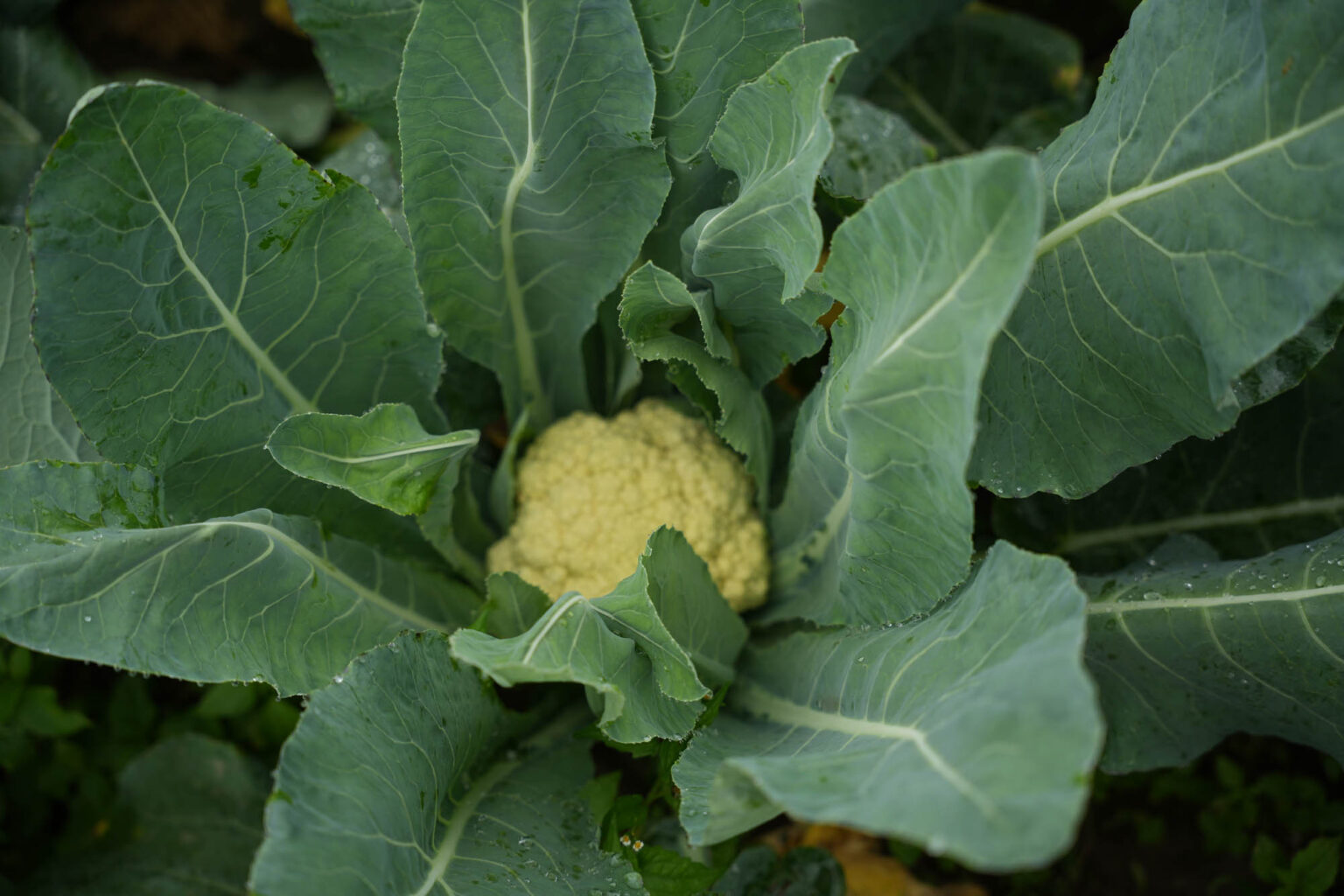
Cauliflower
This scene is just a representative picture of Sangurigadhi Rural Municipality-5, Dandabazar. A village that once worried about food shortages is now gaining recognition as a major vegetable-producing hub in eastern Nepal. Many families in the village have dedicated themselves to commercial vegetable farming.
Putting down the gun to work the fields
Like Khadga Bahadur, Tarabir Tamang is another industrious farmer. His identity used to be quite different. He was a Head Constable in the Armed Police Force. Having served the country’s security with a gun in his hand, Tarabir decided to leave his job and sweat it out in the soil after the Comprehensive Peace Accord of 2006.
Immersing himself in commercial agriculture since 200, Tarabir is now a leading farmer in Dandabazar. He is growing vegetables on a total of 20 ropanis of land, combining his own and his brothers’ plots.
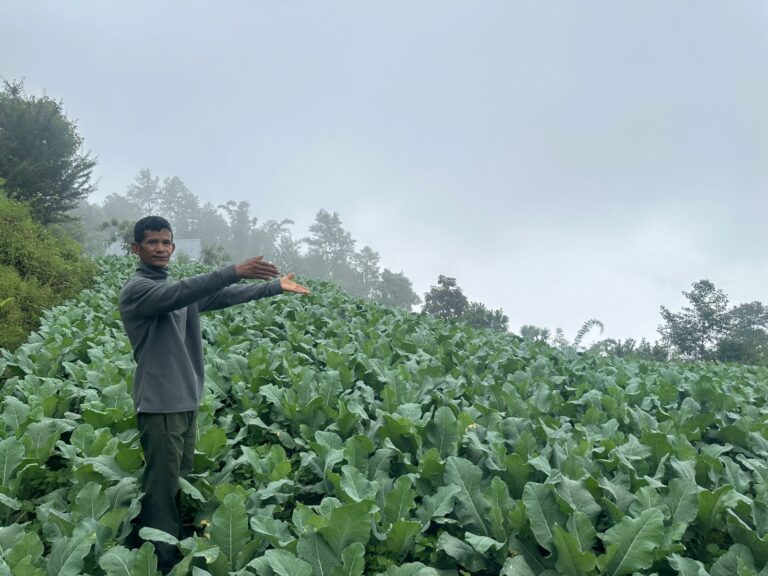
Farmer Tarabir Tamang showing his vegetable farm
“Just like people cultivate paddy in the Terai, we cultivate cauliflower here,” he says. “Earning from the soil gives a different kind of satisfaction compared to a job.”
He has planted cauliflower on 7,630.8 square meters and radish, maize, and soybeans on 2,543.6 square meters. By selling vegetables across two seasons a year, he earns up to Rs 450,000.
The engineer made by vegetables
Sita Ghimire is another successful farmer in Dandabazar. Cultivating vegetables on 6104.64 square meter of land, Sita successfully educated her son to become an engineer solely through the income generated from this soil. Her son, Denis Ghimire, is currently a software engineer in Bengaluru, India. Her daughter, Dikshya, is studying in the third year of her BBS degree in Dharan.
“Previously, when we only grew maize and potatoes, it wasn’t enough to feed us for the whole year. We used to lease out the field to others for just two to three thousand rupees,” Sita recalls the old days. “When we started commercial farming ourselves, the door to income opened.”
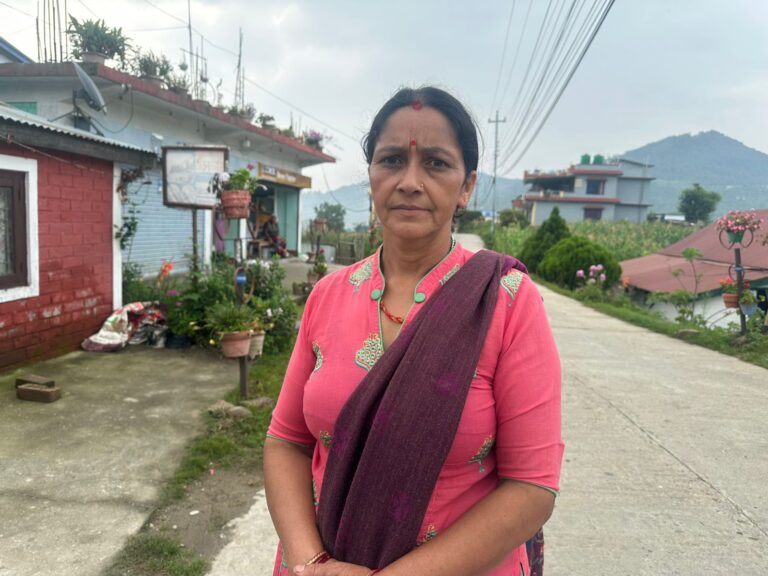
Sita Ghimire
Along with vegetable farming, Sita’s family also rears cattle and runs a homestay. Her husband, Arun Ghimire, supports her hard work. She has planted cauliflower, radish, coriander, and maize across her fields. She notes that out of the total 6104.64 square meter, cauliflower alone is grown on nearly 4,578.48 square meters. She says, “In one season, after deducting all expenses, we make an income of Rs 150,000 to 200,000.” She adds that the annual turnover reaches up to Rs 300,000 across two seasons.
“The cauliflower will be ready for harvesting in the next 15 to 20 days. Right now, the florets are blooming,” she says. “The family members plan to harvest and sell them together.”
Farmers’ Concerns and State Indifference
Despite seeing the potential to improve their standard of living through commercial vegetable farming, the farmers of Dandabazar are deeply concerned about volatile prices and pressure from middlemen.
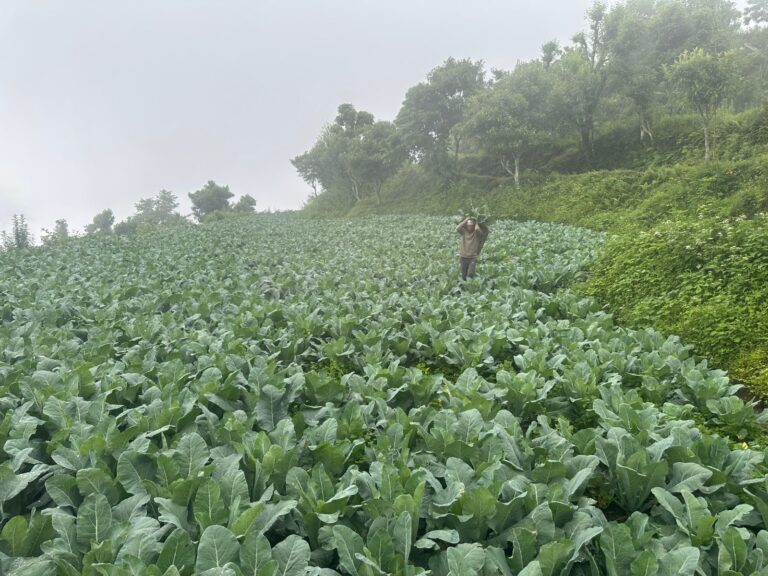
Cauliflower plants ready for harvest
“We have to sell cauliflower for Rs 30–35, whereas consumers pay Rs 80–100 when they buy it,” Sita says. “Sometimes the price drops to Rs 20. Then, it becomes difficult even to recover the investment.”
She states that farmers need reliable technical support from the state and stability in market prices. “If the government plays an effective role in price fixation and disease control, Dandabazar can become a model agricultural village,” Sita says.
Tarabir Tamang is also worried about the degrading health of the soil and government indifference.
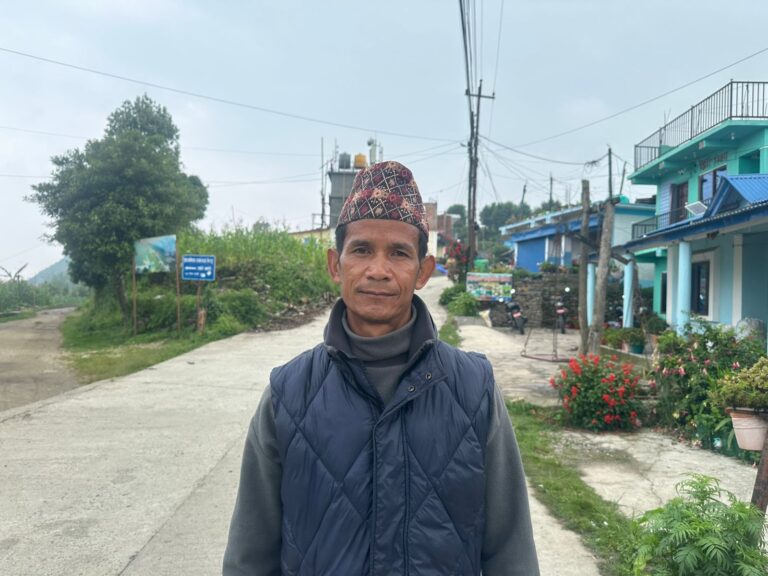
Tarabir Tamang
“A disease causing nodules at the base of the plant (clubroot) has started troubling us,” he says. “But neither the municipality nor the provincial technicians have taught us how to treat it.” He believes the state should support farmers during such crises.
The local government’s plan
According to Khadga Bahadur Limbu, the Ward Chairman of Sangurigadhi-5, more than 400 out of the 528 households within the ward are involved in commercial farming. He informs that the ward has allocated Rs 400,000 for seeds this year. He says, “From the allocated budget, necessary seeds have been purchased and distributed to the farmers here this year.”
The Chairman of Sangurigadhi Rural Municipality, Jitendra Rai, states that the municipality has brought forward a “One Ward, One Technician” policy with the goal of turning the entire local unit into an agricultural hub. He is well aware of the issues where commercial vegetable farming is flourishing in areas like Dandabazar, yet farmers do not receive fair prices and middlemen dominate the market.
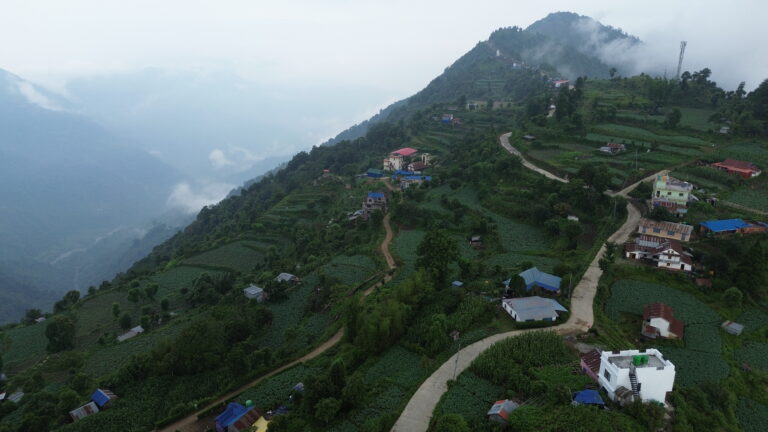
Dandabazar
“The inability to fix market prices is the main problem right now. This is not just a problem of our municipality, but a problem of the entire country,” he says. “Farmers are suffering from the trend where prices drop when production is high and rise when production is low.”
He mentions that the rural municipality has prioritized off-season vegetable farming so that price fluctuations do not adversely affect farmers. He explains that various plans have been introduced to attract farmers toward this direction, as off-season produce commands a good price in the market. He says, “We are providing subsidies to farmers for mini-tillers, mulching technology, and modern tools.”
In Dandabazar, where it was once difficult to sustain life on maize and millet alone, cauliflower, radish, and other vegetables have now carved out a new path of income. However, the hard work of farmers alone is not enough to make this path sustainable. Support from the state appears essential in disease control, technical services, market management, and price stability.