Kathmandu
Wednesday, June 24, 2026





The proposal to build a 100-kilometer cable car project through the Mundum Trekking Trail in the Saptakoshi-Sagarmatha region is highly objectionable from geographical, natural, social, and cultural standpoints.
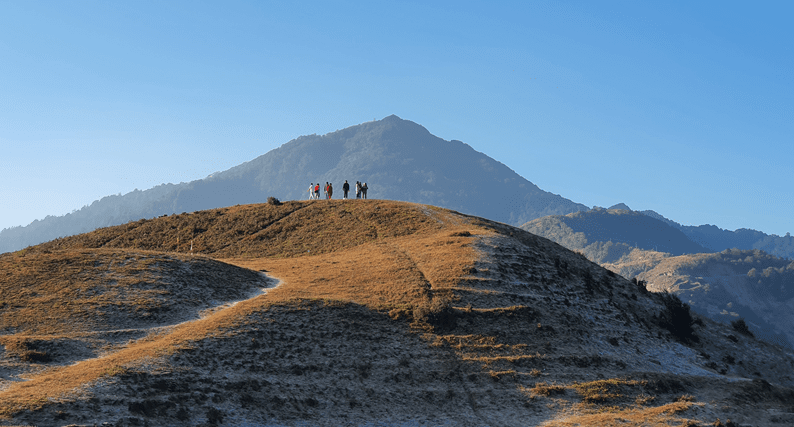
KATHMANDU: Recently, tourism entrepreneur Ramesh Rai presented a concept for a cable car project stretching from Chatara in Sunsari to Kharikhola near Lukla in Solumbu. On June 10, he wrote a lengthy status on Facebook titled “The Game Changer Mega Project of Province 1: Construction of Cable-Way from Saptakoshi to Sagarmatha.” In the post, he put forward the concept of constructing a cable car through the core areas of the Mundum Trekking Trail. Rai is the very individual who played a leading role in the discovery, proposal, approval, and development of the potential of the Mundum Trekking Trail, which connects the hills of Bhojpur, Khotang, and Solukhumbu.
His proposed Saptakoshi-Lukla cable car project is said to be 100 kilometers long. He has mentioned that this concept was born out of two primary objectives: to attract 1.5 to 2 million tourists annually within the Saptakoshi-to-Sagarmatha corridor, and to connect the residents of Solukhumbu, Bhojpur, Khotang, Okhaldhunga, Sankhuwasabha, and Udayapur with the capital of Province 1 and the Terai plains via the shortest possible means.
In addition, he has outlined nine points detailing the benefits, such as the promotion of the natural, biological, cultural, and religious sites of the region; direct employment for 50,000 individuals in hotels, restaurants, trekking guides, porters, and drivers due to tourist arrivals; market access for local products; making it possible to trek the future ‘Greater Mundum Trail’ within a fixed number of days; and establishing Province 1 as the base station for all tourists entering or returning from the Sagarmatha (Everest) region.
According to the proposal, the project is designed with two primary objectives: attracting 1.5 to 2 million tourists annually to the Saptakoshi-Sagarmatha corridor, and providing the shortest transport route to connect the residents of Solukhumbu, Bhojpur, Khotang, Okhaldhunga, Sankhuwasabha, and Udayapur with the Terai plains and the provincial capital.
The concept outlines nine key benefits, including the promotion of natural, biological, cultural, and religious sites; the direct creation of 50,000 jobs in hotels, restaurants, trekking guiding, portering, and driving; expanding markets for local products; enabling trekking along the future ‘Greater Mundum Trail’ within a fixed number of days; and establishing Koshi Province (Province 1) as the primary base station for all tourists entering or returning from the Everest region. The mega-infrastructure is envisioned under a Public-Private Partnership (PPP) model with an estimated cost of Rs. 50 billion to Rs. 60 billion. Rai, who is also the author of the book “Possibilities and Opportunities of Tourism in Nepal,” has shared a proposed map of the project, demanding that this infrastructure become a priority issue in upcoming elections.
The Mundum Trekking Trail is a 42-kilometer route that Ramesh Rai previously helped list among the Ministry of Tourism’s ‘100 Destinations to Visit in Nepal’. He was also instrumental in securing infrastructure funding for the trail from various domestic and international donors, including the Government of Nepal, the Swiss Agency for Development and Cooperation (SDC), the Koshi Provincial Government, and local governments. Rai has stated that he is currently working on expanding this into the “Greater Mundum Trail” and has shared its map on social media.
Crucially, according to Mundum oral traditions and memory, the trail maps out the migratory paths, ancient settlements, and places of worship used by Kirati ancestors in prehistoric times. It was developed to protect the geographical landscape and sacredness of the core beliefs held by the Kirati people, particularly the Rai community. Given this background, critics find it astonishing that a proposal to run a cable car straight through the heart of the Mundum trail has originated from one of the trail’s primary pioneers.
Potential environmental, social, and economic impacts
Although initiated as an individual dream, critics warn that amidst the current nationwide craze for cable car developments, the execution of such a project would severely impact the region’s nature, biodiversity, local livelihoods, and culture.
The proposal positions the base station at Chatara in Sunsari, the final station near Kharikhola in Solukhumbu, and several auxiliary terminals in between. Three main terminals are planned in the core heartland of the Mundum trail: near Chakhewa in Temkemaiyung (Bhojpur), near Hansapokhari in Kepilasgadhi (Khotang), and near Silichung in Mahakulung (Solukhumbu).
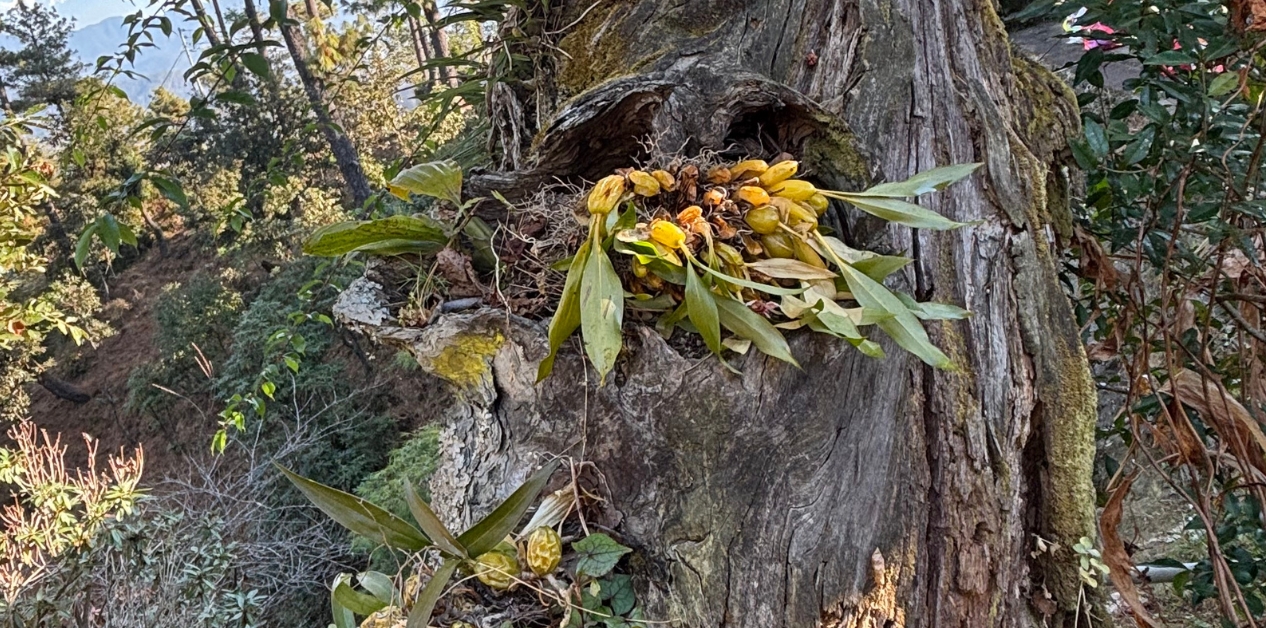
This specific corridor is a rich and pristine sanctuary of natural beauty and ecological diversity, serving as a natural habitat for the endangered Red Panda, a recently declared Himalayan Tahr conservation area, dozens of rhododendron and pine species, Himalayan birch (Bhojpatra), bamboo reeds (Malingo), hundreds of medicinal herbs, and various birds and wildlife. Detailed research on this eco-zone remains incomplete, making it a rare, unpolluted area untouched by large-scale human encroachment. Until now, the local buffer-zone communities have successfully preserved its natural form through a commitment to maintaining it as a quiet, concrete-free, and noise-free zone for meditation and nature-locked travel. Tourism infrastructure currently being built along the trail—such as paving difficult paths with stone steps, setting up drinking water taps, installing waste disposal bins, constructing toilets and resting chautaris, and upgrading cattle sheds into tourist-friendly home-stays (goth-stays)—strictly prioritizes eco-friendly methods and local resources.
Introducing a cable car would completely disrupt these conservation efforts and render millions of rupees of sustainable investment obsolete, as hikers would abandon the stone trails. For instance, travelers would no longer walk the Dhwotre-Jaljale section if a cable car connected Chakhewa to Hansapokhari, nor would they climb the difficult slopes of Laure and the cliffs of Runa if they could glide directly to the vicinity of Silichung. Tourists heading to Everest would bypass the local communities entirely, flying straight from Chatara to Lukla, viewing the scenery from the sky, and returning without interacting with the local economy.
Furthermore, constructing the towers, cable lines, and terminals would require cutting down thousands of trees, destroying wildlife habitats, and fracturing the ancestral sacred lands of indigenous communities. Economically, large corporate forces would likely wipe out small-scale local investors and budding goth-stay businesses. Traffic would be heavily centralized around the immediate terminal stations, meaning tourists would not stay overnight in the meadows of Maiyung. Large corporate entities would seize control of local livestock products, establish their own hotels and food stalls at the terminals, and build massive luxury resorts on the most scenic peaks, permanently disfiguring the natural landscape under the guise of development.
The trend of labeling dissenters as “ignorant”
The project highlights a global trend where corporate interests influence state machinery to capture and exploit natural resources under labels of modernization and employment, while local populations rise up to defend their territorial rights. Those who voice concerns over the geographical, ecological, and cultural fallout of mega-projects are frequently branded as “anti-development”. This tension is already visible in Pathibhara (Mukkumalung) in Taplejung, where a violent and unresolved conflict persists between indigenous communities and cable car developers.
Whether Ramesh Rai brought forward this Saptakoshi-Sagarmatha concept out of personal conviction or as a mouthpiece for large capitalists aiming to capture the Maiyung and Salpa landscapes remains to be seen. While his Facebook status received limited support, it was met with widespread disagreement. In response, Rai chose not to engage in theoretical defense but instead dismissed critics as “ignorant” individuals commenting without reading or studying the proposal, eventually disabling the comment section on his post altogether.
Though highly ambitious and seemingly impossible for an underdeveloped country with a small budget like Nepal anytime soon, the proposal has officially opened a dangerous precedent. Past instances show that half-baked concepts can cause permanent damage; for example, when former Culture Minister Gopal Kirati proposed an advanced 100-story ‘Wabuk Tower’ at the peak of Temke, the actual result was a crude iron tower that permanently ruined Temke’s natural aesthetic. Critics warn that even if only a fraction of this proposed 100-kilometer cable car is ever built, it is the Mundum Trekking Trail and its fragile ecosystem that will bear the permanent scars of destruction.