Kathmandu
Saturday, June 20, 2026





Exploring how the tunes we listen to, the songs we sing, and the traditions we practice do not originate from a single individual, this perspective explains how generations of experience, memory, and cultural exchange transform music into a profound medium to understand society
KATHMANDU: Nepali musicians embark on their creative paths through remarkably diverse journeys. While some draw natural inspiration from musical families, others must learn their craft in secret, away from disapproving households. Every artistic trajectory is entirely unique; some evolve into iconic vocalists, others become the master instructors who trained them, and some serve as the technical hands recording their tracks. Ultimately, a musician is never just the individual standing on stage. Singers naturally dominate the spotlight, but instrumentalists, teachers, recordists, instrument makers, researchers, and managers remain the vital force driving the industry from behind the curtains.
When I was little, I was also one of those children who showcased their ‘talent’ at family gatherings. When I sang, tears would fill the eyes of my mother, father, grandmother, uncles, and aunts. They would embrace me while weeping, and I considered myself an extraordinarily good singer. Although I was not particularly excellent in academics, the teachers liked me because I sang. When people who recognized them asked, “Aren’t you the parents of that little girl who sings?” they would swell with pride.
Coincidentally, around that time, the film Taare Zameen Par, which carried the message that every child possesses their own unique capability, was also released. At home, my elder sister had managed even my share of studying well, so perhaps my parents also prioritized my interest in music over studies and enrolled me in vocal classes at a young age.
In vocal class, I learned ascending and descending scales, notes, a few ragas, and modern songs. Back then, I considered anyone who could beautifully perform the songs of Narayan Gopal or Bhakta Raj Acharya to be an exceptionally great singer. I did not pay much attention to those who sang and played folk songs, pop music, rock, metal, and the like.
I also grew up listening to cassettes and CDs of modern songs, singing those very songs and receiving praise. When anyone asked what I wanted to become when I grew up, I would say a singer. At that time, I used to immerse myself in the imagination of standing on a stage, holding a microphone, and singing.
While studying at the higher secondary level, I discovered a YouTube channel named Fuzzscape. In its videos, musicians and filmmakers would travel to various places, including Manang, Bhojpur, and Helambu, collaborating with local musicians to create music. Watching those videos made me begin to realize that music is not merely something to be sung on a stage. It made me feel that music could also connect people with places, communities, and journeys. I had formed a thought that one day I would also connect with this kind of work.
When anyone asked what I wanted to become when I grew up, I would say a singer. At that time, I used to immerse myself in the imagination of standing on a stage, holding a microphone, and singing.
A short time later, I watched a play that influenced me so deeply that I immediately participated in a theater workshop. That age itself was such that one would instantly get influenced by just about anything. To tell the truth, that habit has not gone away even today. It always feels to me like it would be great if I could get to do this as well, or if I could get to do that as well.
Music was merely a medium of entertainment and personal expression for me. An art to dance to when happy, to lighten the heart by crying when sad, and to present on stage. I had not really thought at all about how music is connected to society, history, language, and culture.
Many musicians in Nepal have made music their profession solely on the strength of their dedication, practice, and experience. Since the prospects of building a future by studying music appear limited here, many have forged their paths without formal education. Some have taken short training, some have formed bands while learning with friends, and some have developed skills through their own practice. Therefore, the discussion of formal music education is still heard relatively less in Nepal.
Amid the confusion of what to study after completing Grade 12, I learned about Kathmandu University’s Department of Music through interviews of Lochan Rijal. After passing the entrance examination, I still remember one statement made by the teachers in the orientation class—”Remember, rather than just singing or learning to play an instrument, music is taught here by connecting it deeply with society, culture, and human life.”
That statement did not feel strange to me. Instead, it felt exactly like this was the subject I had been searching for.
Music was merely a medium of entertainment and personal expression for me. An art to dance to when happy, to lighten the heart by crying when sad, and to present on stage.
Over the subsequent four years, my very understanding of music transformed. While working in theaters, meeting friends from various communities, and studying at the university, I began to understand music as a subject far grander than a medium of entertainment or personal expression.
At Kathmandu University’s Department of Music, ‘Ethnomusicology’ is taught. To put it in simple language, it can be called cultural musicology. This subject studies music not just as sound or art but also by placing it within its relationship with people and society. Why is the music of a certain community the way it is? What kind of relationship exists between language and music? How is technology changing music? What was music like in history? What kind of role does music play in identity, memory, or community building? Such questions fall at the center of ethnomusicology.
When enrolling in music school, I wanted to become a good singer. However, with music at the center, my questions have become different. When a musician steps onto a stage, what kind of social identities do they carry? From what kind of backgrounds do the listeners who have come to hear their music arrive? What is the history of the very stage where the performance is taking place? Since when did the musical instruments played there begin to be used in Nepal? How has the technology used in the presentation changed over time? Such questions captivate me just as much.
Before studying at the music school, I used to understand folk music as meaning only Dohori songs. Since I had no special interest, I did not give much importance to folk songs. Now, however, I have understood that the bhajans my grandmother hums, the Dhime played during festivals, the Bhailo sung during the Tihar festival, and the Mangal Geet sung during weddings are all forms of folk music. It was a musical world that I had not seen or thought of, yet it was continuously present all around me.
Music is not merely an object to be sung or played; it is the story and history of human beings.The song ‘Rajamati Kumati‘ recorded by Seturam more than 100 years ago informs us about the recording technology, musical style, and cultural environment of that time.
As I continued to study music, I understood another thing as well. Music is not solely the creation of an artist; it is also the property of the community. The tunes we listen to, the songs we sing, and the traditions we practice do not originate from a single individual. Behind them lie generations of experience, memory, and cultural exchange.
Music is not merely an object to be sung or played; it is the story and history of human beings. The song ‘Rajamati Kumati‘ recorded by Seturam more than 100 years ago informs us about the recording technology, musical style, and cultural environment of that time. When walking through villages carrying the Sarangi, the Gandharvas were not just singing songs; they were also walking around carrying news, history, and stories. We collectively sing songs during festivals, and we take the support of music even in moments of mourning. Music is intertwined with the crucial moments of our lives.
The anecdote where the maestro of Indian classical music, Ustad Bade Ghulam Ali Khan, stated that the roots of classical music also lie within folk music is quoted many times. In fact, the tunes we hum today, considering them ordinary, the songs sung while putting children to sleep, Sohar, or festival songs all have their own long histories. When following those histories, music does not remain merely a subject of entertainment; it becomes a medium to understand society. Perhaps this is the greatest difference between the me who entered the music school and the me of today.
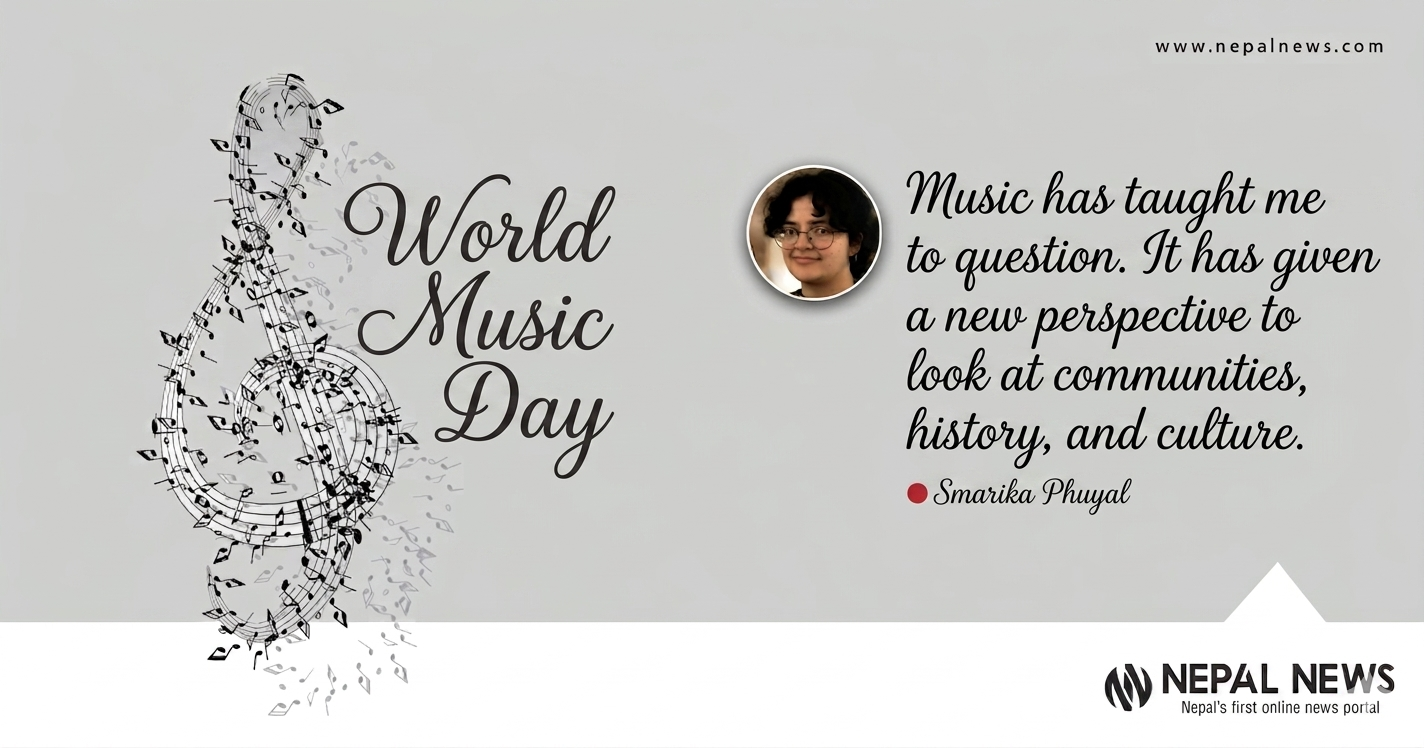
Previously, I viewed music only as an expression of my emotions. Even now, music makes me happy, makes me cry, and inspires me. However, alongside that, music has taught me to question. It has given a new perspective to look at communities, history, and culture. The most important aspect is that, along with the songs and music, it has motivated me to listen to and understand people.