Kathmandu
Saturday, July 4, 2026





Mandatory stoppages introduced for player safety are increasingly influencing tactics, match outcomes and television broadcasting, prompting debate over whether football is sacrificing its continuous flow.
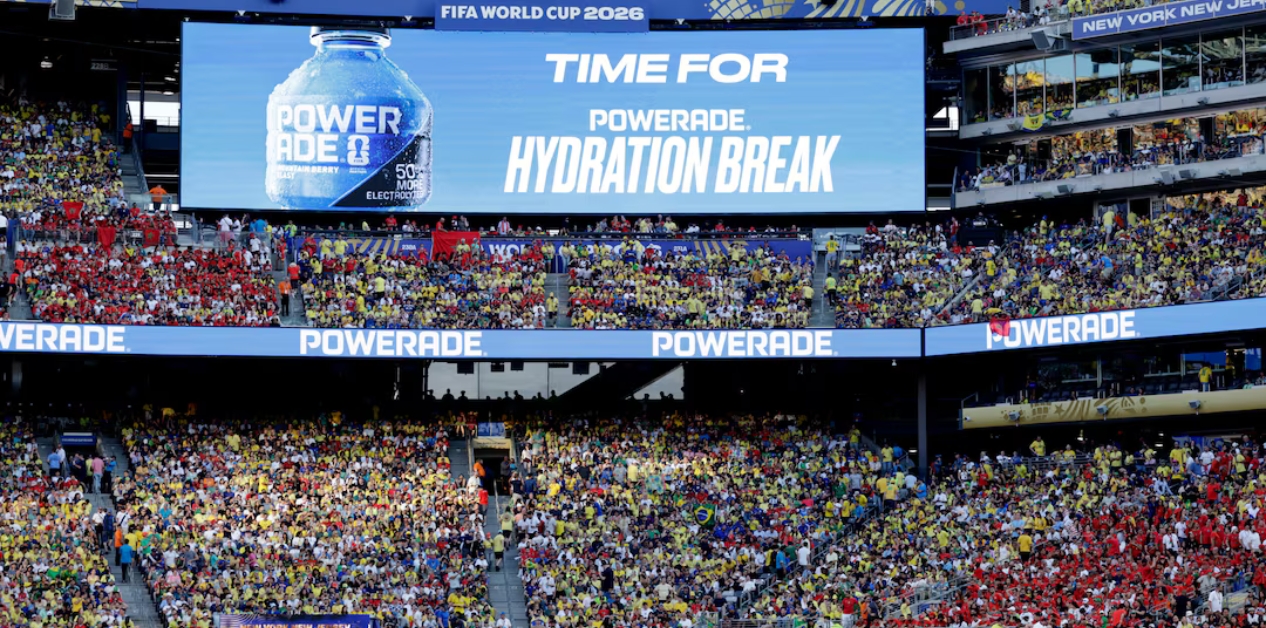
KATHMANDU: Only 23 minutes were left before the final whistle. The opposing team, Senegal, was leading 2-0. This sight on the Seattle Stadium scoreboard during the FIFA World Cup match had already made Belgium’s head coach, Rudi Garcia, feel that his team’s journey was almost over. To make matters worse, a heated on-field argument erupted between captain Youri Tielemans and winger Leandro Trossard, making the team’s situation even more uncomfortable. As the dispute intensified, teammates had to step in to separate them.
However, the game’s mandatory “hydration break” (water-drinking interval) in the 67th minute sparked fresh hope for Belgium. Garcia used this opportunity as a means to reorganize the team. Not only did he formulate a new strategy, but he also found the chance to calm the dispute between Tielemans and Trossard.
Following that specific hydration break, Belgium’s gameplay took a dramatic turn. With about four minutes remaining in the match, Romelu Lukaku scored a smooth finish to pull back the first goal for his team. This was his seventh goal in the World Cup. Then, just as regulation time was drawing to a close, Tielemans—who had been fighting shortly before—headed home a powerful goal from an excellent cross by Trossard, bringing the match to a 2-2 draw. Prior to that, Senegal had maintained control over most of the game.
In extra time, Belgium was awarded a penalty. Captain Tielemans converted it into a goal without making any mistake, securing a memorable victory with a thrilling comeback for Belgium. “For me, this proved to be a ‘coaching break’ rather than a cooling (hydration) break. It became incredibly crucial for our comeback,” Garcia stated after the match.
A new rule introduced by the Club World Cup
For a long time, football was considered unique compared to most other team sports. Once the referee blew the whistle, the game would flow continuously. There was no rule allowing coaches to call a “timeout.” The game was never paused to show advertisements on television. Having a separate time for tactical discussions was out of the question. This uninterrupted continuity, where each half ran flawlessly for 45 minutes, formed the original identity of football.
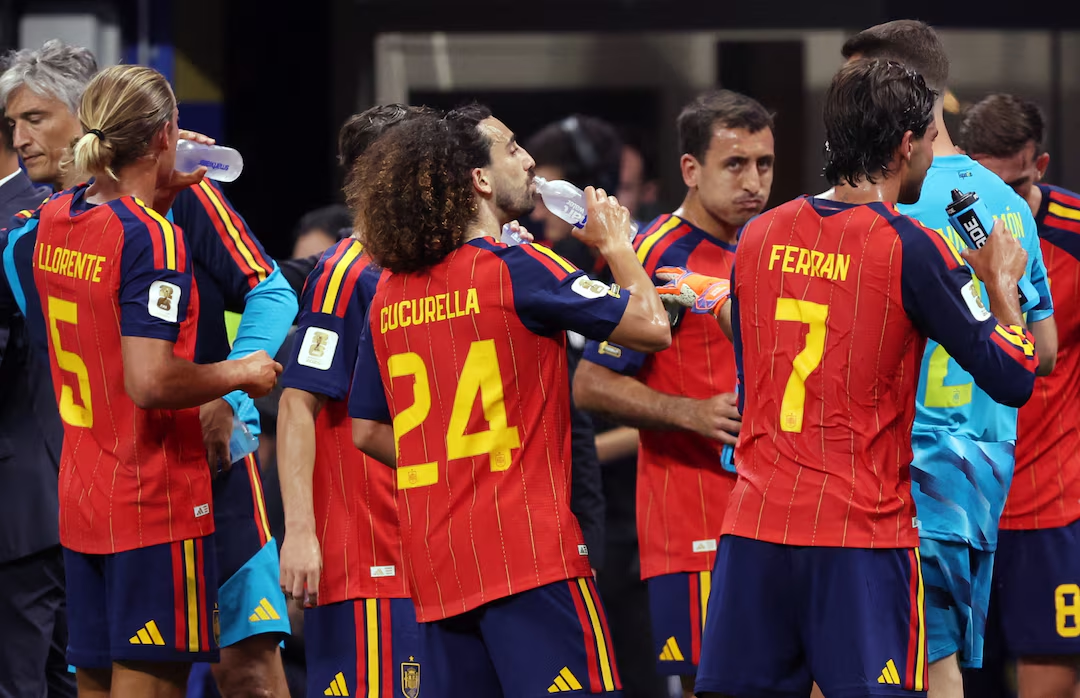
Spanish players taking a hydration break during a match against Cape Verde. Photo: Reuters
However, this characteristic of football seems to be gradually changing in this World Cup. The new rules introduced for various purposes are changing the speed, rhythm, and tactical structure of the game, which has started altering match results as well. Among these rules is the hydration break.
During the Club World Cup held in the United States last year, many matches were played under extreme heat. At that time, Argentina and English club Chelsea’s midfielder, Enzo Fernández, commented that he felt dizzy during the game and that playing in such temperatures was highly risky.
FIFA conducted the tournament despite restrictions from the local administration. Back then, Chelsea manager Enzo Maresca complained about having to shorten training sessions due to the intense heat. Spain’s Marcos Llorente also shared his experience of playing for Atlético Madrid in California, stating that the heat was unbearable and caused pain all the way to his toes and toenails.
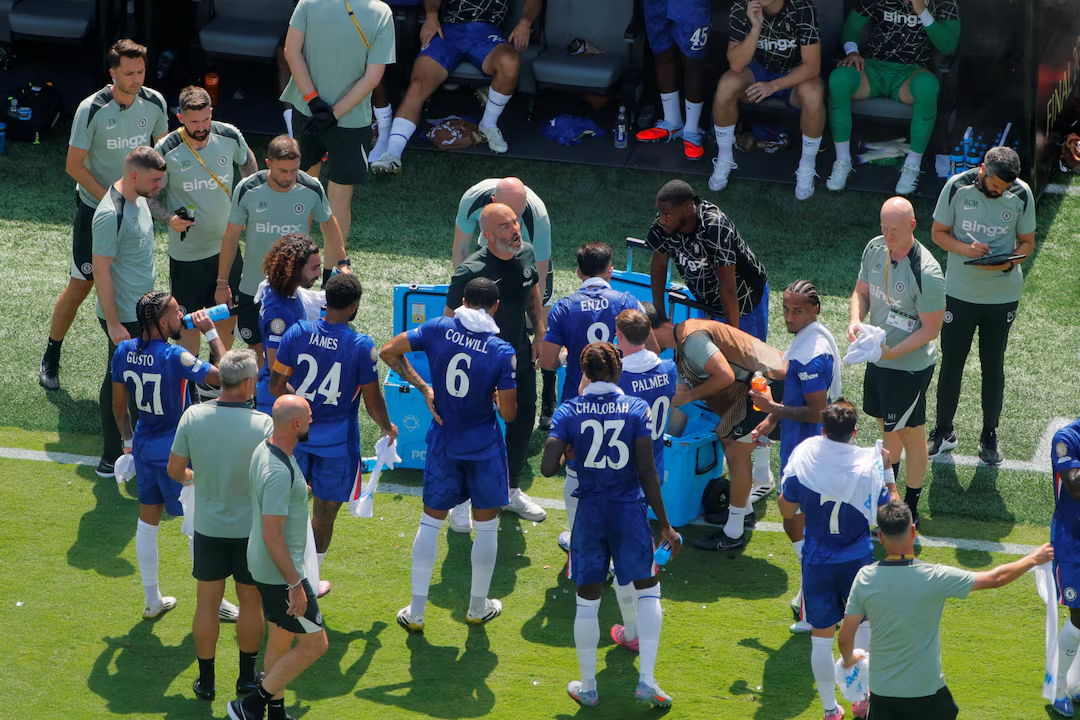
A hydration break taken during the match between Chelsea and Paris Saint-Germain in the final of the Club World Cup. Photo: AP
Based on these experiences, FIFA announced last December that it would implement a mandatory three-minute hydration break in the 22nd and 67th minutes across all 104 matches of the 2026 World Cup. Even before this, provisions for hydration breaks existed in the World Cup and other major tournaments.
It originally began during the 2014 match between the Netherlands and Mexico in Brazil. A break was granted in that match after the temperature soared above 32 degrees Celsius. Since then, this arrangement was applied only on an as-needed basis. Now, however, the hydration break has been made mandatory in all matches, regardless of the weather conditions.
According to critics, football is a game played in two halves. With an additional break added to each half, it has started resembling a game divided into four quarters.
In a way, this break might seem trivial to many. However, when viewed in relation to the results, it is vividly apparent that the traditional rhythm of football is slowly changing. This rule has begun to exert a significant impact on the flow and strategic aspects of the game. When the game stops, coaches get an opportunity to reorganize the team, change tactics, and give direct instructions to players. Players are also resting for a while, resetting themselves both mentally and physically.
Yet, not everyone has taken these changes positively. In particular, English football fans have openly opposed the hydration breaks. Interestingly, England successfully pulled off a comeback victory against Congo by taking advantage of this very break.
A rule that ruined the game
On July 1, in the Round of 32 match held at the Atlanta Stadium, Congo took an early lead through a goal by Bryan Sipenga in the 7th minute. However, England, trailing 1-0, returned to the game by changing their strategy after the second break. The hero of this turnaround was captain Harry Kane. He scored in the 75th and 87th minutes of the match to give his team a 2-1 comeback victory. Despite the win, the England team faced heavy criticism from its own fans.
Boos and jeers had already started in the stadium from around the 20th minute of the match. That sound grew even louder during the first hydration break. The match was being played inside Atlanta’s air-conditioned stadium while it was raining outside. Fans felt compelled to boo when the game was halted under such conditions. Their dissatisfaction stemmed from the disruption of the game’s flow.
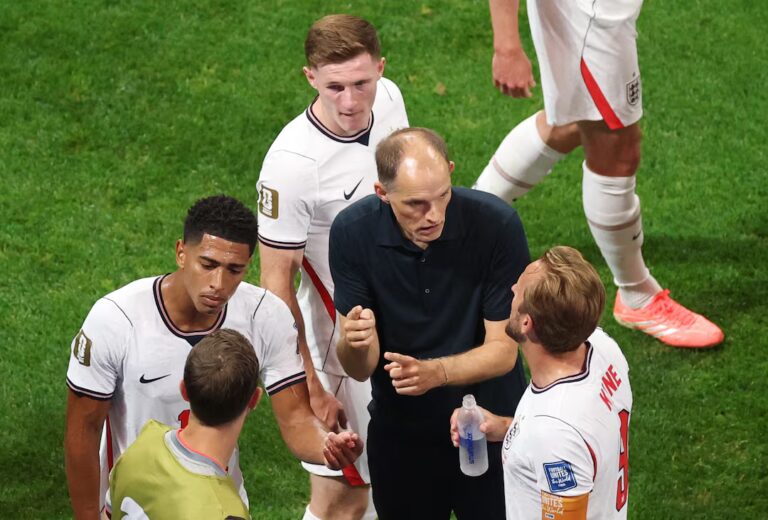
England coach Thomas Tuchel explaining tactics to captain Harry Kane during the match against Congo. Photo: Reuters
Naeem Naseem Sultan, a former analyst for the Nepali National Team, is also dissatisfied with hydration breaks. “A lot of differences can be seen in the results because of this break. If any team is playing well, their performance drops as soon as this break occurs. On the other hand, it benefits the team that is performing poorly. It gives the coach of the underperforming team a chance to correct their mistakes,” he says.
The greatest example of this can be seen in the match between four-time world champions Germany and debutants Curaçao. The game was tied at 1-1 until the 21st minute. Felix Nmecha had given Germany an early lead in the 6th minute off a pass from Florian Wirtz. However, in the 21st minute, Livano Comenencia scored to bring Curaçao to a 1-1 draw. This was Curaçao’s first-ever goal in the World Cup, which left their fans ecstatic. It was anticipated that a major upset might occur in the match. But following the hydration break just two minutes later, Germany became ruthless.
Head coach Julian Nagelsmann got the opportunity to steady his squad. Nico Schlotterbeck scored in the 38th minute, and Kai Havertz scored in injury time, giving Germany a 3-1 lead in the first half itself. In the second half, Jamal Musiala, Nathaniel Brown, Deniz Undav, and Havertz scored goals to extend Germany’s victory to 7-1. The last time Germany won the title (in 2014), they secured an identical 7-1 victory against Brazil in the semifinals.
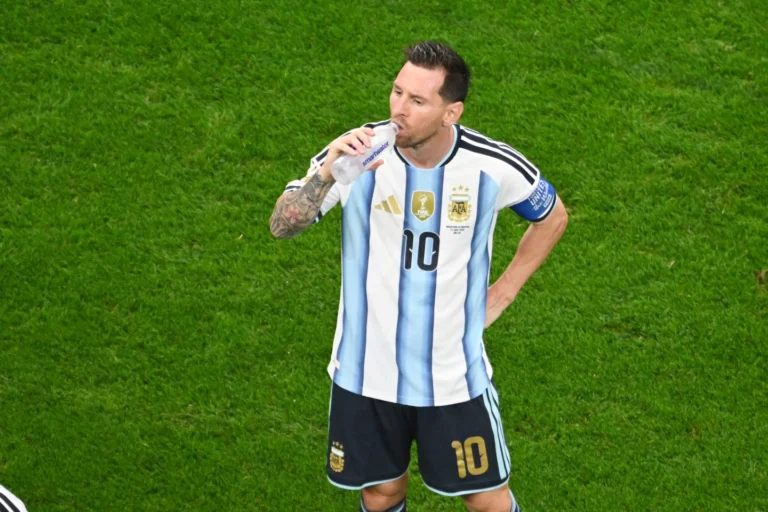
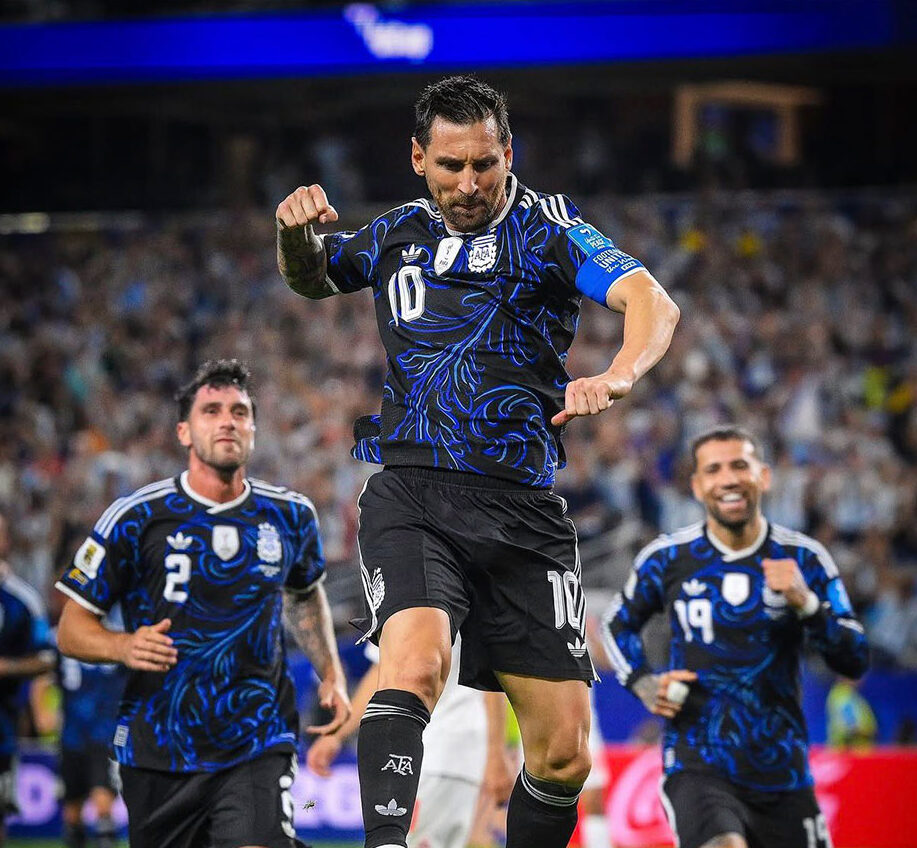
Argentina captain Lionel Messi taking a hydration break during the World Cup Group J match between Argentina and Austria. Photo: AP
Apart from this, matches between teams like Brazil and Morocco, Japan and the Netherlands, Ivory Coast and Ecuador, Iraq and Norway, South Korea and the Czech Republic, Morocco and Haiti, and Ivory Coast and Norway also saw their results overturned in a similar fashion after hydration breaks.
Players facing criticism
Although FIFA prioritized player health this time around, many have criticized the decision to make breaks mandatory in the game. Critics argue that football is a game played in two halves, but adding extra rest to each half makes it look like a game split into four quarters.
Before the World Cup, during a friendly match against Senegal, a video went viral showing US coach Mauricio Pochettino gathering his players around a laptop during a hydration break to show them video clips and give tactical instructions.
Since such scenes are rarely witnessed in football, many commentators remarked that this resembles a “timeout” in basketball, volleyball, or futsal rather than traditional football. The criticism intensified significantly after FIFA permitted television broadcasters to air commercials during the World Cup hydration breaks. Many commented that commercial interests, alongside player health, were a primary reason behind this decision. Some have linked this to additional revenue generation for FIFA.
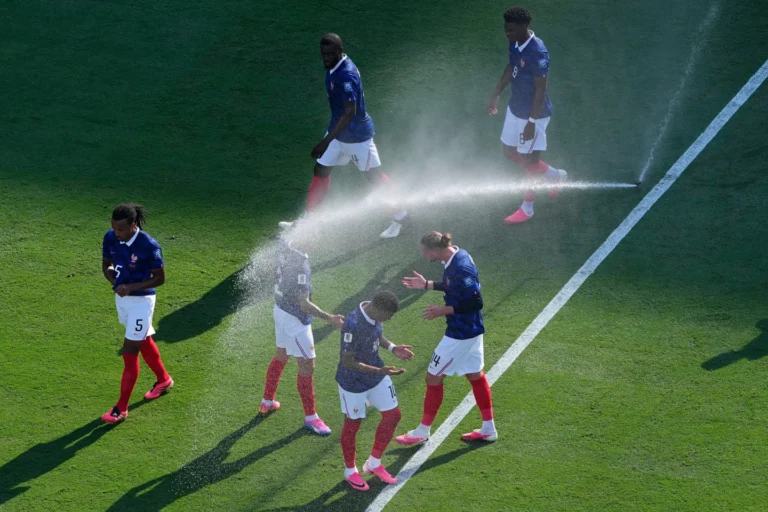
French players feeling refreshed from a field sprinkler during the Round of 32 match against Sweden. Photo: AP
According to American sports industry analyst Michael Johnson, the cost of advertisements shown during a hydration break could reach seven to nine million US dollars, equivalent to a US Super Bowl commercial slot. According to him, the 2022 World Cup final between Argentina and France was watched by around 1.42 billion viewers worldwide. He notes that it is natural for such a massive audience size to attract advertisers.
Johnson mentions that since American audiences are accustomed to commercials and breaks in the middle of games, the World Cup is gradually moving toward that exact model. “American audiences are used to games played in four quarters, like the NFL and NBA. They are habituated to watching breaks and commercials during the match itself. Therefore, this World Cup is basically becoming a carbon copy of that style,” he states.
In European football, competitions like the English Premier League are traditionally broadcast via pay-TV networks (including Sky in the UK). There, viewers watch advertisements before the game, at halftime, and after the match. However, they do not appreciate commercials in the middle of live play.
Of course, football has previously embraced many changes that were initially deemed controversial. The back-pass rule, VAR, and extended added time are examples of this. Therefore, the possibility of the hydration break becoming a permanent practice in football cannot be ruled out.
According to sports industry analyst François Godard, subscription-based broadcasters like Sky might welcome the additional advertising slots because it brings extra revenue. However, warnings have been issued that this new “in-game ad” model between the match and advertisements could increase viewer dissatisfaction in the European market. Criticism is likely to grow, particularly with claims that it is an attempt to over-commercialize football in an American style.
“Football is famous for its continuous gameplay. However, there is concern that such changes are making the sport over-commercialized. Too many advertisements can exhaust viewers, especially when they perceive it as unnecessary or disruptive,” he says.
Many fans have already expressed discontent as games are repeatedly halted due to VAR. Frequent interruptions have affected the natural rhythm and excitement of football. This sentiment was reflected in a survey conducted by the Football Supporters’ Association. In the survey concerning the English Premier League, only 3.3 percent of fans stated that VAR had improved their match-viewing experience.
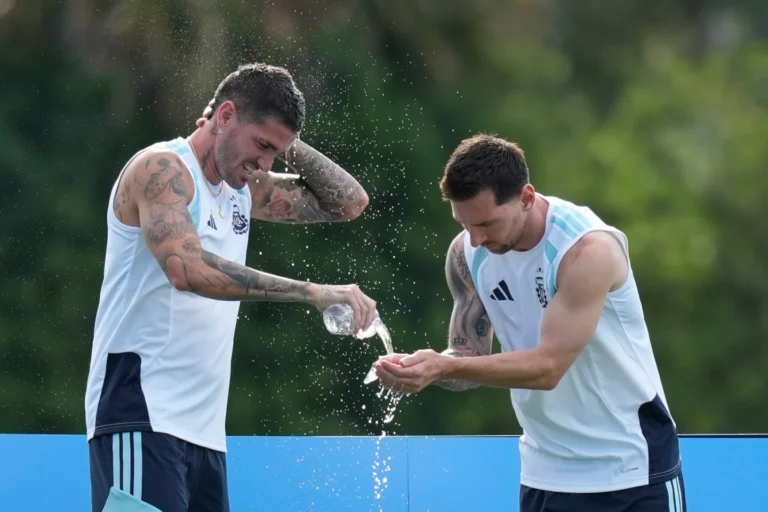
Argentina captain Lionel Messi (right) and Rodrigo De Paul during a training session on the eve of the World Cup Round of 32 match against Cape Verde. Photo: AP
In the UK, the television network ITV has already announced that it will not broadcast advertisements during hydration breaks. This decision was made in compliance with the advertising regulations of the British media regulator, Ofcom.
According to analyst Godard, British viewers are also unlikely to welcome more commercials during live play. Meanwhile, due to the expansion of the World Cup from 32 to 48 teams, FIFA’s total revenue for 2026 is projected to reach USD 8.9 billion dollars. Around 44 percent of this share is expected to come from television broadcasting rights.
Netherlands captain Virgil van Dijk has remarked, “This break is interesting. However, it is not a good experience for television viewers. It is necessary when it’s very hot, but decisions should be made according to the conditions of each individual match.”
The rules dictate that broadcasting agencies can display advertisements 20 seconds into the break and must return to the live broadcast 30 seconds before the game resumes. However, ITV in the UK and Telemundo (Spanish language) have decided to show live stadium footage instead of commercials. Meanwhile, in Nepal, the broadcasting platform ‘Digo’ has repeatedly frustrated viewers by airing advertisements during these breaks.
FIFA in its own defense
The International Football Association Board (IFAB), the body that creates football rules, permits the provision of a “cooling break” lasting from 90 seconds to three minutes. FIFA President Gianni Infantino has openly stood in defense of this arrangement.
According to him, the purpose of the hydration break is not to reap additional commercial benefits. Since FIFA finalized all major commercial agreements before the start of the World Cup, this decision was driven by player health, safety, and match fairness rather than financial motives.
“The main reason is the extreme heat. In a tournament like the World Cup that lasts for 39 days, teams have to play many matches in short intervals. Under such conditions, making provisions to give players a brief rest is extremely important,” Infantino stated.
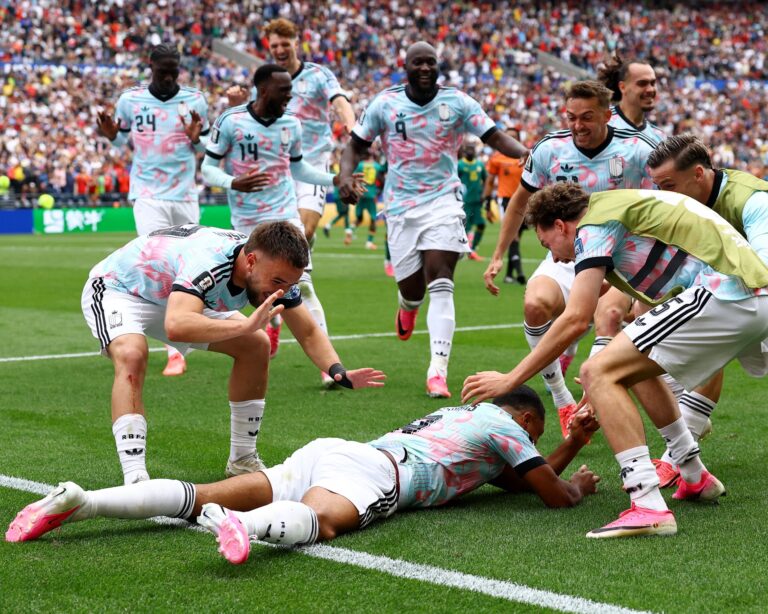
Belgian players celebrating after scoring against Senegal. Photo: Reuters
He believes it is equally essential for all teams to compete under identical circumstances. If a coach gets the opportunity to change strategy due to extreme heat in one match, but such an opportunity is absent in another match, equality in competition cannot be maintained.
Now, the main question is whether the hydration break will become a permanent rule or be discontinued. The Union of European Football Associations (UEFA) has stated that the current hydration break system is satisfactory. However, the English Premier League has made it clear that it has no plans to implement it on a regular basis.
Football has integrated several changes that were highly controversial at first. The back-pass rule, VAR, and extended injury time serve as examples. Therefore, the possibility that hydration breaks will become a permanent fixture in football’s future cannot be dismissed.
FIFA has not yet released any official decision regarding whether to continue or discontinue hydration breaks in future tournaments. However, the 2030 World Cup is scheduled to be hosted in Spain, Portugal, and Morocco, and the 2034 edition in Saudi Arabia. Temperatures are exceptionally high in these regions. Therefore, the likelihood of this rule staying remains strong.
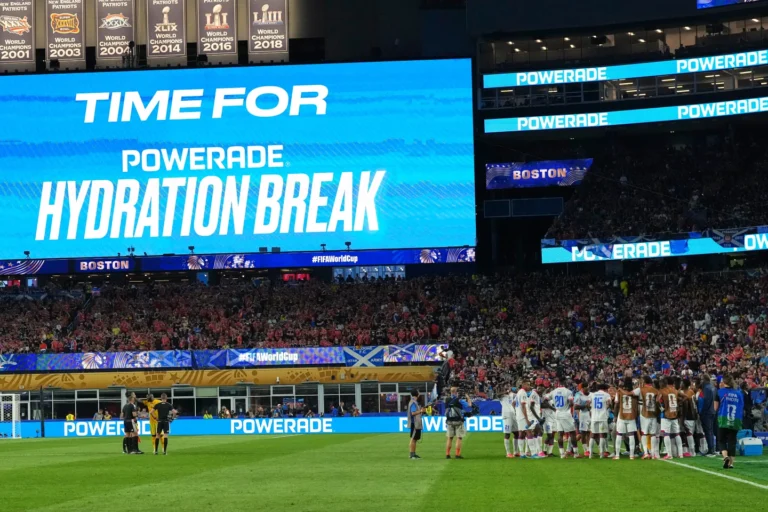
Haitian players taking a break during the World Cup Group C match between Haiti and Scotland. Photo: AP
According to analyst Michael Johnson, such rules could intensify the competition for World Cup broadcasting rights in the future among streaming companies like Apple, Amazon, and particularly Netflix. In the United States, the World Cup broadcasting rights currently held by Fox Sports will expire after 2026.
On the other hand, Netflix has already secured the broadcasting rights for the 2027 and 2031 Women’s World Cups. Therefore, the chances are high that football fans’ headaches will increase even further.