Kathmandu
Tuesday, July 7, 2026





From legal classifications under the 1854 Civil Code to everyday experiences of exclusion, Nepal’s Muslim community has faced generations of structural discrimination shaped by caste, religion, and geography.
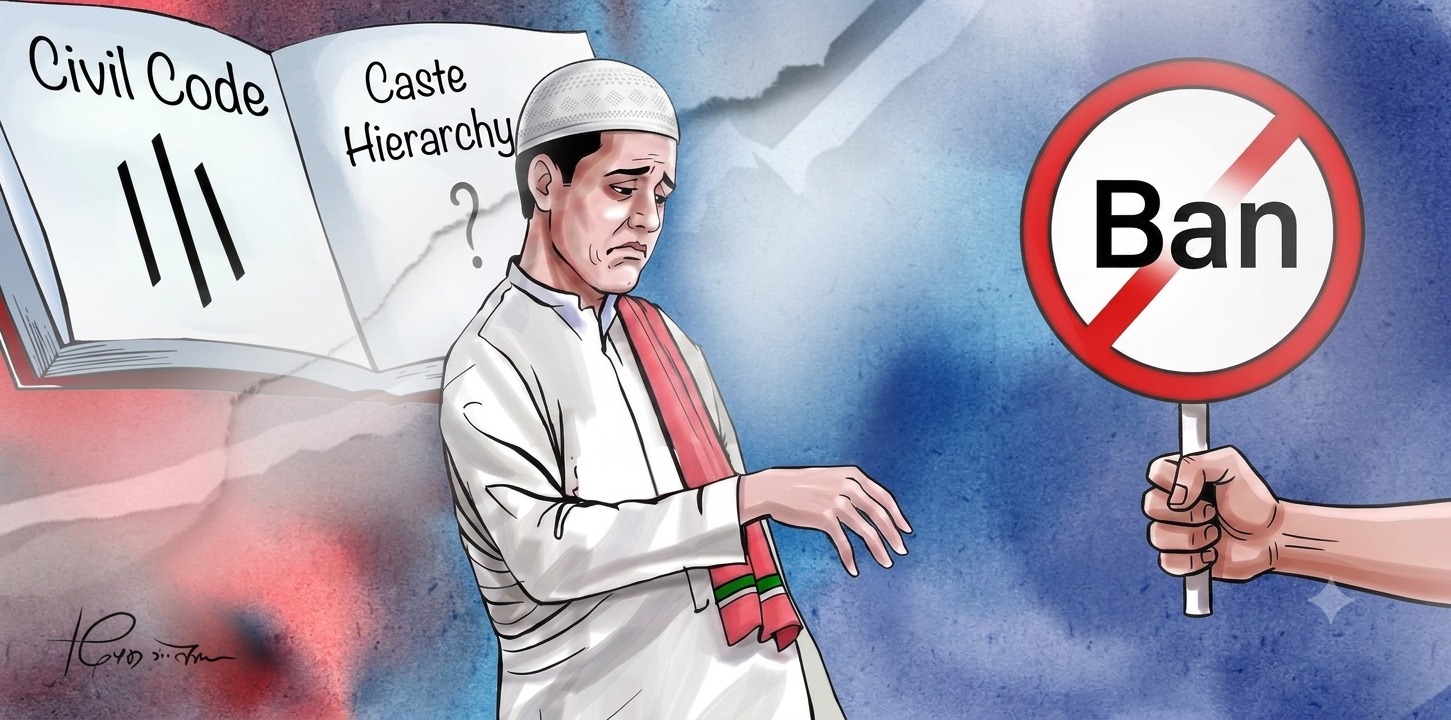
KATHMANDU: In the 1970s, a Muslim man returned to Nepal after completing his education in Darbhanga, India, and entered government service. At a time when the country faced a shortage of educated manpower, he was appointed as a Section Officer at Singha Durbar. As a government official, he traveled to various parts of the country to collect data for the United Nations.
Initially, he was respected and addressed as ‘Hakim Saheb‘ (Officer) in many places, and was even presented with gifts. However, once people discovered he was a Muslim, the respect turned into humiliation. People would refuse to eat with him. This treatment caused him deep psychological trauma. He shared with the author that he resigned from his job immediately upon returning to Kathmandu.
This experience is not an isolated incident of personal humiliation. It is an example of the caste, religious, and geographical marginalization that the Muslim community in Nepal has faced for a long time. The marginalization of the Muslim community is often viewed in connection with religion, geography, and the exclusionary character of the state. However, its deep historical foundation is also the caste system.
The history of Nepal’s legal and social structures shows that the Muslim community was treated not just as a religious minority, but as a community placed in a subordinate position within the caste hierarchy.
Following the unification of Nepal by Prithvi Narayan Shah, the state gradually institutionalized Hindu identity through customs and laws. Rules concerning food, water, touch, and sexual relations associated with the caste system were not limited to social behavior alone; they entered the legal framework. Nepal’s first Rana Prime Minister, Jung Bahadur Rana, gave legal status to this Hindu social code through the Muluki Ain (Civil Code) in 1854.
The Civil Code placed Muslims in the category of ‘pani nachalne tara choichhito halnu naparne‘ (those from whose hands water cannot be accepted, but whose touch does not require purification by sprinkling water). People in this category were considered socially impure. Social rules were established stating that raw or dry food items could be taken from their hands, but water or cooked rice could not be accepted. This very classification placed the Muslim community in a subordinate position within the state-recognized caste hierarchy.
The classification within the Code was even more complex. Even within the same category, different groups within the Muslim community were assigned different positions. ‘Musalman’ was placed at the top of the list, while the ‘Churaute’ (the Muslim community that sells bangles in the hilly regions) was placed at the bottom of the list. This indicates that the state assigned distinct social statuses even within the Muslim community itself.
In ‘The Civil Code 1854: Nepal’s First Legal Code’, edited and translated by Rajan Khatiwada, Simon Kubelik, and Axel Michaels, it is mentioned that when explaining what kinds of food can be accepted from the ‘pani nachalne‘ (water-unacceptable) castes, the Code placed Muslims, Kamis, Damais, Sarkis, and others in the group from whom water is unacceptable. Historian Mahesh Chandra Regmi, in his book ‘Nepal: An Historical Miscellany‘, also noted that the laws regarding untouchability placed Muslims alongside castes considered untouchable.
According to András Höfer’s book ‘The Cast Hierarchy and the State of Nepal: A Study of the Muluki Ain of 1854‘, consuming rice cooked by Muslims or water given by them, or having sexual relations with them, was considered defiling and prohibited for all Hindu groups. This prohibition was not limited only to upper-caste Hindus; it applied even among castes considered water-unacceptable and untouchable.
Among Hindus, there was a concept of ‘jat jane‘—meaning falling into a lower caste—if one consumed rice or water prepared by someone considered to be of a lower caste than themselves. However, in the case of Muslims, this rule did not apply in the same manner. No Hindu would drop into the Muslim caste, nor would a Muslim drop into a Hindu caste. This shows that although Muslims were placed within the caste system, their position was determined in an unusual and degrading manner.
The Civil Code allowed Muslims to practice their religion, except for cow slaughter. The Code provided that all castes and communities could perform activities according to ‘their family tradition and belief.’ Yet, this very provision carried another contradiction. While limited freedom to practice religion was granted, social equality was not ensured. In the name of ‘their own tradition,’ other castes and communities received a social license to continue discrimination against Muslims.
In this way, the state dragged the Muslim community—which does not have a caste system—into the caste hierarchy and placed them in a lower status. They were presented as a socially unacceptable group even to the castes considered lower and untouchable in society. Since attempting to protest against such a structure could conversely result in the Muslims themselves being punished, they could not resist this humiliating structure for a long time.
The state did not merely ensure discrimination against Muslims legally; in some instances, it also established it as a form of social validation. A document of the Bhardari Parishad (Council of State) dated December 13, 1860 mentions the caste status of the Meche community of Morang. The children of the Meche community worked as slaves in the royal palace, and water from them was unacceptable. Later, it was decided that upper-caste people could accept water from the hands of the Meches. One of the bases for this was that the Meches did not accept water from the hands of untouchable castes and Muslims, and that they belonged to the Shivamargi sect. This shows that not taking water from the hands of a Muslim was used as proof of social ‘superiority.’
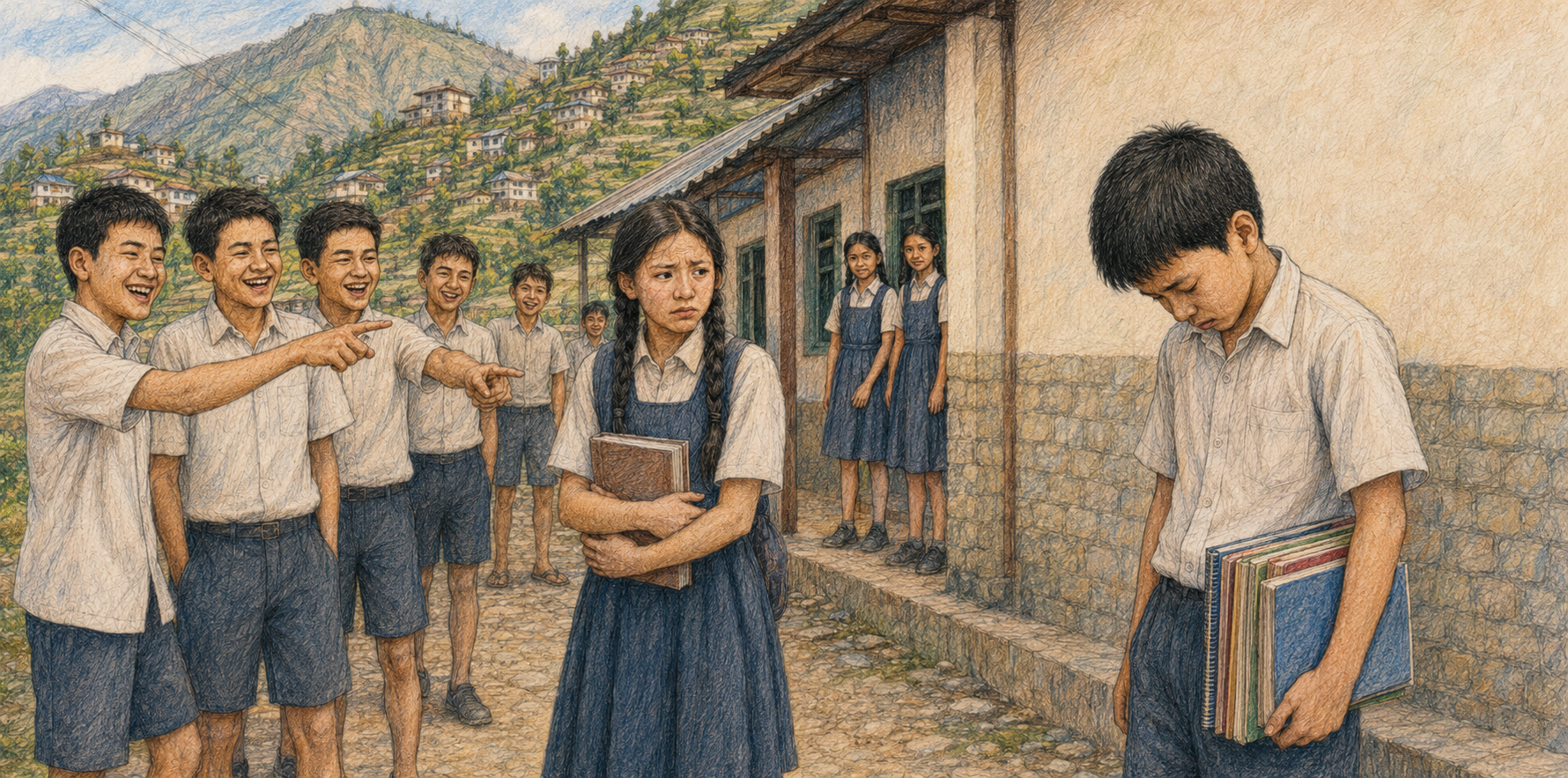
The impact of such legal and social structures manifested deeply in the daily lives of the Muslim community. Examples exist showing that until a few decades ago, Muslims were not even permitted to go near hand pumps and public wells. If a Muslim child accidentally touched the earthen pots kept for drawing water at public wells, the water would be thrown away or the pot itself would be smashed. Such discrimination, even in a basic necessity like water, continuously humiliated the Muslim community.
A former Joint Secretary of the Government of Nepal also shared an experience with the author about facing untouchability and discrimination during his student life in a hostel mess simply because he was a Muslim. In the hostel, Muslim students were not allowed to go near the tube well. In the mess, they were placed in a separate line alongside Chamar (Madhesi Dalit) students. After enduring this treatment for a few days, he protested. Following his protest, instead of serving him in the mess, they began giving him food in his room. The protest did not eliminate the discrimination; it merely shifted it into another form.
A Muslim individual from Rautahat shared that Hindus like Yadavas and Lohars lived alongside Muslims in his village. However, Muslims were not allowed to step onto the cemented section of the public well. Even if they were invited as guests to Hindu homes, they had to carry their own utensils. When Hindu neighbors came to fetch water from the tube well in front of his own house, he was asked to move away from the cement pad. He used to ask himself, “I maintain cleanliness, sometimes even more than those who come to fetch water. Then why am I impure to them?” He shared that this experience inflicted a deep psychological wound during his childhood.
An experience shared by the son of a hill Muslim trader is of a similar nature. While traveling to the hills with goods for trade, he ate at an eatery. When it was time to pay, the eatery owner asked for his surname. After he stated that he was a Muslim, the owner treated him abusively, calling him a ‘Churaute.’ He was told to wash the dishes he had used. Although he was ready to pay for the food, he refused to wash the dishes. As the dispute escalated, he was tied to a pillar. A few hours later, a soldier who had served in Muslim countries under a United Nations Peacekeeping Mission arrived there and got him released. Had that soldier not arrived, he might have remained tied up all night.
King Mahendra legally ended the caste system and untouchability in 1963 by introducing a law that prohibited discrimination based on caste. However, even though the law changed, social behavior did not transform immediately. Even in Kathmandu, up until 35 years ago, Muslims had to wash the glasses they used after drinking tea at tea shops. Experiences are heard of Muslims in some parts of the Terai not being allowed to touch water sources like tube wells and wells even 15 years ago. Muslims continued to face untouchability and exclusion in messes, hostels, hotels, and other public spaces.
These experiences are not merely incidents of personal humiliation. They are expressions of structural violence. Structural violence weakens a community’s self-esteem, self-confidence, and public participation. Continuous rejection and humiliation push people away from the state, society, and institutions. They begin to look for structures where they do not have to endure daily humiliation. Many decisions regarding the economic and social life of the Muslim community in Nepal can be understood in connection with this psychology.
The humiliation resulting from discrimination and untouchability forced Muslims to stay away from the national mainstream. Because of this, they were attracted toward “structures consisting only of Muslims.” This historical experience increased the social isolation of the Muslim community, pushing them toward ‘ghettoization’—the process of being confined or forced into a specific, limited geographical area.
The impact of this is also visible in representation and development indicators. According to data from the report ‘State of Social Inclusion in Nepal – 2019‘, prepared by the Central Department of Anthropology at Tribhuvan University, the presence of Brahmins and Kshetris in the civil service is 61 percent, while the presence of Muslims is a mere 0.7 percent. The representation of Madhesi Dalits is also on par with that of Muslims.
In the Human Development Index (HDI) as well, the value for the Brahmin- Kshetris group is 0.538, which is the highest. Following them, Janajati groups (excluding Newars) stand at 0.482. The index for Dalits is 0.434, while for Muslims it is 0.422. If one compares the caste hierarchy of the Civil code with the Human Development Index, a clear pattern emerges. The groups at the top of the hierarchy possess a high Human Development Index, and the status of the groups placed at the bottom is progressively weaker.
The marginalization of Muslims appears to have occurred on three levels—due to their low position in the caste hierarchy, due to religion, and due to geography. Since the majority of Muslims reside in the Tarai, their deprivation is also linked with the historical neglect of Madhesh.
Looking at geography alone, the Human Development Index of hill Dalits appears higher than that of Muslims. This indicates that geography adds an extra layer of deprivation to communities residing in the Tarai. Although the overall Human Development Index of Muslims appears slightly better compared to Madhesi Dalits, a disaggregated look at the indicators shows that Muslims lag behind Madhesi Dalits in certain areas.
Indian researcher and political scientist Mollica Dastider, in her research article ‘Muslims of Nepal’s Terai’ published in Economic and Political Weekly, noted that the definition assigned to Islam and Muslims by Nepal’s hierarchical governance system and the legal code derived from traditional society forced Nepal’s Muslims to accept a low and subordinate status.
This conclusion aligns with the historical experience of Nepal’s Muslim community. The marginalization of the Muslim community did not happen by chance. It is a historical outcome constructed by the combined structure of the state, law, caste system, religion, and geography. The untouchability and social exclusion enforced upon Muslims have impacted their development, representation, and self-esteem for more than a century and a half.
Today’s constitution promises equality, justice, and inclusive development. However, for communities that have historically faced structural violence, a mere declaration of general equality is not sufficient. To address the marginalization of the Muslim community, explicit and targeted policies ensuring access to education, employment, representation, social security, and public institutions are necessary. An inclusive future cannot be built without recognizing historical injustice.
(Banskar is a student of political science and a social activist who has been researching Islam and Muslims for two decades.)