Kathmandu
Thursday, July 9, 2026





Drying springs, erratic rainfall, and declining groundwater are exposing decades of weak planning and misplaced priorities. Nepal’s water challenge now demands political decisions that go beyond temporary fixes and address the country’s long-term water security

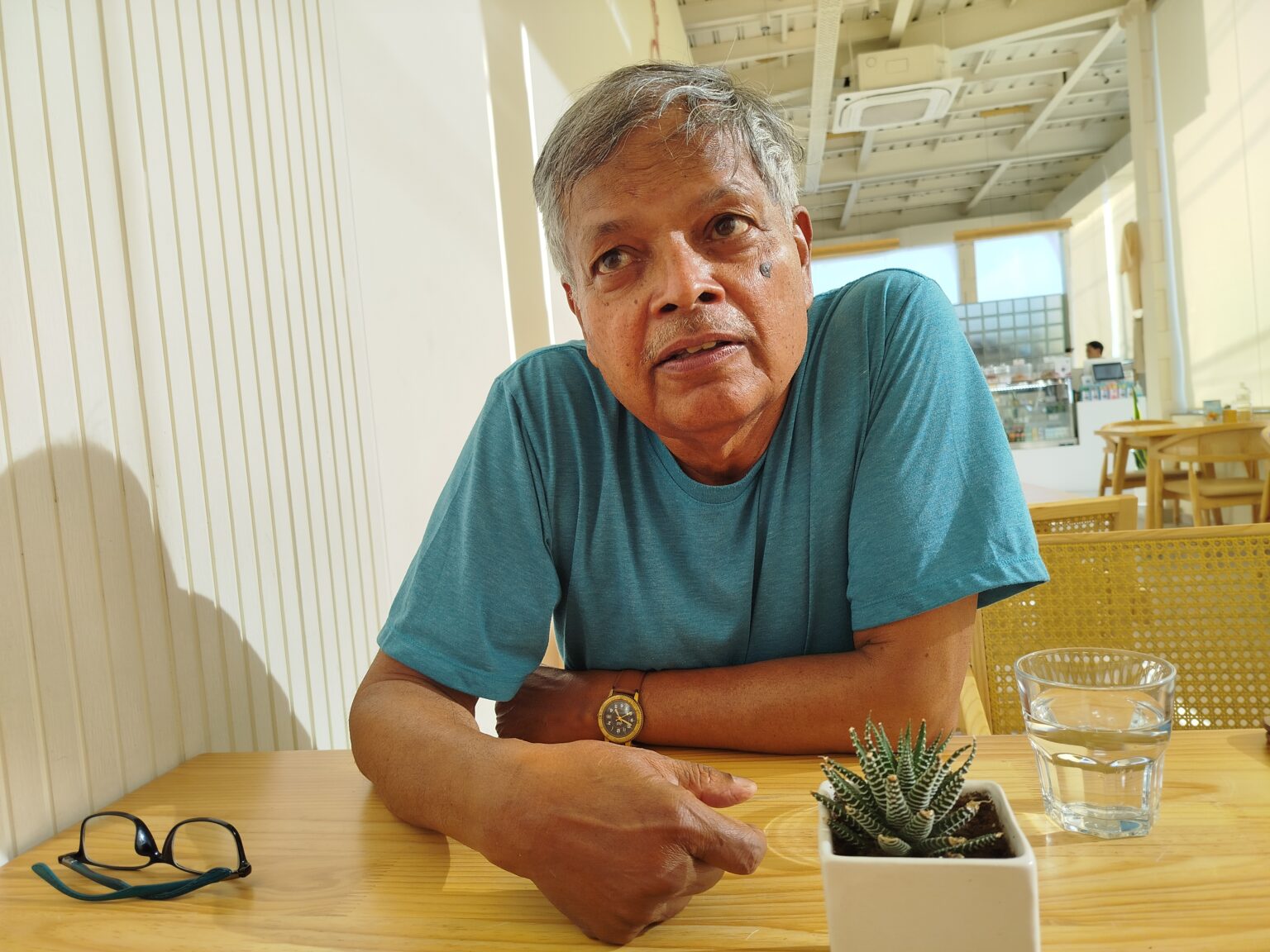
KATHMANDU: The water crisis in Nepal is not limited to water taps and tube wells. Shifting monsoons, drying springs, and depleting groundwater have begun to impact farming, food security, migration, and even citizens’ right to vote. Watershed expert Madhukar Upadhya considers this not just an environmental issue but a political one. Here is an edited excerpt of a conversation between Upadhya and Bidhya Rai regarding the deepening water crisis, weak water management, and the government’s policy priorities:
How can El Niño affect water availability in Nepal?
Weather instability has increased significantly over the last few years. It has been four years since we last had winter rain. It has also been a long time since rain fell uniformly during the monsoon. This year, El Niño is further heightening that instability.
This could push us into a situation beyond a normal water crisis. The main impact will be seen during the farming season. Right now is the rice-planting season, but there hasn’t been enough rain anywhere to carry out planting.
El Niño is connected to temperatures in the Pacific Ocean. Previously, an increase in temperature by 0.5 Degree Celsius was considered an El Niño. This year, forecasts suggest temperatures could rise by up to 2. Meteorologists have warned that if that happens, it could trigger a Super El Niño.
There is no telling how far its impact will reach. Meteorologists are releasing forecasts cautiously so that people do not panic.
In South Asia, particularly in southern Tamil Nadu, India, drought was forecast during the main farming months from June to September. This could be similar for Nepal as well. Therefore, it is an alarming matter.
The changing pattern of rainfall has obstructed groundwater recharge. Water springs are drying up. There is no telling how many days groundwater will last through boring either. Last year, when the monsoon was delayed by six weeks in the Terai, a situation arose where 500 tube wells had to be installed. This year, pre-monsoon rains provided some relief, but if El Niño weakens the monsoon, the water crisis is bound to escalate.
How will this impact agriculture and food security?
El Niño affects the monsoon across South Asia, including Nepal. Generally, rainfall decreases. This has a direct impact on agricultural production.
Maize, millet, and rice are the staple cereal crops in Nepal. June and July are the months when maize develops kernels. If a drought occurs during that time, the kernels will not become plump. Maize is a crop that is quickly affected.
Rice requires continuous water from planting until it bears fruit. It remains to be seen how much water rice will get this year. Millet also requires water at the time of planting. Therefore, it needs to be planted in the moisture of July/August. If a drought occurs during that period, farmers might not be able to plant it at all.
El Niño does not mean it will not rain at all. However, if hailstorms occur, they damage crops during their flowering and fruiting stages. Last year, the kind of monsoon-induced disaster that hit Ilam was something no one had anticipated. It has become impossible to know when torrential rain will pour down.
Farming is a strict discipline. If it stays dry for just one week when the crops are flowering, everything gets ruined. During the El Niño year 16 years ago, it was already time to plant rice in Kirtipur, but it hadn’t rained. Farmers watered the seedlings using water pots (gagro) to plant them, believing that if the roots took hold, they would survive and the rain would eventually come. Current climate variations have exacerbated everything—droughts have increased, floods have increased, and pests have increased.
What kind of impact is the drought having on agricultural fields?
When you meet farmers and ask them what has happened over the past 25 years, the answer is that drought has had the greatest impact. Drought has increased pests and diseases in crops.
I had a citron lime tree at my house. It used to yield well. We even used to distribute the sour fruit to the neighborhood. Now, for the past eight or nine years, it has stopped bearing fruit due to disease. Even the curry leaf bush has withered after being eaten by insects. If I have observed such an impact on just one or two plants, how much loss must the farmers be enduring?
This year, El Niño looks set to further increase drought-induced disasters. The monsoon entered six days later than average, and it hasn’t rained properly. Moreover, in recent decades, monsoon rains have shifted northward. The rain that used to fall in the Terai has shifted toward Tibet. It has started raining in places in Tibet where it never used to rain. We fell right in the path. It feels as though our share of water is just leaking a little on its way to Tibet.
This affects the production of cereal crops that depend on rainwater. When production drops, food insecurity rises. Problems with drinking water and irrigation also intensify.
Government data shows high access to drinking water. Why then is the acute shortage of water increasing on the ground?
Government data does not match the reality experienced by communities. There is a problem with data collection itself. People are deployed to conduct surveys, but in many places, they sit in one location and fill out forms based on guesswork. They should reach every house and individual to count, but they fail to do so.
Geographical remoteness is also a reason. In the Terai, you can travel even by car. It is not easy to reach every household in the mountains and hills to gather data. However, there are now elected representatives in every village and ward. They know the ground reality. Data can be collected from them. The government has not paid attention to this.
The government also harbors the illusion that if a disaster strikes, providing Rs 5,000 in relief settles the matter. A few years ago, during a drought in Panchthar, the provincial government provided Rs 5,000 per family as relief. Following that, it was expected that provincial policies and programs to tackle drought would be introduced. But the issue was not included in the next year’s policy, program, and budget.
The development model of provincial and local governments is also focused every year on building water taps, roads, temples, buildings, bridges, and view towers. It is not focused on conserving water sources.
Why is the problem of drinking water and irrigation deepening in the mid-hills?
When speaking of the hills, one must understand the water springs of August, June, and the foothills. The August spring is a matter of local science. It emerges higher up in the hills. This spring emerges because water overflows once the underground reservoirs are full. Depending on how the monsoon turned out, this spring begins to appear around the beginning or middle of July/August. Once the monsoon stops, the groundwater depletes, and the spring begins to dry up. The August spring lasts for a maximum of two and a half to three months.
Below that is the June spring. This is located at a slightly lower altitude. As soon as a little rain starts falling, the June spring emerges. Depending on the location and soil, this can last until February or March.
Below the June spring lies the foothill (Phedi) spring. It is called the foothill spring because it is located at the base of the hill. This flows until May/June, but its volume becomes very low. Today, people are forced to walk for half an hour or an hour to fetch water from the lower springs. The reason for this is that the August and June springs above are emptying out.
Over the last 30 years, the upper springs in the hills have been drying up. Yet we ignored it. Thinking that science and technology had assisted us, we began pumping water from below up to the top. Even if people are consuming water drawn by electricity, pumps, or tankers, my concern is different—where did the traditional spring that flowed for hundreds of years go?
The volume of monsoon rainwater has not decreased. The monsoon rain that used to fall over 60 days might now fall in 35 days, but the total volume of water has not gone down. The question is—where did the spring go? Can it be brought back or not? If attention had been paid to this in time, a situation where pumps have to lift water upward would not have arisen.
Nepal is called a country rich in water resources and biodiversity. Forest cover has also increased. Why then has the shortage of drinking water and irrigation not reduced?
It has been about five decades since the narrative that water exists where forests exist began in Nepal. Globally, too, it was assumed that forests increase water and rainfall. This might be true to some extent in tropical regions. However, the process of rainfall in Nepal is different. Easterly winds bring the monsoon, while westerly winds bring winter rain.
The narrative that everything becomes fine once there is a forest, that floods reduce, and soil erosion decreases, is not very relevant to Nepal. Forest cover has increased from 39 percent to 46 percent. But along with the forests, wild animals that damage crops, such as monkeys, porcupines, and wild boars, have also increased. The availability of water did not increase.
Forests have expanded in places where people abandoned farming due to a lack of water. In the mid-hills of eastern Nepal, nearly 80 percent of water springs have dried up. It dried up in the hills, and even in the Terai, groundwater is emptying out. Thirty percent of people in the Terai have reported that their tube wells have dried up. This is no joking matter.
We were taught that everything becomes fine once there are forests. Now, we must be able to state that such education was flawed. In the 1970s, campaigns were run and policies were formulated based on the premise that forests control landslides and floods. But floods and landslides did not decrease. It was only after entering the 1990s that this began to be realized.
Sitting around expecting foreigners to provide money and support is not a mature decision. The springs, small streams, wells, and water holes visible on the surface of the land are disappearing. No one has conducted an official study on the condition of groundwater, but everyone states that groundwater is depleting.
The government’s focus is on forest-based carbon trading. It is waiting around for donors to provide a little budget so it can run the administration. There is no concern about the plight of those who migrated from the hills down to the Madhesh due to shortages of drinking water and irrigation. Those who shifted to the Terai in search of water risk facing the same situation as in the hills. How deep should tube wells be installed? Until when can they be installed?
The government runs the Chure Conservation Program targeting the Terai. No one has clearly stated how much benefit it yielded. Just because there is greenery does not mean everything is fine. There is a dense pine forest on Srinagar hill above Tansen, but there is a terrible water crisis there. This has been a problem for 50 years.
The destruction of the Chure region is linked to the water crisis in the Madhesh-Terai. How do you view this?
Our Terai plains are a part of the Gangetic plains. Uttar Pradesh and Bihar in India also fall within the Gangetic plains. However, the amount of water available in Uttar Pradesh and Bihar is not available on our side.
The area that continuously recharges Bihar’s groundwater is the Bhabar zone. But we are at the edge of the Gangetic plains. Therefore, water cannot retain itself on our side. Large rivers like the Koshi, Gandaki, and Karnali flow down from the Himalayas and hills, pass through the Bhabar zone, and reach the Gangetic plains on the Indian side. Streams and rivers head straight downward through the Bhabar zone at once. They cannot retain themselves on the Nepali side. The little water that does retain itself dries up quickly.
Therefore, once water is drawn, availability drops immediately on our side. Groundwater is not being recharged in proportion to the amount of water being drawn. That is why if the monsoon is delayed by six weeks, an acute shortage of water breaks out in the Madhesh-Terai.
Chure destruction might have caused some impact. The extraction of pebbles and sand might have also had an effect. But it cannot be stated that this is the entire reason for the water shortage. The biggest problem is that geographically, we are disadvantaged when it comes to groundwater recharge.
Are deep boring and water lifting long-term solutions to the water crisis?
For the immediate term, there is no option other than this. But this is absolutely not a long-term solution. In the long run, it adds to the crisis; it does not provide a solution.
There is no alternative to recharging and managing natural rainwater. Water has its own world. To converse with the world of water, one must live with water and speak of water. Methods of water management may vary by location, but water management must start with water itself, not with anything else.
In a country like ours with small towns and small settlements, water cannot be supplied everywhere by lifting or boring. Melamchi water has been brought to Kathmandu. Water has been lifted from the Roshi Stream to Panchkhal. But that water cannot be transported to Dang. There is a water problem in Dhankuta. Tansen has faced a water problem for 50 years. From which streams will water be lifted, and to where? Where will boring be carried out? And on the day that stream dries up, from where will water be brought?
Therefore, one must engage in managing monsoon rainwater. By blocking it, slowing it down, or doing whatever it takes, it must be stored in the ground.
To what extent has the government included programs to conserve traditional water sources in its policies, programs, and budgets?
The Prime Minister, Finance Minister, or Planning Commission prepare policies, programs, and budgets by requesting lists of programs and plans from each ministry. Bureaucrats have been writing and sending those lists for years. No matter which government takes charge, the only addition they make is their own political agenda. Therefore, no substantial difference is visible in the current policies, programs, and budgets compared to previous years.
Regarding the water crisis, recharge ponds have been built in various places, but the work has not taken place on the scale it should have. This year’s policies and programs have barely covered it either. Instead, emphasis has been placed on establishing AI data centers.
From what I have heard and read, large data centers consume vast amounts of water to balance temperatures. One also hears that studies are being conducted to claim that Nepal has abundant water. It feels as though this is being done just to assert that there is no water crisis in Nepal. Instead of doing that, simply asking the people who were displaced because their water springs dried up would reveal whether a crisis exists or not.
The water crisis is not a current problem; it has been an issue for decades. If data centers that consume large amounts of water are operated now, the water shortage could intensify further. A data center might provide employment to 5,000 or 10,000 people and contribute slightly to the GDP. But it does not do justice to the general Nepali public.
Therefore, the water crisis must be made a political issue. Because production has stopped due to a lack of water, people have gone to urban areas, India, and other countries to work as laborers. Staying away from home for years, they are unable to participate even in the elections held every five years. In other words, a situation has developed where the common man is deprived of his voting rights solely due to the lack of water.
In a democratic system, as many people as possible should be able to exercise their right to vote. The legitimacy of an elected representative is stronger, and their sense of accountability is greater, only when a large number of voters elect them.
What must Nepal do to cope with extreme weather events?
At one level, we cannot do much. Temperatures are rising. A massive amount of heat is added to the Earth every 24 hours, which some compare to the energy of millions of Hiroshima bombs. This rising temperature has brought changes to the process of cloud formation.
Warm water evaporates and rises into the air. But it holds higher humidity. This has affected the process of large cloud formation. Clouds used to block the sun’s heat and filter the sunlight reaching the ground. Now, the heat strikes the ground directly.
This has already affected the cultivation of proso and foxtail millet (Chino-Kaguno) in Jumla. It has already affected mud snails (Ghungi) and fish in the Terai. The rise in temperature has increased incidents of glacial lake outburst floods. Subsurface ice has begun to melt. It hasn’t been long since we started hearing new terms like ‘supraglacial’. Newer problems are emerging.
In this situation, there is no option but to adapt to extreme weather events. But adaptation varies from person to person and place to place. The same solution will not work for everyone. Even now, people are adapting in their own ways. After agricultural yields dropped, they are sustaining their families by sending money earned abroad.
For the sake of talking, grand things like carbon finance and electric vehicles are discussed. Billions of amounts also enter the country. But there is no one to ask what it is being spent on. We need local ‘champions’ who speak about local problems based on facts. Problems must be highlighted by the locals themselves, not by people from Kathmandu visiting the field. The means to solve a location-specific problem must be sought according to that very location.
The government is aware of the problem. Why then is it not providing the necessary support and solutions to its citizens?
The government has not been able to free itself from the belief that problems are solved through projects. A project is meant to show model work. Implementing work on a large scale is the job of the government itself, the local levels, and the community.
The community has not been mobilized and led toward a solution. This approach of the government did not work yesterday, is not working today, and will not work tomorrow.