Kathmandu
Wednesday, July 15, 2026





Using volcanic stones imported from Japan, a returnee entrepreneur blended Japanese techniques with Nepali flavors to build a restaurant business from the skills and savings earned abroad.
Chitwan. Krishna Paudel was running two restaurants in Nagoya, Japan. Forty people, including part-timers, were employed there. His business was expanding. Yet, his mind was constantly on his own house being built back in Bharatpur.
It was not just a regular house meant for living. The blueprints were designed to run a Japanese restaurant on the ground floor. Underground pipes were installed to supply gas to every table. The kitchen and interior layout were also built specifically to meet the needs of a restaurant.
Having harbored plans to return home since the very day he left for Japan, Krishna fulfilled his goal through that house. After spending a decade in Japan, he returned to Chitwan with his wife, Binita Sedhain, and their two sons who were born in Japan. Along with them came his experience running a franchise of the Japanese restaurant brand ‘Yappari Steak’ and the capital he had earned abroad.
In the Japanese language, the word yappari conveys the meaning of “as expected” or “just as thought,” while steak refers to a grilled meat dish. Krishna Paudel, who had operated two franchises of the restaurant of the same name in Japan, brought the taste, skills, and business experience he learned there back to his homeland. In June/July 2023, he launched Yappari Steak in Syaulibazar, Bharatpur Metropolitan City-10.
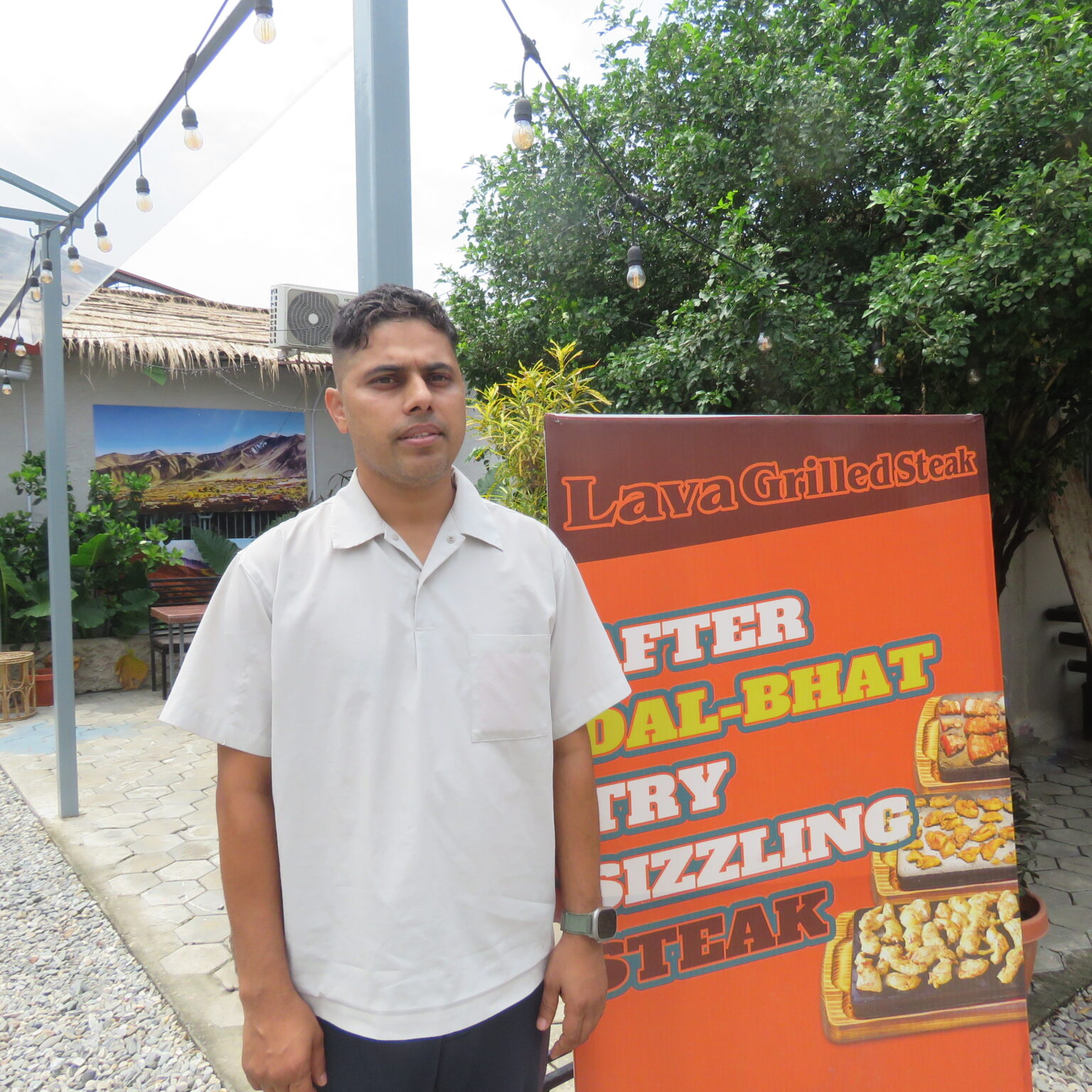
Krishna Paudel. Photo: Sabita Shrestha
After receiving excellent feedback from customers, he opened another branch on Old Medical College Road within just ten months. Following that, he partnered with three other investors to open Limba Thakali Restaurant in Khetrapur.
Now 38, Krishna, who successfully connected the skills he learned and the money he earned in Japan to an enterprise in his homeland, has set his next target on Kathmandu.
Mind set on returning since boarding the plane
Before moving to Japan, Krishna worked as a journalist in Chitwan. After working as a correspondent for four years, he decided to go abroad in search of better opportunities.
“I thought going abroad would earn me a bit more. I was also young and restless,” he says. “I went purely for the opportunity.”
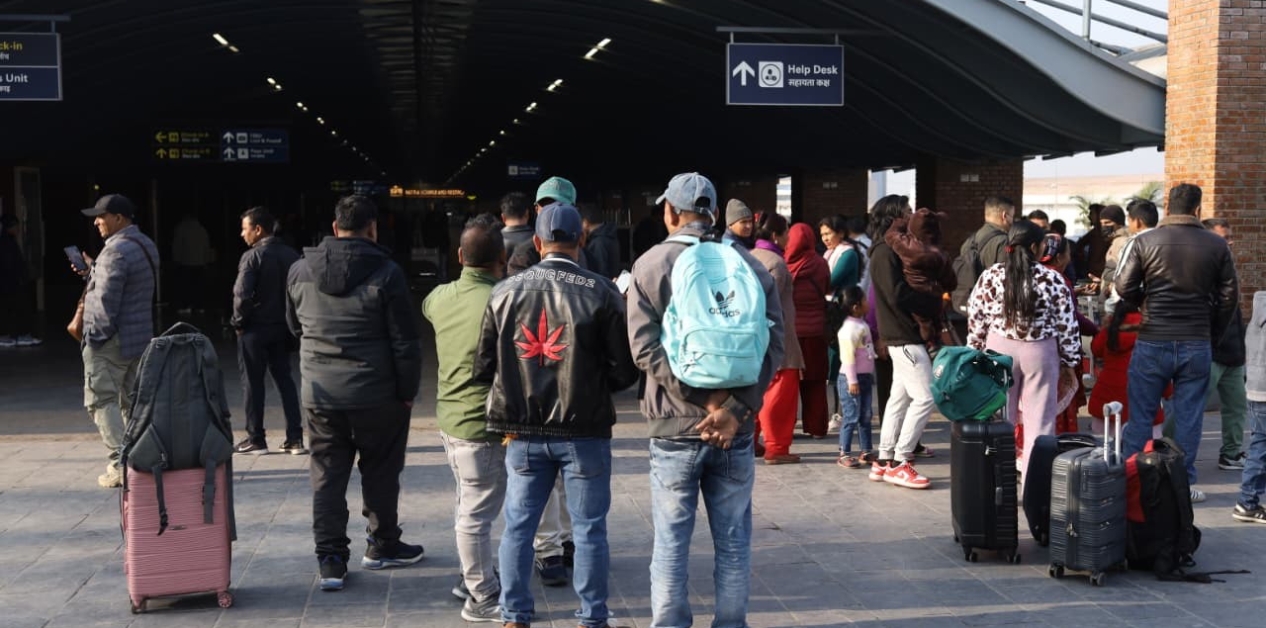
He arrived in Japan on a student visa in early 2014. Even as his flight was about to take off from Tribhuvan International Airport, he was in two minds about his decision.
“As the plane was taking off, I felt like I was making a mistake,” he says, recalling his first journey abroad. “I thought I would return very soon.”
Since his family was financially stable, he was under no major pressure to earn and send money back home. However, starting from scratch in Japan was difficult. He recalls how, while washing dishes abroad, he often questioned why he had come in the first place.
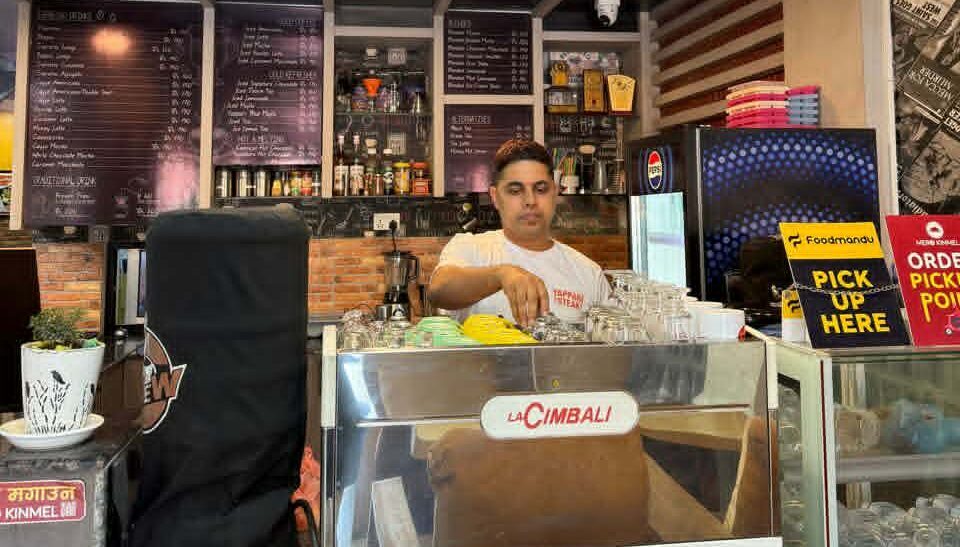
Krishna Paudel
Gradually, he adjusted to the Japanese environment. Then, he faced another dilemma.
“I was torn between working long hours to make money or focusing on learning the language to build a better future,” he says. “Ultimately, I decided to earn just enough to cover my food, accommodation, and tuition. I then dedicated my time to learning Japanese and understanding the local culture.”
He realized that it would be difficult to get ahead in Japan without being proficient in the language. Prioritizing his studies meant that he occasionally had to ask his family for financial support.
Later, he brought his wife, Binita, to Japan on a dependent visa. He recalls that once they both started earning, managing expenses and paying off debts became much easier.
From automobiles to restaurants
After finishing his language classes, Krishna studied automobile engineering for two years. His choice of subject was also tied to his plan of returning home.
“Japan leads in car manufacturing, and there are prestigious companies there,” he says. “I thought the skills I learned by studying it could be applied in Nepal.”
Once he became fluent in the language, he landed opportunities to work at good companies. His network with Japanese citizens grew, and he secured automobile-related work.
After working at an automobile company for about six months, he founded a company named ‘Hanzo Inc. Corporation’. Through this company, he helped Nepalis in Japan with language support, finding rooms, and translation services.
It was during this time that he connected with Yappari Steak. He initially worked as a consultant for the restaurant. The Japanese owners of Yappari then suggested that he run a franchise.
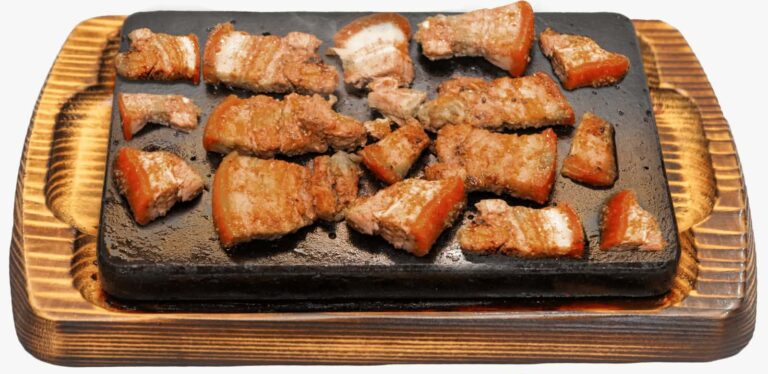
Pork steak
At that time, there was no Yappari branch in Nagoya, the city where he lived. With the owners promising support, he gathered the courage to open one. “Since they asked me to run one in the city I lived in, I took the plunge,” he says, recalling the early days. “During that process, I received immense support from the Japanese.”
Following the success of his first restaurant in Nagoya, he opened a second branch. The number of employees, including part-timers, across both locations reached 40.
Despite studying automobiles, Krishna found himself enjoying the restaurant business as he kept working. His language proficiency, local connections, and familiarity with Japanese work culture helped him expand the business.
Seeking potential in Nepal
Once the two Yappari branches in Japan became stable, Krishna felt he could run a similar restaurant in Nepal. During his visits to Nepal, he began consulting with businessmen and relatives in Bharatpur.
“Whenever I visited Nepal, I would share my plans and cook the dishes for people to taste,” he says. “Once I got feedback that it would work well, I gained the confidence.”
It was not an easy decision to return to Nepal, as his business in Japan was well-established. However, his determination to return since the day he left, combined with his desire to do something in Nepal, helped him make the decision.
He began his preparations two years before actually returning to Nepal. In the blueprints of the house to be built on his ancestral land in Bharatpur, he incorporated the structures required for a restaurant. He raised the funds and planned the interior decor and equipment.
“I built the house with the sole intention of running a restaurant. I arranged underground piping for that and ensured gas reached every table,” he says. “I started the construction only after planning the necessary infrastructure.”
Once the house and the restaurant’s interior structure were ready, he shipped the necessary equipment from Japan. He then returned to Nepal with his family and launched Yappari.
He sold his franchises in Japan only after the Bharatpur restaurant was up and running.
Japanese technique, Nepali taste
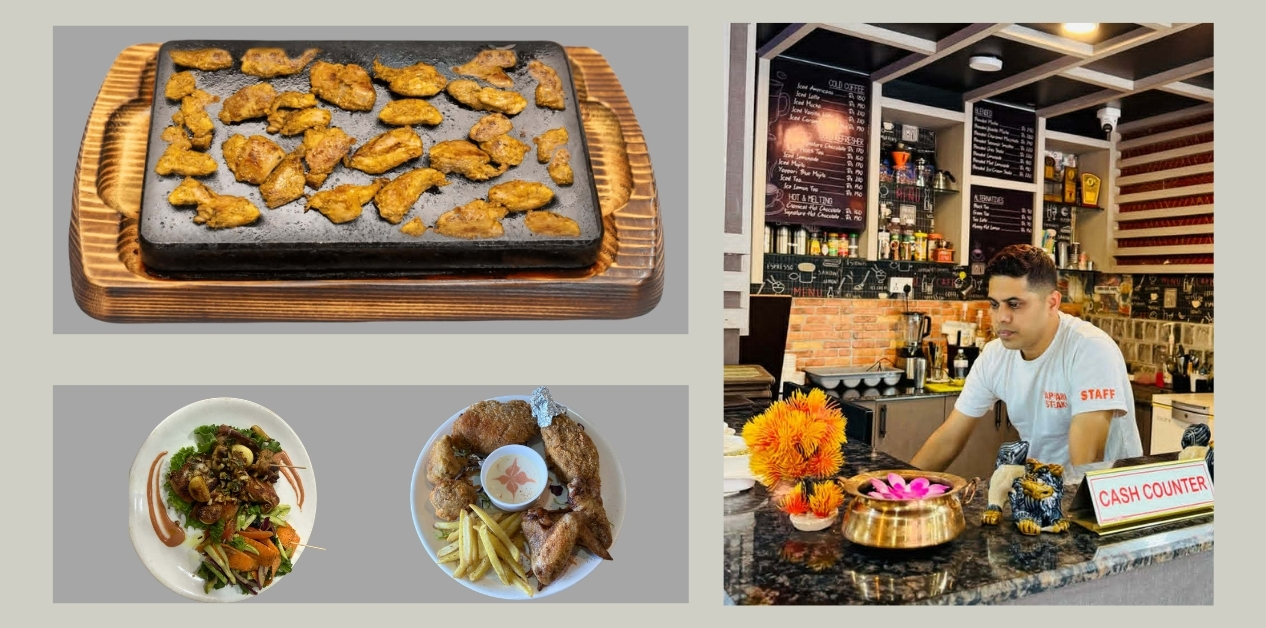
At Yappari Steak, meat is served to customers on a hot black stone. According to Krishna, the stone used in the restaurant is volcanic stone from Japan’s Mount Fuji region.
He imported the stones, the machines to heat them, and some spices directly from Japan. He mentions that he brought about 200 stones, each weighing around two kilograms, to Nepal. However, importing the stones was not an easy process.
“It took time just to explain what the stones were. There was confusion about how to label them for shipping,” he says. “There were even suggestions that they had to be taken to the Department of Archaeology to get cleared.” He notes that the process was delayed because such stones had never been imported before. Eventually, he succeeded in bringing them in by labeling them as ‘barbecue stones’.
He was, however, unable to import the Japanese sauces served with the meat dishes. He explains that they could not complete the food import procedures because the ingredient details were written only in Japanese. He then prepared the sauces in Nepal using locally available ingredients.
Even though he brought the necessary materials from Japan, keeping the taste exactly the same did not work out. Initially, Krishna prepared the dishes with authentic Japanese flavors. Crowds flocked to see the new restaurant and taste the food, but after some time, customer numbers started to decline.
He realized that Japanese flavors did not suit the palate of Nepali customers. He then adjusted the spices and taste while keeping the original style intact.
“The authentic Japanese flavor was not preferred much here,” he says. “It is neither fully spiced in the Nepali style nor low-spiced like the Japanese style. We have now created a blend of Nepali and Japanese tastes.”
Since introducing local flavors to the dishes, he says his regular customer base has grown. Based on customer feedback, Krishna launched his second outlet in less than a year.
“We are not running at a loss. But it is not that we are making massive profits either. I started the second outlet because of the great response from customers,” he says.
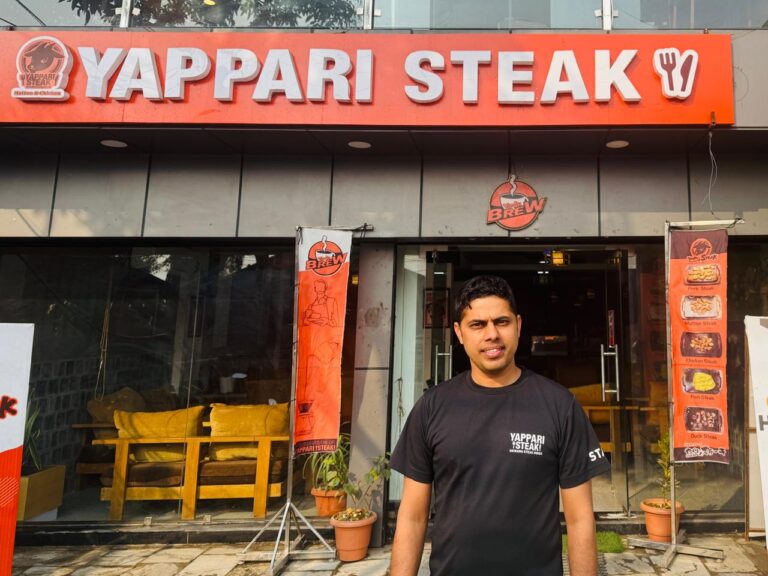
Krishna Paudel
He mentions that across both outlets, they consume about 20 kilograms of pork and chicken, and five kilograms of mutton daily. Pork steak, chicken steak, and chicken nan-kochu are the most popular dishes at his restaurant.
Krishna states that he has invested around Rs 10 million in each outlet. He funded this investment using his savings from Japan along with some loans.
Since the food is served on hot stones, he explains that it does not cool down quickly, maintaining its temperature from the moment the customer starts eating until they finish. He claims they focus closely on maintaining food hygiene and consistency in taste.
From Yappari to Limba
After the two Yappari outlets were up and running, Krishna pushed forward another business plan in Bharatpur. Partnering with three other investors, he opened Limba Thakali Restaurant in Khetrapur, Bharatpur Metropolitan City-2.
He says they started Limba with the goal of serving traditional Thakali food. Before opening the restaurant, he visited Mustang several times to understand the dishes and the authentic Thakali style of dining.
His wife, Binita, has also played a key role in expanding the business. Since she worked at Yappari in Japan for about seven years, she is active in everything from the kitchen to management.
“Binita worked at Yappari in Japan for about seven years. She can also help in the kitchen when needed,” he says with a smile. “It has become a dynamic where I keep opening new ventures, and she keeps supporting them.”
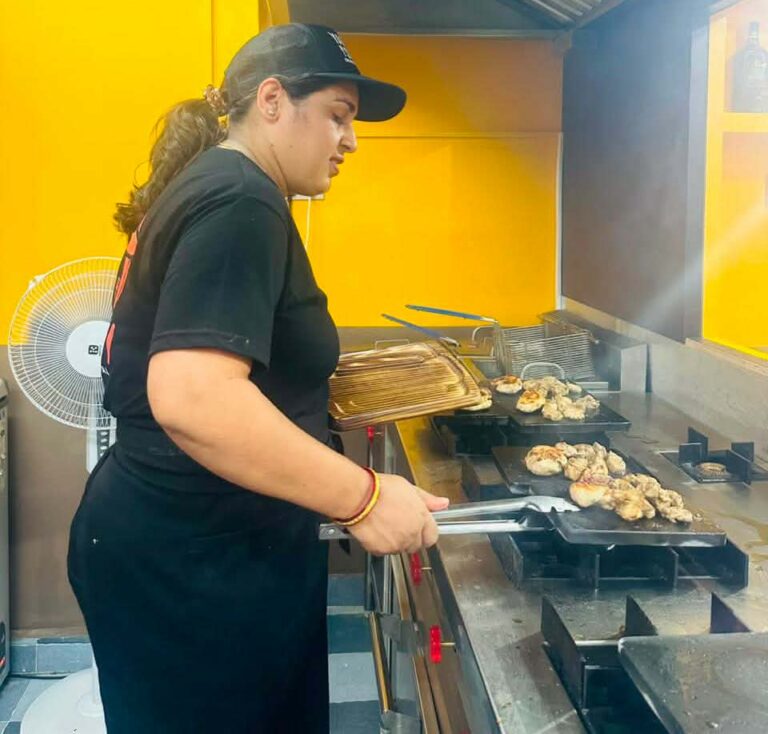
Binita Sedhain
The couple has now invested the money they earned working together abroad into their business back home. The skills they learned in Japan have become the foundation for running their enterprise.
How Japan changed the perception of work
Krishna has returned from Japan not just with a restaurant franchise and capital, but also with a deep understanding of their work culture. He says this has completely transformed his outlook on work.
In Japan, he saw everyone from restaurant owners to staff doing whatever work was needed. Work was never categorized as big or small.
“Seeing everyone do all kinds of work changed my entire mindset,” he says.
After seeing restaurant owners wash dishes themselves, he also learned to do any task.
“While working as a waiter, I had to deliver food, clear dishes, take orders, and handle cash at the counter,” he says. “If dishes piled up, I had to wash them. When the owner themselves is doing all the work, the workers have to do it too.”
He has maintained this practice, learned in Japan, in Bharatpur as well. When necessary, he gets involved in all tasks at the restaurant himself.
He considers a business successful when it can sustain both the owner and the employees. “Once you invest, being able to run and sustain the business is the main thing,” he says. “If my home and my employees’ homes are sustained, I felt it is better to invest in a business and earn an income rather than keeping money in the bank for interest. That is why I felt encouraged to invest more.”
Next destination: Kathmandu
At Yappari restaurants in Japan, beef dishes were the top sellers. In Bharatpur, however, Krishna notes that pork and chicken dishes are more popular.
This has taught him that foreign business models and tastes must be adapted to local markets. His experience shows that even if you bring the brand, equipment, and technology from abroad, a business will struggle to survive unless the dishes are modified to suit consumer preferences.
Krishna mentions that after he started the franchise in Bharatpur, Yappari has expanded to countries like Australia, Singapore, and the Philippines. This has encouraged him to open more branches in Nepal.
With two Yappari outlets and one Thakali restaurant running, his business focus is now on Kathmandu. Market research for potential locations and team building are currently underway.
“We are currently searching for locations in Kathmandu,” he says. “We are discussing running future outlets in partnership with others who have returned from Japan.”
Krishna has given a successful entrepreneurial direction to his dream of returning home—a thought that first crossed his mind a decade ago as he boarded the plane to Japan. Having established three restaurants in Bharatpur using the skills he learned in Japan, he is now preparing to take that experience to Kathmandu.