Kathmandu
Sunday, July 26, 2026





The seizure of five dozen bananas at the Nepal-India border is more than an isolated incident—it reveals how economic policies can disrupt citizens' lives when implemented without the supporting systems needed to make them work.
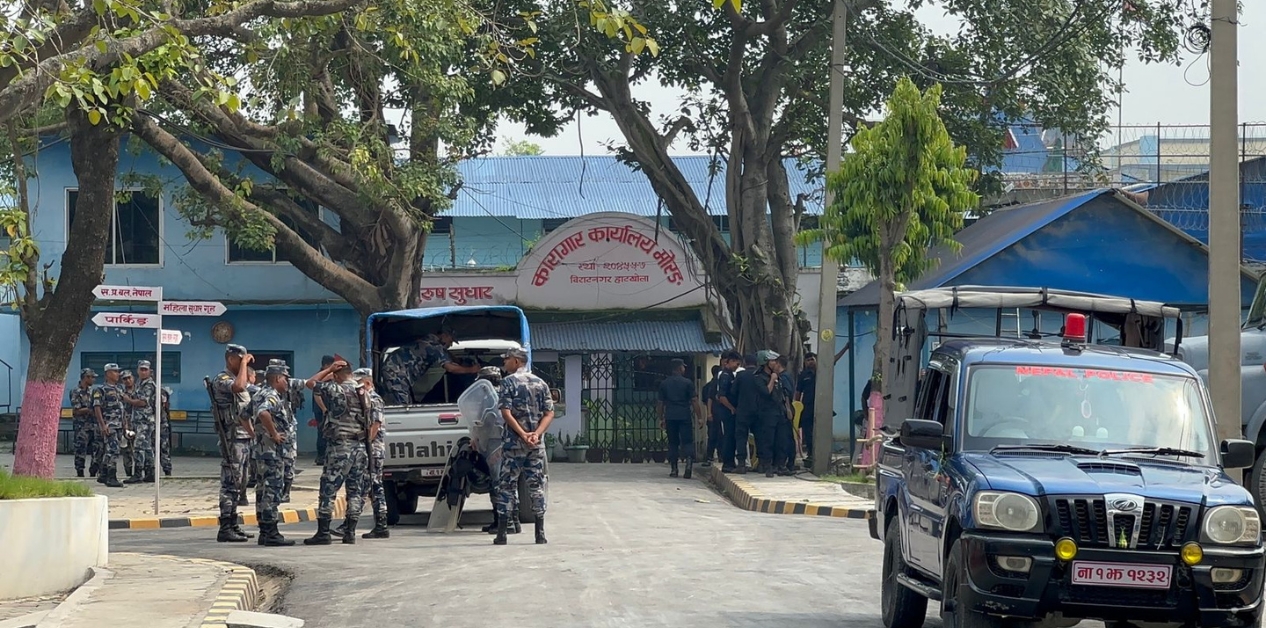
KATHMANDU: A woman living in a border town of Nepal had traveled to India for some work. Crossing the border is nothing new for the Nepalese living there. Whenever they have work, need to meet relatives or friends, or require daily necessities, they routinely cross back and forth.
On her way back to Nepal, she spotted large, yellow, high-quality bananas in the market. She inquired about the price: Rs 80 per dozen. In Nepal, bananas were selling for around Rs 300 per dozen. Thinking of bringing a gift for her family and relatives due to the cheap price, she carefully handpicked and bought five dozen high-quality bananas. However, as soon as she crossed the Indian border and entered Nepal, she was stopped. Being told that bananas were not allowed, all the bananas were seized and thrown onto the ground.
It was not just five dozen bananas that were thrown away. Her hope of feeding her family and relatives, the love attached to the gift, and her desire to make her children happy were also discarded.
She seemed sadder about the fact that the bananas could not even be put to good use than about losing them. If they were not to be brought in, they could have been distributed to the people walking by right there. Even if her own children did not get to eat them, someone else’s children would have, and the hungry would have been fed. But even that was not allowed. When she asked, “Why were the bananas thrown away like this?”, she was simply told, “Bananas are not allowed to be brought in; it is not our policy.” The exact reason why the bananas were seized was not explained to her.
The logic sounds reasonable at first glance. No one can reject the objectives of protecting domestic production, reducing imports, and keeping Nepalese money within the country. However, there are serious flaws associated with this policy.
Behind such control, there might be objectives like agricultural quarantine, reducing the risk of crop disease transmission, or protecting domestic farmers. There might also be a thought that during peak consumption periods, locally produced Nepalese bananas should find a market so that money stays within the national economy—which in itself is not wrong. However, good intentions alone do not make a good policy. The timing, process of policy implementation, and the impact it has on the daily lives of citizens are equally important.
The Government of Nepal has begun strictly enforcing an old provision that requires custom duties to be paid on goods valued at over Rs 100 brought from India. Advancing that policy, Finance Minister Swarnim Wagle stated, “Nepalese people derive no benefit from the money spent in India. The tax collected from that does not contribute to Nepal’s economy. It goes over there.”
The logic sounds reasonable at first glance. No one can reject the objectives of protecting domestic production, reducing imports, and keeping Nepalese money within the country. However, there are serious flaws associated with this policy.
Following protests against this arrangement, although the Supreme Court did not immediately annul the Rs 100 limit, it issued an interim order directing that citizenship dignity and daily life should not be obstructed when bringing medicines, minimal necessities for social customs, and essential personal-use items for border residents.
Weak foundation of domestic production
Nepal imports numerous goods. The agricultural products produced in Nepal do not meet the demand of Nepalese consumers. The list of items that are not produced at all is long. Even the items that are produced are not in sufficient quantities. Therefore, Nepal faces the compulsion to import food grains, fruits, vegetables, and other agricultural produce from India and other countries.
Nepal has adopted an open-market economic policy. However, we must seriously ponder the question of how capable Nepal is when it comes to competing with India in an open market.
India provides various types of subsidies to farmers for agricultural production. There are irrigation facilities and electricity concessions. Due to a large market and large-scale production, agricultural produce there is cheaper than in Nepal. Since India’s economy is much larger than Nepal’s, production occurs on a massive scale, capable of meeting Nepal’s demands as well. Hence, many items, including rice, are imported directly from India.
Nepal’s situation, however, is different. Despite being called a country rich in water resources, there is no reliable irrigation system. Even a project of national pride like the Sikta Irrigation Project has failed to reach a state where farmers can benefit as expected due to controversies, delays, and poor implementation. Ultimately, farmers bear the brunt of these failings.
Farmers do not receive water on time. Electricity supply is inconsistent. Affordable and high-quality seeds are not available when needed. Fertilizers do not arrive on time, and there is a shortage of laborers. For all these reasons, Nepal’s production capacity has historically remained weak.
On the other hand, even after going through immense hardship to produce crops, farmers do not get access to markets or fair prices. We have repeatedly witnessed scenes of farmers dumping milk, vegetables, or other produce onto the streets after failing to secure a decent price.
On one end, consumers are forced to pay high prices. On the other end, farmers are unable to sell their produce. Rather than showing that Nepal lacks an economic and development policy altogether, these examples clearly demonstrate a lack of necessary coordination among various policies.
Broken link between production and market
Running a market does not simply mean having farmers produce goods. Advance arrangements must be made for seeds, fertilizers, water, electricity, technology, and labor required for production. Support needed by farmers must be ensured until the crops are ready. Once the produce is ready, it must be collected. Transportation and distribution systems are needed to bring collected produce to the market. Storage facilities must be arranged for agricultural produce that spoils shortly after preparation.
Without prior preparation and mutual coordination across all these stages, farmers’ produce cannot reach the right market at the right time. Cold storage is essential during times of surplus production. However, merely constructing a building for cold storage is not enough. Technical expertise and management are required to determine what item to store at what temperature, what humidity levels to maintain, how long to store, and how not to break the temperature chain when transporting goods to the market.
Without proper technology and management, even produce kept in cold storage will spoil. Therefore, the “cold chain”—from storage to transportation and market—must be developed as a single unified system. Multiple systems must be built to deliver any product to the market. Nepal is not in a position to abruptly stop imports without constructing these systems, making necessary arrangements, and ensuring domestic production can meet demand.
Nepal’s import dependency will persist as long as all stages from production to market are not tied into a single system and designed as complements to one another. Yet, we are attempting to control imports before building these systems.
Lifeline for border citizens
For many Nepalese living along the border, bringing goods from across the border is a lifeline. Before stopping someone from bringing bananas or cracking down on goods valued at over Rs 100, the government should have arranged alternative solutions.
If demand for a product rises during festivals, the exact volume of domestic production should have been verified. Preparations should have been made regarding how that production would reach the market, how consumers could obtain it at affordable prices, and how to prevent traders from creating artificial shortages to hike prices. Only after establishing all these arrangements would it have been appropriate to tighten imports at the border.
Consider the context of the bananas mentioned above. The demand for bananas was rising. During that same period, the price of bananas in the Nepalese market reached Rs 300 to Rs 400 per dozen. When demand increases and supply falls short, prices rise—this is a basic rule of economics. If bananas were not available in the required quantity in Nepal’s market, importing them from India would naturally follow.
However, bananas failed to reach the market in the required quantity, at the required time, and at a fair price. The government should have investigated the extent to which weak supply management, middlemen, artificial scarcity, or black-marketing contributed to this.
The government should have first ensured how to bring the price of bananas in Nepal closer to the price available across the Indian border. It should have created a situation where domestic production reached the market on time, supply met demand, and there was no unnatural price gap across the border. Had that been the case, Nepalese citizens would not have been compelled to go to India to buy five dozen bananas. But here, the existing door was shut without opening another. The impact of that hit the lifeline of the citizens living along the border directly.
In many settlements along the border region, poverty, poor market access, and daily reliance on cross-border markets are interconnected. For a poor person, saving even a single unit of money matters. If the exact same item costs Rs 80 across the border and Rs 300 in Nepal, they will choose the cheaper item. That is not a lack of patriotism; it is an economic reality. The government has failed to take the necessary steps to prevent this situation from arising.
Economic policy and citizens’ daily lives
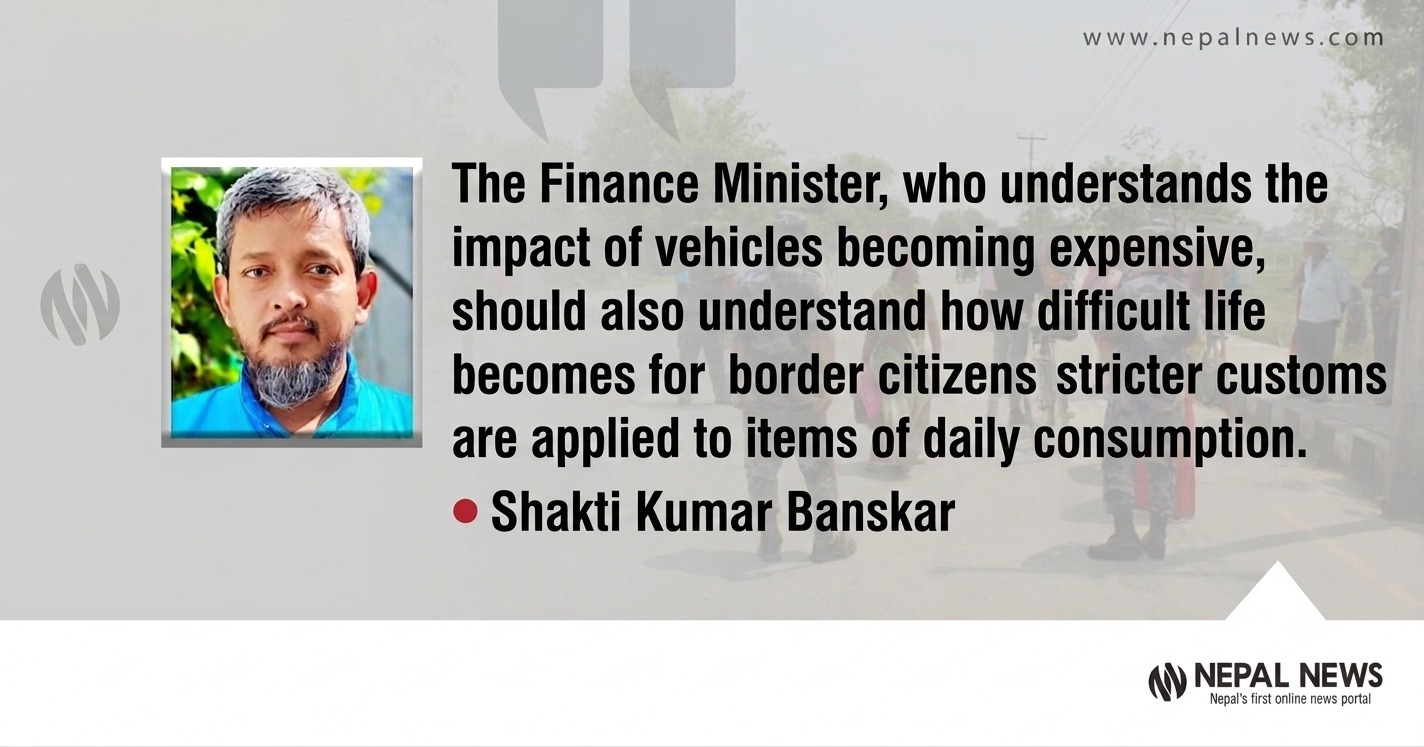
The Finance Minister, who is also an economist, must pay attention not only to macroeconomic data but also to the impact policies have on the daily lives of ordinary citizens. A policy aimed at reducing the trade deficit on paper or keeping money within the country may look good. However, if that same policy makes the daily life of border citizens difficult, it cannot be called a successful policy.
One can imagine the chaos and price hikes that would ensue in Kathmandu’s market if goods-carrying trucks were halted for ten days. Similarly, telling border citizens not to bring goods worth more than Rs 100 delivers a severe blow to their daily supply system.
The Rs 100 limit is decades old. Due to inflation, there is a massive difference between the purchasing power of Rs 100 back then and Rs 100 today. The rule’s limit has not been revised in accordance with time, inflation, or the changing consumption habits of citizens.
Back then, Rs 100 could meet a major portion of a family’s needs. Today, that same amount cannot even purchase basic daily necessities. It is unjust to enforce a rule based on an outdated sum without considering changes in time, prices, and citizen income.
The core question
The incident involving five dozen bananas is not an exception; it is representative. The fundamental question it raises is: How much attention does the state pay to ground realities when formulating economic and development policies? A finance minister who understands that cars and other goods have become expensive due to taxes must also realize that most citizens in Nepal belong to the lower and lower-middle classes.
While the finance minister states that “the overall development and democracy of the country cannot be sustainable until the middle class is secure, stable, and economically empowered,” he must realize that daily consumption items hold far greater importance in the lives of these classes than cars.
Food grains, fruits, vegetables, medicines, and daily essential goods are their true lifelines. The state must not sever this very lifeline of its citizens under the guise of any policy.
When designing policies in the name of development, the question of whether or not it adversely impacts the lives of lower and lower-middle-class citizens must be asked first. Government policies should stand in favor of the poor and the general public, not against them.
Before implementing any policy, all supporting systems must be put in place. An existing door should not be closed without opening an alternative one. Doing so can cause unbearable negative impacts on the lives of ordinary citizens and block their very means of survival.
A citizen’s life is not an intellectual debate conducted in a closed room that can be brought to one conclusion today and easily altered tomorrow. For policymakers, a decision might be an experiment. But for an ordinary citizen, the difference between a good policy and a bad policy can be a matter of life and death. The five dozen bananas thrown onto the border ground serve to remind us of exactly this.
(Banskar is a researcher and a student of political science.)