Kathmandu
Sunday, June 21, 2026





As farmers endure more than 4-hour lines for just 10 kg, a widening gap of 750,000 vs 500,000 metric tons persists, with 7,500 metric tons frozen in buffer stock pending federal approval
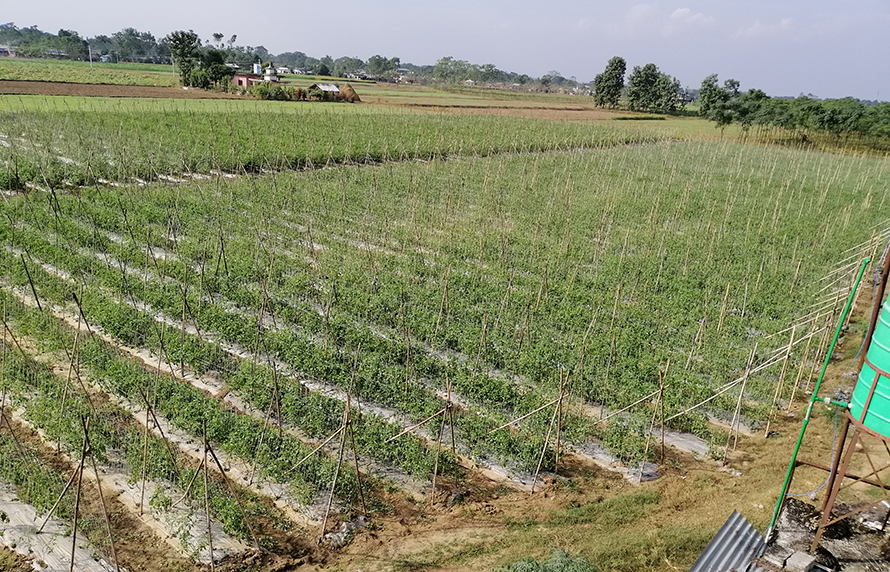
MORANG: At 8:00 AM on May 4, Mohan Dhimal of Bhausabari, Ward 5 of Kanepokhari Rural Municipality, Morang, hurried to Ramailo Market, located about 2 kilometers north of his village. Carrying an empty sack, he also carried hope, expecting to secure fertilizer for the maize and paddy growing on his 13,545.25 square meters of land.
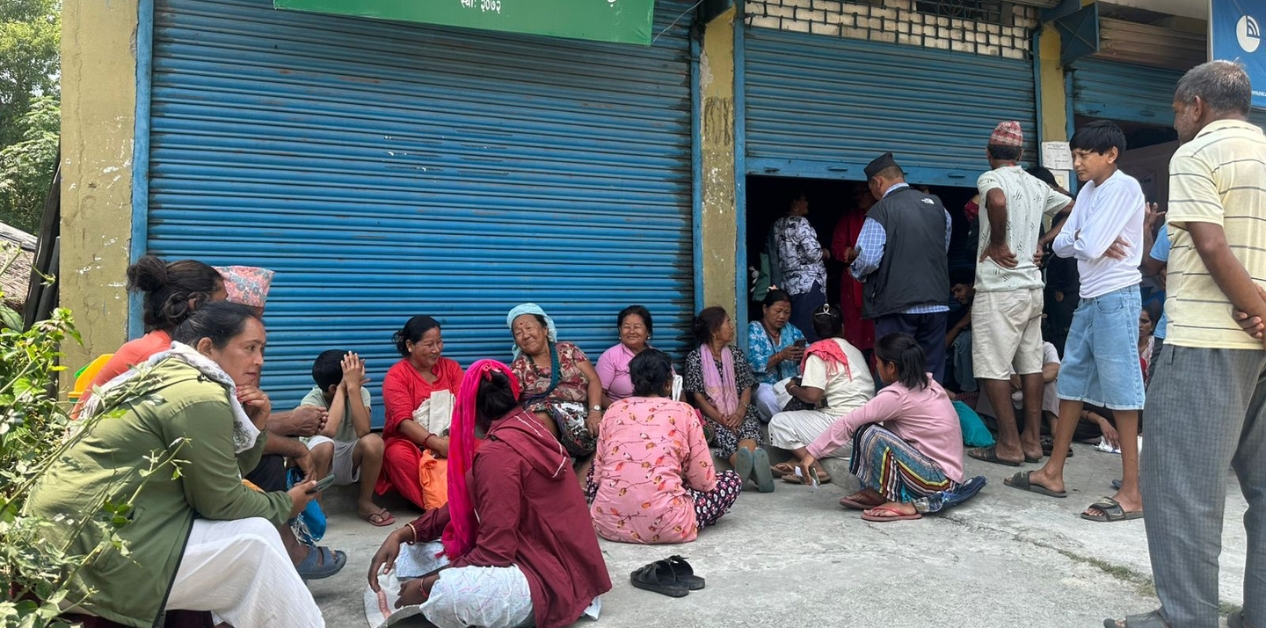
Dhimal had woken at dawn after neighbors informed him that fertilizer was being distributed at the Small Farmer Agriculture Cooperative, locally known as ‘Sana Kisan,’ in Bayarban, Ward 6. By the time he arrived, a long queue of farmers had already formed. Fertilizer was being distributed at 10 kilograms per person, and he joined the line. But just as his turn approached, cooperative staff announced that supplies had run out.
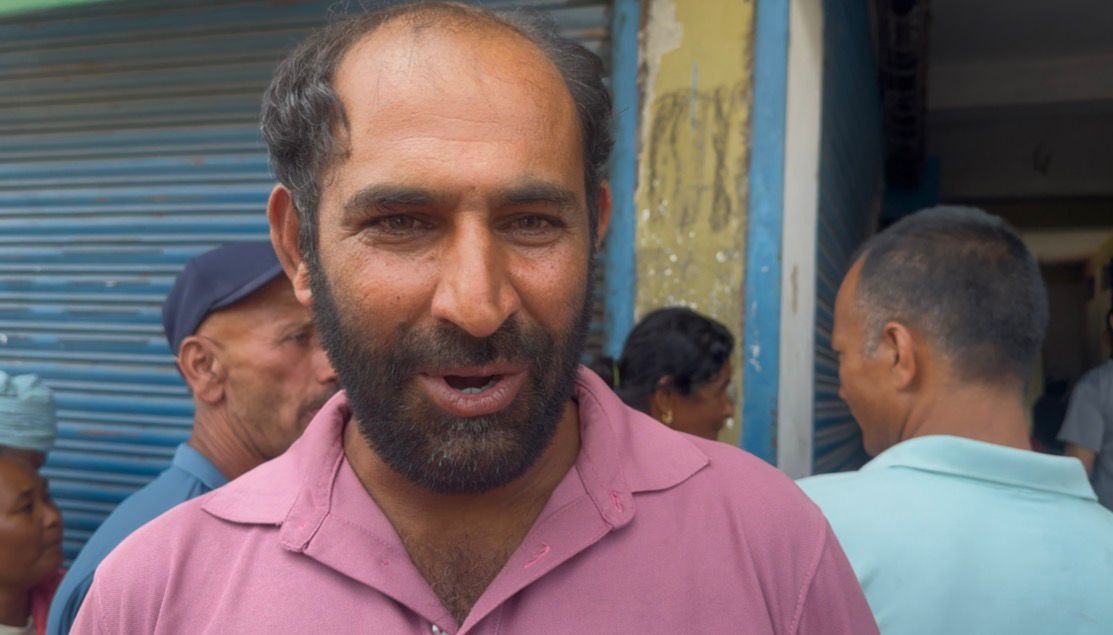
Farmer Mohan Dhimal of Kanepokhari-5
“I sat in the scorching sun for more than 4 hours to get fertilizer,” said the 42-year-old Dhimal, his face tense with frustration. “Around 12:30 PM, just as my turn was about to come, the staff shut the shutters, saying the fertilizer was finished.”
Dhimal’s experience reflects a broader reality. Around 400 farmers who stood in line that day were forced to return home empty-handed. “This is the time to apply fertilizer to maize. Without it, the ears won’t even develop,” he said. “But I had no choice except to return empty-handed.”
A similar ordeal was faced by Jit Kumari Rai of Kanepokhari-6, who cultivates 10,158.94 square meters of land. After waiting in line for 4 hours without success, she staged a sit-in at the cooperative gate. “We waited for hours with our sacks, and now the staff are hiding inside, saying there is no fertilizer,” she said angrily. “I am not leaving until I get fertilizer.”

Farmer Jit Kumari Rai of Kanepokhari-6
Frustration among farmers has been fueled not only by shortages but also by confusion and a lack of transparency in distribution. While there were rumors that 50 sacks of fertilizer had arrived, many suspected that only 40 sacks were distributed and the remaining 10 sacks were withheld. Mani Kumar Tamang and Somnath Giri, also from Kanepokhari-6, spent the entire day in line without food or water, only to leave disappointed.
Yasoda Limbu, chairperson of the Small Farmer Agriculture Cooperative in Bayarban, attributed the problem to limited supply. “Only 45 sacks of urea reached the cooperative, and they were exhausted while distributing 10 kilograms per person,” she said. “We distributed everything we had, but disputes arose because the number of farmers was too high.”
Government stocks remain in warehouses while farmers go without
The fertilizer crisis during the planting season is not limited to Morang; it has become a recurring nationwide problem. According to the Ministry of Agriculture and Livestock Development, the country faces an annual demand of 750,000 metric tons of fertilizer, while government programs account for only 500,000 metric tons. This persistent gap between demand and supply continues to trigger frustration and protests among farmers when shortages arise.
Kamal Pokharel, chief of Krishi Samagri Company in Koshi Province, said a quota of 2,115 metric tons has been allocated for the province. Although total urea stock stands at 11,555 metric tons, about 7,500 metric tons remain reserved as buffer stock. “Buffer stock cannot be mobilized without approval from the federal government,” he said. “We distribute fertilizer only after receiving decisions from local authorities.”

Mani Kumar Tamang (left) and Somnath Giri (right) both from Kanepokhari-6
In Morang, out of the allocated 405 metric tons, only 243 metric tons have been distributed so far. Authorities claim fertilizer is being supplied through 250 dealers across the district, but it has yet to reach many farmers at the ground level.
Meanwhile, the Salt Trading Corporation in Koshi Province reports significant reserves, with 60,322 sacks of urea and 118,000 sacks of DAP currently in storage. In the fiscal year 2025/26, the corporation received 436,559 sacks of urea and 479,039 sacks of DAP.
This disconnect, where fertilizer accumulates in government warehouses but fails to reach farmers’ fields, continues to strain an agriculture-dependent nation. Rudra Chhetri, another farmer from Kanepokhari, voiced the frustration: “Farmers who toil to make the country self-reliant in food cannot access fertilizer when it is needed most. How can production increase under such conditions?”
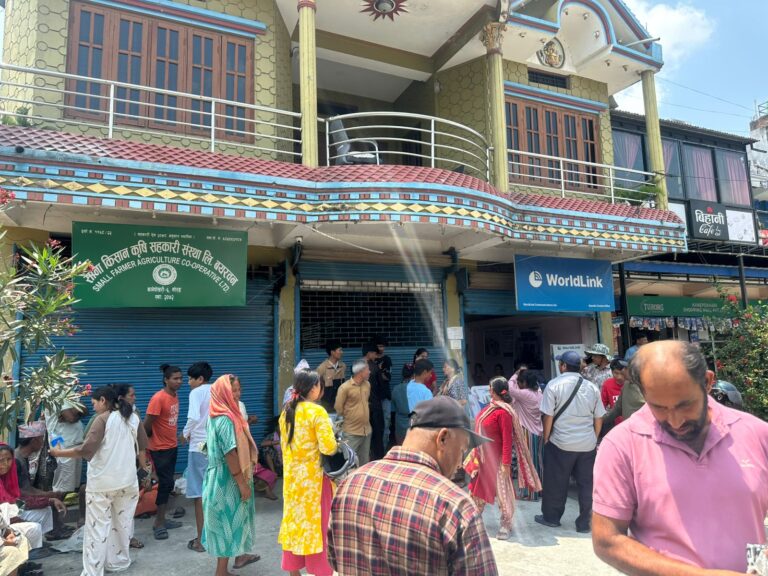
Farmers who reached the distribution center only to find empty sacks and closed shutters