Kathmandu
Saturday, July 25, 2026





A long-form investigation into nepotism, corruption, and the slow institutional collapse of Nepal Airlines Corporation
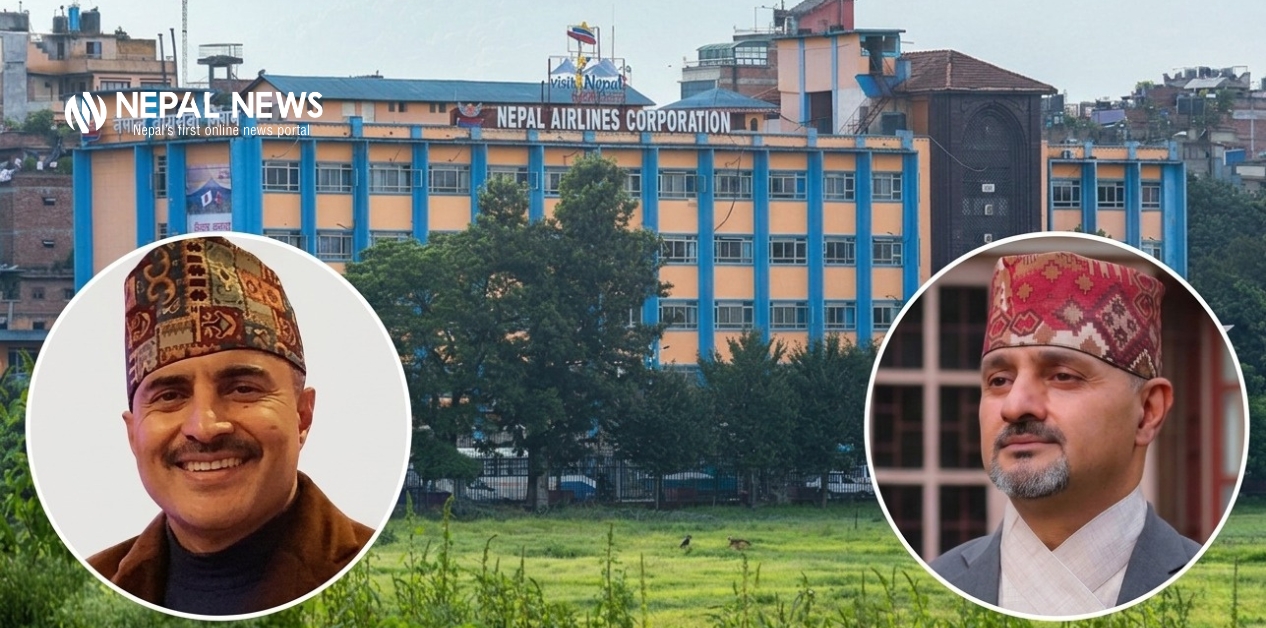
KATHMANDU: The morning of April 15, 2026, was supposed to be routine for Nepal Airlines Corporation. A pair of pilots were scheduled to board a flight to Kuala Lumpur, Malaysia, where they would undergo expensive Airbus A-320 type-rating training at the CAE facility, a critical program that would allow them to fly one of NAC’s most important aircraft types. But only hours before departure, something unusual happened: one of the pilots was pulled from the roster.
His name was Roshan Koirala. And the story of how he got on that list and how he was taken off it reveals something deeper, darker, and far more consequential than a simple scheduling change.
It is the story of a national institution that has, piece by piece, been repurposed for private benefit. It is the story of a dynasty.
Nepal Airlines Corporation has long been a byword for scandal. Charges of ingrained nepotism, persistent corruption and recurrent safety lapses have clung to the state-owned carrier with stubborn tenacity. Accounts of irregular appointments and generously remunerated contracts for well-connected insiders-especially within its operational ranks-have steadily corroded public confidence.
Its balance sheet is no less troubling. Years of political meddling, managerial frailty and internecine wrangling have left the airline burdened with losses and swelling debt.
Governments, in turn, have made ritualistic pledges of transparency and reform; results have been scant. In a market where private airlines contrive to stay aloft, state-owned enterprises-Nepal Airlines chief among them-continue to hemorrhage resources, offering a cautionary tale of public-sector dysfunction.
The latest imbroglio center on Captain Subash Rijal. Once associated with the widebody procurement scandal, he formally retired from the airline only to return in the powerful post of Director of the Operations Department.
His reappointment has rekindled familiar anxieties about accountability and propriety. Fresh allegations-of policy manipulation and undue influence-now swirl, reinforcing the sense that, at Nepal Airlines, old habits prove stubbornly difficult to dislodge.
In Nepali culture, the term samdhi carries specific weight. It refers to a family relationship through marriage, the bond between in-laws. In the corridors of Nepal Airlines Corporation’s headquarters in Kathmandu, the word samdhi has recently taken on a different kind of resonance: as a synonym for institutional favoritism.
Captain Subash Rijal is the Director of Operations at NAC ,arguably the most powerful operational position at Nepal’s flag carrier. In early 2026, he was the man who controlled which pilots flew, which got trained, and when.

Subash Rijal
According to multiple sources within the corporation, he used that power to do something extraordinary: he bypassed nineteen qualified pilots who had been waiting, in some cases for up to six years, to send his relative by marriage, Roshan Koirala, to a high-cost Airbus A-320 training program in Malaysia.
The allegations against Rijal do not arise in isolation. They emerge from a pattern. But to understand how Koirala came to be on that manifest and why his removal represents a watershed moment, it is necessary to understand the mechanics of what was allegedly arranged on his behalf.
Koirala is a contract pilot. He was appointed to NAC for the Airbus A-320 fleet despite sources and internal records indicating he had already crossed the mandatory retirement age of 58 stipulated by corporation regulations.
His only type experience was on the two small Dornier 228 and a LET 410, both small 19-seater turboprops. His service record at NAC is short. By any standard measurement of institutional eligibility, he was not the most qualified candidate for what is an expensive and coveted training placement.
Yet Koirala was on track to fly to Kuala Lumpur on April 15 for a training course that would cost the Nepali state significant sums and that would, had it been completed, have given him a qualification that would have been useful for precisely the limited period he was legally allowed to remain employed.
To understand the full picture of how this happened, it is necessary to reach back further to who appointed Koirala in the first place.
The appointment that planted the seed of this current controversy was made not by Subash Rijal, but by his brother.
Captain Srawan Rijal previously served as Director of Operations at NAC — the exact same post his brother now occupies. It was during Shrawan’s tenure, sources say, that Roshan Koirala was initially brought into the corporation on a contract basis.
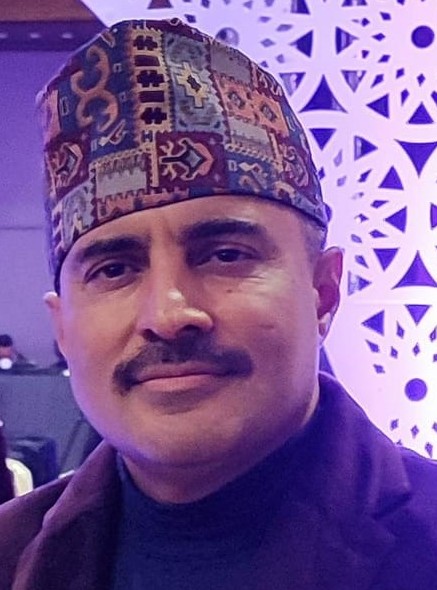
Srawan Rijal
The appointment raised eyebrows from the start. Koirala had already exceeded NAC’s mandatory retirement age threshold. He was simultaneously engaged as a pilot with the United Nations Humanitarian Air Service in Africa, flying a Let L-410 aircraft, at or around the same time his appointment at NAC was being processed. Holding active flying roles in two separate organizations concurrently is, NAC sources say, a direct violation of regulatory standards and professional responsibility norms.
Despite these issues, the appointment went through. Despite failing to comply with the requirement to deposit a mandatory Rs 5 million security bond at the time of his appointment, Koirala was not removed. Instead, when he quietly traveled abroad without notice, sources within NAC say the process was quietly paused and then resumed again upon his return, as if nothing unusual had occurred.
This is the appointment that Subash Rijal then sought to build upon when he took over as Operations Director. The Koirala contract was not his creation — but the training scheme that followed was allegedly his initiative.
On April 13, Srawan Rijal said in a Facebook post that recent media reports accusing him of appointing Captain Roshan Koirala through favoritism were “misleading and baseless,” clarifying that he was no longer serving as Operations Director at the time of the appointment.
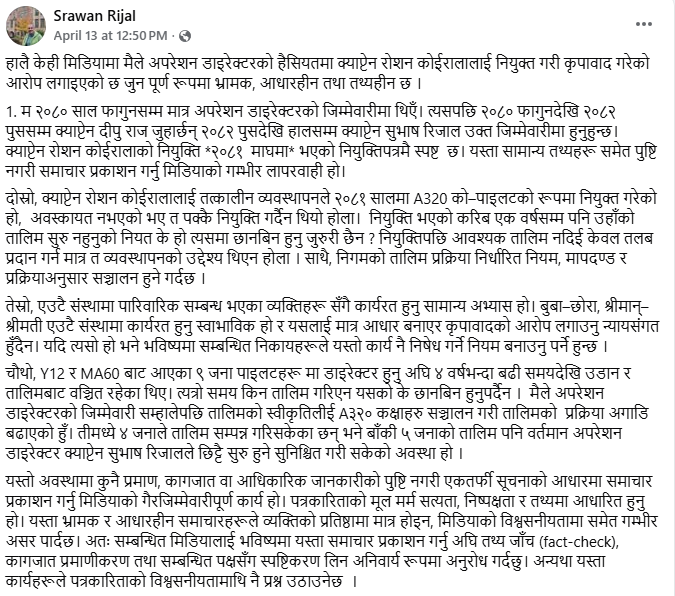
Screenshot of Srawan Rijal Facebook post along with the docments
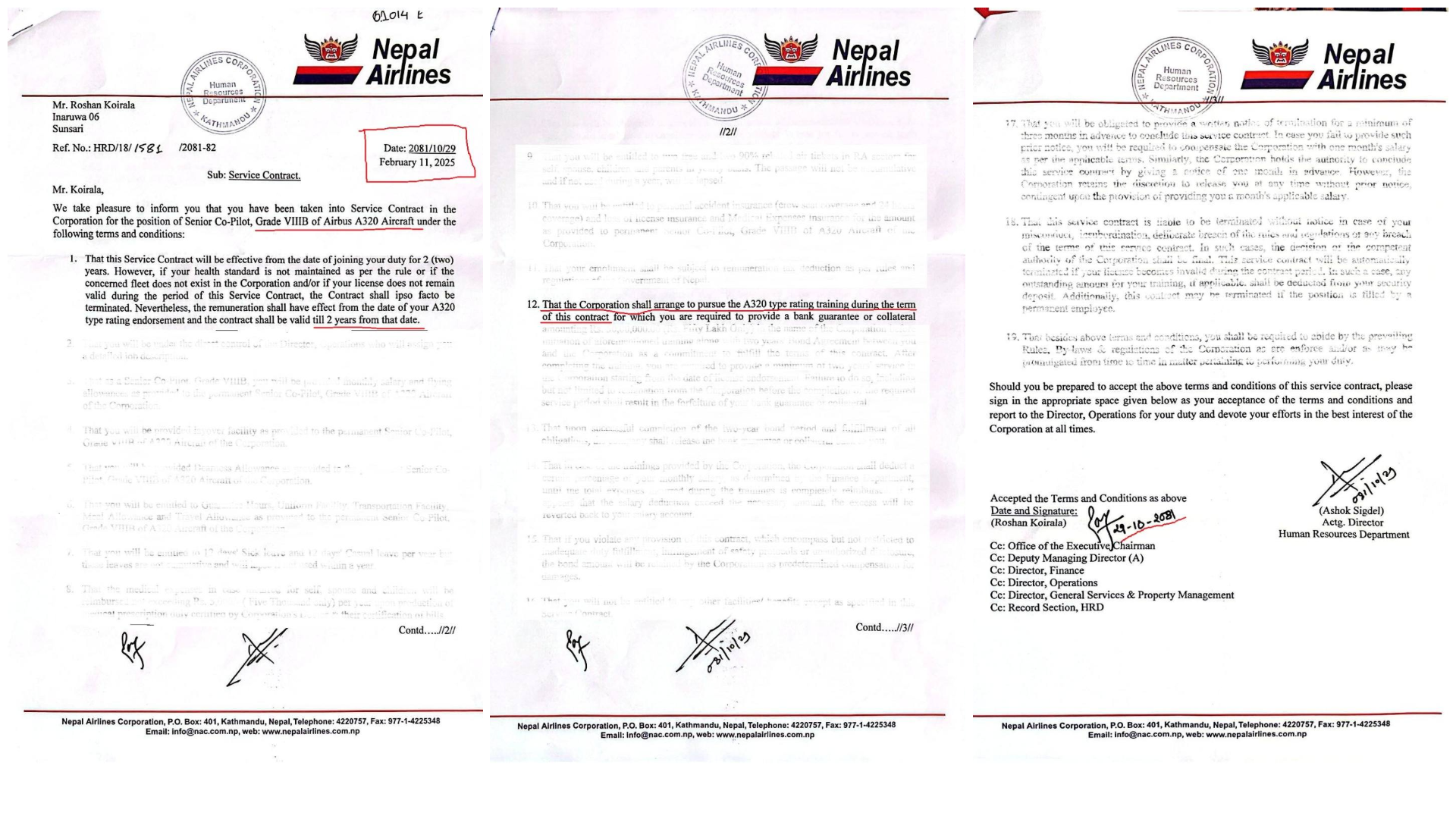
He stated that Koirala had been recruited by the then management as an A320 co-pilot and met the required qualifications, questioning why his training had been delayed for nearly a year.
Rijal also argued that citing family connections alone does not amount to nepotism, calling it a common practice in many institutions. He further noted that several pilots had remained without training for years before his tenure, and claimed he had initiated steps to resume A320 training, with some already completed.
He criticized the media for publishing what he called one-sided reports without verifying basic facts, urging outlets to fact-check, validate documents, and seek clarification before publication.
The chronology of who held which post at which moment is contested and important. What is not contested is that both brothers served in the most sensitive operational position at Nepal’s national carrier — back to back — and that a relative by marriage of one was appointed during a period of overlapping institutional influence.
According to the sources within NAC, placing Koirala in the Malaysia training cohort involved bypassing multiple safeguards. The Airbus A320 type-rating exam, typically conducted as a computer-based test to prevent interference, was allegedly switched to a paper-based format without a publicly stated reason.
Sources further claim the question paper was prepared and administered by Sanjay Poudel, a non-type-rated pilot, instead of qualified Airbus 320 instructor pilots as required.
An email dated February 16, 2026, reportedly indicated that the paper would be supplied directly by the Operations Director’s office rather than an independent or expert body. Koirala is alleged to have received 100 percent marks, with no proper evaluation by an expert panel.
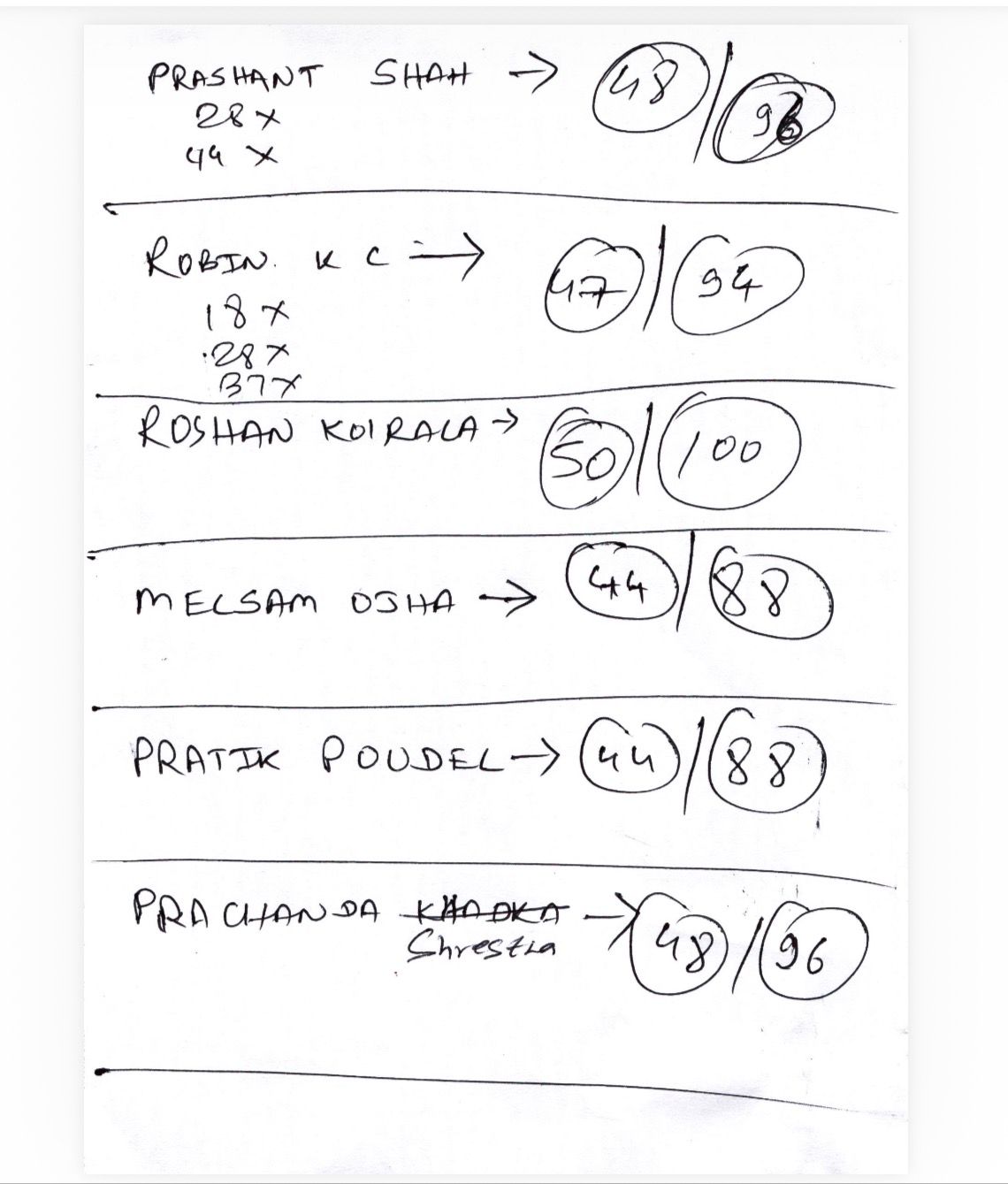
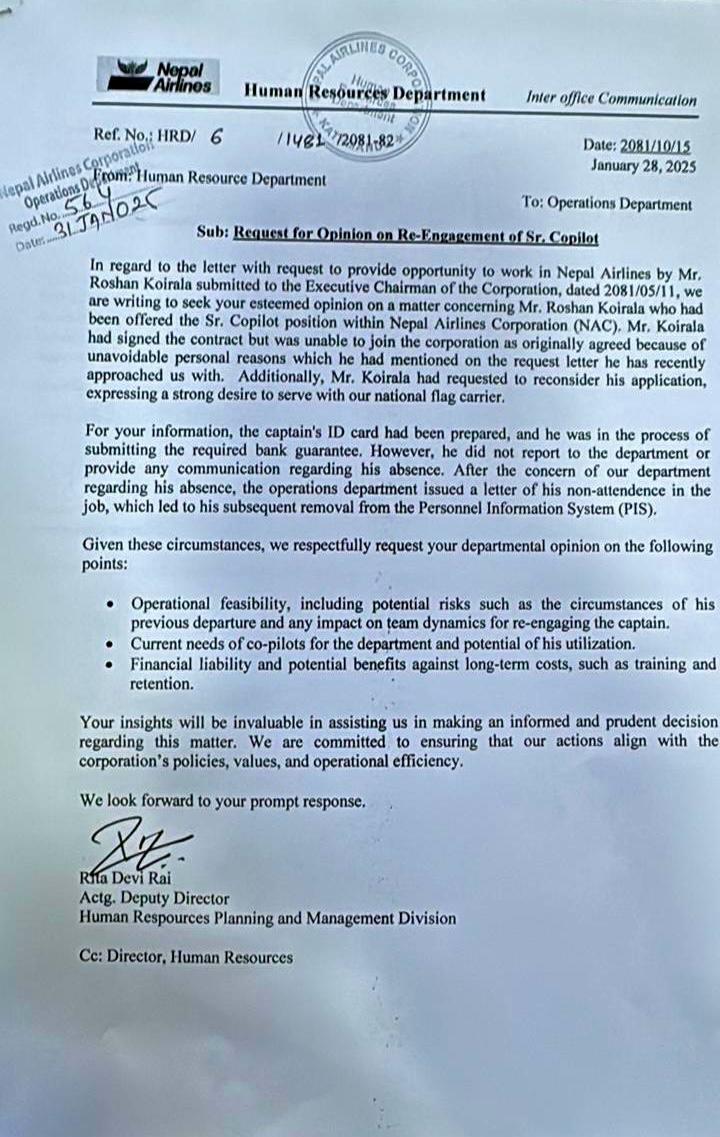
A rough official marksheet of ‘Training crew division’
Additional concerns include the reported expiry of NAC’s training agreement with CAE Malaysia and an attempt by a subcommittee to halt the process. Despite this, training allegedly proceeded under a “conditional arrangement” approved at the Operations Director level, without the required bank guarantee or collateral. Sources also say Koirala did not meet OM-A requirements, which mandate type rating and at least 500 flight hours on type.
Meanwhile, 19 pilots were reportedly put on hold — including Melsam Ojha, Prachanda Shrestha, Prashant Shah, Pratik Poudel, Badal Raj Gupta, Ananda Kumar Shrestha, Ram Krishna Shrestha, Ankit Bohara, Srijana Acharya, and Rabin KC — many of whom have been inactive without type-rating for up to six years.
Eligible Twin Otter pilots such as Abin Gauchan, Vivek Pyakurel, Bishworaj Thapa, Nimisha Nepal, Santosh Yadav, and Amrit Khanal were also reportedly bypassed despite qualifying for Airbus conversion training.
When the news first surfaced through media reports on April 11, 2026, the reaction was swift — though largely because it could no longer be delayed.
The Ministry of Culture, Tourism and Civil Aviation took the matter seriously. Under pressure from the ministry, NAC Executive Director Amritman Shrestha summoned Operations Director Subash Rijal for questioning. When reached by Nepali media prior to that meeting, Shrestha was measured in his statements: “This appointment was made during the tenure of former chairman Yuvraj Adhikari. Initially, the process appeared to have followed regulations. I have called the Operations Director for questioning to understand the full picture, after which I will brief the Ministry.”
The questioning happened. The evidence was examined. And Roshan Koirala’s name was removed from the Malaysia training manifest.
If the Koirala affair illustrated how institutional authority can be used to create opportunities for relatives, a second, less-noticed development at NAC illustrated something perhaps more brazen: that even when relatives face legal jeopardy related to their role at the institution, they can be brought back — at extraordinary compensation.
Srawan Rijal Subash’s brother, the former operations director who had originally overseen the institutional environment in which Koirala was appointed, resigned from NAC in May 2025 after spending 28 years at the corporation. His resignation came in the context of a corruption case connected to NAC’s wide-body aircraft purchase. The Commission for the Investigation of Abuse of Authority (CIAA) had filed charges against him at the Special Court in April 2024. He resigned after the case moved to the Supreme Court on appeal.
What happened next would be difficult to believe if it had not been documented.
According to NAC sources who have reviewed internal contract documents, Srawan Rijal was re-hired by NAC on a five-year contract as a Senior Captain (Grade 9) for the Airbus A-330 fleet. His appointment letter is dated March 13, 2026— approximately ten months after his resignation.
The person who facilitated this re-hiring, sources allege, was his own brother, Subash Rijal, in his capacity as Operations Director.
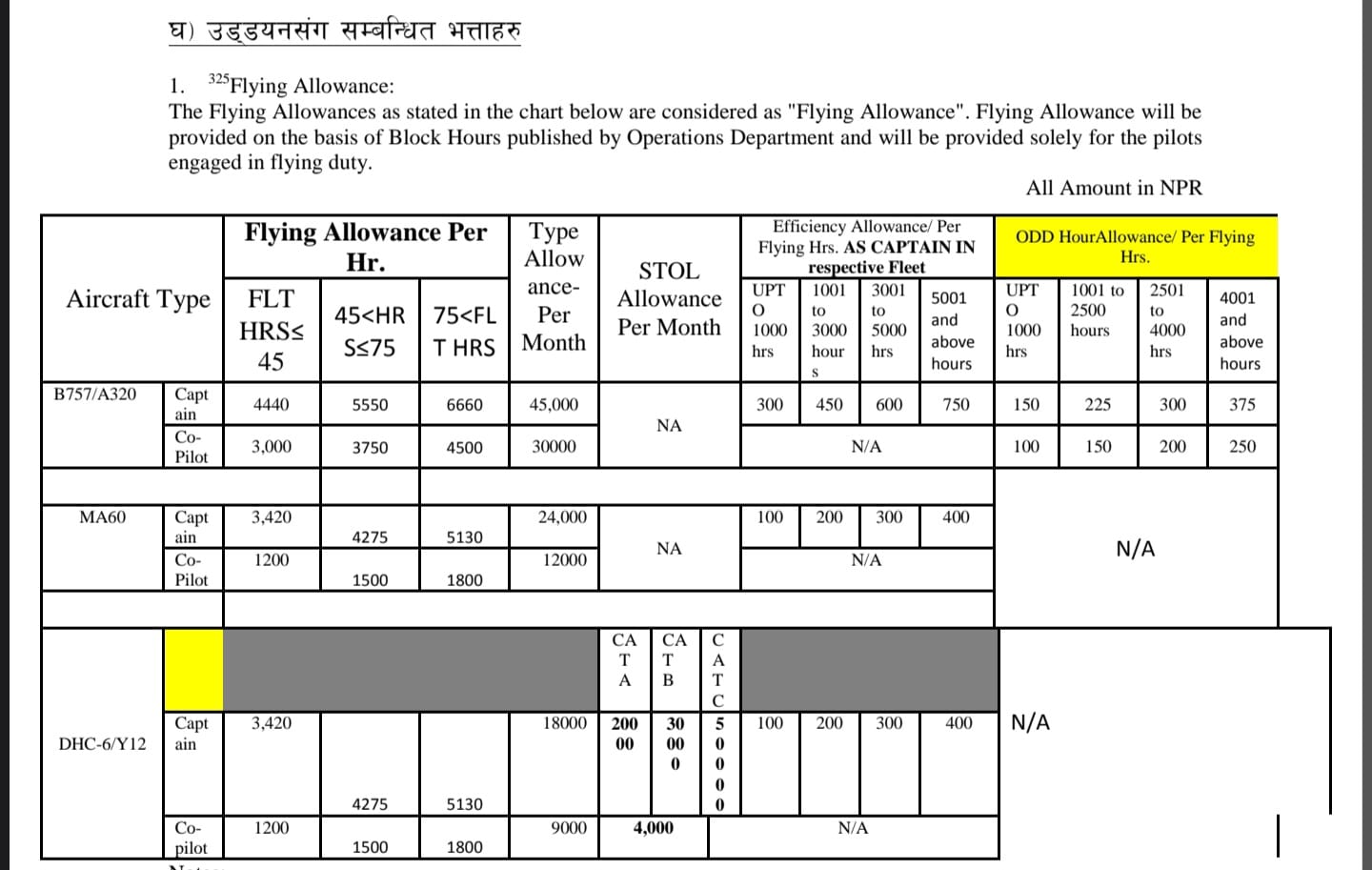
A chart of ‘Flying Allowance’ for pilots engaged in flying duty
The salary terms are notable. The average monthly compensation for a permanent NAC pilot, sources within the corporation say, falls in the range of Rs 400,000 to 500,000.
Srawan Rijal’s contract reportedly provides a monthly base salary of Rs 1,230,000 — more than double the regular rate — plus an additional Rs 300,000 per month in instructor allowances.
Combined with food, uniform, transport, and travel allowances equivalent to a permanent Senior Captain, his total monthly compensation reportedly exceeds Rs 2,000,000. That is approximately five times what comparable permanent pilots receive.
The contract also specifies that Srawan will work under the direct supervision of NAC’s Operations Director — his brother. It provides for personal accident insurance, license-loss insurance, and family health coverage up to Rs 5,000 annually.
If the A-330 is grounded or unavailable for more than 15 days, he receives a reduced “retainer fee” rather than full salary — a provision that acknowledges the uncertain operational status of NAC’s wide-body fleet.
There is an additional allegation that compounds the concern. Some NAC employees have claimed that Srawan Rijal is also currently affiliated with SriLankan Airlines, meaning he may be drawing income from two separate carriers simultaneously, a potential violation of the terms under which pilots are typically contracted. Prior to his re-engagement with NAC, he reportedly worked for a cargo company based in India following his original resignation.
Sources also note a dynastic dimension that predates even the brothers’ careers at NAC. Their father, Ganga Prasad Rijal, was himself a senior pilot at Nepal Airlines, joining the corporation in 1967 and retiring in 2005.
At one point, all three — Ganga Prasad and his two sons — were serving at NAC simultaneously. The Rijals are, in a meaningful sense, a NAC institution in themselves.
A governance expert might describe what the Rijal family represents at NAC as “inter-generational institutional capture” — the embedding of a family network so deeply in an organization that it becomes structurally difficult to dislodge.
What begins as one relative helping another eventually becomes a self-sustaining system in which the institution’s resources, processes, and decision-making authority are partially redirected to serve the network’s interests.
Throughout the accumulation of these events, one institution has been conspicuously absent from the story: the Civil Aviation Authority of Nepal (CAAN), the independent regulatory body tasked with overseeing aviation safety and institutional compliance at all Nepali carriers.
Sources within NAC say that CAAN was aware of the irregularities in Koirala’s examination process — including the conversion from computer-based to paper-based format, the use of a non-type-rated pilot to prepare the question paper, and the issuance of the exam paper directly from the Operations Director’s office. Despite this awareness, no regulatory action was taken.
This is not, unfortunately, out of character. CAAN itself has had a tumultuous recent history with institutional integrity. In December 2025, Pradeep Adhikari, the recently suspended Director General of the Civil Aviation Authority of Nepal (CAAN), came under intense scrutiny.
He came to be seen as a reflection of the deeper dysfunction within Nepal’s public enterprises and bureaucracy — marked by nepotism, brokerage-driven politics, policy-level corruption, and an entitlement rooted in proximity to power and money.
Adhikari was later taken into custody by the Commission for the Investigation of Abuse of Authority (CIAA) along with five others. The arrests were made on December 3, 2025, as part of an investigation into alleged corruption linked to the construction of the Nalinchowk Heliport, according to the CIAA.
CAAN’s operational audit of NAC, conducted in April 2026, reportedly flagged nepotism, irregular appointments, Air Operator Certificate (AOC)-related compliance problems, and failures to follow operational manuals. The audit’s findings were damning on paper. Their practical effect, beyond the media storm that accompanied their disclosure, remains to be seen.
The Civil Aviation Authority of Nepal was established in December 1998 to be an independent safety and regulatory watchdog. Its record in recent years suggests that independence is more aspirational than operational. When safety matters require confrontation with powerful institutional figures, the authority has frequently found reasons not to act.
The governance crisis inside NAC’s headquarters would be serious enough if it were merely a matter of personnel decisions. But there is a second layer to Nepal Airlines’ current predicament — one that touches directly on flight safety, and on Nepal’s standing with foreign aviation regulators.
On February 6, 2026, a Nepal Airlines flight from Guangzhou Baiyun International Airport in China bound for Kathmandu, operated by an Airbus A-320, under the command of Senior Captain Uddhab Ghimire was involved in what sources describe as a ground mishap in the airport’s takeoff area. The precise nature of the incident has not been publicly detailed by NAC. What has become public is the response, or rather, the absence of one.
China’s Civil Aviation Administration (CAAC), one of the world’s most rigorous aviation regulators, wrote formally to NAC requesting detailed clarification. The CAAC wanted information about navigation procedures during takeoff, visibility conditions at the time, communication protocols, runway surface status, and other environmental factors relevant to the incident. It was not an unusual request — it was standard regulatory procedure following a reported safety event.
NAC, according to sources within the corporation, failed to submit the required information within the one-week deadline set by the CAAC. More strikingly, officials from NAC’s Operations Department and Safety Office reportedly declined to attend a meeting that the CAAC scheduled for March 10, citing, and this detail strains credulity, their busy schedules due to Nepal’s election period.
A foreign civil aviation authority does not call a meeting to discuss safety matters and accept “we’re busy” as a valid response. The CAAC did not accept it either. On March 9, it issued a second, more strongly worded notice, describing NAC’s continued inaction as “unacceptable” and reiterating its demand for a formal safety investigation report.
Reports from sources familiar with Captain Ghimire’s record suggest this is not his first encounter with safety-related concerns. Sources within NAC claim he has previously faced disciplinary measures related to level-bust incidents in Hong Kong (altitude deviations from assigned flight levels, which are among the more serious navigational errors in commercial aviation), concerns about cockpit oxygen management, and violations of mandatory crew rest periods.
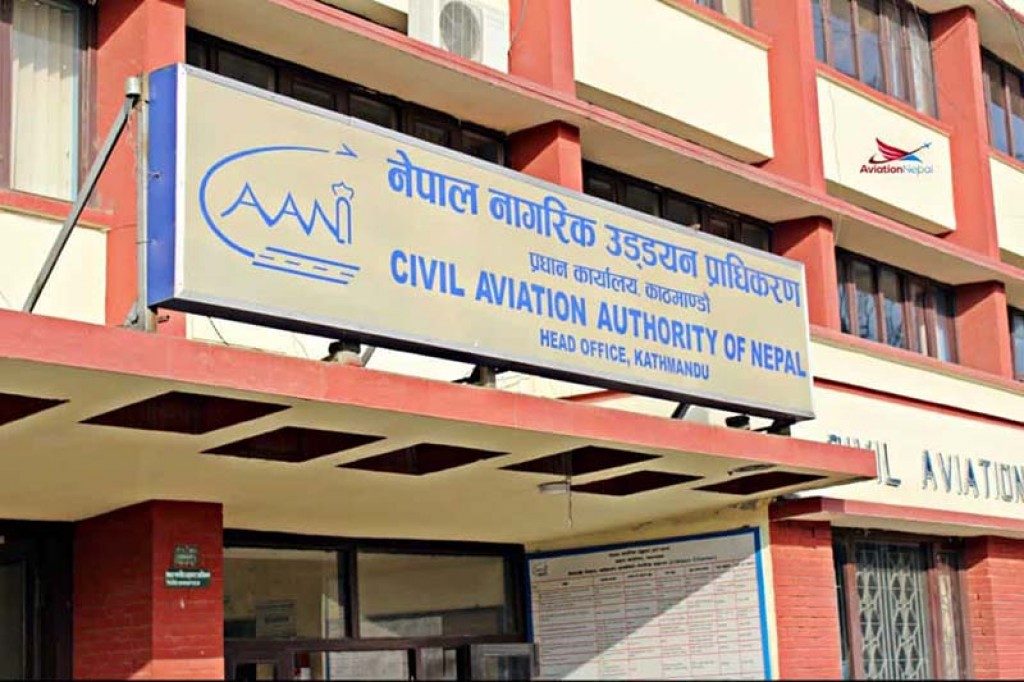
Office of CAAN. File photo
If these allegations are accurate, they raise a different kind of question: why was this captain flying international routes without those prior incidents having been formally addressed?
One source with knowledge of Chinese aviation authority procedures noted that it is “extremely rare” for the CAAC to formally pursue a foreign carrier over a safety incident unless the perceived severity is high.
When a major aviation regulator goes as far as two formal letters demanding response and attendance at a regulatory meeting, it is signaling that it considers the incident — and the carrier’s response to it — serious.
Nepal’s own regulator, CAAN, was not initially even officially informed of the incident. When contacted by journalists in March 2026, CAAN officials said the authority “had not yet received formal information.”
The officials at the Ministry of Tourism similarly said the ministry would act only after receiving a formal complaint, and that “the ministry has not formally received any information about the incident.”
An aviation safety event at an international airport, involving China’s aviation authority, with two formal regulatory notices sent — and Nepal’s institutions responding by saying they hadn’t heard anything official.
In the interim, CAAN sent an inspection team from its Flight Safety Standard Department to NAC to obtain details. NAC officials allegedly failed to share relevant details with the inspection team, and sources claimed the corporation was “trying to hide the incident.”
CAAN subsequently directed NAC to investigate the incident thoroughly, noting it raised “serious questions about the flight safety standards of Nepal Airlines.” Whether that investigation has been conducted, completed, or acted upon has not been publicly confirmed.
The weight of history
None of what is happening at Nepal Airlines Corporation in 2026 can be properly understood without understanding the institution’s history — a history that reads, in many chapters, as variations on the same theme.
Nepal Airlines was founded in 1958, just a year after civil aviation in the country was formally established. For its first few decades, as Royal Nepal Airlines Corporation, it served a country with limited infrastructure and enormous geographic challenges, connecting mountain communities that had no other reliable transit. It was, in those years, a genuine source of national pride.
The rot, most analysts agree, began after the restoration of multi-party democracy in 1990. Politicians began interfering in management appointments. Kickbacks became common. Lucrative contracts were awarded on the basis of relationships rather than merit. Private airlines, given room to operate in the newly liberalized economy, began to do what NAC could not: run professionally.
The early 2000s brought the first major international corruption scandal. Dinesh Dhamija, a British-Indian businessman, had been appointed as NAC’s General Sales Agent for European ticket sales in 1993.
Critics alleged the appointment was made under pressure from the then Prime Minister Girija Prasad Koirala, via cronyism that benefited the GSA at the expense of the institution.
Dhamija eventually won a substantial court settlement after the deal was scrapped. The Dhamija case — remarkably — was formally revived by Nepali authorities as recently as November 2025, a reminder that historical accountability at NAC has a very long tail.
The wide-body aircraft purchase scandal of 2017 brought NAC’s institutional dysfunction to a new level of visibility. The procurement of two Airbus A330-200 wide-body jets for approximately $209.6 million — funded by borrowing Rs 24 billion from Nepal’s Employees Provident Fund and Citizens Investment Trust, effectively mortgaging public pension savings — became one of the largest corruption cases in Nepali history. The CIAA filed charges against 32 individuals at the Special Court in April 2024, alleging losses to the government of Rs 1.47 billion.
At the heart of the international dimension of that scandal was a bribery admission that reverberated from Kathmandu to Washington, D.C. Deepak Sharma, a Nepali-born British citizen who was a senior executive at AAR Corp., an American aviation services company, pleaded guilty before the U.S. Department of Justice to violating the Foreign Corrupt Practices Act.
He admitted to facilitating bribes to Nepali officials to ensure that the aircraft procurement process was tilted in AAR Corp.’s favor. AAR Corp. itself ultimately agreed to pay over $55 million to resolve potential violations of U.S. anti-corruption law.
Among the defendants named in the CIAA’s case at the Special Court were Senior Captains Subash Rijal and Srawan Rijal. The Special Court, in its December5, 2024 verdict, acquitted both of them, along with a number of other NAC officials.
The CIAA, dissatisfied with acquittals it considers unjustified, has appealed to the Supreme Court, arguing that the Special Court failed to adequately address criminal acts under the Prevention of Corruption Act. As of April 2026, that appeal is pending.
The verdict acquitting Subash and Srawan Rijal has not, in a legal sense, established their innocence in the minds of everyone watching. But it has freed them to continue their careers at NAC. Shrawan resigned from the corporation after the CIAA’s Supreme Court appeal was filed — and then, as detailed, returned under a contract reportedly worth five times a standard pilot’s salary, under his brother’s direct supervision.
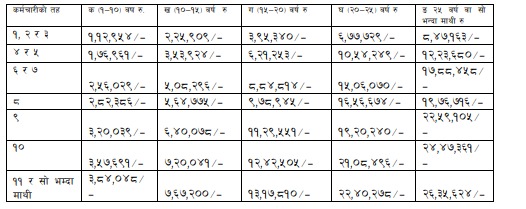
A chart of pilot salary according to their level
The Special Court’s verdict was itself notable for another reason. The bench raised questions about Prem Kumar Rai — the same official who, as Secretary of the Ministry of Culture, Tourism and Civil Aviation, had chaired NAC’s board of directors during the aircraft procurement.
Rai is currently the chief commissioner of the CIAA — the body that filed the corruption case and that is now appealing the verdict. It is, to put it mildly, an unusual institutional arrangement.
The pilots who wait
Somewhere between the legal proceedings, the salary disputes, and the ministerial briefings, there are the pilots.
Rabin KC joined NAC’s Airbus fleet as a First Officer and has been waiting for type-rating training for years. Prachanda Shrestha has been in the same queue even longer. Melsam Ojha. Prashant Shah. Pratik Poudel. Srijana Acharya. Ankit Bohara.
These are professionals who signed employment contracts with Nepal’s national carrier, who passed qualifying examinations, who accepted assignments on smaller aircraft, and who have been waiting — in some cases for six years — to move to the aircraft they were ultimately hired to fly.
Six years is not an administrative delay. Six years is a career. Six years of watching less-qualified individuals, or individuals with better connections, advance past you in a queue that was supposed to be governed by rules and merit.
For many of these pilots, the Koirala affair was not a revelation. It was a confirmation of what they had long suspected: that the queue exists on paper and not necessarily in practice. That the rules apply to some more than others. That who you know — and, specifically, who is related to you — can matter more than how long you’ve waited or how qualified you are.
“This incident of favoritism has demoralized other pilots and significantly damaged institutional credibility,” a source within NAC told Nepal News — a mild formulation for what is, in human terms, an experience of profound institutional betrayal.
What makes this particularly consequential is not merely the unfairness to individuals. It is the systemic effect. When promotion and training opportunities are not allocated by merit and transparent procedure, the most competent individuals often conclude that competence is not what is being rewarded.
They leave — for private airlines, for foreign carriers, for industries where merit has at least a fighting chance. What remains behind is self-selected for a different quality: the quality of knowing the right people.
NAC’s operational audit in April 2026 also highlighted a specific instance of this dynamic. Despite the availability of experienced Designated Check Captains like Captain Vijay Lama, who had completed the DCP course from CAAN, they had not been appointed to their designated roles.
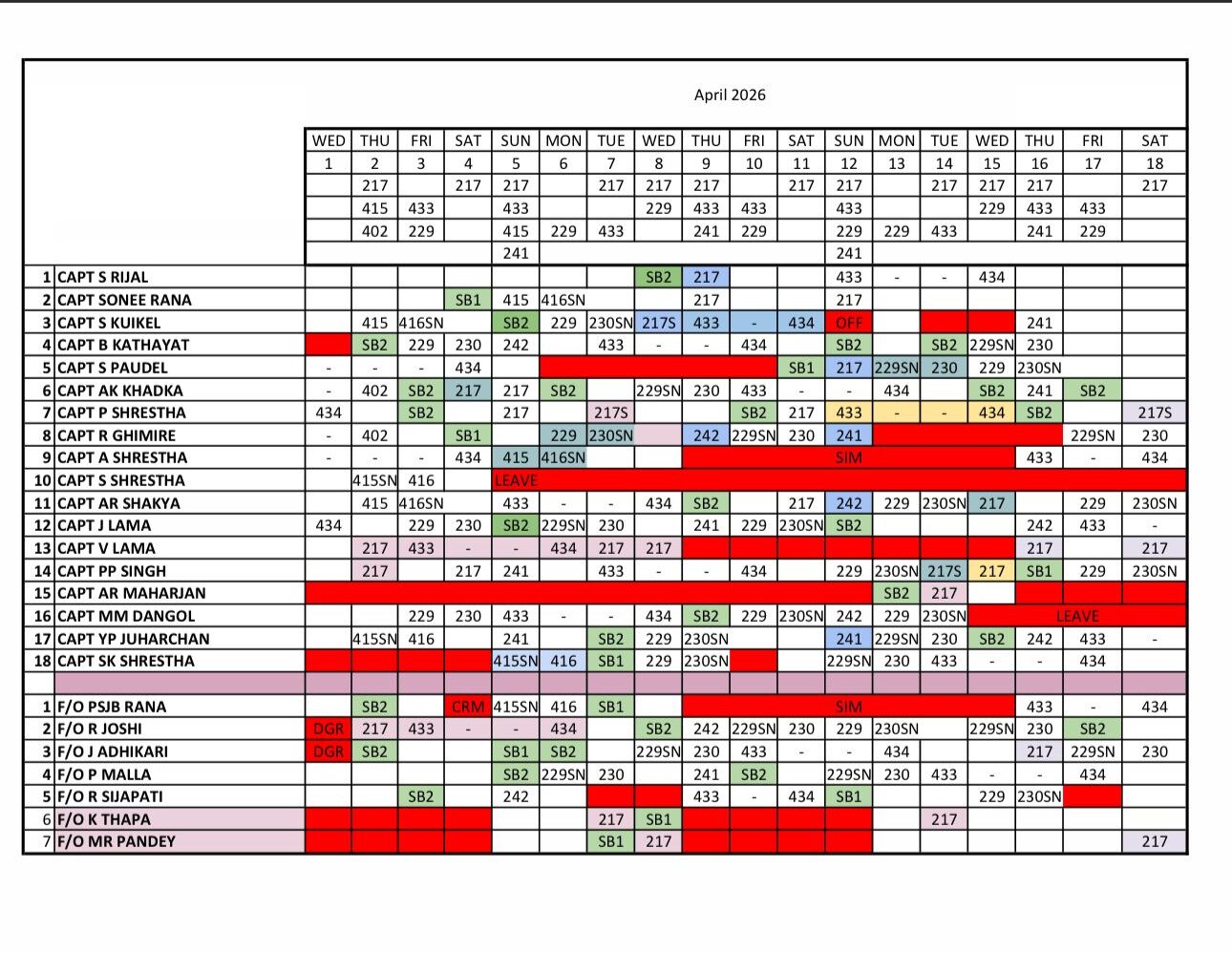
NAC’s operational audit in April 2026
Sources alleged that Captain Maharjan was deliberately sidelined to manufacture an artificial shortage of DCPs, creating a pretext for bringing in contract pilots. One of those contract pilots was Roshan Koirala.
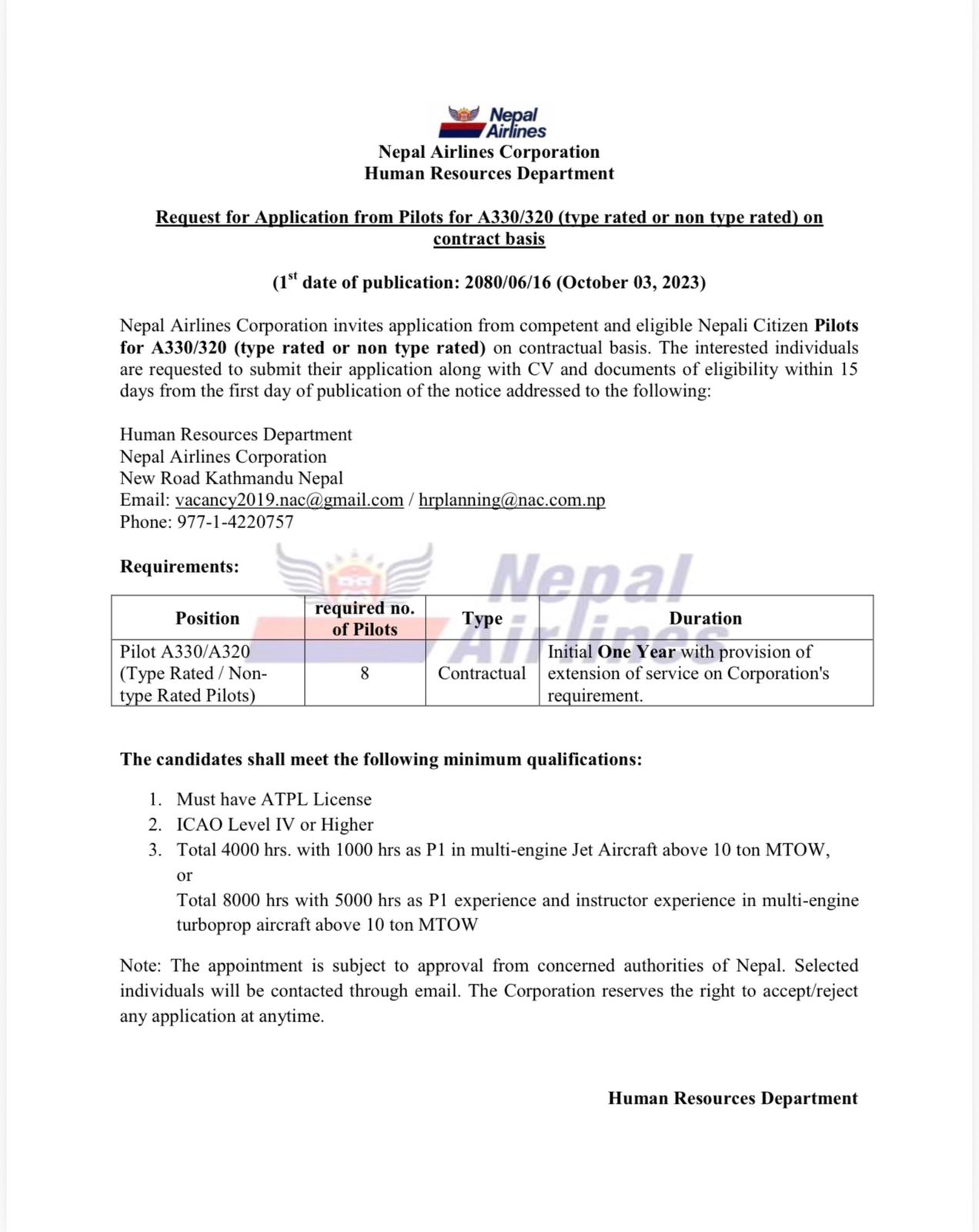
Even the recruitment process for in-house instructor pilots — advertised on February 16, 2026 — was reportedly halted due to the personal interests of the Operations Director.
An open, competitive process for selecting instructor pilots was shut down in the middle of a period when, according to allegations, a non-type-rated pilot was instead being positioned to prepare and administer Airbus type-rating examinations.
The intervention by the Ministry of Culture, Tourism and Civil Aviation — which forced NAC’s hand in removing Koirala from the Malaysia training manifest — is a good outcome. But it is a reactive outcome, achieved only because journalists reported what was happening and the ministry chose to respond.
It is not a structural outcome. The Operations Director who allegedly orchestrated the scheme remains in his post. His brother, reportedly re-hired at five times standard pilot compensation under his supervision, reportedly remains employed.
The CAAN’s operational audit has documented the problems. What happens with that documentation depends on institutional will that has not consistently been present.
Experts who have spoken publicly about the situation have called for an independent high-level investigation — not one managed by the institutions that are the subject of the concerns, but an external inquiry with genuine authority to examine appointments, examine examination processes, examine training expenditures, and examine the circumstances under which Srawan Rijal was reappointed.
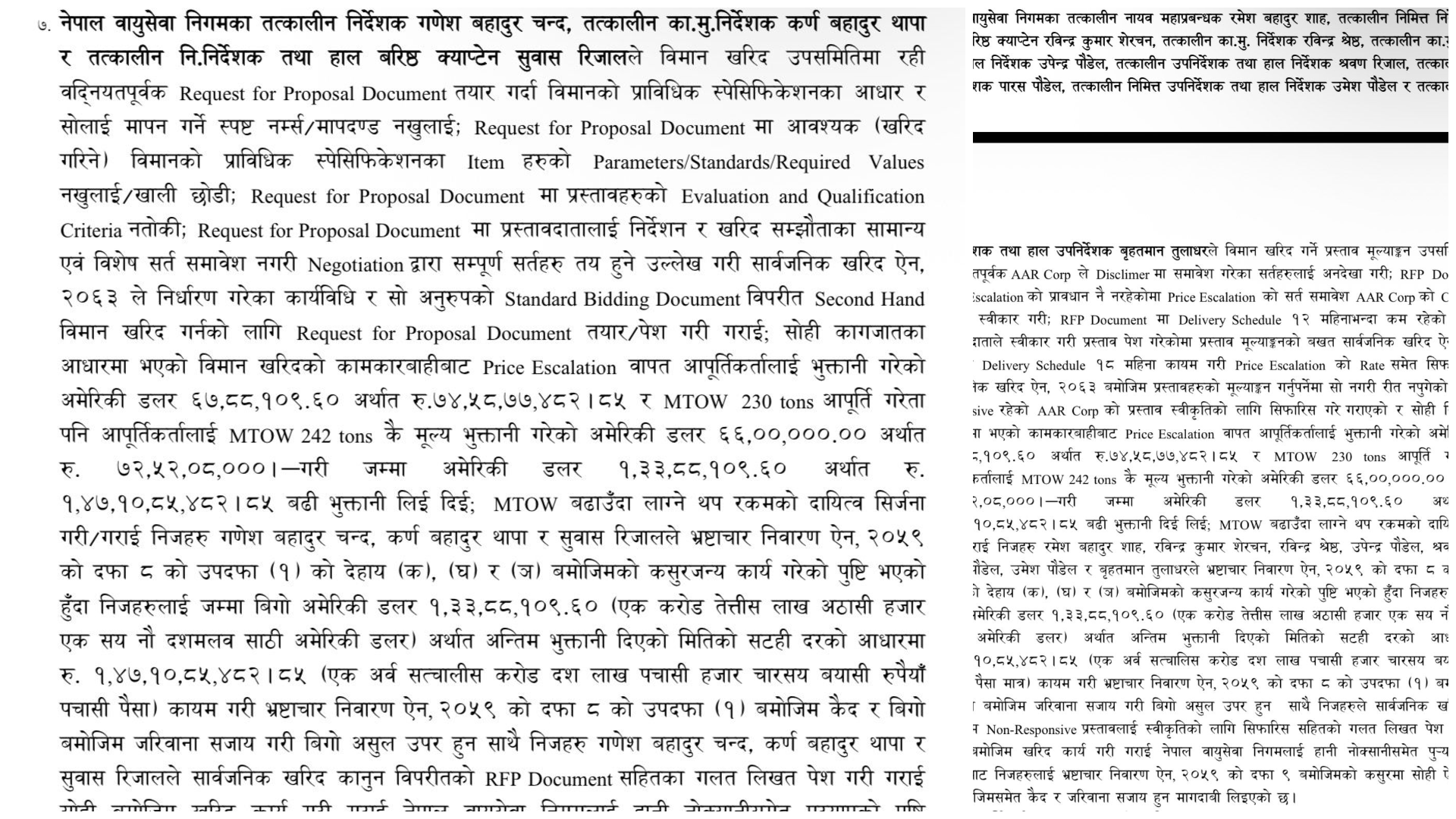
A photo collage of Special Court verdict against Rijal
They have also called for the implementation of merit-based, transparent systems — not just as a matter of fairness to individual pilots, but as a matter of aviation safety, since the quality of pilots flying commercial aircraft is ultimately a safety issue.
The Guangzhou incident adds a separate, more immediate dimension of urgency. If NAC has been systematically declining to respond to a foreign civil aviation authority’s safety-related inquiries — and if the captain involved has a documented prior history of safety-related concerns — the question is not merely whether NAC will be sanctioned by CAAC. The question is whether Nepal’s aviation safety system is functioning at a level that protects passengers.
Nepal’s aviation record is already scrutinized closely. The country was subject to an European Aviation Safety Agency flight ban from 2013 to 2023, during which Nepali airlines were barred from operating in European airspace due to safety concerns.
Nepal was removed from the EU’s banned list in February 2023 after years of regulatory reforms, many of which involved CAAN improving its oversight mechanisms.
The Guangzhou incident, and NAC’s alleged non-response to CAAC’s formal inquiries, is precisely the kind of behavior that risks eroding the credibility that those years of reform were meant to build.
For a country whose aviation sector is economically critical — connecting a landlocked nation to the world, supporting a tourism industry that generates significant foreign exchange, and serving as the logistical lifeline for dozens of mountain communities — the consequences of a national carrier that is institutionally compromised are not theoretical. They land.
Late in the evening of April 15, 2026, as Prachanda Shrestha and Rabin KC boarded their flight to Kuala Lumpur for the Airbus A-320 training that had been rightfully theirs all along, there was a measure of justice in the outcome. A queue that had been manipulated was, at least temporarily, restored to its proper order.
But in the world of institutional reform, a single corrected outcome is not a reform. It is an episode. Whether it becomes a turning point depends on things that have not yet happened: investigations that are genuinely independent, accountability that extends beyond the immediate controversy, structural changes that make it harder for the next Operations Director — whoever that may be — to run the corporation’s human resource functions for the benefit of family networks.
Ganga Prasad Rijal flew for Nepal Airlines for nearly four decades. His sons both served at the highest operational levels of the same institution. One of them now reportedly earns five times what his colleagues make, under the direct supervision of his brother.
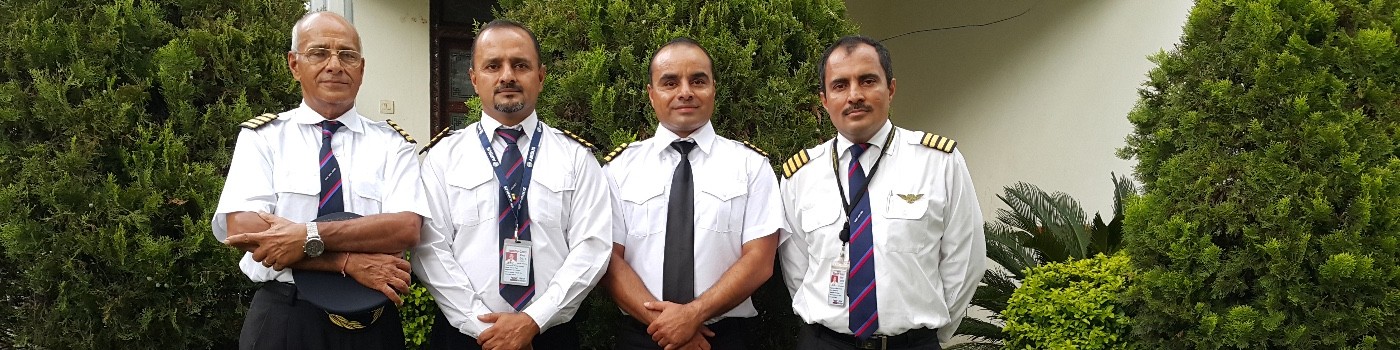
Capt. Ganga Prasad Rijal (left) and his sons. Photo credit: Subash Rijal/LinkedIn
And a man related by marriage to that brother recently came within hours of flying to Malaysia for training he was not meant to receive, at public expense, past a queue of twenty people who had waited years for their turn.
The story of Nepal Airlines is, in one sense, the story of every poorly governed public institution: talented people ground down by systems that reward loyalty over competence, and institutions that were built to serve a public purpose gradually repurposed to serve the interests of whoever holds the controls.
The story of Nepal Airlines is also, in another sense, specifically Nepali: shaped by the dynamics of political patronage, family obligation, and the particular way that power circulates in a small country where everyone knows everyone and where the line between institutional and personal has always been uncomfortably thin.
Whether Nepal Airlines can escape that story is a question its own history suggests should be answered with caution. The airline has been in crisis before. Reforms have been announced before. Committees have been formed, audits conducted, charges filed. Each time, the institution has found a way to absorb the shock and return to familiar patterns.
But something feels different in April 2026. The convergence of a nepotism scandal in the Operations Department, a re-hiring of a corruption-accused official at premium rates, a safety incident in China that the corporation tried to quietly bury, a CAAN audit that documented systemic failures, and a ministry that chose to intervene rather than look away — this accumulation of pressures, reported openly and acted upon in at least one instance, represents a stress test of a different kind.
Nepal Airlines has been flying for nearly seven decades. Whether it flies into a reformed future or continues on its current descent path will depend, in the coming months, on whether the people who hold the controls — at the airline, at CAAN, at the ministry, and in the courts — decide that the institution’s purpose is larger than any family’s interests.
At 30,000 feet, there is no room for confusion about who is in command, and why they are there. The same clarity is long overdue on the ground.