Kathmandu
Tuesday, July 28, 2026






KATHMANDU: Nepal News presents today’s snapshot of Nepal’s economic activities. Get quick updates on major market movements, policy shifts, and financial developments shaping the economy of Nepal. Here are the key economic highlights for today:
NRB Relaxes Foreign Exchange Rules with 5% Buffer for Students
The Nepal Rastra Bank (NRB) issued a revised unified directive relaxing foreign exchange guidelines for students pursuing higher education in non-Indian international destinations. Central bank authorities authorized commercial banking channels to maintain an additional 5 percent financial buffer above required foreign currency limits to shield student accounts from volatile exchange rate fluctuations during visa processing and ongoing subsistence cycles. Under current regulatory guidelines, parents are eligible to remit student subsistence allowances valued between USD 2,500 and USD 5,000 annually, while digital documents verified through encrypted electronic signatures are now recognized as valid under the Electronic Transactions Act 2006.
NEPSE Decreases by 1.54 Points with Rs 6.443 Billion Turnover
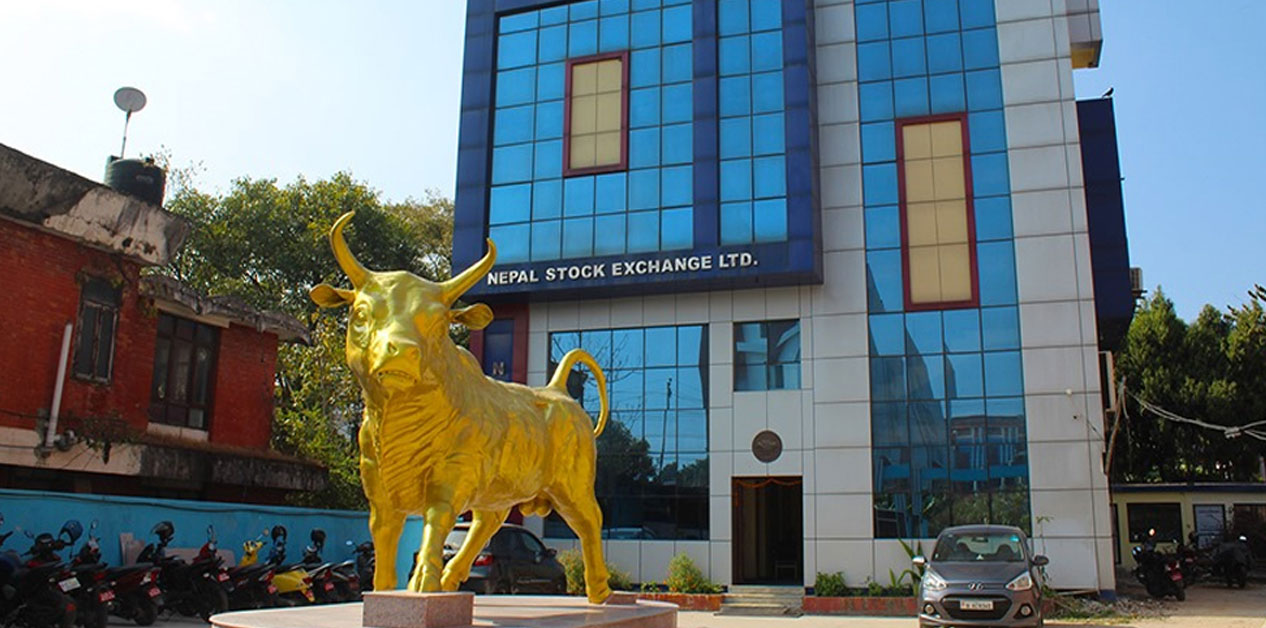
On Tuesday, the Nepal Stock Exchange (NEPSE) fell by 1.54 points to close at 2,733.59, marking a marginal decline of 0.05 percent after a volatile session. Market turnover, however, rose sharply to Rs 6.443 billion, up from Rs 4.084 billion on Monday. The sensitive index also slipped slightly by 0.29 points to 469.07. Out of 357 listed companies, 105 advanced, 151 declined, and 15 remained unchanged. Sectoral performance was mixed, with finance and insurance groups mostly down, while hotels, manufacturing, and hydropower saw minor gains.
Monthly Remittance Inflows Hit Record Highs
The Nepal Rastra Bank published current macroeconomic metrics demonstrating a massive historic surge in overseas monthly remittance distributions, with incoming worker transfers hitting a record Rs 257 billion in a single monthly cycle. Current institutional fiscal summaries covering the opening ten months of the current year show total aggregate national remittance collections climbing 41.2 percent year-on-year to hit Rs 1.916 trillion. Evaluated in international currency baskets, aggregate remittance inflows surged by 33 percent to reach USD 13.26 billion, while domestic human resource ledgers logged 335,510 citizens securing initial legal overseas labor approvals.
NRB Doubles Digital Loan Limits
The Nepal Rastra Bank (NRB) enacted structural amendments to its Digital Lending Guidelines 2021, expanding digital credit facilities to support small, medium, and cottage business enterprises. Under the updated financial regulations, self-employed natural persons with stable salaried or professional bank deposits can seamlessly secure automated digital credit limits reaching up to Rs 500,000 carrying a mature three-year payback lifespan. Similarly, generalized retail applicants can access online personal lines of credit up to Rs 200,000, whereas commercial merchants are authorized to draw Rs 500,000 in short-term working capital loans or Rs 1 million via long-term trade instruments.
Cabinet Launches Promotional Drive for State-Owned DDC Products
The Ministry of Agriculture, Forests, and Environment tabled a strategic domestic marketing agenda during an executive cabinet session to transform the state-owned Dairy Development Corporation (DDC) into a highly competitive public enterprise. Government representatives finalized plans to establish wide-scale distribution pathways for high-quality domestic milk, ghee, yogurt, and paneer to secure fair profit margins for rural cattle farmers. During the policy assembly, ministry leadership distributed specialized DDC product packages directly to cabinet members and the Prime Minister, who pledged active state advocacy to shift consumer behavior toward buying authentic Nepalese dairy goods over imported alternatives.
Govt. Halves Cash Transaction Limit for Tax Deductions
Through the Economic Bill 2026, the government has amended the Income Tax Act to disallow tax deductions for cash payments exceeding Rs 25,000. Under the revised rules, individuals or businesses with an annual turnover above Rs 2 million cannot claim single cash payments over Rs 25,000 as deductible expenses when calculating taxable income, a limit that previously stood at Rs 50,000. This measure is expected to push transactions into the banking system, promoting formal economy expansion, transparency, and reduced cash reliance. Conversely, the amendment now allows expenses incurred during the issuance of shares or debentures to be recognized as deductible expenses for tax purposes, though all other capital expenditures remain non-deductible.
National Assembly MPs Demand Independent Probe Pre Budget Tariff Leaks
Members of the National Assembly called for the swift formation of an independent parliamentary probe committee during an emergency legislative session, citing severe irregularities concerning classified pre-budget pricing changes. Opposition lawmakers alleged that 16 vital pages outlining upcoming structural customs updates were illegally removed and modified less than twenty-four hours before the official fiscal bill presentation. Parliamentary representatives asserted that secret tariff schedules regarding automotive import values were deliberately leaked to private trading agencies, allowing hundreds of imported vehicles to clear border checkpoints at adjusted evaluation rates, while demanding the Prime Minister clarify statements regarding cross-border diplomatic relations.
Karnali Registers 2K Development Submissions Inside Planning Bank
The Ministry of Physical Infrastructure and Urban Development in Karnali Province successfully uploaded 2,062 verified infrastructural project proposals into the regional planning registry for review. The systematic data indexing covers project designs approved across 10 regional districts and 79 separate municipal clusters, ensuring all pending regional works pass through formalized project bank screening before securing layout funds. Regional administrative bodies have cataloged 11,262 open projects across various sector ministries, while provincial planning executives are tracking 930 entries through advanced evaluation pathways to prevent uncoordinated spending and establish transparent public infrastructure budgeting metrics ahead of annual allocations.
Ministry Exposes Rs 26 Billion Unpaid Power Tariffs Across Corporate Enclaves
The Ministry of Energy, Water Resources, and Irrigation published a debt assessment tracking sheet detailing massive unresolved electricity tariff defaults across private corporate enclaves and local municipal councils. Financial audit logs confirm that 59 major manufacturing plants operating via dedicated feeder and trunk lines owe an accumulated debt of Rs 26.95 billion extending through mid-January. Concurrently, 355 municipalities failed to resolve their public street-lighting electricity bills, which hit Rs 9.935 billion after applying late fees, with Kathmandu Metropolitan City topping the municipal list with an outstanding default of Rs 1.986 billion.
Govt. Warehouses Hold 140K Metric Tons of Fertilizer Reserves
The Ministry of Agriculture, Forests, and Environment published localized supply chain statistics confirming that public warehouses hold robust reserves of agricultural chemical fertilizers, despite localized distribution challenges during peak planting cycles. Operational logs up to June 1 show total urea imports hit 329,689 metric tons, with 80,900 metric tons securely stored in regional silos managed by the Agricultural Inputs Company Limited and Salt Trading Corporation. Additionally, national fertilizer storage units contain 40,760 metric tons of DAP along with 19,180 metric tons of potassium reserves, backed by active international procurement tenders covering 491,300 metric tons funded through a Rs 28.821 billion annual state budget line.
Korala Customs Generates Rs 13 Billion in Transit Duties
The Mustang Customs Office at Lomanthang registered robust international trade traffic along the northern Korala border point shared between Nepal and China, collecting Rs 13.877 billion in aggregated import tariff revenues. Official customs logs stretching through June reveal that border inspection units cleared 2,997 imported Chinese electric vehicles, which directly injected Rs 6.760 billion into the total treasury pool. Conversely, outbound regional handcraft and manufactured item exports headed into China generated Rs 205.5 million, while state agencies formulated a three-member probe panel to investigate alleged valuation non-compliance affecting 649 cleared vehicles.
Ministry Orders Balaju Commercial Enclaves to Pay Rental Arrears
The Ministry of Industry, Commerce, and Supplies directed the management of Industrial Zone Management Limited Balaju to issue an ultimatum to corporate manufacturers over unpaid state rental balances inside the Balaju Industrial Estate. Public debt registries expose that Gurans Engineers holds Rs 37.3 million in cumulative back dues, followed by Continental Component and Services Private Limited at Rs 36.9 million and Botlers Nepal at Rs 17.5 million. Enforcement teams gave businesses a seven-day settlement window to resolve real estate rents, water levies, and electricity balances before encountering direct utility disconnections and facility closure orders.
Sunsari Becomes Major Marijuana Smuggling Hub Along Nepal-India Border
A series of major police seizures from 2025 to 2026 has revealed an expanding and increasingly sophisticated marijuana smuggling network operating through Sunsari and eastern Nepal, with routes extending into India. Authorities have recovered hundreds of kilograms in multiple operations, including 537 kg from Koshi Rural Municipality, 440 kg from an ambulance in Dharan, and 153 kg in Inaruwa, highlighting the use of vehicles such as ambulances and SUVs to evade detection. Police data shows Sunsari alone accounted for over 60 percent of marijuana seizures in Koshi Province in FY 2025/26, reinforcing its role as the primary trafficking hub along the open Nepal-India border. Officials say smugglers are exploiting border corridors, including Bhantabari and Koshi River routes, to move large consignments into Bihar. Law enforcement agencies acknowledge that despite record seizures, only a fraction of total trafficking is intercepted, signaling a deeper and expanding illicit network.
Ministry Allocates Rs 4 Billion Federal Grant Pool Across Tanahun Districts
The Ministry of Finance structured a comprehensive Rs 4.564 billion federal fiscal grant package to support local governance operations across 10 local unit layers situated inside Tanahun District for the upcoming 2026/27 fiscal cycle. Official treasury distribution registries confirm that Vyas Municipality secured the highest single allocation worth Rs 943 million, which merges equalization, conditional, and complementary funds. In contrast, Ghiring Rural Municipality received the lowest local budget ceiling at Rs 282.9 million, while remaining administrative clusters, including Bhanu, Bhimad, and Shuklagandaki Municipalities, were allotted specific multi-million rupee matching grants for structural projects.
District Census Bureau Achieves 91% Completion
The District Economic Census Office in Jumla reached 91 percent of its baseline statistical target for the ongoing National Economic Census 2025, deploying specialized field teams across eight local administrative zones. Census enumerators logged exact operational details for 4,038 commercial facilities and small-scale cottage factories out of a targeted countywide baseline of 4,411 active economic establishments. Comparative demographic records highlight a substantial surge in local commercial activities compared to historical 2018 census figures, which carried a lower target of 3,078 facilities. Chandannath Municipality recorded the highest business concentration with 1,492 entries, while both Tila and Sinja regions outperformed initial statistical baselines.
180 MW Kaligandaki Gorge Hydropower Project Construction Begins in Myagdi
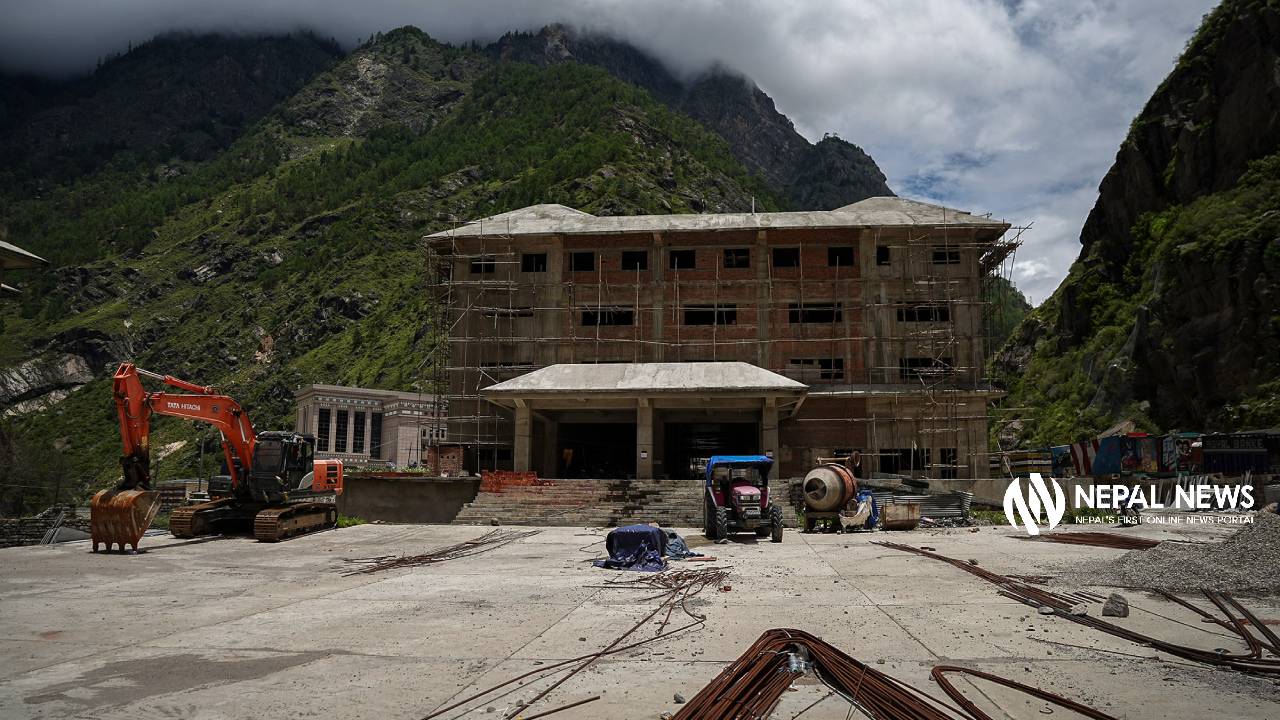
Construction of the 180 MW Kaligandaki Gorge Hydropower Project has started in Myagdi district with the launch of tunnel work at Bhalebas in Annapurna Rural Municipality-4 on Monday. Developed by Kaligandaki Gorge Hydropower, the run-of-the-river project is expected to be completed within four years. It includes a 5.6 km tunnel, a powerhouse at Gharap, and a barrage at Ghansama, along with a 1 km penstock pipeline. Project infrastructure such as access roads, transmission lines, staff housing, and other facilities are nearing completion. The Rs 40 billion project is being financed by a consortium of banks led by Global IME Bank, and locals will receive 10 percent equity shares.
Rahughat Corridor Interconnects 127 MW of Hydroelectric Energy to National Grid
The Raghuganga Hydropower, an institutional subsidiary operating under the Nepal Electricity Authority (NEA), successfully commissioned its advanced 220 kV air-insulated switchyard facility at Tilkenichaur in Myagdi. Engineering crews successfully completed system synchronizations using a specialized “loop-in, loop-out” (LILO) infrastructural method to connect 127.8 megawatts of clean energy generated across four separate regional river projects into the Kaligandaki Corridor grid system. The new switchyard infrastructure will additionally integrate power generated by the flagship 40-megawatt Rahughat Hydroelectric Project, which is completing final construction testing and structural tunnel assessments managed under engineering agreements with Jaiprakash Associates.
Rapid Response Veterinary Teams Cull 500K Fowls to Contain Bird Flu Outbreak
The Department of Livestock Services deployed emergency rapid response veterinary units across 10 high-risk poultry development districts to aggressively contain highly contagious bird flu virus strains. Epizootic tracking logs confirm that field health teams systematically culled 515,000 infected layers and indigenous fowl breeds across 72 commercial farming operations while destroying 700,000 potentially contaminated eggs and 183 metric tons of raw poultry feed. While avian infection circles have leveled off across eastern districts, agricultural boards maintained a strict two-month business quarantine lockdown within bird-flu hotspots, processing fiscal compensations covering 75 percent of recorded production costs under the Bird Flu Control Regulations of 2021.
Gold Traded at Rs 301,9000, Silver at Rs 4,925 Today
Gold and silver prices increased in the market today (Tuesday). According to the Federation of Nepal Gold and Silver Dealers’ Association, the price of gold jumped by Rs 2,000 per tola (11.66 grams), trading at Rs 301,900. On Monday, gold was traded at Rs 299,900 per tola. Similarly, silver prices also registered a gain today. The Federation reported that the price of silver rose by Rs 20 per tola, bringing the current trading price to Rs 4,925 per tola. Prior to this, silver was traded at Rs 4,905 per tola on Monday.