Kathmandu
Monday, June 15, 2026






KATHMANDU: Nepal News presents today’s snapshot of Nepal’s economic activities. Get quick updates on major market movements, policy shifts, and financial developments shaping the economy of Nepal. Here are the key economic highlights for today:
NEPSE Falls 12.26 Points, Turnover Drops to Rs 4.41 Billion
The Nepal Stock Exchange (NEPSE) index declined by 12.26 points or 0.45 percent on Monday, closing at 2,711.76 points amid broad-based selling pressure. The market recorded a turnover of Rs 4.41 billion, with 10.74 million shares of 350 companies traded through 51,702 transactions. The sensitive index slipped 0.96 points to 466.13. Only 73 companies gained, while 188 declined and 12 remained unchanged. Of the 13 trading groups, only Manufacturing and Processing advanced, edging up 0.11 percent. Among major sectors, Finance fell 1.26 percent, Hydropower 0.49 percent, Hotels and Tourism 0.44 percent, and Development Banks 0.54 percent, while the Others group posted the steepest decline of 1.82 percent.
National Revenue Collections Plateau at Rs 93 Billion Last Month
Fiscal data from the Financial Comptroller General Office shows revenue collection for one month (May 15–June 14, 2026) reached Rs 93 billion, identical to the Rs 93 billion collected in this very month last year. With one month remaining, total 11-month revenue stands at Rs 1.081 trillion which is 71 percent of the Rs 1.48 billion annual target. Capital expenditure remains critically low at Rs 132 billion, representing only 30% of the allocated Rs 407 billion budget.
Watchdog Flags Rs 800 Billion Financing Gap in Rs 2.12 Trillion Budget
Policy watchdog Nepal Development Watch has welcomed the government’s Rs 2.12 trillion budget for fiscal year 2026/27 as reform-oriented but warned that implementation capacity remains a major challenge. In its commentary, the watchdog noted that projected revenue of Rs 1.4 trillion leaves a financing gap of about Rs 800 billion, requiring increased borrowing and external support. The watchdog praised measures such as reducing federal ministries from 22 to 18 and merging 31 state agencies, alongside tax relief for salaried workers, a reduction in the top income tax rate to 29 percent, and a 21 percent public sector salary increase. However, it said social inclusion, job creation, export promotion and investment climate reforms received insufficient attention. It also highlighted limited allocations for health at Rs 102.95 billion and education at Rs 218.30 billion, much of which is tied to recurrent spending.
Nepal’s Trans-Asian Railway Progress Stalls After 2 Decades
Since joining the Trans-Asian Railway (TAR) network on November 10, 2006, and ratifying the treaty on March 6, 2012, Nepal has achieved minimal infrastructure growth. The 1,003 km Mechi-Mahakali Railway, a “missing link” for regional connectivity, remains largely incomplete 17 years after project inception. While the 93.6 km sector has seen initial work and 68 km of track have been laid between Bardibas and Choncha, broader progress is paralyzed by budget shortages, land compensation disputes, and lack of technical personnel.
Madhesh Unveils Rs 41.14 Billion Budget, Down 13% from Last Year
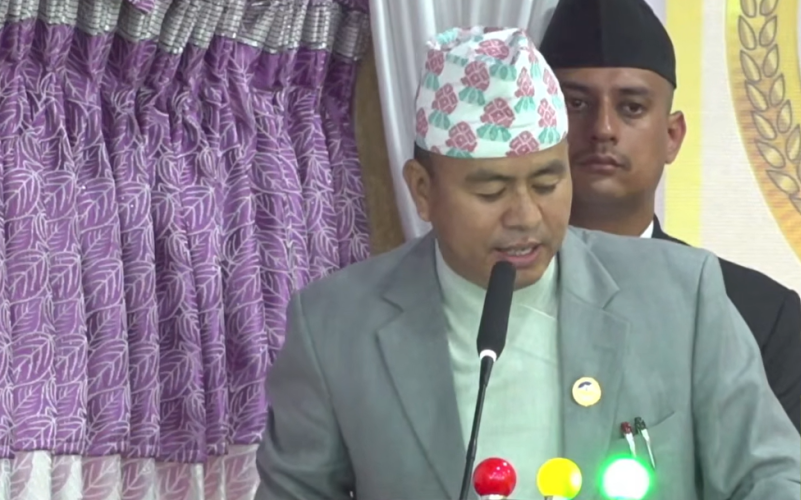
The Madhesh Province government on Monday presented a Rs 41.14 billion budget for fiscal year 2026/27, a decline of nearly 13 percent from the Rs 46.58 billion budget introduced for the current fiscal year. Presenting the budget in the Provincial Assembly, Economic Affairs Minister Yuvraj Bhattarai allocated Rs 26.47 billion (64.36 percent) for capital expenditure and Rs 14.66 billion (35.64 percent) for recurrent expenditure. The province expects to finance the budget through Rs 11.23 billion in internal revenue, Rs 12.83 billion from revenue sharing, Rs 9.50 billion in fiscal equalization grants, and Rs 6.09 billion from last year’s cash balance.
Ilam Tea Exports Halted After India Imposes Strict Testing Rules
Tea production and exports from Ilam have been suspended after processing units under the Suryodaya Orthodox Tea Producers Association Nepal were hit by new Indian import procedures requiring mandatory laboratory testing for each shipment. The rules, implemented under a May 1, 2026 SOP, have caused border clearance delays of over 20 days, leaving more than 300,000 kg of premium tea stuck at transit points. Around 700,000 kg of finished stock remains trapped in warehouses, exhausting storage capacity across the region. The disruption has affected 53 processing units and nearly 3,000 organic tea growers, who produce about 20,000 metric tons of green leaves annually, generating an estimated Rs 4.25 billion in exports. Local authorities have urged diplomatic intervention over escalating trade barriers affecting cross-border tea movement.
Energy Task Force Formed to Resolve Khimti 1 Ownership Dispute
The Ministry of Energy has formed a high-level negotiation task force led by NEA board member Anshu Kiran Shahi to resolve the long-stalled ownership transfer of the 60 MW Khimti 1 Hydropower Project. Under the BOOT agreement signed on December 15, 1994, the state utility was due to receive a 50 percent stake after 20 years of operation. Although the project became operational in 2000 and the timeline matured on July 11, 2020, the handover has been delayed for about six years due to management disputes. The Norwegian consortium involved is pursuing an exit by selling its 83 percent stake (14,662,787 shares) to Butwal Power Company, which already holds 17 percent. The delay and fixed tariff arrangements have reduced royalty income for local governments, including Tamakoshi Rural Municipality.
Madhesh Budget: 10% Salary Hike and Performance Incentives
Madhesh Province Economic Affairs Minister Yubraj Bhattarai presented the 2026/27 budget, featuring a 10 percent salary increase for civil servants and an additional 10 percent performance-based incentive allowance. The fiscal plan introduces the Hello CM App and a toll-free number for grievance redressal, a 100-day guaranteed employment program for youth (18 to 35 years), and the Chief Minister Female Self-Employment Program. Rs 3.7 billion is allocated to the Ministry of Agriculture, alongside funding for a new Kamala River bridge to replace a 15-year-old abandoned federal project.
Bagmati Province Completes 1,640 km of Paved Roads in 6 Years
The Bagmati Province Economic Survey 2026 confirms the construction of 1,640.19 km of blacktopped roads since the 2020/21 fiscal year. By mid-March this year, road networks reached all 119 local government units, with 90 centers now accessible via paved roads; 29 remain connected only by earthen tracks. Infrastructure gains include 147 motorable bridges and 35 suspension bridges, with Makawanpur District leading with 175 completed bridge structures.
Madhesh Province Leads National Streetlight Electricity Arrears
Nepal Electricity Authority (NEA) records show national streetlight arrears total Rs 7.948 billion, rising to Rs 9.935 billion with 25 percent penalties. Madhesh Province accounts for Rs 2.349 billion of this debt. Major municipal liabilities include Birgunj Metropolitan City (Rs 230 million), Malangwa Municipality (Rs 91.2 million), and Jaleshwor Municipality (Rs 77.7 million). Due to unauthorized unmetered connections, Energy Minister Biraj Bhakta Shrestha ordered immediate disconnections for non-compliant local units.
3rd Annual Madhesh Travel Mart Concludes in Birgunj
The Nepal Tourism Board, in collaboration with the Jeetpur Simara Sub-Metropolitan City and the Nepal Association of Tour and Travel Agents (NATTA) Madhesh Province, successfully concluded the third annual Madhesh Travel Mart 2026 from June 12 to June 14, 2026. The 3-day cross-border tourism summit brought together 55 prominent Indian tourism executives and journalists alongside 25 domestic hospitality business delegates for structured business-to-business (B2B) networking sessions, panel discussions, and promotional tours across Birgunj, Jeetpur Simara, and Janakpurdham. Acting Chief Executive Officer Hikmat Singh Ayer and municipal leaders emphasized that the event leverages shared cultural assets and open-border access to increase Indian tourist arrivals, safeguarding large-scale private investments made across the Terai and mid-hill hospitality sectors.
Madhesh Allocates Rs 3.70 Billion for Agriculture in New Budget
The Madhesh Province government earmarked Rs 3.70 billion for the Ministry of Agriculture within its fiscal blueprint for the upcoming financial year 2026/27. Under this budgetary envelope, the province introduces digital identity cards for farmers, direct-to-account subsidy disbursements, and land pooling initiatives designed to generate self-employment for returning migrant workers under the national security motto “Productive Madhesh, Self-Reliant Nation.” Additionally, Economic Affairs and Planning Minister Yubraj Bhattarai informed the provincial assembly that funds have been secured to build an alternative bridge over the Kamala River to link Dhanusha and Siraha districts, stepping in after a federal government bridge project remained abandoned for 15 years.
Lalitpur Deploys QR-Enabled Electronic Citations for Civic Violations
Lalitpur Metropolitan City Mayor Chiri Babu Maharjan announced the formal launch of an integrated e-Chalan digital ticketing platform to execute instantaneous enforcement penalties against civic offenses within the municipality. The updated digital administration framework equips field enforcement units with portable QR-code terminal devices, enabling citizens to instantly settle regulatory fines on-site without visiting the central municipal municipal headquarters. The digital penalty tracking system targets illegal street parking, unauthorized public waste disposal, and the destruction of municipal flora, advancing the local government’s broader smart-city modernization and digital public service integration goals.
Kathmandu Municipal Assembly Passes 2026/27 Policy Framework
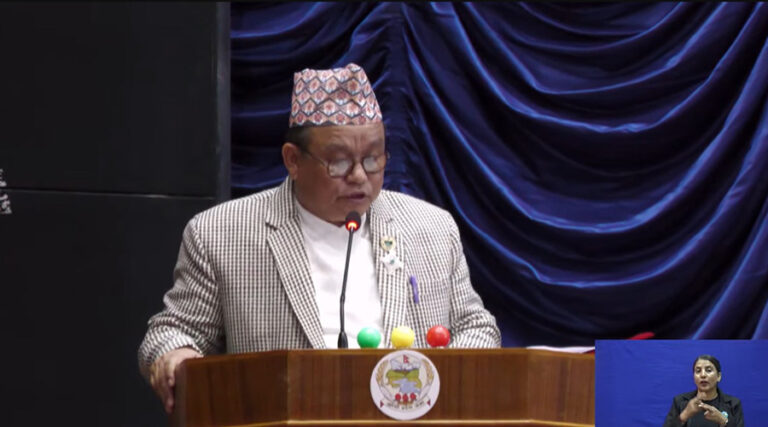
The Kathmandu Metropolitan City municipal assembly approved its 101-point policy for 2026/27 during its 19th session on Monday. Tabled on Sunday, the policy covers 11 key sectors including urban planning, disaster management, and heritage conservation. The framework mandates architectural standards for historical areas, liquid waste management, and formal compensation processes for Tinkune land. Final budget allocations based on this policy will be presented during the third assembly session on June 18 at 3:00 PM.
Authorities Cull 700K Birds in 10 Districts
The Department of Livestock Services deployed specialized emergency response units to neutralize a severe avian influenza outbreak across 10 impacted districts, including the Kathmandu Valley. In a synchronized biosecurity operation, containment teams culled approximately 700,000 poultry birds and destroyed 300,000 kilograms of contaminated animal feed to halt regional transmission. The containment measures swept through targeted agricultural zones in Kathmandu, Lalitpur, Bhaktapur, Jhapa, Morang, Sunsari, Mahottari, Bara, Chitwan, and Nawalparasi. Because an official medical vaccine for bird flu does not exist, emergency crews also confiscated and destroyed 1.1 million potentially infected eggs, while district administration offices began cataloging agricultural losses to coordinate financial compensation packages with provincial authorities.
Traffic Police Penalize Drivers, Collect Rs 1 Million in 24 Hours in Valley
The Kathmandu Valley Traffic Police Office boosted federal revenue reserves by more than Rs 1 million within a 24-hour enforcement window after penalizing 2,025 drivers for various highway violations. Field logistics logs show that traffic patrollers booked 100 individuals for operating vehicles under the influence of alcohol, 107 for unauthorized ride-sharing activities, 136 for traffic light non-compliance, and 165 for radar-verified speeding violations. Regional enforcement tracking data further indicates that officers cited 58 motorists for lane discipline breaches, 109 for illegal horn deployment in restricted zones, 105 for sidewalk parking, 117 for one-way street infractions, and 1,128 for secondary road safety failures.
Taplejung Arranges Cardamom Festival to Advance Cash Crop Markets
The Atharai Tribeni Rural Municipality partnered with the Taplejung Agriculture Knowledge Center to host the inaugural Provincial Cardamom Festival from June 26 to June 27. The commercial agricultural exhibition will serve as a strategic trading hub featuring botanical sapling displays, specialized food processing demonstrations, and direct comparative studies between high-yield and low-yield agricultural properties. The regional cashmere summit includes localized farmer workshops, trade negotiations linking commercial buyers with wholesale producers, and scientific panels analyzing modern cultivation techniques. Agricultural land audits indicate that large-scale cardamom farming spans 3,700 hectares of cultivation territory within Taplejung District, solidifying its status as a primary cash crop engine for the regional economy.
National Grid Reaches Remote Langtang
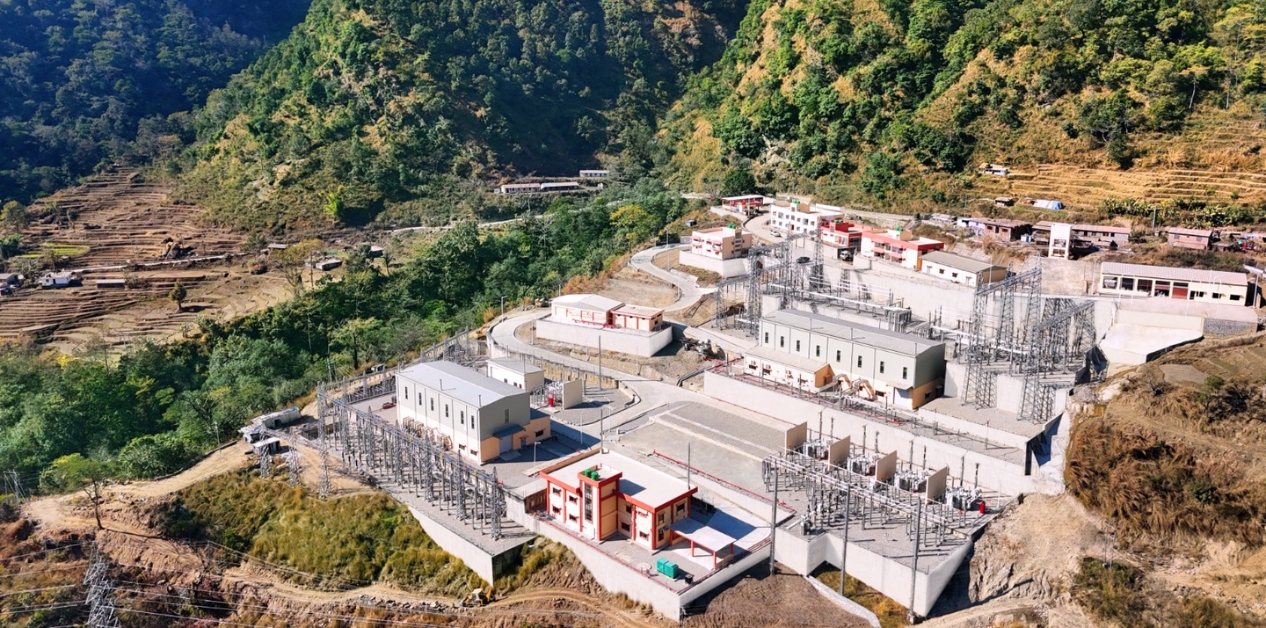
The National electricity grid has been extended to Kanyanjin Gumba and nearby settlements in the high-altitude Langtang Valley, marking a major boost for local residents and tourism. The Nepal Electricity Authority (NEA) says around 200 households, hotels, and businesses at an elevation of 3,870 meters are now receiving regular power from the central transmission line after an investment of about Rs 90 million. Officials say the new connection will improve living standards and support tourism-linked enterprises such as hotels, bakeries, and local cheese production in the region. Before the expansion, the area relied on a small micro-hydro plant that often faced technical issues.
Sanigad Hydro IPO Allotted, 467K Applicants Receive 10 Shares Each
The Initial Public Offering (IPO) of Sanigad Hydro was allotted on Monday, with 467,400 applicants receiving 10 shares each. According to Laxmi Sunrise Capital, the issue manager, a total of 2,759,490 applications were received for 30,132,500 shares. Of these, 2,727,515 applications were approved, while the remaining applications were rejected. The company had opened the IPO for the general public from June 1 to June 4, issuing 4,674,000 shares at a face value of Rs 100 per share. Investors can check the allotment results through Mero Share, the websites of Laxmi Sunrise Capital, Sanigad Hydro, and CDS and Clearing.
Gold Traded at Rs 298,200, Silver at Rs 5,015
The Federation of Nepal Gold and Silver Dealers’ Association reported historic structural price increases in the domestic precious metals market on Monday. Retail data confirmed that gold surged by Rs 5,000 per tola (11.66 grams) in a single trading session, causing fine gold to settle at an all-time market high of Rs 2,98,200 per tola, up from the Rs 2,93,200 trading baseline recorded on Sunday. Simultaneously, silver experienced a single-day valuation increase of Rs 120 per tola, shifting the domestic trading price to Rs 5,015 per tola compared to the prior session’s close of Rs 4,895.


![Victims of Karnali Development Bank protest at Maitighar seeking refund of savings [Photo Feature]](https://english.nepalnews.com/wp-content/uploads/2026/06/Karnali-Dev-Bank-Pidit_NPL-2.jpeg)