Kathmandu
Friday, July 24, 2026






KATHMANDU: Nepal News presents today’s snapshot of Nepal’s economic activities. Get quick updates on major market movements, policy shifts, and financial developments shaping the economy of Nepal. Here are the key economic highlights for today.
NRB Submits Economic Review for 2026/27 Budget Formulation
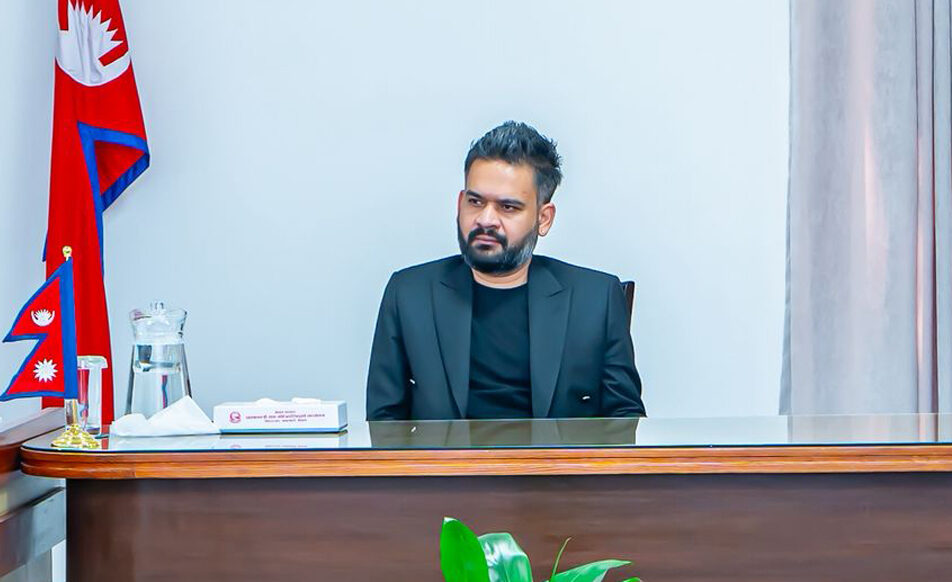
In accordance with Section 69 (4) of the Nepal Rastra Bank Act, 2002, Governor Prof. Dr. Biswo Nath Poudel submitted the annual economic and financial review report to the Ministry of Finance on Monday. The report, presented to the Finance Minister Swarnim Wagle, provides a comprehensive analysis of the country’s current fiscal health and financial stability to serve as a foundational document for drafting the national budget for the fiscal year 2026/27. This mandatory submission ensures that the government’s budgetary targets align with the macroeconomic realities and monetary policies managed by the Nepal Rastra Bank (NRB).
NEPSE Jumps 38 Points as Broad Market Rally Lifts All Sectors
The Nepal Stock Exchange (NEPSE) climbed 38.19 points, or 1.39 percent, on Monday to close at 2783.85, marking a broad-based market rally. The Sensitive Index also gained 6.08 points to 473.41, while float and sensitive float indices rose 1.43 percent and 1.32 percent, respectively. A total of 10.43 million shares of 332 companies were traded through 68,444 transactions, generating a turnover of Rs 4.61 billion. Share prices of 247 companies advanced, 18 declined, and four remained unchanged. All 13 sectoral indices ended in positive territory, led by the ‘Others’ group with a 2.11 percent gain, followed by the finance, hydropower, and microfinance sectors.
Council of Ministers Approves Budget Policies and Programs for Fiscal Year 2026/27
The Council of Ministers, in a meeting held on Monday, officially approved the government’s policies and programs for the upcoming fiscal year. The document was presented by President Ram Chandra Paudel during a joint session of both houses of the Federal Parliament at 4:00 PM today, in accordance with Article 95 of the Constitution of Nepal. This presentation marks the formal start of the budget session. Following the approval, the Ministry of Education, Science, and Technology confirmed that the address will focus on the government’s strategic priorities for the new year as the joint session of the House of Representatives and the National Assembly commences.
Microfinance Sector Records 31% Profit Growth in Third Quarter
The microfinance sector in the country has shown significant financial recovery, with 32 listed institutions reporting a combined net profit of Rs 5.374 billion by the end of the third quarter. This represents a 30.97 percent increase compared to the Rs 4.103 billion earned during the same period last fiscal year, 2024/25. Chhimek Laghubitta led the sector with a profit of Rs 906.4 million, followed by Deprosc Laghubitta at Rs 680.1 million. While Mahuli Laghubitta saw a massive growth of over 1,270 percent, some institutions like Nirdhan Utthan and Sana Kisan experienced profit declines of 67.74 percent and 11.33 percent, respectively.
Tribhuvan International Airport Reopens After 90 Minutes
Tribhuvan International Airport resumed operations about 90 minutes after a Turkish Airlines aircraft caught fire while landing in Kathmandu on Sunday morning. Airport officials said flames broke out in the wheel section of Flight TKI 726 arriving from Istanbul at around 6:45 a.m., forcing a temporary shutdown of the runway. Fire engines quickly brought the blaze under control, while all 273 passengers and 11 crew members were safely evacuated through emergency exits. The aircraft remained on the runway during rescue operations. Airport authorities later reopened the facility, allowing incoming flights, including Air India and Fly Dubai, to land shortly afterward.
Dairy Farmers in Chitwan Await Rs 550 Million in Unpaid Dues
Dairy farmers in Chitwan are facing severe financial distress as Dairy Development Corporation (DDC) and various private industries have failed to clear dues totaling Rs 550 million. While the government-run DDC has not issued payments since mid-December 2025, private dairies have withheld payments for the past three months. Approximately 40,000 farmers, organized through 115 cooperatives, produce 350,000 liters of milk daily in the district, yet only 25 percent of purchasing industries are providing regular payments. To mitigate the crisis and market their products directly, the Chitwan District Milk Producers’ Cooperative Union has opened Dairy Marts at Telecom Road, Bharatpur-3 Belchowk, and behind Chitwan Medical College, selling milk, ghee, paneer, and other dairy items.
Businesses Resume Customs Clearance at Birgunj with MRP Commitments
Importers at the Birgunj customs point have started clearing goods after a two-week deadlock caused by the mandatory Maximum Retail Price (MRP) sticker requirement. Traders are now being allowed to pass their shipments upon providing a formal commitment to apply the MRP stickers at their own warehouses before the goods hit the market. While revenue collection had slowed due to the initial enforcement of the rule, current daily revenue at Birgunj has bounced back to over Rs 500 million. The government has provided a grace period until the last month of the current fiscal year, 2025/26, for full compliance, after which MRP labeling will be strictly mandatory for all imported items at the point of entry.
IPPAN Submits 53-Point Suggestion for National Energy Development Decade
The Independent Power Producers’ Association, Nepal (IPPAN) has submitted a 53-point recommendation to the Ministry of Finance for the upcoming 2026/27 budget, urging the government to declare a “National Energy Development and Consumption Increase Decade.” IPPAN is calling for the reopening of Power Purchase Agreements (PPAs) under “take or pay” principles and the elimination of the single-buyer system to allow private sector participation in domestic and cross-border electricity trade. Key demands include a 10-year tax holiday with an additional five years of a 50 percent discount, reducing customs duties to 1 percent on machinery imports, and speeding up IPOs for energy companies. The association aims to support the national goal of producing 30,000 megawatts within ten years.
Construction Federation Demands Guaranteed Budgeting Before Project Tenders
The Federation of Contractors’ Associations of Nepal (FCAN) has submitted a series of recommendations for the 2026/27 budget, urging the government to call for tenders only after ensuring a guaranteed budget and resource allocation. Highlighting that many projects remain stranded due to lack of preparation and funding, the federation called for a monthly payment system to improve market cash flow. Key demands include the removal of local-level taxes on construction materials like stone and sand within road jurisdictions and the elimination of double taxation on river and mine-based materials. Additionally, FCAN requested a ‘cooling period’ of at least 3 years to remove companies from blacklists and a waiver on interest and penalties for those who settle their principal income tax and VAT dues.
Construction of Access Road Begins for Rs 1.8 Billion Super Ghalemdi Project
The Super Ghalemdi Hydropower Project, estimated to cost Rs 1.8 billion, has commenced construction of a 5.5-kilometer access road in Annapurna Rural Municipality-4. The 9.14-megawatt project, located in Narchyang, has completed 2 kilometers of the road connecting the confluence of the Ghalemdi and Rele rivers to the proposed dam site at the base of Mount Annapurna. Financed through a 70:30 debt-to-equity ratio with Global IME Bank and Machhapuchchhre Bank, the project aims for completion within two years. Narchyang is becoming a major energy hub, already hosting five operational projects totaling 162 megawatts, including the Mistri Khola (42 MW) and Nilgiri-II (71 MW) plants.
Over 26K Families Live on Unregistered Land in Kailali and Kanchanpur
Data from the recently dissolved Land Problem Resolution Commission reveals that 26,674 families are residing as landless squatters on public and unregistered land in Kailali and Kanchanpur. In Kailali, 21,545 families have been verified, including 7,631 landless Dalits and 13,914 squatters, with over 11,672 hectares of land mapped for registration. In Kanchanpur, 58,635 applications have been processed across nine local levels. While the commission had planned to distribute land titles for housing and agriculture with minimal revenue requirements, its dissolution has left the process in limbo. Local leaders in Kailali have insisted that only land in high-risk zones or forest areas should be cleared, sparing areas already identified for the landless.
Nepal Airlines Increases Flights to Humla to Ease Travel Pressure
Nepal Airlines Corporation has increased regular flights to the Himalayan district of Humla to address passenger demand and travel difficulties. The Nepalgunj-Surkhet-Simikot route will now have four flights per week, up from three earlier. The new schedule has become effective from May 9. Flights on the Simikot-Surkhet and Simikot-Nepalgunj routes will operate on Mondays, Wednesdays, and Fridays. The airline has also announced fare discounts for senior citizens, persons with disabilities, children under 12, and students, while setting the regular ticket price at Rs 18,000 per passenger.
Bagmati Province Issues New Guidelines for Project Selection and Budgeting
The Ministry of Economic Affairs and Planning of Bagmati Province has introduced the Annual Project Proposal and Selection Guidelines, 2026, to streamline the budget for the upcoming fiscal year 2026/27. Under the new directive, a project selection recommendation committee will be formed in each district, headed by a directly elected provincial assembly member. The committee, which includes proportional representation members, local level heads, and thematic office chiefs, is tasked with identifying projects that cannot be funded by local resources. Proposals must align with periodic plans and sector policies while including a medium-term expenditure framework covering the next three years to ensure geographic balance and avoid project duplication.
Inflation and Material Shortages Halt Infrastructure Projects in Karnali
Infrastructure development in Karnali Province has come to a standstill due to skyrocketing prices and shortages of essential construction materials like fuel and bitumen. Construction firms have formally notified the Road Division Office in Chaurjahari, which oversees Jajarkot, Rukum Paschim, and Dolpa, that they cannot continue work under current economic conditions. Consequently, the provincial government has only completed 53 kilometers of its 161-kilometer blacktopping target for the year. National pride projects, including the Bheri-Babai Diversion, are also facing slowdowns. Contractors report that the price of diesel and kerosene has nearly doubled since February 28 this year, leading to a physical progress rate of only 40 percent on major road sections like the Madan Bhandari Highway.
Funding Shortage Stalls Construction of Rs 276.6 Million Tikuliaghat Bridge
Construction of the bridge over the Lalbakeya River at Tikuliaghat, connecting Gaur and Ishnath municipalities, has significantly slowed due to a lack of funds. Although the project, contracted to Azad Dipu and Company JV for Rs 276.6 million, reached 35% physical progress with five out of six spans cast, the current fiscal year’s budget of Rs 20 million has been exhausted. The contractor claims an outstanding payment of Rs 40 million for completed work and cites rising material costs as a major hurdle. The bridge is scheduled for completion by July 14 this year, following a prior failed contract with Pappu Construction that was terminated in 2023 for non-performance.
Rs 25 Million Office Building in Jumla Remains Unused After Delisting
A well-equipped office complex in Jumla, constructed at a cost of Rs 25 million, has been left abandoned following the federal government’s decision to dissolve the Federal Water Supply and Sewerage Management Project office. The office, which previously managed water projects across five districts in Karnali, has been downgraded to a field unit with only four staff members currently operating out of a small one-story structure. The closure has left the Rs 1.26 billion Dhauligad Water Supply Project in limbo. Local activists have locked the gates of the new three-story building in protest, labeling the move a setback to the spirit of federalism.
Nepal Telecom Launches Online Portal for Prepaid eSIM Acquisition
Nepal Telecom has introduced a new digital service allowing customers to obtain prepaid eSIMs online, eliminating the need to visit physical offices. Through the dedicated portal esim.ntc.net.np, users can register their details by clicking “Get New Prepaid eSIM” and complete the process by paying via digital wallets or QR codes. Once payment is confirmed, a QR code is provided for mobile activation. The portal also supports the conversion of existing physical SIM cards to eSIMs and allows for the online submission of KYC (Know Your Customer) details. This move is part of the telecom provider’s efforts to digitize service delivery and enhance customer convenience.
Big Group Invests Rs 6 Billion to Build Industrial Village in Saptari
Big Group is developing a private industrial village across some 30.476 hectares of land in Surunga Municipality-3, Padamnagar, with an initial investment of Rs 6 billion. The project, titled Big Indus, aims to establish seven factories, including Nepal’s first plants to produce finished iron and glass using raw materials extracted from domestic mines. The group has secured mining rights in Lapha, Udayapur, where high-quality iron and silica deposits were discovered. Within the next two years, the facility expects to produce 300 tons of iron ingots and 90 tons of glass daily. The industrial village will eventually expand to include factories for bitumen, lubricants, paints, and tires, requiring 20 megawatts of electricity already approved by the authorities.
Gold Price Falls in Domestic Market Today
Gold prices in the market have decreased today. According to the Federation of Nepal Gold and Silver Dealers’ Association, gold has dropped by Rs 400 per tola (11.66 grams) and is being traded at Rs 298,500. On Sunday, gold was traded at Rs 298,900 per tola. Meanwhile, silver prices have increased. Silver rose by Rs 40 per tola today and is being traded at Rs 5,340, up from Rs 5,300 on Sunday.