Kathmandu
Saturday, July 18, 2026





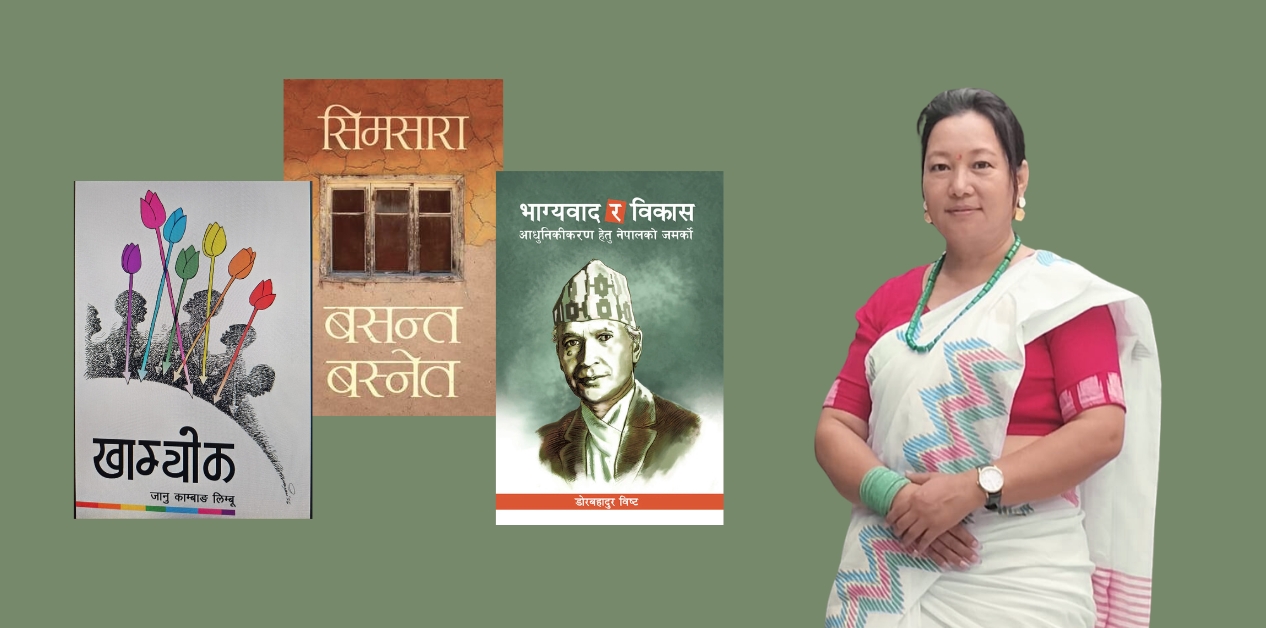
KATHMANDU: Pragati Rai, a formidable literary voice known for foregrounding gender discrimination, caste hierarchies, and the many layers of social oppression, has carved a distinct place in contemporary Nepali literature. The author of acclaimed novels such as Lekhak Ki Swasni, Birsie Ko Mrityu, and Thangra, she has also published a poetry collection titled Badi Bigyapti. Her novel Thangra, which earned a nomination for the 2023 Madan Puraskar, went on to secure the Pehchan Puraskar, further cementing her reputation as a writer of remarkable social and artistic depth. Here are seven questions Nepal News posed to Rai:
Which book did you read recently, and what are you reading currently?
The book read recently is Basanta Basnet’s novel, Simsara. I am reading Kedar Sanket’s story collection Antim Saanjh. I liked the painful story of the Bosnian civil war in the collection very much. Other stories are also interesting and supernatural.
Your favorite genre?
While one can express one’s feelings in short through the medium of poetry, one gets to write open-heartedly in a novel. Therefore, poetry and novels are my favorite genres.
Could you tell us about your preferred time, place, and environment for reading?
My reading time is mostly after 9 o’clock at night before sleeping. Reading at this time does not give other stresses an opportunity to cause nightmares. I read books that I read voluntarily by staying at home. If any book needs to be read for a specific work for review/editing, I go to some quiet cafe and read. Many such peaceful cafes are found in Nankhel, Lalitpur, the area where I live. I am also reading many books in the course of editing new works.
Three favorite books?
Bhagyabad Ra Bikas, Simsara, and Khamyok.
In Dor Bahadur Bista’s Bhagyabad Ra Bikas, it is explained how ruling was done by creating a caste-based pyramid in Nepal.
In Basanta Basnet’s novel Simsara, there is a depiction of the extent to which the bad nature of parents makes a child’s psychology suffocated. This is a novel that will be useful if parents of every family read it.
Janu Kambang Limbu’s novel Khamyok has been published just recently. I had received an opportunity to read its manuscript. In this, a story of playing with the feelings and finances of a foreigner by showing various dreams while living in Nepal is told. There is a touching depiction of the extent of the state of mind those shedding sweat abroad are having to pass through due to such activities.
What is the biggest change that books have brought to your personality or your personal life?
In my life, books have not only brought change but have also given me employment. Loneliness is never felt. Depression does not happen, and the biggest change is that it has increased self-confidence. Everything has a reason; after understanding that reason, it does not leave an excessive impact. One can easily face emergencies that arise in life. I have become able to understand this thing.
Why should we read books?
No matter how deeply we believe we understand life without reading, books allow us to understand it far more profoundly. Reading transforms a person’s emotional temperament, reducing the tendency to rush excessively into sorrow or become entirely consumed by moments of happiness. Study cultivates simplicity, patience, and seriousness, gradually shaping a more thoughtful and balanced human being.
What should be done to preserve reading culture in the digital age?
Preserving a culture of reading has become increasingly difficult in today’s digital age, where people are constantly drawn toward instant entertainment and fleeting distraction. Ultimately, individuals themselves must decide whether they wish to live only for momentary pleasure or cultivate habits that lead to deeper and more lasting fulfillment.
Writers, too, carry a responsibility. One should not write merely for the sake of becoming a writer but write with sincerity, substance, and a grounding in reality. A book should leave the reader with something meaningful, if not answers, then at least a way to untangle some of life’s difficulties.