Kathmandu
Tuesday, July 7, 2026





A satirical youth movement triggered by controversial remarks has gone viral, drawing massive online support and debate across India.

KATHMANDU: India’s most unlikely political movement of 2026 was born not in a dusty party office or a backroom deal, but from a single word spoken inside a Supreme Court chamber. When Chief Justice of India Surya Kant compared unemployed youth to “cockroaches” during a May 15 hearing, the internet did not mourn. It mobilised. Within 24 hours, a 30-year-old student sitting in the United States had turned that slur into a party, a website, a manifesto, an anthem, and a swarm of over hundreds of thousands of members.
What follows is everything you need to know about the Cockroach Janata Party and why India cannot stop talking about it.
What exactly is the Cockroach Janata Party?
The Cockroach Janata Party, commonly abbreviated as CJP and also spelled Cockroach Janta Party, is a satirical political movement that was founded on May 16, 2026, the day after Chief Justice of India Surya Kant made remarks inside the Supreme Court that were widely understood to compare unemployed young people to cockroaches.
The movement describes itself as “a political front of the youth, by the youth, for the youth” and uses the tongue-in-cheek slogan “Secular, Socialist, Democratic, and Lazy.” Its official website went live almost immediately after launch under the tagline “Voice of the Lazy and Unemployed.”
The name itself is a deliberate play on the Bharatiya Janata Party, swapping “Bharatiya” for “Cockroach” to signal both mockery of the political establishment and solidarity with those who have been dismissed by it.
It is not a formally registered political party with the Election Commission of India. The CJP openly presents itself as a satirical movement and a public pressure campaign, not a traditional political organisation. Its power lies precisely in that ambiguity, sitting somewhere between a joke and a protest, between meme culture and genuine civic anger.
What triggered its creation? What did the Chief Justice actually say?
On May 15, 2026, Chief Justice of India Surya Kant was presiding over a Supreme Court hearing that dealt with the issue of fake professional credentials being used to enter fields like law and media. In the course of that hearing, he said, roughly paraphrased, that there are youngsters like cockroaches who find no employment and have no place in any profession, and some of them enter media, social media, RTI activism, and other spaces and proceed to attack everyone.
He also used the word “parasites” in the same session. The remarks detonated on social media within hours. Young Indians, already grinding through a punishing job market, immediately felt the words were aimed at them.
The following day, the Chief Justice clarified that he had been misquoted or misunderstood, saying that his criticism was directed specifically at individuals who had sneaked into professional fields using fraudulent degrees, and that he holds India’s youth in the highest regard, calling them the “pillars of a developed India.” But as tends to happen in the age of instant outrage, the original remark had already spread much farther than the clarification ever would.
The Cockroach Janata Party had already been born overnight.
Who is the person behind the Cockroach Janata Party?
The face and founder of the movement is Abhijeet Dipke, a 30-year-old originally from Aurangabad in Maharashtra. At the time of the party’s founding, he was a public relations student at Boston University in the United States, where he was finishing his master’s degree.
Dipke has a background in digital media strategy and political communication and had previously worked with the Aam Aadmi Party’s social media team between 2020 and 2022, contributing to meme-driven campaign content during the Delhi Assembly elections. That experience clearly shaped his instincts around viral communication and internet-first political messaging.

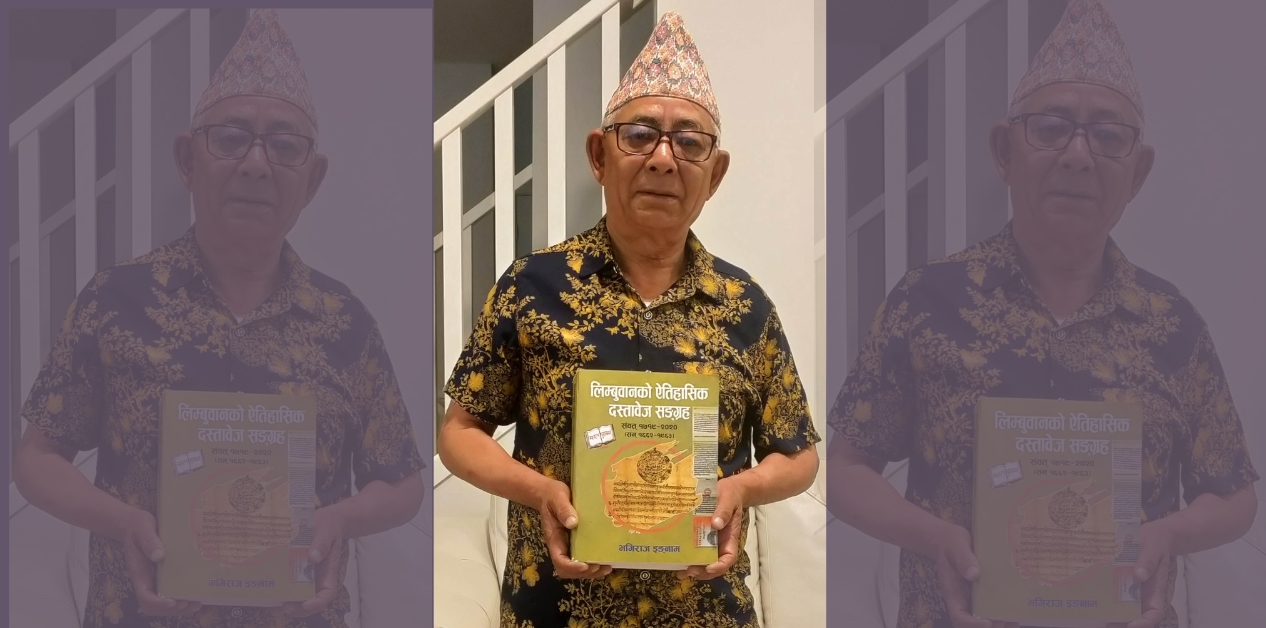
Abhijeet Dipke, the founder of Cockroach Janata Party
He has been open about the fact that the Cockroach Janata Party was born from pure impulse rather than any strategic plan. The moment he read about the Chief Justice’s remarks, the idea simply arrived. He posted a Google Form on X inviting “cockroaches” to join and watched in disbelief as tens of thousands of people signed up within hours.
He built the entire digital infrastructure of the movement, including the website and social media accounts, within 24 hours, using AI tools including Claude and ChatGPT to help with design and drafting. He is currently based in Chicago and has been running the one-man operation largely without sleep since its launch.
How fast did it grow and what are the membership numbers?
The speed of the CJP’s growth is genuinely staggering by any standard of political organising. Within 48 hours of launching on May 16, 2026, the movement had crossed 25,000 registered members through a simple Google Form. By the end of 72 hours, that number had crossed 100,000, meaning people had voluntarily signed up.
The Instagram account of the Cockroach Janata Party crossed 3 million followers within three days and reportedly reached 4.6 million by day four, making it one of the fastest growing political accounts in India’s social media history.
The X account gathered over 100,000 followers in the same window. As per reports by May 20, 2026, membership registrations through the Google Form had crossed 350,000. The party also launched a party anthem and a poster series that were widely shared across platforms.
Reddit communities including r/india and r/IndiaPolitics lit up with discussions. YouTube explainers went viral. The movement essentially colonised India’s internet in less than a week. None of this required any advertising budget.
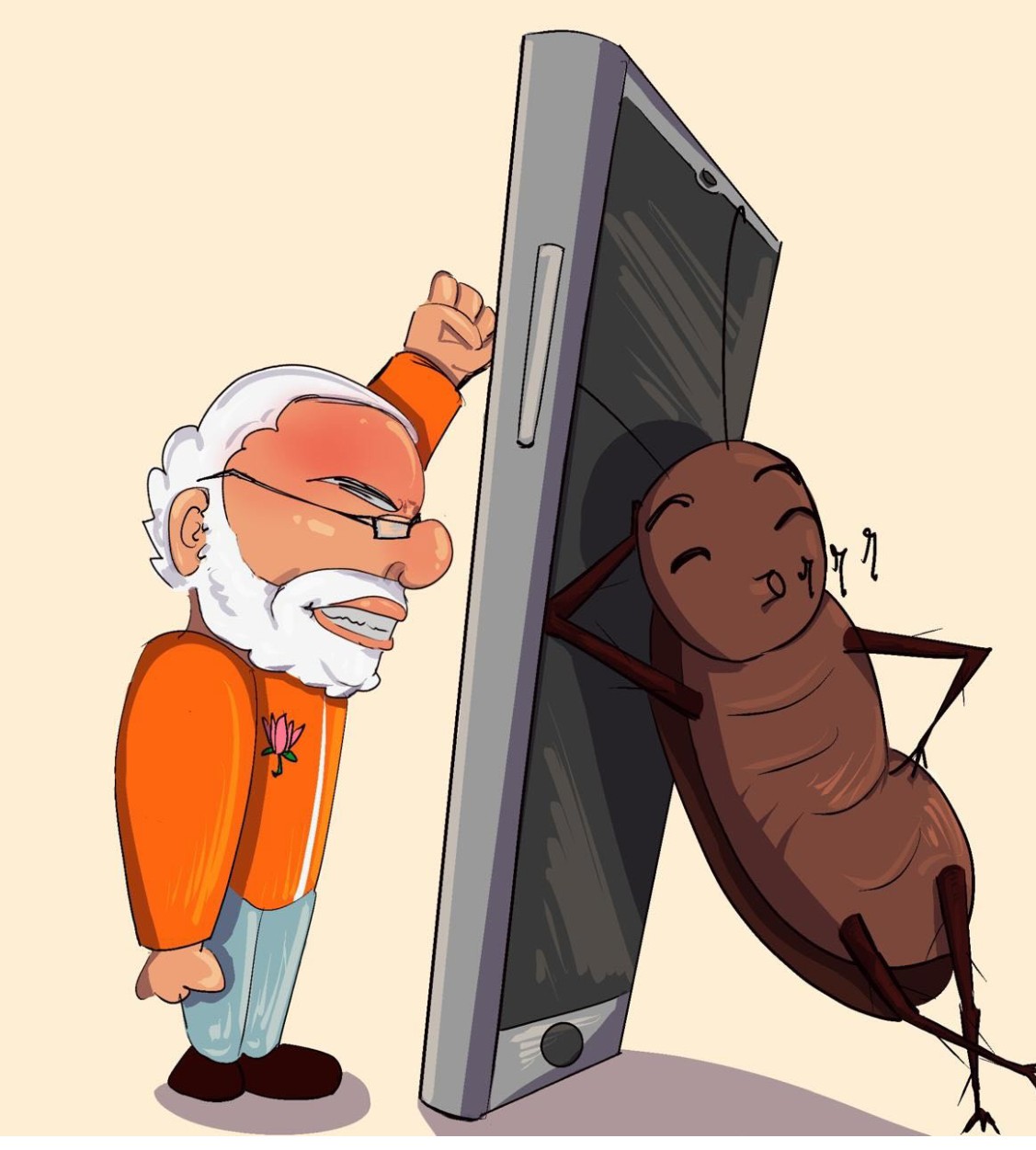
The phrase “Main Bhi Cockroach,” meaning “I am also a cockroach,” became the rallying hashtag that people across the country used to signal their solidarity.
What are the eligibility criteria for joining?
The membership criteria are designed to be humorous while being completely sincere underneath the joke. According to the official campaign material, you can join the Cockroach Janata Party if you are unemployed, lazy, chronically online, or possess the ability to rant professionally.
These four conditions are presented with full awareness of their absurdity, but they also deliberately capture the language that India’s youth have been labelled with by politicians, elders, and now, apparently, the Chief Justice.
The genius of these criteria is that they turn every accusation levelled at young Indians into a badge of membership. You have been called lazy? Welcome. You spend too much time online? Perfect. You cannot find a job despite your degree? You are exactly who they want.
The movement also welcomed opposition politicians, retired bureaucrats, journalists, and anyone who felt the system had dismissed them in some way. In practice, the registration form has been open to anyone willing to fill it out, which explains the explosive membership numbers.
The satirical framing of the criteria made people want to join precisely because it validated their frustration in a way that felt dignified and even funny rather than defeated.
What does the CJP’s manifesto actually demand?
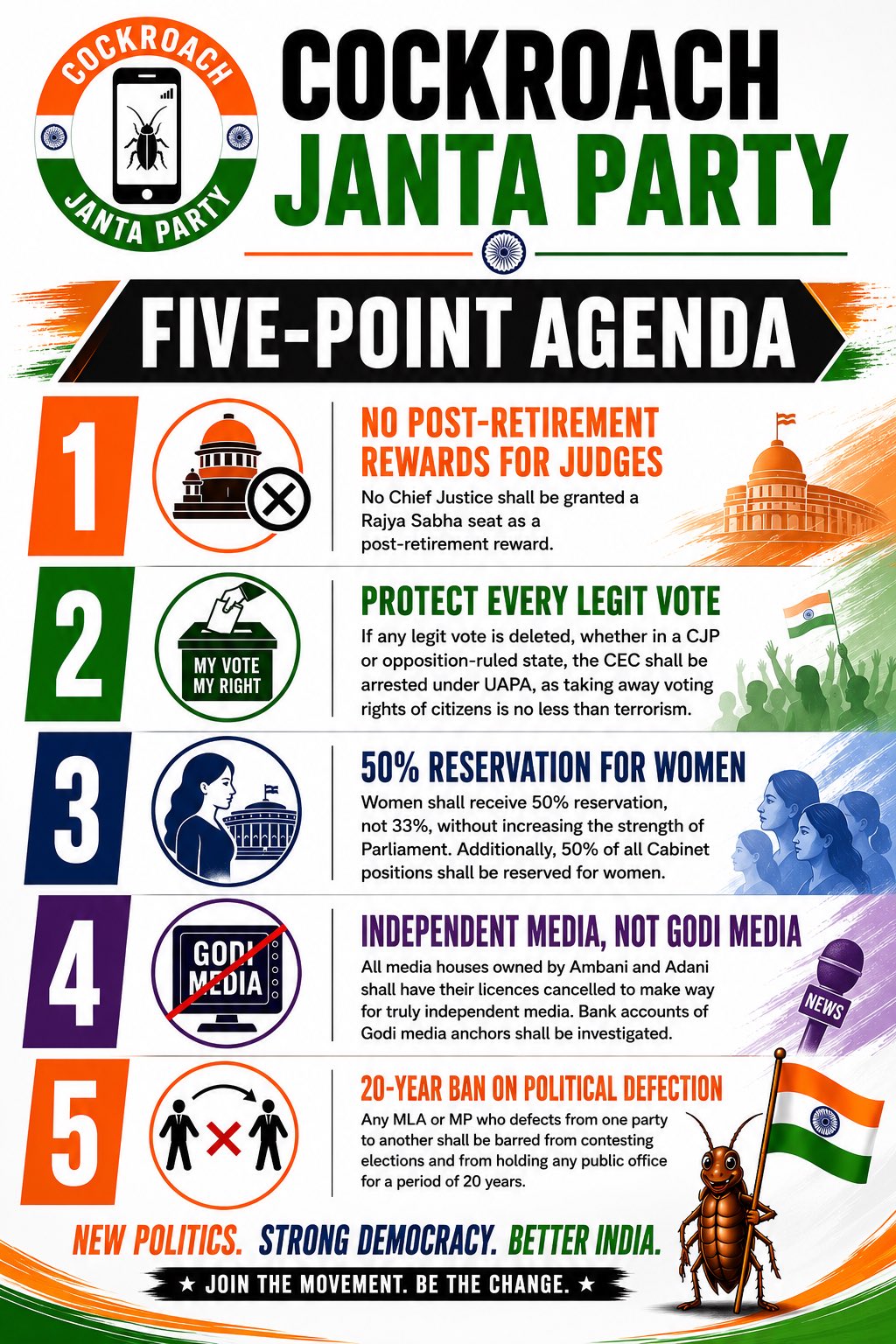
Despite the satirical tone of its branding, the Cockroach Janata Party released a formal five-point manifesto that contains genuinely substantive political demands.
The first point calls for a prohibition on former Chief Justices being rewarded with Rajya Sabha seats after retirement, which has been a long-standing concern about the independence of the judiciary.
The second demand states that any Chief Election Commissioner who allows legitimate votes to be deleted should be prosecuted under UAPA, the Unlawful Activities Prevention Act, framing the protection of voting rights as a matter of national security.
The third demand calls for 50 percent reservation for women in Parliament without increasing the overall strength of the house, meaning men would need to vacate seats rather than new ones being added.
The fourth point demands a 20-year ban on electoral politics for any MLA or MP who defects from their party.
The fifth point calls for public scrutiny of the bank accounts of television news anchors who are accused of functioning as government propaganda, using the popular internet term “Godi Media” for such anchors.
These demands, wrapped inside satire, are quite specific and reflect a coherent set of concerns about judicial independence, electoral integrity, gender representation, political defection, and press freedom.
Which prominent personalities have joined or endorsed it?
The most significant establishment figures to publicly align with the Cockroach Janata Party are two sitting parliamentarians from the Trinamool Congress party.
Mahua Moitra, the outspoken MP from West Bengal who is known for her fierce opposition politics and has previously survived a parliamentary ethics controversy, expressed her wish to join the party and was welcomed by the CJP’s social media account.
She added with characteristic wit that she wanted to join “besides being a card-carrying member of the Anti-National Party,” poking fun at the BJP’s habit of calling critics anti-national.
Kirti Azad, a former Indian cricket team member turned politician and currently a TMC MP from Bihar, also expressed interest in signing up. Ashish Joshi, a retired senior bureaucrat from the Indian Administrative Service who had recently left federal service, was among the earliest prominent names to register, saying that the movement felt like a breath of fresh air in a country that has grown increasingly fearful of speaking out.

Several YouTubers, digital commentators, and political podcasters also signed up and amplified the movement significantly. The endorsements from sitting MPs gave the movement a degree of political credibility that surprised even its founder.
What is its legal status? Is it a real political party?
The Cockroach Janata Party is not registered with the Election Commission of India and does not have legal status as a recognised political party under Indian law. Its own website and founder openly acknowledge this, describing it as a satirical political movement and a public pressure campaign rather than a formal organisation.
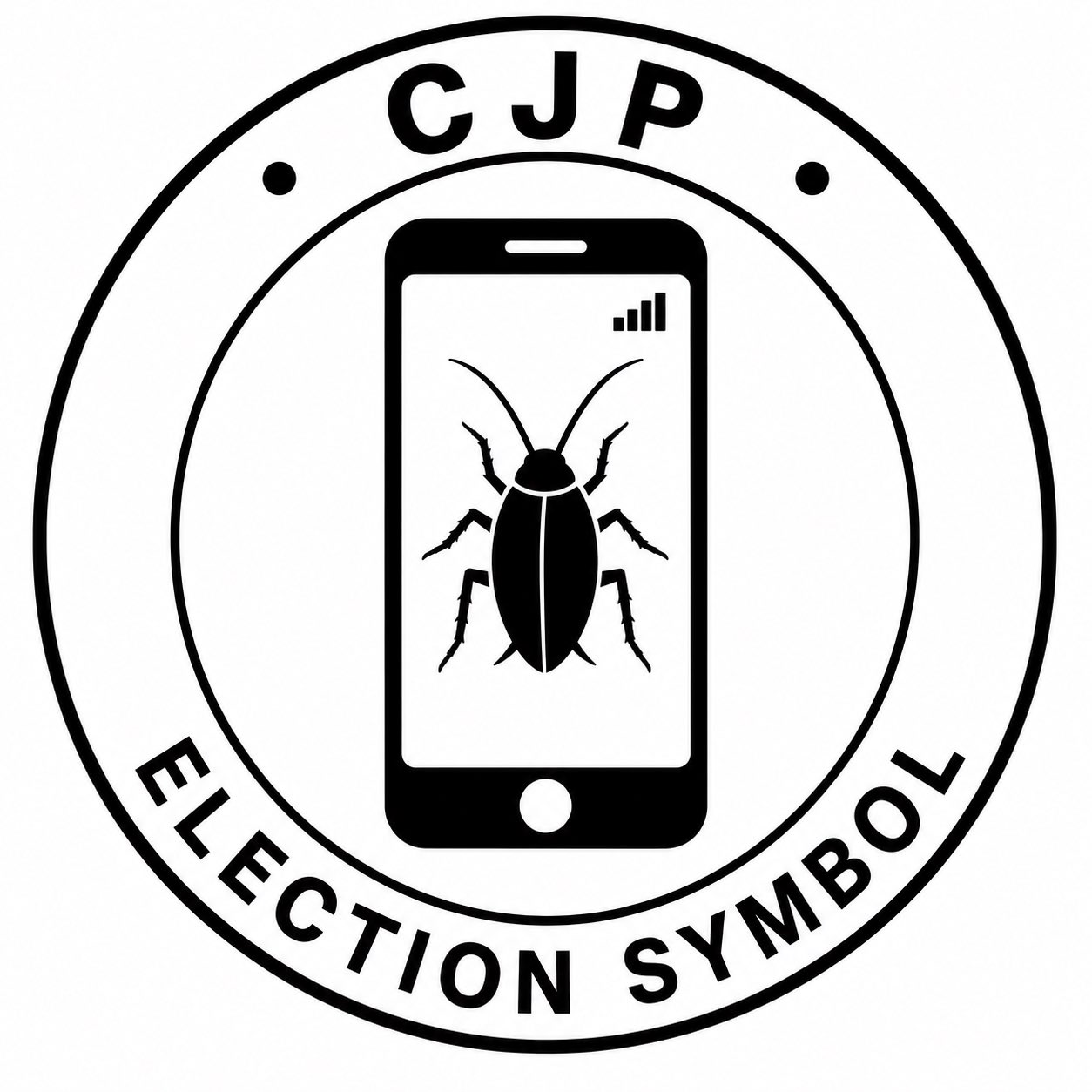
It has no office, no treasurer, no formal membership rolls in the legal sense, and no party symbol assigned by the Election Commission. The Google Form registrations, while numbering in the hundreds of thousands, carry no legal weight in terms of electoral participation.
Dipke himself has been candid about this, stating that the movement may well fade within days, and that he is not delusional about its staying power. However, there are early discussions among supporters about fielding a candidate in the Bankipur Assembly constituency by-election in Bihar, which would require going through the process of either registering the CJP as a party or finding an independent candidate who identifies with the movement.
Political observers have noted that this would represent a significant shift from online satire to genuine electoral participation. As of now, it remains a movement in the legal sense, occupying the space between protest and politics.
Why did it become so viral so fast?
Several forces converged to create the perfect storm. The Chief Justice’s remark landed on a live and extremely raw nerve. India’s graduate unemployment rate stands at around 29 percent, which is roughly nine times the unemployment rate among people who never attended school at all. This means that education is actively failing to deliver economic security, and young people know it intimately.
When the country’s top judge appeared to call these same struggling graduates cockroaches, the insult felt not just personal but institutional. It confirmed a fear that many young Indians had quietly harboured, that those in power hold them in contempt.
The second reason the CJP went viral is that the response was funny, fast, and visual. Meme-driven political movements spread fastest when they are easy to share, visually striking, and emotionally resonant. CJP ticked all three. The cockroach imagery was immediately ripe for creative reinvention.
Third, the movement asked almost nothing of participants. Signing a Google Form takes under a minute. There was zero financial cost or physical risk involved. This lowered the barrier to participation enormously.

Finally, the involvement of politicians like Mahua Moitra gave the story a mainstream news angle that brought it to audiences who might not have encountered it through memes alone.
What does the movement symbolise beyond the jokes?
At its core, the Cockroach Janata Party is a cultural mirror held up to India’s political establishment. The cockroach as a symbol carries genuine resonance. The insect is known for surviving almost anything, for persisting in environments that have been declared hostile, for emerging from places society would rather forget.
When young Indians adopted the label, they were saying something precise: we have survived your indifference, your broken exam systems, your scandal-ridden competitive processes, your precarious gig economy, and we are still here. The movement also signals a shift in the grammar of political protest in India.
The older tradition of political protest involved marches, rallies, fasting, and street-level organisation. The Cockroach Janata Party suggests that for Gen Z, the first instrument of protest is the meme, the hashtag, and the satirical manifesto.
This is not necessarily shallower than older forms of protest. It may simply be the rehearsal stage before something more sustained. The movement also represents something about civic dignity.
When the language of those in power becomes contemptuous, the act of reclaiming that language and wearing it proudly is itself a political act of considerable self-possession and courage.
What is the connection between CJP and India’s broader unemployment crisis?
The Cockroach Janata Party did not create India’s youth unemployment problem. It simply gave it a name, a flag, and a place to gather.
India produces over 8 million graduates annually, but the formal economy has struggled to absorb them at anywhere near that rate. The unemployment rate among graduates, at roughly 29 percent, reveals a structural mismatch between educational output and economic opportunity.
Young people who have spent years studying and preparing for competitive government examinations, only to face paper leaks, postponed tests, and seats filled through nepotism and manipulation, carry a compounded frustration.
The NEET paper leak controversy, which the CJP specifically addressed by calling for the resignation of the Education Minister and demanding accountability, reflects this exactly. Beyond exams, the gig economy has offered flexibility but stripped away security, benefits, and dignity.
Many young Indians are technically employed but in conditions far below what their qualifications suggested they might expect. This gap between expectation and reality, between the promises made to them through education and the actual conditions they face in the labour market, is the emotional fuel behind the Cockroach Janata Party.
The movement gave that fuel a place to ignite in a way that was visible, shareable, and just funny enough to keep people engaged rather than despairing.
How has Dipke responded to comparisons with the Nepal and Bangladesh protests?
When journalists began asking Abhijeet Dipke whether the Cockroach Janata Party could evolve into the kind of street movement that toppled governments in Bangladesh in 2024 or contributed to political turbulence in Nepal, his response was pointed and revealing.
He pushed back firmly, saying that such comparisons insult India’s Gen Z rather than compliment them. His argument was that Indian youth are deeply aware of their constitutional rights and are fully capable of expressing dissent through peaceful, democratic, and legal channels, and that this is not a sign of weakness but of political sophistication.
He did not deny the frustration or the anger. He simply insisted that the form of expression matters, and that India’s youth have chosen a form that respects democratic norms. This is a nuanced position. It simultaneously validates the depth of the discontent while refusing the narrative that the movement is pre-revolutionary.
Observers have noted, however, that Bangladesh’s 2024 uprising also began with online organising and satire before becoming a street movement. Nepal’s youth activism has similarly moved between online and physical spaces. Dipke’s response distinguishes intent from outcome, but whether that distinction holds over time depends on how much the establishment listens and responds to what the movement is asking for.
Can the Cockroach Janata Party become a real political force?
This is the question that political observers in India are genuinely trying to answer. The movement has demonstrated a capacity for rapid mobilisation that established parties spend years and billions of rupees trying to achieve.
Its Instagram growth rate in the first week was faster than most celebrity accounts. The emotional resonance of its message is broad enough to cross state, caste, language, and class boundaries, at least online. There is already talk of contesting the Bankipur Assembly by-election in Bihar, which would give the CJP its first real test of whether online numbers translate into offline votes.
However, the challenges are substantial. Indian electoral politics require extensive ground organisation, candidates who are credible at the local level, access to campaign funding, and the ability to navigate a deeply entrenched party system. Satirical movements have a particularly precarious relationship with institutional politics because the moment you file nomination papers and stand for election, you cease to be entirely a joke, and the expectations shift entirely.
Dipke has been honest that the movement could fade quickly. What is more likely, in the short term, is that it functions as a pressure group and a civic engagement platform rather than a traditional electoral party, using RTI filings, public campaigns, and accountability demands to make itself felt without necessarily winning seats.
How is the CJP using technology and AI?
One of the more fascinating aspects of the Cockroach Janata Party’s launch is how openly its founder has spoken about building it using artificial intelligence tools. Dipke acknowledged to Al Jazeera that he used AI tools including Claude and ChatGPT to help design the party’s visual identity, draft its manifesto, and build its web presence, all within 24 hours.
This is significant because it illustrates something broader about the new economics of political organising. What previously required a team of designers, writers, and strategists working over months can now be compressed into a single night by one person with the right tools and a clear creative vision.
The website, the poster aesthetics, the party anthem, the meme templates, all emerged from this compressed AI-assisted sprint. This raises interesting questions about the future of political movements more broadly.
If the infrastructure of a political organisation can be assembled overnight, the barriers to starting a movement drop dramatically, but so does the friction that previously forced movements to develop slowly and build genuine depth.
The Cockroach Janata Party is in some ways a proof-of-concept for AI-enabled political organising, and whether that is exciting or alarming depends entirely on your perspective.
What has the media and political establishment made of it?
Mainstream Indian media has covered the movement extensively, though with varying degrees of seriousness. Publications like Deccan Herald, Business Today, and Outlook India have run detailed explainers.
Al Jazeera carried a feature story placing it in the context of South Asian youth politics. The Wire drew a historically sobering comparison to the use of the word “inyenzi,” meaning cockroach, in Rwanda during the 1994 genocide, while being careful to note that the CJI’s remarks were in no way comparable in intent or context. That comparison was nonetheless a reminder that dehumanising language carries weight and history. On the political establishment side, the
BJP has not formally responded to the movement, which is likely a strategic calculation. Engaging with a satirical movement risks amplifying it further, while ignoring it carries the risk of appearing tone-deaf.
The opposition parties have been more comfortable engaging, with TMC figures openly signing up. The founder himself has reported that someone attempted to hack the party’s social media accounts, which he announced in a video.
Whether that is connected to any political actor is unverified, but the allegation itself suggests the movement has accumulated enough visibility to attract unwanted attention from somewhere.
What are the real grievances underneath all the satire?
Strip away the memes and the cockroach mascot and what you find underneath is a layered set of genuinely serious complaints. Young Indians have watched competitive examination processes be undermined by paper leaks, most prominently the NEET controversy in which students allegedly died by suicide in the aftermath of the scandal.
They have watched media organisations align so closely with the ruling party that the term “Godi Media” entered common usage as shorthand for captured journalism. They have seen judges take up government positions after retirement in what critics argue is a structural conflict of interest.
They have lived through years of inflation while income growth has lagged behind. They have participated in elections while worried about electoral roll manipulation and electronic voting machine reliability.
They have used the RTI Act to demand transparency from government and been called parasites for doing so. These are not manufactured grievances. They represent a coherent picture of institutional failure as experienced by a generation that was told education and hard work were enough, and then found out they were not.
The Cockroach Janata Party gives these grievances a shared name and a shared aesthetic, which is both its strength and its limitation.
What might be the long-term significance of this movement?
Whether or not the Cockroach Janata Party lasts another month or another decade, it has already done something meaningful. It has demonstrated that India’s Gen Z, so often dismissed as chronically online and politically disengaged, is capable of rapid, creative, and organised political expression when given a spark that resonates.
It has shown that the language of protest is evolving, that irony and satire can carry as much weight as a rally, and sometimes more, in an attention economy. It has illustrated that the political establishment’s contempt for young people carries real costs, because contempt, when it is voiced loudly enough in a public forum, can crystallise a diffuse sense of grievance into something with a name and a face and a membership form.
The movement also asks a question that India’s political system will have to reckon with eventually. What happens when an entire generation of educated, informed, connected young people feels that the institutions built to serve them treat them as a nuisance? You get cockroaches, apparently.
And cockroaches, as the party itself likes to say, are very difficult to squash.