Kathmandu
Saturday, July 25, 2026





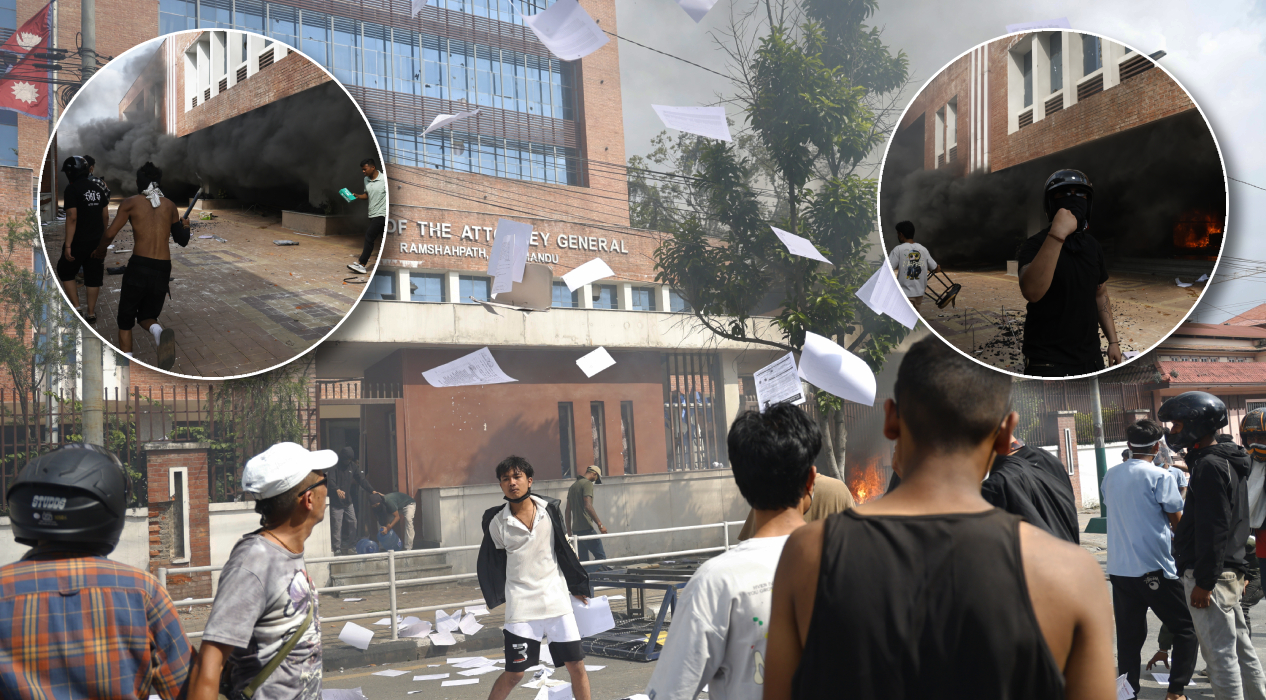
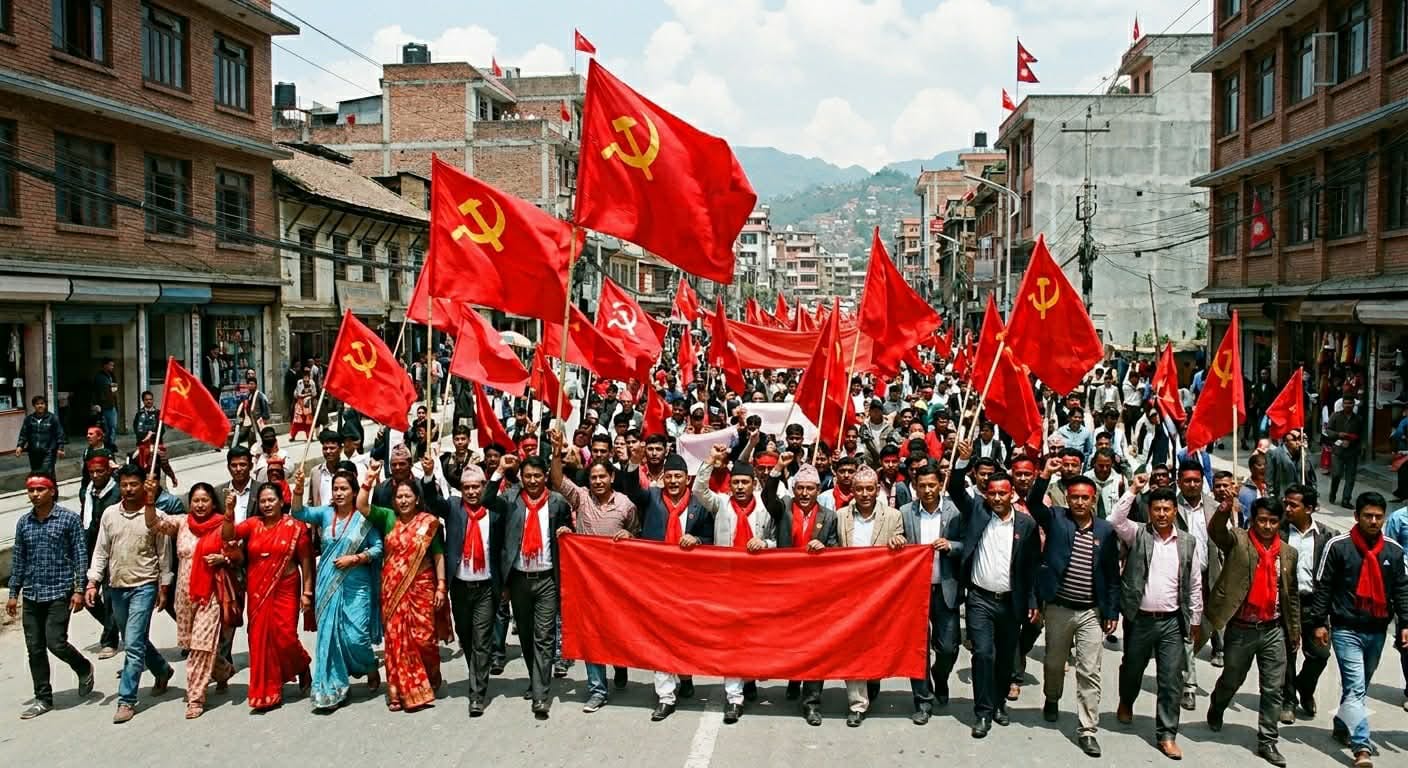
KATHMANDU: On September 8 and 9, 2025, Nepal witnessed its most intense street protests in years, led largely by young people demanding political accountability. What began as peaceful demonstrations spiraled into violence, arson, and destruction of major state buildings including the Parliament building, government’s main administrative seat Singha Durbar, the Supreme Court complex and the presidential residence Sheetal Niwas.
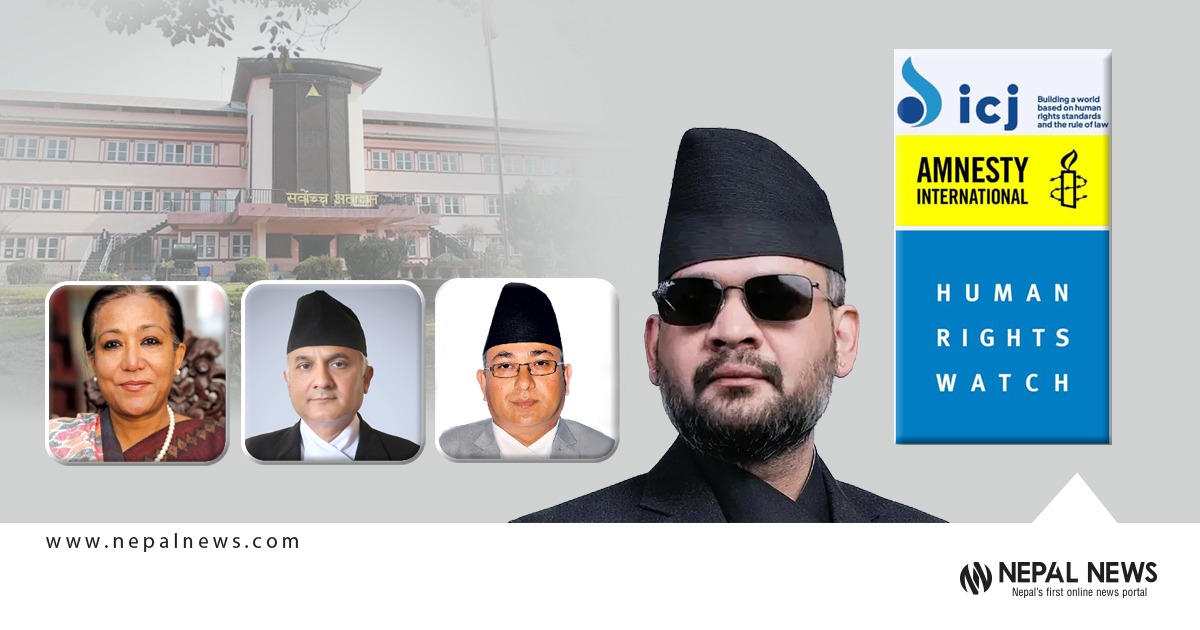
Nearly nine months later, on May 27, 2026, the National Human Rights Commission published its findings after a comprehensive investigation led by Commissioner Dr. Lily Thapa.
What exactly is this report and who prepared it?
The National Human Rights Commission of Nepal published an investigation report examining human rights violations that occurred during the Gen Z protests of September 8 and 9, 2025. A special committee was formed under the leadership of NHRC member Dr. Lily Thapa to conduct this inquiry.
The committee spent roughly six months gathering evidence, recording statements from hundreds of individuals, analyzing social media content, reviewing news coverage, and examining material collected by national intelligence.
The final document runs to around one thousand pages. The commission’s full bench then reviewed the committee’s findings and passed formal resolutions to send its recommendations to the Prime Minister’s Office.
The report was officially submitted to the Prime Minister’s Office on the same day (May 27) it was made public.
Who are the three main people the NHRC identified as human rights violators?
The report directly names three individuals who held government leadership positions during the protests: then Prime Minister KP Sharma Oli, then Home Minister Ramesh Lekhak, and then Minister for Information and Communication Prithvi Subba Gurung.
The NHRC’s full bench formally confirmed that all three committed human rights violations. Since no existing Nepali law specifically punishes human rights violations of this nature, the commission has asked the government to create new legislation and use it to prosecute these three individuals.
The commission cited a precedent set by the Supreme Court that allows retrospective laws to be applied in human rights violation cases, meaning a law passed today could be used to punish acts committed in the past.
What specifically did KP Oli do that the NHRC considers a violation?
As the head of government during the protests, Oli bore ultimate responsibility for how state security forces were deployed and what orders were given. The report places Oli at the top of the chain of command that directed the crackdown on demonstrators.
His failure to pursue a peaceful resolution, the decision to use lethal weapons against protesters, and the broader response that resulted in deaths and injuries are all laid at his door.

KP Sharma Oli. File photo
The commission has recommended that any new law enacted to punish human rights violators must be applied to Oli as a primary subject. He is also among those who the commission believes should face restrictions on running for any elected office for five years, and on travel abroad for three years.
What role did then-Home Minister Ramesh Lekhak play?
Ramesh Lekhak, who was Home Minister during the protests, had direct administrative oversight of Nepal Police, Armed Police Force and National Investigation Department.
The NHRC holds him responsible for the manner in which security forces handled the demonstrators on both days. As the minister in charge of internal security, he was in a position to issue clear guidelines on proportionate use of force, ensure protective gear for deployed personnel, and establish a chain of accountability.
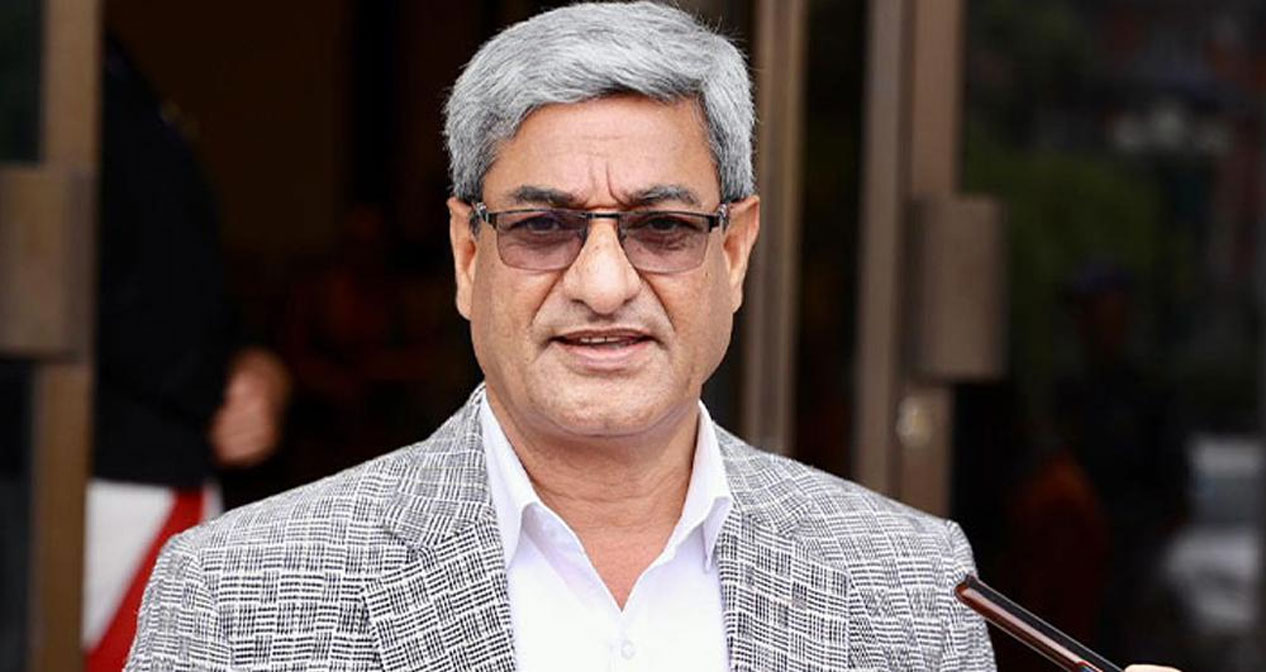
Ramesh Lekhak/File photo
The report concludes that these obligations were not met. Lekhak is identified as one of the core violators whose actions, or failures to act, directly contributed to the deaths and injuries that occurred.
Why is then-Communications Minister Prithvi Subba Gurung named in the report?
Gurung’s inclusion might surprise some, given that communications ministers are not typically associated with policing. However, the NHRC noted that as communications minister, Gurung played a role in managing the state’s information environment during the protests.
The report examines whether his statements or actions influenced the situation, particularly in the context of blanket social media ban and his vocal criticism of youth demands in public communication.
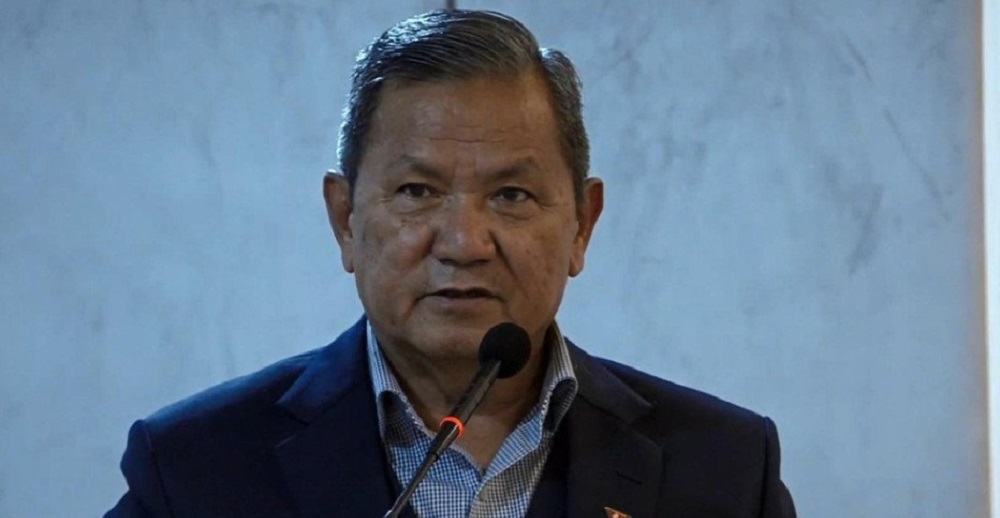
Prithvi Subba Gurung/File photo
His name appears in a specific numbered section of the report’s facts and analysis chapter as a confirmed human rights violator.
Gurung is subject to the same recommended penalties as Oli and Lekhak if the proposed new law is enacted.
What does the NHRC say about Rabi Lamichhane and his role during the protests?
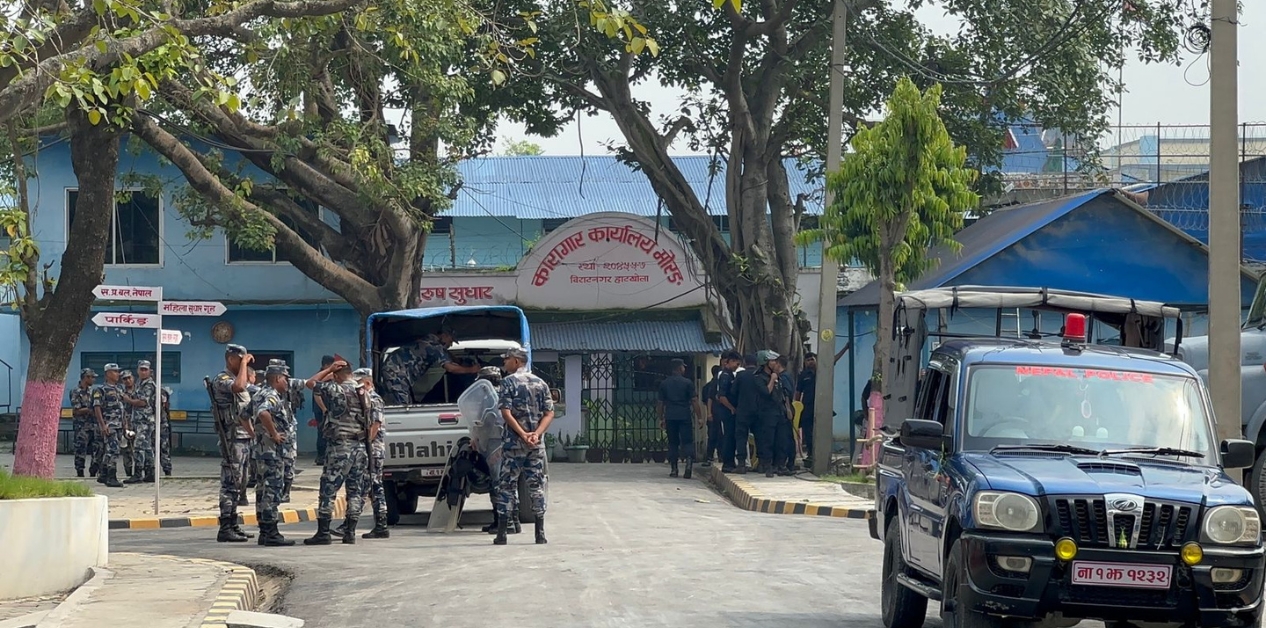
This is one of the more striking findings in the report. Rabi Lamichhane, chairman of the Rastriya Swatantra Party, was himself in Nakkhu Prison at the time of the protests.
The NHRC concludes that his departure from the prison during the unrest amounted to a criminal offense under Section 49 of the Prison Act 2022.
Beyond his own exit, the commission finds that Lamichhane was involved in facilitating the release of other inmates from both Nakkhu Prison and a juvenile correction facility. The report notes a direct conflict between Lamichhane’s version of events and that of jailer Satyaraj Joshi.
Joshi told investigators that he was coerced by Lamichhane’s supporters and signed the release order under pressure, while Lamichhane told investigators that it was Joshi himself who asked him to leave, saying the prison would be safer without him.
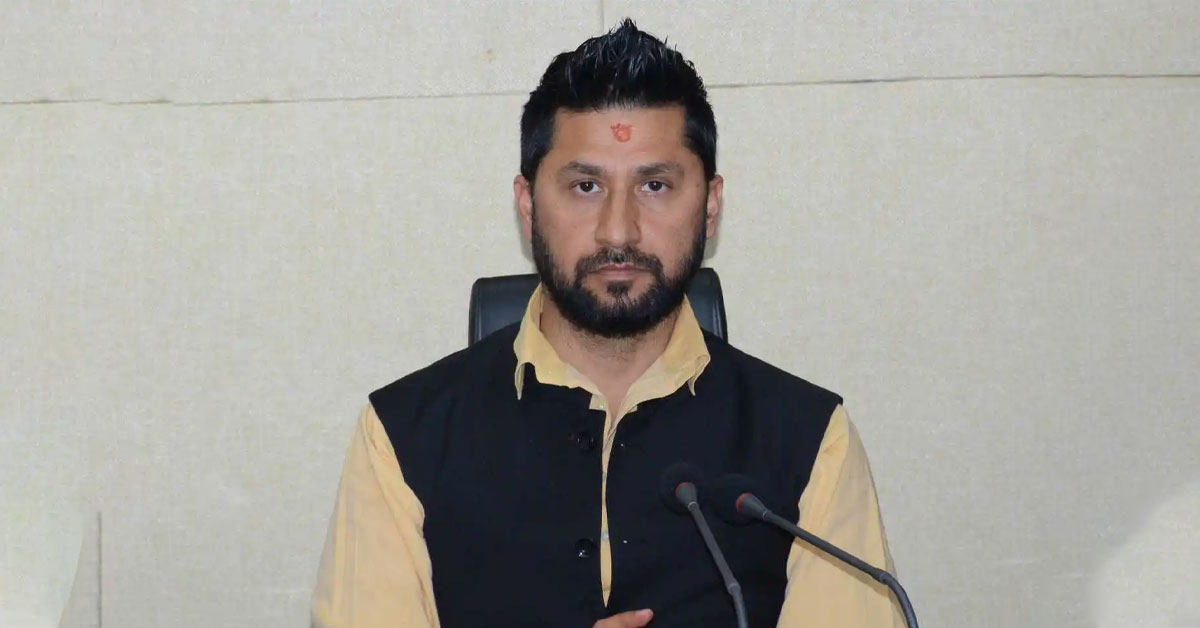
RSP Chairman Rabi Lamichhane.
The NHRC recommends a detailed investigation into Lamichhane over both the prison escape and the facilitation of other inmates’ release.
Which RSP parliamentarians are recommended for investigation and why?
The report recommends investigation into 17 RSP MPs and party figures.
The list includes sitting lawmakers Sudhan Gurung, Manish Jha, Deepak Bohara, Ganesh Karki, Sulabh Kharel, Shiva Yadav, Bablu Gupta, Hari Dhakal, Krishna Kumar Karki, Dr. Toshima Karki, Rajeev Khatri, KP Khanal, Ashika Tamang, Jwala Sangraula, Som Sharma and Purushottam Yadav, along with party central committee members Khemraj Saud and Hem Raj Thapa.
The NHRC’s basis for naming them includes statements they made before, during, and after the protests, intelligence reports suggesting their presence or likelihood of participation, and social media posts.
The commission believes their public utterances may have inflamed protesters and contributed to violence, and wants an investigation to determine whether they incited unrest.
Why is Sushila Karki on the investigation list?
Sushila Karki served as an interim Prime Minister after the Gen Z protests. The report includes her on a broader list of over four dozen individuals whose statements and actions need further scrutiny.
The NHRC’s reasoning follows a consistent pattern: people who made public statements that could have excited or provoked demonstrators are recommended for investigation to determine whether those statements contributed to physical or material damage.

Former Prime minister Sushila Karki
The commission is careful to note that being on this list does not amount to a finding of guilt. It specifically states that any investigation must include a fair hearing for each individual named.
Who is Gauri Bahadur Karki and what is the conflict of interest the report raises?
This is one of the most eyebrow-raising elements of the report. Gauri Bahadur Karki was appointed by the government to head the official judicial inquiry commission examining the same Gen Z protests. However, the NHRC found that Karki himself made statements on social media during the Gen Z protests that were seen as provocative or inflammatory.
Opposition parties had already objected to his appointment on exactly these grounds, arguing that someone who actively took a public position on the protests could not investigate them impartially.
The NHRC has now recommended that Karki himself be investigated to determine whether his statements contributed to unrest or incitement. The report also notes that the inquiry commission Karki led was criticized for only examining the September 8 events rather than both days, and opposition parties have called its findings biased.
What did the report find about Nepal Police and what action is recommended?
The NHRC has recommended departmental action against Nepal Police Inspector General Dan Bahadur Karki (then-AIG) and a number of senior officers below him.
These include DIG Om Rana, DIG Bishwa Adhikari (then-SSP), then-Kathmandu CDO Chhabilal Rijal, and the director of the National Investigation Department, Krishna Khanal, among others.
Then then-IGP Chandrakuber Khapung of Nepal Police, then-IGP of APF Raju Aryal and then head of National Investigation Department Hutaraj Thapa are also named.
The commission holds them responsible for ordering or permitting the use of lethal weapons against protesters without adequate precaution.

Nepal Police Logo
Under Nepal’s constitution, the NHRC has the power to recommend departmental action and punishment for security officials who violate human rights, and such recommendations must be acted upon within three months.
What does the report say about the Armed Police Force?
Armed Police Force Inspector General Narayan Dutta Poudel (then-AIG) is among those against whom departmental action is recommended.
APF personnel were deployed during the protests and the report finds that their use of force was similarly disproportionate and insufficiently controlled.
The broader finding across police and APF is that field commanders made decisions in the heat of chaotic street situations without proper guidelines, equipment, or oversight.
Armed Police Force Logo
The commission does not let individual officers entirely off the hook while also acknowledging that part of the problem was systemic, rooted in the failure of political and administrative leadership to provide proper instructions and resources.
What does the report say about the Nepali Army’s failure?
The Army’s role is treated somewhat differently from the police. The NHRC found that the Army had a responsibility to protect Singha Durbar, the Supreme Court, and Sheetal Niwas, all of which sustained serious damage from fire and vandalism.
Despite being stationed at or near these locations, Army units failed to prevent that destruction. The commission directs the Chief of Army Staff to take the protection of national property and citizens’ rights more seriously going forward, and asks the government to formally reprimand the commanders who were in charge of Singha Durbar and Sheetal Niwas at the time.
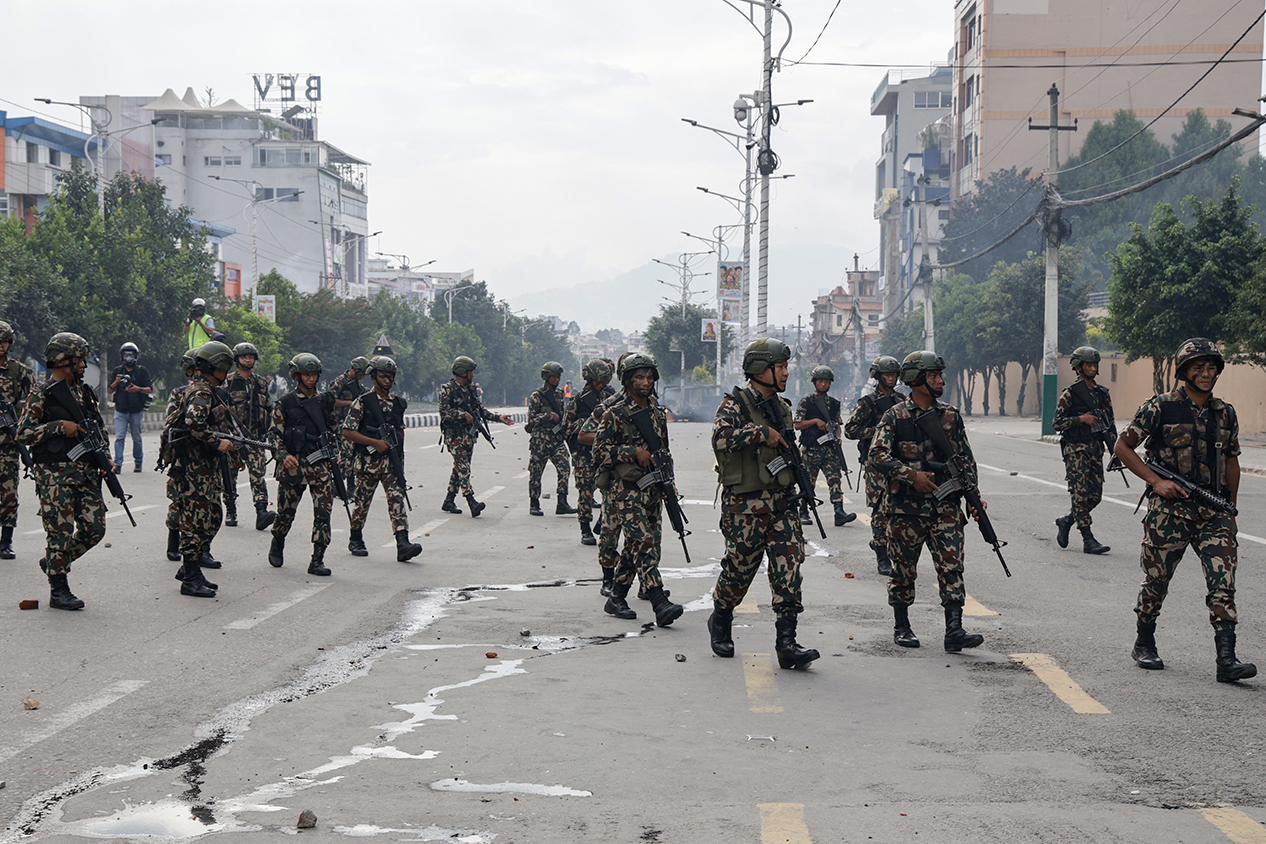
Army on the streets on the first day of the Gen Z protest on September 8. Photo: Bikram Rai/Nepal News
Notably, the Army is not recommended for the same level of punitive action as police and APF, partly because the commission found that on the night of September 9, the Army was eventually deployed without a formal government order, which contradicted its earlier claim that it had stayed back because no deployment directive had been issued.
Did the Army cooperate with the NHRC’s investigation?
Not initially. The report explicitly notes that the Army’s cooperation during the investigation process was unsatisfactory. When the commission summoned the Chief of Army Staff for questioning, there was initial resistance and non-cooperation.
A written statement was eventually provided, but only after considerable delay. This reluctance to engage is itself flagged as a concern.
The inconsistency in the Army’s public position, first claiming it stayed out due to the absence of a government order and then being found to have deployed on the night of September 9 without such an order, further undermined its credibility with the commission.
What does the report say about police being under-equipped?
One of the more sympathetic observations in the report concerns the state’s failure to provide adequate protective equipment to deployed security personnel.
Officers on the ground lacked sufficient shields, helmets, bulletproof vests, and armored vehicles. The commission notes that this absence of basic self-protection gear created impossible situations: police were unable to make arrests or hold their ground because they were themselves at physical risk.
This contributed directly to two outcomes the report treats as problematic, officers fleeing to save their own lives, and officers firing weapons because they had no other option.
The report frames this as an institutional failure of the government rather than a personal failing of individual officers.
What were the protesters doing during the demonstrations according to the report?
The report does not present the demonstrations as purely peaceful. It describes scenes where the march moving from Maitighar toward Babarmahal involved large-scale infiltration by elements who were not simply marching.
Protesters reportedly used sticks, arrows, and slingshots, and broke the walls of the parliament building compound. Attempts by police to disperse crowds using tear gas were met with increasingly aggressive responses.
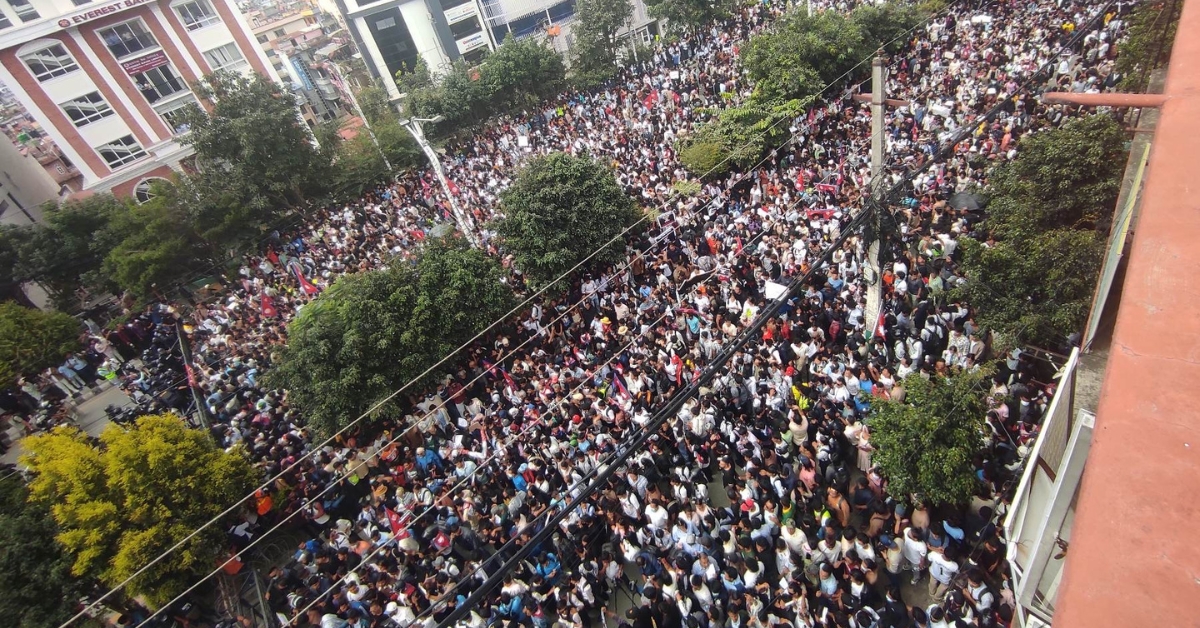
Youth gathered in New Baneshwar during the Gen Z movement. Photo: Bikram Rai / Nepal News.
The commission describes a cycle of escalation in which security force actions provoked demonstrators, and demonstrator actions provoked security forces.
The report also identifies a specific group, the TOB (Tibetan Original Blood), as having played a major role in escalating the protests toward violence.
The presence of organized groups within what appeared to be a spontaneous youth movement is treated as a significant factor.
What new law does the NHRC recommend and what would it contain?
Since Nepal currently has no specific law punishing human rights violations, the commission has drafted a detailed framework for what such legislation should include.
Violators would face up to six months imprisonment, a fine of up to Rs 300,000, or both.
They would be barred from standing as candidates in any elected or political appointment position for a minimum of five years. Administrative responsibilities would be off limits for at least three years, and foreign travel would be restricted for three years as well.
Any charge filed under this law would trigger automatic suspension from any public position held. Cases under this law would be heard by a dedicated special court.
For less serious violations, the law would allow a path to resolution through public apology, payment of compensation, and possible pardon, subject to the victim’s agreement and court approval.
On what legal basis does the NHRC believe a retrospective law is permissible?
Nepal’s Supreme Court established a precedent in March 2013 that retrospective legislation can be applied in human rights violation cases.
This is unusual in standard legal doctrine, which generally prohibits punishing people for acts that were not crimes when committed. The NHRC leans on this exceptional precedent to argue that even if today’s laws do not cover what Oli, Lekhak, and Gurung allegedly did, parliament can pass a new law and have it reach back to cover their actions.
The commission frames this as a matter of justice and accountability rather than a technical legal exercise.
Critics may argue this principle is open to abuse, but the commission presents it as established Nepali jurisprudence.
What happens if someone charged under this new law is currently in public office?
The NHRC recommends that the new law include an automatic suspension clause. This means that the moment a case is registered against a person, regardless of what public office they hold, whether elected parliamentarian, minister, or any other position, they would be suspended without any additional process required.
This provision is specifically designed to prevent the situation where accused individuals continue to exercise state power while facing accountability proceedings. Given that some of the people named in the report currently hold or may hold future public positions, this recommendation has immediate political implications.
What is notably absent from the report, particularly regarding Balen Shah?
The report makes no mention of Balen Shah, who was Kathmandu’s mayor during the protests and is currently the Prime Minister.
Shah gave a statement to the NHRC during the investigation and had previously publicly stated that the then government and political parties should bear responsibility for the damage caused during the demonstrations.

Prime Minister Balendra Shah
Despite his central role as the city’s chief executive during the unrest, and despite some people claiming he encouraged protesters, the report neither names him as a subject of investigation nor cites his statement as evidence.
Whether this omission reflects the commission’s assessment of his actions, a deliberate decision, or something else entirely, the report offers no explanation.