Kathmandu
Saturday, July 25, 2026





From the riverbanks of the Bagmati in Kathmandu to the paddy fields of the Terai and the terraced slopes of the far-western hills, landlessness in Nepal is not just an urban issue, a caste issue, or a housing issue. It is one of the country’s oldest, most politicized, and least resolved structural failures—and it is once again at the centre of national life
16579484331689644844.jpg)
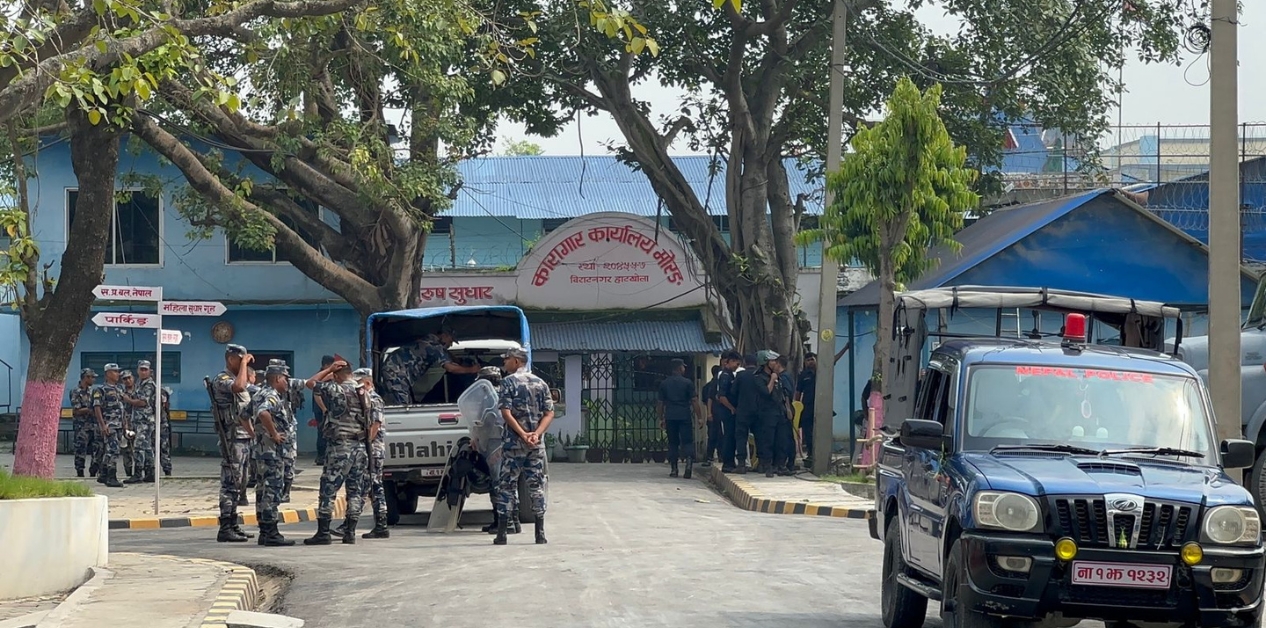
KATHMANDU: The government is reportedly planning to carry out the first phase of evictions from squatter settlements along Kathmandu’s rivers this coming Saturday and Sunday but government spokesperson and Education Minister Sasmit Pokharel has denied that any such decision has been formally approved by the cabinet.
The contradiction reflects a recurring pattern in Nepal’s squatter politics: administrative action racing ahead of institutional consensus. With Prime Minister Balen Shah — who battled this same issue as Kathmandu’s mayor — now leading the federal government, the question of who holds authority, who bears responsibility, and where thousands of landless families will go has never been more urgent.
Behind the capital’s latest crisis lies a national catastrophe decades in the making: an estimated 2.1 million people living without formal land rights, 22 commissions formed and dissolved without resolution, and a feudal land inheritance that has systematically excluded Dalits, women, bonded labourers, and the rural poor from the most basic foundation of dignified life.
What exactly is being planned for this weekend in Kathmandu, and why is there official confusion about it?
Reports circulating in Kathmandu suggest that the federal government, in coordination with the Kathmandu District Administration Office, is preparing to begin a first phase of clearing squatter settlements from the banks of the capital’s rivers — primarily the Bagmati and its tributaries — on Saturday and Sunday.
The District Administration Office has reportedly convened security meetings to discuss operational logistics of the drive. However, Government Spokesperson and Education Minister Sasmit Pokharel categorically stated that no such decision was passed at the Council of Ministers, contradicting what administrative agencies appear to be preparing on the ground.
This gap between official denial and ground-level preparation is not unusual in Nepal’s policy environment, where administrative arms often move ahead of formal cabinet approval once the leadership’s political intent has been signalled through directives.
Prime Minister Balen Shah’s instruction to relevant agencies to address squatter settlements appears to have set operational wheels in motion even without a formal resolution, creating a situation where the government’s left hand and right hand are offering contradictory messages to the public, to squatter communities, and to human rights observers who are monitoring the situation closely.
What does the Nepali word “sukumbasi” actually mean and why does the definition matter so much?
The word sukumbasi comes from Nepali and literally describes a person who has no house for shelter, no private land to cultivate, and no other reliable means of earning a livelihood.
In its original rural context it referred specifically to someone without farmland — a devastating condition in an agrarian society where land meant food, dignity, social standing, and access to everything from credit to political voice.
In contemporary usage, the term has expanded to cover urban riverbank squatters, freed bonded labourers, forest encroachers, and conflict-displaced families living on public land — people whose reasons for landlessness vary enormously.
The word carries strong negative connotations and is rarely embraced by those it describes. This is not merely a semantic issue: legal definitions determine who qualifies for state protection and land distribution.
The 1964 Land Act defines a genuine landless squatter as someone whose family has not owned land for generations and who cannot purchase any through family income. That strict definition means a significant portion of people who identify as sukumbasi and who genuinely need help do not qualify for the most targeted forms of relief, creating frustration, resentment, and political friction at every level of the issue across the country.
How big is the national problem — what do the actual numbers say?
The numbers are sobering and contested depending on which category is being counted. The Land Problem Settlement Commission has estimated approximately 450,000 families across Nepal as genuine landless squatters by the strict legal definition of the Land Act.
Beyond that, another approximately 1.2 million families fall under the category of “unorganized settlers” — people living on land they do not legally own but who may hold some land elsewhere.
The former chairperson of the 2021 Commission estimated 2.1 million people living without land rights in some form. Advocacy figures from SPOSH-Nepal have put the national squatter population even higher at around four million. At the national agrarian level, 26.1 percent of all agricultural households in Nepal have no land to farm.
Among Dalits — who constitute roughly 13 to 14 percent of the population — conditions are acutely worse: 36.7 percent of hill Dalits are landless and 41.4 percent of Madhesi Dalits have no land. An estimated 75 percent of Dalits are described as functionally landless when marginal, non-viable holdings are included.
Women, despite contributing over 61 percent of agricultural labour nationwide, control only around five percent of the country’s arable land. These are not peripheral statistics — they describe the structural condition of millions of Nepali citizens.
How did Nepal’s land ownership become so deeply unequal — what are the historical roots?
The roots of Nepal’s land inequality go back more than two centuries to feudal land governance systems that treated land as a tool of political patronage and social control. Under the Rana oligarchy and earlier monarchical regimes, fertile land in the Terai and the hills was granted to court favourites, military commanders, religious institutions, and upper-caste elites as birta and jagir — reward grants that came with the effective labour of those already farming the land.
Indigenous communities, particularly Tharu people in the western Terai, cultivated land for generations without formal documentation. When malaria was eradicated from the Terai in the 1950s and 1960s, a wave of hill migrants moved in and legally registered land that Tharu farmers had tilled for centuries, often by securing thumbprints of illiterate farmers on blank documents.
The result is documented starkly: by the early 2000s, the top five percent of Nepal’s population controlled 37 percent of all arable land, while the bottom 47 percent shared just 15 percent between them.
Dalits, comprising a significant share of the population, collectively own roughly one percent of land. Caste discrimination further restricted their access — laws explicitly excluded Dalits from land markets and economic participation for generations.
This is not historical accident but the documented outcome of discriminatory administration maintained across every political regime Nepal has known.
Who are the freed Kamaiyas of western Nepal, and what happened after their liberation?
The Kamaiya system was a form of hereditary bonded labour that enslaved entire Tharu families — primarily in Dang, Banke, Bardiya, Kailali, and Kanchanpur districts of western Nepal — across generations.
Kamaiyas worked in the fields and homes of landlords in exchange for nothing more than food and clothing, their debts compounding across lifetimes, their children inheriting the bondage by birth. The system had existed since the 18th century and was particularly brutal in its modern form, where debts were deliberately structured to be impossible to repay.
Following sustained activism and mass protests including a landmark demonstration in Dhangadhi in May 2000 involving over 10,000 people, the government formally abolished the Kamaiya system on July 17, 2000, freeing over 30,000 families in five districts.
But liberation without land or livelihood is hollow. Most freed Kamaiyas were immediately evicted by their former landlords from the land where they had lived and worked, cast onto riverbanks and forest margins with nothing.
The government promised rehabilitation including land, but as of 2024 — the 24th anniversary of liberation — 2,375 of the 27,570 registered Kamaiya families still had no land at all. Those who received plots were often given unproductive, flood-prone, or poorly located land inadequate for subsistence farming.
Freed Kamaiyas remain among the most visible faces of Nepal’s landlessness failure: freed on paper, dispossessed in daily reality.
Who are the Haliyas of the far-western hills, and have they fared any better than the Kamaiyas?
The Haliya system was the hill counterpart of the Kamaiya system — hereditary agricultural bonded labour practised primarily in the far-western hill districts, where landless Dalit men were bound to till the land of upper-caste landlords under debt conditions designed to be permanent.
The government officially abolished the Haliya system in September 2008. But the rehabilitation programme that followed was even more poorly executed than the Kamaiya process. Estimates suggest that the government’s rehabilitation programme reached less than five percent of Haliya families.
The roughly 20,000 freed Haliya families were declared “liberated” without land, skills, or functional social support to fall back on. Many continued working for their former landlords because no viable alternative source of income existed.
Women faced compounded discrimination — excluded from land rights under both caste hierarchy and gender norms, they could not access the land titles that were supposed to form the core of the rehabilitation package.
An EU-funded advocacy project completed in 2023, the ADHICAR project, used mobile-based data collection to document the ongoing rights violations of freed Haliyas and support their participation in democratic processes — but government-level rehabilitation remains structurally and chronically incomplete.
The Haliyas represent perhaps the most geographically isolated and administratively neglected of Nepal’s formally freed but practically landless communities.
Who are the Haruwas and Charuwas, and why are they still largely invisible in national policy?
The Haruwa-Charuwa system is a form of bonded agricultural labour concentrated in the eastern Terai districts, where landless labourers from marginalized communities are bound to plough and tend the land and livestock of high-caste landowners in conditions of effective serfdom that continue despite legal prohibition.
Haruwas are adult labourers who plough mid-sized and large agricultural plots; Charuwas — typically their children — herd the landlord’s cattle. An ILO study found that in the 12 districts where these systems are most prevalent, approximately 12 percent of an estimated 942,000 households are affected by forced labour conditions.
More than 45 percent of Haruwa-Charuwa workers operate without any formal contract, subject to wage deductions for illness, verbal abuse, and multigenerational debt bondage structurally identical to the Kamaiya system.
Unlike the Kamaiyas and Haliyas, these communities have never been the subject of a formal government liberation announcement or a dedicated rehabilitation plan. Their bondage is effectively normalized.
The Bonded Labour Prohibition Act, 2002, covers them in principle, but enforcement in the remote eastern Terai is minimal and sporadic.
They represent the most invisible layer of Nepal’s landless and bonded population — present in the data, absent from the policy response, and unlikely to feature in the current political conversation about sukumbasi evictions in Kathmandu.
How does the sukumbasi problem in Kathmandu differ from the rest of the country?
The Kathmandu version of the sukumbasi crisis is the most visible and politically charged because it involves public land in a densely populated capital with television cameras, active squatter federations, and now a prime minister who personally directed eviction drives as mayor.
Approximately 4,000 families live along Kathmandu Valley’s six major rivers — Bagmati, Bishnumati, Manohara, Dhobikhola, Balkhu, and Godavari — in informal settlements, though the valley-wide total including non-riverbank sites is estimated closer to 50,000 families.
The Kathmandu squatters are primarily internal migrants — people displaced by conflict, drought, poverty, and earthquake from districts across the country who ended up in the capital with nowhere to go. Outside Kathmandu, the sukumbasi problem is predominantly rural and agrarian.
In the Terai, it takes the form of Dalit and indigenous communities farming land they do not legally own, freed bonded labourers living on forest margins, and landless sharecroppers. In the hills, it manifests as extreme fragmentation of tiny landholdings and Dalit families with no land whatsoever.
In the mountains, squatting on national park and protected land is common after displacement from wildlife reserves. The problems share the same root — structural land inequality — but require radically different policy responses by geography and community type, a nuance that uniform eviction drives from the capital entirely miss.
How and when did squatter settlements first appear along Kathmandu’s rivers?
Poor rural migrants first began settling in Kathmandu’s temples and public buildings in the 1980s, with informal riverside settlements emerging in the late part of that decade. Around 1985, there were an estimated 2,000 squatters in the capital; by 1992, the number had grown to between 8,000 and 10,000.
The Maoist insurgency, which began in 1996, proved to be a major accelerant — conflict-displaced families from across the country poured into Kathmandu and occupied public land along river corridors where no one else was building.
The 2001 to 2004 state of emergency saw evictions from sites including Tinkune, Shankhamul, and Thapathali, but those evictions scattered rather than resolved the population. By 2003, Kathmandu had 63 documented squatter settlements with between 20,000 and 40,000 inhabitants.
The political changes of 2006 that ended the monarchy gave the squatter movement new legitimacy and political protection, and their numbers kept climbing through the years that followed. By 2019, advocacy groups counted 29,000 squatters across 73 sites in the valley.
By 2022, the Bagmati riverbank alone was home to an estimated 35,000 families. The failure of the Rs 230 million Ichangu Narayan resettlement site after the 2012 Thapathali eviction — where not a single displaced family moved in — convinced remaining squatters that resistance was more effective than compliance, a lesson that has shaped every confrontation since.
What role did the Maoist conflict and the 2006 political changes play in shaping land expectations?
The decade-long Maoist armed conflict from 1996 to 2006 was, at its structural core, a land war. The Maoist movement drew its foot soldiers significantly from the landless poor — freed Kamaiyas, Dalit agricultural labourers, evicted forest dwellers, and urban squatters who saw armed struggle as the only route to redistribution that peaceful petitioning had never delivered across seven decades of independence.
The Maoist slogan “land to the tiller” resonated across the Terai and hills precisely because it named the structural injustice that successive commissions had failed to touch. The 2006 Comprehensive Peace Agreement that ended the conflict included commitments to land reform, and the Constituent Assembly process raised expectations of genuine redistribution for the first time.
But the post-conflict political settlement essentially preserved the existing distribution of land while changing the political superstructure around it. The Maoists, once in government, proved as reluctant as their predecessors to challenge the landowning elite.
This betrayal of expectations created deep and lasting cynicism among landless communities — cynicism that explains why squatter communities today resist eviction orders with such intensity, why they do not trust promises of resettlement without verified alternatives in hand, and why political parties of every stripe still use squatter communities as foot soldiers while in opposition and abandon them once in government.
What does Nepal’s Constitution and legal framework actually promise the landless ?
Nepal’s 2015 Constitution made sweeping, specific commitments to the landless. Article 37 guarantees every citizen the right to appropriate housing and prohibits eviction from one’s residence except in strict accordance with law.
Article 16 guarantees the right to live with dignity. Article 40 on Dalit rights explicitly mandates the state to provide housing and land to landless Dalits once. The Constitution commits the state to identifying squatters, rehabilitating them, and guaranteeing land and social security to economically backward groups.
The Land Act of 1964, amended most recently in 2021, provides the statutory framework for distribution, including provisions for apartment-based housing in urban areas where individual plots are impractical.
The 2020 Land Rules amendment formally allowed squatters and landless Dalits to receive title under defined conditions. In 2024, the Supreme Court ordered evacuation of riverside squatter settlements in Kathmandu but explicitly conditioned this on the government first providing proper housing to genuinely landless families, with direct financial support where needed.
On paper, Nepal has one of the more progressive legal frameworks in South Asia for addressing landlessness. The gap between that framework and lived reality is not a legal gap — it is a political one.
Successive governments have had the constitutional mandate, statutory tools, and international guidance. What they have consistently lacked is the political will to prioritize the landless over their own electoral calculations.
How many commissions has Nepal formed to resolve this — and what has the pattern of failure looked like?
Nepal has formed 22 commissions, committees, and land reform bodies since the first land inspection commission in 1952, headed by Naradamuni Thulung. Of these, 14 were specifically squatter-focused commissions, three were high-level land reform bodies, and five were land registration and management committees.
Collectively, these bodies have distributed approximately 46,600 bighas (315604352.32 square meter) of government land to around 150,000 families since 2013 — a real but wholly insufficient number against the scale of need. The structural pattern of failure is remarkably consistent across all 22 bodies.
Every time a new government takes power, the existing commission is dissolved and a new one formed, staffed with party loyalists. The KP Sharma Oli government formed its commission in March 2020; the Deuba government dissolved it eighteen months later and formed another, even while a Supreme Court challenge to that dissolution was pending.
This churn destroys institutional memory, verification progress, database continuity, and public trust simultaneously. Commissions have historically prioritized distributing land to politically connected applicants over verified genuine sukumbasi.
A dedicated software system developed by one commission to cross-check applications against national land records — a basic anti-fraud tool — was simply abandoned by its successor.
The 22nd commission’s term expired in September 2024; preparations for a 23rd were underway as of early 2026. The number of commissions formed is itself the most damning statistic of all.
What is the conflict between the federal, provincial, and local governments on this issue?
Nepal’s 2015 transition to a three-tier federal system created new possibilities for addressing landlessness at the community level but also introduced fresh layers of jurisdictional confusion that have been actively exploited to avoid accountability.
Land management and squatter rehabilitation technically involve all three government tiers simultaneously. The National Land Commission and Ministry of Land Management operate at the federal level. Provincial governments hold some authority over land use. Local governments were given the mandate to verify and implement land distribution — but many received that responsibility without corresponding budgets, technical capacity, or data-sharing cooperation from federal agencies.
Freed Kamaiya rehabilitation, for example, was transferred to local governments in 2018 without adequate resources, leading to a budget freeze when land revenue offices at the federal level refused to share necessary data.
In Kathmandu specifically, Bagmati riverbank land is primarily federal territory, managed through the HPCIDBC under the Ministry of Urban Development — yet the city’s municipal police have repeatedly deployed on this federal land without adequate federal authorization or coordination.
When evictions fail, each tier deflects primary responsibility onto the others. When commissions attempt land distribution, conflicts arise between local records and federal databases. The federal promise of inclusive governance has not yet translated into coordinated, accountable policy delivery for any category of landless Nepali.
What happened in November 2022 when then KMC Mayor Balen Shah first tried to evict Thapathali and what did that teach us?
The November 2022 eviction attempt at Thapathali was among the most violent confrontations between municipal authorities and squatters in Kathmandu’s recent history and remains the most instructive precedent for understanding what is being planned now.
The Kathmandu Metropolitan City deployed over 200 municipal police with bulldozers to clear roughly 136 homes on Bagmati riverbanks, having issued a ten-day notice with no alternative housing arrangement in place.
Squatters — including women and elderly residents — resisted with stones and bricks. Over 18 municipal police officers were injured, including the chief of municipal police, three of whom required intensive care treatment.
The eviction attempt collapsed entirely and the police withdrew. Squatters afterwards erected barricades, burned tyres, and chanted slogans demanding Shah’s resignation. The city backtracked publicly and announced it would consult all stakeholders before any further attempt.
Experts who analyzed the incident noted that the city had not studied past eviction failures, had not consulted its own ward-level officials, had not coordinated with federal agencies that hold primary jurisdiction over the riverbank land, and had not prepared any resettlement alternative.
Urban planners called it governance through confrontation rather than consultation. Critically, the failed attempt convinced the remaining squatter population that the government could no longer forcibly remove them — a perception that has hardened resistance in every subsequent eviction notification since.
What is the Bagmati Civilization Project and what role does it play in the eviction drive?
The High-Powered Committee for Integrated Development of Bagmati Civilization, known as the HPCIDBC, is a federal body under the Ministry of Urban Development with a mandate to clean, beautify, and restore the Bagmati River and its ten tributary rivers and rivulets flowing through the Kathmandu Valley.
The project aims to restore religious shrines along river corridors, build sewerage systems, create public walking promenades, and rehabilitate rivers that have become open sewers over decades of urban neglect and unplanned development. Clearing squatter settlements from riverbanks is formally positioned as part of this broader environmental and cultural restoration mission.
Critically, the legal jurisdiction over Bagmati riverbank land rests primarily with the HPCIDBC at the federal level — not with the Kathmandu Metropolitan City, whose police have repeatedly been deployed on this land without fully adequate federal authorization, creating the jurisdictional confusion that has undermined every eviction attempt.
The most damning chapter in the project’s history is the Rs 230 million resettlement colony built at Ichangu Narayan in the Nagarjun hills after the 2012 Thapathali evictions — not a single displaced family moved in because the site lacked public transport, employment access, adequate water, and was never designed with community input.
That failure remains the definitive case study for why eviction without genuine, co-designed resettlement reliably fails regardless of which government orders it.
What have Nepal’s courts ruled — does the government have solid legal standing to proceed?
The courts have given a carefully conditional and heavily qualified green light that is often misrepresented as full legal backing.
In April 2023, the Patan High Court refused to grant an interim order blocking Kathmandu Metropolitan City’s eviction notices but explicitly stated that petitioners able to prove genuine landlessness and the absence of any alternative residence could invoke state protection — and that the government would be legally obligated to provide alternative housing in such proven cases.
In July 2024, Nepal’s Supreme Court went further, ordering the evacuation of riverside squatter settlements in the Kathmandu Valley — but conditioned this order entirely on the government first providing proper housing to genuinely landless families, with direct financial assistance where needed, assigning joint responsibility for this to the Ministry of Urban Development and the HPCIDBC.
This gives the government a partial legal basis to proceed with evictions, but it is categorically not unconditional authorization. Any eviction that proceeds without prior verified resettlement for genuine sukumbasi would violate the Supreme Court’s own conditions as well as Article 37 of the Constitution.
The Land Related Problems Resolution Commission additionally warned in early 2025 that evictions without proper resettlement plans violate both constitutional rights and international humanitarian law.
Three UN Special Rapporteurs wrote to the KMC in January 2023 expressing alarm at forced evictions without adequate housing alternatives. The government’s legal obligation, read accurately, is to evict and rehabilitate simultaneously — not simply to evict and declare the matter resolved.
How has the 2015 earthquake deepened the landlessness crisis in ways that are still unresolved?
The April 2015 earthquake, which killed nearly 9,000 people and destroyed hundreds of thousands of homes, created a wave of internal displacement that deepened the national landlessness crisis in ways that have not been adequately accounted for in any subsequent policy.
An estimated 900,000 households were severely affected across the hill districts, many of whom lacked secure legal tenure over the land their homes stood on — meaning they had no recognized legal claim for compensation and no formal standing to rebuild through state programmes.
Landless families in earthquake-affected districts who had been living informally on government or community land found themselves doubly dispossessed: homes gone and land never legally theirs to begin with.
Many migrated to Kathmandu after the earthquake, adding directly to the riverbank settlement population in the years between 2015 and 2022.
The earthquake also exposed with brutal clarity how tightly landlessness and disaster vulnerability are intertwined — informal settlements on unstable riverbanks and precarious hillsides, occupied precisely because no one else claims that land, expose the poorest and most landless families to the greatest seismic, flood, and landslide risk.
The 2015 Constitution, promulgated just months after the earthquake, promised justice to these displaced groups — but reconstruction policy was implemented through channels that systematically excluded those without land titles from accessing the relief they needed most.
What role do political parties play in keeping this crisis deliberately unresolved?
The political instrumentalization of the sukumbasi issue is one of the primary reasons it has remained unresolved for over seven decades, and understanding this dynamic is essential to evaluating whether the current government will behave differently from its predecessors.
Every major political party — Nepali Congress, CPN-UML, and the Maoists (now Nepali Communist Party) — has at various points promised squatters land and resettlement if voted into power, only to abandon those promises once in government.
Squatter communities have historically been mobilized as foot soldiers for street protests and mass demonstrations, treated as reliable vote banks whose loyalty could be maintained through promises rather than delivery.
The practice of dissolving existing landless commissions and forming new ones staffed with party loyalists each time the government changes has meant that data, verification progress, and institutional memory are lost with every transition.
Land distribution has become, as one land rights activist bluntly described it, “politically motivated” rather than need-based, with genuine landless families repeatedly bypassed in favour of connected applicants.
The Kamaiyas of Bardiya still live on riverbanks 24 years after liberation. The Haliyas of Sudurpashchim are still waiting for functional rehabilitation 16 years after abolition. The Haruwas of the eastern Terai have never even been formally declared free. This is not administrative incompetence alone — it is a system that has found the landless more useful as a perpetual grievance than as a resolved problem.
What are the lived conditions of sukumbasi families across the country — what does daily survival look like?
Behind every policy debate and legal argument are families living in conditions of extreme and chronic precarity that most urban Nepalis never witness. In Kathmandu’s riverbank settlements, families of four to six live in makeshift structures — corrugated metal roofs, bamboo walls, plastic sheeting — built on land that floods every monsoon and is subject to demolition with little or no warning at any time.
Children do homework under kerosene lamps. Access to clean water is unreliable; sanitation is minimal or absent. Adults are overwhelmingly employed in informal daily-wage labour — construction, domestic work, waste collection, and scavenging — with no job security, no health insurance, and wages that rarely exceed subsistence level.
Advocacy data has indicated some squatter communities historically survived on less than the equivalent of one US dollar per day. In the western Terai, freed Kamaiya families live on marginal land with poor soil and limited water access, many reverting to sharecropping arrangements with the same landlords who formerly held them in bondage.
In the far-western hills, freed Haliya communities live in remote villages without reliable road access, schools, or healthcare facilities within reach. In the eastern Terai, Haruwa-Charuwa families remain trapped in debt cycles with no exit.
Across all these contexts, landlessness is not an abstraction — it is the organizing condition of daily survival, determining access to food, shelter, education, healthcare, credit, and the most basic forms of political recognition.
What role have NGOs, civil society, and international bodies played in the sukumbasi movement?
Civil society organizations have been the most consistent institutional defenders of squatter and landless rights in Nepal, filling the accountability vacuum that the state has repeatedly created.
Nepal Basobas Basti Samrakchan Samaj, formed in 1998 as a federation of Kathmandu squatter groups, built on the belief that squatters themselves must be central to any solution and provided the first systematic surveys of settlements in the Valley.
Nepal Mahila Ekata Samaj is a national network of over 57,000 landless women across fifteen districts focusing on savings, credit, infrastructure access, and constitutional housing rights. Lumanti Support Group built the evidentiary base for squatter advocacy through housing surveys and urban research.
Amnesty International Nepal has consistently documented constitutional and international law violations in forced eviction attempts, stating explicitly that forced eviction without prior resettlement is a state-sponsored human rights violation.
Forum-Asia called for immediate cessation of intimidation against landless families after the 2022 Thapathali clash. Three UN Special Rapporteurs wrote formally to the Kathmandu Metropolitan City in January 2023 warning that planned evictions without housing alternatives violated international standards.
The ILO has documented Haruwa-Charuwa bonded labour conditions and pushed for legislation. Anti-Slavery International has supported Haliya rehabilitation advocacy.
These organizations have not stopped evictions, but they have secured critical court interventions, slowed demolition drives, and kept the human reality of Nepal’s landlessness visible when the state would prefer to discuss it as a planning or law-and-order matter.
What has actually worked in Nepal — are there any examples of land reform or resettlement that succeeded?
Progress exists in Nepal, though it is partial, fragile, and insufficient relative to the scale of need. The government has distributed approximately 46,600 bighas of land to around 150,000 families through its various commissions since 2013 — an imperfect but real number representing genuine land access for a portion of the truly landless.
In Kamaiya rehabilitation, 25,195 out of 27,570 registered families had received land by 2024, though the quality, location, and adequacy of that land varies enormously and many recipients remain in poverty.
In several Terai municipalities, the National Land Commission’s MoU process with local governments produced functional joint verification committees that identified legitimate claimants with somewhat less political interference than earlier processes.
Urban land titling programmes facilitated by UN-Habitat and the Global Land Tool Network in 14 Nepali municipalities demonstrated that systematic, participatory verification with genuine community involvement can produce results when adequately resourced and protected from partisan interference.
Land rights organizations like NMES have demonstrated that savings and credit groups among landless women can build collective economic agency even without full land tenure. None of these examples constitute a solution to the national crisis.
But, they establish clearly that the technical, organizational, and legal tools for meaningful progress exist within Nepal. What has consistently failed is the political commitment to scale, sustain, and decisively depoliticize what demonstrably works.
With Balen Shah now as Prime Minister, does this create a conflict of interest or a historic opportunity?
It creates both — and that dual potential is precisely what makes this political moment the most consequential for Nepal’s sukumbasi since the Maoist peace process.
As mayor of Kathmandu from 2022 to 2026, Balen Shah repeatedly attempted to evict squatters through force, was criticized for bypassing consultation and due process, and faced open clashes that embarrassed his administration and demonstrated the limits of confrontation without coordination.
He also understood firsthand the federal-local jurisdictional gridlock that had paralyzed every previous attempt. As prime minister, he now controls both levers simultaneously — the federal authority to mandate proper resettlement before eviction, the power to form and direct a credible new National Land Commission, the political capital from a landslide election victory to push through what fourteen previous commissions deferred, and the constitutional mandate to deliver what the Constitution has promised since 2015.
The historic opportunity lies in a genuinely coordinated, rights-compliant approach — where the government first verifies genuine sukumbasi through a politically insulated process, then arranges livelihood-appropriate housing, and only then proceeds with phased clearance.
The risk is that the speed, political symbolism, and public appetite for visible urban order matter more to the administration than the slower, resource-intensive, unglamorous work of rehabilitation.
Human rights organizations have been unambiguous: forced eviction without prior resettlement is a constitutional violation and a humanitarian wrong regardless of who orders it. Balen Shah’s legacy on the issue that defined his political rise will be determined entirely by which path he actually takes.
What is the data situation on who actually lives in Kathmandu’s riverbank settlements?
The data reveals a complicated picture that defies simple narratives on either side of the eviction debate. A government study by the Bagmati Project Committee found approximately 4,000 families in 27 settlements across 20 wards in Kathmandu, Lalitpur, and Bhaktapur, with the majority concentrated along the Bagmati within Kathmandu’s metropolitan boundary.
Of these, only about 20 percent are verified as genuine sukumbasi under the strict legal definition — people landless across generations with no capacity to purchase land.
The remaining 80 percent are classified as unorganized settlers — some hold small plots in their home districts, others are landless but lack formal verification, and a documented minority includes people who have quietly acquired land elsewhere while maintaining their status in riverbank settlements.
This ambiguity is not a reason to dismiss the crisis but a reason to take identification seriously. When commissions distribute land without proper verification, genuine sukumbasi are repeatedly bypassed in favour of politically connected applicants.
When governments use the 80 percent figure to delegitimize all settlement residents, they erase the 20 percent who are genuinely landless and constitutionally entitled to protection.
Accurate, politically insulated identification of genuine sukumbasi — separated from both political manipulation of the figure upward and dismissive manipulation of it downward — is the necessary foundation of any resolution that actually works.
What has the National Land Commission actually achieved since its formation in 2021 — and what was lost when its term expired?
The National Land Commission formed on September 15, 2021 — as the 22nd such body in Nepal’s history — carried broader legal authority than its predecessors, including the power to provide apartment-based collective housing in urban areas where individual land plots are impractical.
It signed memoranda of understanding with 680 of Nepal’s 753 local governments to facilitate joint verification and distribution, representing genuine institutional progress over earlier commissions.
For urban squatters in Kathmandu Valley, it was authorized to allocate up to 130 square metres of land per family — elsewhere up to 340 square metres, and up to 2,000 square metres in agricultural areas.
Over 1.43 million applications from squatters and unorganized settlers were submitted to the commission, of which approximately 1,021,847 were formally registered in its system. The commission identified approximately 81,300 landless Dalits, 156,800 landless squatters, and over 783,000 unorganized settler families within its registered base. But the commission’s term expired in September 2024 without completing distribution, and preparations for a 23rd commission were underway as of early 2026.
The KMC’s MoU with the commission to jointly verify Kathmandu Valley squatters — a commitment that would have created the data foundation for rights-compliant evictions — was reportedly never properly implemented.
Each commission restart resets verification progress, triggers fresh politicization of appointments, and generates a new round of applications from people who had already applied to the previous body, compounding the administrative backlog further.
What would genuine, rights-compliant resolution look like nationally — and what would it require of the Balen Shah government and those that follow?
Genuine resolution of Nepal’s sukumbasi crisis — in Kathmandu and across the country — would require the honest acknowledgment that this is not primarily a law-and-order problem, not primarily a housing problem, and not solvable through evictions from the capital while leaving the national structural causes untouched.
It requires at minimum six simultaneous and sustained commitments that no government in Nepal’s history has yet maintained together.
First, a single national database of landless individuals — verified across tiers of government using land records, civil registry data, and on-the-ground community verification, with appointments insulated from party patronage.
Second, differentiated policy responses by geography and community type: freed bonded labourers in the Terai require agricultural land and livelihood support; urban squatters require affordable housing in accessible locations with transport links and employment proximity; hill Dalits require both land titles and investment in the communities where they already live.
Third, constitutional compliance as a non-negotiable floor — no eviction before verified resettlement, full community consultation from design through implementation, and housing that genuinely meets standards for space, services, and location.
Fourth, legally binding timelines with independent monitoring, replacing the rolling extendable mandates that commissions have historically used to defer delivery indefinitely.
Fifth, an end to the political cycle of dissolving and reforming commissions with every change of government — the 23rd commission must operate under statutory protection from partisan interference.
Sixth, and most fundamentally, structural engagement with land concentration: five percent of Nepal’s population controlling 37 percent of all arable land is not a footnote to the sukumbasi problem — it is its cause, and without meaningful redistribution from above, distribution to the landless below will always be constrained by what elite interests are willing to release.
For a government elected on a mandate of governance reform, anti-corruption, and systemic change, this is the defining test of whether that mandate extends beyond spectacle into the hardest, most consequential, and most necessary work any Nepali government can undertake.